Apple has finally caved to users demanding the ‘right to repair’, allowing owners of iPhones, MacBooks, and other devices to tinker with their electronics at home instead of bringing them to notoriously expensive service centers.
Called Self Service Repair, the feature is set to launch “early next year” in the US before expanding to other countries. Some 200 parts are expected to be available, along with instructions on how to replace them.
Initially, the company will offer repairs for the iPhone 12 and 13, to be followed by Macs with M1 chips. Users will be able to replace the phones’ display, battery, and camera – some of the earliest parts to cease functioning – using original equipment from the company. While Apple encourages only “individual technicians with the knowledge and experience to repair electronic devices,” urging users to take their devices to a professional before cracking them open themselves, the move nevertheless represents a major step for a company that has long been resistant to allowing users to even swap out a battery.
After rolling out repair instructions and parts for the iPhone 12 and 13, the company will gradually expand users’ abilities to fix their phones themselves without having to wait in line at the Apple Store. Users who attempt to make these repairs on their own will not void their warranty, according to TechCrunch, representing another major change for the tech giant.
Even this week, Apple was sealing off users’ ability to fix their own phones, barring users who replaced their own screens from being able to use Face ID recognition going forward. However, the various departments seem to be coordinating among themselves – users will receive a recycling credit for returning their used or broken part after completing the repair, and the company plans to sell “more than 200 individual parts and tools,” as well as repair manuals customers can peruse before attempting to repair their devices.
The decision to open up Apple’s “right to repair” might not have been entirely that of the company – the Federal Trade Commission wrote to the corporation earlier this year vowing to “address unlawful repair restrictions,” adding it would also “stand ready to work with legislators, either at the state or federal level, in order to ensure that consumers have choices when they need to repair products that they purchase and own.”
People around the world will need to get a jab against Covid-19 once a year, at least when it comes to the Pfizer vaccine, BioNTech’s CEO Ugur Sahin said in an interview on Sunday, as he praised the quality of its booster shot.
In an interview with Germany’s Bild newspaper on Sunday, Sahin said he considers the vaccine, co-developed by his company, to be “very effective.”
When asked whether people should be worried about the “breakthrough infections” – in which those vaccinated with the Pfizer-BioNTech vaccine still developed Covid-19 symptoms – he dismissed such concerns, saying that the jab offers a “90 percent protection” against cases that require intensive care in those aged over 60.
A “very high” level of protection against severe illness lasts for up to nine months, the BioNTech CEO maintained. He said this level starts decreasing “from the fourth month,” however. To maintain the protection, Sahin strongly pushed for booster shots, arguing that they would not just restore levels of antibodies but would potentially help “to break … chains of infection.”
He also encouraged doctors to be “as pragmatic as possible” when it comes to greenlighting vaccination and “not to send people home unvaccinated even though they could be vaccinated without any problems.”
In the future, people might need to get booster shots once a year, the BioNTech CEO believes. He said that he expects protection from a booster shot to “last longer” than the initial immunity one acquires after getting two doses of the vaccine.
“Subsequent … vaccinations may only be needed every year – just like [with] influenza,” he said. Currently, the German Federal Center for Health Education – an agency subordinated to the Health Ministry – recommends a booster shot six months after one gets the second dose of a vaccine. It also says that “booster vaccination makes sense after a minimum interval of about four months.”
Sahin’s interview comes days after it was revealed that Pfizer, BioNTech and Moderna are making a combined profit of $65,000 every minute – all thanks to their Covid-19 jabs. That is according to estimates made by the People’s Vaccine Alliance (PVA) – a coalition demanding wider access to vaccines.
The PVA estimated that the three companies are to earn a total of $34 billion in combined pre-tax profits this year alone, which roughly translates into more than $1,000 a second and $93.5 million a day.
PVA has slammed the three companies over their refusal to allow vaccine technology transfer despite receiving a combined $8 billion in public funding. Such a move could increase global supply and save millions of lives as well as drive down prices, the coalition said.
“Pfizer, BioNTech and Moderna have used their monopolies to prioritize the most profitable contracts with the richest governments, leaving low-income countries out in the cold,” said Maaza Seyoum of the African Alliance and People’s Vaccine Alliance Africa.
Think your friends would be interested? Share this story!
An adviser to the EU’s top court has claimed that citizens’ information in Germany is being illegally harvested, after telecom companies challenged bulk data collection.
The German data retention law was criticized on Thursday by an adviser to the Court of Justice of the European Union (CJEU), who stated that general and indiscriminate retention of traffic and location data is only allowed in exceptional cases, such as a threat to national security.
According to the adviser, bulk collection of data generates a ‘serious risk’ of leaks or improper access. It also entails a ‘serious interference’ with citizens’ fundamental rights to privacy and the protection of personal data.
This comes after two companies, SpaceNet and Telekom Deutschland, challenged the obligation to store their customers’ telecommunications traffic data in 2016. The Administrative Court of Cologne ruled that the two companies were not obliged to retain data because such an obligation violated Union law. Germany then appealed to the Federal Administrative Court, who asked the CJEU about the compatibility of the data retention obligation.
The CJEU has often stated that indiscriminate mass surveillance does not fit within the general principles of EU law. Over a year ago it saw a similar case involving legal challenges around national bulk data collection under UK and French law. The court then ruled that only limited data collection and temporary retention were allowed. France seeks to bypass the CJEU on data retention and has asked the country’s highest administrative court (the Council of State) not to follow the EU ruling. France is waiting for the conclusion of the procedure launched by the Council of State before “assessing to what extent” national law should be changed.
Despite recent EU court attempts to curb surveillance powers, leaked papers from June 2021 show that the national governments of the Netherlands, France, Spain, Luxembourg, Slovakia, and Estonia are pushing for a new pan-EU data retention law. They claim that data retention is essential for safeguarding public security and ensuring effective criminal investigations.
Think your friends would be interested? Share this story!
Scientists have used an AI tool to identify which animals are most likely to contract and spread mutated versions of Covid-19. The model highlighted both pets and wild animals as likely reservoirs for the virus.
Using information about their habitats and various biological traits, researchers at the Cary Institute of Ecosystem Studies in New York developed the machine learning tool to figure out which animals had the particular ACE2 protein that the coronavirus was most likely to latch onto.
Out of 5,400 tested, the scientists narrowed it down to 540 mammalian species.
Some of its predictions have been previously documented as transmission risks, for instance, dogs, cats and bats, while farm animals like pigs and exotic zoo animals were surprise additions.
Other expected additions are minks, Sunda pangolins, and 35 species of bats – which are together ranked among the top 10% of animals most likely to spread the virus, in line with lab results.
The study, published in the Proceedings of the Royal Society journal, also ranked water buffalo, a number of primates, including gorillas and 76 rodent species as being more susceptible to infection.
The researchers taught the AI to identify patterns between rates of transmission and some 60 ecological and biological traits collected by earlier studies, including the overlap between the animal and human habitats as well as their respective lifespans, diets, and sizes.
Previously, the specific amino acid sequences had only been mapped out in around 300 species, including about 143 mammals — and figuring out which ones are more prone to infection is key to predicting the spread of the virus, researchers said.
Arinjay Banerjee at the University of Saskatchewan in Canada told the New Scientist that the results will help researchers “track viral infections and the possible emergence of animal-adapted coronavirus variants” around the world. Barbara Han, who led the study, said predictions needed to be followed up with systematic surveillance and lab studies.
Think your friends would be interested? Share this story!
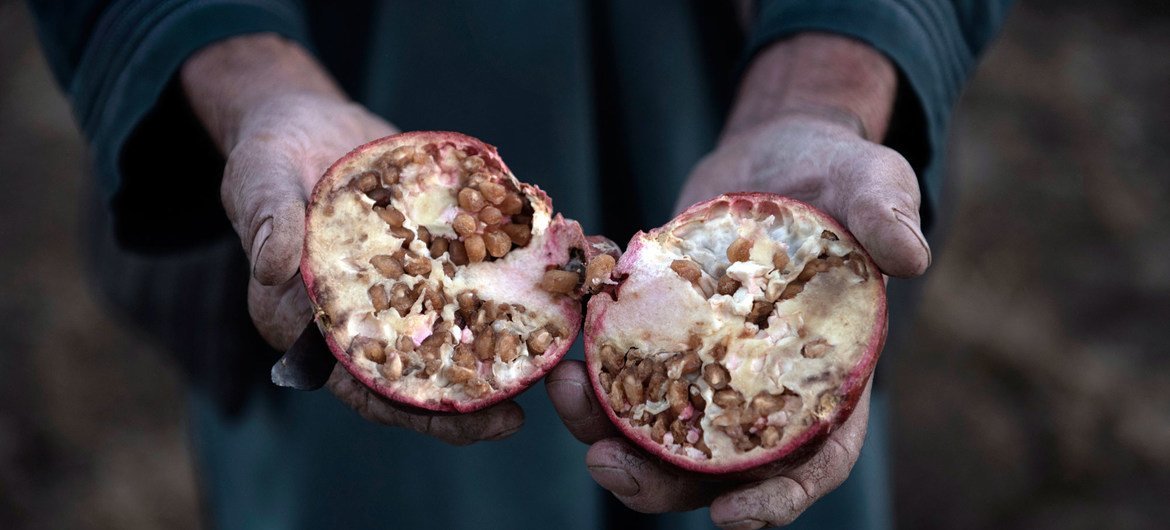
“Catastrophic and famine-like conditions” hang over Afghanistan’s farmers and herders, whose needs continue to worsen with the onset of winter, UN humanitarians said on Friday.
When the PRC decides to move on Taiwan, it is unlikely to move in a manner that makes a US decision on intervention clear cut. Should China decide, initially at least, against a full-scale invasion of that island nation, it could instead opt to try to “win without fighting.” Beijing might do so by using its large, state-controlled fishing fleet to cut smaller Taipei-controlled islands off from Taiwan itself much as the PRC is now massing fishing boats to expand Chinese-controlled seas to press claims on the Japanese Senkakus and Whitsun Reef in Philippine waters. Chinese state-owned fisheries companies – part of the so-called ‘Maritime Militia’ – serve as fronts for PLA intelligence. Using their fleets to operate in a manner somewhere between peace and conflict in the gray zone of contested control around Taiwan would allow Beijing to test whether the US and its allies are willing to help defend the island’s independence without being seen to initiate open conflict.
“The Cipher Brief has become the most popular outlet for former intelligence officers; no media outlet is even a close second to The Cipher Brief in terms of the number of articles published by formers.” – Sept. 2018, Studies in Intelligence, Vol. 62 No.
Access all of The Cipher Brief’s national-security focused expert insight by becoming a Cipher Brief Level I Member .
At least ten people have been killed and several wounded by security forces during mass demonstrations in Sudan against the recent military coup, a medics organization has said.
“The coup forces used live bullets heavily in different areas of the capital and there are tens of gunshot injuries, some of them in serious condition,” the Central Committee of Sudanese Doctors (CCSD) said in a statement.
The group of medics, which supports the protest movement, said several of the injured were in critical condition. It reported ten deaths across Bahri, Omdurman and the capital Khartoum.
According to AFP, citing witnesses, security forces also fired tear gas at protesters in the capital.
Although internet services have been disrupted and telephone lines cut since the military coup on October 25, thousands of people made it to the streets of major cities.
The Sudanese Professionals Association, which also supports the demonstrators, said people were witnessing “excessive repression” and that there was a “deliberate interruption of voice and internet communications services.”
Videos posted on social media show protesters wrapping up in national flags, chanting anti-military mottos and demanding the release of activists detained by the military since the takeover. Resistance committees across Sudan adopted the Liverpool Football Club’s chant ‘You Will Never Walk Alone’ as their slogan, which has already become a popular hashtag on Twitter.
“The street is calling Thwra (revolution), The revolution says Madaniya (civilian gov)”
On October 25, following a long period of tensions between Sudan’s military and civilian-led government, General Abdel Fattah al-Burhan announced the dissolution of both the Sovereign Council and the transitional government, declaring a state of emergency. The apparent military coup immediately prompted mass protests across the country.
Think your friends would be interested? Share this story!
A stream literally flowing with booze emitting a strong beery odor has been discovered in one of the tropical islands of Hawaii. Its waters have been apparently contaminated with alcohol after a leak at a beverage warehouse.
A small river with a distinctive alcoholic smell was recently found on the island of Oahu, some 15 miles (24 kilometers) away from Honolulu, Hawaiian capital. Its waters have been flowing through the Waipio valley and even turned into a 100-foot (30 meters) waterfall on their way.
The stream caught the attention of local environmental activists, who noticed the smell in the area.
“The other day we came here you would think it was a beer pub that hadn’t opened its doors for three or four days,” activist Carroll Cox told local Hawaii News Now. She also contacted the Department of Health about the issue.
Local media took samples from the unusual stream and had them checked at a private laboratory. It tested positive for alcohol, containing 1.2% percent of the substance in its waters – nearly a quarter the content in regular beer and strong enough to cause a buzz.
Local health authorities got involved, and an investigation into the source of contamination was launched. It was learned that the stream was coming from a drain pipe that was traced back to a warehouse of Hawaii’s largest liquor distributor, Paradise Beverages. Its representatives told local media they were working with officials to eliminate a possible spill, with the booze river apparently closing its free drinks service.
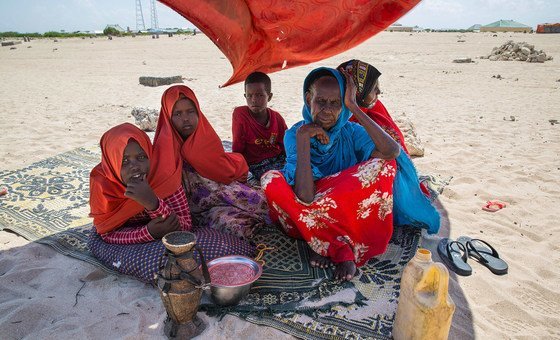
With about 2.3 million people already suffering with serious water, food and pasture shortages in Somalia, a rapidly worsening drought could lead to an “extreme situation” by April next year.