The US and Chinese leaders have held a lengthy virtual meeting on Tuesday, with Joe Biden and Xi Jinping expressing readiness to improve strained bilateral relations and make sure competition doesn’t end in conflict.
Biden, who smiled and waved to Xi as he appeared on screen, said that the responsibility of the two was to ensure that “the competition between our countries does not veer into conflict, whether intended or unintended.”
There should be “simple, straightforward competition” between Washington and Beijing, he added.
Xi also pointed out the need to “increase communication and cooperation” between the two nations. He said he was ready to work with Biden to “build consensus, take active steps and move China-US relations forward in a positive direction.” However, he stressed that this process must be based on mutual respect.
The Chinese leader called Biden an “old friend” as they’ve known each other for years, working together when they were still vice presidents of their countries.
Despite the cheerful start of the meeting, which was initiated by the American side, there were a lot of difficult issues on the agenda. It came amid growing tensions between Washington and Beijing over US support of Taiwan’s independence push and trade disputes, among other things. The US also claims China is committing human rights violations against the Uyghur population in the Xinjiang region – an accusation Beijing is strongly denying.
Speaking from the Roosevelt Room in the White House, Biden said that Washington believed that “all countries have to play by the same rules of the road,” and insisted that the US “is always going to stand up for our interests and values and those of our allies and partners.”
The comment could’ve been a nod to Taiwan, a self-governed island some 160 kilometers east of mainland China, which Beijing views as its breakaway territory. The US has been committed to the ‘One China’ policy since 1979 – and Biden again confirmed it to Xi during the talks – but has also maintained unofficial ties with Taipei, selling it weapons and warning that it was ready to help the island militarily if Beijing resorts to the use of force. China has been angered by those contacts, calling them meddling in its internal affairs.
“We are patient and willing to do our utmost to strive for the prospect of peaceful reunification” with Taiwan, Xi said. However, he reiterated to his American counterpart that China would take “decisive measures” if “pro-Taiwan independence” forces crossed a “red line.”
The two leaders had “extended discussion” on Taiwan, with Biden directly telling his counterpart that China’s behavior had been at odds with stability across the Taiwan strait, a senior US administration official told Reuters. However, he acknowledged that nothing new was established on Taiwan in terms of guardrails during the virtual sit-down.
The White House said that the US leader also raised concerns over human rights to Xi, especially singling out Xinjiang, Tibet and Hong Kong.
Xi pointed out that trade and economic cooperation between China and the US was mutually beneficial and a win-win for the two countries, insisting that such issues shouldn’t be politicized. Ahead of the talks, the US officials warned that scaling back US tariffs on Chinese goods wasn’t on Biden’s agenda.
The Chinese leader spoke about the Covid-19 pandemic, which the US blames on China, saying that solidarity and cooperation were “the most powerful weapons” against the virus and calling on the world to unite against the threat.
The two presidents also pledged to work together on energy and climate issues during the negotiations, which the Chinese side described as “frank, constructive and fruitful.”
It was the most extensive conversation between the two leaders since Biden took office. The two are yet to hold a face-to-face meeting, as Xi has been refraining from leaving China during the pandemic.
The EU must quickly seal its external borders to stem the flow of migrants who are no longer welcome in the 27-member bloc, according to Slovenia’s interior minister, whose country currently holds the presidency of the EU Council.
Speaking at the ‘Sarajevo Migration Dialogue’ on Thursday, Interior Minister Ales Hojs said EU countries were preoccupied recently with the coronavirus pandemic, the fall of the government in Afghanistan, and now a migrant crisis on the Poland-Belarus border, which he said was a hybrid war waged by Minsk against the EU.
“All three have additionally contributed to the increase in numbers of illegal migrants moving towards Europe and the Balkans, destabilizing the European Union,” Hojs told reporters.
The Slovenian minister said the current situation was similar to the 2015 influx of refugees and migrants from the Middle East and North Africa, when the EU admitted over one million people across its borders.
This time the situation is different, Hojs said, warning that “there is no more ‘refugees welcome.’”
“I believe that external borders must be secured, even with fences if necessary,” Hojs said, saying that he supported a plan for Brussels to finance the building of fences to reinforce the bloc’s borders.
He said it was important to strengthen cooperation and partnership across the EU in order to better manage migration and maintain security.
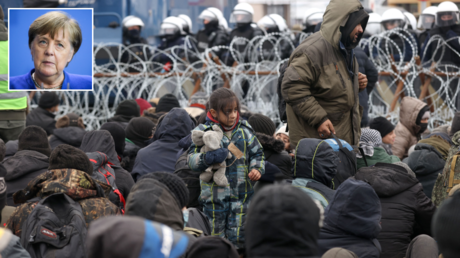
Thousands of migrants have been trying to cross the Belarus-Poland border in an attempt to reach the EU. They have been stranded at barbed-wire fencing with Polish border guards repelling their attempts to cross. Warsaw has accused Belarus of orchestrating the crisis to destabilize the EU and “weaponize” migration in an effort to have sanctions lifted.
A spokesperson for Belarusian leader Alexander Lukashenko claimed on Thursday that Germany agreed to open a humanitarian corridor for 2,000 refugees on the border.
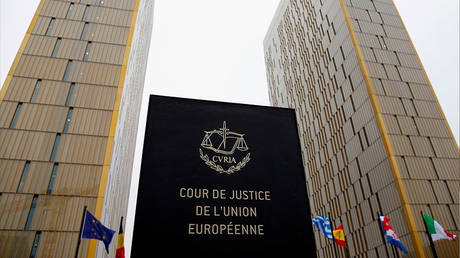
Poland’s procedure for appointing senior judges by the executive branch violates EU rules, the Court of Justice of the European Union (CJEU) has said.
Tuesday’s ruling by the CJEU said the situation in Poland in which the justice minister, “who is also the Public Prosecutor General,” can “second judges to higher criminal courts” and terminate them at any time “without stating reasons,” infringes on the independence of the judicial branch.
The EU court’s opinion was requested by a regional court in Warsaw, which was worried that the appointment and termination procedure compromised the presumption of innocence in cases adjudicated by minister-seconded judges.
The CJEU found “a number of factors” that could empower the justice minister to influence judges and thus “may give rise to doubts concerning their independence.” It said appointments and terminations of a judge should be made “on the basis of criteria known in advance and must contain an appropriate statement of reasons.” Under the current procedures, the criteria are not public at all and the minister doesn’t have to explain his or her decision to withdraw the secondment.
The European court also noted that while a judge has to consent to be seconded by the minister, the termination can be done without one, which “may have effects similar to those of a disciplinary penalty.”
The minister’s role as head of the prosecution is problematic in the context of judge appointments, since it calls into question the impartiality of prosecution and trial, the CJEU said.
Lastly, there is an issue with seconded judges’ involvement in disciplinary proceedings brought against other judges. They serve as deputies to the Disciplinary Officer for Ordinary Court Judges, also appointed by the minister of justice. The arrangement could cast doubt on “the imperviousness of the other members of the adjudicating panels concerned to external factors,” the EU court said.
The combination of factors gave the CJEU reason to believe that minister-seconded judges “are not provided with the guarantees and the independence which all judges should normally enjoy” in a member-state of the EU. The minister’s power “cannot be considered compatible with the obligation to comply with the requirement of independence.”
Considering the circumstances, the court added, “the presumption of innocence may be jeopardised” in cases presided over by judges such as these in Poland.
The disputed procedure is part of a sweeping reform of the judicial system, which put the conservative Polish government at loggerheads with the EU. The opinion is the latest blow dealt to Poland in the ongoing conflict.
Last month, the CJEU imposed a €500,000 ($568,000) per day fine on Warsaw for ignoring a previous order from the court in a case regarding a mining operation. Poland called the ruling part of a “political blackmail” campaign by Brussels.
The EU and Poland have long been entrenched in conflicts over domestic policies which officials in Brussels say go against the union’s rules. Warsaw, among other things, has been accused of compromising the rule of law, discriminating against the LGBT community, and curbing freedom of the press. The Polish government says the EU is attempting to encroach upon its national sovereignty.
Think your friends would be interested? Share this story!
A pack of wild boars were rounded up and euthanized after one of the animals attacked a police officer in the streets of Hong Kong – the opening shot in a pitched battle between the feral hogs and the city’s law enforcement.
A group of veterinarians took seven wild boars into custody, euthanizing the beasts after knocking them out with dart guns in an area near the financial center of the city, according to a statement from Hong Kong’s Agriculture, Fisheries, and Conservation Department on Thursday.
The pigs were captured after one attacked a police officer last week, an act which reflects the city’s new policy toward the animals: stop them before they attack again.
The aggressive boar knocked down a police officer by biting his leg last week as the two faced off in a residential car park, the pig only losing the battle after falling off the building to its death. The wild boars are apparently “accustomed” to wandering back and forth along the roadway, begging for food from pedestrians and vehicles alike. Previously, the city had handled the population by capturing and sedating the animals, then relocating them to “remote areas,” according to the the department.
Hong Kong CEO Carrie Lam vowed to increase penalties for those citizens found feeding the boars, which have reportedly been responsible for some 30 attacks in recent years. While residents are warned not to feed the boars so as not to encourage population growth or disease outbreaks, the animals are a favorite among some visitors. Still, Lam insisted “we can’t simply sit on our hands while things deteriorate.”
Animal rights groups have responded with a protest letter against a policy of euthanasia, pointing out that most visitors do not feed the boars and arguing resources should be directed toward stopping the human activity rather than blaming all the boars. Allowing the boars to be captured and killed “ignores their right to live and considers their existence in urban areas as a capital offense,” the letter read.
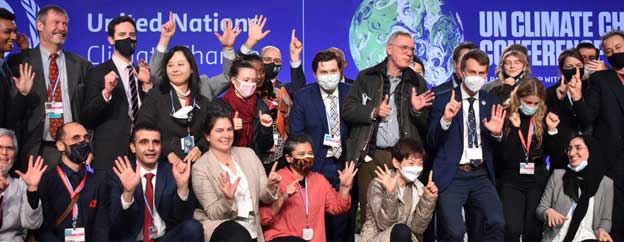
NEW YORK, Nov 19 (IPS) – A week has gone by since COP 26 with 197 Parties ended in the Scottish city of Glasgow on extended time last Saturday. Climate change which covers wide array of issues affecting all living beings engaged the people around the world for COP 26 in a way never experienced since COP1 was held in Berlin in 1995.
An Argentinian woman has become the second-ever HIV-infected person whose immune system helped defeat the virus without requiring additional medical treatment. She was first diagnosed with the AIDS-causing infection in 2013.
Scientists have dubbed the 30-year-old mother the “Esperanza patient,” after her hometown. The word ‘esperanza’ translates to ‘hope’ in English. Publishing their findings in the Annals of Internal Medicine journal on Monday, the researchers said the discovery boosts hope for a “sterilizing cure” for the estimated 38 million people with the life-long infection.
“I enjoy being healthy,” the Esperanza patient told NBC News over email. “I have a healthy family. I don’t have to medicate, and I live as though nothing has happened. This already is a privilege.”
The study found no intact remnants of the virus in the 1.5 billion blood and tissue cells the researchers analyzed – confirming the discovery first announced in March at an international meeting of HIV experts.
No additional information about the woman has been made public, but she was described at the time as “athletic and beautiful” and revealed to have an HIV-negative boyfriend and newborn baby.
Only one other person, identified in August 2020 as 67-year-old Loreen Willenberg from San Francisco, has been confirmed to have overcome the virus without medical intervention. The two women have been labeled ‘elite controllers’, referring to a rare subset of HIV patients who show no signs of the infection despite not undergoing antiretroviral treatments.
Typically, an HIV-infected person requires constant drug therapy to prevent the virus from attaching to their immune cells’ DNA and replicating. But, in the eight years since she was diagnosed, the Esperanza patient only received medication for six months during pregnancy to ensure her baby would be healthy.
In all, there have been four patients cured of HIV, two of whom – the ‘Berlin patient’ Timothy Ray Brown and the ‘London patient’ Adam Castillejo – were also cancer patients who received risky bone marrow transplants from donors with HIV-resistant genes. However, the success of their procedures is yet to be replicated.
“This is really the miracle of the human immune system that did it,” Dr. Xu Yu, an immunologist at the Ragon Institute in Boston, who co-authored the study, told NBC.
The European Union’s top court has ruled that Hungary’s 2018 law aimed at criminalizing aiding illegal immigrants who are claiming asylum violates the “rights safeguarded” by the bloc’s legislature.
The Hungarian legislation, passed in 2018, sought to punish anyone “facilitating illegal immigration” with a year in prison, under a bill dubbed the “Stop Soros” law. Hungary’s government justified it at the time by arguing that migrants illegally entering the country threatened its national security.
In the ruling, handed down on Tuesday, the European Court of Justice declared that “criminalizing such activities impinges on the exercise of the rights safeguarded by the EU legislature in respect of the assistance of applicants for international protection.”
The EU’s advocate general, Athanasios Rantos, had urged the court to make such a judgement back in February, claiming the introduction of the legislation meant that “Hungary has failed to fulfil its obligations under the [bloc’s] Procedures Directive.”
It became known as the Stop Soros law after billionaire philanthropist George Soros became a vocal opponent of the Hungarian government’s opposition to migration. The administration, in turn, accused Soros of orchestrating migration to Europe, with the Open Society Foundation, run by the philanthropist, closing its operation in the country in response.
Hungary, under the leadership of right-wing Prime Minister Viktor Orban, has repeatedly clashed with the EU in recent years over its strong stance on immigration and concerns from the bloc about threats to the rule of law in the country.
At the end of 2020, a dispute between Hungary and Poland and the EU risked derailing the bloc’s budget, as both member states were threatening to veto it over their view that the EU was attempting to interfere in their domestic affairs. Ultimately, the EU backed down, agreeing to a compromise with Budapest and Warsaw to ensure the budget secured the support of all 27 member states.
Despite acknowledging the EU court’s ruling, Hungary’s government defended its right to challenge any foreign-funded non-government organizations that are attempting to “promote migration.”
“Hungary’s position on migration remains unchanged: Help should be taken where the problem is, instead of bringing the problem here,” Hungarian government spokesperson Zoltan Kovacs said, adding that the country will challenge outside entities “seeking to gain political influence and interference.”
Think your friends would be interested? Share this story!
An official inquiry has found that Germany’s justice system was staffed with former Nazis for decades after the Second World War, At one point, three out of four top officials at the prosecutor’s office were former party members.
Released on Thursday, the 600-page report was compiled by historian Friedrich Kiessling and legal scholar Christoph Safferling, and covers the Cold War period running from the early 1950s until 1974. The work was commissioned by the federal prosecutor’s office.
The researchers found that, at one point during the 1950s, roughly three in four top officials in the federal prosecutor’s office had been members of the Nazi Party. It took until 1972 before former Nazis were no longer in the majority in that office, and until 1992 before the judicial system had been fully purged of ex-members of the fascist party.
“There was no break, let alone a conscious break, with the Nazi past,” the researchers said of the situation.
Presenting the inquiry’s findings, state secretary at the justice ministry Margaretha Sudhof said the country has “long remained blind” to the presence of ex-Nazis in senior positions after the end of the Second World War.
“On the face of it they were highly competent lawyers… but that came against the backdrop of the death sentences and race laws in which they were involved,” Sudhof commented.
In a statement about the study’s publication, Justice Minister Christine Lambrecht said she welcomed “the fact that the Federal Prosecutor’s Office is also grappling with its troubled past and is shedding more light on its own Nazi entanglements in the post-war period.”
The federal prosecutor’s office is Germany’s highest prosecutorial authority, responsible for pursuing those who violate international law and commit alleged crimes relating to state security.
The latest study follows an earlier report published in 2016, which stated that in 1957 – more than a decade after the war had ended – 77% of senior officials in the justice ministry were former Nazis. At the time of that publication, then-Justice Minister Heiko Maas stated that the “Nazi-era lawyers went on to cover up old injustice rather than to uncover it, and thereby created new injustice.”
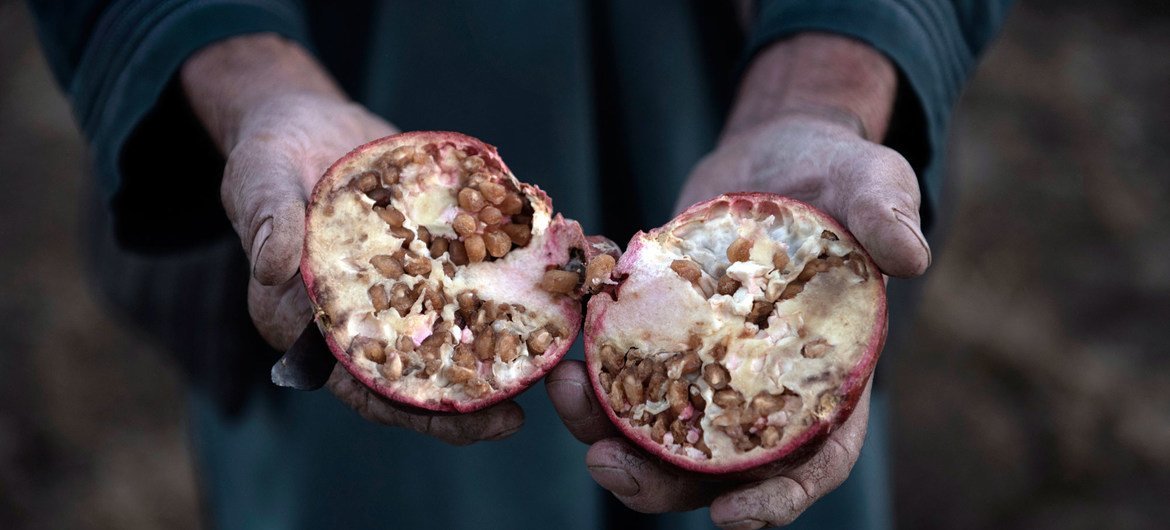
“Catastrophic and famine-like conditions” hang over Afghanistan’s farmers and herders, whose needs continue to worsen with the onset of winter, UN humanitarians said on Friday.