The decision by Israeli MPs paves the way for a fifth election in the Jewish state in less than four years
Israel’s parliament, the Knesset, voted to dissolve itself on Thursday, meaning the Jewish state will hold its fifth election since 2019 later this year.
The 92-0 vote ended the premiership of Naftali Bennett, which became one of the shortest in the country’s history. He was only sworn in as prime minister on June 13, 2021.
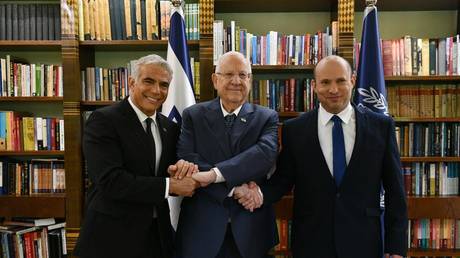
From midnight, Bennett will be replaced as prime minister by foreign minister and alternate prime minister, Yair Lapid. The two ruling coalition partners symbolically switched their seats in the Knesset after the vote.
The new legislative election has been scheduled to take place in Israel on November 1, a date preferred by the government.
Bennett had already announced on Wednesday that he wasn’t going to run for re-election, saying it was “time to step back a little” for him and “look at things from the outside.”
The lawmakers decided to disperse last week, but it took the coalition and the opposition time to agree on a date for the new vote and the fate of some key pieces of legislation.
Eventually, they couldn’t find common ground on the subject of a subway system for Tel Aviv and another draft bill, which is crucial for advancing Israel on its way to obtaining visa-free travel to the US.
The coalition of eight political parties of various views, including the pro-Palestinian United Arab List (UAL or Ra’am), joined forces last year to depose long-time right-wing prime minister Benjamin Netanyahu.
However, working together effectively as a government turned out to be problematic for them. And, last week, Bennett and Lapid announced plans to dissolve the cabinet.
The decision was triggered by the failure of the Knesset in early June to pass a bill that would extend legal rights to settlers in the occupied West Bank for another five years. Two coalition members joined the opposition in refusing to support the bill to expedite the dissolution, putting Israel at risk of an unprecedented legal debacle.
The dissolution of parliament now means Israeli legal rights for settlers will be automatically extended for another six months.
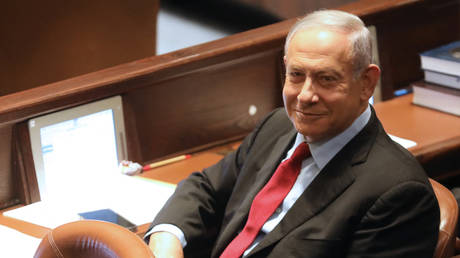
The coalition government will continue to execute its duties until the election, in which Netanyahu will be favorite to become prime minister, according to polls.
A survey published by Radio 103 FM on Tuesday suggested that the opposition leader and his bloc would win 59 of 120 seats in the Knesset. This would make Netanyahu the winner, but still wouldn’t be enough for him to gain a majority and form a government.
BRUSSELS, Jun 30 (IPS) – The writer is Professor Emeritus of the Catholic University of LouvainOn Sunday 19 June, we gathered in Sezano, municipality of Verona (VR), at the Monastery of the Common Good to affirm the need and urgency to ban war, all wars, and build peace without yes or no buts.
It is important that the Ukrainians define the terms of any potential negotiation, Blinken tells NPR, while the US makes sure that the country has the means to repel Russian aggression.
Secretary General Jens Stoltenberg said that increases in deployments and military spending were done with Russia in mind
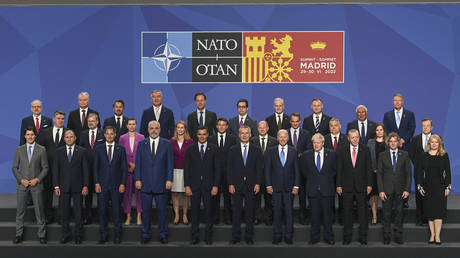
NATO Secretary General Jens Stoltenberg told reporters on Wednesday that increases in military spending and rising numbers of troop deployments in Eastern Europe since 2014 were carried out in anticipation of a conflict with Russia.
Speaking after a meeting of NATO members and partner states in Madrid, Stoltenberg accused Russia of “using force in the eastern Donbass since 2014,” despite the fact that Kiev’s forces have shelled cities in the region ever since the Donetsk and Lugansk People’s Republics declared independence from Ukraine that year.
Nevertheless, Stoltenberg said that the US-led military bloc decided in 2014 to start beefing up its forces in Eastern Europe.
“The reality is also that we have been preparing for this since 2014,” he stated. “That is the reason that we have increased our presence in the eastern part of the alliance, why NATO allies have started to invest more in defense, and why we have increased [our] readiness.”
According to NATO figures, the alliance’s European members and Canada have increased their military expenditure by between 1.2% and 5.9% every year since 2014. However, only 10 out of 30 NATO states currently meet the bloc’s target of spending 2% of GDP on defense.
The increase in expenditure has been most noticeable in Eastern Europe and the Baltics, with Poland, Lithuania, Estonia, Latvia, the Czech Republic, Slovakia and Romania all meeting the target for the first time in 2022.
Earlier on Wednesday, NATO members agreed to adopt a new Strategic Concept. This policy blueprint sets out the alliance’s stance toward partners, non-members, and adversaries, with the 2022 iteration naming Russia as the “most significant and direct threat” to the bloc.
On the other hand, Moscow has labeled NATO’s expansion into former Soviet states since the end of the Cold War – which Western leaders explicitly promised in the early 1990s would not happen – as a threat against its own security. NATO’s official position on Ukraine, set out in the 2008 Bucharest Declaration, is that it and Georgia “will become members of NATO” at an unspecified future date. Russia has cited Ukraine’s pursuit of NATO membership as a key factor behind the current conflict.
Despite the alliance’s post-Cold War march into the former Eastern Bloc, Stoltenberg claimed on Wednesday that “NATO has strived for a better relationship with Russia for decades.”