Denmark’s air force showed off its brand-new electric-powered planes on Thursday, saying its test flights have so far proven that the cheaper-to-run, more eco-friendly technology has potential.
It had obtained the two Velis Electro jets from Slovenian manufacturer Pipistrel, becoming the first military in the world to operate this type of hardware.
“The aircraft are 100% emission-free, very quiet, and otherwise cheap to operate,” Lieutenant Colonel Casper Børge Nielsen of the Defense Ministry’s material and procurement agency said. Initial tests indicate “there may be perspectives in using electric aircraft when the technology becomes mature,” he added.
Denmark has leased the planes for two years, rather than buying it, to avoid the “risk of ending up with equipment that we can’t really use,” Børge Nielsen said. During the lease period, the Danish Air Force hopes to gain an insight into the benefits and disadvantages of the jets’ technology to decide how it can be applied in the future.
The pilots described flying the one-man light electric planes, which are powered by two lithium batteries, as “exciting,” saying they were “built well and fly well.”
Last year, the United States military said it had been keeping an eye on the development of electric-powered planes, describing their ability to approach targets silently as “tremendous.” However, their battery capacity isn’t currently sufficient to meet the US Air Force’s needs.
Work on electric aircraft has been underway since the 1970s, but the battery issue has been a stumbling block in the way of wider adoption of the technology. Global military interest could change all that, stimulating research and investment.
The switch to electric power is likely to be a win-win across the board, as it will drastically reduce CO2 emissions and also make flying much cheaper for commercial carriers and their passengers.
Think your friends would be interested? Share this story!
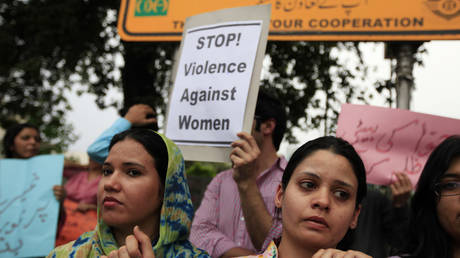
Criminals convicted of multiple cases of rape could face chemical castration in Pakistan as the country’s parliament supported new legislation aimed at tackling the rise in sexual offenses there.
The amendments to existing legislation, which allow for speedy conviction and harsher punishments for rapists, have been voted in by the MPs on Wednesday.
They introduce the death penalty or a life sentence for gang rape as well as chemical castration for repeat sex offenders, with the consent of the convict.
Chemical castration was described in the bill as a process through which “a person is rendered incapable of performing sexual intercourse for any period of his life, as may be determined by the court through administration of drugs.”
It’s planned to establish special courts across the country to make sure that verdicts in sexual assault cases are delivered “expeditiously, preferably within four months.” If chemical castration is assigned as a punishment, it “shall be conducted through a notified medical board,” according to the new legislation.
Mushtaq Ahmed, a senator for the religious Jamaat-i-Islami party, had earlier denounced the bill as un-Islamic. Ahmed argued that there was no mention of chemical castration in Sharia law and that rapists are to be hanged in public.
By resorting to drugs to reduce the libido of repeat sex offenders, Pakistan joins South Korea, Poland, the Czech Republic and some US states, where chemical castration has been introduced.
The measure was put on the table a year ago by Pakistani President Arif Alvi in response to a vast public outcry over a spike across the country in cases of rape involving both women and children.
Back then, Amnesty International decried chemical castration as a “cruel, inhumane” treatment, advising Islamabad to instead focus on reforming its “flawed” justice system and to ensure justice for the victim.
Local NGO War Against Rape told Reuters last year that less than 3% of sexual assault or rape prosecutions in Pakistan result in a conviction.
AstraZeneca has announced that its preventative antibody cocktail offers 83% protection against symptomatic Covid-19 for at least six months, making it more effective than its own vaccine.
In a statement on Thursday, AstraZeneca cemented its lead in the race to develop and market a preventative Covid-19 drug, which is delivered as a shot in the arm.
The drug, named AZD7442, reduces the risk of symptomatic Covid-19 by 83% over the course of six months, according to data from a trial in which participants were given one 300mg dose. There were no deaths or severe infections recorded within the trial group, it said.
A separate trial showed the drug reduced the risk of severe Covid-19 or death by 88% when administered within three days of the onset of symptoms.
“These new data add to the growing body of evidence supporting AZD7442’s potential … We are progressing regulatory filings around the world and look forward to providing an important new option against SARS-CoV-2 [Covid-19] as quickly as possible,” AstraZeneca Executive Vice President Mene Pangalos said in the statement.
The Anglo-Swedish firm has agreed to supply the US government with 700,000 doses of AZD7442 if the Food and Drug Administration grants it emergency use, which AstraZeneca requested on October 5. The firm has similar agreements with other nations.
The drug is created using a combination of two antibodies originating from immune B-cells donated by a recovering Covid-19 patient.
The treatment could be used in people who are known not to respond well to vaccines, such as cancer patients. Around 2% of people are considered to be at risk of not creating enough antibodies following the administration of a Covid-19 vaccine.
Based on the numbers, the drug appears to be more effective than the firm’s first-generation Covid-19 vaccine. Britain’s Zoe Covid study showed the effectiveness of the vaccine dropped to around 67% after four to five months.
A stream literally flowing with booze emitting a strong beery odor has been discovered in one of the tropical islands of Hawaii. Its waters have been apparently contaminated with alcohol after a leak at a beverage warehouse.
A small river with a distinctive alcoholic smell was recently found on the island of Oahu, some 15 miles (24 kilometers) away from Honolulu, Hawaiian capital. Its waters have been flowing through the Waipio valley and even turned into a 100-foot (30 meters) waterfall on their way.
The stream caught the attention of local environmental activists, who noticed the smell in the area.
“The other day we came here you would think it was a beer pub that hadn’t opened its doors for three or four days,” activist Carroll Cox told local Hawaii News Now. She also contacted the Department of Health about the issue.
Local media took samples from the unusual stream and had them checked at a private laboratory. It tested positive for alcohol, containing 1.2% percent of the substance in its waters – nearly a quarter the content in regular beer and strong enough to cause a buzz.
Local health authorities got involved, and an investigation into the source of contamination was launched. It was learned that the stream was coming from a drain pipe that was traced back to a warehouse of Hawaii’s largest liquor distributor, Paradise Beverages. Its representatives told local media they were working with officials to eliminate a possible spill, with the booze river apparently closing its free drinks service.
President Joe Biden commented on reports that US officials are planning to boycott the upcoming Olympics in Beijing over alleged human rights violations – but his answer left journalists perplexed.
When asked on Tuesday if an official US delegation will be traveling to the Winter Games in the Chinese capital in February, Biden responded: “I am the delegation.”
The president, however, did not elaborate, leaving the White House correspondents in a state of confusion, as his response could mean that Biden will attend the Winter Olympics alone or, as some reporters suggested, that he simply did not understand the question.
A recent report by a Washington Post columnist claimed the US won’t be sending an official delegation to Beijing in 2022 over allegations of human rights violations by the Chinese government. According to the sources cited in the article, a formal recommendation for a diplomatic boycott of the Olympics has been already presented to Biden, with the move expected to be approved by the president by the end of November.
The piece was published on the day that Biden held a lengthy virtual meeting with Chinese leader Xi Jinping, in which they discussed a range of issues regarding the strained relations between the two nations – but not the Olympics.
The White House said that during the talks, President Biden challenged his Chinese counterpart over what Washington sees as persecution against the Uyghur population in the Xinjiang region, as well as human rights violations in Tibet and Hong Kong. China has strongly denied the claims, accusing the US of interfering in its internal affairs.
Calls for the Biden administration to boycott the Olympics and refrain from sending a political delegation to Beijing have recently been made by top Democratic and Republican lawmakers.
If implemented, it won’t affect the American athletes, who will still be taking part in the Winter Olympics.
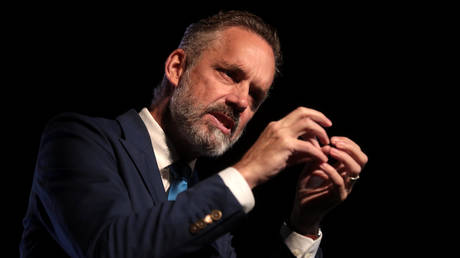
Controversial psychologist and author Jordan Peterson claimed Western countries had no “moral right” to force developing nations to reduce pollution output, noting instead that improving their economies was key.
During an appearance on the BBC’s ‘Question Time’ show on Thursday, the Canadian professor noted that the focus of climate change policies should be on incentivizing the development of cheap energy in poorer polluter countries.
“The best long term solution is to try to make developing countries as rich as possible, and the best way to do that is not control their pollution output, but to help them develop the cheapest energy they can possibly manage as fast as they possibly can,” Peterson said.
The debate saw UK undersecretary for employment Mims Davies suggest that measures taken to tackle climate change should not come at the “expense of developing countries.” But Peterson countered that it “absolutely, 100% will be [at their expense].”
I don’t think we have any moral right in the West at all to do that.
He also criticized the recent COP26 climate change conference for failing to explore ideas on how best to improve national economies in the developing world, noting that he saw “very little of that sort of idea” coming out of the UN summit.
In the final hours of the two-week conference, China and India had intervened to soften the wording around the use of coal in the Glasgow Pact. The two countries demanded a change in the final text of the agreement that called for coal to be phased out, revising this to “phasing down unabated coal.”
The move prompted COP26 president and UK minister Alok Sharma to declare that China and India would have to “justify” their actions to countries that were more vulnerable to global warming effects. However, officials in both Beijing and New Delhi have countered that the criticism was unfair.
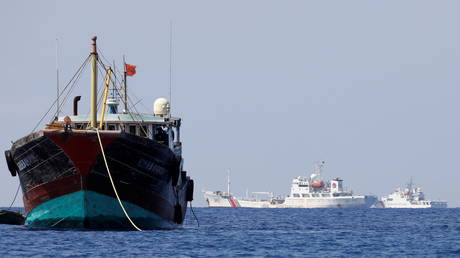
China has accused the Philippines of breaching its territory, saying two supply ships were blocked by Beijing’s coast guard as they approached a disputed shoal. Manila protested over the run-in, citing its own claim to the area.
The two Philippines vessels “trespassed” into waters near the Nansha island chain – also known as the Spratly Islands – on November 16, Foreign Ministry spokesman Zhao Lijan told reporters on Friday, noting that they entered the area “without China’s consent.”
“Chinese coast guard vessels performed official duties in accordance with law and upheld China’s territorial sovereignty and maritime order,” Zhao said, adding that the area is now “generally tranquil” and that the two countries are in communication about the encounter.
The comments from Beijing come just one day after Manila first publicized the incident, with the Philippines Foreign Affairs Secretary Teodoro Locsin claiming Chinese vessels fired water cannon on the two supply boats and forced them to abandon their mission near a disputed shoal in the Spratlys. He called on China to “back off” and “take heed” of Philippines claims to the region.
While both countries regard the Ayungin shoal – alternatively referred to as the Second Thomas or Renai Jiao shoal – as their own territory, The Hague’s Permanent Court of Arbitration settled the dispute in the Philippines’ favor in 2016. However, despite that ruling, as well as the fact that Manila has maintained a presence on the shoal since 1999, Beijing has not abandoned its claims to the area.
Vaccination of all Hungarian citizens against Covid-19 is inevitable, PM Viktor Orban has said, stating that even the most hardline anti-vaxxers will ultimately face a choice between dying with the virus and getting a jab.
Speaking to Kossuth radio on Friday, the Hungarian leader lashed out at those reluctant to get vaccinated against coronavirus, branding them a threat “not only to themselves but to all others.”
In the end, everyone will have to be vaccinated; even the anti-vaxxers will realize that they will either get vaccinated or die. So, I urge everyone to take this opportunity.
The EU member state is currently experiencing its fourth wave of coronavirus, Orban stated, blaming the situation on those who had not got vaccinated. “If everybody were inoculated, there would be no fourth wave or it would be just a small one,” the PM claimed.
Apart from urging the unvaccinated to go and finally get their jabs, Orban also promoted booster shots, revealing that he had already taken three doses of a coronavirus vaccine.
“The only thing that protects us from the virus is vaccination. And we are now also seeing, at least the experts are unanimous in saying, that four to six months after the second vaccination, the protective power of the vaccine weakens. Therefore, a third vaccination is justified,” he said.
Hungary has already announced new anti-Covid measures, though somewhat short of the strict measures proposed by the nation’s Medical Chamber on Wednesday. The medical body called for a blanket ban on mass events, and suggested making entry to restaurants, theaters and other indoor venues conditional on bearing a Covid-19 inoculation certificate. Instead, Budapest rolled out compulsory mask wearing for most indoor environments, as well as making booster shots mandatory for all medical workers, starting from Saturday.
A nation of 10 million, Hungary’s total tally of logged Covid cases is hovering just below the one million mark. On Friday, it registered a new daily record, with nearly 11,300 new Covid infections. More than 32,700 people in Hungary have succumbed to the disease over the course of the pandemic.
Think your friends would be interested? Share this story!
Slovakia has become the latest European country to implement lockdown restrictions on people who haven’t had the Covid vaccine, as it seeks to prevent a resurgence in infections and hospital admissions over the winter.
Slovakian Prime Minister Eduard Heger announced the new measures in a press conference on Thursday, declaring a “lockdown for the unvaccinated” after the country reported a record number of new cases.
The new restrictions in Slovakia, which come into effect on Monday, will require people to have been vaccinated or have recovered from Covid in the past six months to enter restaurants, non-essential shops, or public events.
In the past few days, the European nation has seen record numbers of new infections, including over 8,000 on Tuesday, with hospitals running out of space to treat Covid patients.
Slovakia has one of the lowest rates of vaccination in the European Union, with over 50% of individuals still not jabbed. The country of around 5.5 million has so far only inoculated 2.5 million people against the virus.
Earlier this week, Austria became the first nation to impose restrictions on unvaccinated individuals, as it sought to limit pressure on hospitals and emergency care units. The move came into effect at midnight on Monday for anyone aged 12 and older who has not received their Covid vaccine or recently recovered from the virus.
The German state of Bavaria and the Czech Republic followed Austria in restricting access for unvaccinated individuals. Only people who can show proof of vaccination or that they have recently recovered from Covid will be allowed to enter public spaces, such as restaurants and shops.
At least ten people have been killed and several wounded by security forces during mass demonstrations in Sudan against the recent military coup, a medics organization has said.
“The coup forces used live bullets heavily in different areas of the capital and there are tens of gunshot injuries, some of them in serious condition,” the Central Committee of Sudanese Doctors (CCSD) said in a statement.
The group of medics, which supports the protest movement, said several of the injured were in critical condition. It reported ten deaths across Bahri, Omdurman and the capital Khartoum.
According to AFP, citing witnesses, security forces also fired tear gas at protesters in the capital.
Although internet services have been disrupted and telephone lines cut since the military coup on October 25, thousands of people made it to the streets of major cities.
The Sudanese Professionals Association, which also supports the demonstrators, said people were witnessing “excessive repression” and that there was a “deliberate interruption of voice and internet communications services.”
Videos posted on social media show protesters wrapping up in national flags, chanting anti-military mottos and demanding the release of activists detained by the military since the takeover. Resistance committees across Sudan adopted the Liverpool Football Club’s chant ‘You Will Never Walk Alone’ as their slogan, which has already become a popular hashtag on Twitter.
“The street is calling Thwra (revolution), The revolution says Madaniya (civilian gov)”
On October 25, following a long period of tensions between Sudan’s military and civilian-led government, General Abdel Fattah al-Burhan announced the dissolution of both the Sovereign Council and the transitional government, declaring a state of emergency. The apparent military coup immediately prompted mass protests across the country.
Think your friends would be interested? Share this story!