The planned introduction of chemical castration for serial rapists in Pakistan has been dropped due to objections from experts in Islamic law, who said such punishment would be counter to Sharia.
The controversial clause in a bill amending criminal law in Pakistan was dropped before the National Assembly voted on it on Wednesday, a parliament official said on Friday. If it were passed, it would have been unconstitutional, Parliamentary Secretary for Law and Justice Maleeka Bokhari explained. The basic law of the country requires all its laws to be in line with the Sharia and the Koran.
Bokhari said the decision to drop the clause was taken due to objections from the Council of Islamic Ideology, a constitutional body that advises the government of Pakistan on the intricacies of Islamic law.
The bill amends Pakistan’s Penal Code and Criminal Procedure Code to streamline investigations and prosecutions of sexual crimes as part of wider anti-rape reform. Some conservative lawmakers vocally argued against the castration clause as the piece of legislation was moving towards approval. Senator Mushtaq Ahmed from the Islamist Jamaat-i-Islami party argued that rapists should be hanged publicly, while castration was never mentioned in Sharia.
A separate bill also approved by the parliament on Wednesday introduces a system of special regional investigators for rape allegations to be appointed by the prime minister, as well as new protections for victims, and punishments for officials who fail to investigate their complaints properly. Among other things, it makes evidence that a victim is “generally of immoral character” inadmissible in court.
The reform is necessary because currently deterrence of sexual crimes in Pakistan is undermined by “poor investigation, archaic procedures and rules of evidence and delay in the trial,” the bill said.
Vaccination of all Hungarian citizens against Covid-19 is inevitable, PM Viktor Orban has said, stating that even the most hardline anti-vaxxers will ultimately face a choice between dying with the virus and getting a jab.
Speaking to Kossuth radio on Friday, the Hungarian leader lashed out at those reluctant to get vaccinated against coronavirus, branding them a threat “not only to themselves but to all others.”
In the end, everyone will have to be vaccinated; even the anti-vaxxers will realize that they will either get vaccinated or die. So, I urge everyone to take this opportunity.
The EU member state is currently experiencing its fourth wave of coronavirus, Orban stated, blaming the situation on those who had not got vaccinated. “If everybody were inoculated, there would be no fourth wave or it would be just a small one,” the PM claimed.
Apart from urging the unvaccinated to go and finally get their jabs, Orban also promoted booster shots, revealing that he had already taken three doses of a coronavirus vaccine.
“The only thing that protects us from the virus is vaccination. And we are now also seeing, at least the experts are unanimous in saying, that four to six months after the second vaccination, the protective power of the vaccine weakens. Therefore, a third vaccination is justified,” he said.
Hungary has already announced new anti-Covid measures, though somewhat short of the strict measures proposed by the nation’s Medical Chamber on Wednesday. The medical body called for a blanket ban on mass events, and suggested making entry to restaurants, theaters and other indoor venues conditional on bearing a Covid-19 inoculation certificate. Instead, Budapest rolled out compulsory mask wearing for most indoor environments, as well as making booster shots mandatory for all medical workers, starting from Saturday.
A nation of 10 million, Hungary’s total tally of logged Covid cases is hovering just below the one million mark. On Friday, it registered a new daily record, with nearly 11,300 new Covid infections. More than 32,700 people in Hungary have succumbed to the disease over the course of the pandemic.
Think your friends would be interested? Share this story!
Austria will introduce a full lockdown that could last for three weeks on Monday in an attempt to tackle a new wave of Covid-19 infections. The government has also ordered the entire population to get vaccinated from February 1.
On Friday, conservative Chancellor Alexander Schallenberg told a news conference that a complete lockdown of the nation would begin on Monday and last for an initial 10 days.
He stated that the restrictions could be extended if infection rates did not start to fall, but he insisted the lockdown would not exceed 20 days.
The measures concern the entire Austrian population. The government has already imposed a partial lockdown on the unvaccinated in an effort to reduce hospitalization rates amid a surge in Covid-19 cases.
When the full lockdown ends, restrictions will remain in place for the unvaccinated.
Schallenberg’s announcement came after a meeting of nine state governors, two of whom had already vowed to introduce full lockdowns in their regions on Monday, in the western province of Tyrol.
The chancellor also announced that vaccinations would be mandatory from February 1. “We haven’t been able to convince enough people to vaccinate. For too long, I and others have assumed that you can convince people to get vaccinated,” he added, giving his rationale for the mandate.
Schallenberg said he lamented the political forces, radical opposition, and fake news fighting against vaccination.
Austria has one of the lowest vaccination rates in western Europe, with only 65% inoculated against the deadly virus according to data from Johns Hopkins university.
Infection rates are almost among the highest on the continent. The seven-day incidence rate stands at 971.5 per 100,000 people.
Think your friends would be interested? Share this story!
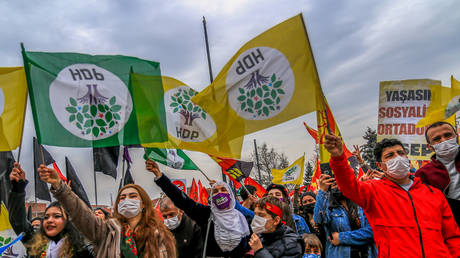
Syrian-born musician Omar Souleyman, who worked with the likes of Bjork and Damon Albarn, has been detained in Turkey over alleged links to the Kurdistan Workers’ Party, which is deemed a terrorist group by Ankara.
Souleyman was brought in for questioning on Wednesday, with officers also searching through his home in Turkey’s southeastern province of Sanliurfa, the singer’s manager said.
The arrest was likely provoked by recent reports that the musician had traveled to an area in Syria controlled by the Kurdish militias known as the YPG, he added.
The YPG have been US allies in the fight against Islamic State (IS, formerly ISIS), but Turkey considers them to be an extension of the Kurdistan Workers’ Party (PKK) and a threat to its national security.
For decades, the Workers’ Party has been fighting Turkish troops in the southeast of the country, striving for greater autonomy for the Kurdish population.
Souleyman’s son denied his father’s alleged terrorist links, saying he didn’t have any political affiliation and had become the victim of a “malicious report.” Some media outlets claimed the musician could be released from custody later on Thursday.
Coming from Syria’s majority-Kurdish province of Hasekeh, Souleyman had been known as a prolific wedding performer in his home country. But his international career skyrocketed after he moved to Turkey a decade ago, fleeing the Syrian conflict. The 55-year-old’s clips, including his top hit ‘Warni Warni’, have garnered millions of views on YouTube. He performed at the Nobel Peace Prize ceremony in 2013, as well as at many large festivals around the globe.
His unique style, which is based on mixing traditional Middle Eastern folk music with electronic sound, has attracted the attention of such stars as Bjork, Four Tet, Damon Albarn, and Diplo, who have all collaborated with Souleyman.
The stars of the Harry Potter films will reunite for a 20-year anniversary special on HBO, minus author JK Rowling. Fans and commenters wondered if Rowling’s absence had anything to do with her views on transgender issues.
‘Harry Potter and the Sorcerer’s Stone’ premiered 20 years ago this week, catapulting actors Daniel Radcliffe, Rupert Grint, and Emma Watson to superstardom. Warner Bros announced on Tuesday that the three stars – as well as a whole range of supporting actors from the franchise – will travel back to Hogwarts for an “enchanting making-of story” airing on New Year’s Day, entitled ‘Harry Potter 20th Anniversary: Return to Hogwarts’.
Conspicuously absent from the production is author JK Rowling. A Warner Bros’ press release made no mention of Rowling, and a lengthy Instagram post by actress Emma Watson thanked fans and fellow cast members, but also made no mention of Rowling, whom other Harry Potter actors said they “owe everything” to.
Rowling’s PR team did not comment on the author’s absence, and the Hollywood Reporter claimed that the author will only appear in the show in archival footage.
Commentators online reckoned that Rowling had been canceled from the retrospective special due to her high-profile clashes with transgender activists. A self-described feminist, Rowling has spoken out against gender-neutral language, arguing that it “erases” the concept of sex and therefore the concept of womanhood. She has also stated that sex is a binary concept, and argued against gender-neutral bathrooms, claiming that by allowing men into women’s bathrooms, women are made less safe.
If I owed my entire career to 1 person, if I’d known her since I was 8, if I was worth $90m because of her, then not only would I defend her when maligned but I would refuse to take part in any reunion that excluded her. But that’s just me. #JKRowlinghttps://t.co/0ay5mhQ1FE
I can’t believe they’re actually shunning JK Rowling
“No you can’t participate in something celebrating the world you made because we are the new Amish but with more Puritan soul and no redeeming features”.
Rowling’s comments on gender issues generated intense backlash from LGBT organizations, and death and rape threats from the most zealous transgender ideologues online. Actors Daniel Radcliffe and Emma Watson also both spoke out against Rowling’s defense of biological sex last year, with Radcliffe declaring that “transgender women are women,” and apologizing to upset fans “for the pain [Rowling’s] comments have caused you.”
“Trans people are who they say they are and deserve to live their lives without being constantly questioned or told they aren’t who they say they are,” Watson chimed in.
Rowling has repeatedly stated that she is against anti-trans discrimination, but would not change her position on sex. “I refuse to bow down to a movement that I believe is doing demonstrable harm in seeking to erode ‘woman’ as a political and biological class and offering cover to predators like few before it,” she wrote last year.
Think your friends would be interested? Share this story!
An official inquiry has found that Germany’s justice system was staffed with former Nazis for decades after the Second World War, At one point, three out of four top officials at the prosecutor’s office were former party members.
Released on Thursday, the 600-page report was compiled by historian Friedrich Kiessling and legal scholar Christoph Safferling, and covers the Cold War period running from the early 1950s until 1974. The work was commissioned by the federal prosecutor’s office.
The researchers found that, at one point during the 1950s, roughly three in four top officials in the federal prosecutor’s office had been members of the Nazi Party. It took until 1972 before former Nazis were no longer in the majority in that office, and until 1992 before the judicial system had been fully purged of ex-members of the fascist party.
“There was no break, let alone a conscious break, with the Nazi past,” the researchers said of the situation.
Presenting the inquiry’s findings, state secretary at the justice ministry Margaretha Sudhof said the country has “long remained blind” to the presence of ex-Nazis in senior positions after the end of the Second World War.
“On the face of it they were highly competent lawyers… but that came against the backdrop of the death sentences and race laws in which they were involved,” Sudhof commented.
In a statement about the study’s publication, Justice Minister Christine Lambrecht said she welcomed “the fact that the Federal Prosecutor’s Office is also grappling with its troubled past and is shedding more light on its own Nazi entanglements in the post-war period.”
The federal prosecutor’s office is Germany’s highest prosecutorial authority, responsible for pursuing those who violate international law and commit alleged crimes relating to state security.
The latest study follows an earlier report published in 2016, which stated that in 1957 – more than a decade after the war had ended – 77% of senior officials in the justice ministry were former Nazis. At the time of that publication, then-Justice Minister Heiko Maas stated that the “Nazi-era lawyers went on to cover up old injustice rather than to uncover it, and thereby created new injustice.”
An object lurking in the outer region of our solar system may well be the elusive Planet 9, a leading British astronomer has suggested after digging through the telescope archives of 250,000 point sources.
Possible evidence of a mysterious planet up to 10 times bigger than Earth, with a distant orbit around the Sun, has been unveiled by professor of astrophysics at Imperial College of London, Michael Rowan-Robinson. Aiming to prove – or rule out – the existence of another big planet beyond Neptune, the UK scientist decided to conduct a new analysis of data collected by the Infrared Astronomical Satellite (IRAS) in 1983.
The astronomer has looked through some 250,000 point sources detected by the telescope, which took a far-infrared survey of 96% of the sky. Having analyzed the data, keeping in mind the hypothetical planet’s size and distance, “at the very limit of the survey,” he singled out a moving object that the satellite picked out on three occasions.
The candidate for Planet 9 would be up to five times the mass of Earth, according to the IRAS data. Its orbital distance would be some 225 times farther than that of our planet, equaling about 33.7 billion kilometers (20.9 billion miles) from the Sun.
If the enigmatic object is indeed rotating around the Sun at such a distance, it would be extremely cold and not much sunlight would be reflected by it, making it even more elusive and harder to find. While the latest study is not a clear detection, it could be valuable as guidance for where exactly to search for the new planet, the astronomer concluded.
“Given the great interest of the Planet 9 hypothesis, it would be worthwhile to check whether an object with the proposed parameters and in the region of sky proposed, is inconsistent with the planetary ephemerides,” he wrote in the preprint paper, accepted for publication in the Monthly Notices of the Royal Astronomical Society.
A debate on the possible existence of an undiscovered planet in our solar system has been ongoing for decades. With no concrete evidence found, there has been speculation about its presence, mainly based on the gravitational clustering of objects in the system’s outer reaches. Several years ago, a suggestion was put forward that a group of icy objects that lie beyond the orbit of Neptune in the Kuiper Belt are possibly under the gravitational influence of a larger mysterious body, possibly Planet 9. The claim was based not on observation, but on modeling.
Currently, the eighth and farthest known planet from the Sun is Neptune. In the last century, Pluto, discovered in 1930, was regarded as the ninth planet, but a controversial vote at the International Astronomical Union (IAU) in 2006 formally excluded it from the solar system’s ‘planets’, and reclassified it as a dwarf planet.
An Argentinian woman has become the second-ever HIV-infected person whose immune system helped defeat the virus without requiring additional medical treatment. She was first diagnosed with the AIDS-causing infection in 2013.
Scientists have dubbed the 30-year-old mother the “Esperanza patient,” after her hometown. The word ‘esperanza’ translates to ‘hope’ in English. Publishing their findings in the Annals of Internal Medicine journal on Monday, the researchers said the discovery boosts hope for a “sterilizing cure” for the estimated 38 million people with the life-long infection.
“I enjoy being healthy,” the Esperanza patient told NBC News over email. “I have a healthy family. I don’t have to medicate, and I live as though nothing has happened. This already is a privilege.”
The study found no intact remnants of the virus in the 1.5 billion blood and tissue cells the researchers analyzed – confirming the discovery first announced in March at an international meeting of HIV experts.
No additional information about the woman has been made public, but she was described at the time as “athletic and beautiful” and revealed to have an HIV-negative boyfriend and newborn baby.
Only one other person, identified in August 2020 as 67-year-old Loreen Willenberg from San Francisco, has been confirmed to have overcome the virus without medical intervention. The two women have been labeled ‘elite controllers’, referring to a rare subset of HIV patients who show no signs of the infection despite not undergoing antiretroviral treatments.
Typically, an HIV-infected person requires constant drug therapy to prevent the virus from attaching to their immune cells’ DNA and replicating. But, in the eight years since she was diagnosed, the Esperanza patient only received medication for six months during pregnancy to ensure her baby would be healthy.
In all, there have been four patients cured of HIV, two of whom – the ‘Berlin patient’ Timothy Ray Brown and the ‘London patient’ Adam Castillejo – were also cancer patients who received risky bone marrow transplants from donors with HIV-resistant genes. However, the success of their procedures is yet to be replicated.
“This is really the miracle of the human immune system that did it,” Dr. Xu Yu, an immunologist at the Ragon Institute in Boston, who co-authored the study, told NBC.
Covid-battered global supply chains are being threatened by organized criminals, including drug cartels and con artists posing as legit suppliers, a new study has found, warning that the situation is set to get worse.
The international supply chain woes amid the Covid-19 pandemic are highlighted in a new annual report, released this week by the British Standards Institution (BSI).
The document, titled the ‘Supply Chain Risk Insights Report’, highlights Covid’s impact on supply chains, with the experts also warning that organized crime has increasingly preyed on this crucial area during the pandemic. On multiple instances, criminals were posing as legitimate logistics providers, stealing goods during shipment.
“I’m seeing a significant number of false suppliers acting as genuine potential suppliers in supply chain logistics provision – warehousing distribution, distribution centres, transportation companies – and actually, they are criminal groups trying to infiltrate the logistics supply chain,” said David Fairnie, BSI’s principal consultant in supply chain security. He urged producers to “continuously monitor” the supply chain and to not immediately trust new logistics providers – especially those contacted only remotely.
So, arguably today more than ever, you do need to know your suppliers. So far in 2021, BSI has noted this issue of fake carriers in an increasing number of countries in both the Americas and Europe.
Criminals have apparently been trying to steal goods in various ways, with phony truck drivers loading up items and taking off with them, while conmen “posing as legitimate employees” have reportedly been observed lurking around delivery destinations to steal cargo.
At the same time, the report found that trade in illicit goods has also been on the rise lately, with the illegal drug industry in particular appearing to flourish. While the supply chain for drug cartels, which require large amounts of assorted chemicals to produce narcotics, was disrupted due to the pandemic lockdowns and border closures impacted trafficking routes, organized crime quickly overcame these problems, the BSI noted.
“Drug cartels around the world did not miss a beat,” Chris Tomas, BSI lead intelligence analyst, said.
While many cartels shifted their production towards synthetic drugs, namely amphetamine, amid the pandemic, the apparent “lack of eradication of coca crops in Latin American countries” also remains an issue, the BSI said. The flow of cocaine has grown over the past year and is expected to increase even further, the organization warned.
“The numbers and quantities of cocaine seizures in Europe increased steadily in 2020 and 2021 and are expected to continue to rise in 2022,” the report reads.
Think your friends would be interested? Share this story!
Greece will soon prohibit unvaccinated residents from entering a litany of public spaces, the country’s prime minister has announced, claiming its current Covid outbreak is largely fueled by those who haven’t received the jab.
Starting next week, the unvaccinated will be barred from entry to restaurants, cafes, theaters, bars, gyms and museums, among other indoor public places, PM Kyriakos Mitsotakis said on Thursday, noting that a negative Covid-19 test will no longer be accepted as an alternative to proof of vaccination.
“This is indeed a pandemic of the unvaccinated,” he said as he announced the move in a televised address, adding “Greece is mourning unnecessary losses because it simply does not have the vaccination rates of other European countries.”
The new rules are set to take effect on Monday, and will require Greeks to present vaccine certificates to businesses and other indoor establishments to be allowed inside. Those attending religious services mark a rare exception, however, as they will only be asked to present a negative test in order to enter a church or other place of worship.
In a bid to encourage booster vaccinations among the elderly – a population much more vulnerable to Covid-19 – citizens over the age of 60 will be made to renew their certificate after a period of seven months.
While officials had hoped to hit a full vaccination figure of 70% for Greece’s population of 11 million by autumn, the number currently stands at about 62%, according to Reuters. As its weekly case counts continue to soar to record highs, the country reported 7,317 new Covid-19 infections and 63 deaths on Thursday, bringing the totals to more than 860,000 cases and some 17,000 fatalities since the pandemic kicked off in late 2019.
The new restrictions in Greece mirror similar policies implemented elsewhere in Europe, with Austria, Germany, Italy, France, the Czech Republic and Slovakia each imposing limits on public life for the unvaccinated. Though the Austrian government recently imposed a full lockdown for millions of residents who have not received the shot, some officials in that country are pushing for even harsher policies, including a national stay-at-home order on the jabbed and non-jabbed alike.
Think your friends would be interested? Share this story!