As part of a special series on climate in partnership with The Intelligence Project at Harvard University’s Belfer Center for Science and International Affairs, and Cipher Brief Expert and Senior Editor Kristin Wood, The Cipher Brief is focusing on the national security implications of climate change. 

This report is derived from a half-day conference in April 2021 co-sponsored by the Intelligence Project and the Environment and Natural Resources Program at Harvard Kennedy School’s Belfer Center for Science and International Affairs, along with the Center for Climate and Security and The Cipher Brief. It explores the requirements of the U.S. IC to fulfill the mission prescribed by President Biden, DNI Haines, and Secretary Kerry. The IC must rise to challenge, unshackled from the past, to re-imagine its role in combatting climate change.

The Authors

Calder Walton, Asst. Director, Belfer Center’s Applied History Project and Intelligence Project, Harvard University
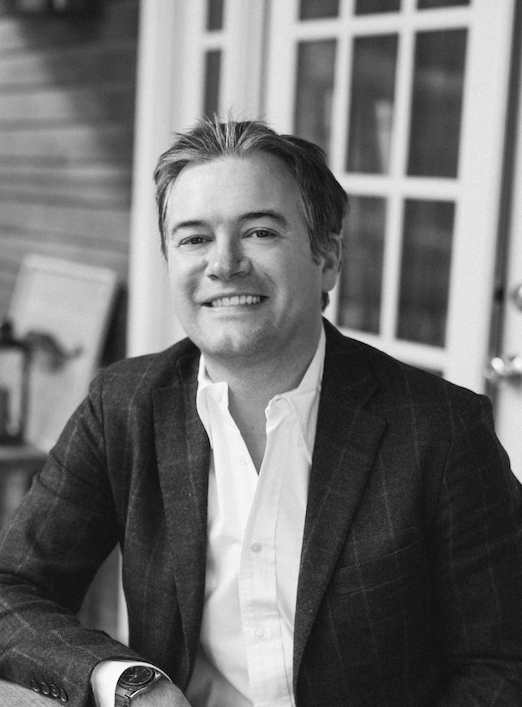
Calder Walton is Assistant Director of the Belfer Center’s Applied History Project and Intelligence Project. Calder’s research is broadly concerned with intelligence history, grand strategy, and international relations. The

Sean Power, Masters in Public Policy Candidate, Harvard Kennedy School

Sean Power is a Masters in Public Policy 2021 candidate at the Harvard Kennedy School. Prior to HKS, he managed the analyst program at Kobre & Kim LLP, where he assisted on matters involving government enforcement defense and internal investigations.

The Report

The U.S. Director of National Intelligence (DNI), Avril Haines, has stated that climate change needs to be at the center of U.S. foreign policy and national security. It is a threat multiplier that impacts every function of government and society: territorial integrity, economic well-being, social stability, and military capabilities are all impacted by climate change, directly and indirectly. However, in addressing climate change, the U.S. Intelligence Community (IC) is currently unsure of its mission space and hitherto has been relying on boilerplate responses to it. In an exclusive discussion, the U.S. Special Presidential Envoy for Climate, Secretary John Kerry, who should be a principal consumer of intelligence about climate change within the U.S. government, stated that the U.S. IC must deliver significantly more.

The increasing effects of climate change are arising at a moment when the nature of intelligence itself is undergoing a revolution—from the collection of hidden secrets to collation of non-obvious (but knowable) data frequently hiding out in the open. This watershed in intelligence and national security requires bold, innovative, ideas for the U.S. IC to adapt and anticipate security threats derived by climate change. It must establish its mission space and alter its own architecture to ensure it is providing its customers with intelligence about them needed. Its mission will not be about spies disseminating secrets to policymakers; rather, it will require a new intelligence and national security paradigm that must reach across society, allowing the general public to consume climate intelligence and hold policymakers to account.

Background

The twenty-first century presents globalized threats that will require globalized solutions, the greatest of which is climate change. As the Covid-19 pandemic has demonstrated, no country is immune from actor-less threats like novel disease outbreaks and climate change. When combined with other security threats like transnational terrorism and ubiquitous cyberattacks, it becomes clear that existing national security frameworks are insufficient. New relationships and lines of communication will need to be forged, both within the U.S. government, in the private sector, and internationally with allies and adversaries. The U.S. IC needs to determine the requirements of its customers regarding climate change and how its unique collection and analytical capabilities fit into this new mission space.

The IC has incorporated climate change into its analysis and threat assessments for decades, but climate has not received the attention it requires given the magnitude of the threat it poses. On January 27, 2021, President Biden issued an executive order on tackling the climate crisis at home and abroad, establishing that “climate considerations shall be an essential element of United States foreign policy and national security.” The order also called for the Director of National Intelligence to prepare a National Intelligence Estimate on the national and economic security impacts of climate change within 120 days.

The Climate Change, Intelligence, and Global Security conference at Harvard’s Belfer Center earlier this year, brought together senior climate experts, current and former intelligence officers, and leaders in the private sector and academia to discuss the climate threat and generate innovative ideas on role the IC will play in combatting that threat. Led by Paul Kolbe, Director of the Intelligence Project, Kristin Wood, Intelligence Project Non-Resident Fellow, and Erin Sikorsky, Deputy Director of the Center for Climate and Security, the conference facilitated an urgent opportunity for productive dialogue on the climate threat.

Climate change as a threat to international security

Policymakers and the public need to understand that climate change impacts seemingly unrelated challenges and magnifies existing threats. The direct effects of climate change are readily apparent around the world—melting glaciers, rising sea levels, thawing permafrost, longer droughts, hotter heat waves, persistent wildfires, torrential rains, and catastrophic storm systems. These effects create disastrous consequences for humans like crop failures, fishery collapses, water insecurity, and the inundation of coastal regions, all of which lead to mass migration and displacement. These situations lead to fragile states and regions where increased conflict over scarce resources allows malign actors thrive. In this way, climate change is a threat multiplier that touches every aspect of international security.

Professor John P. Holdren, the Teresa and John Heinz Professor of Environmental Policy at Harvard Kennedy School, noted that the big picture on how climate change will impact the planet is clear, but the detailed effects are difficult to predict with precision and confidence, in part because we do not know exactly how human societies will react. This uncertainty exacerbates the security threat posed by climate change. We know it will increase the number of displaced persons in the world, but we do not know when they will be displaced, how many there will be, or where they will go.

Climate change also impacts the effective functioning of the U.S. military: to meet traditional security threats and protect Americans at home and abroad. U.S. bases around the world function as launching pads for everything from quick tactical operations to large-scale disaster relief missions. When severe weather damages those bases or limits their ability to operate at full capacity, America’s security is put at risk. Disasters like the flooding at Offutt Air Force Base in Nebraska, headquarters for U.S. Strategic Command, and Hurricane Michael’s destruction of Tyndall Air Force Base in Florida show that this threat knows no geographic bounds. Their effects are costly as well—the Air Force requested nearly $5 billion to rebuild those two bases alone.

The overall impacts of climate change on international security are inevitable, consequential, and predictable. Previously the U.S. government has undertaken more extensive, and expensive, actions on the basis of proportionally less intelligence about security threats. The U.S. IC must give climate change the proportional attention it deserves.

Role of U.S. intelligence in addressing climate change

Climate change poses an existential, global, non-state security threat, making it fundamentally different from past threats. Its unprecedented nature will require unprecedented thinking by the U.S. IC and requirements from it. Former Principal Deputy Director of National Intelligence Sue Gordon stated clearly that it is not enough to just say that the U.S. IC should focus more on climate— rather, the challenge lies in determining what its specific contribution will be, and then evaluating what changes need to occur to make that contribution happen. Answering these questions will require difficult, but necessary, upfront work. Without that work, the U.S. IC is likely to lead with its current capabilities, rather than identifying and developing capabilities needed to meet the nature of the new threat we face.

The U.S. IC must play to its strengths in carving out its climate mission. Intelligence is no longer just about stealing secrets; it is about providing policymakers with decision advantages to influence events, which is the same as the past, but with a key difference that doing so now requires mastery of is a vast eco-space of openly-available information. To accomplish its mission, the U.S. IC must leverage its analytic tradecraft to present objective assessments about climate change to policymakers. This means collecting intelligence, assessing it, removing bias, and delivering timely and relevant assessments to customers. The U.S. IC must also leverage its global relationships with partners and competitors in performing these tasks. These relationships lie below politics and can help elicit understanding that allows policymakers to distinguish facts on the ground from prevailing political rhetoric of the day.

The U.S. IC’s workforce and technology will need to advance and adapt to serve the climate mission. It does not need to have the foremost climate experts, but it does need to have dialogue with them, and develop its own climate expertise. Like other threats, the IC needs personnel that are devoted to understanding this new threat and understand its place in larger risk frameworks. Predictive models are critical to understanding climate science, and the IC should invest more resources into artificial intelligence and machine learning capabilities (AI/ML) that can inform them. Intelligence professionals will not need to advance science, and scientists will not need to assess national security; but collaborations between the IC and the federal science community are necessary and will benefit both by allowing them to identify and meet shared objectives.

Climate change intelligence cannot be siloed. As DNI Haines promised, it must be integrated into traditional security threat assessments, and those emerging threats from other globalized challenges, bio-hazards, cyber capabilities, and weaponized information, if we want to understand how they interact and manifest around the globe. Compared to the twentieth century, when intelligence was dominated by governments, the twenty-first century offers more democratic forms of intelligence: the private sector offers major capabilities to collect and analyze intelligence. It has disrupted and transformed the nature of intelligence. The IC’s advantage in this new environment will come from thinking deeply about these issues and using its unique analytical and collection capabilities to identify patterns and trends others might overlook.

The future of intelligence cooperation and climate change

Climate change is an indiscriminating challenge unlike anything humanity has encountered before. Understanding how it is different helps illustrate the need for intelligence cooperation among states, large and small, to combat it. Carol Dumaine, Senior Fellow at the Atlantic Council, noted that the impact of the Covid-19 pandemic has highlighted many of the ways in which the climate threat is unique. It is non-state, non-adversarial, non-linear, boundary-less, and its root causes can be found in human economic activity. Unlike pandemics, however, combatting climate change will require something we have never done: decades of consistent cooperation across states with an eye towards tackling a systemic problem that will persist for centuries.

The U.S. IC needs to determine how it will work with other countries to combat the shared threat of climate change. The big first step is determining what the security collective is trying to accomplish. One area ripe for collaboration is foresight and early warning systems. During the Cold War the famous “red telephone” connected the White House and the Kremlin, enabling direct communication to avoid nuclear brinksmanship. Similar innovate thinking will be needed on climate change cooperation. Lt. Gen. Richard Nugee, Climate Change and Sustainability Strategy Lead for the UK Ministry of Defence, emphasized that the biggest danger on climate change is not a morass of bureaucracy, but instead a lack of imagination in understanding its impact and generating solutions for it.

Relying on existing partnerships, such as the Five Eyes alliance or NATO, will not be sufficient. Those agreements will play a role, but they do not include some of largest contributors to greenhouse gases or the countries that will suffer the largest initial impacts from climate change. Intelligence communities are by nature competitive and adversarial, but when it comes to climate change they will need to be cooperative. The U.S. IC needs to identify areas of cooperation even with adversaries like China and Russia. Rolf Mowatt-Larssen, Senior Fellow and former Director of the Intelligence Project, tasked the U.S. IC to look for a peace dividend—areas where collaboration on climate will yield multilateral benefits. Even though spying will still exist, as it always had, we cannot let espionage stand in the way of climate collaboration.

Any collaboration on climate intelligence will certainly require American leadership. That means America needs to treat the climate threat with the seriousness it deserves. Climate change is siloed into a one-page length analysis in the 27-page Annual Threat Assessment issued by the Office of the Director of National Intelligence in April 2021. The six pages focusing on China and Russia make no mention of how those are contributing to climate change or working to combat it. The IC must continually reinforce that climate is a serious and central threat. We cannot wait until the impacts are painfully obvious for every individual across the globe to treat it with the seriousness it requires.

The private sector, intelligence, and climate change

The threat from climate change reinforces the fact that intelligence is no longer a domain solely for governments. Mekala Krishnan, Partner at the McKinsey Global Institute, underscored that the private sector is also seeking to take climate risk out of a sustainability silo and integrate it into all aspects of decision making affected by risk and finance. Companies are thinking about how climate interacts with physical capital, natural resources, labor supply, and food supply—the factors of production in an economy that fundamentally affect our lives and livelihoods. One of the most important factors in a country’s national security is the health of its economy. The U.S. IC needs to be working with the private sector to understand what the economic effects of climate change will be.

In many respects, the U.S. government is still one of the few parties that can afford the costs to collect data on climate change, much like space exploration and early Internet research. The private sector can innovate ways to extract insights from that public data. Harnessing that with government capabilities will require innovative public-private partnerships with a shared strategy to help combat climate change. The U.S. IC must develop a level of transparency on climate data that will allow the private sector to identify where incentives for research and development exist. It will not matter how good the climate intelligence collected by the U.S. IC is if it does not get into the hands of public and private users in the right shape and form.

At the same time, the IC cannot be everywhere at once, collecting troves of climate data at significant cost. Richard Jenkins, CEO of Saildrone, noted that the private sector has the capability to deploy significant private money to develop and test new technologies that advance climate data collection, which the government can purchase at great value and incorporate into climate intelligence analysis. New technology is democratizing intelligence; it will force the U.S. IC to change how it interacts with the private sector— for the better.

Conclusion

In a moderated discussion with Dr. Calder Walton, Secretary Kerry stated unambiguously that the U.S. IC needs to start providing policymakers with a decision advantage on climate change in order for the U.S. government to lead the world on meeting this unprecedented threat. That starts with treating climate change seriously. The U.S. IC will need to determine its requirements, play to its strengths, and adapt its workforce to best serve its mission. It will need to cultivate deeper cooperation with allies and adversaries, develop new relationships with the private sector, and approach climate change with a fresh mindset to seek and find what others overlook.

When it comes to climate change, the U.S. IC should also reframe who its customers are, not just policymakers, to whom it gives secret briefings, but also the public. By publicly disseminating assessments, the U.S. IC can effectively democratize intelligence about climate change, with the public holding policymakers to account for their actions or inactions on the basis of shared intelligence.

The Cipher Brief is proud to be continuing our coverage on Climate with a series of webcast briefings beginning in July 2021.

Read also:

The Climate and US National Security Conversation with Admiral Jim Stavridis (Ret.)

How to Integrate Climate in Future National Security Risk

Russia’s Climate Problem and Opportunity

Why the Intelligence Community Needs a Climate Change Task Force


The post Defining the IC’s Mission Space for Climate Change appeared first on The Cipher Brief.

find more fun & mates at SoShow now !

Palestinian Islamist group Hamas has called on Canadian singer Justin Bieber to cancel his upcoming concert in what it calls the “Zionist occupation state” of Israel.

Bieber announced his 2022 world tour dates this week, with a concert in Tel Aviv planned for next October. On Thursday, Hamas’ Artistic Production Department issued a statement, cited by the Palestinian Sawa news outlet, “condemning and denouncing” the performer. It called on the star to cancel the show and “boycott the Zionist occupation state in protest at its repeated crimes against the Palestinian people.” 

Read more

A Palestinian boy rides a bicycle past a mural depicting late Hamas leader Abdel-Aziz Al-Rantissi in Gaza City (FILE PHOTO) © REUTERS/Mohammed Salem
UK outlaws Hamas as terrorist organization

Bieber has performed in Israel multiple times, his last performance there having been in 2017 at Park HaYarkon – the same venue slated for next year. Since the announcement of the ‘Justice’ tour dates, calls for him to cancel the Tel Aviv show have gained momentum across social media, with many posters condemning the singer for supporting what one called an “apartheid state.”

Some noted that Bieber was set to arrive in Israel after performing in South Africa. “Justin Bieber is really going straight from SA to Israel. From a country that fought apartheid to a country that’s practicing apartheid,” one Twitter user complained.

A petition asking the singer to boycott Israel and exclude it from his tour has been launched online, and had garnered some 3,700 signatures by Friday. 

In 2018, the New Zealand singer Lorde canceled a concert in Israel, subsequently thanking fans for “educating” her on the issue, and, the same year, US artist Lana Del Rey at first defended her decision to perform in the country, saying her appearance would not be a “political statement,” before backtracking and canceling the gig.

Hamas has been designated a terrorist group by the US, the EU, and, as of Friday, the UK. In April 2021, international non-governmental organization Human Rights Watch concluded in a report that Israel had committed “crimes against humanity of apartheid and persecution.”

If you like this story, share it with a friend!

find more fun & mates at SoShow now !

Reuters has apologized for its poor choice of photo to illustrate a story about a monkey brain study that was deemed offensive and racist in China.

On Thursday, Reuters published a story titled “Monkey-brain study with link to China’s military roils top European university.” The report was about a Chinese professor studying how a monkey’s brain functions at extreme altitude.

The study was done with the help of Beijing’s People’s Liberation Army (PLA) with the aim of developing new drugs to prevent brain damage, Reuters said.

The news agency promoted the story on Twitter with a photo of smiling Chinese soldiers in an oxygen chamber.

The tweet prompted outrage in China, with people calling it racist on social media. Reuters responded on Friday night by deleting the original tweet because the photo of Chinese soldiers was unrelated to the story and “could have been read as offensive.”

“As soon as we became aware of our mistake, the tweet was deleted and corrected, and we apologize for the offense it caused,” Reuters said in a statement to the Global Times, China’s state-run newspaper.

It was not the first time the leading Western news agency had run into trouble in China. In July, the Chinese Embassy in Sri Lanka criticized Reuters for using a photo of Chinese weightlifter and Tokyo 2020 Olympics gold medalist Hou Zhihui that the country’s state media described as “ugly” and “disrespectful to the athlete.”

Think your friends would be interested? Share this story!

find more fun & mates at SoShow now !

An official inquiry has found that Germany’s justice system was staffed with former Nazis for decades after the Second World War, At one point, three out of four top officials at the prosecutor’s office were former party members.

Released on Thursday, the 600-page report was compiled by historian Friedrich Kiessling and legal scholar Christoph Safferling, and covers the Cold War period running from the early 1950s until 1974. The work was commissioned by the federal prosecutor’s office. 

Read more

The Federal Ministry of Justice in Berlin © De-okin
Over 50% of W. Germany’s senior justice ministry officials in 1950-70s were ex-Nazis – govt report

The researchers found that, at one point during the 1950s, roughly three in four top officials in the federal prosecutor’s office had been members of the Nazi Party. It took until 1972 before former Nazis were no longer in the majority in that office, and until 1992 before the judicial system had been fully purged of ex-members of the fascist party.

“There was no break, let alone a conscious break, with the Nazi past,” the researchers said of the situation. 

Presenting the inquiry’s findings, state secretary at the justice ministry Margaretha Sudhof said the country has “long remained blind” to the presence of ex-Nazis in senior positions after the end of the Second World War.

“On the face of it they were highly competent lawyers… but that came against the backdrop of the death sentences and race laws in which they were involved,” Sudhof commented. 

In a statement about the study’s publication, Justice Minister Christine Lambrecht said she welcomed “the fact that the Federal Prosecutor’s Office is also grappling with its troubled past and is shedding more light on its own Nazi entanglements in the post-war period.”

The federal prosecutor’s office is Germany’s highest prosecutorial authority, responsible for pursuing those who violate international law and commit alleged crimes relating to state security. 

The latest study follows an earlier report published in 2016, which stated that in 1957 – more than a decade after the war had ended – 77% of senior officials in the justice ministry were former Nazis. At the time of that publication, then-Justice Minister Heiko Maas stated that the “Nazi-era lawyers went on to cover up old injustice rather than to uncover it, and thereby created new injustice.”

If you like this story, share it with a friend!

find more fun & mates at SoShow now !

Those making and knowingly using fake vaccination certificates in Germany could soon face up to five years behind bars, as the country’s likely future coalition government is looking to tighten the screws.

Coming under the same category are also fake test results and Covid recovery certificates, with similar penalties for the counterfeiters and the holders. Everything envisaged in the new guidelines was drafted by the Social Democrats, along with the Free Democratic and Green Parties. The three are currently in coalition talks and expected to form a new government as early as next week.

The German Parliament will decide on the regulations this Thursday, though a draft has already been seen by the media outlet DPA.

According to German media, the manufacturing and sale of fake certificates has become a booming black-market industry in the country. In just one such case reported by Der Spiegel in late October, a counterfeiter working at a pharmacy in Munich and her accomplice had churned out more than 500 fake digital certificates in the span of one month, raking in €350 for each one sold.

Read more

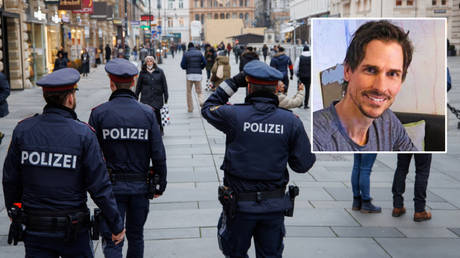
Felix Gottwald has spoken out as police patrol the streets of Austria to check people are vaccinated © Lisi Niesner / Reuters | © Instagram / felixgottwaldofficial
‘I am deeply ashamed of our country’: Austria’s greatest Olympian quits political role as lockdown for unvaccinated comes in

Meanwhile, Berlin authorities are planning to further ramp up restrictions in the city, where, starting Monday, having either a vaccination or recovery certificate is a must to enter restaurants, cinemas, theaters, museums, galleries, swimming pools, gyms, as well as hairdressers and beauty salons. On Tuesday, Berlin Mayor Michael Müller confirmed that authorities want to “have an additional instrument” to contain the spread of the virus. However, he declined to elaborate on what the new measures will be. Local media speculate that starting next week, in addition to the requirement to have a vaccination or recovery certificate to enter public places, people inside the venues will also need to practice social distancing and wear a mask, or have a recent negative test result.

This comes after Covid-19 numbers in Berlin hit an all-time high last Thursday, with 2,874 new cases reported that day.

Think your friends would be interested? Share this story!

find more fun & mates at SoShow now !

Australia’s government could be forced to spend tens of millions in payouts after receiving more than 10,000 compensation claims from people who suffered side effects and loss of income due to Covid-19 vaccines.

Under its no-fault indemnity scheme, eligible claimants can apply for compensation amounts between AU$5,000 (US$3,646) to AU$20,000 (US$14,585) to cover medical costs and lost wages as a result of being hospitalized after getting the shot. The scheme’s online portal is scheduled to be launched next month.

Official figures suggest, however, that over 10,000 people have already indicated their intention to make a claim since registration opened on the health department’s website in September. If each claim was approved, the government could face a bill of at least AU$50 million (US$36.46 million).

There were around 78,880 adverse events to Covid-related vaccination in Australia as of November 7, according to the Therapeutic Goods Administration, which regulates national health products. The majority of side effects were minor, including headaches, nausea, and arm soreness.

Read more

© Tanaonte / Getty Images
Unvaccinated will have ‘miserable, very lonely life,’ top Australian doc warns

Only people who experienced a moderate to significant adverse reaction that resulted in a hospital stay of at least one night are eligible for coverage under the government’s scheme. Those seeking $20,000 or less have to provide proof their claims are vaccine-related – although there has been no information as yet on exactly what evidence would be acceptable.

“Adverse events, even though they happen to a tiny proportion of people, for the people it does impact it’s really quite devastating,” Clare Eves, the head of medical negligence at injury compensation firm Shine Lawyers, told the Sydney Morning Herald.

Among the adverse reactions covered are the blood clotting disorder “thrombosis with thrombocytopenia syndrome (TTS)” linked to the AstraZeneca vaccine and the “myocarditis and pericarditis” heart conditions associated with the Pfizer vaccine. Other reportedly accepted side effects are Guillain-Barré syndrome, a rare neurological condition, and immune thrombocytopenia (excessive bleeding due to low platelet levels).

Claims for over $20,000, including those for vaccine-related deaths, will be assessed by an independent legal panel of legal experts and compensation paid on its recommendations. Nine people have reportedly died after an adverse reaction to one of the three vaccines in the country.

Eves told the Morning Herald that her firm was representing a number of litigants over the vaccine side effects, including several who are not eligible for the scheme.

If you like this story, share it with a friend!

find more fun & mates at SoShow now !

Israeli and UAE defense suppliers have agreed to jointly develop unmanned vessels that can be tailored for a range of military roles, including anti-sub warfare. The move comes after the two countries held naval drills last week.

Emirati state-owned weapons maker EDGE group and the government-run Israel Aerospace Industries (IAI) announced the partnership in Dubai on Thursday. In a joint statement, the firms said they would design the 170 m-USV (modular-unmanned surface vessels) series for both military and commercial applications.

The vessels, which can apparently operate remotely or with partial and complete autonomy, are expected to be used for “maritime security operations,” intelligence-gathering, surveillance, detecting and countering submarines and mines, and as a deployment platform for vertical take-off and landing (VTOL) aircraft such as helicopters and certain types of drones.

Read more

FILE PHOTO: Israeli Foreign Minister Yair Lapid, US Navy Vice Admiral Brad Cooper and Bahrain's Foreign Minister Abdullatif Al-Zayani at the US 5th Fleet base in Bahrain on September 30, 2021. © Israel Ministry of Foreign Affairs/Handout via REUTERS
Israel holds first navy drills with ‘frenemies’ from Persian Gulf

For commercial use, the manufacturers noted that they can be customized to serve in a variety of roles, including oceanography, pollution monitoring, oil and gas exploration, transportation, search and rescue, firefighting, and first interventions.

While not specifying the sources and amount of the project’s funding, or when production would begin, EDGE Chief Executive Faisal Al Bannai described the deal as an “important milestone” that would “open many doors” for the company in “local and global markets, military and commercial alike.”

According to the statement, the EDGE-owned Abu Dhabi Ship Building (ADSB) will design the vessel and integrate the platform’s control systems and payload. IAI will develop the autonomous control systems and provide various mission-requirement payloads to the control system units.

In March, the two companies had partnered up to develop an autonomous drone defense system to “detect, identify and intercept a broad range of threats.”

Last week, the UAE and Bahrain conducted their first-ever joint maritime drill with Israel’s navy. The US Fifth Fleet also participated in the five-day show of force in the Red Sea, which was reported by Israeli media outlets as sending a message to Iran.

The naval exercises came a little more than a year after Israel and the UAE established diplomatic ties in normalization agreements brokered by the Trump administration. The Abraham Accords broke decades of Arab consensus to not formally recognize Israel until the issue of a Palestinian state was settled.

If you like this story, share it with a friend!

find more fun & mates at SoShow now !

An Argentinian woman has become the second-ever HIV-infected person whose immune system helped defeat the virus without requiring additional medical treatment. She was first diagnosed with the AIDS-causing infection in 2013.

Scientists have dubbed the 30-year-old mother the “Esperanza patient,” after her hometown. The word ‘esperanza’ translates to ‘hope’ in English. Publishing their findings in the Annals of Internal Medicine journal on Monday, the researchers said the discovery boosts hope for a “sterilizing cure” for the estimated 38 million people with the life-long infection.

“I enjoy being healthy,” the Esperanza patient told NBC News over email. “I have a healthy family. I don’t have to medicate, and I live as though nothing has happened. This already is a privilege.”

The study found no intact remnants of the virus in the 1.5 billion blood and tissue cells the researchers analyzed – confirming the discovery first announced in March at an international meeting of HIV experts.

Read more

© Belova59 from Pixabay
‘Elite controllers’ can cure themselves of HIV without any medical treatment, bombshell research claims

No additional information about the woman has been made public, but she was described at the time as “athletic and beautiful” and revealed to have an HIV-negative boyfriend and newborn baby.

Only one other person, identified in August 2020 as 67-year-old Loreen Willenberg from San Francisco, has been confirmed to have overcome the virus without medical intervention. The two women have been labeled ‘elite controllers’, referring to a rare subset of HIV patients who show no signs of the infection despite not undergoing antiretroviral treatments.

Typically, an HIV-infected person requires constant drug therapy to prevent the virus from attaching to their immune cells’ DNA and replicating. But, in the eight years since she was diagnosed, the Esperanza patient only received medication for six months during pregnancy to ensure her baby would be healthy.

In all, there have been four patients cured of HIV, two of whom – the ‘Berlin patient’ Timothy Ray Brown and the ‘London patient’ Adam Castillejo – were also cancer patients who received risky bone marrow transplants from donors with HIV-resistant genes. However, the success of their procedures is yet to be replicated.

“This is really the miracle of the human immune system that did it,” Dr. Xu Yu, an immunologist at the Ragon Institute in Boston, who co-authored the study, told NBC.

If you like this story, share it with a friend!

find more fun & mates at SoShow now !

France’s best-known book of words, Le Petit Robert dictionary, has caused a stir by including the non-binary personal pronoun as an alternative to the existing masculine and feminine terms.

While the annual update of the Petit Robert dictionary is often a topic of considerable debate in French media, the latest edition has caused quite the backlash, with some, including a cabinet member, accusing it of pandering to wokeism.

The word “iel,” a neologism combining the French words for he and she (“il” and “elle“), is described as the personal pronoun for a person of any gender. “Personal pronoun subject to the third person singular and plural, used to evoke a person of any gender. The use of the pronominal in inclusive communication,” the dictionary’s entry reads. 

Read more

(FILE PHOTO) © REUTERS/Costas Baltas
France turns to Ancient Greece for war on woke

Striking out at the latest inclusion, François Jolivet, an MP in President Emmanuel Macron’s LREM party took his protest to the Académie Française, the official guardians of the French language.  

Describing the move as “wokeism,” Jolivet said in a letter to the Académie that the word “iel” had no place in the French language and claimed it would be a precursor to the rise of ‘woke’ ideology, which undermines the values of the Gallic nation.

Outspoken Education Minister Jean-Michel Blanquer also chimed in. “Inclusive writing is not the future of the French language,” he tweeted, sharing Jolivet’s letter. “Just as our schoolchildren are consolidating their basic skills, they don’t need to have this as a reference,” he added.

The head of Gaullist party Debout La France, Nicolas Dupont-Aignan, further criticized Petit Robert’s “woke” addition. “Let’s defend our language against these ridiculous fanatics of deconstruction and let’s boycott the collaborators who give into them,” he tweeted.  

Le Petit Robert has responded to the “lively debate” by claiming that the pronoun has been used increasingly in society in recent months and they chose to reflect this by adding it to their latest update. The publication also said that some have welcomed the addition.

France’s offensive against wokeism, which has been described by some as an Anglo-Saxon import, recently saw Blanquer vow to increase the teaching of ancient Greek and Latin languages. The education minister claims that the classical vernaculars respond to a demand for logos (language as a tool for reason), in a world where “a lack of reason is spreading like wildfire.” 

If you like this story, share it with a friend!

find more fun & mates at SoShow now !

Scientists have used artificial intelligence to “predict” formulas for new designer drugs, with the stated goal of helping to improve their regulation. The AI generated formulas for nearly nine million potential new drugs.

Researchers with the University of British Columbia (UBC) used a deep neural net for the job, teaching it to make up chemical structures of potential new drugs. According to their study, released this week, the computer intelligence fared better at the task than the scientists had expected.

The research team used a database of known designer drugs – synthetic psychoactive substances – to train the AI on their structures. The market for designer drugs is ever-changing, since their manufacturers are constantly tweaking their formulas to circumvent restrictions and produce new “legal” substances, while cracking their structure takes months for law enforcement agencies, the researchers said.

Read more

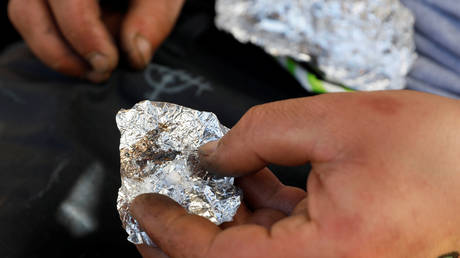
FILE PHOTO: A man living on the streets displays what he says is the synthetic drug fentanyl, in the Tenderloin section of San Francisco, California, February 27, 2020 © Reuters / Shannon Stapleton
Drug overdose deaths in US hit all-time record

“The vast majority of these designer drugs have never been tested in humans and are completely unregulated. They are a major public-health concern to emergency departments across the world,” one of the researchers, UBC medical student Dr. Michael Skinnider has said.

After its training, the AI was able to generate some 8.9 million potential designer drugs. Afterwards, researchers ran a data sheet of some 196 new drugs, which had emerged in real life after the model was trained, and found that more than 90% of these have been already predicted by the computer.

“The fact that we can predict what designer drugs are likely to emerge on the market before they actually appear is a bit like the 2002 sci-fi movie, Minority Report, where foreknowledge about criminal activities about to take place helped significantly reduce crime in a future world,” senior author Dr. David Wishart, a professor of computing science at the University of Alberta, has said.

Identifying completely unknown substances remains an issue for the AI, the research team has noted, but they hope it might potentially help with that task, since the computer was also able to predict which formulas of designer drugs were more likely to be created and hit the market. The model “ranked the correct chemical structure of an unidentified designer drug among the top 10 candidates 72 percent of the time,” while throwing in spectrometry analysis, which is an easily obtained measurement, bumped the accuracy to some 86%.

“It was shocking to us that the model performed this well, because elucidating entire chemical structures from just an accurate mass measurement is generally thought to be an unsolvable problem,” Skinnider stated.

Think your friends would be interested? Share this story!

find more fun & mates at SoShow now !