As information emerges about Islamic State of Khorasan, or ISIS-K – the terrorist group that claimed responsibility for last week’s suicide attack that killed 13 US service members and more than 160 Afghans – there is an increased effort to predict how Afghanistan, under Taliban rule, may emerge once again as a breeding ground for terrorist groups.

A United Nations report released in June estimates that thousands of fighters from the region had already poured into Afghanistan.  Many of them are believed to be affiliated with either the Taliban – still seen as a terrorist organization – or al Qaeda or ISIS-K.

The New York Times reports that ISIS-K was created six years ago by members of the Pakistani branch of the Taliban.  There is a range of thought among experts as to what their ability to successfully carry out a terrorist attack in a Taliban-ruled area means for the terrorist threat moving forward. 

The Cipher Brief spoke with respected terrorism experts Bruce Hoffman, Mitch Silber and Colin Clarke to get their thoughts on the current risk of terrorist attacks against Americans both home and abroad. 

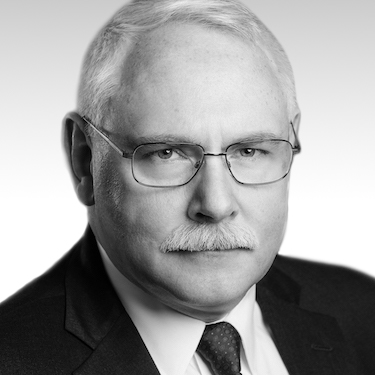
Bruce Hoffman, Terrorism Expert and Professor, Georgetown University
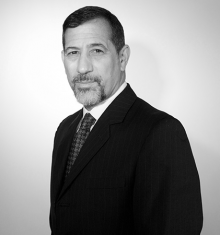
Cipher Brief Expert Bruce Hoffman is a professor at Georgetown University and served as a commissioner on the Independent Commission to Review the FBI’s Post-9/11 Response to Terrorism and Radicalization.  He is also a Scholar-in-Residence for Counterterrorism at CIA.

Mitch Silber, Former Director of Analysis, NYPD

Cipher Brief Expert Mitch Silber served as Director of Intelligence Analysis at the New York City Police Department and served as principal advisor to the Deputy Commissioner of Intelligence on counterterrorism policy and analysis. He is now executive director of the Community Security Initiative.

Colin Clarke, Director of Policy and Research, The Soufan Group
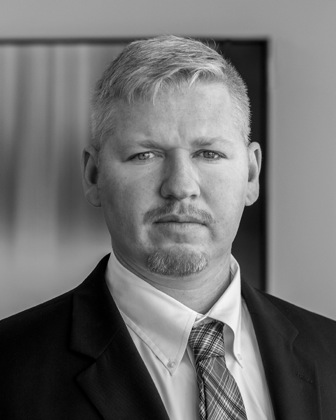
Colin P. Clarke, Ph.D., is the Director of Policy and Research at The Soufan Group. Clarke’s research focuses on domestic and transnational terrorism, international security, and geopolitics. He is also a senior research fellow at The Soufan Center.  

The Cipher Brief: If the United Nations Report issued in June is accurate, and there are thousands of fighters from the region who have poured into Afghanistan – many associated with known terrorist groups – is there any way that the administration can say ‘mission accomplished’ in terms of degrading terrorism’s presence in Afghanistan? 

Hoffman: No. As those numbers from the report released by the United Nations Support and Sanctions Monitoring Team highlight, Afghanistan is again becoming a jihadi magnet and will likely continue to be so into the future. The suicide bomb attacks outside the gates of Kabul International Airport last Thursday underscore the multiplicity of terrorist groups already present in that country.

In addition to ISIS-K, there is the Haqqani Network, al Qaeda and, of course, the Taliban. Terrorism thrives in conditions of chaos and instability which the terrorists hope to spread to other countries and eventually across regions.

Much as Salafi-Jihadi terrorists migrated from existing battlefields in South Asia back to the Middle East, North Africa, and the Caucasus in the 1990s; spread to East and West Africa in the early 2000s; blossomed during the Arab Spring to wage civil wars in Syria, Libya, and the Sahel, in the early twenty-teens; the same phenomenon is unfolding in Afghanistan.

Silber:  Frankly, I don’t think any of the four administrations can make the claim that the policy goal of making Afghanistan inhospitable to serve as a safe haven for Al Qaeda or other similarly oriented jihadist groups has been accomplished.  Certainly, at a number of times during the last twenty years, the threat that jihadist groups, most importantly — Al Qaeda — has presented, in terms of their ability to project a threat to the United States has been diminished, the degradation of the threat was only temporary.

The Cipher Brief: How confident are you that Al Qaeda and ISIS are unable to plan and execute attacks against the U.S. domestically? 

Hoffman:  The credulous Doha negotiations with the Taliban that led to the withdrawal of U.S. military forces from Afghanistan and subsequently to the Taliban’s blitzkrieg across Afghanistan and then to the shambolic evacuation of our diplomats and citizens, has painted a huge target on America’s back. Like sharks in the water, terrorists will smell blood. As my Council on Foreign Relations colleague, Jacob Ware, and I wrote in War on the Rocks, in May, every time terrorism has forced the U.S. to withdraw from a conflict zone where it had committed ground forces, whether in Lebanon in 1984; Somalia in 1993; and Iraq in 2011, it has led to more terrorism worldwide, not less, and thus made the U.S. less safe.

At a time when our country continues to grapple with the COVID pandemic; when climate change is pulverizing the Gulf States with Hurricane Ida and California with worsening wildfires; when the January 6th insurrection at the U.S. Capitol building continues to smolder with incidents such as the bomb threat that paralyzed the area near the Library of Congress and Cannon House Office Building earlier this month; coupled with ongoing cyberattacks and peer competition from China and Russia and concerns over Iran’s nuclear aspirations; our terrorist adversaries may well conclude that the U.S. is sufficiently preoccupied or distracted by any or all of the preceding and therefore conclude that the time to strike the homeland is opportune. It would very unlikely entail a repeat of the catastrophic September 11th 2001 attacks. But a terrorist strike along the lines of the 2019 shootings at Naval Air Station Pensacola; the 2017 suicide bombing of a concert venue in Manchester, England; the coordinated suicide attacks on London transport in 2005; the 2004 Madrid commuter train bombings; or any kind of significant lone wolf incident perpetrated in the name of some existing terrorist movement would likely re-create the widespread fear and anxiety that are terrorism’s stock-in-trade. Twice in the past three years, it should also be noted, members of al-Shabaab – perhaps al Qaeda’s least technologically proficient franchise – have been arrested both in the Philippines and in an undisclosed African country engaging in the same flight training that four of the 9/11 hijackers undertook before their fateful, history-changing coordinated attack.

Silber:  At this very moment, it is unlikely that Al Qaeda or ISIS-K have the infrastructure, resources, recruits and external planning ability to strike the United States based on statements by the IC and senior DoD officials to Congress.  However, without any, or only limited external pressure by the U.S. military as a result of the retreat from Afghanistan, these networks and capabilities can be reconstituted in the coming months and certainly groups like Al Qaeda have never given up their desire to strike the American homeland.

Clarke:  I think it is unlikely that AQ or ISIS will be able to attack the U.S. homeland.  We’ve spent the better part of the past two decades shoring up homeland defense. We’ve got CT tools now that we didn’t have twenty years ago. That said, the picture could look quite different 6, 12, 18 months from now. Both of those organizations are capable of regenerating an external operations planning capability. There is also the worry of inspired attacks.


The Cipher Brief hosts private briefings with the world’s most experienced national and global security experts.  Become a member today.


The Cipher Brief:  Some analysts have said that morale among terrorist or Islamic extremist groups is extremely high due to the circumstances surrounding the US pullout in Afghanistan, do you agree and if so what does that mean? 

Hoffman:  Yes. Of course. Both Sunni and Shi’a terrorist movements around the globe have applauded the Taliban’s re-conquest of Afghanistan and routing of the U.S. military. For Sunni Salafi-Jihadi terrorists, the events there this past month validate the strategy articulated by Usama bin Laden just before the 2004 U.S. presidential election, when he described the ease with which al-Qaeda had been able to “bled Russia for 10 years, until it went bankrupt and was forced to withdraw in defeat” from Afghanistan in 1989, and predicted that the same fate would eventually befall the U.S. And, Sayed Hassan Nasrallah, the Secretary-General of Hezbollah, a Shi’a terrorist organization, for instance, last week delivered a sermon where he described America’s “historic and humiliating defeat in Afghanistan as representing, “the moral downfall of America.”

Silber:  Jihadi chat rooms and online extremist networks are feeling like they have the wind behind them.  It took twenty years, but before the 20th anniversary of the attacks of 9/11 an Islamic emirate has been re-established in Afghanistan.  Suddenly, what seemed impossible has become possible and Islamist insurgencies all throughout the Middle East and South Asia can take inspiration by the determination of the Taliban in their efforts to overthrow a secular democratic government and replace it with an Islamist one.

Clarke:  I do expect morale to be high among terrorist and especially Islamic extremists given the turn of events we’ve seen in Afghanistan. We’re a week and a half out from the 20-year anniversary of 9/11, and Al Qaeda leaders are returning to Afghanistan (this is being displayed in AQ propaganda). We’ve seen al-Qaeda affiliates all over the globe congratulating the Taliban for their victory. I don’t want to overstate the case here, but I do believe that what has occurred in Afghanistan will be a serious boost for the global jihadist movement right at the same time the U.S. and its allies are shifting from counterterrorism to great power competition. There will be fewer resources and energy to deal with terrorists, right at the time we have major threats metastasizing in Afghanistan, potentially with both a reinvigorated al-Qaeda and a stubbornly resilient ISKP.

Read also Mike Leiter’s Why We’re Much Safer from Terrorism Now, Than We Were After 9/11 in The Cipher Brief 

Read also Why We Need a New National Defense Strategy (for terrorism) exclusively in The Cipher Brief 


Go beyond the headlines with expert perspectives on today’s news with The Cipher Brief’s Daily Open-Source Podcast.  Listen here or wherever you listen to podcasts.


The post The Risk of Terrorism at Home and Abroad appeared first on The Cipher Brief.

find more fun & mates at SoShow now !

France’s education minister has announced plans to boost the teaching of ancient Greek and Latin in an effort to fight the proliferation of wokeism and “develop the culture” of the country’s younger generations.

Speaking on Monday, Education Minister Jean-Michel Blanquer, a leading figure in France’s war on woke, said that ancient Greek and Latin would become available to sixth formers pursuing vocational courses next year, as well as middle school students. 

Blanquer wants sixth formers to have the opportunity to “develop their culture” by reading ancient philosophers while gaining the technical qualifications that the economy demands. 

Read more

© Getty Images / Rattanakun Thongbun / EyeEm
I just graduated from a British university. They’re broken

Speaking at a charter signing, alongside counterparts from Italy, Greece, and Cyprus, the minister claimed their joint commitment to the promotion of the classics came at a time when ancient languages were being threatened by American wokeism.

The targeting of the dead languages has been most prominent in the US with Princeton University announcing this summer that it would no longer require classics students to study ancient Greek and Latin; the two vernaculars are often considered the core pillars of the discipline.

Dan-el Padilla Peralta, an associate professor of classics at Princeton, claimed the ancient languages had been used as a justification of slavery, colonialism, and fascism for 2,000 years.

In a similar move, a Massachusetts high school boasted that it had removed Homer’s Odyssey from the school curriculum as it conflicted with the anti-racist agenda it wanted to teach. “Very proud to say we got the Odyssey removed from the curriculum this year,” a teacher wrote on social media. 

Blanquer told Le Point that such interpretations of the classics were “completely mind boggling.” “To stick categories and a contemporary world view on writings dating back two millennia is an abyssal absurdity,” he added, noting that these civilizations brought us “openness and a search for the universal.”

The minister believes that ancient languages are a common bond for contemporary European nations, noting that the “common linguistic fund” would help spread “common values.”

Blanquer also claimed the classics respond to a demand for logos (language as a tool for reason), in a world where “a lack of reason is spreading like wildfire.”

Last month, the education minister set up a think tank dedicated to President Emmanuel Macron’s war on wokeism.

The liberal or woke agenda, which some in France claim is an Anglo-Saxon import, is likely to be a major feature in the 2022 presidential election, where Macron’s main competitor is likely to hail from the far right of the political spectrum.

If you like this story, share it with a friend!

find more fun & mates at SoShow now !

After vowing to retaliate against Lithuania’s move to allow Taiwan open a “representative office” in Vilnius, Beijing has announced it is downgrading diplomatic relations with the Baltic state.

In a statement on Sunday, the Chinese foreign ministry said that China’s diplomatic relations with Lithuania will be formally lowered to the level of charge d’affaires, while blasting Vilnius for setting a “bad international precedent” by giving the island the green light to open its mission in the Lithuanian capital.

The ministry went on to accuse Vilnius of undermining the One China principle and the principle of neutrality in bilateral relations, explaining its decision to demote relations by citing the need to “safeguard its sovereignty and the basic norms of international relations.”

Read more

The Lithuanian flag (FILE PHOTO) © REUTERS/Ints Kalnins
China reveals whether it’ll ‘punish’ Lithuania over Taiwan

“The Lithuanian government must bear all the consequences arising from this,” the ministry said, while calling on Vilnius to “correct its mistakes immediately.”

“No matter how the ‘Taiwan independence’ forces distort facts and reverse black and white, they cannot change the historical fact that the mainland and Taiwan belong to the same China,” the ministry asserted.

The move comes just two days after Beijing went on a verbal offensive against the Baltic country, warning that pushback for its cozying up to Taiwan would be imminent. “As to what necessary measures China will take, you may wait and see,” it said at the time.

Lithuania and China have been embroiled in a diplomatic row and have not maintained relations at ambassadorial level since September. After the Baltic state revealed that it would be opening a de facto Taiwanese embassy, China withdrew its ambassador from the country in August. Vilnius followed suit the following month.

Think your friends would be interested? Share this story!

find more fun & mates at SoShow now !

Any apology for Nazism is unacceptable, Colombia’s president Ivan Duque has insisted, after photos of police academy cadets dressed up in Third Reich uniforms were uploaded online, causing outrage.

“Any apology for Nazism is unacceptable,” Duque stated in a tweet on Friday. The president said he condemned any references to those who were “responsible for the Jewish Holocaust that claimed the lives of more than 6 million people,” adding that “anti-Semitism has no place in the world.”

Duque had earlier made demands for “heads to roll” at an academy that “promotes such criminal practices,” with its director, Lieutenant Colonel Jorge Ferney Bayona Sanchez, already having been sacked.

Colombia’s defense ministry, which oversees the country’s police, also insisted in a statement that that its training programs “don’t envisage in any way an activity such as the one which took place” at the academy.

Read more

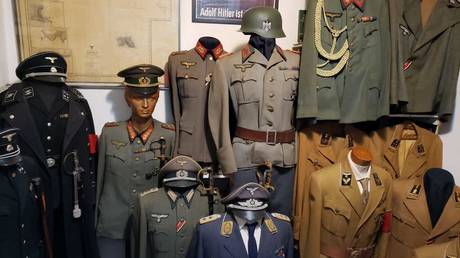
Nazi uniforms found inside the house of a man suspected of raping a 12-year-old boy at the Vargem Grande neighbourhood of Rio de Janeiro. © AFP / Rio de Janeiro Civil Police
Brazilian police discover $3.5mn trove of Nazi memorabilia at home of ‘insane psychopath’ suspected of child rape

The images of police cadets in Nazi uniforms caused anger and bewilderment among internet users.

The German and Israeli embassies in the country reacted by issuing a joint statement, in which they expressed “total rejection of any form of apology or demonstration of Nazism.” The US embassy in Bogota also said that it was “shocked and deeply disappointed” by the development.

The controversial images, in which aspiring officers were caught sporting black SS outfits with red swastika armbands and grey Wehrmacht uniforms from the World War II era, weren’t revealed in some bombshell media report, but were actually published on the official Twitter account of the Colombian police this Thursday.

The photos were taken as part of a “cultural exchange” event at the police academy in the city of Tulua, aimed at commemorating Germany and “strengthening the knowledge of our police students.” The cosplay was apparently intended to illustrate the history of German law enforcement, with more cadets pictured wearing more modern versions of the country’s police uniforms in the pictures.

Like this story? Share it with a friend!

find more fun & mates at SoShow now !

As the U.S. works toward getting more 11,000 Americans, diplomats and Afghan allies out of the country, what kind of Taliban should the U.S. expect to deal with in Afghanistan?  So far, there have been assurances from the Taliban that a new regime may not be as brutal as regimes past, but few who have worked with the Taliban believe the assurances.  How might the regime work with, or shelter groups like al-Qaeda, which is the reason why the U.S. entered into Afghanistan after 9/11.  And how might a massive-scale exodus of Afghans impact neighboring countries?

The Cipher Brief sat down with the former National Intelligence Manager for Iran at ODNI, Norman T. Roule to get his expert-level perspective.

Norman T. Roule, Former National Intelligence Manager for Iran, ODNI

Cipher Brief Expert Norm Roule served for 34-years in the Central Intelligence Agency, managing numerous programs relating to Iran and the Middle East. He served as the National Intelligence Manager for Iran (NIM-I) at the Office of the Director of National Intelligence from November 2008 until September 2017.  As NIM-I, he was the principal Intelligence Community (IC) official responsible for overseeing all aspects of national intelligence policy and activities related to Iran, to include IC engagement on Iran issues with senior policy makers in the National Security Council and the Department of State.

The Cipher Brief: How would you characterize the international community’s response to the Taliban victory in Afghanistan?

Roule:  Historians of the future will likely describe the response to the Taliban victory as a strange mix of apathy and confusion.

In terms of apathy, there is extraordinary irony in the fact that after spending so much blood and treasure to defeat Da’esh efforts to establish an extremist Islamic Republic in Syria and impose its oppression over Iraqis and Syrians, the international community failed to prevent the creation of an Islamic Republic in Afghanistan. Many of the arguments behind our involvement in Syria – from a refugee crisis to the need to deny international Islamic militants a home to birth new terror groups – apply to Afghanistan. Whether or not one supported this decision, it is hard to avoid thinking that this episode will embolden militants worldwide.

In terms of confusion, we seem to be unable to accept that no one can predict the course and pace of crowd dynamics that so quickly eroded Afghan resistance. We live in a world where people acknowledge their inability to predict who will win our presidential elections but insist the Intelligence Community can somehow predict the day events will occur in a denied environment. But such a worst-case possibility should have been part of the planning deck and resourced on the ground accordingly.

The Cipher Brief: How would you expect the international community to respond in the coming days?

Roule: Absent a Taliban attack, operations at the airport should proceed more smoothly as our response architecture grows. Beyond that, much depends on how the Taliban act in the coming weeks. The group is not a monolith. Their success was highly likely as much a surprise to them as anyone. As they define their path and choose their leaders, there will be internal debates, jockeying for power, and perhaps some violent infighting.

In terms of indicators of the regime’s direction, we may want to consider the following questions:

First and foremost, how will the Taliban respond to our ongoing evacuation? Thus far, they seem willing to let us leave untouched, probably believing that the sooner we get out, the easier it will be for them to take control. At the same time, international media coverage of the evacuation will impose a strategic embarrassment on Washington.

Second, to what extent have the Taliban changed? They certainly understand that diplomacy played a role in their victory. Some of their leaders have spent hundreds of hours with foreign diplomats and traveled to multiple foreign capitals. How will these leaders merge such experiences into governance with more insular colleagues? They are likely to talk initially about compromise regarding women’s rights and inclusion of opponents in the government, but this may well be another effort to buy time. The international community has few pressure points over the group. How this plays out will be a good indicator of how they plan to run the country.

Next, how will they handle the issue of al-Qaida and other terrorists? We cannot overlook the deep connections between the Taliban and al-Qaida. If they believe the international community will limit its response to demarches, press statements, and empty sanctions, many in the group will be inclined to allow al-Qaida to reorganize.

Last, I would look at the refugee issue. They are likely to welcome external aid and allow at least some humanitarian groups to remain in country. Doing so requires no political concessions, addresses a domestic headache, and provides an opportunity for corruption. Humanitarian groups also offer a lever the Taliban can use against the West, i.e., refrain from criticizing us, or we will block your humanitarian operations. The Houthis have done this with great effect in Yemen.


The Cipher Brief hosts private briefings with the world’s most experienced national and global security experts.  Become a member today.


The Cipher Brief: How do you think will China, Russia, and other adversaries will respond to the withdrawal? 

Roule: Chinese propagandists have aggressively exploited our evacuation from Afghanistan. Its media is already claiming that these events show Taiwan that “once war breaks out in the Straits, the island’s defense will collapse in hours, and the US military won’t come to respond.” China’s press has also reportedly announced that the U.S. will not stand by Hong Kong activists.

Beijing, Tehran, and their proxies will likely point to the withdrawal as evidence that the U.S. is a declining power, unwilling or incapable of defending its friends. It will be lost on no one that whereas the U.S. has abandoned Afghanistan, Russia, China, and Iran have not wavered in support of their – admittedly few and otherwise isolated – allies.

In a worse case, if our adversaries believe the withdrawal reflects a lack of national resolve, they may be tempted to test our will on other issues. In this case, a miscalculation could lead to a conventional war in another theater.

The Cipher Brief: What would you say to those who say that the withdrawal demonstrates that the U.S. will only focus on strategic interests?

Roule:  Certainly, this argument has an appeal. It is true that our strategic adversaries like nothing better than the U.S. expending resources and diplomatic energy in such areas as Afghanistan, in part because we are, in essence, protecting their interests for free. But it does beg two questions.

First, what will happen differently next year regarding China, Russia, efforts to combat climate change, and cyber actors, now that we are out of Afghanistan? Second, what exactly is a U.S. strategic interest that we would protect? Estonia? Bahrain? Taiwan?

This argument also glosses over how others respond to such a posture. If a country perceives itself outside the international community’s protection, it will likely accommodate an aggressor. Our next call for a coalition of the willing will likely meet with less enthusiasm.

U.S. influence depends on the respect shown to us in multiple arenas. The echoes of this localized respect become self-reinforcing. We should think about what happens to collective international security if these echoes are silenced.

Last, this argument inherently argues that values are strategic interests. Unless violence directly touches Americans, we will limit our response to diplomacy and public statements. Such protests are unlikely to stop those behind a future Srebrenica massacre or the Rwandan genocide. Indeed, one can make a case that such a response might even encourage such events.

The Cipher Brief: How can the U.S. now best demonstrate its national resolve?

Roule:  As the saying goes, the best way to demonstrate national resolve is to demonstrate national resolve. Fair or not, this episode will tar the Biden administration. It doesn’t help that some allies reportedly have complained that the U.S. did not sufficiently consult with them on its decision to withdraw. Public criticism of the withdrawal decision by some of our closest European partners is growing. Adversaries will now consider their action through the lens of Afghanistan, much as the post-Vietnam malaise encouraged Soviet aggression in the 1970s.

I am not saying that we can’t reverse this situation. The U.S. withdrawal from Lebanon in 1984 caused many to question U.S. resolve. Although it did signal an end to U.S. (and international) efforts to eradicate Hezbollah, Reagan’s actions in other arenas (to include Afghanistan) restored the image of U.S. national resolve. Difficult diplomacy and a demonstration of our willingness to use military power when needed lay ahead.


Go beyond the headlines with expert perspectives on today’s news with The Cipher Brief’s Daily Open-Source Podcast.  Listen here or wherever you listen to podcasts.


The Cipher Brief: What does the return of the Taliban mean for al-Qaeda?

Roule:  There is little reason to believe the Taliban-Al-Qaida relationship will not resume, although al-Qaeda is a fragmented and a pale version of its original stature. Nonetheless, it is easy to imagine the delight of its remaining leadership and cadres. Elements in Iran will likely seek to return to Afghanistan, perhaps assuring Iran that in exchange for tolerance of periodic transit of Iranian territory, the group will use its influence with the Taliban to protect Iran’s interests. We should watch for any signs of a return to Afghanistan by Zawahiri’s deputy, Sayf al-Adel, who is currently in Iran with other members of the group’s leadership council.

But al-Qaeda is not the only actor on this stage. Its leader Ayman al-Zawahiri has not appeared for months and has far less influence than Osama Bin Laden. Afghanistan also hosts al-Qaeda in the Indian Subcontinent (AQIS), ISIS, and other groups. The Taliban have emptied Afghanistan’s prisons which held deeply committed and dangerous militants who may gravitate to whatever new militant leadership might arise. But a lethal threat to Americans is sure to appear. The only questions are its size, goals, and reach.

The Cipher Brief: What does the U.S. withdrawal mean for China and Russia?

Roule: Both countries have sought to undercut U.S. influence in Afghanistan. They will each be delighted with the rhetorical violence of our internal debate over the withdrawal. But they also enjoyed the stability our engagement provided in a country so close to their borders.

Both countries have developed relations with the Taliban. I believe each hosted a Taliban delegation in recent weeks. It shouldn’t be lost on us that neither country felt compelled to withdraw its personnel from Kabul. That’s a pretty good sign of their confidence in the relationship.

Outside of Afghanistan, each will use the withdrawal to increase their influence with Central Asian actors – including Turkey. Coordination on terrorism and narcotics issues will come most easily. For example, Uzbekistan will worry that the Taliban will renew support of the violent Islamic Movement of Uzbekistan, which has long maintained a presence in Afghanistan.

China’s concerns will be threefold. Beijing will use economic and diplomatic inducements to ensure that the Taliban do not encourage unrest among China’s oppressed Uighur population, let alone support the East Turkistan Islamic Movement or other Chinese militants in Xinjiang province. Next, Beijing will want to explore the Belt and Road access Afghanistan offers. Last, China will likely test whether it can achieve a commercially viable deal to mine Lithium and other minerals. In that mine operations require many years to develop and a vast amount of capital to construct, such arrangements are likely to be few given Afghanistan’s unpredictable political and security environment.

As for Russia, the U.S. withdrawal offers a chance for greater influence in Central Asia. We should watch for signs of new Russian military bases in the region. Moscow’s concern that Afghanistan will once more become a sanctuary for anti-Russian terrorists will also drive its relationship with the Taliban.

The Cipher Brief: What about Iran and Pakistan?

Roule: Iran has long maintained a relationship with Taliban elements. Reportedly, this involved sanctuary and provision of some weaponry. Tehran’s goals were to hedge its bets in Afghanistan, influence the enemies of the U.S., and protect the Shi’a of Afghanistan.

On the last point, Iran may have much work to do. Taliban personnel reportedly tore down Shi’a posters as they entered Kabul. Tehran must now contend with the consequences of refugees and the rise of warlords on its border.

The current head of Iran’s Qods Force, Esmail Qaani, has considerable experience on Afghan issues, and I expect he will play a prominent role in Iran’s response. We should watch to see how the Qods Force deploys its seasoned Afghan Fatemiyoun proxies from Syria.

Pakistan’s long-time relationship with the Taliban will give it more influence over the group than other countries. But Islamabad also will be on the receiving end of a flood of refugees, renewed militant terrorism in its loosely-controlled border areas, and Western pressure for its support of the Taliban. Ties to the Taliban may also complicate Islamabad’s relationship with India and China.

The Cipher Brief: What does this mean for the U.S. intelligence community?

Roule: The counterterrorism cadre of the US intelligence community and its partners have achieved extraordinary successes in the last years. But their work is now more complicated but no less urgent. For example, our withdrawal has reduced collection streams and potential access when the Afghanistan-based terrorist threat has only begun to grow. This challenge arrives as we shift counterterrorism resources from al-Qaeda to domestic extremists, cyber threats, and China.

The Cipher Brief: Any final comments?

Roule: If I may, I would like to close with a couple of brief comments.

First, we need to do everything we can to support personnel on the ground in Afghanistan. They – and their support teams at home – are trying to restore order in the middle of a hurricane. We are watching heroism at its best.

Next, the narrative of Afghanistan is unsurprisingly partisan. But politics shouldn’t obscure the truth. For more than twenty years, thousands of American and coalition partners volunteered to risk their lives in Afghanistan. We didn’t come to colonize. We didn’t steal Afghan resources. The operational goals were to bring Bin Laden to justice, destroy al-Qaeda, and prevent Afghanistan from becoming a haven for the group in the future. We also worked to transform Afghan society. The need for this last effort wasn’t apparent at the outset of our invasion. But it was likely unavoidable if we hoped to satisfy our values and enable Afghan society to confront its militant population. This effort represents the best of our values, and we owe all who served in this arena our most profound respect. Afghans who have participated in their country’s efforts during the past two decades will endure tremendous suffering. But they remain Afghanistan’s best hope and they deserve our support. Last, we need to end the fiction that Afghans didn’t fight for their country. Tens of thousands of Afghans were killed and wounded in the fight against al-Qaeda. Many involved in this fight are reportedly being sought door-to-door by the Taliban. Discounting their efforts may serve a political narrative, but it does them a terrible injustice.

Read more expert-driven national security insights, perspective and analysis in The Cipher Brief


The post What Should the U.S. Expect from the ‘New’ Taliban Regime? appeared first on The Cipher Brief.

find more fun & mates at SoShow now !

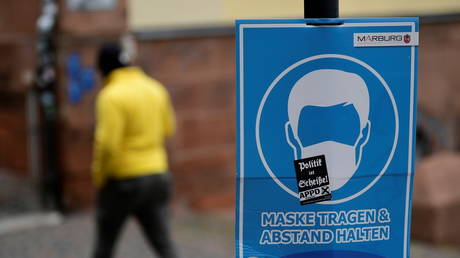
For the first time since the start of the pandemic, the number of new daily Covid cases in Germany has exceeded 60,000, according to the country’s disease control and prevention agency, the Robert Koch Institute.

Authorities fear that in reality the figure is even higher, as not all cases are immediately reported or detected. Just a week ago, the number of daily infections across Germany surpassed the 50,000 mark.

Read more

(FILE PHOTO) © REUTERS/Fabian Bimmer
Germans facing ‘really terrible Christmas’

Among the country’s Covid hotspots are Thuringia, Saxony and Bavaria. In the latter region, hospitals are so overwhelmed with Covid patients that they have had to put off any non-emergency surgery.

Against this grim backdrop, lawmakers in the Bundestag on Thursday backed a new set of measures aimed at containing the spread of the disease. The package was proposed by Germany’s Social Democrats, the Green and Free Democratic parties, which are expected to form a new coalition government as early as next week.

If passed by the upper house, the rules would include mandatory daily Covid testing for employees of, and visitors to, care homes, regardless of vaccination status. Germans would also be required to show proof of full vaccination, recovery or a fresh negative Covid test in order to enter their workplace or use public transport.

On top of that, those caught selling and forging fake certificates and tests could face up to five years behind bars. Just like the Covid regulations currently in place, the new plan gives some leeway to regional authorities in terms of restrictions so that, for instance, the banning of recreational, cultural, and sporting events will be at their discretion. However, things like travel bans, curfews and massive closures of businesses would now be off-limits to local government.

If you like this story, share it with a friend!

find more fun & mates at SoShow now !

France has imposed a curfew on its overseas territory of Guadeloupe and is sending extra police to the island, citing days of “violence,” unrest and vandalism in response to harsh pandemic restrictions.

“Given the ongoing social unrest and acts of vandalism, the prefect of Guadeloupe has decided to establish a curfew starting today from 6pm to 5am,” Alexandre Rochatte, who represents the archipelago as prefect, said on Friday.

Earlier on Friday, the French Interior Ministry noted that 200 French police officers and gendarmes would be shipped into Guadeloupe in the coming days to crack down on the “violence” and “restore republican order.”

READ MORE: Macron discloses whether lockdown for unvaccinated will be necessary in France

The move comes after nearly a week of heated protests over local Covid-19 policies – which include mandatory vaccinations for healthcare staff and other ‘essential’ workers, among other things. Demonstrators have torched cars and erected burning barricades in the streets, while doctors, firefighters and other professionals have walked off their jobs in protest, according to Reuters.

In footage circulating online earlier this week, men purported to be protesting firefighters were seen soaking police with a water hose hooked up to a nearby fire hydrant. Officers quickly shut off the spigot.

As in mainland France, residents are also required to present proof of vaccination, a negative PCR test or show they recently recovered from the virus in order to enter a number of public establishments, including restaurants and museums.

Those policies have proven unpopular for many locals, with trade unions launching indefinite strikes in protest over the past week, joined by other residents in street demonstrations.

Like this story? Share it with a friend!

find more fun & mates at SoShow now !

A Canadian teenager has been arrested after allegedly stealing $36.5 million in cryptocurrency from a person in the US. The police claim it was the largest such heist involving one victim ever registered in North America.

Police in the city of Hamilton, Ontario, arrested the unidentified perpetrator on Wednesday, after over a year investigating what they have described as the biggest-ever cryptocurrency theft from a single person in either the US or Canada. Local police began a joint investigation with the Federal Bureau of Investigation and the US Secret Service Electronic Crimes Task Force in March 2020, when the theft was reported.

Read more

© AP Photo/Jiri Buller
Europol detains 10 hackers over $100 million cryptocurrency theft from celebrities

The Hamilton Police Service said it had made “multiple” seizures in excess of CA$7 million (US$5.5 million) during the arrest, which came after investigators noticed some of the stolen money had been used to buy an online username considered “rare” in the gaming community, according to a police statement.

The victim was apparently targeted by a cell phone hijack known as SIM swapping. This method involves manipulating cellular network employees to duplicate phone numbers in order to let the scammer intercept the two-factor authorization requests that allow them access to a victim’s account.

This method is considered especially potent because a lot of people use the same password for multiple sites, according to Detective Constable Kenneth Kirkpatrick, of the Hamilton Police’s cybercrimes unit. He added that cyber and cryptocurrency crimes were becoming increasingly common, but noted that the figures involved in this case were “very surprising.”

“It’s a large amount of money in anybody’s opinion,” Kirkpatrick said, adding that the case was currently in the Hamilton court system.

The police haven’t revealed the age or gender of the youth, the username they purchased, or whether they were acting alone.

If you like this story, share it with a friend!

find more fun & mates at SoShow now !

UK Home Secretary Priti Patel has acted to proscribe the Palestinian group Hamas “in its entirety,” stating that it has significant capacity to carry out terrorist acts and has facilities to train attackers.

In a tweet on Friday, Patel stated that she had banned the Palestinian group Hamas and designated it a terrorist organization, as she reiterated the British government’s commitment to “tackling extremism and terrorism wherever it occurs.”

Read more

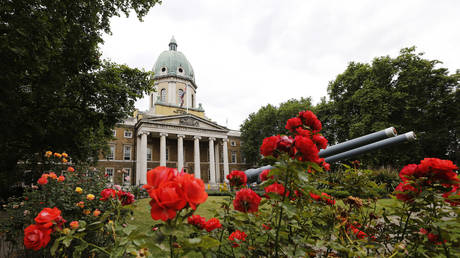
The Imperial War Museum (FILE PHOTO) © REUTERS/Suzanne Plunkett
Woke rap after moment of silence lands museum in trouble

“Hamas has significant terrorist capability, including access to extensive and sophisticated weaponry, as well as terrorist training facilities,” she wrote.  

The home secretary’s tweet came during her visit to Washington and followed speculation on Friday morning that she was soon to outlaw the group.

Pre-empting Patel’s announcement, Israeli Prime Minister Naftali Bennett welcomed Britain’s intention” on Twitter.

“Hamas is a radical Islamic group that targets innocent Israelis & seeks Israel’s destruction. I welcome the UK’s intention to declare Hamas a terrorist organization in its entirety – because that’s exactly what it is,” Bennett wrote, thanking the leadership of Prime Minister Boris Johnson.  

Yair Lapid, Israel’s foreign minister, also hailed the expected move against Hamas, saying it was part of strengthening ties with Britain.” 

Until now, only Hamas’ military wing, the Izz al-Din al-Qassam Brigades, had been outlawed by the British government. The EU and the US have already proscribed all of Hamas.

Hamas political official Sami Abu Zuhri rejected Britain’s move, claiming it showed absolute bias toward the Israeli occupation and is a submission to Israeli blackmail and dictations.” 

In a separate statement, the group claimed it had a right to resist occupation by all available means, “including armed resistance.”

Hamas seized total control of Gaza in 2007, on the back of an election victory in 2006.

If you like this story, share it with a friend!

find more fun & mates at SoShow now !