EXPERT OPINION — More than 200 U.S. officers have been hunted around the globe and targeted by an adversary using a mysterious weapon that causes permanent brain injury. It’s time to get serious about fighting back.

The Authors:

Paul Kolbe served for 25 years in the CIA’s Directorate of Operations. He is currently Director of the Intelligence Project at Harvard Kennedy School’s Belfer Center for Science and International Affairs.

Marc Polymeropoulos worked for the CIA for 26 years. He is author of “Clarity in Crisis: Leadership Lessons from the CIA.

John Sipher worked for the CIA’s clandestine service for 28 years. He is now a nonresident senior fellow at the Atlantic Council and a co-founder of Spycraft Entertainment.

Prior to 9/11, al Qaida declared war on the United States, bombed the USS Cole, and blew up U.S. embassies in Nairobi and Dar es Salam. Despite heavy casualties, America viewed successive al Qaida terrorist attacks as somehow unique, not representative of a larger threat or state of war. We went about our business and failed to take hard action against al Qaida despite clear warning. Our failure to respond forcefully led to 9/11 and the two decades of war that followed.

Fast forward to today.  Since 2016, more than 200 U.S. officials have reportedly suffered from a mysterious series of symptoms which have caused long-lasting, debilitating injuries. Suffering from searing headaches, vertigo, vision impairment, and nausea, many victims have been formally diagnosed with traumatic brain injuries (TBI) at the Walter Reed National Military Medical Center and other leading hospitals. Family members and young children have suffered as well. Some medical tests can now confirm the markers of brain injury, similar to those suffered by victims of concussive injuries in Iraq and Afghanistan.

These injuries began with a cluster of reports from Cuba in 2016 and have become commonly referred to as Havana Syndrome. Moscow, Vienna, Belgrade, and Hanoi are among more than a dozen cities where U.S. officials reportedly have been attacked and injured. In residences, on the street, in vehicles, and even at secure U.S. facilities, U.S. officers are being hunted. Stunningly, even a close aide to CIA Director Bill Burns was reportedly attacked on a trip to India just this past August.

The CIA, after a period of confusion, delay, and even denial at times, now appears to take these threats very seriously. CIA Director Burns and Deputy Director David Cohen have publicly stated that U.S. officials are being “attacked.” They have improved health care for CIA officers who are hurt. And an agency task force is hard at work trying to obtain additional intelligence on those responsible. We credit Director Burns for his solid leadership.

The cause of these injuries? The National Academy of Sciences has pointed to Directed Energy Weapons – devices which emit microwave pulses which can inflict pain and damage tissue. The United States, Russia, China, and others have all developed Directed Energy Weapons to destroy equipment, counter drones, and control crowds. This is not science fiction.

Directed energy weapons would account for the highly directional and locational nature of these incidents. When victims can “move off the x,” the signature sounds, sensations, and pain that goes with the attacks often stop, though damage has already occurred. The amount of exposure seems to affect the degree of injury. Other technologies could be at play and are being investigated, but microwaves appear to be the most likely vector. Russia has used them before, flooding the U.S. Embassy in Moscow with microwave radiation for decades.

Regardless of form, the weapons being used in these attacks are nothing less than weapons of terror, designed to cause injury to non-combatants. Who would use such a weapon to attack U.S. intelligence officers, diplomats, and military personnel, and to what conceivable end?


The Cipher Brief hosts private briefings with the world’s most experienced national and global security experts.  Become a member today.


CIA Deputy Director Cohen stated at a recent intelligence summit, that the U.S. was closer to identifying the culprit, and Politico has reported that members of the Senate Intelligence Committee are increasingly convinced that Russia or another hostile adversary is behind the attack, although reportedly, no smoking gun has been found.

As former CIA operations officers with extensive experience dealing with both counterterrorism and counterintelligence issues, we have few doubts about who will be named as the culprit. For at least a decade, Russia has conducted itself as in a state of conflict with the West in general and the United States in particular. Russia has launched cyberattacks impacting critical infrastructure and supply chains, assassinated opponents with nuclear poisons and chemical weapons, gunned down people in the streets using criminal proxies, sabotaged a Czech ammunition depot, and mounted a violent coup attempt in Montenegro. It has also bombarded the U.S. embassy in Moscow with microwave radiation and used carcinogenic “spy dust” without regard to health effects. The attacks on U.S. officials would fit this pattern of behavior.

We recognize that it is important to let the intelligence community do its job and its findings must inform policy action. Congress and the administration must work together to formulate a range of possible responses and it is not too early to begin. As Senator Collins and others have stated, these attacks are “an act of war,” and as such, preparation for a future attribution call by the national security establishment is in order. So how could the U.S. respond?

Let’s start with what doesn’t work – sanctions. Sanctions feel good and satisfy an action imperative but they are feckless. Sanctions have not stopped Russia from killing dissidents, halted the Nordstream II pipeline, compelled a pull back from occupied territories, reduced support for tyrants, or hindered oil and gas production. Sanctions have simply forced Russia to develop more creative money laundering and sanction circumvention mechanisms.

So, what would work? For starters, we must understand that the Putin regime considers itself in a state of conflict with the U.S., short of war, but nonetheless deadly real. We are dealing with a state sponsor of terror which conducts operations across the globe to weaken the U.S. abroad, divide it from its allies, and sow discord at home. Our policy must be calibrated to win this conflict, without sparking a shooting war, but at risk of one.

Russia understands reciprocity and strength. When four Russian diplomats were kidnapped by extremists in Beirut in 1985, and one of them was killed, Russia reportedly responded by kidnapping and gruesomely killing a relative of the group’s leader. The surviving diplomats were released immediately. The story may be apocryphal, but it does illustrate the Russian approach. Tempting as it may be for America to retaliate tit for tat, we need not mirror Russia’s actions. Instead, we should play to our greater economic, diplomatic, and military advantages.

We offer five elements to frame a response: enlist U.S. allies, expand forward deterrence, limit the adversary’s reach, choke off money, and bring those accountable to justice.

NATO: With proof of the attacks on U.S. officials, we should activate NATO’s Article Five collective defense clause. The only other time this was enacted was after 9/11. As justification, in addition to the Havana Syndrome attacks, (which also caused Canadian casualties), we would include GRU and FSB assassination operations across Europe, deadly sabotage in the Czech Republic, a coup attempt in Montenegro, persistent cyberattacks, and a litany of other actions that can only be described as irregular warfare directed against NATO members.


Go beyond the headlines with expert perspectives on today’s news with The Cipher Brief’s Daily Open-Source Podcast.  Listen here or wherever you listen to podcasts.


Forward Presence: A crystal clear signal that we understand the nature of Russian hybrid warfare and are responding would be to enhance our deployed military presence in Poland, the Baltic States, and in the Black Sea region. These units would pose no offensive threat to Russia but would be a clear signal that the U.S. is prepared to counter any Russian shenanigans. We should also significantly ramp up our lethal aid and training to the Ukraine, where the nature of Russian aggression is well known. Weakness in Eastern Europe is an invitation to conflict.

Travel and Presence: We should drastically limit Russian business and tourist travel which is being used as cover for FSB and GRU operations. We would reduce Russian diplomatic presence in each capital to the bare minimum – handfuls not hundreds. American and European counterintelligence experts believe there are more Russian intelligence officers operating from embassies than during the Cold War. Limiting the size of Russia’s espionage infrastructure will complicate the planning and execution of all of its intelligence operations.

Finance: A key tool in counterterrorism operations is the ability to target sources of finance which constitute material support to terrorism. In this case, we would apply that principle to the Russian government, state enterprises, and individuals who provide cover, tools, and sources of funding to Russia’s campaign to undermine the West with violence, terror, and media manipulation. Russia’s dirty money has been used to undermine the west and poison our politics. We should limit the easy access of shady money to western banks.

Criminal Cases: We need bring war crime cases to the International Court of Justice (ICJ) in the Hague. Following a decade of conflict in the Balkans, the ICJ brought to justice 161 indicted Serbian, Croatian, and Bosnian war criminals. This was an astounding success – a manhunt which included American and European law enforcement and intelligence services. Just as in Nuremberg after World War II, these actions to hold war criminals accountable drew a line in the sand.

This is a start.  Successive Democratic and Republican administrations have pursued Russia policies which represent the triumph of hope over experience. We have treated the symptoms of malign Russian actions rather than the underlying pathology. It is now time to finally acknowledge that we are in a long-term hybrid conflict and forget the fantasy of changing Putin’s behavior. Only a new regime in the Kremlin would hold the hope of bringing about a change in actions. Eventually, the Putin regime will wither or collapse, but until it does, we and our allies must do a better job of defending ourselves.

Read more expert-driven national security insights, perspective and analysis in The Cipher Brief

The post Havana and the Global Hunt for U.S. Officers appeared first on The Cipher Brief.

find more fun & mates at SoShow now !

EXPERT PERSPECTIVE — On 16 June, US President Joe Biden and Russian President Vladimir Putin met for just under four hours in Geneva. This was Mr. Biden’s first meeting with Mr. Putin during his presidency and Biden is the fifth US President with whom Putin has held a summit.

Expectations for the summit were characterized as low by both sides in advance and assessed a bit more positively after the conclusion of the meeting. The meeting presented an opportunity for both leaders to present grievances and warnings to the other (and show toughness to their domestic constituencies).  Other than presenting the opportunity to blow off steam, the results of the meeting appear modest:  the agreement to return ambassadors to their posts, to resume bilateral arms control discussions, to conduct discussions on “strategic stability” and to hold unspecified consultations on cyber. In typical fashion, Mr. Putin rejected all of Mr. Biden’s assertions about Russian actions and made counter accusations referencing hostile US actions.

Of the deliverables from the summit, cyber will no doubt turn out to be the most problematic area for follow up. Mr. Biden apparently delivered to Mr. Putin a list of 16 US critical infrastructure sectors that should be considered “off limits” for cyberattacks, e.g., “red lines” not to be crossed without the risk of significant retaliation. For his part, Mr. Putin asserted that it is Russia that is the victim of cyberattacks originating from the territory of the US and it’s NATO partners and also is the victim of  attempts to interfere with Russian elections.  The challenge in cyber discussions going forward will center around three areas:  differing interpretations of the relevance of deterrence theory in today’s cyber environment, attribution, and control.

Mr. Biden’s firm comments to Mr. Putin on recent cyberattacks against the US such as the ransomware attack on Colonial Pipelines (Mr. Biden is said to have asked Mr. Putin how he would react if Russia’s pipelines were hit?) and his provision of a list of “off limits” US infrastructure entities suggests a deep belief in this administration that Russia can be deterred from engaging in future conduct of cyber operations against US targets or “sanctioning” attacks originating from the territory of the Russian Federation by criminal groups.

Unfortunately, it is highly likely that either Mr. Putin nor those who control the levers of Russian cyber operations agree that deterrence theory applies.  Deterrence only works when both sides know the other is capable of – and willing to – cause significant harm to the other.

The Russian side likely believes (and may have amply demonstrated) that the US is disproportionately vulnerable to cyber risk at every level of its economic, societal, and political infrastructure whereas Russia is not.  There is a reason the use of cyber tools has become a central feature of Russian strategic doctrine. They work and seem a legitimate tool that falls short of conventional war. Hybrid warfare using cyber tools, the Russian side would argue, is no different than the economic warfare Russia is experiencing from sanctions imposed by the US its allies.

For full access to the article, sign up to become a Cipher Brief member for just $10/mo.


“The Cipher Brief has become the most popular outlet for former intelligence officers; no media outlet is even a close second to The Cipher Brief in terms of the number of articles published by formers.” – Sept. 2018, Studies in Intelligence, Vol. 62 No.

Access all of The Cipher Brief’s national-security focused expert insight by becoming a  Cipher Brief Level I Member .  


The post After Geneva: US – Russia Strategy Moving Forward appeared first on The Cipher Brief.
find more fun & mates at SoShow now !

AstraZeneca has announced that its preventative antibody cocktail offers 83% protection against symptomatic Covid-19 for at least six months, making it more effective than its own vaccine.

In a statement on Thursday, AstraZeneca cemented its lead in the race to develop and market a preventative Covid-19 drug, which is delivered as a shot in the arm. 

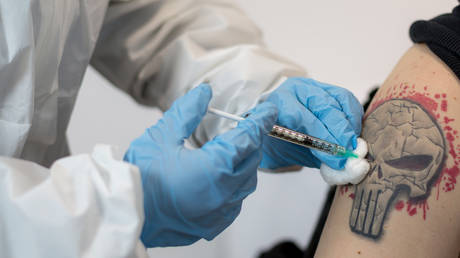
The drug, named AZD7442, reduces the risk of symptomatic Covid-19 by 83% over the course of six months, according to data from a trial in which participants were given one 300mg dose. There were no deaths or severe infections recorded within the trial group, it said. 

Read more

Paxlovid, a Pfizer's coronavirus disease (Covid-19) pill, is seen manufactured in Ascoli, Italy (FILE PHOTO) © Pfizer/Handout via REUTERS
Pfizer gets new $5.3bn boost over Covid

A separate trial showed the drug reduced the risk of severe Covid-19 or death by 88% when administered within three days of the onset of symptoms. 

“These new data add to the growing body of evidence supporting AZD7442’s potential … We are progressing regulatory filings around the world and look forward to providing an important new option against SARS-CoV-2 [Covid-19] as quickly as possible,” AstraZeneca Executive Vice President Mene Pangalos said in the statement. 

The Anglo-Swedish firm has agreed to supply the US government with 700,000 doses of AZD7442 if the Food and Drug Administration grants it emergency use, which AstraZeneca requested on October 5. The firm has similar agreements with other nations. 

The drug is created using a combination of two antibodies originating from immune B-cells donated by a recovering Covid-19 patient. 

The treatment could be used in people who are known not to respond well to vaccines, such as cancer patients. Around 2% of people are considered to be at risk of not creating enough antibodies following the administration of a Covid-19 vaccine. 

Based on the numbers, the drug appears to be more effective than the firm’s first-generation Covid-19 vaccine. Britain’s Zoe Covid study showed the effectiveness of the vaccine dropped to around 67% after four to five months. 

If you like this story, share it with a friend!

find more fun & mates at SoShow now !

France has imposed a curfew on its overseas territory of Guadeloupe and is sending extra police to the island, citing days of “violence,” unrest and vandalism in response to harsh pandemic restrictions.

“Given the ongoing social unrest and acts of vandalism, the prefect of Guadeloupe has decided to establish a curfew starting today from 6pm to 5am,” Alexandre Rochatte, who represents the archipelago as prefect, said on Friday.

Earlier on Friday, the French Interior Ministry noted that 200 French police officers and gendarmes would be shipped into Guadeloupe in the coming days to crack down on the “violence” and “restore republican order.”

READ MORE: Macron discloses whether lockdown for unvaccinated will be necessary in France

The move comes after nearly a week of heated protests over local Covid-19 policies – which include mandatory vaccinations for healthcare staff and other ‘essential’ workers, among other things. Demonstrators have torched cars and erected burning barricades in the streets, while doctors, firefighters and other professionals have walked off their jobs in protest, according to Reuters.

In footage circulating online earlier this week, men purported to be protesting firefighters were seen soaking police with a water hose hooked up to a nearby fire hydrant. Officers quickly shut off the spigot.

As in mainland France, residents are also required to present proof of vaccination, a negative PCR test or show they recently recovered from the virus in order to enter a number of public establishments, including restaurants and museums.

Those policies have proven unpopular for many locals, with trade unions launching indefinite strikes in protest over the past week, joined by other residents in street demonstrations.

Like this story? Share it with a friend!

find more fun & mates at SoShow now !

Palestinian Islamist group Hamas has called on Canadian singer Justin Bieber to cancel his upcoming concert in what it calls the “Zionist occupation state” of Israel.

Bieber announced his 2022 world tour dates this week, with a concert in Tel Aviv planned for next October. On Thursday, Hamas’ Artistic Production Department issued a statement, cited by the Palestinian Sawa news outlet, “condemning and denouncing” the performer. It called on the star to cancel the show and “boycott the Zionist occupation state in protest at its repeated crimes against the Palestinian people.” 

Read more

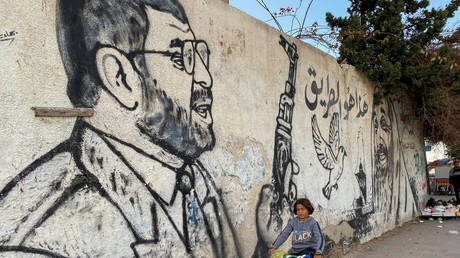
A Palestinian boy rides a bicycle past a mural depicting late Hamas leader Abdel-Aziz Al-Rantissi in Gaza City (FILE PHOTO) © REUTERS/Mohammed Salem
UK outlaws Hamas as terrorist organization

Bieber has performed in Israel multiple times, his last performance there having been in 2017 at Park HaYarkon – the same venue slated for next year. Since the announcement of the ‘Justice’ tour dates, calls for him to cancel the Tel Aviv show have gained momentum across social media, with many posters condemning the singer for supporting what one called an “apartheid state.”

Some noted that Bieber was set to arrive in Israel after performing in South Africa. “Justin Bieber is really going straight from SA to Israel. From a country that fought apartheid to a country that’s practicing apartheid,” one Twitter user complained.

A petition asking the singer to boycott Israel and exclude it from his tour has been launched online, and had garnered some 3,700 signatures by Friday. 

In 2018, the New Zealand singer Lorde canceled a concert in Israel, subsequently thanking fans for “educating” her on the issue, and, the same year, US artist Lana Del Rey at first defended her decision to perform in the country, saying her appearance would not be a “political statement,” before backtracking and canceling the gig.

Hamas has been designated a terrorist group by the US, the EU, and, as of Friday, the UK. In April 2021, international non-governmental organization Human Rights Watch concluded in a report that Israel had committed “crimes against humanity of apartheid and persecution.”

If you like this story, share it with a friend!

find more fun & mates at SoShow now !

Sporadic clashes broke out at massive Saturday demonstrations in major European cities, as thousands of people took to the streets of Vienna, Paris and Rome to express their discontent with Covid-19 restrictions.

The Austrian capital Vienna on Saturday saw the largest protest turnout since the start of the Covid-19 pandemic. A total of 38,000 people took to the city streets to join a dozen demonstrations protesting government measures.

The protests came a day after the Austrian authorities ordered nationwide compulsory vaccination from February 1 and imposed a full lockdown, starting Monday. The massive procession that spanned over several kilometers marched along Vienna’s central ring road. The city center was paralyzed for several hours as traffic was restricted.

Austria’s right-wing Freedom Party, whose members joined the rallies, put the number of protesters at 100,000. Some demonstrations were also attended by members of various far-right groups. The protests were generally peaceful but footage published by Ruptly video news agency showed several scuffles between the police and the demonstrators breaking out.

Law enforcement spoke of a total of five arrests. One incident saw a protester attempting to grab an officer’s gun and take it from its holster. In another incident, the officers were pelted with bottles and fireworks and had to use pepper spray in response.

Hundreds of kilometers away from Vienna, in the French capital Paris, events took a more dramatic turn. There, a demonstration against the government Covid-19 measures coincided with the third anniversary of the Yellow Vests movement. Hundreds of protesters took part in the protest, which quickly turned into clashes between the demonstrators and law enforcement.

The protesters were building barricades and setting them on fire as well as pelting police with bottles and various other projectiles. Law enforcement responded with profuse amounts of tear gas, sometimes filling entire streets with thick smoke to disperse the crowds.

Rome saw a massive demonstration against Italy’s Covid-19 health pass, also known as the Green Pass. Some 4,000 people gathered in the center of the Italian capital, according to the police. The demonstrators were waving national flags and chanting “Freedom” and “No Green Pass,” referring to the vaccination certificate needed to enter various public venues such as clubs or bars.

The crowd staged a sit-in in the Circus Maximus – an ancient Roman chariot-racing stadium converted into a modern-day park. They remained there after sunset, lighting the area with thousands of phones and colored smoke bombs. The rally was peaceful, though, as the police did not report any incidents.

Unlike Rome, Italy’s northern city of Milano saw clashes between protesters and the police as law enforcement officers sought to break up an unauthorized rally at the city center. Large police forces were deployed to the city center and several squares were cordoned off.

Think your friends would be interested? Share this story!

find more fun & mates at SoShow now !

Covid-19 variants keep emerging in different parts of the world, causing experts to ask how long the pandemic will last, and how effective the current methods of protection really are.

Since the pandemic started in 2019, people have referred to the disease which has paralyzed the world simply as ‘coronavirus’. Now, in 2021, when we talk about it, we mean not just the original variant, but also its numerous mutations. 

Read more

© Getty Images / sasacvetkovic33
Drastic drop in Covid vaccine effectiveness – study

In May, the WHO decided to label the key variants with Greek letters. Since then, the Delta variant has been proclaimed the predominant strain across the world, and now we have titles that look like codes to detail the differences between variants. Last month, the UK was put on high alert over a fast-spreading Delta AY.4.2 variant. This week, Norway reported finding one more version of the Delta strain – AY. 63. The country’s experts suggest it’s not more dangerous than the Delta mutation itself. Meanwhile, another Covid variant, discovered in France (B.1.640), brought the researchers an unpleasant surprise: they said they’d never seen mutations like it. 

Professor David Dockrell, from the Center for Inflammation Research of the University of Edinburgh, described to RT the reasons for the constant mutation of the coronavirus. “The areas in the virus that are most likely to change are those that come into contact with what we call ‘selective pressures’ – or factors that make them need to change,” he explains. “So, a version of the virus which mutates and changes to give it a selective advantage to escape from the immune system is more likely to prosper and become a dominant strain.” 

That’s how it works: The part of the virus many of the immune responses (or antibodies, T-cells etc.) are responding to is called the spike protein (or the S-protein). So, the virus tries to change it in order to survive. 

“We know that a variety of different viruses are able to mutate and change when exposed to the selective pressure of the immune system, whether it would be the human immune system or other species in which these viruses have evolved,” Prof. Dockrell says. “And of course, we’ve seen it most clearly with HIV, which is particularly good at changing and evolving. It does something called ‘reverse transcription’ – it copies material in the reversed direction from DNA to RNA.” 

Covid is still seemingly running faster than humanity’s efforts to curb it, but Prof. Dockrell has some good news. “The coronavirus – and viruses like it – are not as able to make these changes. They are going to do it to some extent, but they are not going to be as successful as retroviruses and HIV.” 

And the other major thing to say: When the viruses make changes, there’s always what we call ‘a fitness cost’. Many of the potential changes that the virus could make will actually not favor its survival. So there are only a certain number, potentially, of changes that the virus can make, before it starts affecting its fitness. 

Now, unfortunately, we are still in a phase where Covid19 can continue to evolve and change. It’s not time to panic, though, because across the world various ways to adapt the current anti-Covid strategies are already in place. First of all, people should keep getting vaccines – maybe receiving slightly altered booster doses, Prof. Dockrell suggests, “in a way, that we, after all, have to do with influenza, by providing a seasonal influenza vaccine and changing it every year.” 

Read more

RT
WHO sounds alarm over looming Covid-19 catastrophe in Europe

“And maybe we have to keep changing some of the treatments like these new monoclonal antibodies against the virus, because they also may be limited by the emergence of a mutation of the virus evolving the S-protein,” he adds. 

Sounds promising – but won’t it become a never-ending race against constantly emerging mutations? 

Hopefully not. According to Prof. Dockrell, there are parts of viruses that scientists call ‘conserved areas’. With time, vaccines and monoclonal antibodies will target these areas, which the virus finds very hard to change. “Clearly, the direction of travel is to develop either vaccine responses that affect more different kinds of virus, or these ‘monoclonal antibodies’ that we could use to prevent or treat infection, that they will target more conserved areas and therefore will be less limited by the ability of these virus to evolve and change,” he concludes.

Think your friends would be interested? Share this story!


find more fun & mates at SoShow now !

Robert Dannenberg, Former Senior CIA Officer

Cipher Brief Expert Rob Dannenberg is a 24-year veteran of the CIA, where he served in several senior leadership positions, including chief of operations for the Counterterrorism Center, chief of the Central Eurasia Division and chief of the CIA’s Information Operations Center. Dannenberg is a member of the Board of Advisors to the Director of the National Counterterrorism Center and is a senior fellow at the GWU Center for Cyber and Homeland Security. He is now an independent consultant on geopolitical and security risk, after serving as the managing director and head of the Office of Global Security for Goldman Sachs, and director of International Security Affairs at BP.

EXPERT PERSPECTIVE — The images from Kabul are demoralizing and depressing—unless you are sitting in the Kremlin, where they are certainly being viewed in a quite different light. Probably something close to giddiness and glee.

From Russian President Vladimir Putin’s perspective, this likely reinforces his view that President Joe Biden and his national security team are weak and naïve.  ‘This is Obama’s third term’, Putin must be thinking. And of course, the images of US helicopters desperately trying to evacuate thousands from Kabul also resonate in Kiev, Tbilisi, and probably Tallinn, Riga, and Vilnius and beyond—think Taipei.  The appalling mismanagement of the withdrawal from Afghanistan will have consequences that will affect American credibility globally and linger well beyond the end of Biden’s presidency.

A first order consequence concerns Russia.

It is highly likely there was practical cooperation between the Kremlin and the Taliban in the preparation for the American withdrawal and this may have included direct support to Taliban forces. We don’t need to revisit the narrative of Russian bounties for dead American soldiers in Afghanistan, but the evidence of Russian energetic engagement with the Taliban in recent months is manifest and the fact the Russian embassy in Kabul is currently protected by Taliban fighters is significant.

For both Russia and the Taliban there was a clear shared strategic objective: Get the Americans and their allies out of Afghanistan and ideally in the most humiliating fashion possible.  The Russian-Taliban honeymoon may not last long, but for the moment it has served both sides well.

For over a decade and a half of his tenure as Russia’s president, Putin has been preaching the gospel that you can’t trust the Americans to back you in the long run or when the chips are down, but you can count on the Russia he leads (think the Russian intervention in Syria and support for Assad or their intervention—whether acknowledged or not—in Libya on the side of Khalifa Haftar among other examples). This messaging is important in current times and reinforces Putin’s narrative about the decline of the West and the waning relevance of western liberal systems of governance.

In recent years, Chinese President Xi Jinping has picked up the trumpet to echo this message that American power is in decline and that American security guarantees cannot be relied on in East Asia and beyond.

Putin has been Russia’s Czar for over two decades without meaningful interruption and is likely to remain so for the foreseeable future. He has seen US Presidents come and go and he has been quick to size them up and adjust his moves accordingly. He was genuinely scared of what George W. Bush might do in the immediate aftermath of 9/11 and the speed and efficacy of the US response made a deep impression on him.  He adjusted his approach to the US to one of partner and ally against Islamic extremism (Putin was also busy consolidating his control over the Russian Federation in the immediate post-Yeltsin period).

Putin also sized up then-President Barack Obama after Obama’s failure to act when Syrian President Bashar al-Assad blithely crossed the “no use of chemical weapons” red line.  That opened the door for the annexation of Crimea as well as the Russian military intervention in Syria (and later Libya). Joe Biden was Vice President at the time. Putin likely has a very good book on Joe Biden and was quite confident of what the end result for the US in Afghanistan would look like.  Putin may even have a better feel for Joe Biden than many realize, if any of the Hunter Biden material is true.  One leader’s assessment of another, matters in geopolitical relations. Putin has a high level of confidence in his ability to read his international opposition.

As recently as July 2021 President Biden said, “There’s going to be no circumstance where you see people being lifted off the roof of the US embassy in Afghanistan.”  He went on to add, “The likelihood there’s going to be the Taliban overrunning everything and owning the whole country is highly unlikely.”  President Biden made these statements knowing perfectly or should have known—from intelligence briefings and expert commentary—as well as historical precedent—that when the US announces a withdrawal of forces with a hard deadline, in this case 9/11, our adversaries use the time to prepare for their offensive military action. Our Afghan allies knew this as well and prepared accordingly.  Now the Taliban will celebrate the twentieth anniversary of the September 11 attacks in the US embassy in Kabul, probably with their ISIS and Al Qaeda friends as honored guests.  If you think the videos from Afghanistan have been troubling to this point, just wait for the anniversary celebrations.

Perhaps of more near term geopolitical significance, Putin will use the Taliban takeover of Afghanistan to support a narrative that Russia needs to defend its interests from the spread of Islamic extremism from Afghanistan by strengthening “security and counterterrorism” cooperation with Turkmenistan, Uzbekistan, Tajikistan, Kyrgyzstan. Does anyone want an excuse to get – and keep – those pesky Americans out of Central Asia and start rebuilding that corner of the Soviet Union?

Putin’s use of terrorism risk as justification for military action is well-rehearsed and goes back to the Moscow apartment bombings (which the FSB almost certainly organized) in September 1999, which Putin used both to consolidate political power and to justify the brutal military campaign in Chechnya. Putin is acutely aware of the risks of Islamic extremism spreading from Afghanistan to Central Asia, the Caucasus, and into the Russian Federation. In fact, Russian, Uzbek, and Tajik troops conducted exercises in July, which appear to have been designed to prepare to respond to cross border incursions from Afghanistan. This is only the first step in his plan for consolidation of Russian power and influence in Central Asia and the Caucasus.


The Cipher Brief hosts private briefings with the world’s most experienced national and global security experts.  Become a member today.


Some might ask – given the risk of the spread of Islamic extremism from Afghanistan to the Russian Federation – why would Putin would want to partner with the Taliban?  Those who ask this question are misunderstanding the depth of Putin’s enmity toward the United States and the West and everything for which we stand.  Putin views the world as a “zero sum” game.  What hurts the US must serve Russia’s interests. The debacle in Afghanistan clearly qualifies. A short-term deal with the Taliban is a risk with taking in Putin’s mind.  Putin plays on the superpower chessboard using the only tools he has at hand, military power, cyber and disinformation capability and US ineptitude and lack of strategic thought.  He has taken clever advantage of President Trump’s four years of thoughtless estrangement of US allies around the world.

Beyond the propaganda value and regional leverage our withdrawal has given adversaries like Russia and China, there is the impact of our withdrawal on the many nations among our allies who contributed to the Afghanistan mission. The images of Afghans clinging to a departing US Air Force C-17 and falling to their deaths will not fade easily. How easy will it be to assemble their support when we inevitably have to go in again to deal with a resurgent Al Qaeda, a globally ambitious Taliban, or an even more dangerous embedded ISIS in the hills of Afghanistan?

We should also consider the impact on Pakistan.  Pakistan has nurtured Islamic extremism in Afghanistan for decades.  While a part of the Pakistani security establishment partnered with the US effectively after 9/11, other parts simultaneously were nurturing relations with extremists including the Taliban. The “Great Game” is still being played in that part of the world, and neither the Pakistanis, nor the Indians or Chinese have forgotten it.

Pakistan also still certainly chafes from the US raid to kill bin Ladin in Abbottabad a little over ten years ago.  One wonders if the waning of US influence in Islamabad has opened the door for Islamic extremists to enter the security establishment there. Pakistan is a nuclear power and has in recent years, increased its development of tactical nuclear weapons. Does the Taliban now have a path to nuclear weapons?  This is an important question and it’s answer casts a shadow over our withdrawal from Afghanistan.

The Biden Administration, for all its vaunted claims of “return to competence” in Washington, has fallen flat in its first serious challenge. One could argue that Biden’s capitulation on Nord Stream 2 and Putin’s mocking rejection in Geneva of charges of US election interference and cyberattacks on the US, foretold the debacle in Afghanistan. The challenge for the US now will be to manage the airlift of those Afghans who were willing to partner with the US and carefully look for opportunities to rebuild the credibility of US security guarantees around the world.

Taiwan and South Korea would seem good places to start.

At the same time, we need to recognize that Afghanistan will once again become the training ground for those who hope to replicate 9/11 attacks on the US. A strong and robust intelligence capability will be essential in mitigating that risk.

Read more expert-driven national security insight, perspective and analysis in The Cipher Brief

The post Putin’s Calculated Afghanistan Play appeared first on The Cipher Brief.

find more fun & mates at SoShow now !

Cipher Brief Expert Tim Willasey-Wilsey is a Visiting Professor at King’s College, London and a former senior British diplomat. From 1996 to 1999 he was senior advisor to the British government on overseas counterterrorism.  This piece was first published by RUSI in London.  The views do not represent those of RUSI.


Analysis of openly available sources indicates that a British report shared with the US in December 1998 described an early stage of the 9/11 plot.


EXPERT PERSPECTIVE — Two extracts from Presidential Daily Briefs (PDB) are given some prominence in the 9/11 Commission report into the terrorist attacks in New York and Washington on 11 September 2001. One is from a PDB delivered to President Bill Clinton on 4 December 1998, and the other is from a PDB given to President George W Bush on 6 August 2001. Both are presented inside a textbox and both contain intelligence ‘from a friendly government’ which provided the first and only significant suggestion that Al-Qa’ida (AQ) planned to hijack aircraft in the US.

Eight months after the attacks, under Congressional pressure, the Bush administration was obliged to reveal some details of the PDBs, and on 17 May 2002 the New York Times disclosed that ‘the report provided to the president on Aug. 6, which warned him that Mr. bin Laden’s followers might hijack airplanes, was based on 1998 intelligence data drawn from a single British source, government officials said today’. The British government was obliged to acknowledge that the intelligence came from British sources. The Guardian reported on 18 May that ‘The memo received by Bush on 6 August contained unconfirmed information passed on by British intelligence in 1998’. The Independent ran much the same story with additional detail.

Both PDBs quoted from one British report from December 1998. The key question is whether this report, with its significant deviations from what actually happened on the day, actually referred to the 9/11 operation. Subsequently published evidence points compellingly to this indeed being an early version of the 9/11 plan.

The heavily redacted British contribution was shown on pages 127 and 128 of the 9/11 Commission’s report. It reads:

‘On Friday December 4 1998 the CIA included an article in the Presidential Daily Brief (PDB) describing intelligence received from a friendly government about a hijacking in the United States.

‘SUBJECT. Bin Laden preparing to hijack US aircraft. Reporting [passage redacted] suggests bin Laden and his allies are preparing for attacks in the US including an aircraft hijacking to obtain the release of Sheikh Omar Abdal Rahman,  Ramzi Yousef and Muhammad Sadiq Awda. One source quoted a senior member of the Gamaat Al-Islamiya (GI) saying that “as of late October the GI had completed planning for an operation in the US on behalf of bin Laden but that the operation was on hold. A senior bin Laden operative from Saudi Arabia was to visit GI counterparts in the US soon thereafter to discuss options – perhaps including an aircraft hijacking. GI leader Islambouli in late September was planning to hijack a US airliner during “the next couple of weeks” to free Abdal Rahman and the other prisoners according to what may be another source. The same source late last month said that bin Laden might implement plans to hijack aircraft before the beginning of Ramadan on 20 December and that two members of the operational team had evaded security checks during a recent trial run at an unidentified New York airport.’


The Cipher Brief hosts private briefings with the world’s most experienced national and global security experts.  Become a member today.


In May 2002 the US National Security Advisor Condoleezza Rice issued a statement observing (correctly) that the report had mentioned ‘hijacking in the traditional sense’ with no indication that aircraft would be used as weapons of mass destruction. Her testimony to the 9/11 Commission made broadly the same point.

Indeed, even in late 1998, there was a profusion of threat reports of which the aviation strand was just one. The MI5 official history comments aptly that the Service was puzzled as to why there were so many more reports of threats than actual attacks: ‘Even the most reliably sourced intelligence received on this question usually consists of a snapshot of a proposed plan being discussed. Most of the reporting does not make clear how far advanced the plan is’ (Christopher Andrew, The Defence of the Realm, pp. 802–806). What MI5 did not realise at the time was that AQ operations could take up to three years from inception to execution.

Steve Coll writes that ‘Within the morass of intelligence lay ominous patterns. One was an interest by bin Laden’s operatives in the use of aircraft … yet at the counter terrorism security group meetings and at the CIA’s counter terrorist centre there was no special emphasis placed on bin Laden’s threat to civil aviation or on the several exposed plots where his followers had considered turning hijacked airplanes into cruise missiles’ (Steve Coll, Ghost Wars, pp. 419–420).

Although the December 1998 report appears fragmentary, there were a number of aspects of particular interest. The first was the name Ramzi Yousef. Yousef had studied electrical engineering at Swansea Institute from 1986 to 1990 before exploding a massive bomb under the World Trade Centre in February 1993 and then planning the Bojinka Plot against airliners in the Philippines in 1994. Yousef had been arrested in Islamabad in February 1995 and sent to the US, where he was tried and imprisoned for life. He was an energetic and imaginative terrorist, and his uncle Khalid Sheikh Mohammed was also known to move in terrorist circles.

The aviation link must have struck a chord, too. The British were also interested in Hussain Kherchtou, who had been in Kenya at the time of the Embassy bombings and was himself a pilot. He later provided a debrief to the FBI. His story and his courtship by the British came into the public domain because of a subsequent US court case and a talkative FBI officer.

The Egyptian angle also would have provoked little surprise. On 19 November 1995 Egyptian terrorists had blown up the Egyptian Embassy in Islamabad, killing 13 – only yards from the British High Commission compound with its exposed staff housing and kindergarten. The British had a miraculous escape that day.

The concern for the release of Sheikh Abdal Rahman, ‘the Blind Sheikh’, was consistent with the widespread devotion which the preacher inspired among Islamist radicals and particularly Egyptians. His imprisonment in New York for his part in Yousef’s attack on the World Trade Centre had caused significant distress among his many adherents, who all wanted his release.

The idea that AQ would strike the US had first surfaced in 1997 and felt like the logical next step. Only a month beforehand (in November 1998), AQ had attacked two US Embassies in Kenya and Tanzania, killing 224 people including 12 US citizens. These operations had served as a wake-up call for those who thought the AQ threat was being exaggerated, and some who even conceived of Osama bin Laden himself as a benign figure who had somehow got out of his depth.

There were also some puzzling elements in the report. The first was the rather outdated idea of hijacking an aircraft to demand the release of the Blind Sheikh. It felt more in tune with Palestinian terrorist methods of the 1970s, and it was already known that Ramzi Yousef had developed the idea of exploding full airliners in flight.

The involvement of Gama’at Islamiya (GI) seemed odd. Bin Laden was known to be close to Ayman Al-Zawahiri of Egyptian Islamic Jihad (EIJ), with whom GI were usually at daggers drawn. At the time GI were conceived of more as domestic Egyptian terrorists compared to the internationalist EIJ. Indeed, GI’s most recent operation had been the Luxor Massacre of November 1997, which killed 56 foreign tourists.


Go beyond the headlines with expert perspectives on today’s news with The Cipher Brief’s Daily Open-Source Podcast.  Listen here or wherever you listen to podcasts.


The name Islambouli carried great resonance. This was Mohammed Shawqi Islambouli, who had tried to assassinate Egyptian President Hosni Mubarak in Addis Ababa in 1995. His brother Khalid had been one of the assassins of President Anwar Sadat in October 1981 and had been tried and executed in Cairo. However, although Mohammed was thought to be in Afghanistan, he was not then known to be close to bin Laden, let alone Al-Zawahiri.

The dates made little sense. On the one hand an attack seemed imminent, but on the other hand it was ‘on hold’. But such is the nature of counterterrorist reporting: small fragments of a much bigger jigsaw.

Nonetheless, the report was taken very seriously on its receipt in the US. President Bill Clinton’s counterterrorism advisor Richard Clarke summoned his Counterterrorism Security Group. ‘To address the hijacking warning, the group agreed that New York airports should go to maximum security starting that weekend. They agreed to boost security at other East coast airports. The CIA agreed to distribute versions of the report to the FBI and FAA to pass to the New York Police Department and the airlines. The FAA issued a security directive on December 8, with specific requirements for more intensive air carrier screening of passengers and more oversight of the screening process, at all three New York City area airports.’

Of course, when 9/11 happened nearly three years later, there were two very significant differences. Although aircraft were indeed hijacked, they were used as missiles rather than as bargaining chips, and the terrorists were mainly Saudi and not Egyptian. So what happened between December 1998 and September 2001 which could explain these changes?

The 9/11 Commission report (drawing on material from the interrogation of Khalid Sheikh Mohammed) provides a fascinating section on AQ’s development of aviation methodology. Even before bin Laden had left Sudan in mid-1996, he had allegedly discussed the use of aircraft with Mohammed Atef: ‘(1) they rejected hijackings aimed at gaining the release of imprisoned comrades as too complex, because al Qaeda had no friendly countries in which to land a plane and then negotiate; (2) they considered the bombing of commercial flights in midair, as carried out against Pan Am Flight 103 over Lockerbie, Scotland, a promising means to inflict massive casualties; and (3) they did not yet consider using hijacked aircraft as weapons against other targets.’

So, why was the idea of a traditional hijacking still being discussed as late as December 1998? The answer must lie in the Egyptian jihadists’ determination to win the release of the Blind Sheikh. Mustafa Hamid, a journalist who was with bin Laden in Afghanistan, provides illuminating insight into the wrangling between EIJ and GI in Afghanistan. Hamid documents the tortuous process by which GI, with some reluctance, formed a union (‘The World Islamic Front against Jews and Crusaders’) with AQ, EIJ and others, but recounts how GI insisted on secrecy about their involvement. Hamid also describes GI’s determination to obtain the Blind Sheikh’s release and the involvement of one of their operatives in the African Embassy bombings (Mustafa Hamid and Leah Farrall, The Arabs at War in Afghanistan, p. 241 and pp. 263–266). So GI was indeed part of bin Laden’s group in Afghanistan and was involved in operations at the time of the December 1998 report.

However, bin Laden became increasingly irritated by the endless squabbling among the two Egyptian groups. Lawrence Wright, drawing upon a variety of sources, chronicles the disastrous attack on Luxor, which had the effect of alienating the Egyptian population from both groups. When on 23 February 1998 bin Laden’s second fatwa announcing the ‘World Islamic Front’ was published in an Arabic newspaper in London, GI were appalled, and some members tried to have Rahman pronounced emir instead of bin Laden. No wonder that Wright concludes that ‘bin Laden had had enough of the in-fighting between the Egyptian factions. He told both groups that their operations in Egypt were ineffectual and too expensive and that it was time for them to turn their guns on the United States and Israel’ (Lawrence Wright, The Looming Tower, pp. 290–296). This may explain why the December 1998 report mentions the operation being ‘on hold’. Between December and the spring of 1999, the GI team and Islambouli must have been stood down.

According to the 9/11 Commission report, in March or April 1999, Khalid Sheikh Mohammed (KSM) – who had hitherto allegedly been on the fringes of AQ – was summoned to Kandahar, where he discussed the aircraft plan with bin Laden and Mohammed Atef. Four operatives were chosen to begin work on the US project. However, ‘travel issues … played a part in al Qaeda’s operational planning from the very start. During the spring and summer of 1999, KSM realized that Khallad and Abu Bara, both of whom were Yemenis, would not be able to obtain US visas as easily as Saudi operatives like Mihdhar and Hazmi’. And so, the 9/11 plot developed with 15 of the 19 terrorists being Saudi nationals. Only Mohammed Atta was Egyptian.

KSM’s key involvement in the 9/11 plot makes it evident that there could not have been a second GI plot running in parallel, because KSM and Islambouli were close associates. Robert Baer and the 9/11 Commission report agree that KSM and Islambouli were working together in Qatar in the mid-1990s. For KSM it must have been difficult to abandon the rescue of his nephew, but he would have known that a traditional hostage release operation had none of the ambition or scale of bin Laden’s new thinking.

On 6 August 2001, only five weeks before the attacks, the December 1998 report featured once again in the PDB given to George W Bush at Crawford, Texas, entitled ‘Bin Laden determined to strike in US’. It began: ‘Clandestine foreign government and media reports indicate bin Laden since 1997 has wanted to conduct terrorist attacks in the US’, and concluded: ‘We have not been able to corroborate some of the more sensational threat reporting such as that from a [redacted] Service in 1998 saying that bin Laden wanted to hijack a US aircraft to gain the release of “blind Sheikh” Omar Abdal Rahman and other US-held extremists … Nevertheless, FBI information since that time indicates patterns of suspicious activity in this country consistent with preparations for hijackings or other types of attacks.’

The PDB of 6 August caused some discomfort to the Bush administration and led to a National Security Archive page devoted to that one PDB (of which the December 1998 British report was just one constituent part).

The CIA Director George Tenet, who had been a tireless pursuer of the AQ threat before 9/11 and a regular correspondent with and visitor to London, regretted that more had not been done ‘to protect the United States against the threat. To cite two obvious and tragic failures, only after 9/11 were cockpit doors hardened and passengers forbidden from carrying box-cutters aboard US commercial airliners’ (George Tenet, At the Centre of the Storm, p. 205).

The British report of December 1998 was fragmentary, and while it was certainly ‘sensational’, it was not half as sensational as the actual events of that unforgettable and tragic day.

The views expressed in this Commentary are the authors, and do not represent those of RUSI or any other institution.

Read more expert-driven national security insights, perspective and analysis in The Cipher Brief

The post The British and 9/11 appeared first on The Cipher Brief.
find more fun & mates at SoShow now !

French President Emmanuel Macron has dismissed the possibility of locking down unvaccinated people in France, claiming the move would not be necessary because of the success of the Covid-19 ‘health pass’.

Speaking to La Voix du Nord newspaper in an interview published on Thursday, Macron said there was no need for France to follow Austria’s lead by locking down its unvaccinated citizens. 

Read more

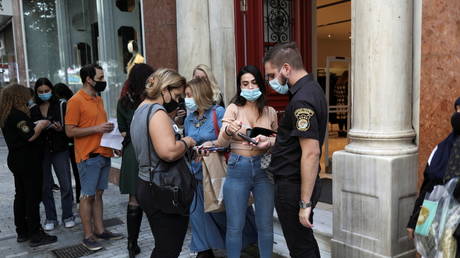
A security guard checks vaccination certificates outside a business in Athens, Greece, November 6, 2021.
Another EU state to ban unvaccinated from indoor spaces

“Those countries locking down the non-vaccinated are those which have not put in place the [health] pass. Therefore, this step is not necessary in France,” Macron claimed.

The president’s health pass, which was the target of much criticism when it was introduced, requires people to provide proof of vaccination or a recent negative test before undertaking certain normal activities.  

The ‘Pass Sanitaire’ is required if citizens wish to go to restaurants, cafes, cultural venues, or cinemas. It’s also required to take long-distance trains, among other activities. 

Austria has led the way by starting a partial lockdown of the unvaccinated amid a surge in Covid-19 cases. The Czech Republic will follow suit next week, while Germany decided on Thursday to introduce similar measures in areas where Covid incident rates exceed the threshold.

Earlier in November, Macron made the continued use of the Covid health pass for over 65s dependent on getting a booster jab. 

Some 20,366 new infections were registered in the last 24-hour recording period. Case numbers have risen steeply in recent weeks. 

If you like this story, share it with a friend!

find more fun & mates at SoShow now !