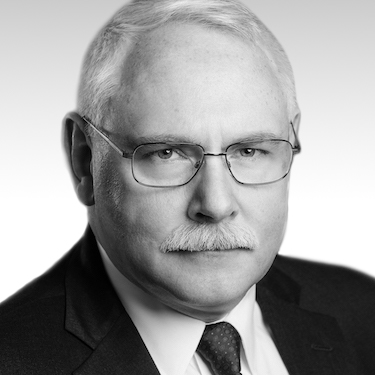
Cipher Brief Expert Tim Willasey-Wilsey is a Visiting Professor at King’s College, London and a former senior British diplomat. From 1996 to 1999 he was senior advisor to the British government on overseas counterterrorism.  This piece was first published by RUSI in London.  The views do not represent those of RUSI.


Analysis of openly available sources indicates that a British report shared with the US in December 1998 described an early stage of the 9/11 plot.


EXPERT PERSPECTIVE — Two extracts from Presidential Daily Briefs (PDB) are given some prominence in the 9/11 Commission report into the terrorist attacks in New York and Washington on 11 September 2001. One is from a PDB delivered to President Bill Clinton on 4 December 1998, and the other is from a PDB given to President George W Bush on 6 August 2001. Both are presented inside a textbox and both contain intelligence ‘from a friendly government’ which provided the first and only significant suggestion that Al-Qa’ida (AQ) planned to hijack aircraft in the US.

Eight months after the attacks, under Congressional pressure, the Bush administration was obliged to reveal some details of the PDBs, and on 17 May 2002 the New York Times disclosed that ‘the report provided to the president on Aug. 6, which warned him that Mr. bin Laden’s followers might hijack airplanes, was based on 1998 intelligence data drawn from a single British source, government officials said today’. The British government was obliged to acknowledge that the intelligence came from British sources. The Guardian reported on 18 May that ‘The memo received by Bush on 6 August contained unconfirmed information passed on by British intelligence in 1998’. The Independent ran much the same story with additional detail.

Both PDBs quoted from one British report from December 1998. The key question is whether this report, with its significant deviations from what actually happened on the day, actually referred to the 9/11 operation. Subsequently published evidence points compellingly to this indeed being an early version of the 9/11 plan.

The heavily redacted British contribution was shown on pages 127 and 128 of the 9/11 Commission’s report. It reads:

‘On Friday December 4 1998 the CIA included an article in the Presidential Daily Brief (PDB) describing intelligence received from a friendly government about a hijacking in the United States.

‘SUBJECT. Bin Laden preparing to hijack US aircraft. Reporting [passage redacted] suggests bin Laden and his allies are preparing for attacks in the US including an aircraft hijacking to obtain the release of Sheikh Omar Abdal Rahman,  Ramzi Yousef and Muhammad Sadiq Awda. One source quoted a senior member of the Gamaat Al-Islamiya (GI) saying that “as of late October the GI had completed planning for an operation in the US on behalf of bin Laden but that the operation was on hold. A senior bin Laden operative from Saudi Arabia was to visit GI counterparts in the US soon thereafter to discuss options – perhaps including an aircraft hijacking. GI leader Islambouli in late September was planning to hijack a US airliner during “the next couple of weeks” to free Abdal Rahman and the other prisoners according to what may be another source. The same source late last month said that bin Laden might implement plans to hijack aircraft before the beginning of Ramadan on 20 December and that two members of the operational team had evaded security checks during a recent trial run at an unidentified New York airport.’


The Cipher Brief hosts private briefings with the world’s most experienced national and global security experts.  Become a member today.


In May 2002 the US National Security Advisor Condoleezza Rice issued a statement observing (correctly) that the report had mentioned ‘hijacking in the traditional sense’ with no indication that aircraft would be used as weapons of mass destruction. Her testimony to the 9/11 Commission made broadly the same point.

Indeed, even in late 1998, there was a profusion of threat reports of which the aviation strand was just one. The MI5 official history comments aptly that the Service was puzzled as to why there were so many more reports of threats than actual attacks: ‘Even the most reliably sourced intelligence received on this question usually consists of a snapshot of a proposed plan being discussed. Most of the reporting does not make clear how far advanced the plan is’ (Christopher Andrew, The Defence of the Realm, pp. 802–806). What MI5 did not realise at the time was that AQ operations could take up to three years from inception to execution.

Steve Coll writes that ‘Within the morass of intelligence lay ominous patterns. One was an interest by bin Laden’s operatives in the use of aircraft … yet at the counter terrorism security group meetings and at the CIA’s counter terrorist centre there was no special emphasis placed on bin Laden’s threat to civil aviation or on the several exposed plots where his followers had considered turning hijacked airplanes into cruise missiles’ (Steve Coll, Ghost Wars, pp. 419–420).

Although the December 1998 report appears fragmentary, there were a number of aspects of particular interest. The first was the name Ramzi Yousef. Yousef had studied electrical engineering at Swansea Institute from 1986 to 1990 before exploding a massive bomb under the World Trade Centre in February 1993 and then planning the Bojinka Plot against airliners in the Philippines in 1994. Yousef had been arrested in Islamabad in February 1995 and sent to the US, where he was tried and imprisoned for life. He was an energetic and imaginative terrorist, and his uncle Khalid Sheikh Mohammed was also known to move in terrorist circles.

The aviation link must have struck a chord, too. The British were also interested in Hussain Kherchtou, who had been in Kenya at the time of the Embassy bombings and was himself a pilot. He later provided a debrief to the FBI. His story and his courtship by the British came into the public domain because of a subsequent US court case and a talkative FBI officer.

The Egyptian angle also would have provoked little surprise. On 19 November 1995 Egyptian terrorists had blown up the Egyptian Embassy in Islamabad, killing 13 – only yards from the British High Commission compound with its exposed staff housing and kindergarten. The British had a miraculous escape that day.

The concern for the release of Sheikh Abdal Rahman, ‘the Blind Sheikh’, was consistent with the widespread devotion which the preacher inspired among Islamist radicals and particularly Egyptians. His imprisonment in New York for his part in Yousef’s attack on the World Trade Centre had caused significant distress among his many adherents, who all wanted his release.

The idea that AQ would strike the US had first surfaced in 1997 and felt like the logical next step. Only a month beforehand (in November 1998), AQ had attacked two US Embassies in Kenya and Tanzania, killing 224 people including 12 US citizens. These operations had served as a wake-up call for those who thought the AQ threat was being exaggerated, and some who even conceived of Osama bin Laden himself as a benign figure who had somehow got out of his depth.

There were also some puzzling elements in the report. The first was the rather outdated idea of hijacking an aircraft to demand the release of the Blind Sheikh. It felt more in tune with Palestinian terrorist methods of the 1970s, and it was already known that Ramzi Yousef had developed the idea of exploding full airliners in flight.

The involvement of Gama’at Islamiya (GI) seemed odd. Bin Laden was known to be close to Ayman Al-Zawahiri of Egyptian Islamic Jihad (EIJ), with whom GI were usually at daggers drawn. At the time GI were conceived of more as domestic Egyptian terrorists compared to the internationalist EIJ. Indeed, GI’s most recent operation had been the Luxor Massacre of November 1997, which killed 56 foreign tourists.


Go beyond the headlines with expert perspectives on today’s news with The Cipher Brief’s Daily Open-Source Podcast.  Listen here or wherever you listen to podcasts.


The name Islambouli carried great resonance. This was Mohammed Shawqi Islambouli, who had tried to assassinate Egyptian President Hosni Mubarak in Addis Ababa in 1995. His brother Khalid had been one of the assassins of President Anwar Sadat in October 1981 and had been tried and executed in Cairo. However, although Mohammed was thought to be in Afghanistan, he was not then known to be close to bin Laden, let alone Al-Zawahiri.

The dates made little sense. On the one hand an attack seemed imminent, but on the other hand it was ‘on hold’. But such is the nature of counterterrorist reporting: small fragments of a much bigger jigsaw.

Nonetheless, the report was taken very seriously on its receipt in the US. President Bill Clinton’s counterterrorism advisor Richard Clarke summoned his Counterterrorism Security Group. ‘To address the hijacking warning, the group agreed that New York airports should go to maximum security starting that weekend. They agreed to boost security at other East coast airports. The CIA agreed to distribute versions of the report to the FBI and FAA to pass to the New York Police Department and the airlines. The FAA issued a security directive on December 8, with specific requirements for more intensive air carrier screening of passengers and more oversight of the screening process, at all three New York City area airports.’

Of course, when 9/11 happened nearly three years later, there were two very significant differences. Although aircraft were indeed hijacked, they were used as missiles rather than as bargaining chips, and the terrorists were mainly Saudi and not Egyptian. So what happened between December 1998 and September 2001 which could explain these changes?

The 9/11 Commission report (drawing on material from the interrogation of Khalid Sheikh Mohammed) provides a fascinating section on AQ’s development of aviation methodology. Even before bin Laden had left Sudan in mid-1996, he had allegedly discussed the use of aircraft with Mohammed Atef: ‘(1) they rejected hijackings aimed at gaining the release of imprisoned comrades as too complex, because al Qaeda had no friendly countries in which to land a plane and then negotiate; (2) they considered the bombing of commercial flights in midair, as carried out against Pan Am Flight 103 over Lockerbie, Scotland, a promising means to inflict massive casualties; and (3) they did not yet consider using hijacked aircraft as weapons against other targets.’

So, why was the idea of a traditional hijacking still being discussed as late as December 1998? The answer must lie in the Egyptian jihadists’ determination to win the release of the Blind Sheikh. Mustafa Hamid, a journalist who was with bin Laden in Afghanistan, provides illuminating insight into the wrangling between EIJ and GI in Afghanistan. Hamid documents the tortuous process by which GI, with some reluctance, formed a union (‘The World Islamic Front against Jews and Crusaders’) with AQ, EIJ and others, but recounts how GI insisted on secrecy about their involvement. Hamid also describes GI’s determination to obtain the Blind Sheikh’s release and the involvement of one of their operatives in the African Embassy bombings (Mustafa Hamid and Leah Farrall, The Arabs at War in Afghanistan, p. 241 and pp. 263–266). So GI was indeed part of bin Laden’s group in Afghanistan and was involved in operations at the time of the December 1998 report.

However, bin Laden became increasingly irritated by the endless squabbling among the two Egyptian groups. Lawrence Wright, drawing upon a variety of sources, chronicles the disastrous attack on Luxor, which had the effect of alienating the Egyptian population from both groups. When on 23 February 1998 bin Laden’s second fatwa announcing the ‘World Islamic Front’ was published in an Arabic newspaper in London, GI were appalled, and some members tried to have Rahman pronounced emir instead of bin Laden. No wonder that Wright concludes that ‘bin Laden had had enough of the in-fighting between the Egyptian factions. He told both groups that their operations in Egypt were ineffectual and too expensive and that it was time for them to turn their guns on the United States and Israel’ (Lawrence Wright, The Looming Tower, pp. 290–296). This may explain why the December 1998 report mentions the operation being ‘on hold’. Between December and the spring of 1999, the GI team and Islambouli must have been stood down.

According to the 9/11 Commission report, in March or April 1999, Khalid Sheikh Mohammed (KSM) – who had hitherto allegedly been on the fringes of AQ – was summoned to Kandahar, where he discussed the aircraft plan with bin Laden and Mohammed Atef. Four operatives were chosen to begin work on the US project. However, ‘travel issues … played a part in al Qaeda’s operational planning from the very start. During the spring and summer of 1999, KSM realized that Khallad and Abu Bara, both of whom were Yemenis, would not be able to obtain US visas as easily as Saudi operatives like Mihdhar and Hazmi’. And so, the 9/11 plot developed with 15 of the 19 terrorists being Saudi nationals. Only Mohammed Atta was Egyptian.

KSM’s key involvement in the 9/11 plot makes it evident that there could not have been a second GI plot running in parallel, because KSM and Islambouli were close associates. Robert Baer and the 9/11 Commission report agree that KSM and Islambouli were working together in Qatar in the mid-1990s. For KSM it must have been difficult to abandon the rescue of his nephew, but he would have known that a traditional hostage release operation had none of the ambition or scale of bin Laden’s new thinking.

On 6 August 2001, only five weeks before the attacks, the December 1998 report featured once again in the PDB given to George W Bush at Crawford, Texas, entitled ‘Bin Laden determined to strike in US’. It began: ‘Clandestine foreign government and media reports indicate bin Laden since 1997 has wanted to conduct terrorist attacks in the US’, and concluded: ‘We have not been able to corroborate some of the more sensational threat reporting such as that from a [redacted] Service in 1998 saying that bin Laden wanted to hijack a US aircraft to gain the release of “blind Sheikh” Omar Abdal Rahman and other US-held extremists … Nevertheless, FBI information since that time indicates patterns of suspicious activity in this country consistent with preparations for hijackings or other types of attacks.’

The PDB of 6 August caused some discomfort to the Bush administration and led to a National Security Archive page devoted to that one PDB (of which the December 1998 British report was just one constituent part).

The CIA Director George Tenet, who had been a tireless pursuer of the AQ threat before 9/11 and a regular correspondent with and visitor to London, regretted that more had not been done ‘to protect the United States against the threat. To cite two obvious and tragic failures, only after 9/11 were cockpit doors hardened and passengers forbidden from carrying box-cutters aboard US commercial airliners’ (George Tenet, At the Centre of the Storm, p. 205).

The British report of December 1998 was fragmentary, and while it was certainly ‘sensational’, it was not half as sensational as the actual events of that unforgettable and tragic day.

The views expressed in this Commentary are the authors, and do not represent those of RUSI or any other institution.

Read more expert-driven national security insights, perspective and analysis in The Cipher Brief

The post The British and 9/11 appeared first on The Cipher Brief.

find more fun & mates at SoShow now !

Planetary alignment on Friday has offered sky-gazers around the globe a chance to witness a spectacular near-total lunar eclipse, the longest since the 1440s.

The fascinating astronomical phenomenon lasted three hours and 28 minutes – the longest in centuries, according to international space agencies. On Thursday and Friday, depending on local time zones, the Earth, Sun and Moon aligned in such a way that 97.4% of our natural satellite’s surface was darkened in shadow.

When the Moon came out of the shroud, it turned bloody or rusty red in sunlight.

The dramatic celestial show was visible in those parts of the globe where the Moon appeared above the horizon during the eclipse.

Sky watchers in North and South America, parts of Eastern Asia and Australia had a chance to witness the phenomenon.

In Russia, the partial eclipse could be seen in Siberia and the Far East. Russian space agency Roscosmos also shared images of the shadowed moon as seen from the International Space Station (ISS).

Adding to the astonishment, the Moon was very low in the sky for much of the eclipse, causing an optical illusion that made it seem larger.

While the full Moon travels through Earth’s shadow roughly two times a year, lunar eclipses are usually far shorter.

The latest event, due to its rare duration, might have affected people not only visually, but also emotionally, astrologers cautioned.

Like this story? Share it with a friend!

find more fun & mates at SoShow now !

People are weird. They cook and eat the strangest things. This time it’s an octopus stuffed inside a turkey, sitting on top of crab legs, and (optionally) garnished with bacon strips. This monstrous culinary invention was inspired by H.P. Lovecraft’s Cthulhu mythos, and honestly… it looks like a crime against food.

Cthulhu turkey.

Cthulhu turkey.

Cthulhu turkey.

Cthulhu turkey.

Cthulhu turkey.

Cthulhu turkey.

Cthulhu turkey.

Cthulhu turkey.

Cthulhu turkey.

Cthulhu turkey.

Cthulhu turkey.

Cthulhu turkey.

Cthulhu turkey.

Cthulhu turkey.

Cthulhu turkey.

Cthulhu turkey.

Cthulhu turkey.

Cthulhu turkey.

Cthulhu turkey.

Cthulhu turkey.

Cthulhu turkey.

If this gallery wasn’t disgusting enough for you, you should also check out pre-cooked canned chicken that we’ve previously featured on this fun and useful site. We know you’ll love it!

The post Meet Cthulhu Turkey: It’s a Turkey Stuffed With Octopus That People Actually Make first appeared on .

find more fun & mates at SoShow now !

All cities and towns in China, as well as “most” villages, will be covered by 5G networks by 2025, the Ministry of Industry in Beijing has announced in a new infrastructure development plan.

Under the plan, the number of 5G base stations per 10,000 people will be increased to 26, and gigabit optical fiber networks will be extended to most urban and rural areas of China, the Ministry of Industry and Information Technology (MIIT) announced on Tuesday.

Read more

FILE PHOTO.
China overtakes US in global wealth race

Digital infrastructure has been defined as a “strategic, basic and pioneering industry to help build a new type of digital infrastructure and support economic and social development,” according to MIIT official Xie Cun. 

Information technology will be “deeply integrated” with the economy and society, with the goal of spurring internet innovation and creating a business boom, the ministry added. Meanwhile, the authorities are working on “a new type of supervision system” as well as measures to protect users’ personal information and data.

Like this story? Share it with a friend!

find more fun & mates at SoShow now !

Rotterdam Mayor Ahmed Aboutaleb has described an anti-lockdown protest in his city as an “orgy of violence.” The Dutch demonstration devolved into a violent riot that saw police open fire on protesters.

Aboutaleb described the events of Friday night as an “orgy of violence,” after protesters packed Rotterdam’s central Coolsingel shopping street to voice their opposition to an ongoing partial lockdown, a ban on New Year’s Eve fireworks displays, and the possibility of a two-tiered system of freedom in the Netherlands, one of liberty for the vaccinated and restrictions for those without the jab.

Read more

A police squad car is seen engulfed in flames during a protest in Rotterdam, Netherlands, November 19, 2021.
2 wounded after shots fired at Covid protest in Netherlands

The protest soon got out of hand, and police said on Saturday that 57 people were arrested. Protesters were seen torching police vehicles and launching fireworks at police, who shot at them in response.

Aboutaleb said that the cops had been “forced” to use their weapons. “On a number of occasions the police felt it necessary to draw their weapons to defend themselves,” he told reporters. “They shot at protesters, people were injured.”

Police say at least seven people were injured. Two of these injuries were caused by police bullets, and the victims are still in hospital. One officer was hospitalized, while several others were treated at the scene for minor injuries.

Like this story? Share it with a friend!

find more fun & mates at SoShow now !

As the U.S. works toward getting more 11,000 Americans, diplomats and Afghan allies out of the country, what kind of Taliban should the U.S. expect to deal with in Afghanistan?  So far, there have been assurances from the Taliban that a new regime may not be as brutal as regimes past, but few who have worked with the Taliban believe the assurances.  How might the regime work with, or shelter groups like al-Qaeda, which is the reason why the U.S. entered into Afghanistan after 9/11.  And how might a massive-scale exodus of Afghans impact neighboring countries?

The Cipher Brief sat down with the former National Intelligence Manager for Iran at ODNI, Norman T. Roule to get his expert-level perspective.

Norman T. Roule, Former National Intelligence Manager for Iran, ODNI

Cipher Brief Expert Norm Roule served for 34-years in the Central Intelligence Agency, managing numerous programs relating to Iran and the Middle East. He served as the National Intelligence Manager for Iran (NIM-I) at the Office of the Director of National Intelligence from November 2008 until September 2017.  As NIM-I, he was the principal Intelligence Community (IC) official responsible for overseeing all aspects of national intelligence policy and activities related to Iran, to include IC engagement on Iran issues with senior policy makers in the National Security Council and the Department of State.

The Cipher Brief: How would you characterize the international community’s response to the Taliban victory in Afghanistan?

Roule:  Historians of the future will likely describe the response to the Taliban victory as a strange mix of apathy and confusion.

In terms of apathy, there is extraordinary irony in the fact that after spending so much blood and treasure to defeat Da’esh efforts to establish an extremist Islamic Republic in Syria and impose its oppression over Iraqis and Syrians, the international community failed to prevent the creation of an Islamic Republic in Afghanistan. Many of the arguments behind our involvement in Syria – from a refugee crisis to the need to deny international Islamic militants a home to birth new terror groups – apply to Afghanistan. Whether or not one supported this decision, it is hard to avoid thinking that this episode will embolden militants worldwide.

In terms of confusion, we seem to be unable to accept that no one can predict the course and pace of crowd dynamics that so quickly eroded Afghan resistance. We live in a world where people acknowledge their inability to predict who will win our presidential elections but insist the Intelligence Community can somehow predict the day events will occur in a denied environment. But such a worst-case possibility should have been part of the planning deck and resourced on the ground accordingly.

The Cipher Brief: How would you expect the international community to respond in the coming days?

Roule: Absent a Taliban attack, operations at the airport should proceed more smoothly as our response architecture grows. Beyond that, much depends on how the Taliban act in the coming weeks. The group is not a monolith. Their success was highly likely as much a surprise to them as anyone. As they define their path and choose their leaders, there will be internal debates, jockeying for power, and perhaps some violent infighting.

In terms of indicators of the regime’s direction, we may want to consider the following questions:

First and foremost, how will the Taliban respond to our ongoing evacuation? Thus far, they seem willing to let us leave untouched, probably believing that the sooner we get out, the easier it will be for them to take control. At the same time, international media coverage of the evacuation will impose a strategic embarrassment on Washington.

Second, to what extent have the Taliban changed? They certainly understand that diplomacy played a role in their victory. Some of their leaders have spent hundreds of hours with foreign diplomats and traveled to multiple foreign capitals. How will these leaders merge such experiences into governance with more insular colleagues? They are likely to talk initially about compromise regarding women’s rights and inclusion of opponents in the government, but this may well be another effort to buy time. The international community has few pressure points over the group. How this plays out will be a good indicator of how they plan to run the country.

Next, how will they handle the issue of al-Qaida and other terrorists? We cannot overlook the deep connections between the Taliban and al-Qaida. If they believe the international community will limit its response to demarches, press statements, and empty sanctions, many in the group will be inclined to allow al-Qaida to reorganize.

Last, I would look at the refugee issue. They are likely to welcome external aid and allow at least some humanitarian groups to remain in country. Doing so requires no political concessions, addresses a domestic headache, and provides an opportunity for corruption. Humanitarian groups also offer a lever the Taliban can use against the West, i.e., refrain from criticizing us, or we will block your humanitarian operations. The Houthis have done this with great effect in Yemen.


The Cipher Brief hosts private briefings with the world’s most experienced national and global security experts.  Become a member today.


The Cipher Brief: How do you think will China, Russia, and other adversaries will respond to the withdrawal? 

Roule: Chinese propagandists have aggressively exploited our evacuation from Afghanistan. Its media is already claiming that these events show Taiwan that “once war breaks out in the Straits, the island’s defense will collapse in hours, and the US military won’t come to respond.” China’s press has also reportedly announced that the U.S. will not stand by Hong Kong activists.

Beijing, Tehran, and their proxies will likely point to the withdrawal as evidence that the U.S. is a declining power, unwilling or incapable of defending its friends. It will be lost on no one that whereas the U.S. has abandoned Afghanistan, Russia, China, and Iran have not wavered in support of their – admittedly few and otherwise isolated – allies.

In a worse case, if our adversaries believe the withdrawal reflects a lack of national resolve, they may be tempted to test our will on other issues. In this case, a miscalculation could lead to a conventional war in another theater.

The Cipher Brief: What would you say to those who say that the withdrawal demonstrates that the U.S. will only focus on strategic interests?

Roule:  Certainly, this argument has an appeal. It is true that our strategic adversaries like nothing better than the U.S. expending resources and diplomatic energy in such areas as Afghanistan, in part because we are, in essence, protecting their interests for free. But it does beg two questions.

First, what will happen differently next year regarding China, Russia, efforts to combat climate change, and cyber actors, now that we are out of Afghanistan? Second, what exactly is a U.S. strategic interest that we would protect? Estonia? Bahrain? Taiwan?

This argument also glosses over how others respond to such a posture. If a country perceives itself outside the international community’s protection, it will likely accommodate an aggressor. Our next call for a coalition of the willing will likely meet with less enthusiasm.

U.S. influence depends on the respect shown to us in multiple arenas. The echoes of this localized respect become self-reinforcing. We should think about what happens to collective international security if these echoes are silenced.

Last, this argument inherently argues that values are strategic interests. Unless violence directly touches Americans, we will limit our response to diplomacy and public statements. Such protests are unlikely to stop those behind a future Srebrenica massacre or the Rwandan genocide. Indeed, one can make a case that such a response might even encourage such events.

The Cipher Brief: How can the U.S. now best demonstrate its national resolve?

Roule:  As the saying goes, the best way to demonstrate national resolve is to demonstrate national resolve. Fair or not, this episode will tar the Biden administration. It doesn’t help that some allies reportedly have complained that the U.S. did not sufficiently consult with them on its decision to withdraw. Public criticism of the withdrawal decision by some of our closest European partners is growing. Adversaries will now consider their action through the lens of Afghanistan, much as the post-Vietnam malaise encouraged Soviet aggression in the 1970s.

I am not saying that we can’t reverse this situation. The U.S. withdrawal from Lebanon in 1984 caused many to question U.S. resolve. Although it did signal an end to U.S. (and international) efforts to eradicate Hezbollah, Reagan’s actions in other arenas (to include Afghanistan) restored the image of U.S. national resolve. Difficult diplomacy and a demonstration of our willingness to use military power when needed lay ahead.


Go beyond the headlines with expert perspectives on today’s news with The Cipher Brief’s Daily Open-Source Podcast.  Listen here or wherever you listen to podcasts.


The Cipher Brief: What does the return of the Taliban mean for al-Qaeda?

Roule:  There is little reason to believe the Taliban-Al-Qaida relationship will not resume, although al-Qaeda is a fragmented and a pale version of its original stature. Nonetheless, it is easy to imagine the delight of its remaining leadership and cadres. Elements in Iran will likely seek to return to Afghanistan, perhaps assuring Iran that in exchange for tolerance of periodic transit of Iranian territory, the group will use its influence with the Taliban to protect Iran’s interests. We should watch for any signs of a return to Afghanistan by Zawahiri’s deputy, Sayf al-Adel, who is currently in Iran with other members of the group’s leadership council.

But al-Qaeda is not the only actor on this stage. Its leader Ayman al-Zawahiri has not appeared for months and has far less influence than Osama Bin Laden. Afghanistan also hosts al-Qaeda in the Indian Subcontinent (AQIS), ISIS, and other groups. The Taliban have emptied Afghanistan’s prisons which held deeply committed and dangerous militants who may gravitate to whatever new militant leadership might arise. But a lethal threat to Americans is sure to appear. The only questions are its size, goals, and reach.

The Cipher Brief: What does the U.S. withdrawal mean for China and Russia?

Roule: Both countries have sought to undercut U.S. influence in Afghanistan. They will each be delighted with the rhetorical violence of our internal debate over the withdrawal. But they also enjoyed the stability our engagement provided in a country so close to their borders.

Both countries have developed relations with the Taliban. I believe each hosted a Taliban delegation in recent weeks. It shouldn’t be lost on us that neither country felt compelled to withdraw its personnel from Kabul. That’s a pretty good sign of their confidence in the relationship.

Outside of Afghanistan, each will use the withdrawal to increase their influence with Central Asian actors – including Turkey. Coordination on terrorism and narcotics issues will come most easily. For example, Uzbekistan will worry that the Taliban will renew support of the violent Islamic Movement of Uzbekistan, which has long maintained a presence in Afghanistan.

China’s concerns will be threefold. Beijing will use economic and diplomatic inducements to ensure that the Taliban do not encourage unrest among China’s oppressed Uighur population, let alone support the East Turkistan Islamic Movement or other Chinese militants in Xinjiang province. Next, Beijing will want to explore the Belt and Road access Afghanistan offers. Last, China will likely test whether it can achieve a commercially viable deal to mine Lithium and other minerals. In that mine operations require many years to develop and a vast amount of capital to construct, such arrangements are likely to be few given Afghanistan’s unpredictable political and security environment.

As for Russia, the U.S. withdrawal offers a chance for greater influence in Central Asia. We should watch for signs of new Russian military bases in the region. Moscow’s concern that Afghanistan will once more become a sanctuary for anti-Russian terrorists will also drive its relationship with the Taliban.

The Cipher Brief: What about Iran and Pakistan?

Roule: Iran has long maintained a relationship with Taliban elements. Reportedly, this involved sanctuary and provision of some weaponry. Tehran’s goals were to hedge its bets in Afghanistan, influence the enemies of the U.S., and protect the Shi’a of Afghanistan.

On the last point, Iran may have much work to do. Taliban personnel reportedly tore down Shi’a posters as they entered Kabul. Tehran must now contend with the consequences of refugees and the rise of warlords on its border.

The current head of Iran’s Qods Force, Esmail Qaani, has considerable experience on Afghan issues, and I expect he will play a prominent role in Iran’s response. We should watch to see how the Qods Force deploys its seasoned Afghan Fatemiyoun proxies from Syria.

Pakistan’s long-time relationship with the Taliban will give it more influence over the group than other countries. But Islamabad also will be on the receiving end of a flood of refugees, renewed militant terrorism in its loosely-controlled border areas, and Western pressure for its support of the Taliban. Ties to the Taliban may also complicate Islamabad’s relationship with India and China.

The Cipher Brief: What does this mean for the U.S. intelligence community?

Roule: The counterterrorism cadre of the US intelligence community and its partners have achieved extraordinary successes in the last years. But their work is now more complicated but no less urgent. For example, our withdrawal has reduced collection streams and potential access when the Afghanistan-based terrorist threat has only begun to grow. This challenge arrives as we shift counterterrorism resources from al-Qaeda to domestic extremists, cyber threats, and China.

The Cipher Brief: Any final comments?

Roule: If I may, I would like to close with a couple of brief comments.

First, we need to do everything we can to support personnel on the ground in Afghanistan. They – and their support teams at home – are trying to restore order in the middle of a hurricane. We are watching heroism at its best.

Next, the narrative of Afghanistan is unsurprisingly partisan. But politics shouldn’t obscure the truth. For more than twenty years, thousands of American and coalition partners volunteered to risk their lives in Afghanistan. We didn’t come to colonize. We didn’t steal Afghan resources. The operational goals were to bring Bin Laden to justice, destroy al-Qaeda, and prevent Afghanistan from becoming a haven for the group in the future. We also worked to transform Afghan society. The need for this last effort wasn’t apparent at the outset of our invasion. But it was likely unavoidable if we hoped to satisfy our values and enable Afghan society to confront its militant population. This effort represents the best of our values, and we owe all who served in this arena our most profound respect. Afghans who have participated in their country’s efforts during the past two decades will endure tremendous suffering. But they remain Afghanistan’s best hope and they deserve our support. Last, we need to end the fiction that Afghans didn’t fight for their country. Tens of thousands of Afghans were killed and wounded in the fight against al-Qaeda. Many involved in this fight are reportedly being sought door-to-door by the Taliban. Discounting their efforts may serve a political narrative, but it does them a terrible injustice.

Read more expert-driven national security insights, perspective and analysis in The Cipher Brief


The post What Should the U.S. Expect from the ‘New’ Taliban Regime? appeared first on The Cipher Brief.

find more fun & mates at SoShow now !

The EU must quickly seal its external borders to stem the flow of migrants who are no longer welcome in the 27-member bloc, according to Slovenia’s interior minister, whose country currently holds the presidency of the EU Council.

Speaking at the ‘Sarajevo Migration Dialogue’ on Thursday, Interior Minister Ales Hojs said EU countries were preoccupied recently with the coronavirus pandemic, the fall of the government in Afghanistan, and now a migrant crisis on the Poland-Belarus border, which he said was a hybrid war waged by Minsk against the EU.

Read more

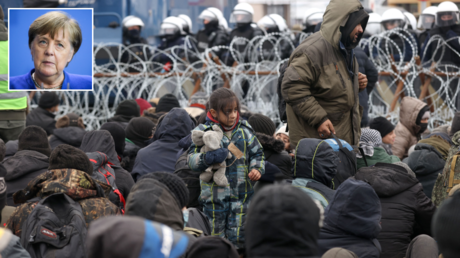
Migrants gather on the Belarusian-Polish border on November 15, 2021. © AFP / OKSANA MANCHUK; (inset) German Chancellor Angela Merkel. © AFP / MARKUS SCHREIBER
Germany agreed on plan to open humanitarian corridor for refugees on Poland-Belarus border – Minsk

“All three have additionally contributed to the increase in numbers of illegal migrants moving towards Europe and the Balkans, destabilizing the European Union,” Hojs told reporters.

The Slovenian minister said the current situation was similar to the 2015 influx of refugees and migrants from the Middle East and North Africa, when the EU admitted over one million people across its borders.

This time the situation is different, Hojs said, warning that “there is no more ‘refugees welcome.’”

“I believe that external borders must be secured, even with fences if necessary,” Hojs said, saying that he supported a plan for Brussels to finance the building of fences to reinforce the bloc’s borders.

He said it was important to strengthen cooperation and partnership across the EU in order to better manage migration and maintain security.

Thousands of migrants have been trying to cross the Belarus-Poland border in an attempt to reach the EU. They have been stranded at barbed-wire fencing with Polish border guards repelling their attempts to cross. Warsaw has accused Belarus of orchestrating the crisis to destabilize the EU and “weaponize” migration in an effort to have sanctions lifted.

A spokesperson for Belarusian leader Alexander Lukashenko claimed on Thursday that Germany agreed to open a humanitarian corridor for 2,000 refugees on the border.

If you like this story, share it with a friend!

find more fun & mates at SoShow now !

A gunman injured two civilians, one of them fatally, and two police officers before being shot dead by security forces near Jerusalem’s Western Wall on Sunday morning, Israeli police said.

The civilian victims were taken to Shaare Zedek Medical Center. One, who was in his 30s, succumbed to his injuries at the hospital. The other, a 46-year-old, is said to have suffered moderate injuries. Two police officers were hurt by shrapnel.

In a video clip shared on social media and purportedly filmed at the scene, multiple gunshots could be heard amid agitated shouting. Security officers could then be seen standing around what appears to be a dead body. Witnesses speculated it was that of a “terrorist.”

The gunman, whose identity was not immediately disclosed, was killed during the incident. Police said he had used a homemade submachine gun.

DETAILS TO FOLLOW

find more fun & mates at SoShow now !

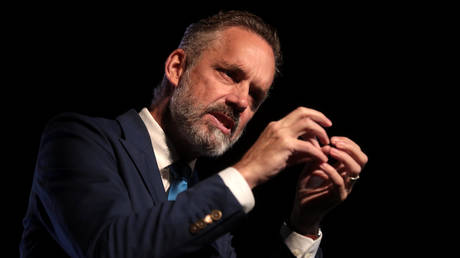
Controversial psychologist and author Jordan Peterson claimed Western countries had no “moral right” to force developing nations to reduce pollution output, noting instead that improving their economies was key.

During an appearance on the BBC’s ‘Question Time’ show on Thursday, the Canadian professor noted that the focus of climate change policies should be on incentivizing the development of cheap energy in poorer polluter countries.

“The best long term solution is to try to make developing countries as rich as possible, and the best way to do that is not control their pollution output, but to help them develop the cheapest energy they can possibly manage as fast as they possibly can,” Peterson said.

The debate saw UK undersecretary for employment Mims Davies suggest that measures taken to tackle climate change should not come at the “expense of developing countries.” But Peterson countered that it “absolutely, 100% will be [at their expense].”

I don’t think we have any moral right in the West at all to do that.

Read more

FILE PHOTO: Jordan Peterson speaking with attendees at the 2018 Student Action Summit hosted by Turning Point USA in West Palm Beach, Florida, December 20, 2018 © Flickr / Gage Skidmore
Jordan Peterson hammers ‘totalitarian’ Covid rules

He also criticized the recent COP26 climate change conference for failing to explore ideas on how best to improve national economies in the developing world, noting that he saw “very little of that sort of idea” coming out of the UN summit.

In the final hours of the two-week conference, China and India had intervened to soften the wording around the use of coal in the Glasgow Pact. The two countries demanded a change in the final text of the agreement that called for coal to be phased out, revising this to “phasing down unabated coal.”

The move prompted COP26 president and UK minister Alok Sharma to declare that China and India would have to “justify” their actions to countries that were more vulnerable to global warming effects. However, officials in both Beijing and New Delhi have countered that the criticism was unfair.

If you like this story, share it with a friend!

find more fun & mates at SoShow now !