Behind the Headlines brings you expert perspectives on today’s headlines by telling you more than what happened, but also what it means.  You can also listen to The Cipher Brief’s Daily Open-Source Collection Podcast wherever you listen to podcasts.

Jack Devine, Former Acting Director, National Clandestine Service, CIA

Cipher Brief Expert Jack Devine, a 32-year CIA veteran. Devine served as both Acting Director and Associate Director of CIA’s operations from 1993-1995.  He is a founding partner and President of The Arkin Group, which specializes in international crisis management, strategic intelligence and investigative research. Devine is the author of Spymaster’s Prism: The Fight Against Russian Aggression.

Russia’s multi-pronged support of Myanmar is a microcosm of its strategy in Southeast Asia.

In the months since Myanmar’s February military coup, Russia and China have been the junta’s most powerful allies, but Russia has exploited regional instability to position itself as a third path between China and the West. While China was closer with the former Myanmar government than the military, it was also concerned about the government’s ties with the West and potential interference in its development efforts, particularly its Belt and Road Initiative. Russia, on the other hand, doesn’t depend on stability in Southeast Asia to the same degree as China and can instead take advantage of warring factions. Last month, on his first trip outside of the immediate region since February, Myanmar’s junta leader Min Aung Hlaing went to Moscow to meet with high-level Russian defense officials instead of heading to Beijing. Hlaing has reportedly visited Russia seven times within the past decade and previously stated that over 6,000 Myanmar officers have studied at Russian military academies. According to data from the Stockholm International Peace Research Institute (SIPRI), Russia was responsible for almost 40% of arms sales to Myanmar from 1999-2018, second only to China. SIPRI data further indicates that Russia has been Southeast Asia’s largest arms supplier over the past two decades, counting Vietnam and Laos as top customers. But Russia is offering the region more than arms and has promised Myanmar two million Covid-19 vaccines and assistance in the nation’s own vaccine production efforts. Russia has also been trying to expand free trade agreements between its Eurasian Economic Union (EAEU) and Southeast Asian countries, most recently getting Indonesia to sign on to the deal. Stepping even further into soft power efforts, last week Russia’s foreign minister met with his Bangladeshi counterpart and agreed to encourage Myanmar to engage in dialogue with Bangladesh on the Rohingya crisis.


Get your free daily Open-Source Collection report in The Cipher Brief newsletter or take it on the go as a podcast.  Listen here or wherever you listen to podcasts.


Leftist, former schoolteacher Pedro Castillo is declared President of a divided Peru, projected economic growth could play in his favor. 

Peru, like many of its neighbors, has been battling the triple and interwoven threat of Covid-19, social unrest, and severe economic downturn. But for the past several years Peru has also been challenged by sharp divisions between its executive and legislative powers. Last November, Peru’s unicameral legislature voted to impeach then-President Martín Vizcarra, citing mismanagement of the pandemic and corruption, in a move that outraged thousands. The June presidential elections were likewise fraught. Castillo’s right-wing rival Keiko Fujimori, who is also under investigation for corruption, alleged electoral fraud and the Peruvians initiated a six-week long investigation, eventually finding Castillo the rightful victor. The EU, U.S. and 14 electoral missions deemed the elections legitimate, and the U.S. called the election a “model of democracy” for the region. Castillo, who previously worked as an elementary school teacher and has never held public office, will be greeted by a political establishment that is almost entirely against him. Peruvian citizens are also deeply divided, and many urban elites reportedly moved their money overseas out of fear for Castillo’s economic policies. But Castillo’s Peru Libre party holds fewer than 40 of 130 seats in the legislature and Castillo has already recruited several moderate advisors. Further, he has backed away from talk of nationalizing Peru’s lucrative multinational mining, oil, gas, and hydrocarbon companies, instead pledging to raise taxes on mining firms. Prices of copper and gold, two of Peru’s most critical exports, remain high and Covid-related trade obstacles are expected to ease over the coming months. While it is uncertain how effective Castillo will be, or where he will ultimately fall on his policies, positive projections for Peru’s export-based economy will likely play in his favor.


The Cipher Brief hosts private briefings with the world’s most experienced national and global security experts.  Become a member today.


Enjin becomes first blockchain platform to gain acceptance into the United Nations Global Compact, signaling widespread range of corporate sustainability efforts.

On Tuesday, Enjin, an innovative blockchain technology company focused on non-fungible tokens (NFTs), became the first such company to join the United Nations Global Compact. Upon admission, Enjin stated that it hopes to use NFTs to promote sustainability and equality in line with the UN pact that encourages businesses and firms worldwide to adopt more environmentally friendly and socially responsible practices. NFTs have surged in popularity in the past two years, and during the first quarter of 2021 NFT sales reportedly exceeded US $2 billion. In essence, an NFT is a way to prove ownership of a unique virtual item. It’s a unit of data that’s stored on a blockchain, or digital ledger, that certifies exclusive ownership of digital files ranging from photos to sports trading cards. Enjin, which is headquartered in Singapore, has focused its NFT efforts on games and apps and is reportedly able to operate with a lower carbon footprint than Bitcoin due to a slimmed-down verification model that requires less energy. This week, the UN Global Compact not only included Enjin as a member, but gave the company its highest membership rank, sending a signal that it’s interested in promoting such an environmental effort by crypto and blockchain entrepreneurs. For its part, Enjin has stated that it wants to employ the technology in carbon capture companies, fighting climate change in the process. The Head of the UN AI and Robotics Center remarked that during the global struggle to recover from the pandemic we should take advantage of new technologies like AI and blockchain to better equip ourselves for the future.

Read more expert-driven national security insights, perspective and analysis in The Cipher Brief


The post Behind the Headlines: Russia in Myanmar, Peru’s New President and what Enjin means for the United Nations Global Compact appeared first on The Cipher Brief.

find more fun & mates at SoShow now !

A strike of more than 20,000 metal workers in Cadiz, Spain has halted the operations of key manufacturing plants, including Airbus and Alestis, with barricades erected, roads blocked, and vehicles burned.

Cadiz, the capital of the southernmost province of the country, has become one of the main sites of protests over working conditions. The Avenida de Astilleros is currently closed to traffic, with protesters burning vehicles.

Picket lines also blocked access to major shipbuilding and industrial sites of key local companies, such as Airbus, Navantia, Dragados, Alestis, and Acerinox, causing their work to be interrupted. 

Protesters also cut off access to major industrial zones in Puerto Real and Campo de Gibraltar with barricades and bonfires. Rail traffic is also being obstructed, with pipes thrown onto the tracks.

The national police have been deployed to bring the situation under control and to protect the industrial sites. At one point on Tuesday, the strike turned into a full-scale confrontation, with protesters throwing rocks and screws at police, who reacted by firing rubber bullets. One person was arrested. 

The Federation of Metal Entrepreneurs (FEMCA), which represents major employers in the region, reiterated earlier its offer for dialogue with the workers, while stressing that the union’s requests were “unjustified” and “disproportionate.”

The workers say they will continue the strike until FEMCA provides them with an acceptable agreement.

Think your friends would be interested? Share this story!

find more fun & mates at SoShow now !

Once you’ve reached optimal cat lady status, there comes a time in your life where you think it’s necessary to start massaging your cat’s head. Luckily, someone has already created a cat head massager, and it is most likely the most specific niche product you could think of. You can get it on Amazon or AliExpress.

Cat head massager.

If your cat didn’t love you before, rest assured he will love you now. Your cat will be so thankful for the head massage that he might even ignore you for less time throughout the day, and if you’re really lucky, your cat may even acknowledge your existence. …Or you can use it on yourself if you have a particularly small head.

Cat head massage.

Cat massage.

Feels good, man.

Feels good.

In case you feel like you should have this thing in your (and your cat’s) life, you can get it on Amazon or AliExpress.

The post Cat Head Massager Is The Cutest Thing Ever first appeared on .

find more fun & mates at SoShow now !

Criminals convicted of multiple cases of rape could face chemical castration in Pakistan as the country’s parliament supported new legislation aimed at tackling the rise in sexual offenses there.

The amendments to existing legislation, which allow for speedy conviction and harsher punishments for rapists, have been voted in by the MPs on Wednesday.

They introduce the death penalty or a life sentence for gang rape as well as chemical castration for repeat sex offenders, with the consent of the convict.

Chemical castration was described in the bill as a process through which “a person is rendered incapable of performing sexual intercourse for any period of his life, as may be determined by the court through administration of drugs.”

Read more

RT
High court rules Pakistan’s ‘two-finger’ virginity test for rape victims unconstitutional

It’s planned to establish special courts across the country to make sure that verdicts in sexual assault cases are delivered “expeditiously, preferably within four months.” If chemical castration is assigned as a punishment, it “shall be conducted through a notified medical board,” according to the new legislation.

Mushtaq Ahmed, a senator for the religious Jamaat-i-Islami party, had earlier denounced the bill as un-Islamic. Ahmed argued that there was no mention of chemical castration in Sharia law and that rapists are to be hanged in public.

By resorting to drugs to reduce the libido of repeat sex offenders, Pakistan joins South Korea, Poland, the Czech Republic and some US states, where chemical castration has been introduced.

The measure was put on the table a year ago by Pakistani President Arif Alvi in response to a vast public outcry over a spike across the country in cases of rape involving both women and children.

Back then, Amnesty International decried chemical castration as a “cruel, inhumane” treatment, advising Islamabad to instead focus on reforming its “flawed” justice system and to ensure justice for the victim.

Local NGO War Against Rape told Reuters last year that less than 3% of sexual assault or rape prosecutions in Pakistan result in a conviction.

If you like this story, share it with a friend!

find more fun & mates at SoShow now !

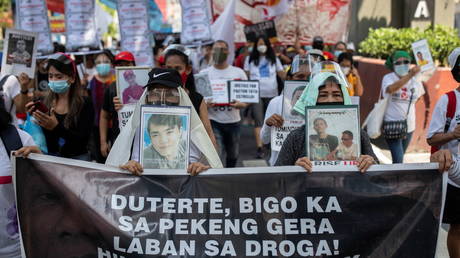
The International Criminal Court has halted an investigation into alleged rights abuses carried out by Philippines authorities as part of a harsh crackdown on the drug trade, saying it is reviewing a deferral request from Manila.

The ICC’s chief prosecutor Karim Khan said the probe was suspended after the Philippines government filed a request to defer the case earlier this month, according to court documents cited by Reuters on Friday. 

“The prosecution has temporarily suspended its investigative activities while it assesses the scope and effect of the deferral request,” he wrote, adding that the court is seeking more information from the government in Manila.

Based in The Hague, the ICC allows states to ask for postponements if they conduct their own investigations into the charges in question. President Rodrigo Duterte’s administration filed its deferral request on November 10, while the country’s Justice Ministry announced its own investigation into the alleged abuses late last month.

Read more

Relatives of drug war victims hold photographs of their slain loved ones with placards calling for justice (FILE PHOTO) © REUTERS/Eloisa Lopez
Philippines announces probe into thousands of killings during Duterte’s war on drugs as initial review suggests abuses took place

The court initially opened the probe in September over allegations that Philippines police had carried out thousands of extrajudicial executions and used other brutal tactics against suspected drug dealers, and that Duterte gave implicit backing to those actions. Activists have accused authorities of killing innocent people, including children, though the police insist they only use violence in self-defense.

While Duterte has declined to cooperate with the ICC probe, saying it has no authority on the island nation, and even pulled the Philippines out of the international body in 2019, the court has jurisdiction to investigate alleged violations committed by the country while it was still a member.

The president’s chief legal counsel, Salvador Panelo, confirmed the deferral request in brief comments to Reuters, saying “There is no inconsistency with the request for suspension of action,” though he did not elaborate.

Since its founding some 20 years ago, the ICC has successfully convicted just five people of war crimes or crimes against humanity – all leaders of armed movements in Africa, including in Mali, Uganda and the Democratic Republic of the Congo.

Think your friends would be interested? Share this story!

find more fun & mates at SoShow now !

The EU’s drug regulator has backed the emergency use of Merck’s pill for the treatment for clinically vulnerable Covid-19 patients as cases surge across the continent.

On Friday, the European Medicines Agency (EMA) “issued advice” backing the emergency use of the drug developed by Merck in collaboration with Ridgeback Biotherapeutics, although it has not yet been authorized by national authorities.

Read more

© Reuters / Piroschka van de Wouw
EMA green lights new Covid treatments

In a statement, the drug regulator said the medicine called Lagevrio – also known as molnupiravir or MK 4482 – “can be used to treat adults with Covid-19 who do not require supplemental oxygen and who are at increased risk of developing severe Covid-19.

It said the treatment should be administered as soon as possible after Covid-19 is diagnosed and within five days of the start of symptoms. The medicine should be taken twice a day for a period of five days.

The EMA listed the potential side effects of the capsules, including mild or moderate diarrhea, nausea, dizziness and headache. The treatment is not recommended for pregnant women.

The watchdog announced earlier on Friday that it had begun reviewing Pfizer’s medicine Paxlovid for Covid-19 with the same goal “to support national authorities” who may decide on its early use prior to marketing authorization in light of rising cases and deaths in Europe.

On Friday, Austria announced it would enter a new nationwide lockdown from Monday and make vaccination mandatory, while Germany’s health authorities claimed the country had turned into “one big outbreak.”

Both Pfizer and Merck have requested approval for their coronavirus medicines from the US Food and Drug Administration, but it is unclear when it might be granted.

Think your friends would be interested? Share this story!

find more fun & mates at SoShow now !

A pack of wild boars were rounded up and euthanized after one of the animals attacked a police officer in the streets of Hong Kong – the opening shot in a pitched battle between the feral hogs and the city’s law enforcement.

A group of veterinarians took seven wild boars into custody, euthanizing the beasts after knocking them out with dart guns in an area near the financial center of the city, according to a statement from Hong Kong’s Agriculture, Fisheries, and Conservation Department on Thursday.

The pigs were captured after one attacked a police officer last week, an act which reflects the city’s new policy toward the animals: stop them before they attack again.

The aggressive boar knocked down a police officer by biting his leg last week as the two faced off in a residential car park, the pig only losing the battle after falling off the building to its death. The wild boars are apparently “accustomed” to wandering back and forth along the roadway, begging for food from pedestrians and vehicles alike. Previously, the city had handled the population by capturing and sedating the animals, then relocating them to “remote areas,” according to the the department.

Hong Kong CEO Carrie Lam vowed to increase penalties for those citizens found feeding the boars, which have reportedly been responsible for some 30 attacks in recent years. While residents are warned not to feed the boars so as not to encourage population growth or disease outbreaks, the animals are a favorite among some visitors. Still, Lam insisted “we can’t simply sit on our hands while things deteriorate.”

Animal rights groups have responded with a protest letter against a policy of euthanasia, pointing out that most visitors do not feed the boars and arguing resources should be directed toward stopping the human activity rather than blaming all the boars. Allowing the boars to be captured and killed “ignores their right to live and considers their existence in urban areas as a capital offense,” the letter read.

Like this story? Share it with a friend!

find more fun & mates at SoShow now !

General Joseph L. Votel (Ret.) joined BENS as CEO & President in January 2020 following a 39-year military career where he commanded special operations and conventional forces at every level; last serving as the Commander of U.S. Central Command (CENTCOM) where he was responsible for U.S. and coalition military operations in the Middle East, Levant, and Central and South Asia. General Votel’s career included combat in Panama, Afghanistan, and Iraq and he led the 79-member coalition that successfully liberated Iraq and Syria from the Islamic State Caliphate. General Votel preceded his assignment at CENTCOM with service as the Commander of U.S. Special Operations Command and the Joint Special Operations Command.

The Cipher Brief:  Did you ever envision that the U.S. would pull out so quickly or completely leaving the Afghan military on its own without U.S. air support?  

General Votel: I did not anticipate this during my time – but once the President sets a hard departure date – then a fast withdrawal is inevitable.  No Commander wants to accept unnecessary risk with troops on the ground when you are up against a clearly articulated departure date.

The Cipher Brief: Intelligence assessments wildly missed the mark on how fast Kabul would fall, what factors contributed most directly to this? 

General Votel: Certainly, the departure of our own capabilities is a big part of this; the lack of direct contact with Afghan leaders is another important factor; and, of course, once it was clear that we were departing (and took our Commander out) — we lost priority and access with our normal and reliable Afghan intelligence sources.

The Cipher Brief: U.S. personnel are facing a deteriorating security situation at the Kabul airport while U.S. forces are still deploying for the contingency operation, another sign that the administration underestimated how fast the Taliban would reach Kabul. The U.S. could have chosen to slow the Taliban advance using airpower, why didn’t it happen, do you think? 


The Cipher Brief hosts private briefings with the world’s most experienced national and global security experts.  Become a member today.


General Votel: I think it is very clear that this was no longer a priority for our Government.  The mission right now, at least articulated over the weekend, is about supporting evacuation of the diplomats and helping with the departure of those Afghans who assisted the US and meet the criteria for evacuation.  While I don’t know this for certain — I believe what we were trying to do with over the horizon air support in a rapidly developing situation, was not optimal or overly effective.  It doesn’t seem to have done much – if anything.

The Cipher Brief: The U.S. has allowed U.S. supplied military hardware, weapons and technology to fall into the hands of the Taliban, a group responsible for the deaths of U.S. personnel and thousands of innocent Afghans.  The U.S. government holds private citizens and corporations accountable for far lesser violations of export violations involving dual-use technology or military equipment, etc.  How should Americans think about this situation now, where the Taliban will use equipment, paid for the by the U.S. taxpayer, to potentially perpetrate acts of violence against U.S. interests, and erode democratic values that the U.S. tried to introduce to Afghanistan?  

General Votel: Not sure on this.  Unfortunately, it is not the first time we have seen this — remember ISIS in 2014, in Mosul?  I suspect these will be more trophy pieces than they will be hard military capability – with the exception of small arms, mortars, and artillery.  Most of this will be difficult for the Taliban to sustain – and they probably prefer their own gear, anyway.

The Cipher Brief:  There is a lot of anger among the national security community right now.  What would you say to individuals who have suffered because of the U.S. role in Afghanistan, who may be feeling anger and rage?  

General Votel: I can’t really comment on anger in the national security community — I am sure that exists, but the sentiment that seems more strong to me, is disappointment.  No one wants what we are seeing now.  I think most security professionals can accept a decision to depart by the Commander in Chief — that is well within his authority, and everyone understands this; what is harder to accept is the manner in which this happened, and how it has played out.  It was hard for me to watch Taliban sitting at a conference table that I once sat at with the Afghan President.  In a number of public engagements, I have participated in lately – people have asked me if this whole effort was a waste.  My response has been consistent.  American military personnel, members of the IC and the diplomatic corps conducted themselves honorably throughout this war.  They responded when the Nation called and did their best for our Country, each other, and the Afghan people.  There will be plenty of time to place the blame – but the vast, vast majority of Americans who participated in some aspect of the Afghan War did so nobly and to the best of their ability.  We should not lose sight of this.  That this did not turn out the way we all hoped — is not their fault … and I would not want anyone (especially families of our wounded and killed) to think these efforts were in vain.  That is not how I thought about them at the time, and it is not how I think about them now.  They answered when the Nation called.

Have a perspective to share?  Email Editor@thecipherbrief.com

Read more expert-driven national security insight, perspective and analysis in The Cipher Brief


The post The Painful Lessons of Afghanistan appeared first on The Cipher Brief.

find more fun & mates at SoShow now !

Carving the turkey for Thanksgiving is a true honor for any man, and should be taken extremely seriously. Assuming you have no backup turkey, you have one opportunity to slice and carve it just perfectly, or your reputation with your family with be tainted forever. What better way to ensure you carve your Thanksgiving turkey properly and in the most manly way possible than with a chainsaw carving tool?

Turkey carving chainsaw.

The electric chainsaw turkey carving tool looks and acts like a real chainsaw, except it won’t actually cut wood, and it’s a much smaller version of its larger counterpart. Though a chain doesn’t wrap around the blade and spin like a real chainsaw, a small electric knife is on the bottom of the blade to make it look like it’s working like a real chainsaw.

Turkey carving chainsaw.

Made with stainless steel cutting blades along with an ABS plastic body, the chainsaw inspired turkey carving tool is not only great for cutting turkeys and other birds, but is also useful for cutting melons, pineapples, potatoes, breads, and more.

Chainsaw knife.

Turkey carving chainsaw.

Turkey carving chainsaw.

Turkey carving chainsaw.

Turkey carving chainsaw.

If you feel like this is something you would want to spend money on, you can get this weird kitchen tool on Amazon.

The post This Miniature Chainsaw For Carving Turkeys Will Take Thanksgiving To The Next Level first appeared on .

find more fun & mates at SoShow now !