As part of a special series on climate in partnership with The Intelligence Project at Harvard University’s Belfer Center for Science and International Affairs, and Cipher Brief Expert and Senior Editor Kristin Wood, The Cipher Brief is focusing on the national security implications of climate change. 

This report is derived from a half-day conference in April 2021 co-sponsored by the Intelligence Project and the Environment and Natural Resources Program at Harvard Kennedy School’s Belfer Center for Science and International Affairs, along with the Center for Climate and Security and The Cipher Brief. It explores the requirements of the U.S. IC to fulfill the mission prescribed by President Biden, DNI Haines, and Secretary Kerry. The IC must rise to challenge, unshackled from the past, to re-imagine its role in combatting climate change.

The Authors

Calder Walton, Asst. Director, Belfer Center’s Applied History Project and Intelligence Project, Harvard University

Calder Walton is Assistant Director of the Belfer Center’s Applied History Project and Intelligence Project. Calder’s research is broadly concerned with intelligence history, grand strategy, and international relations. The

Sean Power, Masters in Public Policy Candidate, Harvard Kennedy School

Sean Power is a Masters in Public Policy 2021 candidate at the Harvard Kennedy School. Prior to HKS, he managed the analyst program at Kobre & Kim LLP, where he assisted on matters involving government enforcement defense and internal investigations.

The Report

The U.S. Director of National Intelligence (DNI), Avril Haines, has stated that climate change needs to be at the center of U.S. foreign policy and national security. It is a threat multiplier that impacts every function of government and society: territorial integrity, economic well-being, social stability, and military capabilities are all impacted by climate change, directly and indirectly. However, in addressing climate change, the U.S. Intelligence Community (IC) is currently unsure of its mission space and hitherto has been relying on boilerplate responses to it. In an exclusive discussion, the U.S. Special Presidential Envoy for Climate, Secretary John Kerry, who should be a principal consumer of intelligence about climate change within the U.S. government, stated that the U.S. IC must deliver significantly more.

The increasing effects of climate change are arising at a moment when the nature of intelligence itself is undergoing a revolution—from the collection of hidden secrets to collation of non-obvious (but knowable) data frequently hiding out in the open. This watershed in intelligence and national security requires bold, innovative, ideas for the U.S. IC to adapt and anticipate security threats derived by climate change. It must establish its mission space and alter its own architecture to ensure it is providing its customers with intelligence about them needed. Its mission will not be about spies disseminating secrets to policymakers; rather, it will require a new intelligence and national security paradigm that must reach across society, allowing the general public to consume climate intelligence and hold policymakers to account.

Background

The twenty-first century presents globalized threats that will require globalized solutions, the greatest of which is climate change. As the Covid-19 pandemic has demonstrated, no country is immune from actor-less threats like novel disease outbreaks and climate change. When combined with other security threats like transnational terrorism and ubiquitous cyberattacks, it becomes clear that existing national security frameworks are insufficient. New relationships and lines of communication will need to be forged, both within the U.S. government, in the private sector, and internationally with allies and adversaries. The U.S. IC needs to determine the requirements of its customers regarding climate change and how its unique collection and analytical capabilities fit into this new mission space.

The IC has incorporated climate change into its analysis and threat assessments for decades, but climate has not received the attention it requires given the magnitude of the threat it poses. On January 27, 2021, President Biden issued an executive order on tackling the climate crisis at home and abroad, establishing that “climate considerations shall be an essential element of United States foreign policy and national security.” The order also called for the Director of National Intelligence to prepare a National Intelligence Estimate on the national and economic security impacts of climate change within 120 days.

The Climate Change, Intelligence, and Global Security conference at Harvard’s Belfer Center earlier this year, brought together senior climate experts, current and former intelligence officers, and leaders in the private sector and academia to discuss the climate threat and generate innovative ideas on role the IC will play in combatting that threat. Led by Paul Kolbe, Director of the Intelligence Project, Kristin Wood, Intelligence Project Non-Resident Fellow, and Erin Sikorsky, Deputy Director of the Center for Climate and Security, the conference facilitated an urgent opportunity for productive dialogue on the climate threat.

Climate change as a threat to international security

Policymakers and the public need to understand that climate change impacts seemingly unrelated challenges and magnifies existing threats. The direct effects of climate change are readily apparent around the world—melting glaciers, rising sea levels, thawing permafrost, longer droughts, hotter heat waves, persistent wildfires, torrential rains, and catastrophic storm systems. These effects create disastrous consequences for humans like crop failures, fishery collapses, water insecurity, and the inundation of coastal regions, all of which lead to mass migration and displacement. These situations lead to fragile states and regions where increased conflict over scarce resources allows malign actors thrive. In this way, climate change is a threat multiplier that touches every aspect of international security.

Professor John P. Holdren, the Teresa and John Heinz Professor of Environmental Policy at Harvard Kennedy School, noted that the big picture on how climate change will impact the planet is clear, but the detailed effects are difficult to predict with precision and confidence, in part because we do not know exactly how human societies will react. This uncertainty exacerbates the security threat posed by climate change. We know it will increase the number of displaced persons in the world, but we do not know when they will be displaced, how many there will be, or where they will go.

Climate change also impacts the effective functioning of the U.S. military: to meet traditional security threats and protect Americans at home and abroad. U.S. bases around the world function as launching pads for everything from quick tactical operations to large-scale disaster relief missions. When severe weather damages those bases or limits their ability to operate at full capacity, America’s security is put at risk. Disasters like the flooding at Offutt Air Force Base in Nebraska, headquarters for U.S. Strategic Command, and Hurricane Michael’s destruction of Tyndall Air Force Base in Florida show that this threat knows no geographic bounds. Their effects are costly as well—the Air Force requested nearly $5 billion to rebuild those two bases alone.

The overall impacts of climate change on international security are inevitable, consequential, and predictable. Previously the U.S. government has undertaken more extensive, and expensive, actions on the basis of proportionally less intelligence about security threats. The U.S. IC must give climate change the proportional attention it deserves.

Role of U.S. intelligence in addressing climate change

Climate change poses an existential, global, non-state security threat, making it fundamentally different from past threats. Its unprecedented nature will require unprecedented thinking by the U.S. IC and requirements from it. Former Principal Deputy Director of National Intelligence Sue Gordon stated clearly that it is not enough to just say that the U.S. IC should focus more on climate— rather, the challenge lies in determining what its specific contribution will be, and then evaluating what changes need to occur to make that contribution happen. Answering these questions will require difficult, but necessary, upfront work. Without that work, the U.S. IC is likely to lead with its current capabilities, rather than identifying and developing capabilities needed to meet the nature of the new threat we face.

The U.S. IC must play to its strengths in carving out its climate mission. Intelligence is no longer just about stealing secrets; it is about providing policymakers with decision advantages to influence events, which is the same as the past, but with a key difference that doing so now requires mastery of is a vast eco-space of openly-available information. To accomplish its mission, the U.S. IC must leverage its analytic tradecraft to present objective assessments about climate change to policymakers. This means collecting intelligence, assessing it, removing bias, and delivering timely and relevant assessments to customers. The U.S. IC must also leverage its global relationships with partners and competitors in performing these tasks. These relationships lie below politics and can help elicit understanding that allows policymakers to distinguish facts on the ground from prevailing political rhetoric of the day.

The U.S. IC’s workforce and technology will need to advance and adapt to serve the climate mission. It does not need to have the foremost climate experts, but it does need to have dialogue with them, and develop its own climate expertise. Like other threats, the IC needs personnel that are devoted to understanding this new threat and understand its place in larger risk frameworks. Predictive models are critical to understanding climate science, and the IC should invest more resources into artificial intelligence and machine learning capabilities (AI/ML) that can inform them. Intelligence professionals will not need to advance science, and scientists will not need to assess national security; but collaborations between the IC and the federal science community are necessary and will benefit both by allowing them to identify and meet shared objectives.

Climate change intelligence cannot be siloed. As DNI Haines promised, it must be integrated into traditional security threat assessments, and those emerging threats from other globalized challenges, bio-hazards, cyber capabilities, and weaponized information, if we want to understand how they interact and manifest around the globe. Compared to the twentieth century, when intelligence was dominated by governments, the twenty-first century offers more democratic forms of intelligence: the private sector offers major capabilities to collect and analyze intelligence. It has disrupted and transformed the nature of intelligence. The IC’s advantage in this new environment will come from thinking deeply about these issues and using its unique analytical and collection capabilities to identify patterns and trends others might overlook.

The future of intelligence cooperation and climate change

Climate change is an indiscriminating challenge unlike anything humanity has encountered before. Understanding how it is different helps illustrate the need for intelligence cooperation among states, large and small, to combat it. Carol Dumaine, Senior Fellow at the Atlantic Council, noted that the impact of the Covid-19 pandemic has highlighted many of the ways in which the climate threat is unique. It is non-state, non-adversarial, non-linear, boundary-less, and its root causes can be found in human economic activity. Unlike pandemics, however, combatting climate change will require something we have never done: decades of consistent cooperation across states with an eye towards tackling a systemic problem that will persist for centuries.

The U.S. IC needs to determine how it will work with other countries to combat the shared threat of climate change. The big first step is determining what the security collective is trying to accomplish. One area ripe for collaboration is foresight and early warning systems. During the Cold War the famous “red telephone” connected the White House and the Kremlin, enabling direct communication to avoid nuclear brinksmanship. Similar innovate thinking will be needed on climate change cooperation. Lt. Gen. Richard Nugee, Climate Change and Sustainability Strategy Lead for the UK Ministry of Defence, emphasized that the biggest danger on climate change is not a morass of bureaucracy, but instead a lack of imagination in understanding its impact and generating solutions for it.

Relying on existing partnerships, such as the Five Eyes alliance or NATO, will not be sufficient. Those agreements will play a role, but they do not include some of largest contributors to greenhouse gases or the countries that will suffer the largest initial impacts from climate change. Intelligence communities are by nature competitive and adversarial, but when it comes to climate change they will need to be cooperative. The U.S. IC needs to identify areas of cooperation even with adversaries like China and Russia. Rolf Mowatt-Larssen, Senior Fellow and former Director of the Intelligence Project, tasked the U.S. IC to look for a peace dividend—areas where collaboration on climate will yield multilateral benefits. Even though spying will still exist, as it always had, we cannot let espionage stand in the way of climate collaboration.

Any collaboration on climate intelligence will certainly require American leadership. That means America needs to treat the climate threat with the seriousness it deserves. Climate change is siloed into a one-page length analysis in the 27-page Annual Threat Assessment issued by the Office of the Director of National Intelligence in April 2021. The six pages focusing on China and Russia make no mention of how those are contributing to climate change or working to combat it. The IC must continually reinforce that climate is a serious and central threat. We cannot wait until the impacts are painfully obvious for every individual across the globe to treat it with the seriousness it requires.

The private sector, intelligence, and climate change

The threat from climate change reinforces the fact that intelligence is no longer a domain solely for governments. Mekala Krishnan, Partner at the McKinsey Global Institute, underscored that the private sector is also seeking to take climate risk out of a sustainability silo and integrate it into all aspects of decision making affected by risk and finance. Companies are thinking about how climate interacts with physical capital, natural resources, labor supply, and food supply—the factors of production in an economy that fundamentally affect our lives and livelihoods. One of the most important factors in a country’s national security is the health of its economy. The U.S. IC needs to be working with the private sector to understand what the economic effects of climate change will be.

In many respects, the U.S. government is still one of the few parties that can afford the costs to collect data on climate change, much like space exploration and early Internet research. The private sector can innovate ways to extract insights from that public data. Harnessing that with government capabilities will require innovative public-private partnerships with a shared strategy to help combat climate change. The U.S. IC must develop a level of transparency on climate data that will allow the private sector to identify where incentives for research and development exist. It will not matter how good the climate intelligence collected by the U.S. IC is if it does not get into the hands of public and private users in the right shape and form.

At the same time, the IC cannot be everywhere at once, collecting troves of climate data at significant cost. Richard Jenkins, CEO of Saildrone, noted that the private sector has the capability to deploy significant private money to develop and test new technologies that advance climate data collection, which the government can purchase at great value and incorporate into climate intelligence analysis. New technology is democratizing intelligence; it will force the U.S. IC to change how it interacts with the private sector— for the better.

Conclusion

In a moderated discussion with Dr. Calder Walton, Secretary Kerry stated unambiguously that the U.S. IC needs to start providing policymakers with a decision advantage on climate change in order for the U.S. government to lead the world on meeting this unprecedented threat. That starts with treating climate change seriously. The U.S. IC will need to determine its requirements, play to its strengths, and adapt its workforce to best serve its mission. It will need to cultivate deeper cooperation with allies and adversaries, develop new relationships with the private sector, and approach climate change with a fresh mindset to seek and find what others overlook.

When it comes to climate change, the U.S. IC should also reframe who its customers are, not just policymakers, to whom it gives secret briefings, but also the public. By publicly disseminating assessments, the U.S. IC can effectively democratize intelligence about climate change, with the public holding policymakers to account for their actions or inactions on the basis of shared intelligence.

The Cipher Brief is proud to be continuing our coverage on Climate with a series of webcast briefings beginning in July 2021.

Read also:

The Climate and US National Security Conversation with Admiral Jim Stavridis (Ret.)

How to Integrate Climate in Future National Security Risk

Russia’s Climate Problem and Opportunity

Why the Intelligence Community Needs a Climate Change Task Force


The post Defining the IC’s Mission Space for Climate Change appeared first on The Cipher Brief.
find more fun & mates at SoShow now !

The Middle East has demanded Washington’s attention on an almost weekly basis since President Biden took office in January. Since then, the White House has made the decision to speed up the withdrawal of U.S. troops from Afghanistan, has been faced with militia attacks in Iraq, Hamas attacks on Israel, the collapse of Lebanon, political instability in Jordan, OPEC issues, a political crisis in Tunisia, Houthi rejection of diplomacy in Yemen, Iran’s refusal to return to the nuclear deal, and most recently, attacks believed to be perpetrated by Iran against  tanker ships. This of course, is occurring as COVID continues to ravage regional economies and undermine the stability of fragile states. And let’s not forget that Al Qaeda and ISIS remain active throughout the region.

The Cipher Brief tapped Expert Norman Roule for insights into what all of this means for the Biden Administration and the rest of us in the coming months.

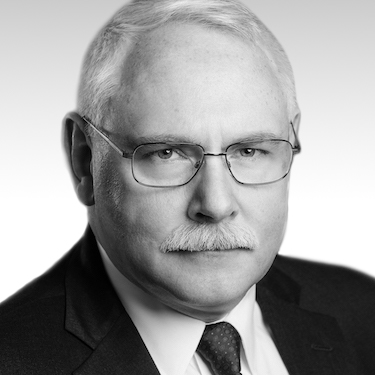
Norman T. Roule, Middle East Expert, Former National Intelligence Manager for Iran, ODNI

Norman Roule served for 34-years in the Central Intelligence Agency, managing numerous programs relating to Iran and the Middle East.   He served as the National Intelligence Manager for Iran (NIM-I) at the Office of the Director of National Intelligence from November 2008 until September 2017.  As NIM-I, he was the principal Intelligence Community (IC) official responsible for overseeing all aspects of national intelligence policy and activities related to Iran, to include IC engagement on Iran issues with senior policy makers in the National Security Council and the Department of State.

The Cipher Brief: Let’s start broadly.  The Biden Administration has had a lot to deal with in the Middle East since the president took office in January.  How are they doing?

Roule:  I think it’s too early to assesses the administration’s performance. The Biden administration arrived with several broad goals. It promised to reduce American military forces in the region, rely more on diplomacy and cooperation with Europe to resolve regional problems, and adjust relations with long-time regional partners like Israel and Saudi Arabia. But the challenges of the region are long-standing and routinely intrude upon Washington’s foreign policy agenda. And U.S. foreign policy in the Middle East has become a sharply partisan issue.

The administration’s response to events that have transpired in the region since the beginning of the year, has reassured those who looked for a greater emphasis on diplomacy. Washington assigned experienced envoys to contain multi-party issues and coordinated with Europe to limit U.S. involvement. The Secretary of State and his deputy have made high-profile visits to the region. The President has hosted such leaders as the King of Jordan and the Prime Minister of Iraq. And National Security Council engagement with Israel is routine. U.S. military shifts have taken place, but the administration still prioritizes security cooperation with regional partners. However, the U.S. withdrawal from Afghanistan is perceived by many as precipitous. Others worry that the U.S. has joined Europe in overlooking Iran’s attempts to change the political DNA of Iraq, Syria, and Yemen. The U.S. response to the Houthi’s use of Iran-supplied missiles and drones against civilian targets remains mainly rhetorical despite the lethal threat this poses to Saudis, Americans, and others living in the Kingdom.

The Cipher Brief:  That’s a sobering review. Is there any good news from the region for this administration?

Roule:  Actually, quite a bit. The administration has found that regional states will collaborate on complex issues beyond the region. Qatar plays a unique role in U.S. Afghan policy. The United Arab Emirates and Saudi Arabia are essential partners in resolving East African crises.

Regional leaders place great value on security cooperation as well as robust engagement with the U.S. private sector. Al-Qaeda and ISIS remain a threat, but at a fraction of their past potency.

Long-overdue political and economic reforms continue, albeit not at the pace or scale some Western observers seek. Saudi Arabia has introduced notable human rights reforms. A growing number of countries in the region have undertaken high-profile efforts to combat corruption and reshape their economies. Oman has begun the long road to restructuring its economy. Iraq and Libya remain intact despite their fractious polities.

I think the administration has also been impressed by the efforts of the Gulf states to diversify their economies, particularly in the area of green energy. The visits by U.S. Climate Envoy Secretary Kerry have been quite popular, probably more than some expected. I see plenty of momentum for growth here. 


Cipher Brief Members are invited to join us for a live virtual briefing with Norm Roule on Wednesday, August 11 at 11a ET.  

Members receive invites via email.  Not a member?  Not a problem.

Become a member today.


The Cipher Brief: The Iranian nuclear talks appear to have stalled. How did this happen? And what will it take for Iran to return to the deal?

Roule: Iran will return to the nuclear deal when it first believes it has wrung every concession out of the West in order to shield its economy from sanctions that could follow its non-nuclear aggression. It will also seek to ensure that it has fatally compromised the U.S. ability to reimpose sanctions within the nuclear deal itself. The Biden administration pledged a return to the deal as written, an end to the maximum pressure policy of its predecessor, and a rejection of regime change. More broadly, it also announced an intention to reduce the U.S. military presence in the region, a reassessment of Washington’s relationship with Israel and Saudi Arabia, and support for regional engagement with Iran. Some believe that the administration may even have turned a blind eye to Chinese purchases of Iranian oil as a signal to Tehran of Washington’s goodwill. If reasonable leaders ruled Iran, all of this should have produced an early return to the deal. But Iran’s leaders are rarely seen as reasonable. Iran could have chosen a fast return to the deal. Instead, it pushed for what all members of the P5+1 agree are unreasonable demands.

At this point, conditions aren’t favorable for an Iranian return to the deal in the near term. First, Tehran has pocketed all the benefits offered by the Biden administration’s initial approach without any concessions of its own.

We should also consider that Iran’s leaders may not want to return to the deal. Tehran’s primary goal in the 2015 nuclear deal was to obtain sanctions protections against the most vulnerable sectors of its economy in exchange for constraints on its civilian nuclear program. Tehran found that an end of nuclear sanctions did not solve the economic problems which produced domestic unrest, nor did the imposition of sanctions threaten the regime. Sanctions indeed constrained Iran’s ability to support proxies in the region, but even this was tolerable for the regime.

Next, Iran’s economy has stabilized somewhat in recent months. It remains in terrible shape but not so bad that the survival of the system is in question.

Last, we need to remember that Iran has historically offered concessions when confronted by a united international threat. Whatever your views on the nuclear deal, its very existence fragments international unity against Iran, which has always been a critical goal for Iran’s leaders. Support of the deal may bring us closer to Europe, Russia, and China but inevitably make regional partners believe we have ignored their valid security interests since there is little reason to believe Iran will moderate its non-nuclear behavior. Opposition to the nuclear talks may win support from Israel and Iran’s neighbors but it also invites friction with Europe, Russia, and China. These countries generally reject non-economic coercion against Iran and say relatively little about Iran’s regional adventurism.

The Cipher Brief: With a new president, will Iran’s new leadership continue to participate in the nuclear talks?  What will it take for Iran to return to the deal?

Roule: I believe Tehran will remain in the talks, but it will likely use the coming weeks to project defiance and even a willingness to walk away. The developing crisis over Iran’s naval attacks in the Arabian Sea may also postpone engagement. But for Iran, talks are a net positive. In addition to significant sanctions relief, the talks allow Iran – a mid-sized country – to routinely engage the attention of the world’s powers and play these actors against each other. This engagement also brings de facto recognition of the Raisi government, no small thing given his bloody background. The talks allow the Raisi government to argue directly with senior European counterparts that new sanctions for its many non-nuclear crimes would prevent it from returning to the nuclear deal. Last, the talks will give the Raisi government a platform for defiant rhetoric that will unsettle its adversaries and satisfy domestic supporters.

The Cipher Brief:  So, what circumstances would compel Iran to return to the deal?

Roule:  I can think of two paths that lead to an Iranian return once the new regime has vented defiant rhetoric. First, Tehran would need to believe that its rejection of the deal and malign regional actions had unified the international community to collectively support renewed economic pressure. Second, if Iran’s economy or political dynamic suffers a downturn that Tehran’s leaders perceive as leading to the downfall of the Islamic Republic. Either will need to include face-saving concessions.

The Cipher Brief: How should we look at current unrest in Iran?

Roule: The ongoing unrest shows no sign of being a near-term threat to the regime.  The crowd sizes appear manageable and anti-regime violence has so far been minimal. Security forces are relatively well organized and they are unsympathetic to protestors. The main weakness of protest remains that the opposition lacks direction, leadership, and support by labor groups. There appear to be no external or internal power centers capable of challenging the Supreme Leader.

We shouldn’t overlook the fact that many Iranians do support the regime. Despite a historically low turnout and Raisi’s admitted record of blood, eighteen million Iranians voted for him. It has become routine to see videos from Iran in which women argue that they cannot be forced to wear a hijab. But the same videos show other Iranian women (and men) asserting that failure to do so violates Iranian law and culture.

The current unrest did have aspects that likely worry Tehran. Oil workers put down their tools, and sympathy strikes reportedly erupted in major cities, albeit not on a scale that threatened the regime. The grievances of the Iranian people are so reasonable that they are increasingly acknowledged as such by government officials. But conditions in Iran are unlikely to improve. COVID continues to wreak havoc while climate change makes water and electricity shortages more painful. For these reasons, unrest will continue and probably intensify.


Go beyond the headlines with expert perspectives on today’s news with The Cipher Brief’s Daily Open-Source Podcast.  Listen here or wherever you listen to podcasts.


The Cipher Brief: What do you expect President Raisi to accomplish domestically, regionally, and internationally in his first 100 days in office?

Roule: Domestically, he will take steps to show how he will sustain Iran’s revolutionary spirit during what many believe to be a period of transition to a new generation of leaders. We will see this initially play out in his ministerial selections as part of a broader campaign to staff the bureaucracy with ideologically sound personnel, especially those with a background in the Revolutionary Guard. Security services and the military are very likely to see strong support. He will want to show that he is taking steps to address COVID and the economy. Programs directed at the poor are likely to be a priority, but he will have no sympathy for protestors. I wouldn’t be surprised if he announced an anti-corruption campaign and targeted members of the Rouhani administration for its initial investigations. We will also continue to see efforts to prepare Iran’s oil sector so that Tehran can quickly ramp up oil sales once sanctions end. Last, he is likely to support growing regime control of the internet. A bill calling for such control is currently before the parliament.

The Cipher Brief:  What about foreign policy?

Roule:  I don’t anticipate many changes in foreign policy. Raisi will mouth support for regional engagement but will maintain a defiant attitude towards the West, animus toward the U.S., support for proxies, and suspicion – but likely not rejection – of the nuclear talks. We need to be clear that he sees any sanctions relief as a transactional issue. Much as in 2015, Tehran will be clear that it will not allow a new deal to transform Iran’s society or its relations with the West.

The Cipher Brief: What are your thoughts on what would constitute an effective U.S. strategy to deter Iran’s regional activities, such as continued attacks on maritime trade, proxy support for attacks on Saudi Arabia, and activities in Yemen and Syria?  Can you imagine a scenario when the U.S. might engage militarily?

Roule: Our strategy must involve our international partners. We should avoid anything that makes it appear as if this is a U.S-Iran conflict instead of Iranian actions that threaten multiple countries and their citizens. The question becomes, will the international community join us or stand back while the U.S. takes the hard steps needed to contain Iran. Sanctions certainly deprive Iran of resources it would use for its proxies, but sanctions alone will not end Iran’s belligerence. The

The Cipher Brief:  What are Iran’s likely plans in Afghanistan in the wake of the U.S. withdrawal? What worries you the most?

Roule: There is plenty about Afghanistan to worry everyone, but I won’t dwell on the issues that are covered well in The Cipher Brief by others.  Iran has enjoyed the security stability that came with our presence. Now they have the Taliban on their border. Qods Force commander Esmail Qaani has considerable experience in Afghanistan. Iran’s security forces will likely engage the Taliban, Afghan governments, and warlords in equal measure to ensure that Iran can exert some influence over each. Iran is likely to transfer some portion of its Afghan proxies in Syria to western Afghanistan to protect Iran’s interests.

One issue that concerns me is the fate of the al-Qaeda cell in Iran. Tehran has enabled an Al-Qaeda presence on its territory for years without any international cost. That presence may well choose to migrate back to Afghanistan to reconstitute its former power center. The international community should hold Iran responsible if this happens. After all of the blood and treasure spent in the war on terror, we cannot tolerate Iran enabling al-Qaeda’s resurgence.

The Cipher Brief:  It feels like that would be an incredible regression.  Let’s shift to energy issues. Where do energy markets stand in the wake of the OPEC deal? And what do you think are the main drivers?


Cipher Brief Members are invited to apply for a seat at the table for The Cipher Brief’s Annual Threat Conference Oct 24-26 in Sea Island, GA.  Engage directly with experts on national security issues.  Space is limited.  Apply today.


Roule: Three baskets of drivers now define energy markets. First, the fundamentals. Here we are watching steady draws on stockpiles, production remains below what the market could absorb, and supplies will be tight for the remainder of the year. U.S. producers appear generally focused on return on equity vice expansion, which will likely mean that we will produce around two million BPD of oil less this year than last year. U.S. rig count is about double what it was a year ago at this time but is growing only slowly. It likely dropped slightly a week ago. Capital investment in the oil industry plummeted in 2020. Shareholders are pressing company leaders to use profits from restored oil prices to invest in green technology. OPEC policy remains conservative in the face of variables including; when Iran and Venezuela will resume production, the question of whether inflation has returned, and the impact of investor speculation.

Second, COVID is here to stay even in the best-case scenarios. The international community has failed to come close to a uniform approach to social distancing, travel, and economic reopening. We tend to look at this through a national perspective, but it may be insightful to look regionally to see how COVID-D shuts down specific industries as it spreads globally. Fresh COVID lockdowns in China have combined with signs of a decline in Chinese manufacturing to restrain prices.

Finally, geopolitical developments have generally had only a temporary impact on price pressures, but I worry about events in the Middle East. Expansion of Iranian attacks in strategic waterways with significant commercial and energy traffic may be more consequential. Insurance costs may increase for an industry with tight profit margins. Worse, attacks against only a few large container ships would disrupt global supply chains. We are moving into a new age when the importance of the Middle East may be as significant in terms of transportation security as it is in terms of energy.

The Cipher Brief:  So, let’s put you on the spot. What is your outlook for prices in the coming months?

Roule: Let me give this my best shot. Absent a sudden economic downturn, widespread COVID lockdowns, or conflict in the Middle East, we should see a continuation of the upward price velocity seen over recent months. This trend should sustain prices in the mid $70s and even low $80s. Several factors make upward movement beyond that problematic. First, OPEC leaders would be reluctant to invite the inflationary (and thus political) pressures such a spike would entail.  The Saudis will continue to push for market stability which dominates their strategy.  Second, India – and possibly China – would draw upon their strategic reserves if prices moved that high. Finally, such a price would draw out producers in the U.S. and OPEC + who would not be able to pass on a chance for a spike in revenue.


Read more expert-driven national security insights, perspective and analysis in The Cipher Brief 

The post Expert Brief: Iran, the Middle East and Strategies around Oil appeared first on The Cipher Brief.

find more fun & mates at SoShow now !

France’s best-known book of words, Le Petit Robert dictionary, has caused a stir by including the non-binary personal pronoun as an alternative to the existing masculine and feminine terms.

While the annual update of the Petit Robert dictionary is often a topic of considerable debate in French media, the latest edition has caused quite the backlash, with some, including a cabinet member, accusing it of pandering to wokeism.

The word “iel,” a neologism combining the French words for he and she (“il” and “elle“), is described as the personal pronoun for a person of any gender. “Personal pronoun subject to the third person singular and plural, used to evoke a person of any gender. The use of the pronominal in inclusive communication,” the dictionary’s entry reads. 

Read more

(FILE PHOTO) © REUTERS/Costas Baltas
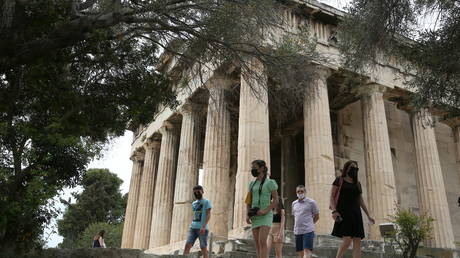
France turns to Ancient Greece for war on woke

Striking out at the latest inclusion, François Jolivet, an MP in President Emmanuel Macron’s LREM party took his protest to the Académie Française, the official guardians of the French language.  

Describing the move as “wokeism,” Jolivet said in a letter to the Académie that the word “iel” had no place in the French language and claimed it would be a precursor to the rise of ‘woke’ ideology, which undermines the values of the Gallic nation.

Outspoken Education Minister Jean-Michel Blanquer also chimed in. “Inclusive writing is not the future of the French language,” he tweeted, sharing Jolivet’s letter. “Just as our schoolchildren are consolidating their basic skills, they don’t need to have this as a reference,” he added.

The head of Gaullist party Debout La France, Nicolas Dupont-Aignan, further criticized Petit Robert’s “woke” addition. “Let’s defend our language against these ridiculous fanatics of deconstruction and let’s boycott the collaborators who give into them,” he tweeted.  

Le Petit Robert has responded to the “lively debate” by claiming that the pronoun has been used increasingly in society in recent months and they chose to reflect this by adding it to their latest update. The publication also said that some have welcomed the addition.

France’s offensive against wokeism, which has been described by some as an Anglo-Saxon import, recently saw Blanquer vow to increase the teaching of ancient Greek and Latin languages. The education minister claims that the classical vernaculars respond to a demand for logos (language as a tool for reason), in a world where “a lack of reason is spreading like wildfire.” 

If you like this story, share it with a friend!

find more fun & mates at SoShow now !

The EU Commission has released draft legislation aimed at tackling the destruction of woodland by introducing import restrictions on products not certified as ‘deforestation-free’.

The draft proposal, which the commission hopes will become binding rules for all member states, seeks to limit the import of beef, cocoa, coffee, palm, soy, and wood if it is not proven “deforestation-free.”

Outlining the legislation, the EU commissioner for climate action policy, Virginijus Sinkevicius, called it a “ground-breaking” proposal that will help fight “illegal deforestation” and “deforestation driven by agricultural expansion.”

The bill comes after nations at the COP26 summit agreed to work to end deforestation by 2030. It would impose two criteria on imports, requiring items to have been produced in accordance with the origin country’s laws, and not on land that has been deforested or degraded since the start of 2021.

It is not clear when the rules would come into effect; legislative proposals by the commission have to be debated and considered by both the EU Parliament and the Council of the EU before they are passed. The implementation of measures could potentially impact the EU’s trade relations with countries like Brazil, where clearing of the Amazon rainforest hit a new record in October.

During the recent COP26 climate summit, 110 world leaders – whose countries contain around 85% of the world’s woodland – committed to ending and reversing deforestation by 2030, pledging around £14 billion ($18.84 billion) of public and private funds towards the goal.

Like this story? Share it with a friend!

find more fun & mates at SoShow now !

The European Union’s top court has ruled that Hungary’s 2018 law aimed at criminalizing aiding illegal immigrants who are claiming asylum violates the “rights safeguarded” by the bloc’s legislature.

The Hungarian legislation, passed in 2018, sought to punish anyone “facilitating illegal immigration” with a year in prison, under a bill dubbed the “Stop Soros” law. Hungary’s government justified it at the time by arguing that migrants illegally entering the country threatened its national security. 

In the ruling, handed down on Tuesday, the European Court of Justice declared that “criminalizing such activities impinges on the exercise of the rights safeguarded by the EU legislature in respect of the assistance of applicants for international protection.”

The EU’s advocate general, Athanasios Rantos, had urged the court to make such a judgement back in February, claiming the introduction of the legislation meant that “Hungary has failed to fulfil its obligations under the [bloc’s] Procedures Directive.”

It became known as the Stop Soros law after billionaire philanthropist George Soros became a vocal opponent of the Hungarian government’s opposition to migration. The administration, in turn, accused Soros of orchestrating migration to Europe, with the Open Society Foundation, run by the philanthropist, closing its operation in the country in response. 

Read more

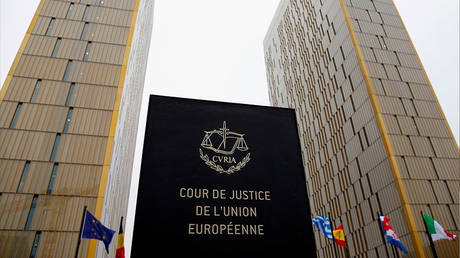
The towers of the European Court of Justice are seen in Luxembourg. © Reuters / Francois Lenoir
Top EU court says Poland broke rules with judge appointment system

Hungary, under the leadership of right-wing Prime Minister Viktor Orban, has repeatedly clashed with the EU in recent years over its strong stance on immigration and concerns from the bloc about threats to the rule of law in the country.

At the end of 2020, a dispute between Hungary and Poland and the EU risked derailing the bloc’s budget, as both member states were threatening to veto it over their view that the EU was attempting to interfere in their domestic affairs. Ultimately, the EU backed down, agreeing to a compromise with Budapest and Warsaw to ensure the budget secured the support of all 27 member states. 

Despite acknowledging the EU court’s ruling, Hungary’s government defended its right to challenge any foreign-funded non-government organizations that are attempting to “promote migration.”

“Hungary’s position on migration remains unchanged: Help should be taken where the problem is, instead of bringing the problem here,” Hungarian government spokesperson Zoltan Kovacs said, adding that the country will challenge outside entities “seeking to gain political influence and interference.”

Think your friends would be interested? Share this story!

find more fun & mates at SoShow now !

The children of families who were affected by the massive earthquake which devastated large parts of south-west Haiti in August this year are receiving free hot meals at school as part of an initiative by the UN’s World Food Programme (WFP) to support the recovery of the country’s most vulnerable communities.

Read the full story, “Hot meals helping Haiti’s children recover from the earthquake”, on globalissues.org

find more fun & mates at SoShow now !

France has imposed a curfew on its overseas territory of Guadeloupe and is sending extra police to the island, citing days of “violence,” unrest and vandalism in response to harsh pandemic restrictions.

“Given the ongoing social unrest and acts of vandalism, the prefect of Guadeloupe has decided to establish a curfew starting today from 6pm to 5am,” Alexandre Rochatte, who represents the archipelago as prefect, said on Friday.

Earlier on Friday, the French Interior Ministry noted that 200 French police officers and gendarmes would be shipped into Guadeloupe in the coming days to crack down on the “violence” and “restore republican order.”

READ MORE: Macron discloses whether lockdown for unvaccinated will be necessary in France

The move comes after nearly a week of heated protests over local Covid-19 policies – which include mandatory vaccinations for healthcare staff and other ‘essential’ workers, among other things. Demonstrators have torched cars and erected burning barricades in the streets, while doctors, firefighters and other professionals have walked off their jobs in protest, according to Reuters.

In footage circulating online earlier this week, men purported to be protesting firefighters were seen soaking police with a water hose hooked up to a nearby fire hydrant. Officers quickly shut off the spigot.

As in mainland France, residents are also required to present proof of vaccination, a negative PCR test or show they recently recovered from the virus in order to enter a number of public establishments, including restaurants and museums.

Those policies have proven unpopular for many locals, with trade unions launching indefinite strikes in protest over the past week, joined by other residents in street demonstrations.

Like this story? Share it with a friend!

find more fun & mates at SoShow now !

People are weird. They cook and eat the strangest things. This time it’s an octopus stuffed inside a turkey, sitting on top of crab legs, and (optionally) garnished with bacon strips. This monstrous culinary invention was inspired by H.P. Lovecraft’s Cthulhu mythos, and honestly… it looks like a crime against food.

Cthulhu turkey.

Cthulhu turkey.

Cthulhu turkey.

Cthulhu turkey.

Cthulhu turkey.

Cthulhu turkey.

Cthulhu turkey.

Cthulhu turkey.

Cthulhu turkey.

Cthulhu turkey.

Cthulhu turkey.

Cthulhu turkey.

Cthulhu turkey.

Cthulhu turkey.

Cthulhu turkey.

Cthulhu turkey.

Cthulhu turkey.

Cthulhu turkey.

Cthulhu turkey.

Cthulhu turkey.

Cthulhu turkey.

If this gallery wasn’t disgusting enough for you, you should also check out pre-cooked canned chicken that we’ve previously featured on this fun and useful site. We know you’ll love it!

The post Meet Cthulhu Turkey: It’s a Turkey Stuffed With Octopus That People Actually Make first appeared on .

find more fun & mates at SoShow now !

People who live in the big cities are definitely masters of eavesdropping. Sometimes they can’t help it, accidentally overhearing conversations from complete strangers can be so funny, it’s hard not to share them with someone else. And here comes the fittingly named Instagram account Overheard San Francisco that’s dedicated to sharing the funniest eavesdropped interactions in San Francisco and the Bay area. Scroll down to see the funniest examples!

Funny conversation overheard in San Francisco.

Funny conversation overheard in San Francisco.

Funny conversation overheard in San Francisco.

Funny conversation overheard in San Francisco.

Funny conversation overheard in San Francisco.

Funny conversation overheard in San Francisco.

Funny conversation overheard in San Francisco.

Funny conversation overheard in San Francisco.

Funny conversation overheard in San Francisco.

Funny conversation overheard in San Francisco.

Funny conversation overheard in San Francisco.

Funny conversation overheard in San Francisco.

Funny conversation overheard in San Francisco.

Funny conversation overheard in San Francisco.

Funny conversation overheard in San Francisco.

Funny conversation overheard in San Francisco.

Funny conversation overheard in San Francisco.

Funny conversation overheard in San Francisco.

Funny conversation overheard in San Francisco.

Funny conversation overheard in San Francisco.

Funny conversation overheard in San Francisco.

Funny conversation overheard in San Francisco.

The post Hilarious Private Conversations People Overheard In San Francisco first appeared on .

find more fun & mates at SoShow now !

Slovakia has become the latest European country to implement lockdown restrictions on people who haven’t had the Covid vaccine, as it seeks to prevent a resurgence in infections and hospital admissions over the winter.

Slovakian Prime Minister Eduard Heger announced the new measures in a press conference on Thursday, declaring a “lockdown for the unvaccinated” after the country reported a record number of new cases.

The new restrictions in Slovakia, which come into effect on Monday, will require people to have been vaccinated or have recovered from Covid in the past six months to enter restaurants, non-essential shops, or public events.

In the past few days, the European nation has seen record numbers of new infections, including over 8,000 on Tuesday, with hospitals running out of space to treat Covid patients.

Slovakia has one of the lowest rates of vaccination in the European Union, with over 50% of individuals still not jabbed. The country of around 5.5 million has so far only inoculated 2.5 million people against the virus.

Read more

(FILE PHOTO) © REUTERS/David W Cerny
Czechia rolls out new restrictions for unvaccinated

Earlier this week, Austria became the first nation to impose restrictions on unvaccinated individuals, as it sought to limit pressure on hospitals and emergency care units. The move came into effect at midnight on Monday for anyone aged 12 and older who has not received their Covid vaccine or recently recovered from the virus.

The German state of Bavaria and the Czech Republic followed Austria in restricting access for unvaccinated individuals. Only people who can show proof of vaccination or that they have recently recovered from Covid will be allowed to enter public spaces, such as restaurants and shops. 

If you like this story, share it with a friend!

find more fun & mates at SoShow now !