EXPERT PERSPECTIVE — A meeting – albeit virtual – between President Joe Biden and Chinese President Xi Jinping finally happened.  It was a cordial and reportedly candid exchange that hopefully cooled some of the tension between the U.S. and China.

President Biden captured the essence of the meeting with his concern that this tension “does not veer into conflict, whether intended or unintended.”  President Xi said, “China and the U.S. need to increase communications and cooperation” and “respect each other and coexist in peace.”

It’s hard to believe that in 1979, when formal U.S. – China diplomatic relations were established, Chinese President Deng Xiaoping looked to the U.S. as the country that would provide the investment, technology, and unlimited access to our best universities.  And the U.S. didn’t disappoint.  Investment and sophisticated technology flowed to China, with hundreds of thousands of Chinese students enrolling in our universities.  Strategic bilateral cooperation initially contributed to the defeat of the Soviet Union in Afghanistan, with joint efforts to address international terrorism and nuclear proliferation.

So, during the span of forty-two years, relations have gone from close economic and strategic cooperation to a concern about conflict, intended or unintended.  Understandably, scholars will spend considerable time analyzing what went wrong. 

What is important now is that U.S. – China relations move in a more positive direction.  That tension over China’s aggression against Taiwan, the militarization of islands and reefs in the South China Sea, internment camps for Uyghurs in Xinjiang, the national security law in Hong Kong that suppresses democratic protests and the theft of intellectual property all must be candidly discussed by our diplomats and leaders to avoid misunderstanding and accidental conflict.

President Biden said Washington continues to have a “one China” policy and “opposes unilateral efforts to change the status quo.”  President Xi reportedly said, “Beijing will take decisive measures if the pro-Taiwan independence movement crosses a red line.”

The three communiques and the Taiwan Relations Act of 1979 specifically states that, inter alia, “the United States decision to establish diplomatic relations with the People’s Republic of China rests upon the expectation that the future of Taiwan will be determined by peaceful means; to consider any effort to determine the future of Taiwan by other than peaceful means, including by boycotts or embargoes, is a threat to the peace and security of the Western Pacific area and of grave concern to the United States.”

The challenge for the U.S. and China is to address Taiwan and a myriad of other irritants in the bilateral relationship to ensure that no one issue, or series of issues leads to conflict.  Toning down the rhetoric and pursuing a policy of substantive and sustained communications, especially by our diplomats, would be a necessary first step.


The Cipher Brief hosts private briefings with the world’s most experienced national and global security experts.  Become a member today.


The annual Economic and Strategic Dialogue with China, led by the heads of State Department and Treasury and their counterparts in Beijing was established to oversee progress in addressing these and other challenging issues.  A forum of this type, with announcements to ensure that the public is kept apprised of the issues and the work being done to resolve these issues, is of value, only if this dialogue is substantive and not just ceremonial.

This virtual presidential summit can be transformative if, in addition to addressing these and other irritants, it also addresses the opportunity to cooperate on a multitude of geopolitical issues that affect the security of the U.S. and China – and the world.

I’ll start with the nuclear issue and the fact that there’s minimal dialogue with China on its nuclear program.  And given recent reporting on the three sites in China with the construction of hundreds of missile silos and the recent DIA report that China, by 2030, will have a nuclear arsenal of 1000 nuclear warheads is of concern.  Ideally, China should be part of New Start arms control negotiations with the U.S. and Russia.  But they previously refused to join in this or any other arms control dialogue.  At a minimum, China should be responsive to a dialogue with the U.S. on nuclear-related issues, to include their recent test of two hypersonic missiles.

A separate but equally important dialogue with China is on cyber, to ensure that the cyber domain is not weaponized and used against our private sector for economic advantage.  Also, to ensure that outer space is used exclusively for peaceful purposes.

There are a multitude of global issues requiring bilateral cooperation.  We recently saw some U.S. – China cooperation on climate change at the Glasgow COPS 26 UN Climate Change Conference.  Obviously, more must be done, but this is a positive first step.

Other issues, like North Korea can and should be addressed now.  China has unique leverage with a North Korea that relies on China for its economic survival.  China can use that leverage to get North Korea to return to negotiations and to convince the North that complete and verifiable denuclearization, in return for significant deliverables, is in North Korea’s interest.

With over five million global casualties and over 760,000 deaths in the U.S. due to COVID-19, it should be obvious that greater bilateral cooperation on this and future pandemics is necessary.


Go beyond the headlines with expert perspectives on today’s news with The Cipher Brief’s Daily Open-Source Podcast.  Listen here or wherever you listen to podcasts.


Bilateral cooperation on nuclear proliferation, countering international terrorism, the trafficking of narcotics and confronting international organized crime are just some of the global issues that affect the security of the U.S. and China and the global community.  Failure to cooperate on these and other international issues is not only a security imperative, but a moral responsibility of all great powers.

Finally, with the Taliban back in control in Afghanistan, the U.S. and China have a shared goal: ensuring that the Taliban does not permit Al Qaeda and other terrorist organizations to once again use Afghanistan as a base for its international terrorist operations. China has engaged this Taliban government and should use its significant financial leverage to ensure that all terrorist groups are permanently removed from Afghanistan.

Xi Jinping was just anointed by the Chinese Communist Party as one of its revered leaders, with Mao Zedong and Deng Xiaoping.  The Party congress next year will likely give Xi a third five-year term as the Party’s Secretary General.  There are a multitude of domestic issues requiring Xi’s and the Party’s attention, to include a campaign of “common prosperity” – addressing the disparity of wealth in a China governed by a capitalist system with Chinese characteristics.

Hopefully, President Xi Jinping will work with President Joe Biden to ensure that the two great powers, consumed with domestic issues, will also address the myriad of international issues requiring immediate and long-term attention and avoid a cold war that could veer into conflict.

Read more expert-driven national security insights, perspective and analysis in The Cipher Brief

The post How to Avoid Cold War with China appeared first on The Cipher Brief.

find more fun & mates at SoShow now !

Corin Stone, Washington College of Law

Corin Stone is a Scholar-in-Residence and Adjunct Professor at the Washington College of Law.  Stone is on leave from the Office of the Director of National Intelligence (ODNI) where, until August 2020, she served as the Deputy Director of National Intelligence for Strategy & Engagement, leading Intelligence Community (IC) initiatives on artificial intelligence, among other key responsibilities. From 2014-2017, Ms. Stone served as the Executive Director of the National Security Agency (NSA).

(Editor’s Note: This article was first published by our friends at Just Security and is the third in a series that is diving into the foundational barriers to the broad integration of AI in the IC – culture, budget, acquisition, risk, and oversight.)

OPINION — As I have written earlier, there is widespread bipartisan support for radically improving the nation’s ability to take advantage of artificial intelligence (AI). For the Intelligence Community (IC), that means using AI to more quickly, easily, and accurately analyze increasing volumes of data to produce critical foreign intelligence that can warn of and help defuse national security threats, among other things. To do that, the IC will have to partner closely with the private sector, where significant AI development occurs. But despite the billions of dollars that may ultimately flow toward this goal, there are basic hurdles the IC still must overcome to successfully transition and integrate AI into the community at speed and scale.

Among the top hurdles are the U.S. government’s slow, inflexible, and complex budget and acquisition processes. The IC’s rigid budget process follows the standard three-year cycle for the government, which means it takes years to incorporate a new program and requires confident forecasting of the future. Once a program overcomes the necessary hurdles to be included in a budget, it must follow a complex sequence of regulations to issue and manage a contract for the actual goods or services needed. These budget and acquisition processes are often considered separately as they are distinct, but I treat them together because they are closely related and inextricably intertwined in terms of the government’s purchasing of technology.

Importantly, these processes were not intended to obstruct progress; they were designed to ensure cautious and responsible spending, and for good reason. Congress, with its power of the purse, and the Office of Management and Budget (OMB), as the executive branch’s chief budget authority, have the solemn duty to ensure wise and careful use of taxpayer dollars. And their roles in this regard are vital to the U.S. government’s ability to function.

Unfortunately, despite the best of intentions, as noted by some in Congress itself, the budget process has become so “cumbersome, frustrating, and ineffective” that it has weakened the power of the purse and Congress’ capacity to govern. And when complicated acquisition processes are layered on top of the budget process, the result is a spider web of confusion and difficulty for anyone trying to navigate them.

The Need for Speed … and Flexibility and Simplicity

As currently constructed, government budget and acquisition processes cause numerous inefficiencies for the purchase of AI capabilities, negatively impacting three critical areas in particular: speed, flexibility, and simplicity. When it comes to speed and flexibility, the following difficulties jump out:

  • The executive branch has a methodical and deliberate three-year budget cycle that calls for defined and steady requirements at the beginning of the cycle. Changing the requirements at any point along the way is difficult and time-consuming.
  • The IC’s budgeting processes require that IC spending fit into a series of discrete sequential steps, represented by budget categories like research, development, procurement, or sustainment. Funds are not quickly or easily spent across these categories.
  • Most appropriations expire at the end of each fiscal year, which means programs must develop early on, and precisely execute, detailed spending plans or lose the unspent funds at the end of one year.
  • Government agencies expend significant time creating detailed Statements of Work (SOWs) that describe contract requirements. Standard contract vehicles do not support evolving requirements, and companies are evaluated over the life of the contract based on strict compliance with the original SOW created years earlier.

These rules make sense in the abstract and result from well-intentioned attempts to buy down the risk of loss or failure and promote accountability and transparency. They require the customer to know with clarity and certainty the solution it seeks in advance of investment and they narrowly limit the customer’s ability to change the plan or hastily implement it. These rules are not unreasonably problematic for the purchase of items like satellites or airplanes, the requirements for which probably should not and will not significantly change over the course of many years.

However, because AI technology is still maturing and the capabilities themselves are always adapting, developing, and adding new functionality, the rules above have become major obstacles to the quick integration of AI across the IC. First, AI requirements defined with specificity years in advance of acquisition – whether in the budget or in a statement of work – are obsolete by the time the technology is delivered. Second, as AI evolves there is often not a clear delineation between research, development, procurement, and sustainment of the technology – it continuously flows back and forth across these categories in very compressed timelines. Third, it is difficult to predict the timing of AI breakthroughs, related new requirements, and funding impacts, so money might not be spent as quickly as expected and could be lost at the end of the fiscal year. Taken together, these processes are inefficient and disruptive, cause confusion and delay, and discourage engagement from small businesses, which have neither the time nor the resources to wait years to complete a contract or to navigate laborious, uncertain processes.


Engage personally with experts on Artificial Intelligence and national security  at The Cipher Brief Threat Conference October 24-26.  If you are an actively working in the national security field, we invite you to apply to attend.  Seats are limited.  


Simply put, modern practices for fielding AI have outpaced the IC’s decades-old approach to budgeting and acquisition. That AI solutions are constantly evolving, learning, and improving both undermines the IC’s ability to prescribe a specific solution and, in fact, incentivizes the IC to allow the solution to evolve with the technology. The lack of flexibility and speed in how the IC manages and spends money and acquires goods and services is a core problem when it comes to fully incorporating AI into the IC’s toolkit.

Even while we introduce more speed and agility into these processes, however, the government must continue to ensure careful, intentional, and appropriate spending of taxpayer dollars. The adoption of an IC risk framework and modest changes to congressional oversight engagements, which I address in upcoming articles, will help regulate these AI activities in the spirit of the original intent of the budget and acquisition rules.

As for the lack of simplicity, the individually complex budget and acquisition rules are together a labyrinth of requirements, regulations, and processes that even long-time professionals have trouble navigating. In addition:

  • There is no quick or simple way for practitioners to keep current with frequent changes in acquisition rules.
  • The IC has a distributed approach that allows each element to use its various acquisition authorities independently rather than cohesively, increasing confusion across agency lines.
  • Despite the many federal acquisition courses aimed at demystifying the process, there is little connection among educational programs, no clear path for IC officers to participate, and no reward for doing so.

The complexity of the budget and acquisition rules compounds the problems with speed and flexibility, and as more flexibility is introduced to support AI integration, it is even more critical that acquisition professionals be knowledgeable and comfortable with the tools and levers they must use to appropriately manage and oversee contracts.

Impactful Solutions: A Target Rich Environment

Many of these problems are not new; indeed, they have been highlighted and studied often over the past few years in an effort to enable the Department of Defense (DOD) and the IC to more quickly and easily take advantage of emerging technology. But to date, DOD has made only modest gains and the IC is even further behind. While there are hundreds of reforms that could ease these difficulties, narrowing and prioritizing proposed solutions will have a more immediate impact. Moreover, significant change is more likely to be broadly embraced if the IC first proves its ability to successfully implement needed reforms on a smaller scale. The following actions by the executive and legislative branches – some tactical and some strategic – would be powerful steps to ease and speed the transition of AI capabilities into the IC.

Statements of Objectives

A small but important first step to deal with the slow and rigid acquisition process is to encourage the use of Statements of Objectives (SOO) instead of SOWs, when appropriate. As mentioned, SOWs set forth defined project activities, deliverables, requirements, and timelines, which are used to measure contractor progress and success. SOWs make sense when the government understands with precision exactly what is needed from the contractor and how it should be achieved.

SOOs, on the other hand, are more appropriate when the strategic outcome and objectives are clear, but the steps to achieve them are less so. They describe “what” without dictating “how,” thereby encouraging and empowering industry to propose innovative solutions. SOOs also create clarity about what is important to the government, leading companies to focus less on aggressively low pricing of specific requirements and more on meeting the ultimate outcomes in creative ways that align with a company’s strengths. This approach requires knowledgeable acquisition officers as part of the government team, as described below, to ensure the contract includes reasonable milestones and decision points to keep the budget within acceptable levels.


The Cipher Brief hosts private briefings with the world’s most experienced national and global security experts.  Become a member today.


New Authorities for the IC

Two new authorities would help the IC speed and scale its use of AI capabilities: Other Transaction Authority (OTA)  and Commercial Solutions Openings (CSO). Other Transaction Authority allows specific types of transactions to be completed outside of the traditional federal laws and regulations that apply to standard government procurement contracts, providing significantly more speed, flexibility, and accessibility than traditional contracts. While OTA is limited in scope and not a silver bullet for all acquisition problems, OTA has been used to good effect since 1990 by the Defense Advanced Research Projects Activity (DARPA), DOD’s over-the-horizon research and development organization, among others.

CSOs are a simplified and relatively quick solicitation method to award firm fixed price contracts up to $100 million. CSOs can be used to acquire innovative commercial items, technologies, or services that close capability gaps or provide technological advances through an open call for proposals that provide offerors the opportunity to respond with technical solutions of their own choosing to a broadly defined area of government interest. CSOs are considered competitively awarded regardless of how many offerors respond.

Both OTA and CSO authority should be immediately granted to the IC to improve the speed and flexibility with which the IC can acquire and transition AI into the IC.

Unclassified Sandbox

The predictive nature of the IC’s work and the need to forecast outcomes means the IC must be able to acquire AI at the point of need, aligned to the threat. Waiting several years to acquire AI undermines the IC’s ability to fulfill its purpose. But with speed comes added risk that new capabilities might fail. Therefore, the IC should create an isolated unclassified sandbox, not connected to operational systems, in which potential IC customers could test and evaluate new capabilities alongside developers in weeks-to-months, rather than years. Congress should provide the IC with the ability to purchase software quickly for test and evaluation purposes only to buy down the risk that a rapid acquisition would result in total failure. The sandbox process would allow the IC to test products, consider adjustments, and engage with developers early on, increasing the likelihood of success.

Single Appropriation for Software

DOD has a pilot program that funds software as a single budget item – allowing the same money to be used for research, production, operations, and sustainment – to improve and speed software’s unique development cycle. AI, being largely software, is an important beneficiary of this pilot. Despite much of the IC also being part of DOD, IC-specific activities do not fall within this pilot. Extending DOD’s pilot to the IC would not only speed the IC’s acquisition of AI, but it would also increase interoperability and compatibility of IC and DOD projects.

No-Year Funds

Congress should reconsider the annual expiration of funds as a control lever for AI. Congress already routinely provides no-year funding when it makes sense to do so. In the case of AI, no-year funds would allow the evolution of capabilities without arbitrary deadlines, drive more thoughtful spending throughout the lifecycle of the project, and eliminate the additional overhead required to manage the expiration of funds annually. Recognizing the longer-term nature of this proposal, however, the executive branch also must seek shorter-term solutions in the interim.

A less-preferable alternative is to seek two-year funding for AI. Congress has a long history of proposing biennial budgeting for all government activities. Even without a biennial budget, Congress has already provided nearly a quarter of the federal budget with two-year funding. While two-year funding is not a perfect answer in the context of AI, it would at a minimum discourage parties from rushing to outcomes or artificially burning through money at the end of the first fiscal year and would provide additional time to fulfill the contract. This is presumably why DOD recently created a new budget activity under their Research, Development, Test and Evaluation (RDT&E) category, which is typically available for two years, for “software and digital technology pilot programs.”

AI Technology Fund

Congress should establish an IC AI Technology Fund (AITF) to provide kick-starter funds for priority community AI efforts and enable more flexibility to get those projects off the ground. To be successful, the AITF must have no-year funds, appropriated as a single appropriation, without limits on usage throughout the acquisition lifecycle. The AITF’s flexibility and simplicity would incentivize increased engagement by small businesses, better allowing the IC to tap into the diversity of the marketplace, and would support and speed the delivery of priority AI capabilities to IC mission users.


Go beyond the headlines with expert perspectives on today’s news with The Cipher Brief’s Daily Open-Source Podcast.  Listen here or wherever you listen to podcasts.


ICWERX  

To quickly take advantage of private sector AI efforts at scale, the IC must better understand the market and more easily engage directly with the private sector. To do so, the IC should create an ICWERX, modeled after AFWERX, an Air Force innovation organization that drives agile public-private sector collaboration to quickly leverage and develop cutting-edge technology for the Air Force. AFWERX aggressively uses innovative, flexible, and speedy procurement mechanisms like OTA and the Small Business Innovation Research and Small Business Technology Transfer programs (SBIR/STTR) to improve the acquisition process and encourage engagement from small businesses. AFWERX is staffed by acquisition and market research experts who are comfortable using those authorities and understand the market. While the IC’s needs are not identical, an ICWERX could serve as an accessible “front door” for prospective partners and vendors, and enable the IC to more quickly leverage and scale cutting-edge AI.

De-mystify Current Authorities

While there is much complaining about a lack of flexible authorities in the IC (and a real need for legal reform), there is flexibility in existing rules that has not been fully utilized. The IC has not prioritized the development or hiring of people with the necessary government acquisition and contracts expertise, so there are insufficient officers who know how to use the existing authorities and those who do are overworked and undervalued. The IC must redouble its efforts to increase its expertise in, and support the use of, these flexibilities in several ways.

First, the IC should create formal partnerships and increase engagement with existing U.S. government experts. The General Services Administration’s Technology Transformation Services (TTS) and FEDSIM, for example, work across the federal government to build innovative acquisition solutions and help agencies more quickly adopt AI. In addition, DOD’s Joint AI Center has built significant acquisition expertise that the IC must better leverage. The IC also should increase joint duty rotations in this area to better integrate and impart acquisition expertise across the IC.

Second, the IC must prioritize training and education of acquisition professionals. And while deep acquisition expertise is not necessary for everyone, it is important for lawyers, operators, technologists, and innovators to have a reasonable understanding of the acquisition rules, and the role they each play in getting to successful outcomes throughout the process. Collaboration and understanding across these professions and up and down the chain of command will result in more cohesive, speedy, and effective outcomes.

To that end, the Office of the Director of National Intelligence (ODNI) should work with the many existing government acquisition education programs, as well as the National Intelligence University, to develop paths for IC officers to grow their understanding of and ability to navigate and successfully use acquisition rules. The ODNI also should strengthen continuing education requirements and create incentive pay for acquisition professionals.

Third, the IC should prioritize and use direct hire authority to recruit experts in government acquisition, to include a mix of senior term-limited hires and junior permanent employees with room to grow and the opportunity for a long career in the IC. Such a strategy would allow the IC to quickly tackle the current AI acquisition challenges and build a bench of in-house expertise.

Finally, practitioners should have an easily accessible reference book to more quickly discover relevant authorities, understand how to use them, and find community experts. A few years ago, the ODNI led the creation of an IC Acquisition Playbook, which describes common IC acquisition authorities, practices, and usages. The ODNI should further develop and disseminate this Playbook as a quick win for the IC.

Incentivize Behavior

To encourage creative and innovative acquisition practices, as well as interdisciplinary collaboration, the IC must align incentives with desired outcomes and create in acquisition professionals a vested interest in the success of the contract. Acquisition officers today are often brought into projects only in transactional ways, when contracts must be completed or money must be obligated, for example. They are rarely engaged early as part of a project team, so they are not part of developing the solutions and have minimal investment in the project’s success. Reinforcing this, acquisition professionals are evaluated primarily on the amount of money they obligate by the end of the fiscal year, rather than on the success of a project.

Therefore, to start, project teams should be required to engage acquisition officers early and often, both to seek their advice and to ensure they have a good understanding of the project’s goals. In addition, evaluation standards for acquisition officers should incorporate effective engagement and collaboration with stakeholders, consideration of creative alternatives and options, and delivery of mission outcomes. If an officer uses innovative practices that fail, that officer also should be evaluated on what they learned from the experience that may inform future success.

Lastly, the ODNI should reinvigorate and highlight the IC acquisition awards to publicly reward desired behavior, and acquisition professionals should be included in IC mission team awards as a recognition of their impact on the ultimate success of the mission.

Conclusion

Between the government’s rigid budget and acquisition processes and confusion about how to apply them, there is very little ability for the IC to take advantage of a fast-moving field that produces new and updated technology daily. Tackling these issues through the handful of priority actions set forth above will begin to drive the critical shift away from the IC’s traditional, linear processes to the more dynamic approaches the IC needs to speed and transform the way it purchases, integrates, and manages the use of AI.

Read more expert-driven national security insights, perspective and analysis in The Cipher Brief


The post AI and the IC: The Tangled Web of Budget and Acquisition appeared first on The Cipher Brief.

find more fun & mates at SoShow now !

Covid-battered global supply chains are being threatened by organized criminals, including drug cartels and con artists posing as legit suppliers, a new study has found, warning that the situation is set to get worse.

The international supply chain woes amid the Covid-19 pandemic are highlighted in a new annual report, released this week by the British Standards Institution (BSI).

The document, titled the ‘Supply Chain Risk Insights Report’, highlights Covid’s impact on supply chains, with the experts also warning that organized crime has increasingly preyed on this crucial area during the pandemic. On multiple instances, criminals were posing as legitimate logistics providers, stealing goods during shipment.

“I’m seeing a significant number of false suppliers acting as genuine potential suppliers in supply chain logistics provision – warehousing distribution, distribution centres, transportation companies – and actually, they are criminal groups trying to infiltrate the logistics supply chain,” said David Fairnie, BSI’s principal consultant in supply chain security. He urged producers to “continuously monitor” the supply chain and to not immediately trust new logistics providers – especially those contacted only remotely.

So, arguably today more than ever, you do need to know your suppliers. So far in 2021, BSI has noted this issue of fake carriers in an increasing number of countries in both the Americas and Europe.

Criminals have apparently been trying to steal goods in various ways, with phony truck drivers loading up items and taking off with them, while conmen “posing as legitimate employees” have reportedly been observed lurking around delivery destinations to steal cargo.

Read more

FILE PHOTO: Migrants walk towards the Bosnia-Croatia border in attempt to cross. © Reuters / Marko Djurica
Human trafficker explains migrant smuggling business

At the same time, the report found that trade in illicit goods has also been on the rise lately, with the illegal drug industry in particular appearing to flourish. While the supply chain for drug cartels, which require large amounts of assorted chemicals to produce narcotics, was disrupted due to the pandemic lockdowns and border closures impacted trafficking routes, organized crime quickly overcame these problems, the BSI noted.

“Drug cartels around the world did not miss a beat,” Chris Tomas, BSI lead intelligence analyst, said.

While many cartels shifted their production towards synthetic drugs, namely amphetamine, amid the pandemic, the apparent “lack of eradication of coca crops in Latin American countries” also remains an issue, the BSI said. The flow of cocaine has grown over the past year and is expected to increase even further, the organization warned.

“The numbers and quantities of cocaine seizures in Europe increased steadily in 2020 and 2021 and are expected to continue to rise in 2022,” the report reads.

Think your friends would be interested? Share this story!

find more fun & mates at SoShow now !

CIPHER BRIEF EXPERT PERSPECTIVE 

Cipher Brief Expert Tim Willasey-Wilsey served for over 27 years in the British Foreign and Commonwealth Office. He is now Visiting Professor of War Studies at King’s College, London.

Older Americans have Saigon 1975 and the helicopters from the Embassy roof seared into their memories. A previous generation of Britons was haunted by the image of General Percival surrendering vast numbers of troops and equipment in Singapore to the Japanese in 1942. How Kabul falls to the Taliban could have important practical and symbolic significance.

The announcement that the United States is sending 3,000 troops to Kabul alongside 600 British troops to manage the evacuation of their civilians and those Afghans who provided assistance, is a remarkably late response to a rapidly deteriorating situation. Unless carried out in the next 48 hours, it will also be risky. Taliban infiltrators are already inside Kabul and the forces which captured Ghazni and Kandahar on 12th August will be heading towards the capital on their Honda 125cc motorbikes.

The US must have extracted undertakings from the Taliban negotiators in Qatar not to launch their full assault on Kabul until the evacuations are complete, but elements of doubt remain. Previous Taliban assurances have proved worthless, and it is doubtful that individual Taliban commanders would wish to hold back while some of Ashraf Ghani’s ministers, senior army officers, judges and officials are spirited away to a life of exile.

It is hard not to be impressed by the speed and élan of the Taliban’s recent successes; taking 13 of Afghanistan’s 34 regional capitals in almost as many days. It is reminiscent of the extraordinary progress which the Japanese made down the Malaya Peninsula in 1942 with Singapore as the ultimate prize.

The Taliban’s success has not happened by chance. It is clearly the fruit of preparation and planning. Above all, they have learnt from the experience of 1994 to 1996 when they eventually took Kabul but failed to capture the north, thereby allowing space for the Northern Alliance parties to survive and then reassert themselves following the 9/11 terrorist attacks.

This time, the Taliban have focussed first on border posts with neighbouring countries (thereby denying the government vital supply routes and customs revenues) before taking outlying regional capitals and leaving Kabul (which is never easy to capture) until last. Above all, they have concentrated on the north where many rural Afghans are disenchanted with the Kabul government and regional warlords. The north is no longer the solid bastion of anti-Taliban sentiment it was in the 1990s.


The Cipher Brief hosts private briefings with the world’s most experienced national and global security experts.  Become a member today.


Taliban progress in the north has snuffed out any chance that the old Northern Alliance could be reborn out of the eventual collapse of the Ashraf Ghani government. Whereas in 1996, Ahmed Shah Massoud, its brilliant military leader, was able to abandon Kabul and beat a tactical retreat up the Panjshir Valley, that option barely exists today. Not only is Massoud dead but his former adherents are no longer guerrilla fighters but members of a stratified Afghan army which has struggled to perform without US air support.

The Taliban have also ruthlessly exploited the weak negotiating stance of the United States and its chief negotiator Zalmay Khalilzad. Whereas some of the Taliban team in Doha, such as Mullah Barader, may indeed have been ‘moderates’ there was never any doubt that the Taliban movement wanted to see the total defeat of the Kabul government and the expulsion of Western forces. Pakistan too, may have occasionally considered some form of negotiated deal but ultimately the only sure way of keeping Indian influence out of Afghanistan (it believes) is a Taliban government.

The Afghan army (and in particular its impressive Special Forces) will now be assembling in Kabul and should be able to repel initial attempts to overrun the city. Certainly, Gulbuddin Hekmatyar found it impossible to take Kabul in 1992 and 1993 even with help from Pakistan, which, in frustration, switched support to the newly-created Taliban movement in late 1994.

But from 1992 to 1996 there were frequent deliveries of supplies to Massoud and his Northern Alliance defenders from Russia, Iran, and India. In 2021, the position is very different. Russia has already decided to “back the winner” and believes it has extracted promises from the Taliban not to export Islamism northwards into the Central Asian Republics (CARs). Iran too has channels to the Taliban and will be watching carefully for any return to the Taliban’s persecution of the Shia Hazaras. And India has already made contact with the Taliban in Doha in the hope that the Taliban in power will prevent Kashmiri militant groups from setting up bases there.

The likelihood therefore is that Kabul will fall to the Taliban quite quickly. If the Americans and British do manage to insert their evacuation forces soon, they should be able to complete the operation successfully, although there are likely to be heart-rending scenes at the airport as crowds of refugees are turned away at gunpoint from departing aircraft. Regional powers, particularly Pakistan, will try and persuade the Taliban to hold back from intervening, conscious that a bloodbath in Kabul would be a disastrous start to the Taliban’s second spell in government. Ironically, however, the evacuation would almost certainly lead to the collapse of the Kabul government as senior officials are forced to decide whether to take the last aircraft out or face almost certain torture and death at the hands of the victors. It is doubtful whether any Western countries will choose to retain their embassies in Kabul. For President Biden, the memory of Benghazi will be too raw.

What is certain is that there will be new iconic images to rival those of Saigon and Singapore.


Go beyond the headlines with expert perspectives on today’s news with The Cipher Brief’s Daily Open-Source Podcast.  Listen here or wherever you listen to podcasts.


Read more expert-driven national security insights, perspective and analysis in The Cipher Brief.

The post How Does Kabul End? appeared first on The Cipher Brief.

find more fun & mates at SoShow now !

Vaccination of all Hungarian citizens against Covid-19 is inevitable, PM Viktor Orban has said, stating that even the most hardline anti-vaxxers will ultimately face a choice between dying with the virus and getting a jab.

Speaking to Kossuth radio on Friday, the Hungarian leader lashed out at those reluctant to get vaccinated against coronavirus, branding them a threat “not only to themselves but to all others.”

In the end, everyone will have to be vaccinated; even the anti-vaxxers will realize that they will either get vaccinated or die. So, I urge everyone to take this opportunity.

The EU member state is currently experiencing its fourth wave of coronavirus, Orban stated, blaming the situation on those who had not got vaccinated. “If everybody were inoculated, there would be no fourth wave or it would be just a small one,” the PM claimed.

Read more

FILE PHOTO. ESSEN, GERMANY. © AFP / Ina FASSBENDER
Covid rates take Germany to ‘nationwide state of emergency’

Apart from urging the unvaccinated to go and finally get their jabs, Orban also promoted booster shots, revealing that he had already taken three doses of a coronavirus vaccine.

“The only thing that protects us from the virus is vaccination. And we are now also seeing, at least the experts are unanimous in saying, that four to six months after the second vaccination, the protective power of the vaccine weakens. Therefore, a third vaccination is justified,” he said.

Hungary has already announced new anti-Covid measures, though somewhat short of the strict measures proposed by the nation’s Medical Chamber on Wednesday. The medical body called for a blanket ban on mass events, and suggested making entry to restaurants, theaters and other indoor venues conditional on bearing a Covid-19 inoculation certificate. Instead, Budapest rolled out compulsory mask wearing for most indoor environments, as well as making booster shots mandatory for all medical workers, starting from Saturday.

A nation of 10 million, Hungary’s total tally of logged Covid cases is hovering just below the one million mark. On Friday, it registered a new daily record, with nearly 11,300 new Covid infections. More than 32,700 people in Hungary have succumbed to the disease over the course of the pandemic.

Think your friends would be interested? Share this story!

find more fun & mates at SoShow now !
A Canadian teenager has been arrested after allegedly stealing $36.5 million in cryptocurrency from a person in the US. The police claim it was the largest such heist involving one victim ever registered in North America.

Police in the city of Hamilton, Ontario, arrested the unidentified perpetrator on Wednesday, after over a year investigating what they have described as the biggest-ever cryptocurrency theft from a single person in either the US or Canada. Local police began a joint investigation with the Federal Bureau of Investigation and the US Secret Service Electronic Crimes Task Force in March 2020, when the theft was reported.

Read more

© AP Photo/Jiri Buller
Europol detains 10 hackers over $100 million cryptocurrency theft from celebrities

The Hamilton Police Service said it had made “multiple” seizures in excess of CA$7 million (US$5.5 million) during the arrest, which came after investigators noticed some of the stolen money had been used to buy an online username considered “rare” in the gaming community, according to a police statement.

The victim was apparently targeted by a cell phone hijack known as SIM swapping. This method involves manipulating cellular network employees to duplicate phone numbers in order to let the scammer intercept the two-factor authorization requests that allow them access to a victim’s account.

This method is considered especially potent because a lot of people use the same password for multiple sites, according to Detective Constable Kenneth Kirkpatrick, of the Hamilton Police’s cybercrimes unit. He added that cyber and cryptocurrency crimes were becoming increasingly common, but noted that the figures involved in this case were “very surprising.”

“It’s a large amount of money in anybody’s opinion,” Kirkpatrick said, adding that the case was currently in the Hamilton court system.

The police haven’t revealed the age or gender of the youth, the username they purchased, or whether they were acting alone.

If you like this story, share it with a friend!

find more fun & mates at SoShow now !

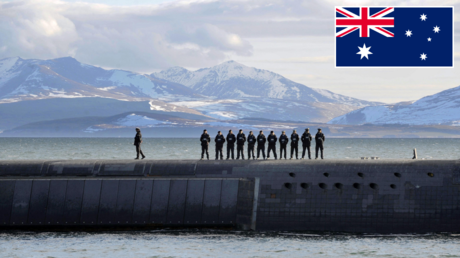
Australia’s Defense Minister derided a senior Chinese diplomat’s comments as “silly” and “comical,” after the latter dubbed Canberra’s trilateral nuclear-powered submarine pact with the US and UK a threat to peace.

During a television interview on Friday, Peter Dutton said acting Chinese Ambassador Wang Xining was “probably reading off a script from the Communist Party” when he warned that Australia would become the “naughty guy” if it procured the stealth-combat vessels through the AUKUS deal.

Wang, who is China’s most senior representative to the country after the previous ambassador’s term ended last month, told The Guardian on Thursday that Australia would be labeled a “sabre-wielder” rather than a “peace defender.” He said the Australian public “should be more worried” about the impact of the security pact their nation had made with the UK and the US. 

There’s zero nuclear capacity, technologically, in Australia, that would guarantee you will be trouble free, that you will be incident free. And if anything happened, are the politicians ready to say sorry to people in Melbourne and in Adelaide?

However, Dutton “dismissed” the comments and countered that “most Australians [would] see through [their] non-productive nature.”

Read more

FILE PHOTO. British Navy personnel stand atop the Trident Nuclear Submarine, HMS Victorious, on patrol off the west coast of Scotland. © AFP / ANDY BUCHANAN
New AUKUS anti-China alliance could spark global arms race, Moscow warns, as Beijing sounds alarm over West’s ‘Cold War’ tactics

“We don’t see it from any other ambassador here in Australia. It’s quite remarkable,” the minister told the Nine Network, adding that “this type of diplomacy” was seen elsewhere in the world too.

“These provocative comical statements – it’s just so silly. It’s funny,” he added.

In September, Australian Prime Minister Scott Morrison announced the deal to obtain at least eight nuclear-powered vessels as part of its new defense alliance. The pact angered not only China but also France, which claimed it had been “stabbed in the back” after Canberra unilaterally scrapped a multi-billion-dollar diesel-electric submarine contract with Paris.

Last weekend, Dutton had irked Beijing by stating that he could not conceive of a situation in which Australia would hesitate to support the US should armed conflict with China break out over Taiwan. Under its ‘One China’ policy, Beijing has pledged to reunify the island with the mainland.

Wang warned Australian politicians on Thursday not to do anything that would be “destructive to our relationship.”

If you like this story, share it with a friend!

find more fun & mates at SoShow now !

EXPERT PERSPECTIVE — On 16 June, US President Joe Biden and Russian President Vladimir Putin met for just under four hours in Geneva. This was Mr. Biden’s first meeting with Mr. Putin during his presidency and Biden is the fifth US President with whom Putin has held a summit.

Expectations for the summit were characterized as low by both sides in advance and assessed a bit more positively after the conclusion of the meeting. The meeting presented an opportunity for both leaders to present grievances and warnings to the other (and show toughness to their domestic constituencies).  Other than presenting the opportunity to blow off steam, the results of the meeting appear modest:  the agreement to return ambassadors to their posts, to resume bilateral arms control discussions, to conduct discussions on “strategic stability” and to hold unspecified consultations on cyber. In typical fashion, Mr. Putin rejected all of Mr. Biden’s assertions about Russian actions and made counter accusations referencing hostile US actions.

Of the deliverables from the summit, cyber will no doubt turn out to be the most problematic area for follow up. Mr. Biden apparently delivered to Mr. Putin a list of 16 US critical infrastructure sectors that should be considered “off limits” for cyberattacks, e.g., “red lines” not to be crossed without the risk of significant retaliation. For his part, Mr. Putin asserted that it is Russia that is the victim of cyberattacks originating from the territory of the US and it’s NATO partners and also is the victim of  attempts to interfere with Russian elections.  The challenge in cyber discussions going forward will center around three areas:  differing interpretations of the relevance of deterrence theory in today’s cyber environment, attribution, and control.

Mr. Biden’s firm comments to Mr. Putin on recent cyberattacks against the US such as the ransomware attack on Colonial Pipelines (Mr. Biden is said to have asked Mr. Putin how he would react if Russia’s pipelines were hit?) and his provision of a list of “off limits” US infrastructure entities suggests a deep belief in this administration that Russia can be deterred from engaging in future conduct of cyber operations against US targets or “sanctioning” attacks originating from the territory of the Russian Federation by criminal groups.

Unfortunately, it is highly likely that either Mr. Putin nor those who control the levers of Russian cyber operations agree that deterrence theory applies.  Deterrence only works when both sides know the other is capable of – and willing to – cause significant harm to the other.

The Russian side likely believes (and may have amply demonstrated) that the US is disproportionately vulnerable to cyber risk at every level of its economic, societal, and political infrastructure whereas Russia is not.  There is a reason the use of cyber tools has become a central feature of Russian strategic doctrine. They work and seem a legitimate tool that falls short of conventional war. Hybrid warfare using cyber tools, the Russian side would argue, is no different than the economic warfare Russia is experiencing from sanctions imposed by the US its allies.

For full access to the article, sign up to become a Cipher Brief member for just $10/mo.


“The Cipher Brief has become the most popular outlet for former intelligence officers; no media outlet is even a close second to The Cipher Brief in terms of the number of articles published by formers.” – Sept. 2018, Studies in Intelligence, Vol. 62 No.

Access all of The Cipher Brief’s national-security focused expert insight by becoming a  Cipher Brief Level I Member .  


The post After Geneva: US – Russia Strategy Moving Forward appeared first on The Cipher Brief.

find more fun & mates at SoShow now !

The Philippine government has accused the Chinese Coast Guard of unleashing water cannon on two supply ships in a disputed stretch of the South China Sea, claiming its boats were blocked and forced to turn around.

Manila’s Department of Foreign Affairs detailed the encounter in a statement on Wednesday, alleging that a pair of supply boats en route to the Ayungin Shoal – also known as the Second Thomas Shoal – were stopped by three Chinese vessels and “water cannoned” before they could reach their destination.

“Fortunately, no one was hurt; but our boats had to abort their resupply mission,” Foreign Affairs Secretary Teodoro Locsin said, adding that the department had conveyed its “outrage, condemnation and protest of the incident” to Beijing’s envoy to the Philippines, Huang Xilian.

The acts of the Chinese Coast Guard vessels are illegal. China has no law enforcement rights in and around these areas. They must take heed and back off.

Though both China and the Philippines claim territorial rights to the Ayungin Shoal, The Hague’s Permanent Court of Arbitration ruled in the latter country’s favor in 2016. And despite Chinese objections, the Philippines has occupied the area for much longer, after its military purposely grounded a naval vessel on the shoal in 1999.  

READ MORE: Manila backs controversial AUKUS security pact as move to fix ‘imbalance’ of power in Southeast Asia

Manila was also quick to note that the supply ships are “covered by the Philippines-United States Mutual Defense Treaty,” a pact inked with Washington in 1951 that calls for a US military response to any attack on the country, including “island territories under its jurisdiction in the Pacific Ocean, its armed forces, public vessels or aircraft.” 

Beijing so far has not commented on the alleged run-in.

Think your friends would be interested? Share this story!

find more fun & mates at SoShow now !