Covid-19 variants keep emerging in different parts of the world, causing experts to ask how long the pandemic will last, and how effective the current methods of protection really are.

Since the pandemic started in 2019, people have referred to the disease which has paralyzed the world simply as ‘coronavirus’. Now, in 2021, when we talk about it, we mean not just the original variant, but also its numerous mutations. 

Read more

© Getty Images / sasacvetkovic33
Drastic drop in Covid vaccine effectiveness – study

In May, the WHO decided to label the key variants with Greek letters. Since then, the Delta variant has been proclaimed the predominant strain across the world, and now we have titles that look like codes to detail the differences between variants. Last month, the UK was put on high alert over a fast-spreading Delta AY.4.2 variant. This week, Norway reported finding one more version of the Delta strain – AY. 63. The country’s experts suggest it’s not more dangerous than the Delta mutation itself. Meanwhile, another Covid variant, discovered in France (B.1.640), brought the researchers an unpleasant surprise: they said they’d never seen mutations like it. 

Professor David Dockrell, from the Center for Inflammation Research of the University of Edinburgh, described to RT the reasons for the constant mutation of the coronavirus. “The areas in the virus that are most likely to change are those that come into contact with what we call ‘selective pressures’ – or factors that make them need to change,” he explains. “So, a version of the virus which mutates and changes to give it a selective advantage to escape from the immune system is more likely to prosper and become a dominant strain.” 

That’s how it works: The part of the virus many of the immune responses (or antibodies, T-cells etc.) are responding to is called the spike protein (or the S-protein). So, the virus tries to change it in order to survive. 

“We know that a variety of different viruses are able to mutate and change when exposed to the selective pressure of the immune system, whether it would be the human immune system or other species in which these viruses have evolved,” Prof. Dockrell says. “And of course, we’ve seen it most clearly with HIV, which is particularly good at changing and evolving. It does something called ‘reverse transcription’ – it copies material in the reversed direction from DNA to RNA.” 

Covid is still seemingly running faster than humanity’s efforts to curb it, but Prof. Dockrell has some good news. “The coronavirus – and viruses like it – are not as able to make these changes. They are going to do it to some extent, but they are not going to be as successful as retroviruses and HIV.” 

And the other major thing to say: When the viruses make changes, there’s always what we call ‘a fitness cost’. Many of the potential changes that the virus could make will actually not favor its survival. So there are only a certain number, potentially, of changes that the virus can make, before it starts affecting its fitness. 

Now, unfortunately, we are still in a phase where Covid19 can continue to evolve and change. It’s not time to panic, though, because across the world various ways to adapt the current anti-Covid strategies are already in place. First of all, people should keep getting vaccines – maybe receiving slightly altered booster doses, Prof. Dockrell suggests, “in a way, that we, after all, have to do with influenza, by providing a seasonal influenza vaccine and changing it every year.” 

Read more

RT
WHO sounds alarm over looming Covid-19 catastrophe in Europe

“And maybe we have to keep changing some of the treatments like these new monoclonal antibodies against the virus, because they also may be limited by the emergence of a mutation of the virus evolving the S-protein,” he adds. 

Sounds promising – but won’t it become a never-ending race against constantly emerging mutations? 

Hopefully not. According to Prof. Dockrell, there are parts of viruses that scientists call ‘conserved areas’. With time, vaccines and monoclonal antibodies will target these areas, which the virus finds very hard to change. “Clearly, the direction of travel is to develop either vaccine responses that affect more different kinds of virus, or these ‘monoclonal antibodies’ that we could use to prevent or treat infection, that they will target more conserved areas and therefore will be less limited by the ability of these virus to evolve and change,” he concludes.

Think your friends would be interested? Share this story!


find more fun & mates at SoShow now !

This piece was first published by RUSI in London.  The views do not represent those of RUSI.

EXPERT PERSPECTIVE –The international community is coming under increasing pressure to recognise the Taliban and to unfreeze Afghan funds held by the IMF or to risk a humanitarian crisis over the winter and a resurgence of international terrorism.

As Afghanistan heads deeper into winter the desperate need is to avoid a humanitarian crisis. The World Food Programme has launched an appeal to feed up to 23 million people and Médecins sans Frontières have followed suit in the healthcare field. Fortunately, the distribution mechanisms are in place inside Afghanistan; what is needed is for the international community to ensure that UN humanitarian programmes are fully funded. This will require Western capitals to get over the shock of their recent defeat. It goes without saying that hunger and health should not be used as instruments of political leverage.

Meanwhile, it is becoming ever more apparent that the Taliban do not have the skills to administer a country which is far more complex than the Afghanistan of 1996 – when they began their previous and disastrous spell in office. They will need international assistance to stabilise the economy, get people back to work and, in time, continue the gradual infrastructure improvements which have been underway since 2002. China will doubtless be willing to assist in some areas but Beijing has already made clear that it is adopting a cautious, gradualist approach. However, there are emerging indications that the Taliban’s intransigent views are beginning to relax; such as their approval of the polio vaccination scheme and their willingness to work with UN humanitarian agencies.

The Taliban will also need outside help in defeating the threat from the Islamic State’s Khorasan Province (ISK). Already the Taliban are finding it difficult to counter similar asymmetric tactics which they used so successfully against Western forces. This is likely one of the subjects which CIA Director William Burns discussed with the Taliban during his visit on 24 August and where there is a mutual interest.

What can the international community (not just the West) realistically expect from the Taliban, following the militant group’s stunning victory? Maximalist demands will inevitably get short shrift.


The Cipher Brief hosts private briefings with the world’s most experienced national and global security experts.  Become a member today.


First, the Taliban should form a more inclusive government. According to multiple sources, the Taliban were intending to form such an administration had Ashraf Ghani not fled the country on 15 August. I am sceptical that this was ever their intention but former president Hamid Karzai and former reconciliation chief Abdullah Abdullah may have remained in Kabul on this understanding and Fatima Gailani, a former negotiator, insists this was the Taliban’s intention.

An inclusive government would need to include women and non-Taliban representatives from the Hazara, Uzbek and Tajik communities. It need not comprise the failed politicians and bloodstained warlords of the past, least of all Gulbuddin Hekmatyar and Abdul Rashid Dostum. It is surely time for a new generation of more technocratic Afghans to become involved in government. Some may be persuaded to return from abroad but they will need assurances for their safety.

Second, the international community should insist on female education at all levels be restored and for women to play a fuller role in society. The Taliban will baulk at this but they only need to look at Pakistan where women play an important role in an avowedly Islamic, if not Islamist, society.

Third, all neighbouring countries, as well as the wider world, want Afghanistan to commit to removing all terrorist bases and terrorists from its soil; not just ISK and Al-Qa’ida but also the Eastern Turkistan Islamic Movement, the Pakistani Taliban (TTP), anti-Iranian and anti-Indian groups, and Central Asian militant movements including the Islamic Movement of Uzbekistan.

Fourth, the Taliban should commit to allow people to join their families in exile if they wish and also cease the continuing search for and punishment of those Afghans who served the Afghan government and Western allies since 2001.


Go beyond the headlines with expert perspectives on today’s news with The Cipher Brief’s Daily Open-Source Podcast.  Listen here or wherever you listen to podcasts.


In an ideal world there would also be a fifth request: to remove Haqqani network members from the Taliban administration. However, that pass was sold when the US negotiator Zalmay Khalilzad engaged with the Haqqanis in Doha – another result of that calamitous dialogue. Furthermore, the current reality is that the Haqqanis control both Kabul and its airport and Sirajuddin Haqqani holds the key position of interior minister.

Instead, the Haqqanis need to be persuaded to prevent Al-Qa’ida regrouping in Afghanistan. Sirajuddin’s father was close to Osama bin Laden and the group retains its Al-Qa’ida connections. Pakistan is already using the Haqqanis to bring the TTP to the negotiating table. It remains to be seen how successful this will be. It is doubtful that the Haqqanis would be willing to take military action against a group from a similar area in the tribal borderlands. However, the Haqqanis could be useful as intermediaries, if not as enforcers.

Meanwhile, the wider Taliban, usually referred to as the ‘Kandaharis’, are increasingly exasperated by the entryist Haqqanis. Although they have worked together, there was never much love lost between the two. The Kandaharis have always distrusted the Haqqanis’ proximity to the Pakistani military. Since the Taliban takeover of Afghanistan, Mullah Abdul-Ghani Baradar, whose willingness to negotiate with the Kabul government in 2008 and 2010 earned him eight years in a Pakistani prison, has been sidelined. There will doubtless be a reckoning

A lasting regret of the US’s careless withdrawal is that Washington did not conclude a broader settlement for Afghanistan involving China, Iran, Russia, India and the Central Asian Republics. From now on it is essential to include all the neighbours in the discussion of recognition and the conditions required. But first the Afghans must be helped to survive the winter.

Read more expert-driven national security insights, perspective and analysis in The Cipher Brief

The post What Stands Between the Taliban and Recognition appeared first on The Cipher Brief.

find more fun & mates at SoShow now !

An exoplanet some 70% the mass of Jupiter and about 1.4 times its size has been discovered by astronomers at India’s Physical Research Laboratory (PRL). The behemoth is 752 light years away from Earth, and has an incredible orbit.

The new discovery was revealed by the Indian Space Research Organization on Tuesday in a statement saying the country’s PRL Advanced Radial-velocity Abu-sky Search (PARAS) had measured the movements of the newly-discovered exoplanet between December 2020 and March 2021.

The planet, named either HD 82139 or TOI 1789 depending on which cataloguing method is used, is ultra-hot – with a surface temperature up to 2,000 degrees Kelvin.

Read more

Russia’s Ministry of Defense
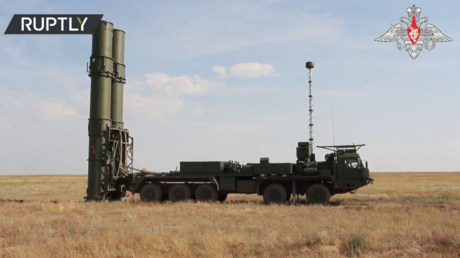
India may buy Russian S-500 anti-space-weapon defense system in world-first arms deal, despite risk of US sanctions, Moscow claims

India’s PRL Advanced Radial-velocity Abu-sky Search (PARAS), an optical fiber-fed spectrograph, observed t he exoplanet and its movements from the Mt. Abu Observatory, according to the space agency. Not only is the planet ultra-hot, but it is also one of the closest to an orbiting star yet discovered.

The measurements obtained via PARAS were confirmed by Germany’s TCES spectrograph in April, and further verified by independent photometric observations from the PRL’s 43cm telescope, also located at Mt. Abu.

The exoplanet has an unusually quick orbit – a mere 3.2 days. The pace indicates that its distance from its host star is one-tenth the distance between Mercury and the Sun. This makes the exoplanet one of fewer than 10 such solar systems discovered thus far. Given the closeness to its host star – an aging orb 1.5 times the mass of the Sun – the new planet is also one of the lowest density planets yet discovered.

Planets so close to their host stars, with a distance less than 0.1 AU and masses between 0.25 to several times the mass of Jupiter, are known as “hot-Jupiters.”

The Indian space agency hailed the detection of the new planet as an opportunity to “enhance our understanding of various mechanisms responsible for inflation in hot-Jupiters and the formation and evolution of planetary systems around evolving and aging stars.” It is the second planet to be discovered by PARAS, with a previous discovery taking place in 2018.

Like this story? Share it with a friend!

find more fun & mates at SoShow now !

NEW YORK, Nov 19 (IPS) – A week has gone by since COP 26 with 197 Parties ended in the Scottish city of Glasgow on extended time last Saturday. Climate change which covers wide array of issues affecting all living beings engaged the people around the world for COP 26 in a way never experienced since COP1 was held in Berlin in 1995.

Read the full story, “Glossing Over in Glasgow – Some Thoughts on COP26”, on globalissues.org

find more fun & mates at SoShow now !

Those making and knowingly using fake vaccination certificates in Germany could soon face up to five years behind bars, as the country’s likely future coalition government is looking to tighten the screws.

Coming under the same category are also fake test results and Covid recovery certificates, with similar penalties for the counterfeiters and the holders. Everything envisaged in the new guidelines was drafted by the Social Democrats, along with the Free Democratic and Green Parties. The three are currently in coalition talks and expected to form a new government as early as next week.

The German Parliament will decide on the regulations this Thursday, though a draft has already been seen by the media outlet DPA.

According to German media, the manufacturing and sale of fake certificates has become a booming black-market industry in the country. In just one such case reported by Der Spiegel in late October, a counterfeiter working at a pharmacy in Munich and her accomplice had churned out more than 500 fake digital certificates in the span of one month, raking in €350 for each one sold.

Read more

Felix Gottwald has spoken out as police patrol the streets of Austria to check people are vaccinated © Lisi Niesner / Reuters | © Instagram / felixgottwaldofficial
‘I am deeply ashamed of our country’: Austria’s greatest Olympian quits political role as lockdown for unvaccinated comes in

Meanwhile, Berlin authorities are planning to further ramp up restrictions in the city, where, starting Monday, having either a vaccination or recovery certificate is a must to enter restaurants, cinemas, theaters, museums, galleries, swimming pools, gyms, as well as hairdressers and beauty salons. On Tuesday, Berlin Mayor Michael Müller confirmed that authorities want to “have an additional instrument” to contain the spread of the virus. However, he declined to elaborate on what the new measures will be. Local media speculate that starting next week, in addition to the requirement to have a vaccination or recovery certificate to enter public places, people inside the venues will also need to practice social distancing and wear a mask, or have a recent negative test result.

This comes after Covid-19 numbers in Berlin hit an all-time high last Thursday, with 2,874 new cases reported that day.

Think your friends would be interested? Share this story!

find more fun & mates at SoShow now !

Chris Inglis’ new White House office has a startup feel to it. There are desks, a few chairs, a coffee maker and a poster hanging on the wall.  But as the head of the newly established Office of the National Cyber Director, Inglis has to make due with what he has while still advising President Joe Biden on the smartest ways for the US to prevent and respond to cyberattacks.

Inglis has already had numerous conversations with the president, who has made clear that the government has a role to play in the defense of the private sector and in assisting the private sector in defending critical infrastructure.  And the president knows, says Inglis, that means the government needs to get its own cyber house in order. 

But like any real startup, Inglis’ resources are scarce.  More than three months after being confirmed by the Senate, he still doesn’t have the full staff he needs to take on his timely and critical mission.  That’s because the funding for his office – some $21 million, part of the $1 trillion infrastructure bill making its way through Congress – is still stuck in the political spin cycle.  Why does it matter?

“The threat is greater than I can ever remember,” Inglis told me during last month’s AFCEA and INSA Intelligence & National Security Summit in National Harbor, Maryland. “The audacity, the brazenness, the thresholds that have been crossed at every turn; we’re in a difficult place.”

While he’s waiting for Congress to act, he says he’s spending about fifty percent of his time defining his role, being careful not to duplicate the work already being done by other agencies and departments, while spending another fifty percent building relationships that will be important later.  Eventually, he’s expected to have a staff of some 75 people who will be expected to work hand in glove with CISA, the National Security Council’s cyber staff, the OMB and others.  The remaining fifty percent of his time, Inglis jokes, is spent figuring out how to attract the country’s best talent.   

“People are starting to flow into the organization. I’m confident that we’re coming up to a breakout moment, not for the National Cyber Director, but the contribution that we can and should make. I’m sobered by the nature of the challenge, I’m optimistic we can make a difference.”

Optimistic he is.  And he’s not even complaining about being given a critical task for US national security and then having to wait for politics to play out before being able to act on it.

“It has been a semi-silver lining in that we would not have had time to think about how we want to apply the resources coming our way.”

While Inglis has been waiting, he and his small team have had time to think about the four things they’d like to focus on right away. 

First, is streamlining the roles and responsibilities in government of who handles what when it comes to protecting the public and private sectors from cyberattacks.  He also spoke during his confirmation hearing about the importance of allocation of resources and while the Office of the National Cyber Director doesn’t have the authority to move money, it does have what Inglis calls the responsibility to account for cyber money.

“One of the most critical gaps in cyber is that the physical digital infrastructure is not built to a common standard. The executive order related to this requires that within a certain amount of time we have to install basic procedures like multifactor authentication and encryption of stored material. That is a challenge and a potential vulnerability for us. We need to make sure that we make these investments necessary to buy down the lack of investment for years.

The second gap is in talent related to number of people required to occupy these jobs. It’s not simply the folks with IT or cyber in their name, but general cyber awareness. There is some expenditure of resources of time, attention, and money to get awareness right on the part of the truly accountable parties like agency and department heads. We have to make sure they don’t see cyber as a cost center, but an enabler on the part of all the users as they understand what their roles are and what the accountability is.

He admits there is still a level of education needed within government to get there.

That is usually the case in both the government and the private sector,” he said.  “We need to think this way about cyber and invest in cyber so that we can enable the mission, not hold it back. I think that education is the most important and effective way to handle this. Then, it is to make sure that the accountability is aligned and harmonized. We tend to take risk in one place and expect someone in another place to be the mitigator of a risk they don’t understand was taken in the first place. We need to operate in a collaborative fashion and get away from divisions of effort which are an agreement not to collaborate and allow adversaries to pick us off one at a time.”

Inglis says that unity of effort must start at home.  “The executive order issued in May has begun to lay out common expectations about the hardware, software, and practices that we need to begin in those spaces,” he said.  “Externally, if we have sector risk management agencies who engage the private sector for the purposes of supporting and engaging the critical components of that infrastructure, we need to make sure you don’t need a Ph.D. in government to know who to deal with and what you’re going to get from them.”

He is arguing for the government to also put ‘valuable material’ on the table.  “That could be our convening power,” said Inglis. “We could perhaps address and reduce liability or give companies a clue as to what might be around the corner because the government has access to exquisite intelligence. If that setup is possible, we also need a venue where collaboration takes place. Information doesn’t collaborate, people do.”

Inglis likes to point to the example of CISA and the Joint Cyber Collaborative.  “They put people from the private sector and the public sector side by side to co-discover threats that hold us at common risk. That project sets up the possibility of implicit collaboration in what we then do with that common operational picture. The government could take ideas that private sector companies turn into proprietary systems and enrich and classify them to deal with it in their system.”

Using what he calls “all the tools in the toolkit,” Inglis also notes the importance of international relationships, which fits nicely into the White House’s International Summit on Ransomware last week in Washington, which zeroed in on tighter cryptocurrency standards, among other things. “Beyond the Five Eyes, what do other like-minded nations think about what is expected behavior in this? What are governmental actions that are appropriate,” he asked.  

Inglis has been an active participant in the president’s recent actions in cyber.  He took part in a White House meeting with tech leaders in August that was hosted by President Biden, who Inglis says, spent the first hour sharing his vision about how the country should focus on collaborative integration.  “The companies represented weren’t only companies like Microsoft and Apple, but people who operate in the critical infrastructure space,” said Inglis.  “The people component, educators, were represented reflecting the president’s view that cyberspace is not just technology, it is also the people component. They are a major link in the chain, and we need to get the roles and responsibilities right.”

While he’s waiting for the funding he needs to get his office fully staffed, Inglis said he’s also putting thought into reconciling resources with aspirations.  Managing expectations is going to be important.  Frustration has been growing for years over what some see as a lack of government response to some of the largest hacks in history.  The phrase ‘time and place of our choosing’ as a definition of response has grown old and some Americans are weary of a government that isn’t responding in a more public way to the beating it sees the US taking in cyberspace.

So, I asked Inglis whether there should be red lines in cyber.

“Red lines are both good and bad,” he answered.  “They are clear and crisp, and everybody knows what they are. The downside is that because of that, an adversary knows exactly how far they can go. It means that you set up a somewhat permissive environment. Red lines also don’t have context; sometimes there is a reason that a defender would make the ransomware payment. As a matter of policy, the U.S. government does not pay ransomware, but I imagine there will be a situation at some point where a hospital is against the Russian state and actual life and safety is at risk. If there is no other way to get the material back, in order to get back in the business of saving lives, they would want to rethink if a red line is a red line in that particular situation. I think the right thing to do here is not to establish hard thresholds of things with scripted responses, but outline what we are prepared to defend and what principles we will exercise in defense of those things. We commit to defending the private sector when it is held at risk by a nation state in cyberspace as much as in the kinetic space and make that clear to adversaries. I think that would be more helpful in changing decision calculus and creating a useful ambiguity about when and where we will come in.”

Inglis said he’s also thinking a lot about present and future resilience.  It’s a worthwhile focus, given that the White House estimates that nearly half a million public and private sector cybersecurity jobs are currently unfilled. 

“That is a massive problem,” said Inglis. “However, the more insidious problem is that the 320 million people in the United States who use the internet who have no idea how to properly take their place on the front lines of this issue. There is an awareness issue that requires us not to make Python programmers out of them but to make sure they understand the nature of this space.”

Everyone has heard the old saying that time is money, but in Inglis’ case, time is security so I asked him point blank whether he thought government was moving has quickly as it should on the cyber problem.

“Government is moving at speed; the question is if it is at the necessary speed. I don’t think anyone is moving at the necessary speed. Some are moving at light speed, but at the end of the day, we need an integrated, collaborative approach. While we won’t have unity of command, I think there needs to be a universally felt sense of urgency so that we will all get our heads in the game.”

Congress, are you listening?  Oh, and by the way, that poster in Inglis’ office? It reads, ‘Hours Since the Last Surprise.”

As a startup with maybe too few resources at the start and who often didn’t understand how all the wickets are run, we have our occasional surprise,” said Inglis.  “When we encounter those surprises and go to someone with the deep and sharp expertise to help us navigate that, we get what we need. However, we are not a full functioning, full featured, fully capable organization yet. We’re trying to build somebody else’s airplane while we’re free falling from our own. We have a parachute, and we can land safely, but it is a bit of a challenge at times.”

Find out more about why experts like former NSA Director General Keith Alexander (Ret.), Mandiant CEO Kevin Mandia and others have joined The Cyber Initiatives Group, powered by The Cipher Brief

Read more expert national security insights, perspective and analysis in The Cipher Brief

The post Chris Inglis and the Gathering Cyber Storm appeared first on The Cipher Brief.

find more fun & mates at SoShow now !
General Joseph L. Votel (Ret.) joined BENS as CEO & President in January 2020 following a 39-year military career where he commanded special operations and conventional forces at every level; last serving as the Commander of U.S. Central Command (CENTCOM) where he was responsible for U.S. and coalition military operations in the Middle East, Levant, and Central and South Asia. General Votel’s career included combat in Panama, Afghanistan, and Iraq and he led the 79-member coalition that successfully liberated Iraq and Syria from the Islamic State Caliphate. General Votel preceded his assignment at CENTCOM with service as the Commander of U.S. Special Operations Command and the Joint Special Operations Command.

The Cipher Brief:  Did you ever envision that the U.S. would pull out so quickly or completely leaving the Afghan military on its own without U.S. air support?  

General Votel: I did not anticipate this during my time – but once the President sets a hard departure date – then a fast withdrawal is inevitable.  No Commander wants to accept unnecessary risk with troops on the ground when you are up against a clearly articulated departure date.

The Cipher Brief: Intelligence assessments wildly missed the mark on how fast Kabul would fall, what factors contributed most directly to this? 

General Votel: Certainly, the departure of our own capabilities is a big part of this; the lack of direct contact with Afghan leaders is another important factor; and, of course, once it was clear that we were departing (and took our Commander out) — we lost priority and access with our normal and reliable Afghan intelligence sources.

The Cipher Brief: U.S. personnel are facing a deteriorating security situation at the Kabul airport while U.S. forces are still deploying for the contingency operation, another sign that the administration underestimated how fast the Taliban would reach Kabul. The U.S. could have chosen to slow the Taliban advance using airpower, why didn’t it happen, do you think? 


The Cipher Brief hosts private briefings with the world’s most experienced national and global security experts.  Become a member today.


General Votel: I think it is very clear that this was no longer a priority for our Government.  The mission right now, at least articulated over the weekend, is about supporting evacuation of the diplomats and helping with the departure of those Afghans who assisted the US and meet the criteria for evacuation.  While I don’t know this for certain — I believe what we were trying to do with over the horizon air support in a rapidly developing situation, was not optimal or overly effective.  It doesn’t seem to have done much – if anything.

The Cipher Brief: The U.S. has allowed U.S. supplied military hardware, weapons and technology to fall into the hands of the Taliban, a group responsible for the deaths of U.S. personnel and thousands of innocent Afghans.  The U.S. government holds private citizens and corporations accountable for far lesser violations of export violations involving dual-use technology or military equipment, etc.  How should Americans think about this situation now, where the Taliban will use equipment, paid for the by the U.S. taxpayer, to potentially perpetrate acts of violence against U.S. interests, and erode democratic values that the U.S. tried to introduce to Afghanistan?  

General Votel: Not sure on this.  Unfortunately, it is not the first time we have seen this — remember ISIS in 2014, in Mosul?  I suspect these will be more trophy pieces than they will be hard military capability – with the exception of small arms, mortars, and artillery.  Most of this will be difficult for the Taliban to sustain – and they probably prefer their own gear, anyway.

The Cipher Brief:  There is a lot of anger among the national security community right now.  What would you say to individuals who have suffered because of the U.S. role in Afghanistan, who may be feeling anger and rage?  

General Votel: I can’t really comment on anger in the national security community — I am sure that exists, but the sentiment that seems more strong to me, is disappointment.  No one wants what we are seeing now.  I think most security professionals can accept a decision to depart by the Commander in Chief — that is well within his authority, and everyone understands this; what is harder to accept is the manner in which this happened, and how it has played out.  It was hard for me to watch Taliban sitting at a conference table that I once sat at with the Afghan President.  In a number of public engagements, I have participated in lately – people have asked me if this whole effort was a waste.  My response has been consistent.  American military personnel, members of the IC and the diplomatic corps conducted themselves honorably throughout this war.  They responded when the Nation called and did their best for our Country, each other, and the Afghan people.  There will be plenty of time to place the blame – but the vast, vast majority of Americans who participated in some aspect of the Afghan War did so nobly and to the best of their ability.  We should not lose sight of this.  That this did not turn out the way we all hoped — is not their fault … and I would not want anyone (especially families of our wounded and killed) to think these efforts were in vain.  That is not how I thought about them at the time, and it is not how I think about them now.  They answered when the Nation called.

Have a perspective to share?  Email Editor@thecipherbrief.com

Read more expert-driven national security insight, perspective and analysis in The Cipher Brief


The post The Painful Lessons of Afghanistan appeared first on The Cipher Brief.

find more fun & mates at SoShow now !
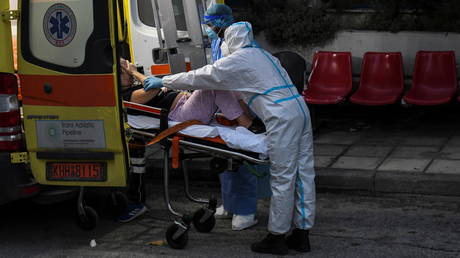
At least two people were wounded by police gunfire in the Dutch city of Rotterdam after a protest over renewed Covid-19 restrictions spiraled into a violent riot, seeing demonstrators torch a squad car and clash with officers.

A large crowd of protesters showed up at Rotterdam’s iconic Coolsingel street on Friday evening to denounce a new round of pandemic measures, including an ongoing partial lockdown, a ban on New Year’s Eve fireworks displays, as well as fears the government will impose a ‘2G’ pass system allowing only the vaccinated and those who’ve recently recovered from the virus to enter a long list of public places.

At least two people were wounded during the demonstration, a local police spokesperson told Reuters, adding the injuries were “probably” due to officers’ “warning shots” but also noting that “direct shots were fired because the situation was life-threatening” to law enforcement.

Footage of the heated protest circulated online, some clips showing a police squad car fully engulfed in flames after it was apparently torched by rioters.

Demonstrators were also seen launching fireworks at police, who appeared to respond with large quantities of tear gas, which at one point blanketed the area.

Local law enforcement said that officers deployed a mobile riot control unit to Coolsingel and unleashed water cannon on protesters who refused to clear the streets, also noting that some arrests were made after an emergency order was imposed to cordon off the area.

The Dutch government announced the fireworks ban earlier on Friday, saying it is meant to “prevent, as much as possible, extra strain on healthcare, law enforcement and first responders.” However, while private displays are prohibited, officials said that local governments may still put on fireworks shows so long as their Covid-19 restrictions allow it.

The Netherlands currently has a ‘3G’ rule in place, allowing the vaccinated, the recently recovered, as well as those who test negative for the virus to enter most public spaces. But as the country remains under a partial three-week lockdown to rein in growing infections, officials are now mulling the stricter ‘2G’ scheme, prompting the intense demonstrations seen on Friday night.

Think your friends would be interested? Share this story!

find more fun & mates at SoShow now !
Denmark’s air force showed off its brand-new electric-powered planes on Thursday, saying its test flights have so far proven that the cheaper-to-run, more eco-friendly technology has potential.

It had obtained the two Velis Electro jets from Slovenian manufacturer Pipistrel, becoming the first military in the world to operate this type of hardware.

“The aircraft are 100% emission-free, very quiet, and otherwise cheap to operate,” Lieutenant Colonel Casper Børge Nielsen of the Defense Ministry’s material and procurement agency said. Initial tests indicate “there may be perspectives in using electric aircraft when the technology becomes mature,” he added.

Denmark has leased the planes for two years, rather than buying it, to avoid the “risk of ending up with equipment that we can’t really use,” Børge Nielsen said. During the lease period, the Danish Air Force hopes to gain an insight into the benefits and disadvantages of the jets’ technology to decide how it can be applied in the future.

Read more

© CIAM / Facebook
Russia to debut world’s first electric plane at MAKS 2021 airshow

The pilots described flying the one-man light electric planes, which are powered by two lithium batteries, as “exciting,” saying they were “built well and fly well.” 

Last year, the United States military said it had been keeping an eye on the development of electric-powered planes, describing their ability to approach targets silently as “tremendous.” However, their battery capacity isn’t currently sufficient to meet the US Air Force’s needs.

Work on electric aircraft has been underway since the 1970s, but the battery issue has been a stumbling block in the way of wider adoption of the technology. Global military interest could change all that, stimulating research and investment.

The switch to electric power is likely to be a win-win across the board, as it will drastically reduce CO2 emissions and also make flying much cheaper for commercial carriers and their passengers.

Think your friends would be interested? Share this story!

find more fun & mates at SoShow now !