This piece was first published by RUSI in London.  The views do not represent those of RUSI.

EXPERT PERSPECTIVE –The international community is coming under increasing pressure to recognise the Taliban and to unfreeze Afghan funds held by the IMF or to risk a humanitarian crisis over the winter and a resurgence of international terrorism.

As Afghanistan heads deeper into winter the desperate need is to avoid a humanitarian crisis. The World Food Programme has launched an appeal to feed up to 23 million people and Médecins sans Frontières have followed suit in the healthcare field. Fortunately, the distribution mechanisms are in place inside Afghanistan; what is needed is for the international community to ensure that UN humanitarian programmes are fully funded. This will require Western capitals to get over the shock of their recent defeat. It goes without saying that hunger and health should not be used as instruments of political leverage.

Meanwhile, it is becoming ever more apparent that the Taliban do not have the skills to administer a country which is far more complex than the Afghanistan of 1996 – when they began their previous and disastrous spell in office. They will need international assistance to stabilise the economy, get people back to work and, in time, continue the gradual infrastructure improvements which have been underway since 2002. China will doubtless be willing to assist in some areas but Beijing has already made clear that it is adopting a cautious, gradualist approach. However, there are emerging indications that the Taliban’s intransigent views are beginning to relax; such as their approval of the polio vaccination scheme and their willingness to work with UN humanitarian agencies.

The Taliban will also need outside help in defeating the threat from the Islamic State’s Khorasan Province (ISK). Already the Taliban are finding it difficult to counter similar asymmetric tactics which they used so successfully against Western forces. This is likely one of the subjects which CIA Director William Burns discussed with the Taliban during his visit on 24 August and where there is a mutual interest.

What can the international community (not just the West) realistically expect from the Taliban, following the militant group’s stunning victory? Maximalist demands will inevitably get short shrift.


The Cipher Brief hosts private briefings with the world’s most experienced national and global security experts.  Become a member today.


First, the Taliban should form a more inclusive government. According to multiple sources, the Taliban were intending to form such an administration had Ashraf Ghani not fled the country on 15 August. I am sceptical that this was ever their intention but former president Hamid Karzai and former reconciliation chief Abdullah Abdullah may have remained in Kabul on this understanding and Fatima Gailani, a former negotiator, insists this was the Taliban’s intention.

An inclusive government would need to include women and non-Taliban representatives from the Hazara, Uzbek and Tajik communities. It need not comprise the failed politicians and bloodstained warlords of the past, least of all Gulbuddin Hekmatyar and Abdul Rashid Dostum. It is surely time for a new generation of more technocratic Afghans to become involved in government. Some may be persuaded to return from abroad but they will need assurances for their safety.

Second, the international community should insist on female education at all levels be restored and for women to play a fuller role in society. The Taliban will baulk at this but they only need to look at Pakistan where women play an important role in an avowedly Islamic, if not Islamist, society.

Third, all neighbouring countries, as well as the wider world, want Afghanistan to commit to removing all terrorist bases and terrorists from its soil; not just ISK and Al-Qa’ida but also the Eastern Turkistan Islamic Movement, the Pakistani Taliban (TTP), anti-Iranian and anti-Indian groups, and Central Asian militant movements including the Islamic Movement of Uzbekistan.

Fourth, the Taliban should commit to allow people to join their families in exile if they wish and also cease the continuing search for and punishment of those Afghans who served the Afghan government and Western allies since 2001.


Go beyond the headlines with expert perspectives on today’s news with The Cipher Brief’s Daily Open-Source Podcast.  Listen here or wherever you listen to podcasts.


In an ideal world there would also be a fifth request: to remove Haqqani network members from the Taliban administration. However, that pass was sold when the US negotiator Zalmay Khalilzad engaged with the Haqqanis in Doha – another result of that calamitous dialogue. Furthermore, the current reality is that the Haqqanis control both Kabul and its airport and Sirajuddin Haqqani holds the key position of interior minister.

Instead, the Haqqanis need to be persuaded to prevent Al-Qa’ida regrouping in Afghanistan. Sirajuddin’s father was close to Osama bin Laden and the group retains its Al-Qa’ida connections. Pakistan is already using the Haqqanis to bring the TTP to the negotiating table. It remains to be seen how successful this will be. It is doubtful that the Haqqanis would be willing to take military action against a group from a similar area in the tribal borderlands. However, the Haqqanis could be useful as intermediaries, if not as enforcers.

Meanwhile, the wider Taliban, usually referred to as the ‘Kandaharis’, are increasingly exasperated by the entryist Haqqanis. Although they have worked together, there was never much love lost between the two. The Kandaharis have always distrusted the Haqqanis’ proximity to the Pakistani military. Since the Taliban takeover of Afghanistan, Mullah Abdul-Ghani Baradar, whose willingness to negotiate with the Kabul government in 2008 and 2010 earned him eight years in a Pakistani prison, has been sidelined. There will doubtless be a reckoning

A lasting regret of the US’s careless withdrawal is that Washington did not conclude a broader settlement for Afghanistan involving China, Iran, Russia, India and the Central Asian Republics. From now on it is essential to include all the neighbours in the discussion of recognition and the conditions required. But first the Afghans must be helped to survive the winter.

Read more expert-driven national security insights, perspective and analysis in The Cipher Brief

The post What Stands Between the Taliban and Recognition appeared first on The Cipher Brief.

find more fun & mates at SoShow now !

The EU must quickly seal its external borders to stem the flow of migrants who are no longer welcome in the 27-member bloc, according to Slovenia’s interior minister, whose country currently holds the presidency of the EU Council.

Speaking at the ‘Sarajevo Migration Dialogue’ on Thursday, Interior Minister Ales Hojs said EU countries were preoccupied recently with the coronavirus pandemic, the fall of the government in Afghanistan, and now a migrant crisis on the Poland-Belarus border, which he said was a hybrid war waged by Minsk against the EU.

Read more

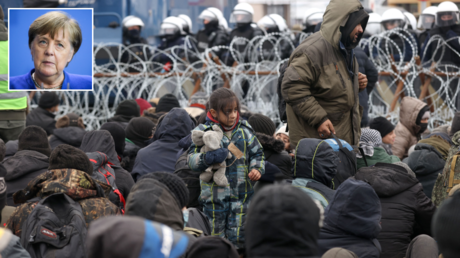
Migrants gather on the Belarusian-Polish border on November 15, 2021. © AFP / OKSANA MANCHUK; (inset) German Chancellor Angela Merkel. © AFP / MARKUS SCHREIBER
Germany agreed on plan to open humanitarian corridor for refugees on Poland-Belarus border – Minsk

“All three have additionally contributed to the increase in numbers of illegal migrants moving towards Europe and the Balkans, destabilizing the European Union,” Hojs told reporters.

The Slovenian minister said the current situation was similar to the 2015 influx of refugees and migrants from the Middle East and North Africa, when the EU admitted over one million people across its borders.

This time the situation is different, Hojs said, warning that “there is no more ‘refugees welcome.’”

“I believe that external borders must be secured, even with fences if necessary,” Hojs said, saying that he supported a plan for Brussels to finance the building of fences to reinforce the bloc’s borders.

He said it was important to strengthen cooperation and partnership across the EU in order to better manage migration and maintain security.

Thousands of migrants have been trying to cross the Belarus-Poland border in an attempt to reach the EU. They have been stranded at barbed-wire fencing with Polish border guards repelling their attempts to cross. Warsaw has accused Belarus of orchestrating the crisis to destabilize the EU and “weaponize” migration in an effort to have sanctions lifted.

A spokesperson for Belarusian leader Alexander Lukashenko claimed on Thursday that Germany agreed to open a humanitarian corridor for 2,000 refugees on the border.

If you like this story, share it with a friend!

find more fun & mates at SoShow now !

Czechia will prohibit people who have not been vaccinated from entering public spaces such as restaurants and shops from Monday. Negative Covid-19 tests will no longer be allowed.

Speaking on Wednesday, outgoing Prime Minister Andrej Babis said the country would adopt the so-called Bavarian model from Monday next week, prohibiting those who have not received a Covid-19 vaccine from entering public places. Those who have recently recovered from the virus will be allowed entry. 

Read more

(FILE PHOTO) © REUTERS/Costas Baltas
France turns to Ancient Greece for war on woke

The country will enter a partial lockdown of the unvaccinated from Monday morning, assuming the restrictions are approved by the cabinet on Thursday.   

“We will introduce the Bavarian model from Sunday to Monday. This means that entry to restaurants, service establishments, or mass events will only be allowed for vaccinated or survivors. Those vaccinated with a single dose must have a PCR test,” Babis said on local TV.

The prime minister said that self-testing would be completely cancelled, as he lamented unvaccinated people for clogging up hospitals and preventing treatment reaching those with other illnesses.  

“The death toll is rising; the situation is serious. Vaccination is the only solution, there is no other,” he added. 

The country is seeing a spike in infections, with a record 22,479 new cases reported on Tuesday. 

The Bavarian model refers to strict anti-Covid measures introduced in the southern German state. Markus Soder, the state’s premier, claimed there was no choice but to implement “a kind of lockdown for the unvaccinated,” citing increasing pressure on hospitals and medical staff. 

Meanwhile, some two million people in Austria who are yet to receive their Covid shots have been subject to the world’s first lockdown for the unvaccinated, in an effort to bring case numbers down.  

While 68% of people are vaccinated in Germany, and 65% in Austria, just over 60% are vaccinated in the Czech Republic. 

If you like this story, share it with a friend!

find more fun & mates at SoShow now !

The Middle East has demanded Washington’s attention on an almost weekly basis since President Biden took office in January. Since then, the White House has made the decision to speed up the withdrawal of U.S. troops from Afghanistan, has been faced with militia attacks in Iraq, Hamas attacks on Israel, the collapse of Lebanon, political instability in Jordan, OPEC issues, a political crisis in Tunisia, Houthi rejection of diplomacy in Yemen, Iran’s refusal to return to the nuclear deal, and most recently, attacks believed to be perpetrated by Iran against  tanker ships. This of course, is occurring as COVID continues to ravage regional economies and undermine the stability of fragile states. And let’s not forget that Al Qaeda and ISIS remain active throughout the region.

The Cipher Brief tapped Expert Norman Roule for insights into what all of this means for the Biden Administration and the rest of us in the coming months.

Norman T. Roule, Middle East Expert, Former National Intelligence Manager for Iran, ODNI
Norman Roule served for 34-years in the Central Intelligence Agency, managing numerous programs relating to Iran and the Middle East.   He served as the National Intelligence Manager for Iran (NIM-I) at the Office of the Director of National Intelligence from November 2008 until September 2017.  As NIM-I, he was the principal Intelligence Community (IC) official responsible for overseeing all aspects of national intelligence policy and activities related to Iran, to include IC engagement on Iran issues with senior policy makers in the National Security Council and the Department of State.

The Cipher Brief: Let’s start broadly.  The Biden Administration has had a lot to deal with in the Middle East since the president took office in January.  How are they doing?

Roule:  I think it’s too early to assesses the administration’s performance. The Biden administration arrived with several broad goals. It promised to reduce American military forces in the region, rely more on diplomacy and cooperation with Europe to resolve regional problems, and adjust relations with long-time regional partners like Israel and Saudi Arabia. But the challenges of the region are long-standing and routinely intrude upon Washington’s foreign policy agenda. And U.S. foreign policy in the Middle East has become a sharply partisan issue.

The administration’s response to events that have transpired in the region since the beginning of the year, has reassured those who looked for a greater emphasis on diplomacy. Washington assigned experienced envoys to contain multi-party issues and coordinated with Europe to limit U.S. involvement. The Secretary of State and his deputy have made high-profile visits to the region. The President has hosted such leaders as the King of Jordan and the Prime Minister of Iraq. And National Security Council engagement with Israel is routine. U.S. military shifts have taken place, but the administration still prioritizes security cooperation with regional partners. However, the U.S. withdrawal from Afghanistan is perceived by many as precipitous. Others worry that the U.S. has joined Europe in overlooking Iran’s attempts to change the political DNA of Iraq, Syria, and Yemen. The U.S. response to the Houthi’s use of Iran-supplied missiles and drones against civilian targets remains mainly rhetorical despite the lethal threat this poses to Saudis, Americans, and others living in the Kingdom.

The Cipher Brief:  That’s a sobering review. Is there any good news from the region for this administration?

Roule:  Actually, quite a bit. The administration has found that regional states will collaborate on complex issues beyond the region. Qatar plays a unique role in U.S. Afghan policy. The United Arab Emirates and Saudi Arabia are essential partners in resolving East African crises.

Regional leaders place great value on security cooperation as well as robust engagement with the U.S. private sector. Al-Qaeda and ISIS remain a threat, but at a fraction of their past potency.

Long-overdue political and economic reforms continue, albeit not at the pace or scale some Western observers seek. Saudi Arabia has introduced notable human rights reforms. A growing number of countries in the region have undertaken high-profile efforts to combat corruption and reshape their economies. Oman has begun the long road to restructuring its economy. Iraq and Libya remain intact despite their fractious polities.

I think the administration has also been impressed by the efforts of the Gulf states to diversify their economies, particularly in the area of green energy. The visits by U.S. Climate Envoy Secretary Kerry have been quite popular, probably more than some expected. I see plenty of momentum for growth here. 


Cipher Brief Members are invited to join us for a live virtual briefing with Norm Roule on Wednesday, August 11 at 11a ET.  

Members receive invites via email.  Not a member?  Not a problem.

Become a member today.


The Cipher Brief: The Iranian nuclear talks appear to have stalled. How did this happen? And what will it take for Iran to return to the deal?

Roule: Iran will return to the nuclear deal when it first believes it has wrung every concession out of the West in order to shield its economy from sanctions that could follow its non-nuclear aggression. It will also seek to ensure that it has fatally compromised the U.S. ability to reimpose sanctions within the nuclear deal itself. The Biden administration pledged a return to the deal as written, an end to the maximum pressure policy of its predecessor, and a rejection of regime change. More broadly, it also announced an intention to reduce the U.S. military presence in the region, a reassessment of Washington’s relationship with Israel and Saudi Arabia, and support for regional engagement with Iran. Some believe that the administration may even have turned a blind eye to Chinese purchases of Iranian oil as a signal to Tehran of Washington’s goodwill. If reasonable leaders ruled Iran, all of this should have produced an early return to the deal. But Iran’s leaders are rarely seen as reasonable. Iran could have chosen a fast return to the deal. Instead, it pushed for what all members of the P5+1 agree are unreasonable demands.

At this point, conditions aren’t favorable for an Iranian return to the deal in the near term. First, Tehran has pocketed all the benefits offered by the Biden administration’s initial approach without any concessions of its own.

We should also consider that Iran’s leaders may not want to return to the deal. Tehran’s primary goal in the 2015 nuclear deal was to obtain sanctions protections against the most vulnerable sectors of its economy in exchange for constraints on its civilian nuclear program. Tehran found that an end of nuclear sanctions did not solve the economic problems which produced domestic unrest, nor did the imposition of sanctions threaten the regime. Sanctions indeed constrained Iran’s ability to support proxies in the region, but even this was tolerable for the regime.

Next, Iran’s economy has stabilized somewhat in recent months. It remains in terrible shape but not so bad that the survival of the system is in question.

Last, we need to remember that Iran has historically offered concessions when confronted by a united international threat. Whatever your views on the nuclear deal, its very existence fragments international unity against Iran, which has always been a critical goal for Iran’s leaders. Support of the deal may bring us closer to Europe, Russia, and China but inevitably make regional partners believe we have ignored their valid security interests since there is little reason to believe Iran will moderate its non-nuclear behavior. Opposition to the nuclear talks may win support from Israel and Iran’s neighbors but it also invites friction with Europe, Russia, and China. These countries generally reject non-economic coercion against Iran and say relatively little about Iran’s regional adventurism.

The Cipher Brief: With a new president, will Iran’s new leadership continue to participate in the nuclear talks?  What will it take for Iran to return to the deal?

Roule: I believe Tehran will remain in the talks, but it will likely use the coming weeks to project defiance and even a willingness to walk away. The developing crisis over Iran’s naval attacks in the Arabian Sea may also postpone engagement. But for Iran, talks are a net positive. In addition to significant sanctions relief, the talks allow Iran – a mid-sized country – to routinely engage the attention of the world’s powers and play these actors against each other. This engagement also brings de facto recognition of the Raisi government, no small thing given his bloody background. The talks allow the Raisi government to argue directly with senior European counterparts that new sanctions for its many non-nuclear crimes would prevent it from returning to the nuclear deal. Last, the talks will give the Raisi government a platform for defiant rhetoric that will unsettle its adversaries and satisfy domestic supporters.

The Cipher Brief:  So, what circumstances would compel Iran to return to the deal?

Roule:  I can think of two paths that lead to an Iranian return once the new regime has vented defiant rhetoric. First, Tehran would need to believe that its rejection of the deal and malign regional actions had unified the international community to collectively support renewed economic pressure. Second, if Iran’s economy or political dynamic suffers a downturn that Tehran’s leaders perceive as leading to the downfall of the Islamic Republic. Either will need to include face-saving concessions.

The Cipher Brief: How should we look at current unrest in Iran?

Roule: The ongoing unrest shows no sign of being a near-term threat to the regime.  The crowd sizes appear manageable and anti-regime violence has so far been minimal. Security forces are relatively well organized and they are unsympathetic to protestors. The main weakness of protest remains that the opposition lacks direction, leadership, and support by labor groups. There appear to be no external or internal power centers capable of challenging the Supreme Leader.

We shouldn’t overlook the fact that many Iranians do support the regime. Despite a historically low turnout and Raisi’s admitted record of blood, eighteen million Iranians voted for him. It has become routine to see videos from Iran in which women argue that they cannot be forced to wear a hijab. But the same videos show other Iranian women (and men) asserting that failure to do so violates Iranian law and culture.

The current unrest did have aspects that likely worry Tehran. Oil workers put down their tools, and sympathy strikes reportedly erupted in major cities, albeit not on a scale that threatened the regime. The grievances of the Iranian people are so reasonable that they are increasingly acknowledged as such by government officials. But conditions in Iran are unlikely to improve. COVID continues to wreak havoc while climate change makes water and electricity shortages more painful. For these reasons, unrest will continue and probably intensify.


Go beyond the headlines with expert perspectives on today’s news with The Cipher Brief’s Daily Open-Source Podcast.  Listen here or wherever you listen to podcasts.


The Cipher Brief: What do you expect President Raisi to accomplish domestically, regionally, and internationally in his first 100 days in office?

Roule: Domestically, he will take steps to show how he will sustain Iran’s revolutionary spirit during what many believe to be a period of transition to a new generation of leaders. We will see this initially play out in his ministerial selections as part of a broader campaign to staff the bureaucracy with ideologically sound personnel, especially those with a background in the Revolutionary Guard. Security services and the military are very likely to see strong support. He will want to show that he is taking steps to address COVID and the economy. Programs directed at the poor are likely to be a priority, but he will have no sympathy for protestors. I wouldn’t be surprised if he announced an anti-corruption campaign and targeted members of the Rouhani administration for its initial investigations. We will also continue to see efforts to prepare Iran’s oil sector so that Tehran can quickly ramp up oil sales once sanctions end. Last, he is likely to support growing regime control of the internet. A bill calling for such control is currently before the parliament.

The Cipher Brief:  What about foreign policy?

Roule:  I don’t anticipate many changes in foreign policy. Raisi will mouth support for regional engagement but will maintain a defiant attitude towards the West, animus toward the U.S., support for proxies, and suspicion – but likely not rejection – of the nuclear talks. We need to be clear that he sees any sanctions relief as a transactional issue. Much as in 2015, Tehran will be clear that it will not allow a new deal to transform Iran’s society or its relations with the West.

The Cipher Brief: What are your thoughts on what would constitute an effective U.S. strategy to deter Iran’s regional activities, such as continued attacks on maritime trade, proxy support for attacks on Saudi Arabia, and activities in Yemen and Syria?  Can you imagine a scenario when the U.S. might engage militarily?

Roule: Our strategy must involve our international partners. We should avoid anything that makes it appear as if this is a U.S-Iran conflict instead of Iranian actions that threaten multiple countries and their citizens. The question becomes, will the international community join us or stand back while the U.S. takes the hard steps needed to contain Iran. Sanctions certainly deprive Iran of resources it would use for its proxies, but sanctions alone will not end Iran’s belligerence. The

The Cipher Brief:  What are Iran’s likely plans in Afghanistan in the wake of the U.S. withdrawal? What worries you the most?

Roule: There is plenty about Afghanistan to worry everyone, but I won’t dwell on the issues that are covered well in The Cipher Brief by others.  Iran has enjoyed the security stability that came with our presence. Now they have the Taliban on their border. Qods Force commander Esmail Qaani has considerable experience in Afghanistan. Iran’s security forces will likely engage the Taliban, Afghan governments, and warlords in equal measure to ensure that Iran can exert some influence over each. Iran is likely to transfer some portion of its Afghan proxies in Syria to western Afghanistan to protect Iran’s interests.

One issue that concerns me is the fate of the al-Qaeda cell in Iran. Tehran has enabled an Al-Qaeda presence on its territory for years without any international cost. That presence may well choose to migrate back to Afghanistan to reconstitute its former power center. The international community should hold Iran responsible if this happens. After all of the blood and treasure spent in the war on terror, we cannot tolerate Iran enabling al-Qaeda’s resurgence.

The Cipher Brief:  It feels like that would be an incredible regression.  Let’s shift to energy issues. Where do energy markets stand in the wake of the OPEC deal? And what do you think are the main drivers?


Cipher Brief Members are invited to apply for a seat at the table for The Cipher Brief’s Annual Threat Conference Oct 24-26 in Sea Island, GA.  Engage directly with experts on national security issues.  Space is limited.  Apply today.


Roule: Three baskets of drivers now define energy markets. First, the fundamentals. Here we are watching steady draws on stockpiles, production remains below what the market could absorb, and supplies will be tight for the remainder of the year. U.S. producers appear generally focused on return on equity vice expansion, which will likely mean that we will produce around two million BPD of oil less this year than last year. U.S. rig count is about double what it was a year ago at this time but is growing only slowly. It likely dropped slightly a week ago. Capital investment in the oil industry plummeted in 2020. Shareholders are pressing company leaders to use profits from restored oil prices to invest in green technology. OPEC policy remains conservative in the face of variables including; when Iran and Venezuela will resume production, the question of whether inflation has returned, and the impact of investor speculation.

Second, COVID is here to stay even in the best-case scenarios. The international community has failed to come close to a uniform approach to social distancing, travel, and economic reopening. We tend to look at this through a national perspective, but it may be insightful to look regionally to see how COVID-D shuts down specific industries as it spreads globally. Fresh COVID lockdowns in China have combined with signs of a decline in Chinese manufacturing to restrain prices.

Finally, geopolitical developments have generally had only a temporary impact on price pressures, but I worry about events in the Middle East. Expansion of Iranian attacks in strategic waterways with significant commercial and energy traffic may be more consequential. Insurance costs may increase for an industry with tight profit margins. Worse, attacks against only a few large container ships would disrupt global supply chains. We are moving into a new age when the importance of the Middle East may be as significant in terms of transportation security as it is in terms of energy.

The Cipher Brief:  So, let’s put you on the spot. What is your outlook for prices in the coming months?

Roule: Let me give this my best shot. Absent a sudden economic downturn, widespread COVID lockdowns, or conflict in the Middle East, we should see a continuation of the upward price velocity seen over recent months. This trend should sustain prices in the mid $70s and even low $80s. Several factors make upward movement beyond that problematic. First, OPEC leaders would be reluctant to invite the inflationary (and thus political) pressures such a spike would entail.  The Saudis will continue to push for market stability which dominates their strategy.  Second, India – and possibly China – would draw upon their strategic reserves if prices moved that high. Finally, such a price would draw out producers in the U.S. and OPEC + who would not be able to pass on a chance for a spike in revenue.


Read more expert-driven national security insights, perspective and analysis in The Cipher Brief 

The post Expert Brief: Iran, the Middle East and Strategies around Oil appeared first on The Cipher Brief.

find more fun & mates at SoShow now !
An American nonprofit behind the US-funded bat virus research in China has denied ever sending virus samples from Laos – a place where SARS-CoV-2 closest natural relative was found – to Wuhan in response to fresh allegations.

“No work was ever conducted in Laos as a part of this collaborative research project,” EcoHealth Alliance – a group that conducted experiments on coronaviruses while receiving funding from the National Institutes of Health (NIH) – said in a series of tweets on Sunday, responding to media reports alleging that the group might have transported a potentially dangerous virus from Laos to the laboratory in Wuhan.

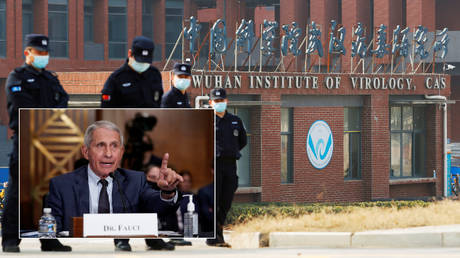
The group’s name surfaced in October when the NIH principal deputy director, Lawrence Tabak, revealed EcoHealth Alliance did experiment on the viruses with the agency’s financial help. At that time, White House Medical Advisor Dr. Anthony Fauci stated that the viruses studied as part of the project “were distant enough molecularly that no matter what you did to them, they could never, ever become SARS-CoV-2.”

EcoHealth has come under renewed scrutiny after its emails, obtained through a Freedom of Information request, appeared to suggest that the group was discussing the prospect of collecting viral samples from bats in Laos and sending them to the Wuhan Institute of Virology. The emails were initially obtained by the White Coat Waste Project and sparked a flurry of reports over the weekend, including in the Spectator by British science writer Matt Ridley.

Read more

FILE PHOTOS.
Fauci DID fund Wuhan virus experiments, but officials insist virus involved ‘could not have been’ cause of Covid-19 pandemic

The emails shared between EcoHealth Alliance and its US government funders reportedly reveal that the scientists discussed collecting viral samples from bats in eight countries, including in Laos, between 2016 and 2019, and toyed with the idea of transporting them to Wuhan, ostensibly, to avoid red tape. One email from 2016 cited by the Spectator reportedly reads: “All samples collected would be tested at the Wuhan Institute of Virology.”

Laos is the birthplace of at least one virus that seems to be very close to SARS-Cov-2. A bat viral strain called Banal-52 discovered in Laos in September shares 96.8 percent of its genome with the virus behind the Covid-19 pandemic

On Sunday, EcoHealth Alliance claimed that the emails cited by Ridley “do not show…that we were sampling bats in Laos and sending the results to Wuhan.”

The group acknowledged, however, that it requested NIH permission to work in Southeast Asian countries, including in Laos, and that this permission was granted. 

However, the nonprofit claimed it ended focusing on China instead.

 The response failed to satisfy Ridley, who is also a co-author of a book on Covid’s origin, who demanded “evidence” proving that  his report was not “fully accurate.”

Think your friends would be interested? Share this story!

find more fun & mates at SoShow now !
The International Criminal Court has halted an investigation into alleged rights abuses carried out by Philippines authorities as part of a harsh crackdown on the drug trade, saying it is reviewing a deferral request from Manila.

The ICC’s chief prosecutor Karim Khan said the probe was suspended after the Philippines government filed a request to defer the case earlier this month, according to court documents cited by Reuters on Friday. 

“The prosecution has temporarily suspended its investigative activities while it assesses the scope and effect of the deferral request,” he wrote, adding that the court is seeking more information from the government in Manila.

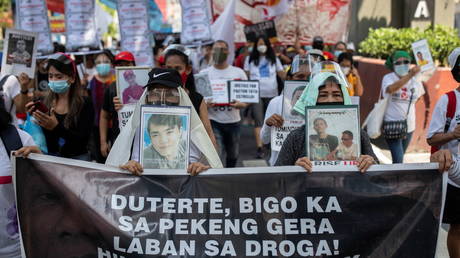
Based in The Hague, the ICC allows states to ask for postponements if they conduct their own investigations into the charges in question. President Rodrigo Duterte’s administration filed its deferral request on November 10, while the country’s Justice Ministry announced its own investigation into the alleged abuses late last month.

Read more

Relatives of drug war victims hold photographs of their slain loved ones with placards calling for justice (FILE PHOTO) © REUTERS/Eloisa Lopez
Philippines announces probe into thousands of killings during Duterte’s war on drugs as initial review suggests abuses took place

The court initially opened the probe in September over allegations that Philippines police had carried out thousands of extrajudicial executions and used other brutal tactics against suspected drug dealers, and that Duterte gave implicit backing to those actions. Activists have accused authorities of killing innocent people, including children, though the police insist they only use violence in self-defense.

While Duterte has declined to cooperate with the ICC probe, saying it has no authority on the island nation, and even pulled the Philippines out of the international body in 2019, the court has jurisdiction to investigate alleged violations committed by the country while it was still a member.

The president’s chief legal counsel, Salvador Panelo, confirmed the deferral request in brief comments to Reuters, saying “There is no inconsistency with the request for suspension of action,” though he did not elaborate.

Since its founding some 20 years ago, the ICC has successfully convicted just five people of war crimes or crimes against humanity – all leaders of armed movements in Africa, including in Mali, Uganda and the Democratic Republic of the Congo.

Think your friends would be interested? Share this story!

find more fun & mates at SoShow now !
Clinics in the Austrian region of Salzburg have set up a special assessment team tasked with identifying Covid patients who have a higher chance of survival; the rest may soon have to take a back seat.

Amid a dramatic spike in Covid cases, medical personnel warn they may soon have to make the heart-wrenching choice of which patients get life-saving treatment and which ones will have to wait, Austrian media report. Intensive care units in the Salzburg region are packed, with the number of patients treated there setting a new grim record on Tuesday, reaching 33. The region ranks amid Austria’s hardest-hit, logging more than 1,500 new infections per 100,000 residents in a week. In an emotional plea for help to the local government, the head of Salzburg’s hospitals warned that soon clinics would likely not be able to guarantee the existing level of standards in terms of medical treatment. A representative for the city clinics likened the situation to “running into a wall.

The region’s governor, Wilfried Haslauer, announced on Tuesday that some of the Covid patients whose condition was no longer life-threatening would be transferred from hospitals to rehabilitation centers to make room for more serious cases.

Read more

FILE PHOTO.GRAZ, AUSTRIA. © AFP /CREDITERWIN SCHERIAU
Austria imposes compulsory vaccination from February 1 & nationwide lockdown starting Monday

In neighboring Upper Austria, the situation is no better, with the number of deaths in intensive care units surpassing figures seen in all the previous Covid waves. Speaking to Austria’s Der Standard paper on condition of anonymity, healthcare workers there said they had free beds “because the infected are dying.

For the time being, the creation of a so-called ‘triage team’ in Salzburg hospitals is being described as a “precautionary measure.” The panel is made up of six people: one legal expert and five providers from various medical disciplines. If push comes to shove, they will be deciding which patients stand a chance and which treatments have little prospect of success.

Like this story? Share it with a friend!

find more fun & mates at SoShow now !
Brazil’s former President Luiz Inacio Lula da Silva has said he is willing to stand as a candidate in elections against incumbent leader Jair Bolsonaro, labelling his potential opponent “a poor copy of Trump.”

Speaking in Brussels at a media conference in the European Parliament on Monday, Lula announced that the Workers Party needs to put forward a presidential candidate to take over from right-wing Bolsonaro in 2022 and said he was willing to run in the elections again.  

Read more

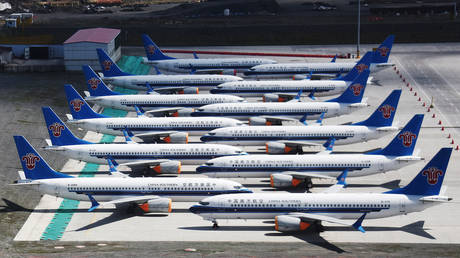
Grounded China Southern Airlines Boeing 737 MAX aircraft at Urumqi airport, in China's western Xinjiiang region, June 5, 2019.
World’s biggest aviation market may soon welcome back exiled Boeing 737 MAX

“I’m willing, I’m motivated, I’m in good health,” Lula stated, adding that said he would only make his decision early next year, some months before the election scheduled for October 2022. The popular leftist said his candidacy would depend on whether the party wanted him. 

“We need to have someone who stands, we need to win the elections. And at the same time, we have to rebuild Brazil,” he said, speaking on behalf of his Workers Party.

Lula, 76, also took aim at the incumbent president. “He’s a poor copy of Trump. But Bolsonaro doesn’t think, he doesn’t have any ideas,” the former president said, claiming the incumbent leader was hellbent on ensuring the beneficial legacies of Lula’s administration were “torn down.” 

A recent poll put him 27 points ahead of Bolsonaro, despite his candidacy not officially being announced.  

In 2010, Lula made way for his protégé, Dilma Rousseff. Rousseff was ousted from power in what was described by her supporters as a parliamentary coup. Lula served nearly two years in prison after being convicted on money laundering and corruption, despite a nine-and-a-half-year sentence. He was also barred from running in the 2018 election. 

A number of judges have subsequently ruled that the case against Lula was unlawful and the Supreme Court annulled his earlier convictions, meaning he can face off against Bolsonaro in 2022.

If you like this story, share it with a friend!

find more fun & mates at SoShow now !

The children of families who were affected by the massive earthquake which devastated large parts of south-west Haiti in August this year are receiving free hot meals at school as part of an initiative by the UN’s World Food Programme (WFP) to support the recovery of the country’s most vulnerable communities.

Read the full story, “Hot meals helping Haiti’s children recover from the earthquake”, on globalissues.org

find more fun & mates at SoShow now !
For the first time since the start of the pandemic, the number of new daily Covid cases in Germany has exceeded 60,000, according to the country’s disease control and prevention agency, the Robert Koch Institute.

Authorities fear that in reality the figure is even higher, as not all cases are immediately reported or detected. Just a week ago, the number of daily infections across Germany surpassed the 50,000 mark.

Read more

(FILE PHOTO) © REUTERS/Fabian Bimmer
Germans facing ‘really terrible Christmas’

Among the country’s Covid hotspots are Thuringia, Saxony and Bavaria. In the latter region, hospitals are so overwhelmed with Covid patients that they have had to put off any non-emergency surgery.

Against this grim backdrop, lawmakers in the Bundestag on Thursday backed a new set of measures aimed at containing the spread of the disease. The package was proposed by Germany’s Social Democrats, the Green and Free Democratic parties, which are expected to form a new coalition government as early as next week.

If passed by the upper house, the rules would include mandatory daily Covid testing for employees of, and visitors to, care homes, regardless of vaccination status. Germans would also be required to show proof of full vaccination, recovery or a fresh negative Covid test in order to enter their workplace or use public transport.

On top of that, those caught selling and forging fake certificates and tests could face up to five years behind bars. Just like the Covid regulations currently in place, the new plan gives some leeway to regional authorities in terms of restrictions so that, for instance, the banning of recreational, cultural, and sporting events will be at their discretion. However, things like travel bans, curfews and massive closures of businesses would now be off-limits to local government.

If you like this story, share it with a friend!

find more fun & mates at SoShow now !