Scientists in Sweden claim that a single protein in the blood could predict the onset of Type 2 diabetes nearly 20 years in advance. The breakthrough potentially affects hundreds of millions of people worldwide.

Diabetes is the world’s ninth-leading cause of death, and affects nearly half a billion people worldwide, according to the World Health Organisation (WHO). The vast majority of diabetes patients suffer from Type 2 diabetes, a condition that can lead to blindness, kidney failure, heart attacks, strokes, and lower limb amputation. Cases of diabetes quadrupled worldwide between 1980 and 2014, with unhealthy diets and lack of exercise blamed for the rise.

Read more

© Getty Images / Peter Dazeley
NHS setting up fat camps for children

However, researchers at Lund University in Malmo, Sweden claim that elevated levels of a certain protein – follistatin – in the blood can predict the onset of Type 2 diabetes regardless of a person’s age, weight, diet or activity level. In a study published last week, the scientists wrote that high levels of follistatin can predict the condition up to 19 years before symptoms appear.

To discover the link between follistatin and diabetes, the researchers tracked 5,300 people from Sweden, Italy, and the UK for between four and 19 years. Follistatin helps break down body fat, while simultaneously leading to an increase in fat in the liver. This buildup can cause fatty liver disease and Type 2 diabetes.

“This study shows that follistatin has the potential to become an important biomarker to predict future Type 2 diabetes, and it also brings us one step closer to the understanding of the mechanisms behind the disease,” Dr. Yang De Marinis, associate professor at Lund University and lead author of the study, told a university newsletter. De Marinis added that the next step for her team would be to help develop an AI-based diagnostic tool that could analyze a patient’s blood sample and use their follistatin levels – and other biomarkers – to calculate their “risk score” for Type 2 diabetes.

As follistatin levels rise in response to food intake and activity levels, the same advice for prevention of diabetes still applies. “Balanced meals, eat[ing] healthy and regular exercise are important to decrease the risk of developing Type 2 diabetes,” De Marinis told StudyFinds.

Think your friends would be interested? Share this story!

find more fun & mates at SoShow now !

At least ten people have been killed and several wounded by security forces during mass demonstrations in Sudan against the recent military coup, a medics organization has said.

“The coup forces used live bullets heavily in different areas of the capital and there are tens of gunshot injuries, some of them in serious condition,” the Central Committee of Sudanese Doctors (CCSD) said in a statement.

The group of medics, which supports the protest movement, said several of the injured were in critical condition. It reported ten deaths across Bahri, Omdurman and the capital Khartoum.

According to AFP, citing witnesses, security forces also fired tear gas at protesters in the capital.

Although internet services have been disrupted and telephone lines cut since the military coup on October 25, thousands of people made it to the streets of major cities. 

The Sudanese Professionals Association, which also supports the demonstrators, said people were witnessing “excessive repression” and that there was a “deliberate interruption of voice and internet communications services.”

READ MORE: Protests in Sudan escalate amid reports of victims, videos claim to show military opening fire

Videos posted on social media show protesters wrapping up in national flags, chanting anti-military mottos and demanding the release of activists detained by the military since the takeover. Resistance committees across Sudan adopted the Liverpool Football Club’s chant ‘You Will Never Walk Alone’ as their slogan, which has already become a popular hashtag on Twitter.

On October 25, following a long period of tensions between Sudan’s military and civilian-led government, General Abdel Fattah al-Burhan announced the dissolution of both the Sovereign Council and the transitional government, declaring a state of emergency. The apparent military coup immediately prompted mass protests across the country.

Think your friends would be interested? Share this story!

find more fun & mates at SoShow now !

When The Washington Post reported this week that CIA Director William Burns slipped into Afghanistan on Monday to meet with Taliban leader Abdul Ghani Baradar, it was described as the highest-level face-to-face encounter between the Taliban and the Biden Administration.  WaPo cited anonymous sources for the information and the CIA offered no immediate comment on the reporting.  If the reporting is accurate, it doesn’t answer any immediate questions about why the President would dispatch the CIA director for such a meeting.

What we do know, is that the unexpected advances of the Taliban that have dominated the headlines over the past week and a half were initially blamed on an intelligence failure by many.  Early on, Cipher Brief Expert and former Acting Director of CIA John McLaughlin tweeted that “The ‘intelligence failure’ drumbeat is starting. People should be careful about the charge if they have not actually seen/read the intelligence…”

So, what intelligence did the US have that would have led to a different outcome in Kabul and throughout the country?

  • The New York Times reported last week that “classified assessments by American spy agencies over the summer painted an increasingly grim picture of the prospect of a Taliban takeover of Afghanistan and warned of the rapid collapse of the Afghan military, even as President Biden and his advisers said publicly that was unlikely to happen as quickly.” The paper cited current and former US government officials, saying, “By July, many intelligence reports grew pessimistic, questioning whether Afghan security forces would muster serious resistance and whether the government could hold on in Kabul, the capital.”
  • On August 15, The Wall Street Journal reported that administration officials said they knew that a “total capitulation of the Taliban was a possibility, and they planned their withdrawal efforts accordingly.” But they also cited an administration official, saying “it wasn’t so much a failure in intelligence in which the administration based its decision, but rather, a change in circumstances brought about by the swift U.S. withdrawal.”

But private sector analysts were watching as well. Here’s an inside look at what The Cipher Brief has been publishing since January with key outtakes from Cipher Brief Expert Tim Willasey-Wilsey:

Brief: January 25, 2021

“The Afghans themselves are also monitoring the Washington newsfeeds in forensic detail and will be encouraged by Sullivan’s statement. Recently, all too many conversations in Kabul have been about when to leave and which route to take. Some wealthier Afghans already have their money in Dubai and children in foreign universities. Some even have passports and property in the United States, UK or Germany. For those who are less fortunate, the discussions are about which route to take out. The Uzbekistan border is favoured because a visa costs just $30 and there is a variety of onward routes via Turkey or Russia to the West whereas the routes via Iran or Pakistan are more restrictive or liable to interference.”

Brief: March 11, 2021

“Saleh will advise Ghani not to take Taliban or Pakistani promises on trust. Instead, Ghani may decide to call Washington’s bluff. He may doubt that Washington is really willing to abandon Afghanistan on 1st May with the risk of a rapid Taliban victory jeopardising all the hard-won advances in areas such as women’s rights and counterterrorism over the past 20 years. The spectre of Al Qaida re-establishing camps in Afghanistan would surely be too much for Biden and Blinken.”

“Even if there were no helicopters from the US Embassy roof, the TV pictures of the Taliban entering Kabul, and of Afghan refugees fleeing their advance could evoke memories of Saigon in 1975. The reimposition of Taliban curbs on women would provoke international opprobrium. And subsequent reports of AQ training camps being re-established in Afghanistan would bring back recent and painful memories. After all the blood and treasure expended in Afghanistan that would be a disastrous outcome.”

Brief: April 19, 2021

“The Afghan government may be able to hold on to power for a few years as the Najibullah administration survived after the Soviet departure. However, there is a danger that there will be a sudden dam-burst in confidence with senior officials and politicians leaving en masse and hundreds of thousands of refugees fleeing westwards through Iran, Pakistan and the Central Asian Republics. As the Taliban re-enter Kabul, we could see disturbing scenes of retribution and, in time, the return of Al Qa’ida figures from their hiding-places in the tribal borderlands in Pakistan. Only then will people re-examine this decision and recognise that the Afghan deployments since 2014 have not been that onerous.”


The Cipher Brief hosts private briefings with the world’s most experienced national and global security experts.  Become a member today.


Brief: June 1, 2021

“According to my sources, the Taliban are convinced they can take Kabul “within days” of the NATO withdrawal and they believe the Afghan army is “in a shambles and demoralised”. Although the Taliban will not disrupt departing US troops (unless attacked) they are not willing to wait until September to continue their campaign against Kabul government forces.”

“But we should not take much comfort from the Najibullah example. The comparisons with today’s Afghanistan are misleading. Najibullah’s government was able to reach and supply all the major towns by military convoy. The Afghan army was deployed to protect towns and road communications. By contrast, in 2021, only the route between Kabul and Jalalabad is reasonably safe. Convoys cannot get through from Kabul to Kandahar, Kandahar to Herat, or Kabul to Mazar-e-Sharif. The Afghan army is spread across the country in piecemeal district centres (often surrounded by Taliban-controlled countryside) and have to be resupplied by air. This is not a sustainable model.”

“Furthermore, a number of today’s Afghan leaders, officials and military officers have received offers to relocate to the United States, Germany and elsewhere. As the security situation continues to deteriorate, the gradual trickle of departures is likely to gather pace. In such circumstances, the government could implode quite suddenly.”

“To some, this may evoke images of the 1975 fall of Saigon with the big losers being the Afghans who remain, particularly the women, who face a future of uncertainty and anxiety. There could also be a migration crisis reminiscent of Syria in the last decade.”

Brief: June 28, 2021

“One key indicator is that Afghan security forces have begun to surrender to the Taliban. The procedure is quick and simple. Tribal elders are used to deliver a stark message to Afghan troops often holding positions in district centres. The message is often; “The non-believers are leaving Afghanistan. They are defeated. Your leaders are corrupt. You can surrender now, and we will protect you; or you can fight, and we will kill you.” Recently, the Taliban appear to have honoured their promise not to punish Afghan soldiers who surrender. News of this new-found leniency is likely to encourage other units to follow suit and lay down their arms. In several provinces, including in the north, the Taliban are tightening their grip on those cities which are still held by the government. The Taliban will soon be in a position to cut off food supplies and demand their surrender, possibly offering a similarly lenient dispensation to the population. Now that the Taliban possesses captured armoured vehicles and artillery, their ability to exert pressure on the cities is enhanced. In Kabul, a sense of panic has begun to grip the capital. There are desperate attempts to sell family homes but there are no buyers even when houses are on the market at one tenth of their previous value. Some families have departed to Tajikistan, conscious that several of the land border crossing-points with the Central Asian Republics have been captured by Taliban forces in recent weeks.”

Read also Putin’s Calculated Afghanistan Play from Cipher Brief Expert Robert Dannenberg


The Cipher Brief hosts private briefings with the world’s most experienced national and global security experts.  Become a member today. 


Read more expert-driven national security insight, perspective and analysis in The Cipher Brief


The post What Intelligence was there on Afghanistan? appeared first on The Cipher Brief.

find more fun & mates at SoShow now !

Robert Dannenberg, Former Senior CIA Officer

Cipher Brief Expert Rob Dannenberg is a 24-year veteran of the CIA, where he served in several senior leadership positions, including chief of operations for the Counterterrorism Center, chief of the Central Eurasia Division and chief of the CIA’s Information Operations Center. Dannenberg is a member of the Board of Advisors to the Director of the National Counterterrorism Center and is a senior fellow at the GWU Center for Cyber and Homeland Security. He is now an independent consultant on geopolitical and security risk, after serving as the managing director and head of the Office of Global Security for Goldman Sachs, and director of International Security Affairs at BP.

EXPERT PERSPECTIVE — The images from Kabul are demoralizing and depressing—unless you are sitting in the Kremlin, where they are certainly being viewed in a quite different light. Probably something close to giddiness and glee.

From Russian President Vladimir Putin’s perspective, this likely reinforces his view that President Joe Biden and his national security team are weak and naïve.  ‘This is Obama’s third term’, Putin must be thinking. And of course, the images of US helicopters desperately trying to evacuate thousands from Kabul also resonate in Kiev, Tbilisi, and probably Tallinn, Riga, and Vilnius and beyond—think Taipei.  The appalling mismanagement of the withdrawal from Afghanistan will have consequences that will affect American credibility globally and linger well beyond the end of Biden’s presidency.

A first order consequence concerns Russia.

It is highly likely there was practical cooperation between the Kremlin and the Taliban in the preparation for the American withdrawal and this may have included direct support to Taliban forces. We don’t need to revisit the narrative of Russian bounties for dead American soldiers in Afghanistan, but the evidence of Russian energetic engagement with the Taliban in recent months is manifest and the fact the Russian embassy in Kabul is currently protected by Taliban fighters is significant.

For both Russia and the Taliban there was a clear shared strategic objective: Get the Americans and their allies out of Afghanistan and ideally in the most humiliating fashion possible.  The Russian-Taliban honeymoon may not last long, but for the moment it has served both sides well.

For over a decade and a half of his tenure as Russia’s president, Putin has been preaching the gospel that you can’t trust the Americans to back you in the long run or when the chips are down, but you can count on the Russia he leads (think the Russian intervention in Syria and support for Assad or their intervention—whether acknowledged or not—in Libya on the side of Khalifa Haftar among other examples). This messaging is important in current times and reinforces Putin’s narrative about the decline of the West and the waning relevance of western liberal systems of governance.

In recent years, Chinese President Xi Jinping has picked up the trumpet to echo this message that American power is in decline and that American security guarantees cannot be relied on in East Asia and beyond.

Putin has been Russia’s Czar for over two decades without meaningful interruption and is likely to remain so for the foreseeable future. He has seen US Presidents come and go and he has been quick to size them up and adjust his moves accordingly. He was genuinely scared of what George W. Bush might do in the immediate aftermath of 9/11 and the speed and efficacy of the US response made a deep impression on him.  He adjusted his approach to the US to one of partner and ally against Islamic extremism (Putin was also busy consolidating his control over the Russian Federation in the immediate post-Yeltsin period).

Putin also sized up then-President Barack Obama after Obama’s failure to act when Syrian President Bashar al-Assad blithely crossed the “no use of chemical weapons” red line.  That opened the door for the annexation of Crimea as well as the Russian military intervention in Syria (and later Libya). Joe Biden was Vice President at the time. Putin likely has a very good book on Joe Biden and was quite confident of what the end result for the US in Afghanistan would look like.  Putin may even have a better feel for Joe Biden than many realize, if any of the Hunter Biden material is true.  One leader’s assessment of another, matters in geopolitical relations. Putin has a high level of confidence in his ability to read his international opposition.

As recently as July 2021 President Biden said, “There’s going to be no circumstance where you see people being lifted off the roof of the US embassy in Afghanistan.”  He went on to add, “The likelihood there’s going to be the Taliban overrunning everything and owning the whole country is highly unlikely.”  President Biden made these statements knowing perfectly or should have known—from intelligence briefings and expert commentary—as well as historical precedent—that when the US announces a withdrawal of forces with a hard deadline, in this case 9/11, our adversaries use the time to prepare for their offensive military action. Our Afghan allies knew this as well and prepared accordingly.  Now the Taliban will celebrate the twentieth anniversary of the September 11 attacks in the US embassy in Kabul, probably with their ISIS and Al Qaeda friends as honored guests.  If you think the videos from Afghanistan have been troubling to this point, just wait for the anniversary celebrations.

Perhaps of more near term geopolitical significance, Putin will use the Taliban takeover of Afghanistan to support a narrative that Russia needs to defend its interests from the spread of Islamic extremism from Afghanistan by strengthening “security and counterterrorism” cooperation with Turkmenistan, Uzbekistan, Tajikistan, Kyrgyzstan. Does anyone want an excuse to get – and keep – those pesky Americans out of Central Asia and start rebuilding that corner of the Soviet Union?

Putin’s use of terrorism risk as justification for military action is well-rehearsed and goes back to the Moscow apartment bombings (which the FSB almost certainly organized) in September 1999, which Putin used both to consolidate political power and to justify the brutal military campaign in Chechnya. Putin is acutely aware of the risks of Islamic extremism spreading from Afghanistan to Central Asia, the Caucasus, and into the Russian Federation. In fact, Russian, Uzbek, and Tajik troops conducted exercises in July, which appear to have been designed to prepare to respond to cross border incursions from Afghanistan. This is only the first step in his plan for consolidation of Russian power and influence in Central Asia and the Caucasus.


The Cipher Brief hosts private briefings with the world’s most experienced national and global security experts.  Become a member today.


Some might ask – given the risk of the spread of Islamic extremism from Afghanistan to the Russian Federation – why would Putin would want to partner with the Taliban?  Those who ask this question are misunderstanding the depth of Putin’s enmity toward the United States and the West and everything for which we stand.  Putin views the world as a “zero sum” game.  What hurts the US must serve Russia’s interests. The debacle in Afghanistan clearly qualifies. A short-term deal with the Taliban is a risk with taking in Putin’s mind.  Putin plays on the superpower chessboard using the only tools he has at hand, military power, cyber and disinformation capability and US ineptitude and lack of strategic thought.  He has taken clever advantage of President Trump’s four years of thoughtless estrangement of US allies around the world.

Beyond the propaganda value and regional leverage our withdrawal has given adversaries like Russia and China, there is the impact of our withdrawal on the many nations among our allies who contributed to the Afghanistan mission. The images of Afghans clinging to a departing US Air Force C-17 and falling to their deaths will not fade easily. How easy will it be to assemble their support when we inevitably have to go in again to deal with a resurgent Al Qaeda, a globally ambitious Taliban, or an even more dangerous embedded ISIS in the hills of Afghanistan?

We should also consider the impact on Pakistan.  Pakistan has nurtured Islamic extremism in Afghanistan for decades.  While a part of the Pakistani security establishment partnered with the US effectively after 9/11, other parts simultaneously were nurturing relations with extremists including the Taliban. The “Great Game” is still being played in that part of the world, and neither the Pakistanis, nor the Indians or Chinese have forgotten it.

Pakistan also still certainly chafes from the US raid to kill bin Ladin in Abbottabad a little over ten years ago.  One wonders if the waning of US influence in Islamabad has opened the door for Islamic extremists to enter the security establishment there. Pakistan is a nuclear power and has in recent years, increased its development of tactical nuclear weapons. Does the Taliban now have a path to nuclear weapons?  This is an important question and it’s answer casts a shadow over our withdrawal from Afghanistan.

The Biden Administration, for all its vaunted claims of “return to competence” in Washington, has fallen flat in its first serious challenge. One could argue that Biden’s capitulation on Nord Stream 2 and Putin’s mocking rejection in Geneva of charges of US election interference and cyberattacks on the US, foretold the debacle in Afghanistan. The challenge for the US now will be to manage the airlift of those Afghans who were willing to partner with the US and carefully look for opportunities to rebuild the credibility of US security guarantees around the world.

Taiwan and South Korea would seem good places to start.

At the same time, we need to recognize that Afghanistan will once again become the training ground for those who hope to replicate 9/11 attacks on the US. A strong and robust intelligence capability will be essential in mitigating that risk.

Read more expert-driven national security insight, perspective and analysis in The Cipher Brief

The post Putin’s Calculated Afghanistan Play appeared first on The Cipher Brief.

find more fun & mates at SoShow now !

China has accused the Philippines of breaching its territory, saying two supply ships were blocked by Beijing’s coast guard as they approached a disputed shoal. Manila protested over the run-in, citing its own claim to the area.

The two Philippines vessels “trespassed” into waters near the Nansha island chain – also known as the Spratly Islands – on November 16, Foreign Ministry spokesman Zhao Lijan told reporters on Friday, noting that they entered the area “without China’s consent.”

“Chinese coast guard vessels performed official duties in accordance with law and upheld China’s territorial sovereignty and maritime order,” Zhao said, adding that the area is now “generally tranquil” and that the two countries are in communication about the encounter.

Read more

FILE PHOTO: Chinese Coast Guard vessels patrol near a fishing boat in a disputed area of the South China Sea.
Philippines accuses China of using water cannon against its ships

The comments from Beijing come just one day after Manila first publicized the incident, with the Philippines Foreign Affairs Secretary Teodoro Locsin claiming Chinese vessels fired water cannon on the two supply boats and forced them to abandon their mission near a disputed shoal in the Spratlys. He called on China to “back off” and “take heed” of Philippines claims to the region. 

While both countries regard the Ayungin shoal – alternatively referred to as the Second Thomas or Renai Jiao shoal – as their own territory, The Hague’s Permanent Court of Arbitration settled the dispute in the Philippines’ favor in 2016. However, despite that ruling, as well as the fact that Manila has maintained a presence on the shoal since 1999, Beijing has not abandoned its claims to the area.

Like this story? Share it with a friend!

find more fun & mates at SoShow now !
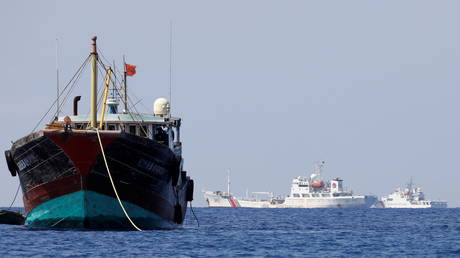
The Chinese foreign ministry has lashed out at Lithuania after the small Baltic Sea nation approved the opening of the Taiwan Representative Office in Vilnius. Beijing says it undermines its One China policy.

Beijing was disappointed that Lithuania had proceeded to grant Taiwan permission to open its ‘representative office’ in Vilnius despite “China’s strong opposition and repeated persuasion,” Chinese foreign ministry spokesman Zhao Lijian said at a press briefing on Friday. Taiwan had opened its mission in Vilnius the previous day. 

Read more

Chinese star Peng Shuai is reportedly missing. © Visual China Group via Getty Images
Peng Shuai: What do we know about Chinese tennis star at center of international storm?

Zhao called the move a violation of the One China principle, which he said is undermining China’s sovereignty and territorial integrity, while grossly interfering in its internal affairs. The spokesman reminded Lithuania that Taiwan is an inalienable part of China’s territory and the Beijing government has sole legal authority. 

As to what necessary measures China will take, you may wait and see. The Lithuanian side shall reap what it sows.

In a “stern warning” to the Taiwanese authorities, Zhao then added that “seeking ‘Taiwan independence’ by soliciting foreign support is a totally misguided attempt that is doomed to fail.”

In August, Lithuania announced that the diplomatic outpost would be named the “Taiwan Representative Office,” angering China. Taiwan’s diplomatic branches – in countries that have de facto relations with the island’s authorities – are normally called “Taipei Economic and Cultural Offices.”

China demanded that Lithuania recall its ambassador from China, which it did. Beijing then withdrew its envoy to the Baltic state.

Chinese officials have repeatedly called on Western nations, notably the UK and US, to stop interfering in Beijing’s internal affairs, stressing that they consider Taiwan to be part of China.

If you like this story, share it with a friend!

find more fun & mates at SoShow now !

When you think the internet can’t get any more niche, it finds a way to get even more specific. We’re, of course, talking about an Instagram account @BagDogs that is solely dedicated to sharing people’s photos of dogs chilling in bags as they are being transported from point A to point B. Scroll down to see some of their best photos!

Dog in a bag.

Dog in a bag.

Dog in a bag.

Dog in a bag.

Dog in a bag.

Dog in a bag.

Dog in a bag.

Dog in a bag.

Dog in a bag.

Dog in a bag.

Dog in a bag.

Dog in a bag.

Dog in a bag.

Dog in a bag.

Dog in a bag.

Dog in a bag.

Dog in a bag.

Dog in a bag.

Dog in a bag.

Dog in a bag.

Dog in a bag.

Dog in a bag.

The post This Instagram Account Shows People Carrying Dogs In Bags, And It’s Hilariously Adorable first appeared on .

find more fun & mates at SoShow now !

Some voters in Germany’s capital, Berlin, may have to re-cast their ballots after the country’s federal election czar filed an official complaint over irregularities in a parliamentary vote held two months ago.

The election – which saw Berliners decide the makeup of the German parliament, the Bundestag, as well as select city representatives – was marred by irregularities at numerous polling stations, according to the official, Georg Thiel. 

Among the most common problems were ballot shortages and long lines, with waiting times of up to two hours. In some cases, voters were also seen casting their ballots past a 6pm cutoff – the time when all polling stations were supposed to have closed. Thiel, who was tasked with overseeing elections at federal level, saw all of the above as reason enough to raise an objection in the German capital, local media reported on Friday.

Read more

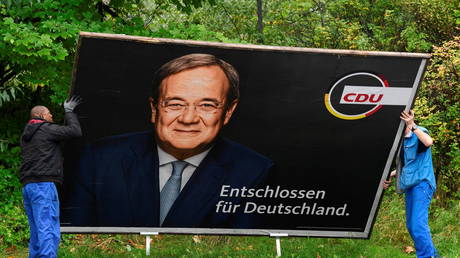
Workers remove a campaign poster showing Armin Laschet, the Christian Democratic Union’s candidate for chancellor, in Bad Segeberg, Germany, September 27, 2021. © Fabian Bimmer / Reuters
Conservative wing of Merkel’s bloc says party leadership must resign after ‘debacle’ in Germany’s general election

Thiel identified six Berlin constituencies where irregularities were allegedly rampant, potentially setting the stage for a re-do election in the city.  

It is now up to a special Bundestag committee to examine Thiel’s complaint and see if the reported violations ran afoul of German law or electoral procedures. For the vote to be repeated, however, at least one of those violations would have to be deemed serious enough to have affected the distribution of seats in the Bundestag.

The September 26 election saw outgoing Chancellor Angela Merkel’s conservatives take a historic beating, with the Social Democrats coming out on top. The Social Democratic Party (SPD) has been engaged in coalition talks with the Greens and the Free Democratic Party ever since, with the trio expected to announce a preliminary deal as early as next week.

Think your friends would be interested? Share this story!

find more fun & mates at SoShow now !

Scientists have used artificial intelligence to “predict” formulas for new designer drugs, with the stated goal of helping to improve their regulation. The AI generated formulas for nearly nine million potential new drugs.

Researchers with the University of British Columbia (UBC) used a deep neural net for the job, teaching it to make up chemical structures of potential new drugs. According to their study, released this week, the computer intelligence fared better at the task than the scientists had expected.

The research team used a database of known designer drugs – synthetic psychoactive substances – to train the AI on their structures. The market for designer drugs is ever-changing, since their manufacturers are constantly tweaking their formulas to circumvent restrictions and produce new “legal” substances, while cracking their structure takes months for law enforcement agencies, the researchers said.

Read more

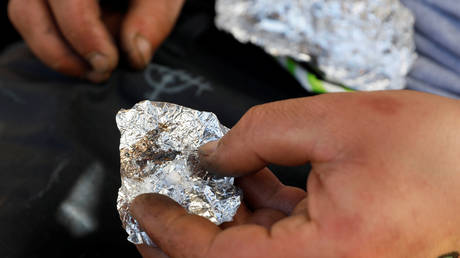
FILE PHOTO: A man living on the streets displays what he says is the synthetic drug fentanyl, in the Tenderloin section of San Francisco, California, February 27, 2020 © Reuters / Shannon Stapleton
Drug overdose deaths in US hit all-time record

“The vast majority of these designer drugs have never been tested in humans and are completely unregulated. They are a major public-health concern to emergency departments across the world,” one of the researchers, UBC medical student Dr. Michael Skinnider has said.

After its training, the AI was able to generate some 8.9 million potential designer drugs. Afterwards, researchers ran a data sheet of some 196 new drugs, which had emerged in real life after the model was trained, and found that more than 90% of these have been already predicted by the computer.

“The fact that we can predict what designer drugs are likely to emerge on the market before they actually appear is a bit like the 2002 sci-fi movie, Minority Report, where foreknowledge about criminal activities about to take place helped significantly reduce crime in a future world,” senior author Dr. David Wishart, a professor of computing science at the University of Alberta, has said.

Identifying completely unknown substances remains an issue for the AI, the research team has noted, but they hope it might potentially help with that task, since the computer was also able to predict which formulas of designer drugs were more likely to be created and hit the market. The model “ranked the correct chemical structure of an unidentified designer drug among the top 10 candidates 72 percent of the time,” while throwing in spectrometry analysis, which is an easily obtained measurement, bumped the accuracy to some 86%.

“It was shocking to us that the model performed this well, because elucidating entire chemical structures from just an accurate mass measurement is generally thought to be an unsolvable problem,” Skinnider stated.

Think your friends would be interested? Share this story!

find more fun & mates at SoShow now !