As information emerges about Islamic State of Khorasan, or ISIS-K – the terrorist group that claimed responsibility for last week’s suicide attack that killed 13 US service members and more than 160 Afghans – there is an increased effort to predict how Afghanistan, under Taliban rule, may emerge once again as a breeding ground for terrorist groups.

A United Nations report released in June estimates that thousands of fighters from the region had already poured into Afghanistan.  Many of them are believed to be affiliated with either the Taliban – still seen as a terrorist organization – or al Qaeda or ISIS-K.

The New York Times reports that ISIS-K was created six years ago by members of the Pakistani branch of the Taliban.  There is a range of thought among experts as to what their ability to successfully carry out a terrorist attack in a Taliban-ruled area means for the terrorist threat moving forward. 

The Cipher Brief spoke with respected terrorism experts Bruce Hoffman, Mitch Silber and Colin Clarke to get their thoughts on the current risk of terrorist attacks against Americans both home and abroad. 

Bruce Hoffman, Terrorism Expert and Professor, Georgetown University
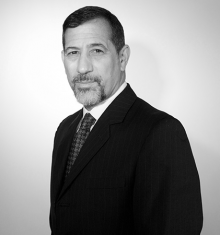
Cipher Brief Expert Bruce Hoffman is a professor at Georgetown University and served as a commissioner on the Independent Commission to Review the FBI’s Post-9/11 Response to Terrorism and Radicalization.  He is also a Scholar-in-Residence for Counterterrorism at CIA.

Mitch Silber, Former Director of Analysis, NYPD

Cipher Brief Expert Mitch Silber served as Director of Intelligence Analysis at the New York City Police Department and served as principal advisor to the Deputy Commissioner of Intelligence on counterterrorism policy and analysis. He is now executive director of the Community Security Initiative.

Colin Clarke, Director of Policy and Research, The Soufan Group

Colin P. Clarke, Ph.D., is the Director of Policy and Research at The Soufan Group. Clarke’s research focuses on domestic and transnational terrorism, international security, and geopolitics. He is also a senior research fellow at The Soufan Center.  

The Cipher Brief: If the United Nations Report issued in June is accurate, and there are thousands of fighters from the region who have poured into Afghanistan – many associated with known terrorist groups – is there any way that the administration can say ‘mission accomplished’ in terms of degrading terrorism’s presence in Afghanistan? 

Hoffman: No. As those numbers from the report released by the United Nations Support and Sanctions Monitoring Team highlight, Afghanistan is again becoming a jihadi magnet and will likely continue to be so into the future. The suicide bomb attacks outside the gates of Kabul International Airport last Thursday underscore the multiplicity of terrorist groups already present in that country.

In addition to ISIS-K, there is the Haqqani Network, al Qaeda and, of course, the Taliban. Terrorism thrives in conditions of chaos and instability which the terrorists hope to spread to other countries and eventually across regions.

Much as Salafi-Jihadi terrorists migrated from existing battlefields in South Asia back to the Middle East, North Africa, and the Caucasus in the 1990s; spread to East and West Africa in the early 2000s; blossomed during the Arab Spring to wage civil wars in Syria, Libya, and the Sahel, in the early twenty-teens; the same phenomenon is unfolding in Afghanistan.

Silber:  Frankly, I don’t think any of the four administrations can make the claim that the policy goal of making Afghanistan inhospitable to serve as a safe haven for Al Qaeda or other similarly oriented jihadist groups has been accomplished.  Certainly, at a number of times during the last twenty years, the threat that jihadist groups, most importantly — Al Qaeda — has presented, in terms of their ability to project a threat to the United States has been diminished, the degradation of the threat was only temporary.

The Cipher Brief: How confident are you that Al Qaeda and ISIS are unable to plan and execute attacks against the U.S. domestically? 

Hoffman:  The credulous Doha negotiations with the Taliban that led to the withdrawal of U.S. military forces from Afghanistan and subsequently to the Taliban’s blitzkrieg across Afghanistan and then to the shambolic evacuation of our diplomats and citizens, has painted a huge target on America’s back. Like sharks in the water, terrorists will smell blood. As my Council on Foreign Relations colleague, Jacob Ware, and I wrote in War on the Rocks, in May, every time terrorism has forced the U.S. to withdraw from a conflict zone where it had committed ground forces, whether in Lebanon in 1984; Somalia in 1993; and Iraq in 2011, it has led to more terrorism worldwide, not less, and thus made the U.S. less safe.

At a time when our country continues to grapple with the COVID pandemic; when climate change is pulverizing the Gulf States with Hurricane Ida and California with worsening wildfires; when the January 6th insurrection at the U.S. Capitol building continues to smolder with incidents such as the bomb threat that paralyzed the area near the Library of Congress and Cannon House Office Building earlier this month; coupled with ongoing cyberattacks and peer competition from China and Russia and concerns over Iran’s nuclear aspirations; our terrorist adversaries may well conclude that the U.S. is sufficiently preoccupied or distracted by any or all of the preceding and therefore conclude that the time to strike the homeland is opportune. It would very unlikely entail a repeat of the catastrophic September 11th 2001 attacks. But a terrorist strike along the lines of the 2019 shootings at Naval Air Station Pensacola; the 2017 suicide bombing of a concert venue in Manchester, England; the coordinated suicide attacks on London transport in 2005; the 2004 Madrid commuter train bombings; or any kind of significant lone wolf incident perpetrated in the name of some existing terrorist movement would likely re-create the widespread fear and anxiety that are terrorism’s stock-in-trade. Twice in the past three years, it should also be noted, members of al-Shabaab – perhaps al Qaeda’s least technologically proficient franchise – have been arrested both in the Philippines and in an undisclosed African country engaging in the same flight training that four of the 9/11 hijackers undertook before their fateful, history-changing coordinated attack.

Silber:  At this very moment, it is unlikely that Al Qaeda or ISIS-K have the infrastructure, resources, recruits and external planning ability to strike the United States based on statements by the IC and senior DoD officials to Congress.  However, without any, or only limited external pressure by the U.S. military as a result of the retreat from Afghanistan, these networks and capabilities can be reconstituted in the coming months and certainly groups like Al Qaeda have never given up their desire to strike the American homeland.

Clarke:  I think it is unlikely that AQ or ISIS will be able to attack the U.S. homeland.  We’ve spent the better part of the past two decades shoring up homeland defense. We’ve got CT tools now that we didn’t have twenty years ago. That said, the picture could look quite different 6, 12, 18 months from now. Both of those organizations are capable of regenerating an external operations planning capability. There is also the worry of inspired attacks.


The Cipher Brief hosts private briefings with the world’s most experienced national and global security experts.  Become a member today.


The Cipher Brief:  Some analysts have said that morale among terrorist or Islamic extremist groups is extremely high due to the circumstances surrounding the US pullout in Afghanistan, do you agree and if so what does that mean? 

Hoffman:  Yes. Of course. Both Sunni and Shi’a terrorist movements around the globe have applauded the Taliban’s re-conquest of Afghanistan and routing of the U.S. military. For Sunni Salafi-Jihadi terrorists, the events there this past month validate the strategy articulated by Usama bin Laden just before the 2004 U.S. presidential election, when he described the ease with which al-Qaeda had been able to “bled Russia for 10 years, until it went bankrupt and was forced to withdraw in defeat” from Afghanistan in 1989, and predicted that the same fate would eventually befall the U.S. And, Sayed Hassan Nasrallah, the Secretary-General of Hezbollah, a Shi’a terrorist organization, for instance, last week delivered a sermon where he described America’s “historic and humiliating defeat in Afghanistan as representing, “the moral downfall of America.”

Silber:  Jihadi chat rooms and online extremist networks are feeling like they have the wind behind them.  It took twenty years, but before the 20th anniversary of the attacks of 9/11 an Islamic emirate has been re-established in Afghanistan.  Suddenly, what seemed impossible has become possible and Islamist insurgencies all throughout the Middle East and South Asia can take inspiration by the determination of the Taliban in their efforts to overthrow a secular democratic government and replace it with an Islamist one.

Clarke:  I do expect morale to be high among terrorist and especially Islamic extremists given the turn of events we’ve seen in Afghanistan. We’re a week and a half out from the 20-year anniversary of 9/11, and Al Qaeda leaders are returning to Afghanistan (this is being displayed in AQ propaganda). We’ve seen al-Qaeda affiliates all over the globe congratulating the Taliban for their victory. I don’t want to overstate the case here, but I do believe that what has occurred in Afghanistan will be a serious boost for the global jihadist movement right at the same time the U.S. and its allies are shifting from counterterrorism to great power competition. There will be fewer resources and energy to deal with terrorists, right at the time we have major threats metastasizing in Afghanistan, potentially with both a reinvigorated al-Qaeda and a stubbornly resilient ISKP.

Read also Mike Leiter’s Why We’re Much Safer from Terrorism Now, Than We Were After 9/11 in The Cipher Brief 

Read also Why We Need a New National Defense Strategy (for terrorism) exclusively in The Cipher Brief 


Go beyond the headlines with expert perspectives on today’s news with The Cipher Brief’s Daily Open-Source Podcast.  Listen here or wherever you listen to podcasts.


The post The Risk of Terrorism at Home and Abroad appeared first on The Cipher Brief.
find more fun & mates at SoShow now !

Nadya Zafira, an international relations student at Indonesia’s Gadjah Mada University, won a writing competition for her letter to UN chief António Guterres, in which she addressed the inequalities laid bare by the COVID-19 pandemic, and how indigenous communities and youth are marginalized in global conversations on climate crisis.

Read the full story, “First Person: ‘Bridge the gap between indigenous youth and the world’”, on globalissues.org

find more fun & mates at SoShow now !

The European Union’s top court has ruled that Hungary’s 2018 law aimed at criminalizing aiding illegal immigrants who are claiming asylum violates the “rights safeguarded” by the bloc’s legislature.

The Hungarian legislation, passed in 2018, sought to punish anyone “facilitating illegal immigration” with a year in prison, under a bill dubbed the “Stop Soros” law. Hungary’s government justified it at the time by arguing that migrants illegally entering the country threatened its national security. 

In the ruling, handed down on Tuesday, the European Court of Justice declared that “criminalizing such activities impinges on the exercise of the rights safeguarded by the EU legislature in respect of the assistance of applicants for international protection.”

The EU’s advocate general, Athanasios Rantos, had urged the court to make such a judgement back in February, claiming the introduction of the legislation meant that “Hungary has failed to fulfil its obligations under the [bloc’s] Procedures Directive.”

It became known as the Stop Soros law after billionaire philanthropist George Soros became a vocal opponent of the Hungarian government’s opposition to migration. The administration, in turn, accused Soros of orchestrating migration to Europe, with the Open Society Foundation, run by the philanthropist, closing its operation in the country in response. 

Read more

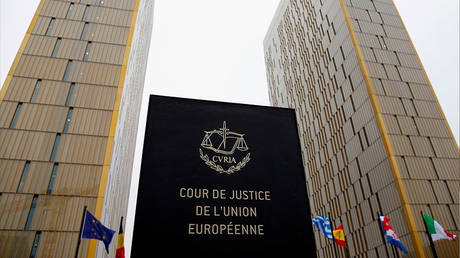
The towers of the European Court of Justice are seen in Luxembourg. © Reuters / Francois Lenoir
Top EU court says Poland broke rules with judge appointment system

Hungary, under the leadership of right-wing Prime Minister Viktor Orban, has repeatedly clashed with the EU in recent years over its strong stance on immigration and concerns from the bloc about threats to the rule of law in the country.

At the end of 2020, a dispute between Hungary and Poland and the EU risked derailing the bloc’s budget, as both member states were threatening to veto it over their view that the EU was attempting to interfere in their domestic affairs. Ultimately, the EU backed down, agreeing to a compromise with Budapest and Warsaw to ensure the budget secured the support of all 27 member states. 

Despite acknowledging the EU court’s ruling, Hungary’s government defended its right to challenge any foreign-funded non-government organizations that are attempting to “promote migration.”

“Hungary’s position on migration remains unchanged: Help should be taken where the problem is, instead of bringing the problem here,” Hungarian government spokesperson Zoltan Kovacs said, adding that the country will challenge outside entities “seeking to gain political influence and interference.”

Think your friends would be interested? Share this story!

find more fun & mates at SoShow now !

When the PRC decides to move on Taiwan, it is unlikely to move in a manner that makes a US decision on intervention clear cut.  Should China decide, initially at least, against a full-scale invasion of that island nation, it could instead opt to try to “win without fighting.” Beijing might do so by using its large, state-controlled fishing fleet to cut smaller Taipei-controlled islands off from Taiwan itself much as the PRC is now massing fishing boats to expand Chinese-controlled seas to press claims on the Japanese Senkakus and Whitsun Reef in Philippine waters. Chinese state-owned fisheries companies – part of the so-called ‘Maritime Militia’ – serve as fronts for PLA intelligence. Using their fleets to operate in a manner somewhere between peace and conflict in the gray zone of contested control around Taiwan would allow Beijing to test whether the US and its allies are willing to help defend the island’s independence without being seen to initiate open conflict.

“The Cipher Brief has become the most popular outlet for former intelligence officers; no media outlet is even a close second to The Cipher Brief in terms of the number of articles published by formers.” – Sept. 2018, Studies in Intelligence, Vol. 62 No.

Access all of The Cipher Brief’s national-security focused expert insight by becoming a  Cipher Brief Level I Member .  


The post Why the China – Russia Relationship Should Worry You – Part Two appeared first on The Cipher Brief.

find more fun & mates at SoShow now !

Japan’s fifth wave of Covid-19 has virtually disappeared so dramatically that some scientists are puzzled as to why it happened. One team suggests the highly infectious Delta strain mutated into extinction on the island nation.

In mid-August, Japan experienced a peak in Covid-19 infections, recording over 23,000 new cases per day. Now the metric is just around 170, with deaths attributed to the disease mostly remaining in single digits this month.

The decline has been attributed by many to high vaccination rates, public acceptance of masks, and other factors, but some researchers say the drop was uniquely significant, compared to other nations with similar conditions.

Ituro Inoue, a geneticist at the National Institute of Genetics, believes that Japan had the good fortune of witnessing the Delta strain mostly rooting out other variants of the SARS-CoV-2 virus before then eradicating itself. He explained his team’s theory to the Japan Times newspaper this week.

For some time now, Inoue and his fellow scientists were researching mutations of SARS-CoV-2 and how they are affected by the protein nsp14, which is crucial for the reproduction of the virus.

RNA viruses, like the one causing Covid-19, tend to have a very high mutation rate, which helps them quickly adapt to changes in the environment. However, this opens the door for a so-called “error catastrophe,” when bad mutations pile up and finally cause the full extinction of a strain. The protein nsp14 appears to offer a form of error proofreading that helps the virus genome to stay below the threshold of the “error catastrophe.”

Read more

© Getty Images / Morsa Images
Fighting for our lives: Humanity’s weapons against Covid-19

In the case of Japan’s fifth wave of Covid-19, the Delta variant’s nsp14 failed at this job, Inoue believes, based on the genetic study of specimens collected from June to October. Contrary to his team’s expectations, there was a lack of genetic diversity, while many samples had many genetic changes in the site called A394V, which is linked to the error-fixing protein.

“We were literally shocked to see the findings,” the researcher told the Japan Times. “The Delta variant in Japan was highly transmissible and [was] keeping other variants out. But as the mutations piled up, we believe it eventually became a faulty virus and it was unable to make copies of itself.”

The theory could be relevant to the previous SARS strain, which was identified in 2003, explaining why it didn’t cause a pandemic. But that would be hard to confirm, since the outbreak ended relatively quickly and didn’t result in the massive collection of genetic data necessary to test the hypothesis.

It’s not clear why Japan had this lucky turn of events, but nothing comparable happened in other East Asian countries like South Korea, where populations are genetically close to that of Japan. Virus mutations similar to those flagged by the scientists have been discovered in at least 24 countries, Inoue said. He and his team plan to publish a paper detailing their findings by the end of November.

Even if the natural extinction theory is confirmed, it is at best a temporary reprieve for the Japanese people. New, more successful strains are likely to eventually find their way into the country, though quarantine measures and immigration control could delay the emergence of new variants in Japan, Inoue believes.

Meanwhile, Tokyo is bracing for a new wave of Covid-19 this winter and is preparing to live with the virus. The government reportedly plans to ease travel restrictions by increasing the number of people it allows to enter the country per day from 3,500 to 5,000.

Like this story? Share it with a friend!

find more fun & mates at SoShow now !

Sporadic clashes broke out at massive Saturday demonstrations in major European cities, as thousands of people took to the streets of Vienna, Paris and Rome to express their discontent with Covid-19 restrictions.

The Austrian capital Vienna on Saturday saw the largest protest turnout since the start of the Covid-19 pandemic. A total of 38,000 people took to the city streets to join a dozen demonstrations protesting government measures.

The protests came a day after the Austrian authorities ordered nationwide compulsory vaccination from February 1 and imposed a full lockdown, starting Monday. The massive procession that spanned over several kilometers marched along Vienna’s central ring road. The city center was paralyzed for several hours as traffic was restricted.

Austria’s right-wing Freedom Party, whose members joined the rallies, put the number of protesters at 100,000. Some demonstrations were also attended by members of various far-right groups. The protests were generally peaceful but footage published by Ruptly video news agency showed several scuffles between the police and the demonstrators breaking out.

Law enforcement spoke of a total of five arrests. One incident saw a protester attempting to grab an officer’s gun and take it from its holster. In another incident, the officers were pelted with bottles and fireworks and had to use pepper spray in response.

Hundreds of kilometers away from Vienna, in the French capital Paris, events took a more dramatic turn. There, a demonstration against the government Covid-19 measures coincided with the third anniversary of the Yellow Vests movement. Hundreds of protesters took part in the protest, which quickly turned into clashes between the demonstrators and law enforcement.

The protesters were building barricades and setting them on fire as well as pelting police with bottles and various other projectiles. Law enforcement responded with profuse amounts of tear gas, sometimes filling entire streets with thick smoke to disperse the crowds.

Rome saw a massive demonstration against Italy’s Covid-19 health pass, also known as the Green Pass. Some 4,000 people gathered in the center of the Italian capital, according to the police. The demonstrators were waving national flags and chanting “Freedom” and “No Green Pass,” referring to the vaccination certificate needed to enter various public venues such as clubs or bars.

The crowd staged a sit-in in the Circus Maximus – an ancient Roman chariot-racing stadium converted into a modern-day park. They remained there after sunset, lighting the area with thousands of phones and colored smoke bombs. The rally was peaceful, though, as the police did not report any incidents.

Unlike Rome, Italy’s northern city of Milano saw clashes between protesters and the police as law enforcement officers sought to break up an unauthorized rally at the city center. Large police forces were deployed to the city center and several squares were cordoned off.

Think your friends would be interested? Share this story!

find more fun & mates at SoShow now !

Those making and knowingly using fake vaccination certificates in Germany could soon face up to five years behind bars, as the country’s likely future coalition government is looking to tighten the screws.

Coming under the same category are also fake test results and Covid recovery certificates, with similar penalties for the counterfeiters and the holders. Everything envisaged in the new guidelines was drafted by the Social Democrats, along with the Free Democratic and Green Parties. The three are currently in coalition talks and expected to form a new government as early as next week.

The German Parliament will decide on the regulations this Thursday, though a draft has already been seen by the media outlet DPA.

According to German media, the manufacturing and sale of fake certificates has become a booming black-market industry in the country. In just one such case reported by Der Spiegel in late October, a counterfeiter working at a pharmacy in Munich and her accomplice had churned out more than 500 fake digital certificates in the span of one month, raking in €350 for each one sold.

Read more

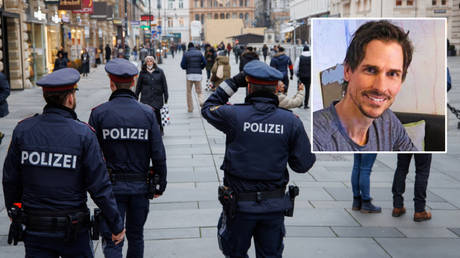
Felix Gottwald has spoken out as police patrol the streets of Austria to check people are vaccinated © Lisi Niesner / Reuters | © Instagram / felixgottwaldofficial
‘I am deeply ashamed of our country’: Austria’s greatest Olympian quits political role as lockdown for unvaccinated comes in

Meanwhile, Berlin authorities are planning to further ramp up restrictions in the city, where, starting Monday, having either a vaccination or recovery certificate is a must to enter restaurants, cinemas, theaters, museums, galleries, swimming pools, gyms, as well as hairdressers and beauty salons. On Tuesday, Berlin Mayor Michael Müller confirmed that authorities want to “have an additional instrument” to contain the spread of the virus. However, he declined to elaborate on what the new measures will be. Local media speculate that starting next week, in addition to the requirement to have a vaccination or recovery certificate to enter public places, people inside the venues will also need to practice social distancing and wear a mask, or have a recent negative test result.

This comes after Covid-19 numbers in Berlin hit an all-time high last Thursday, with 2,874 new cases reported that day.

Think your friends would be interested? Share this story!

find more fun & mates at SoShow now !

A stream literally flowing with booze emitting a strong beery odor has been discovered in one of the tropical islands of Hawaii. Its waters have been apparently contaminated with alcohol after a leak at a beverage warehouse.

A small river with a distinctive alcoholic smell was recently found on the island of Oahu, some 15 miles (24 kilometers) away from Honolulu, Hawaiian capital. Its waters have been flowing through the Waipio valley and even turned into a 100-foot (30 meters) waterfall on their way.  

Read more

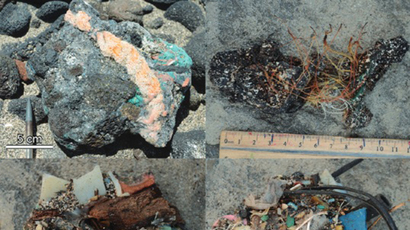
Image from geosociety.org
​‘Plastic stones’ found at remote Hawaii beach

The stream caught the attention of local environmental activists, who noticed the smell in the area.

The other day we came here you would think it was a beer pub that hadn’t opened its doors for three or four days,” activist Carroll Cox told local Hawaii News Now. She also contacted the Department of Health about the issue.

Local media took samples from the unusual stream and had them checked at a private laboratory. It tested positive for alcohol, containing 1.2% percent of the substance in its waters – nearly a quarter the content in regular beer and strong enough to cause a buzz.

Local health authorities got involved, and an investigation into the source of contamination was launched. It was learned that the stream was coming from a drain pipe that was traced back to a warehouse of Hawaii’s largest liquor distributor, Paradise Beverages. Its representatives told local media they were working with officials to eliminate a possible spill, with the booze river apparently closing its free drinks service.

Like this story? Share it with a friend!

find more fun & mates at SoShow now !