Robert Dannenberg, Former Senior CIA Officer

Cipher Brief Expert Rob Dannenberg is a 24-year veteran of the CIA, where he served in several senior leadership positions, including chief of operations for the Counterterrorism Center, chief of the Central Eurasia Division and chief of the CIA’s Information Operations Center. Dannenberg is a member of the Board of Advisors to the Director of the National Counterterrorism Center and is a senior fellow at the GWU Center for Cyber and Homeland Security. He is now an independent consultant on geopolitical and security risk, after serving as the managing director and head of the Office of Global Security for Goldman Sachs, and director of International Security Affairs at BP.

EXPERT PERSPECTIVE — The images from Kabul are demoralizing and depressing—unless you are sitting in the Kremlin, where they are certainly being viewed in a quite different light. Probably something close to giddiness and glee.

From Russian President Vladimir Putin’s perspective, this likely reinforces his view that President Joe Biden and his national security team are weak and naïve.  ‘This is Obama’s third term’, Putin must be thinking. And of course, the images of US helicopters desperately trying to evacuate thousands from Kabul also resonate in Kiev, Tbilisi, and probably Tallinn, Riga, and Vilnius and beyond—think Taipei.  The appalling mismanagement of the withdrawal from Afghanistan will have consequences that will affect American credibility globally and linger well beyond the end of Biden’s presidency.

A first order consequence concerns Russia.

It is highly likely there was practical cooperation between the Kremlin and the Taliban in the preparation for the American withdrawal and this may have included direct support to Taliban forces. We don’t need to revisit the narrative of Russian bounties for dead American soldiers in Afghanistan, but the evidence of Russian energetic engagement with the Taliban in recent months is manifest and the fact the Russian embassy in Kabul is currently protected by Taliban fighters is significant.

For both Russia and the Taliban there was a clear shared strategic objective: Get the Americans and their allies out of Afghanistan and ideally in the most humiliating fashion possible.  The Russian-Taliban honeymoon may not last long, but for the moment it has served both sides well.

For over a decade and a half of his tenure as Russia’s president, Putin has been preaching the gospel that you can’t trust the Americans to back you in the long run or when the chips are down, but you can count on the Russia he leads (think the Russian intervention in Syria and support for Assad or their intervention—whether acknowledged or not—in Libya on the side of Khalifa Haftar among other examples). This messaging is important in current times and reinforces Putin’s narrative about the decline of the West and the waning relevance of western liberal systems of governance.

In recent years, Chinese President Xi Jinping has picked up the trumpet to echo this message that American power is in decline and that American security guarantees cannot be relied on in East Asia and beyond.

Putin has been Russia’s Czar for over two decades without meaningful interruption and is likely to remain so for the foreseeable future. He has seen US Presidents come and go and he has been quick to size them up and adjust his moves accordingly. He was genuinely scared of what George W. Bush might do in the immediate aftermath of 9/11 and the speed and efficacy of the US response made a deep impression on him.  He adjusted his approach to the US to one of partner and ally against Islamic extremism (Putin was also busy consolidating his control over the Russian Federation in the immediate post-Yeltsin period).

Putin also sized up then-President Barack Obama after Obama’s failure to act when Syrian President Bashar al-Assad blithely crossed the “no use of chemical weapons” red line.  That opened the door for the annexation of Crimea as well as the Russian military intervention in Syria (and later Libya). Joe Biden was Vice President at the time. Putin likely has a very good book on Joe Biden and was quite confident of what the end result for the US in Afghanistan would look like.  Putin may even have a better feel for Joe Biden than many realize, if any of the Hunter Biden material is true.  One leader’s assessment of another, matters in geopolitical relations. Putin has a high level of confidence in his ability to read his international opposition.

As recently as July 2021 President Biden said, “There’s going to be no circumstance where you see people being lifted off the roof of the US embassy in Afghanistan.”  He went on to add, “The likelihood there’s going to be the Taliban overrunning everything and owning the whole country is highly unlikely.”  President Biden made these statements knowing perfectly or should have known—from intelligence briefings and expert commentary—as well as historical precedent—that when the US announces a withdrawal of forces with a hard deadline, in this case 9/11, our adversaries use the time to prepare for their offensive military action. Our Afghan allies knew this as well and prepared accordingly.  Now the Taliban will celebrate the twentieth anniversary of the September 11 attacks in the US embassy in Kabul, probably with their ISIS and Al Qaeda friends as honored guests.  If you think the videos from Afghanistan have been troubling to this point, just wait for the anniversary celebrations.

Perhaps of more near term geopolitical significance, Putin will use the Taliban takeover of Afghanistan to support a narrative that Russia needs to defend its interests from the spread of Islamic extremism from Afghanistan by strengthening “security and counterterrorism” cooperation with Turkmenistan, Uzbekistan, Tajikistan, Kyrgyzstan. Does anyone want an excuse to get – and keep – those pesky Americans out of Central Asia and start rebuilding that corner of the Soviet Union?

Putin’s use of terrorism risk as justification for military action is well-rehearsed and goes back to the Moscow apartment bombings (which the FSB almost certainly organized) in September 1999, which Putin used both to consolidate political power and to justify the brutal military campaign in Chechnya. Putin is acutely aware of the risks of Islamic extremism spreading from Afghanistan to Central Asia, the Caucasus, and into the Russian Federation. In fact, Russian, Uzbek, and Tajik troops conducted exercises in July, which appear to have been designed to prepare to respond to cross border incursions from Afghanistan. This is only the first step in his plan for consolidation of Russian power and influence in Central Asia and the Caucasus.


The Cipher Brief hosts private briefings with the world’s most experienced national and global security experts.  Become a member today.


Some might ask – given the risk of the spread of Islamic extremism from Afghanistan to the Russian Federation – why would Putin would want to partner with the Taliban?  Those who ask this question are misunderstanding the depth of Putin’s enmity toward the United States and the West and everything for which we stand.  Putin views the world as a “zero sum” game.  What hurts the US must serve Russia’s interests. The debacle in Afghanistan clearly qualifies. A short-term deal with the Taliban is a risk with taking in Putin’s mind.  Putin plays on the superpower chessboard using the only tools he has at hand, military power, cyber and disinformation capability and US ineptitude and lack of strategic thought.  He has taken clever advantage of President Trump’s four years of thoughtless estrangement of US allies around the world.

Beyond the propaganda value and regional leverage our withdrawal has given adversaries like Russia and China, there is the impact of our withdrawal on the many nations among our allies who contributed to the Afghanistan mission. The images of Afghans clinging to a departing US Air Force C-17 and falling to their deaths will not fade easily. How easy will it be to assemble their support when we inevitably have to go in again to deal with a resurgent Al Qaeda, a globally ambitious Taliban, or an even more dangerous embedded ISIS in the hills of Afghanistan?

We should also consider the impact on Pakistan.  Pakistan has nurtured Islamic extremism in Afghanistan for decades.  While a part of the Pakistani security establishment partnered with the US effectively after 9/11, other parts simultaneously were nurturing relations with extremists including the Taliban. The “Great Game” is still being played in that part of the world, and neither the Pakistanis, nor the Indians or Chinese have forgotten it.

Pakistan also still certainly chafes from the US raid to kill bin Ladin in Abbottabad a little over ten years ago.  One wonders if the waning of US influence in Islamabad has opened the door for Islamic extremists to enter the security establishment there. Pakistan is a nuclear power and has in recent years, increased its development of tactical nuclear weapons. Does the Taliban now have a path to nuclear weapons?  This is an important question and it’s answer casts a shadow over our withdrawal from Afghanistan.

The Biden Administration, for all its vaunted claims of “return to competence” in Washington, has fallen flat in its first serious challenge. One could argue that Biden’s capitulation on Nord Stream 2 and Putin’s mocking rejection in Geneva of charges of US election interference and cyberattacks on the US, foretold the debacle in Afghanistan. The challenge for the US now will be to manage the airlift of those Afghans who were willing to partner with the US and carefully look for opportunities to rebuild the credibility of US security guarantees around the world.

Taiwan and South Korea would seem good places to start.

At the same time, we need to recognize that Afghanistan will once again become the training ground for those who hope to replicate 9/11 attacks on the US. A strong and robust intelligence capability will be essential in mitigating that risk.

Read more expert-driven national security insight, perspective and analysis in The Cipher Brief

The post Putin’s Calculated Afghanistan Play appeared first on The Cipher Brief.

find more fun & mates at SoShow now !

As India is mulling new rules for digital money, Prime Minister Narendra Modi has called for regulations to ensure cryptocurrencies like bitcoin do not “end up in the wrong hands,” warning that this could “spoil” young people.

While he did not expand on those concerns, Modi spoke on Thursday about the need for “democratic nations” to band together and deal with challenges posed by emerging technologies. He was delivering a virtual address at the Sydney Dialogue, an annual cyber-tech summit.

Noting that technology and data could either become “new weapons” for conflict or “instruments of cooperation,” Modi brought up digital currencies as an example of how it was important that like-minded nations “work together on this” to “ensure it does not end up in the wrong hands, which can spoil our youth.”

We are at a historic moment of choice. Whether all the wonderful powers of technology of our age will be instruments of cooperation or conflict, coercion or choice, domination or development, oppression or opportunity.

He also urged the development of technical and governance standards and norms, singling out the use of data, and called for renewed efforts to prevent manipulation of public opinion. In recent weeks, Indian authorities have raised concerns over claims of huge returns from cryptocurrency investment as well as its potential connections to money laundering, organized crime and terror financing.

Read more

© AP Photo / Charles Krupa
Bitcoin crashes after China rules all crypto-related transactions illegal

On Saturday, Modi chaired a meeting to formulate the country’s approach to digital currencies and examine their impact on the economy. According to The Economic Times, Indian officials are drafting regulations to propose a ban on all transactions and payments in cryptocurrencies, while allowing investors to hold them as assets, similar to gold, bonds and stock shares.

Citing unnamed sources familiar with the government’s discussions, the newspaper said there was a belief in policy circles that crypto markets needed to be regulated in order to tackle the problem of opaque advertising that exaggerates investment returns in order to attract young investors.

The sources informed the newspaper that draft legislation on the matter was expected to be forwarded to Modi’s cabinet for consideration in the next two to three weeks.

In September, China had banned all cryptocurrency transactions and crypto-mining.

If you like this story, share it with a friend!

find more fun & mates at SoShow now !

Scientists in Sweden claim that a single protein in the blood could predict the onset of Type 2 diabetes nearly 20 years in advance. The breakthrough potentially affects hundreds of millions of people worldwide.

Diabetes is the world’s ninth-leading cause of death, and affects nearly half a billion people worldwide, according to the World Health Organisation (WHO). The vast majority of diabetes patients suffer from Type 2 diabetes, a condition that can lead to blindness, kidney failure, heart attacks, strokes, and lower limb amputation. Cases of diabetes quadrupled worldwide between 1980 and 2014, with unhealthy diets and lack of exercise blamed for the rise.

Read more

© Getty Images / Peter Dazeley
NHS setting up fat camps for children

However, researchers at Lund University in Malmo, Sweden claim that elevated levels of a certain protein – follistatin – in the blood can predict the onset of Type 2 diabetes regardless of a person’s age, weight, diet or activity level. In a study published last week, the scientists wrote that high levels of follistatin can predict the condition up to 19 years before symptoms appear.

To discover the link between follistatin and diabetes, the researchers tracked 5,300 people from Sweden, Italy, and the UK for between four and 19 years. Follistatin helps break down body fat, while simultaneously leading to an increase in fat in the liver. This buildup can cause fatty liver disease and Type 2 diabetes.

“This study shows that follistatin has the potential to become an important biomarker to predict future Type 2 diabetes, and it also brings us one step closer to the understanding of the mechanisms behind the disease,” Dr. Yang De Marinis, associate professor at Lund University and lead author of the study, told a university newsletter. De Marinis added that the next step for her team would be to help develop an AI-based diagnostic tool that could analyze a patient’s blood sample and use their follistatin levels – and other biomarkers – to calculate their “risk score” for Type 2 diabetes.

As follistatin levels rise in response to food intake and activity levels, the same advice for prevention of diabetes still applies. “Balanced meals, eat[ing] healthy and regular exercise are important to decrease the risk of developing Type 2 diabetes,” De Marinis told StudyFinds.

Think your friends would be interested? Share this story!

find more fun & mates at SoShow now !

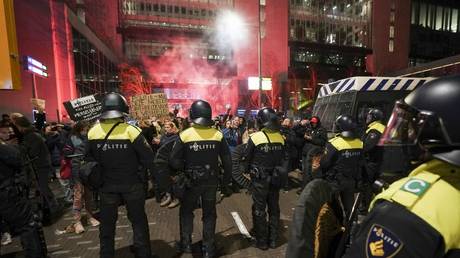
Truckers and other motorists have been trapped in a four-mile-long traffic jam on the outskirts of the Dutch city of Rotterdam amid a protest against the government’s Covid measures.

According to local media, as many as 200 activists blocked the gates of a major port in the city’s harbor on Thursday. For several hours, they prevented any vehicles from driving in and out of the cargo hub, which, in turn, led to massive traffic congestion on the highway leading to the port. Police engaged in negotiations with the protesters, who eventually relented and left the site later in the evening.

The group behind the protest action is reportedly Dockers United, who are staunchly opposed to government Covid policies. The organization’s biggest concern is that authorities could soon make it mandatory for employees to have a vaccination or recovery certificate to enter the workplace, which, as the group argues, would be tantamount to excluding people from society on an “unconstitutional basis.” They are also generally unhappy with the curbs introduced by the Dutch government, with ‘Don’t normalize what’s not normal’ being a translation of one of their slogans.

Read more

Riot police officers face protesters in the Hague on November 12, 2021, as the PM announced new Covid-19 restrictions © Jeroen Jumelet / ANP / AFP
WATCH: Protesters, police clash after new Covid restrictions announced in the Netherlands

In fact, the Dutch government did announce earlier this month that it was working on introducing a ‘corona pass’ for the workplace, though it isn’t clear yet when this measure will be rolled out and how strict it will be.

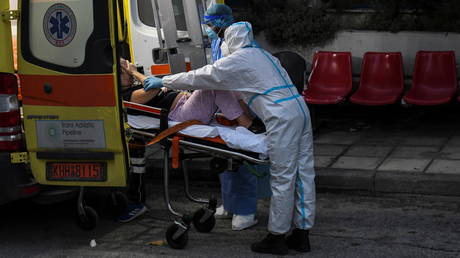
Meanwhile, on Friday the EU country logged its highest-ever number of new Covid cases within 24 hours, with that figure reaching 23,591. Medics say they are working at capacity.

Amid the spike, the Dutch prime minister imposed a partial lockdown last Saturday, which requires bars, restaurants, cafes and supermarkets to close at 8pm, while shops selling non-essential goods are to shut by 6pm. Public gatherings are banned altogether.

If you like this story, share it with a friend!

find more fun & mates at SoShow now !

Covid-19 variants keep emerging in different parts of the world, causing experts to ask how long the pandemic will last, and how effective the current methods of protection really are.

Since the pandemic started in 2019, people have referred to the disease which has paralyzed the world simply as ‘coronavirus’. Now, in 2021, when we talk about it, we mean not just the original variant, but also its numerous mutations. 

Read more

© Getty Images / sasacvetkovic33
Drastic drop in Covid vaccine effectiveness – study

In May, the WHO decided to label the key variants with Greek letters. Since then, the Delta variant has been proclaimed the predominant strain across the world, and now we have titles that look like codes to detail the differences between variants. Last month, the UK was put on high alert over a fast-spreading Delta AY.4.2 variant. This week, Norway reported finding one more version of the Delta strain – AY. 63. The country’s experts suggest it’s not more dangerous than the Delta mutation itself. Meanwhile, another Covid variant, discovered in France (B.1.640), brought the researchers an unpleasant surprise: they said they’d never seen mutations like it. 

Professor David Dockrell, from the Center for Inflammation Research of the University of Edinburgh, described to RT the reasons for the constant mutation of the coronavirus. “The areas in the virus that are most likely to change are those that come into contact with what we call ‘selective pressures’ – or factors that make them need to change,” he explains. “So, a version of the virus which mutates and changes to give it a selective advantage to escape from the immune system is more likely to prosper and become a dominant strain.” 

That’s how it works: The part of the virus many of the immune responses (or antibodies, T-cells etc.) are responding to is called the spike protein (or the S-protein). So, the virus tries to change it in order to survive. 

“We know that a variety of different viruses are able to mutate and change when exposed to the selective pressure of the immune system, whether it would be the human immune system or other species in which these viruses have evolved,” Prof. Dockrell says. “And of course, we’ve seen it most clearly with HIV, which is particularly good at changing and evolving. It does something called ‘reverse transcription’ – it copies material in the reversed direction from DNA to RNA.” 

Covid is still seemingly running faster than humanity’s efforts to curb it, but Prof. Dockrell has some good news. “The coronavirus – and viruses like it – are not as able to make these changes. They are going to do it to some extent, but they are not going to be as successful as retroviruses and HIV.” 

And the other major thing to say: When the viruses make changes, there’s always what we call ‘a fitness cost’. Many of the potential changes that the virus could make will actually not favor its survival. So there are only a certain number, potentially, of changes that the virus can make, before it starts affecting its fitness. 

Now, unfortunately, we are still in a phase where Covid19 can continue to evolve and change. It’s not time to panic, though, because across the world various ways to adapt the current anti-Covid strategies are already in place. First of all, people should keep getting vaccines – maybe receiving slightly altered booster doses, Prof. Dockrell suggests, “in a way, that we, after all, have to do with influenza, by providing a seasonal influenza vaccine and changing it every year.” 

Read more

RT
WHO sounds alarm over looming Covid-19 catastrophe in Europe

“And maybe we have to keep changing some of the treatments like these new monoclonal antibodies against the virus, because they also may be limited by the emergence of a mutation of the virus evolving the S-protein,” he adds. 

Sounds promising – but won’t it become a never-ending race against constantly emerging mutations? 

Hopefully not. According to Prof. Dockrell, there are parts of viruses that scientists call ‘conserved areas’. With time, vaccines and monoclonal antibodies will target these areas, which the virus finds very hard to change. “Clearly, the direction of travel is to develop either vaccine responses that affect more different kinds of virus, or these ‘monoclonal antibodies’ that we could use to prevent or treat infection, that they will target more conserved areas and therefore will be less limited by the ability of these virus to evolve and change,” he concludes.

Think your friends would be interested? Share this story!


find more fun & mates at SoShow now !

Once you’ve reached optimal cat lady status, there comes a time in your life where you think it’s necessary to start massaging your cat’s head. Luckily, someone has already created a cat head massager, and it is most likely the most specific niche product you could think of. You can get it on Amazon or AliExpress.

Cat head massager.

If your cat didn’t love you before, rest assured he will love you now. Your cat will be so thankful for the head massage that he might even ignore you for less time throughout the day, and if you’re really lucky, your cat may even acknowledge your existence. …Or you can use it on yourself if you have a particularly small head.

Cat head massage.

Cat massage.

Feels good, man.

Feels good.

In case you feel like you should have this thing in your (and your cat’s) life, you can get it on Amazon or AliExpress.

The post Cat Head Massager Is The Cutest Thing Ever first appeared on .

find more fun & mates at SoShow now !

Planetary alignment on Friday has offered sky-gazers around the globe a chance to witness a spectacular near-total lunar eclipse, the longest since the 1440s.

The fascinating astronomical phenomenon lasted three hours and 28 minutes – the longest in centuries, according to international space agencies. On Thursday and Friday, depending on local time zones, the Earth, Sun and Moon aligned in such a way that 97.4% of our natural satellite’s surface was darkened in shadow.

When the Moon came out of the shroud, it turned bloody or rusty red in sunlight.

The dramatic celestial show was visible in those parts of the globe where the Moon appeared above the horizon during the eclipse.

Sky watchers in North and South America, parts of Eastern Asia and Australia had a chance to witness the phenomenon.

In Russia, the partial eclipse could be seen in Siberia and the Far East. Russian space agency Roscosmos also shared images of the shadowed moon as seen from the International Space Station (ISS).

Adding to the astonishment, the Moon was very low in the sky for much of the eclipse, causing an optical illusion that made it seem larger.

While the full Moon travels through Earth’s shadow roughly two times a year, lunar eclipses are usually far shorter.

The latest event, due to its rare duration, might have affected people not only visually, but also emotionally, astrologers cautioned.

Like this story? Share it with a friend!

find more fun & mates at SoShow now !

Two climate activists in Australia have brought the world’s busiest coal port to a halt, strapping themselves to a massive piece of machinery and refusing to come down. The stunt follows more than a week of similar actions.

Blockade Australia, a climate group focused on “strategic direct action,” declared that two of its members had clambered atop equipment at the Port of Newcastle and stopped work there late Tuesday night, sharing footage captured by the activists as they suspended themselves from a large loading machine.

“Zianna and Hannah have shut down Newcastle coal port, abseiling from coal handling machinery. The port cannot resume operations until the pair are removed by police,” the group said, identifying the activists by their first names only, adding “This is the tenth consecutive day of disruption to Newcastle coal port and its supply rail network.”

The protest stunt follows at least 16 similar actions over the last week or so, the group said, some targeting the rail line near the port, the world’s largest for coal exports.

Another demonstration carried out on Tuesday saw a second pair of activists breach the port and “hit emergency stop buttons” on machines before strapping themselves to a different piece of equipment. They were brought down and arrested after “several hours” and are expected to appear in court in the coming days.

The disruptions have drawn the ire of state officials, with New South Wales Environment Minister Matt Kean calling them “completely out of line” and urging police to “throw the book” at the protesters, at least 19 of whom have already been arrested so far this month, according to ABC.

“Pull your heads in, get out of the way and stop hurting other people going about their lives, running their businesses,” the minister said during a radio interview on Wednesday. “There are hundreds of ways to make your views known and advocate for change, but risking the lives of rail workers is definitely not one of them.”

The activists could face charges that carry maximum sentences of 25 years in prison, NSW police commissioner Mick Fuller said, noting that local law enforcement has created a “strike force” to deal with future disturbances at the port.

READ MORE: The trillion dollar push to decarbonize global shipping

Like this story? Share it with a friend!

find more fun & mates at SoShow now !

Cipher Brief Expert Tim Willasey-Wilsey is a Visiting Professor at King’s College, London and a former senior British diplomat. From 1996 to 1999 he was senior advisor to the British government on overseas counterterrorism.  This piece was first published by RUSI in London.  The views do not represent those of RUSI.


Analysis of openly available sources indicates that a British report shared with the US in December 1998 described an early stage of the 9/11 plot.


EXPERT PERSPECTIVE — Two extracts from Presidential Daily Briefs (PDB) are given some prominence in the 9/11 Commission report into the terrorist attacks in New York and Washington on 11 September 2001. One is from a PDB delivered to President Bill Clinton on 4 December 1998, and the other is from a PDB given to President George W Bush on 6 August 2001. Both are presented inside a textbox and both contain intelligence ‘from a friendly government’ which provided the first and only significant suggestion that Al-Qa’ida (AQ) planned to hijack aircraft in the US.

Eight months after the attacks, under Congressional pressure, the Bush administration was obliged to reveal some details of the PDBs, and on 17 May 2002 the New York Times disclosed that ‘the report provided to the president on Aug. 6, which warned him that Mr. bin Laden’s followers might hijack airplanes, was based on 1998 intelligence data drawn from a single British source, government officials said today’. The British government was obliged to acknowledge that the intelligence came from British sources. The Guardian reported on 18 May that ‘The memo received by Bush on 6 August contained unconfirmed information passed on by British intelligence in 1998’. The Independent ran much the same story with additional detail.

Both PDBs quoted from one British report from December 1998. The key question is whether this report, with its significant deviations from what actually happened on the day, actually referred to the 9/11 operation. Subsequently published evidence points compellingly to this indeed being an early version of the 9/11 plan.

The heavily redacted British contribution was shown on pages 127 and 128 of the 9/11 Commission’s report. It reads:

‘On Friday December 4 1998 the CIA included an article in the Presidential Daily Brief (PDB) describing intelligence received from a friendly government about a hijacking in the United States.

‘SUBJECT. Bin Laden preparing to hijack US aircraft. Reporting [passage redacted] suggests bin Laden and his allies are preparing for attacks in the US including an aircraft hijacking to obtain the release of Sheikh Omar Abdal Rahman,  Ramzi Yousef and Muhammad Sadiq Awda. One source quoted a senior member of the Gamaat Al-Islamiya (GI) saying that “as of late October the GI had completed planning for an operation in the US on behalf of bin Laden but that the operation was on hold. A senior bin Laden operative from Saudi Arabia was to visit GI counterparts in the US soon thereafter to discuss options – perhaps including an aircraft hijacking. GI leader Islambouli in late September was planning to hijack a US airliner during “the next couple of weeks” to free Abdal Rahman and the other prisoners according to what may be another source. The same source late last month said that bin Laden might implement plans to hijack aircraft before the beginning of Ramadan on 20 December and that two members of the operational team had evaded security checks during a recent trial run at an unidentified New York airport.’


The Cipher Brief hosts private briefings with the world’s most experienced national and global security experts.  Become a member today.


In May 2002 the US National Security Advisor Condoleezza Rice issued a statement observing (correctly) that the report had mentioned ‘hijacking in the traditional sense’ with no indication that aircraft would be used as weapons of mass destruction. Her testimony to the 9/11 Commission made broadly the same point.

Indeed, even in late 1998, there was a profusion of threat reports of which the aviation strand was just one. The MI5 official history comments aptly that the Service was puzzled as to why there were so many more reports of threats than actual attacks: ‘Even the most reliably sourced intelligence received on this question usually consists of a snapshot of a proposed plan being discussed. Most of the reporting does not make clear how far advanced the plan is’ (Christopher Andrew, The Defence of the Realm, pp. 802–806). What MI5 did not realise at the time was that AQ operations could take up to three years from inception to execution.

Steve Coll writes that ‘Within the morass of intelligence lay ominous patterns. One was an interest by bin Laden’s operatives in the use of aircraft … yet at the counter terrorism security group meetings and at the CIA’s counter terrorist centre there was no special emphasis placed on bin Laden’s threat to civil aviation or on the several exposed plots where his followers had considered turning hijacked airplanes into cruise missiles’ (Steve Coll, Ghost Wars, pp. 419–420).

Although the December 1998 report appears fragmentary, there were a number of aspects of particular interest. The first was the name Ramzi Yousef. Yousef had studied electrical engineering at Swansea Institute from 1986 to 1990 before exploding a massive bomb under the World Trade Centre in February 1993 and then planning the Bojinka Plot against airliners in the Philippines in 1994. Yousef had been arrested in Islamabad in February 1995 and sent to the US, where he was tried and imprisoned for life. He was an energetic and imaginative terrorist, and his uncle Khalid Sheikh Mohammed was also known to move in terrorist circles.

The aviation link must have struck a chord, too. The British were also interested in Hussain Kherchtou, who had been in Kenya at the time of the Embassy bombings and was himself a pilot. He later provided a debrief to the FBI. His story and his courtship by the British came into the public domain because of a subsequent US court case and a talkative FBI officer.

The Egyptian angle also would have provoked little surprise. On 19 November 1995 Egyptian terrorists had blown up the Egyptian Embassy in Islamabad, killing 13 – only yards from the British High Commission compound with its exposed staff housing and kindergarten. The British had a miraculous escape that day.

The concern for the release of Sheikh Abdal Rahman, ‘the Blind Sheikh’, was consistent with the widespread devotion which the preacher inspired among Islamist radicals and particularly Egyptians. His imprisonment in New York for his part in Yousef’s attack on the World Trade Centre had caused significant distress among his many adherents, who all wanted his release.

The idea that AQ would strike the US had first surfaced in 1997 and felt like the logical next step. Only a month beforehand (in November 1998), AQ had attacked two US Embassies in Kenya and Tanzania, killing 224 people including 12 US citizens. These operations had served as a wake-up call for those who thought the AQ threat was being exaggerated, and some who even conceived of Osama bin Laden himself as a benign figure who had somehow got out of his depth.

There were also some puzzling elements in the report. The first was the rather outdated idea of hijacking an aircraft to demand the release of the Blind Sheikh. It felt more in tune with Palestinian terrorist methods of the 1970s, and it was already known that Ramzi Yousef had developed the idea of exploding full airliners in flight.

The involvement of Gama’at Islamiya (GI) seemed odd. Bin Laden was known to be close to Ayman Al-Zawahiri of Egyptian Islamic Jihad (EIJ), with whom GI were usually at daggers drawn. At the time GI were conceived of more as domestic Egyptian terrorists compared to the internationalist EIJ. Indeed, GI’s most recent operation had been the Luxor Massacre of November 1997, which killed 56 foreign tourists.


Go beyond the headlines with expert perspectives on today’s news with The Cipher Brief’s Daily Open-Source Podcast.  Listen here or wherever you listen to podcasts.


The name Islambouli carried great resonance. This was Mohammed Shawqi Islambouli, who had tried to assassinate Egyptian President Hosni Mubarak in Addis Ababa in 1995. His brother Khalid had been one of the assassins of President Anwar Sadat in October 1981 and had been tried and executed in Cairo. However, although Mohammed was thought to be in Afghanistan, he was not then known to be close to bin Laden, let alone Al-Zawahiri.

The dates made little sense. On the one hand an attack seemed imminent, but on the other hand it was ‘on hold’. But such is the nature of counterterrorist reporting: small fragments of a much bigger jigsaw.

Nonetheless, the report was taken very seriously on its receipt in the US. President Bill Clinton’s counterterrorism advisor Richard Clarke summoned his Counterterrorism Security Group. ‘To address the hijacking warning, the group agreed that New York airports should go to maximum security starting that weekend. They agreed to boost security at other East coast airports. The CIA agreed to distribute versions of the report to the FBI and FAA to pass to the New York Police Department and the airlines. The FAA issued a security directive on December 8, with specific requirements for more intensive air carrier screening of passengers and more oversight of the screening process, at all three New York City area airports.’

Of course, when 9/11 happened nearly three years later, there were two very significant differences. Although aircraft were indeed hijacked, they were used as missiles rather than as bargaining chips, and the terrorists were mainly Saudi and not Egyptian. So what happened between December 1998 and September 2001 which could explain these changes?

The 9/11 Commission report (drawing on material from the interrogation of Khalid Sheikh Mohammed) provides a fascinating section on AQ’s development of aviation methodology. Even before bin Laden had left Sudan in mid-1996, he had allegedly discussed the use of aircraft with Mohammed Atef: ‘(1) they rejected hijackings aimed at gaining the release of imprisoned comrades as too complex, because al Qaeda had no friendly countries in which to land a plane and then negotiate; (2) they considered the bombing of commercial flights in midair, as carried out against Pan Am Flight 103 over Lockerbie, Scotland, a promising means to inflict massive casualties; and (3) they did not yet consider using hijacked aircraft as weapons against other targets.’

So, why was the idea of a traditional hijacking still being discussed as late as December 1998? The answer must lie in the Egyptian jihadists’ determination to win the release of the Blind Sheikh. Mustafa Hamid, a journalist who was with bin Laden in Afghanistan, provides illuminating insight into the wrangling between EIJ and GI in Afghanistan. Hamid documents the tortuous process by which GI, with some reluctance, formed a union (‘The World Islamic Front against Jews and Crusaders’) with AQ, EIJ and others, but recounts how GI insisted on secrecy about their involvement. Hamid also describes GI’s determination to obtain the Blind Sheikh’s release and the involvement of one of their operatives in the African Embassy bombings (Mustafa Hamid and Leah Farrall, The Arabs at War in Afghanistan, p. 241 and pp. 263–266). So GI was indeed part of bin Laden’s group in Afghanistan and was involved in operations at the time of the December 1998 report.

However, bin Laden became increasingly irritated by the endless squabbling among the two Egyptian groups. Lawrence Wright, drawing upon a variety of sources, chronicles the disastrous attack on Luxor, which had the effect of alienating the Egyptian population from both groups. When on 23 February 1998 bin Laden’s second fatwa announcing the ‘World Islamic Front’ was published in an Arabic newspaper in London, GI were appalled, and some members tried to have Rahman pronounced emir instead of bin Laden. No wonder that Wright concludes that ‘bin Laden had had enough of the in-fighting between the Egyptian factions. He told both groups that their operations in Egypt were ineffectual and too expensive and that it was time for them to turn their guns on the United States and Israel’ (Lawrence Wright, The Looming Tower, pp. 290–296). This may explain why the December 1998 report mentions the operation being ‘on hold’. Between December and the spring of 1999, the GI team and Islambouli must have been stood down.

According to the 9/11 Commission report, in March or April 1999, Khalid Sheikh Mohammed (KSM) – who had hitherto allegedly been on the fringes of AQ – was summoned to Kandahar, where he discussed the aircraft plan with bin Laden and Mohammed Atef. Four operatives were chosen to begin work on the US project. However, ‘travel issues … played a part in al Qaeda’s operational planning from the very start. During the spring and summer of 1999, KSM realized that Khallad and Abu Bara, both of whom were Yemenis, would not be able to obtain US visas as easily as Saudi operatives like Mihdhar and Hazmi’. And so, the 9/11 plot developed with 15 of the 19 terrorists being Saudi nationals. Only Mohammed Atta was Egyptian.

KSM’s key involvement in the 9/11 plot makes it evident that there could not have been a second GI plot running in parallel, because KSM and Islambouli were close associates. Robert Baer and the 9/11 Commission report agree that KSM and Islambouli were working together in Qatar in the mid-1990s. For KSM it must have been difficult to abandon the rescue of his nephew, but he would have known that a traditional hostage release operation had none of the ambition or scale of bin Laden’s new thinking.

On 6 August 2001, only five weeks before the attacks, the December 1998 report featured once again in the PDB given to George W Bush at Crawford, Texas, entitled ‘Bin Laden determined to strike in US’. It began: ‘Clandestine foreign government and media reports indicate bin Laden since 1997 has wanted to conduct terrorist attacks in the US’, and concluded: ‘We have not been able to corroborate some of the more sensational threat reporting such as that from a [redacted] Service in 1998 saying that bin Laden wanted to hijack a US aircraft to gain the release of “blind Sheikh” Omar Abdal Rahman and other US-held extremists … Nevertheless, FBI information since that time indicates patterns of suspicious activity in this country consistent with preparations for hijackings or other types of attacks.’

The PDB of 6 August caused some discomfort to the Bush administration and led to a National Security Archive page devoted to that one PDB (of which the December 1998 British report was just one constituent part).

The CIA Director George Tenet, who had been a tireless pursuer of the AQ threat before 9/11 and a regular correspondent with and visitor to London, regretted that more had not been done ‘to protect the United States against the threat. To cite two obvious and tragic failures, only after 9/11 were cockpit doors hardened and passengers forbidden from carrying box-cutters aboard US commercial airliners’ (George Tenet, At the Centre of the Storm, p. 205).

The British report of December 1998 was fragmentary, and while it was certainly ‘sensational’, it was not half as sensational as the actual events of that unforgettable and tragic day.

The views expressed in this Commentary are the authors, and do not represent those of RUSI or any other institution.

Read more expert-driven national security insights, perspective and analysis in The Cipher Brief

The post The British and 9/11 appeared first on The Cipher Brief.
find more fun & mates at SoShow now !