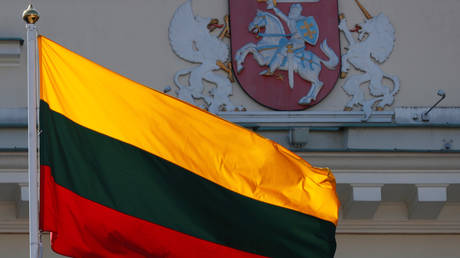
After vowing to retaliate against Lithuania’s move to allow Taiwan open a “representative office” in Vilnius, Beijing has announced it is downgrading diplomatic relations with the Baltic state.

In a statement on Sunday, the Chinese foreign ministry said that China’s diplomatic relations with Lithuania will be formally lowered to the level of charge d’affaires, while blasting Vilnius for setting a “bad international precedent” by giving the island the green light to open its mission in the Lithuanian capital.

The ministry went on to accuse Vilnius of undermining the One China principle and the principle of neutrality in bilateral relations, explaining its decision to demote relations by citing the need to “safeguard its sovereignty and the basic norms of international relations.”

Read more

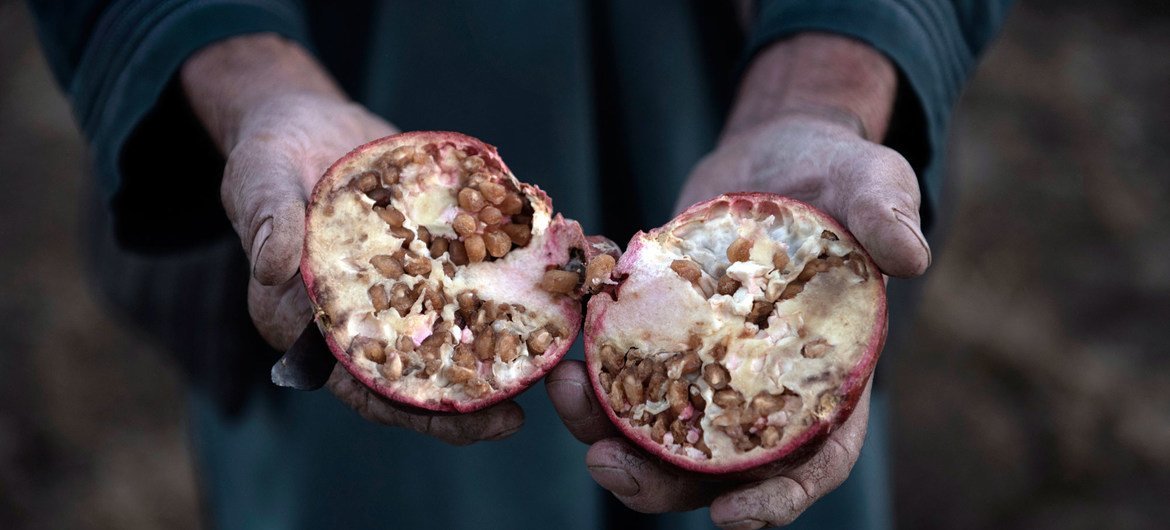
The Lithuanian flag (FILE PHOTO) © REUTERS/Ints Kalnins
China reveals whether it’ll ‘punish’ Lithuania over Taiwan

“The Lithuanian government must bear all the consequences arising from this,” the ministry said, while calling on Vilnius to “correct its mistakes immediately.”

“No matter how the ‘Taiwan independence’ forces distort facts and reverse black and white, they cannot change the historical fact that the mainland and Taiwan belong to the same China,” the ministry asserted.

The move comes just two days after Beijing went on a verbal offensive against the Baltic country, warning that pushback for its cozying up to Taiwan would be imminent. “As to what necessary measures China will take, you may wait and see,” it said at the time.

Lithuania and China have been embroiled in a diplomatic row and have not maintained relations at ambassadorial level since September. After the Baltic state revealed that it would be opening a de facto Taiwanese embassy, China withdrew its ambassador from the country in August. Vilnius followed suit the following month.

Think your friends would be interested? Share this story!

find more fun & mates at SoShow now !

The EU must quickly seal its external borders to stem the flow of migrants who are no longer welcome in the 27-member bloc, according to Slovenia’s interior minister, whose country currently holds the presidency of the EU Council.

Speaking at the ‘Sarajevo Migration Dialogue’ on Thursday, Interior Minister Ales Hojs said EU countries were preoccupied recently with the coronavirus pandemic, the fall of the government in Afghanistan, and now a migrant crisis on the Poland-Belarus border, which he said was a hybrid war waged by Minsk against the EU.

Read more

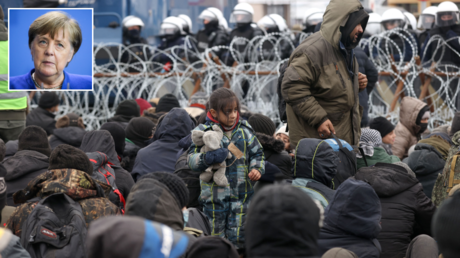
Migrants gather on the Belarusian-Polish border on November 15, 2021. © AFP / OKSANA MANCHUK; (inset) German Chancellor Angela Merkel. © AFP / MARKUS SCHREIBER
Germany agreed on plan to open humanitarian corridor for refugees on Poland-Belarus border – Minsk

“All three have additionally contributed to the increase in numbers of illegal migrants moving towards Europe and the Balkans, destabilizing the European Union,” Hojs told reporters.

The Slovenian minister said the current situation was similar to the 2015 influx of refugees and migrants from the Middle East and North Africa, when the EU admitted over one million people across its borders.

This time the situation is different, Hojs said, warning that “there is no more ‘refugees welcome.’”

“I believe that external borders must be secured, even with fences if necessary,” Hojs said, saying that he supported a plan for Brussels to finance the building of fences to reinforce the bloc’s borders.

He said it was important to strengthen cooperation and partnership across the EU in order to better manage migration and maintain security.

Thousands of migrants have been trying to cross the Belarus-Poland border in an attempt to reach the EU. They have been stranded at barbed-wire fencing with Polish border guards repelling their attempts to cross. Warsaw has accused Belarus of orchestrating the crisis to destabilize the EU and “weaponize” migration in an effort to have sanctions lifted.

A spokesperson for Belarusian leader Alexander Lukashenko claimed on Thursday that Germany agreed to open a humanitarian corridor for 2,000 refugees on the border.

If you like this story, share it with a friend!

find more fun & mates at SoShow now !

The longest lunar eclipse in over 500 years will occur in the early hours of November 19, lasting several hours.

The peak of the partial eclipse will take place in the predawn hours on Friday when 97% of the moon will be eclipsed by the Earth’s shadow. The previous longest partial eclipse took place in 2018 and lasted less than two hours, while this will last for several hours.

The eclipse will be visible from all 50 US states, Canada, and Mexico, as well as parts of South America, Polynesia, Australia, and China, according to NASA.

The moon will be at its farthest point from Earth during the eclipse, slowing its orbit and extending the time it takes to move out of the darkest part of the planet’s shadow, known as the umbra, as the moon, Earth, and sun will all be aligned. The Holcomb Observatory has released a video detailing what the eclipse will look like. 

The event will begin shortly after midnight and unlike a solar eclipse, no one will need special eyewear to view the phenomenon.

When the eclipse occurs, the moon will take on a reddish hue, with only a sliver of the actual moon visible. The event will last for several hours, making it the longest of its kind in 580 years, with the next lunar eclipse not occurring until May of 2022.

If you like this story, share it with a friend!

find more fun & mates at SoShow now !

This piece was first published by RUSI in London.  The views do not represent those of RUSI.

EXPERT PERSPECTIVE –The international community is coming under increasing pressure to recognise the Taliban and to unfreeze Afghan funds held by the IMF or to risk a humanitarian crisis over the winter and a resurgence of international terrorism.

As Afghanistan heads deeper into winter the desperate need is to avoid a humanitarian crisis. The World Food Programme has launched an appeal to feed up to 23 million people and Médecins sans Frontières have followed suit in the healthcare field. Fortunately, the distribution mechanisms are in place inside Afghanistan; what is needed is for the international community to ensure that UN humanitarian programmes are fully funded. This will require Western capitals to get over the shock of their recent defeat. It goes without saying that hunger and health should not be used as instruments of political leverage.

Meanwhile, it is becoming ever more apparent that the Taliban do not have the skills to administer a country which is far more complex than the Afghanistan of 1996 – when they began their previous and disastrous spell in office. They will need international assistance to stabilise the economy, get people back to work and, in time, continue the gradual infrastructure improvements which have been underway since 2002. China will doubtless be willing to assist in some areas but Beijing has already made clear that it is adopting a cautious, gradualist approach. However, there are emerging indications that the Taliban’s intransigent views are beginning to relax; such as their approval of the polio vaccination scheme and their willingness to work with UN humanitarian agencies.

The Taliban will also need outside help in defeating the threat from the Islamic State’s Khorasan Province (ISK). Already the Taliban are finding it difficult to counter similar asymmetric tactics which they used so successfully against Western forces. This is likely one of the subjects which CIA Director William Burns discussed with the Taliban during his visit on 24 August and where there is a mutual interest.

What can the international community (not just the West) realistically expect from the Taliban, following the militant group’s stunning victory? Maximalist demands will inevitably get short shrift.


The Cipher Brief hosts private briefings with the world’s most experienced national and global security experts.  Become a member today.


First, the Taliban should form a more inclusive government. According to multiple sources, the Taliban were intending to form such an administration had Ashraf Ghani not fled the country on 15 August. I am sceptical that this was ever their intention but former president Hamid Karzai and former reconciliation chief Abdullah Abdullah may have remained in Kabul on this understanding and Fatima Gailani, a former negotiator, insists this was the Taliban’s intention.

An inclusive government would need to include women and non-Taliban representatives from the Hazara, Uzbek and Tajik communities. It need not comprise the failed politicians and bloodstained warlords of the past, least of all Gulbuddin Hekmatyar and Abdul Rashid Dostum. It is surely time for a new generation of more technocratic Afghans to become involved in government. Some may be persuaded to return from abroad but they will need assurances for their safety.

Second, the international community should insist on female education at all levels be restored and for women to play a fuller role in society. The Taliban will baulk at this but they only need to look at Pakistan where women play an important role in an avowedly Islamic, if not Islamist, society.

Third, all neighbouring countries, as well as the wider world, want Afghanistan to commit to removing all terrorist bases and terrorists from its soil; not just ISK and Al-Qa’ida but also the Eastern Turkistan Islamic Movement, the Pakistani Taliban (TTP), anti-Iranian and anti-Indian groups, and Central Asian militant movements including the Islamic Movement of Uzbekistan.

Fourth, the Taliban should commit to allow people to join their families in exile if they wish and also cease the continuing search for and punishment of those Afghans who served the Afghan government and Western allies since 2001.


Go beyond the headlines with expert perspectives on today’s news with The Cipher Brief’s Daily Open-Source Podcast.  Listen here or wherever you listen to podcasts.


In an ideal world there would also be a fifth request: to remove Haqqani network members from the Taliban administration. However, that pass was sold when the US negotiator Zalmay Khalilzad engaged with the Haqqanis in Doha – another result of that calamitous dialogue. Furthermore, the current reality is that the Haqqanis control both Kabul and its airport and Sirajuddin Haqqani holds the key position of interior minister.

Instead, the Haqqanis need to be persuaded to prevent Al-Qa’ida regrouping in Afghanistan. Sirajuddin’s father was close to Osama bin Laden and the group retains its Al-Qa’ida connections. Pakistan is already using the Haqqanis to bring the TTP to the negotiating table. It remains to be seen how successful this will be. It is doubtful that the Haqqanis would be willing to take military action against a group from a similar area in the tribal borderlands. However, the Haqqanis could be useful as intermediaries, if not as enforcers.

Meanwhile, the wider Taliban, usually referred to as the ‘Kandaharis’, are increasingly exasperated by the entryist Haqqanis. Although they have worked together, there was never much love lost between the two. The Kandaharis have always distrusted the Haqqanis’ proximity to the Pakistani military. Since the Taliban takeover of Afghanistan, Mullah Abdul-Ghani Baradar, whose willingness to negotiate with the Kabul government in 2008 and 2010 earned him eight years in a Pakistani prison, has been sidelined. There will doubtless be a reckoning

A lasting regret of the US’s careless withdrawal is that Washington did not conclude a broader settlement for Afghanistan involving China, Iran, Russia, India and the Central Asian Republics. From now on it is essential to include all the neighbours in the discussion of recognition and the conditions required. But first the Afghans must be helped to survive the winter.

Read more expert-driven national security insights, perspective and analysis in The Cipher Brief

The post What Stands Between the Taliban and Recognition appeared first on The Cipher Brief.

find more fun & mates at SoShow now !
The Swedish government has announced plans to introduce mandatory Covid-19 passes starting next month, amid rising infection rates in Europe. The passes will be required to attend any indoor event with 100 or more participants.

The upcoming introduction of mandatory coronavirus vaccine passes was announced by Health Minister Lena Hallengren on Wednesday.

Citing the ongoing surge in coronavirus cases across Europe – which has not hit the country itself yet – the minister stressed the need to be ready for the new wave of infections, projected to reach Sweden mid-December.

“The spread is increasing in Europe. We haven’t seen it yet in Sweden, but we are not isolated,” Hallengren told a news conference. “We need to be able to use vaccination certificates.”

Read more

© Getty Images / picture alliance
German media reveals jail terms for fake Covid certificates

Starting from December 1, the documents confirming a person’s vaccination status will be a requirement to enter any indoor event with 100 or more people in attendance. Sweden already boasts high vaccination rates, with 85% of its citizens aged over 16 having received at least one dose of a Covid-19 vaccine. Over 81% have received two shots or more, public health data shows.

Earlier in the day, the country’s health authorities backtracked on a highly controversial decision to stop testing fully vaccinated people who showed symptoms of Covid. The recommendation was rolled out in October, leading to a 35% decline in Covid-19 tests taken.

“The Public Health Agency has decided to recommend that the regions offer testing to everyone who is 6 years and older who gets symptoms that may be COVID-19,” the health authority said in a statement.

Sweden bucked the trend among European governments in its approach to handling the pandemic, electing not to impose widespread lockdowns. Having relied primarily on voluntary measures and social distancing, the country displayed several times higher death rates per capita than its Nordic neighbors, though it still fared better than many European countries, registering some 1.18 million cases and just over 15,000 coronavirus deaths since the beginning of the pandemic.

Think your friends would be interested? Share this story!

find more fun & mates at SoShow now !
Controversial psychologist and author Jordan Peterson claimed Western countries had no “moral right” to force developing nations to reduce pollution output, noting instead that improving their economies was key.

During an appearance on the BBC’s ‘Question Time’ show on Thursday, the Canadian professor noted that the focus of climate change policies should be on incentivizing the development of cheap energy in poorer polluter countries.

“The best long term solution is to try to make developing countries as rich as possible, and the best way to do that is not control their pollution output, but to help them develop the cheapest energy they can possibly manage as fast as they possibly can,” Peterson said.

The debate saw UK undersecretary for employment Mims Davies suggest that measures taken to tackle climate change should not come at the “expense of developing countries.” But Peterson countered that it “absolutely, 100% will be [at their expense].”

I don’t think we have any moral right in the West at all to do that.

Read more

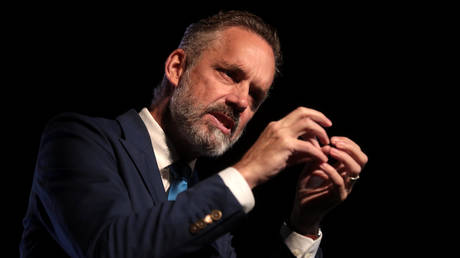
FILE PHOTO: Jordan Peterson speaking with attendees at the 2018 Student Action Summit hosted by Turning Point USA in West Palm Beach, Florida, December 20, 2018 © Flickr / Gage Skidmore
Jordan Peterson hammers ‘totalitarian’ Covid rules

He also criticized the recent COP26 climate change conference for failing to explore ideas on how best to improve national economies in the developing world, noting that he saw “very little of that sort of idea” coming out of the UN summit.

In the final hours of the two-week conference, China and India had intervened to soften the wording around the use of coal in the Glasgow Pact. The two countries demanded a change in the final text of the agreement that called for coal to be phased out, revising this to “phasing down unabated coal.”

The move prompted COP26 president and UK minister Alok Sharma to declare that China and India would have to “justify” their actions to countries that were more vulnerable to global warming effects. However, officials in both Beijing and New Delhi have countered that the criticism was unfair.

If you like this story, share it with a friend!

find more fun & mates at SoShow now !

A gunman injured two civilians, one of them fatally, and two police officers before being shot dead by security forces near Jerusalem’s Western Wall on Sunday morning, Israeli police said.

The civilian victims were taken to Shaare Zedek Medical Center. One, who was in his 30s, succumbed to his injuries at the hospital. The other, a 46-year-old, is said to have suffered moderate injuries. Two police officers were hurt by shrapnel.

In a video clip shared on social media and purportedly filmed at the scene, multiple gunshots could be heard amid agitated shouting. Security officers could then be seen standing around what appears to be a dead body. Witnesses speculated it was that of a “terrorist.”

The gunman, whose identity was not immediately disclosed, was killed during the incident. Police said he had used a homemade submachine gun.

DETAILS TO FOLLOW

find more fun & mates at SoShow now !
Sporadic clashes broke out at massive Saturday demonstrations in major European cities, as thousands of people took to the streets of Vienna, Paris and Rome to express their discontent with Covid-19 restrictions.

The Austrian capital Vienna on Saturday saw the largest protest turnout since the start of the Covid-19 pandemic. A total of 38,000 people took to the city streets to join a dozen demonstrations protesting government measures.

The protests came a day after the Austrian authorities ordered nationwide compulsory vaccination from February 1 and imposed a full lockdown, starting Monday. The massive procession that spanned over several kilometers marched along Vienna’s central ring road. The city center was paralyzed for several hours as traffic was restricted.

Austria’s right-wing Freedom Party, whose members joined the rallies, put the number of protesters at 100,000. Some demonstrations were also attended by members of various far-right groups. The protests were generally peaceful but footage published by Ruptly video news agency showed several scuffles between the police and the demonstrators breaking out.

Law enforcement spoke of a total of five arrests. One incident saw a protester attempting to grab an officer’s gun and take it from its holster. In another incident, the officers were pelted with bottles and fireworks and had to use pepper spray in response.

Hundreds of kilometers away from Vienna, in the French capital Paris, events took a more dramatic turn. There, a demonstration against the government Covid-19 measures coincided with the third anniversary of the Yellow Vests movement. Hundreds of protesters took part in the protest, which quickly turned into clashes between the demonstrators and law enforcement.

The protesters were building barricades and setting them on fire as well as pelting police with bottles and various other projectiles. Law enforcement responded with profuse amounts of tear gas, sometimes filling entire streets with thick smoke to disperse the crowds.

Rome saw a massive demonstration against Italy’s Covid-19 health pass, also known as the Green Pass. Some 4,000 people gathered in the center of the Italian capital, according to the police. The demonstrators were waving national flags and chanting “Freedom” and “No Green Pass,” referring to the vaccination certificate needed to enter various public venues such as clubs or bars.

The crowd staged a sit-in in the Circus Maximus – an ancient Roman chariot-racing stadium converted into a modern-day park. They remained there after sunset, lighting the area with thousands of phones and colored smoke bombs. The rally was peaceful, though, as the police did not report any incidents.

Unlike Rome, Italy’s northern city of Milano saw clashes between protesters and the police as law enforcement officers sought to break up an unauthorized rally at the city center. Large police forces were deployed to the city center and several squares were cordoned off.

Think your friends would be interested? Share this story!

find more fun & mates at SoShow now !