The Funniest Clothing Labels Ever – When was the last time you read the label on your favorite shirt or most comfortable pair of jeans? Maybe it’s time to take a look, your clothing tags may hide a funny message.

The Perfect Gift For Someone You Hate – Hungry AND tired? You can rest on this soft body pillow shaped like smoked pig’s feet! What really amazes us are the details, it looks so real… and so disgusting.

Every Cat at 3AM – If you currently have or have ever had a cat, you’ll be able to relate to Gus Johnson’s video, in which he demonstrates one of the many ways in which our furry friends can be a-holes.

The Funniest Dog Videos Of All Time – We understand the value of a good funny dog video, so here’s a list of our six best viral pup videos of all time. You’re welcome.

Mildly Infuriating Things In Life – Sometimes the internet shows you a photo that’s ever so slightly wrong that it sticks in your brain forever…

Funny Images Showing How Differently Men and Women Act – Yup, we’re different and there is no denying that fact. We have different bodies, different brains and different ways of using both.

Dads Who Didn’t Want The Damn Dogs In Their Lives – Dad logic is a weird thing. They say they hate dogs, and then you end up with a gallery like this…

Random Funny Pictures – What do you do when you are bored at work? You just mindlessly scroll through random funny pictures, of course!

Mr. Bean Playing Every Role In Hollywood – When one thinks of a rugged, versatile actor capable of elevating any role given to them, Mr. Bean naturally springs to mind. And yet he was never cast as Frodo Baggins or Indiana Jones, which in our eyes is one of the saddest tragedies of modern filmmaking.

Funny Thanksgiving Cake Fails – Thanksgiving is a day to reflect and enjoy time with family… and sometimes to FAIL.

Still bored to tears and want to see more funny and entertaining links? You should check out Linkiest, Leenks, or Fark!

The post This Month’s Funniest Internet Finds first appeared on .

find more fun & mates at SoShow now !

France has imposed a curfew on its overseas territory of Guadeloupe and is sending extra police to the island, citing days of “violence,” unrest and vandalism in response to harsh pandemic restrictions.

“Given the ongoing social unrest and acts of vandalism, the prefect of Guadeloupe has decided to establish a curfew starting today from 6pm to 5am,” Alexandre Rochatte, who represents the archipelago as prefect, said on Friday.

Earlier on Friday, the French Interior Ministry noted that 200 French police officers and gendarmes would be shipped into Guadeloupe in the coming days to crack down on the “violence” and “restore republican order.”

READ MORE: Macron discloses whether lockdown for unvaccinated will be necessary in France

The move comes after nearly a week of heated protests over local Covid-19 policies – which include mandatory vaccinations for healthcare staff and other ‘essential’ workers, among other things. Demonstrators have torched cars and erected burning barricades in the streets, while doctors, firefighters and other professionals have walked off their jobs in protest, according to Reuters.

In footage circulating online earlier this week, men purported to be protesting firefighters were seen soaking police with a water hose hooked up to a nearby fire hydrant. Officers quickly shut off the spigot.

As in mainland France, residents are also required to present proof of vaccination, a negative PCR test or show they recently recovered from the virus in order to enter a number of public establishments, including restaurants and museums.

Those policies have proven unpopular for many locals, with trade unions launching indefinite strikes in protest over the past week, joined by other residents in street demonstrations.

Like this story? Share it with a friend!

find more fun & mates at SoShow now !

Hard-line cleric Ebrahim Raisi won Iran’s presidential election on Saturday in a move that is expected to bolster the conservative legacy of the country’s supreme leader, Ayatollah Ali Khamenei.

The decision is not expected to derail ongoing negotiations aimed at restoring the Joint Comprehensive Plan of Action (JCPOA) nuclear deal, even though Mr. Raisi himself is under US sanctions over accusations of human rights abuses.  Many voters stayed away from the polls as the outcome had been predicted for months with many progressive candidates barred from running.

The Islamic Republic has entered a post-revolutionary dynamic in which a fading revolutionary generation seeks to ensure that the rising political leadership sustains their revolutionary ideals,” says Norman T. Roule, former National Intelligence Manager for Iran at ODNI and Cipher Brief Expert. “The regime’s decision to bar so many candidates and the low turnout make this election a historic embarrassment for the regime and its supporters.”

The Cipher Brief talked with Roule about what the election means and what it doesn’t mean when it comes to relations with the west, the progressive movement within Iran and the election’s impact on the oil markets.


“The Cipher Brief has become the most popular outlet for former intelligence officers; no media outlet is even a close second to The Cipher Brief in terms of the number of articles published by formers.” – Sept. 2018, Studies in Intelligence, Vol. 62 No.

Access all of The Cipher Brief’s national-security focused expert insight by becoming a  Cipher Brief Level I Member .  


The post What Iran’s Election Tells Us About Where It’s Headed appeared first on The Cipher Brief.

find more fun & mates at SoShow now !

The EU must quickly seal its external borders to stem the flow of migrants who are no longer welcome in the 27-member bloc, according to Slovenia’s interior minister, whose country currently holds the presidency of the EU Council.

Speaking at the ‘Sarajevo Migration Dialogue’ on Thursday, Interior Minister Ales Hojs said EU countries were preoccupied recently with the coronavirus pandemic, the fall of the government in Afghanistan, and now a migrant crisis on the Poland-Belarus border, which he said was a hybrid war waged by Minsk against the EU.

Read more

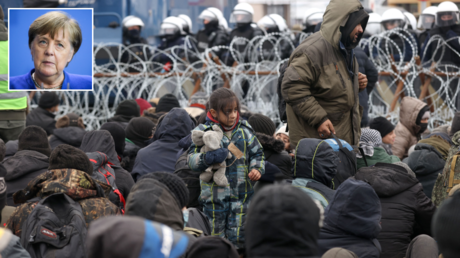
Migrants gather on the Belarusian-Polish border on November 15, 2021. © AFP / OKSANA MANCHUK; (inset) German Chancellor Angela Merkel. © AFP / MARKUS SCHREIBER
Germany agreed on plan to open humanitarian corridor for refugees on Poland-Belarus border – Minsk

“All three have additionally contributed to the increase in numbers of illegal migrants moving towards Europe and the Balkans, destabilizing the European Union,” Hojs told reporters.

The Slovenian minister said the current situation was similar to the 2015 influx of refugees and migrants from the Middle East and North Africa, when the EU admitted over one million people across its borders.

This time the situation is different, Hojs said, warning that “there is no more ‘refugees welcome.’”

“I believe that external borders must be secured, even with fences if necessary,” Hojs said, saying that he supported a plan for Brussels to finance the building of fences to reinforce the bloc’s borders.

He said it was important to strengthen cooperation and partnership across the EU in order to better manage migration and maintain security.

Thousands of migrants have been trying to cross the Belarus-Poland border in an attempt to reach the EU. They have been stranded at barbed-wire fencing with Polish border guards repelling their attempts to cross. Warsaw has accused Belarus of orchestrating the crisis to destabilize the EU and “weaponize” migration in an effort to have sanctions lifted.

A spokesperson for Belarusian leader Alexander Lukashenko claimed on Thursday that Germany agreed to open a humanitarian corridor for 2,000 refugees on the border.

If you like this story, share it with a friend!

find more fun & mates at SoShow now !

A Roadmap for AI in the Intelligence Community

(Editor’s Note: This article was first published by our friends at Just Security and is the fourth in a series that is diving into the foundational barriers to the broad integration of AI in the IC – culture, budget, acquisition, risk, and oversight.  This article considers a new IC approach to risk management.)

OPINION — I have written previously that the Intelligence Community (IC) must rapidly advance its artificial intelligence (AI) capabilities to keep pace with our nation’s adversaries and continue to provide policymakers with accurate, timely, and exquisite insights. The good news is that there is strong bipartisan support for doing so. The not-so-good news is that the IC is not well-postured to move quickly and take the risks required to continue to outpace China and other strategic competitors over the next decade.

In addition to the practical budget and acquisition hurdles facing the IC, there is a strong cultural resistance to taking risks when not absolutely necessary. This is understandable given the life-and-death nature of intelligence work and the U.S. government’s imperative to wisely execute national security funds and activities. However, some risks related to innovative and cutting-edge technologies like AI are in fact necessary, and the risk of inaction – the costs of not pursuing AI capabilities – is greater than the risk of action.

The Need for a Risk Framework

For each incredible new invention, there are hundreds of brilliant ideas that have failed. To entrepreneurs and innovators, “failure” is not a bad word. Rather, failed ideas are often critical steps in the learning process that ultimately lead to a successful product; without those prior failed attempts, that final product might never be created. As former President of India A.P.J. Abdul Kalam once said, “FAIL” should really stand for “First Attempt In Learning.”

The U.S. government, however, is not Silicon Valley; it does not consider failure a useful part of any process, especially when it comes to national security activities and taxpayer dollars. Indeed, no one in the U.S. government wants to incur additional costs or delay or lose taxpayer dollars. But there is rarely a distinction made within the government between big failures, which may have a lasting, devastating, and even life-threatening impact, and small failures, which may be mere stumbling blocks with acceptable levels of impact that result in helpful course corrections.


The Cipher Brief hosts private briefings with the world’s most experienced national and global security experts.  Become a member today.


As a subcommittee report of the House Permanent Select Committee on Intelligence (HPSCI) notes “[p]rogram failures are often met with harsh penalties and very public rebukes from Congress which often fails to appreciate that not all failures are the same. Especially with cutting-edge research in technologies … early failures are a near certainty …. In fact, failing fast and adapting quickly is a critical part of innovation.” There is a vital difference between an innovative project that fails and a failure to innovate. The former teaches us something we did not know before, while the latter is a national security risk.

Faced with congressional hearings, inspector general reports, performance evaluation downgrades, negative reputational effects, and even personal liability, IC officers are understandably risk-averse and prefer not to introduce any new risk. That is, of course, neither realistic nor the standard the IC meets today. The IC is constantly managing a multitude of operational risks – that its officers, sources, or methods will be exposed, that it will miss (or misinterpret) indications of an attack, or that it will otherwise fail to produce the intelligence policymakers need at the right time and place. Yet in the face of such serious risks, the IC proactively and aggressively pursues its mission. It recognizes that it must find effective ways to understand, mitigate, and make decisions around risk, and therefore it takes action to make sure potential ramifications are clear, appropriate, and accepted before any failure occurs. In short, the IC has long known that its operations cannot be paralyzed by a zero-risk tolerance that is neither desirable nor attainable. This recognition must also be applied to the ways in which the IC acquires, develops, and uses new technology.

This is particularly important in the context of AI. While AI has made amazing progress in recent years, the underlying technology, the algorithms and their application, are still evolving and the resulting capabilities, by design, will continue to learn and adapt. AI holds enormous promise to transform a variety of IC missions and tasks, but how and when these changes may occur is difficult to forecast and AI’s constant innovation will introduce uncertainty and mistakes. There will be unexpected breakthroughs, as well as failures in areas that initially seemed promising.

The IC must rethink its willingness to take risks in a field where change and failure is embraced as part of the key to future success. The IC must experiment and iterate its progress over time and shift from a culture that punishes even reasonable risk to one that embraces, mitigates, and owns it. This can only be done with a systematic, repeatable, and consistent approach to making risk-conscious decisions.

Today there is no cross-IC mechanism for thinking about risk, let alone for taking it. When considering new activities or approaches, each IC element manages risk through its own lens and mechanisms, if at all. Several individual IC elements have created internal risk assessment frameworks to help officers understand the risks of both action and inaction, and to navigate the decisions they are empowered to make depending upon the circumstances. These frameworks increase confidence that if an activity goes wrong, supervisors all the way up the chain will provide backing as long as the risk was reasonable, well-considered and understood, and the right leaders approved it. And while risk assessments are often not precise instruments of measurement – they reflect the quality of the data, the varied expertise of those conducting the assessments, and the subjective interpretation of the results – regularized and systematic risk assessments are nevertheless a key part of effective risk management and facilitate decision-making at all levels.


Go beyond the headlines with expert perspectives on today’s news with The Cipher Brief’s Daily Open-Source Podcast.  Listen here or wherever you listen to podcasts.


Creating these individual frameworks is commendable and leading-edge for government agencies, but more must be done holistically across the IC. Irregular and inconsistent risk assessments among IC elements will not provide the comfort and certainty needed to drive an IC-wide cultural shift to taking risk. At the same time, the unique nature of the IC, comprised of 18 different elements, each with similar and overlapping, but not identical, missions, roles, authorities, threats and vulnerabilities, does not lend itself to a one-size-fits-all approach.

For this reason, the IC needs a flexible but common strategic framework for considering risk that can apply across the community, with each element having the ability to tailor that framework to its own mission space. Such an approach is not unlike how the community is managed in many areas today – with overarching IC-wide policy that is locally interpreted and implemented to fit the specific needs of each IC element. When it comes to risk, creating an umbrella IC-wide framework will significantly improve the workforce’s ability to understand acceptable risks and tradeoffs, produce comprehensible and comparable risk determinations across the IC, and provide policymakers the ability to anticipate and mitigate failure and unintended escalation.

Critical Elements of a Risk Framework

A common IC AI risk framework should inform and help prioritize decisions from acquisition or development, to deployment, to performance in a consistent way across the IC. To start, the IC should create common AI risk management principles, like its existing principles of transparency and AI ethics, that include clear and consistent definitions, thresholds, and standards. These principles should drive a repeatable risk assessment process that each IC element can tailor to its individual needs, and should promote policy, governance, and technological approaches that are aligned to risk management.

The successful implementation of this risk framework requires a multi-disciplinary approach involving leaders from across the organization, experts from all relevant functional areas, and managers who can ensure vigilance in implementation. A whole-of-activity methodology that includes technologists, collectors, analysts, innovators, security officers, acquisition officers, lawyers and more, is critical to ensuring a full 360-degree understanding of the opportunities, issues, risks, and potential consequences associated with a particular action, and to enabling the best-informed decision.

Given the many players involved, each IC element must strengthen internal processes to manage the potential disconnects that can lead to unintended risks and to create a culture that instills in every officer a responsibility to proactively consider risk at each stage of the activity. Internal governance should include an interdisciplinary Risk Management Council (RMC) made up of senior leaders from across the organization. The RMC should establish clear and consistent thresholds for when a risk assessment is required, recommended, or not needed given that resource constraints likely will not allow all of the broad and diverse AI activities within organizations to be assessed. These thresholds should be consistent with the IC risk management principles so that as IC elements work together on projects across the community, officers have similar understandings and expectations.

The risk framework itself should provide a common taxonomy and process to:

  • Understand and identify potential failures, including the source, timeline, and range of effects.
  • Analyze failures and risks by identifying internal vulnerabilities or predisposing conditions that could increase the likelihood of adverse impact.
  • Evaluate the likelihood of failure, taking into consideration risks and vulnerabilities.
  • Assess the severity of the potential impact, to include potential harm to organizational operations, assets, individuals, other organizations, or the nation.
  • Consider whether the ultimate risk may be sufficiently mitigated or whether it should be transferred, avoided, or accepted.

AI-related risks may include, among other things, technology failure, biased data, adversarial attacks, supply chain compromises, human error, cost overruns, legal compliance challenges, or oversight issues.

An initial risk level is determined by considering the likelihood of a failure against the severity of the potential impact. For example, is there is a low, moderate, or high likelihood of supply chain compromise? Would such a compromise affect only one discrete system or are there system-wide implications? These calculations will result in an initial risk level. Then potential mitigation measures, such as additional policies, training, or security measures, are applied to lower the initial risk level to an adjusted risk level. For example, physically or logically segmenting an organization’s systems so that a compromise only touches one system would significantly decrease the risk level associated with that particular technology. The higher the likelihood of supply chain compromise, the lower the severity of its impact must be to offset the risk, and vice versa. Organizations should apply the Swiss Cheese Model of more than one preventative or mitigative action for a more effective layered defense. Organizations then must consider the adjusted risk level in relation to their tolerance for risk; how much risk (and potential consequence) is acceptable in pursuit of value? This requires defining the IC’s risk tolerance levels, within which IC elements may again define their own levels based upon their unique missions.

Understanding and considering the risk of action is an important step forward for the IC, but it is not the last step. Sometimes overlooked in risk assessment practices is the consideration of the risk of inaction. To fully evaluate potential options, decision-makers must consider whether the overall risk of doing something is outweighed by the risks of not doing it. If the IC does not pursue particular AI capabilities, what is the opportunity cost of that inaction? Any final determination about whether to take action must consider whether declining to act would cause greater risk of significant harm. While the answer will not always be yes, in the case of AI and emerging technology, it is a very realistic possibility.

And, finally, a risk framework only works if people know about it. Broad communication – about the existence of the framework, how to apply it, and expectations for doing so – is vital. We cannot hold people accountable for appropriately managing risk if we do not clearly and consistently communicate and help people use the structure and mechanisms for doing so.

Buy-in To Enhance Confidence

An IC-wide AI risk framework will help IC officers understand risks and determine when and how to take advantage of innovative emerging technologies like AI, increasing comfort with uncertainty and risk-taking in the pursuit of new capabilities. Such a risk framework will have even greater impact if it is accepted – explicitly or implicitly – by the IC’s congressional overseers. The final article in this series will delve more deeply into needed changes to further improve the crucial relationship between the IC and its congressional overseers. It will also provide a link to a full report that provides more detail on each aspect of the series, including a draft IC AI Risk Framework.

Although Congress is not formally bound by such a framework, given the significant accountability measures that often flow from these overseers, a meeting of the minds between the IC and its congressional overseers is critical. Indeed, these overseers should have awareness of and an informal ability to provide feedback into the framework as it is being developed. This level of transparency and partnership would lead to at least two important benefits: first, increased confidence in the framework by all; and second, better insight into IC decision-making for IC overseers.

Ultimately, such a mutual understanding would encourage exactly what the IC needs to truly take advantage of next-generation technology like AI: a culture of experimentation, innovation, and creativity that sees reasonable risk and failure as necessary steps to game-changing outcomes.

Read also AI and the IC: The Tangled Web of Budget and Acquisition

Read also Artificial Intelligence in the IC: Culture is Critical

Read also AI and the IC: The Challenges Ahead

Read more expert-driven national security insights, perspective and analysis in The Cipher Brief

The post A Roadmap for AI in the IC appeared first on The Cipher Brief.

find more fun & mates at SoShow now !

Scientists have used an AI tool to identify which animals are most likely to contract and spread mutated versions of Covid-19. The model highlighted both pets and wild animals as likely reservoirs for the virus.

Using information about their habitats and various biological traits, researchers at the Cary Institute of Ecosystem Studies in New York developed the machine learning tool to figure out which animals had the particular ACE2 protein that the coronavirus was most likely to latch onto. 

Out of 5,400 tested, the scientists narrowed it down to 540 mammalian species.

Some of its predictions have been previously documented as transmission risks, for instance, dogs, cats and bats, while farm animals like pigs and exotic zoo animals were surprise additions.

Read more

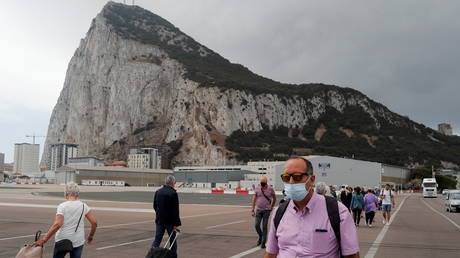
FILE PHOTO: People cross the tarmac of the airport in front of the Rock of Gibraltar in the British Overseas territory of Gibraltar, June 24, 2021 © Reuters / Jon Nazca
‘Most vaccinated’ place on earth cancels Christmas

Other expected additions are minks, Sunda pangolins, and 35 species of bats – which are together ranked among the top 10% of animals most likely to spread the virus, in line with lab results. 

The study, published in the Proceedings of the Royal Society journal, also ranked water buffalo, a number of primates, including gorillas and 76 rodent species as being more susceptible to infection.

The researchers taught the AI to identify patterns between rates of transmission and some 60 ecological and biological traits collected by earlier studies, including the overlap between the animal and human habitats as well as their respective lifespans, diets, and sizes.

Previously, the specific amino acid sequences had only been mapped out in around 300 species, including about 143 mammals — and figuring out which ones are more prone to infection is key to predicting the spread of the virus, researchers said.

Arinjay Banerjee at the University of Saskatchewan in Canada told the New Scientist that the results will help researchers “track viral infections and the possible emergence of animal-adapted coronavirus variants” around the world. Barbara Han, who led the study, said predictions needed to be followed up with systematic surveillance and lab studies.

Think your friends would be interested? Share this story!

find more fun & mates at SoShow now !

France shouldn’t remain silent on Julian Assange, leftist leader Jean-Luc Melenchon has said, after the imprisoned WikiLeaks co-founder’s father suggested that Paris could offer asylum to his son.

The life of Assange – who is being held in solitary confinement at London’s Belmarsh maximum security prison while a British court considers an extradition request by the US – is under threat, Melenchon wrote on Twitter on Tuesday.

“For years, we’ve been calling for France to accept him,” the head of the leftist La France Insoumise (France Unbowed) party said, insisting that “France shouldn’t remain silent.”

The statement by Melenchon, who won 19.6% of the ballot in the first round of the French presidential election in 2017, follows a visit by Assange’s father, John Shipton, to the Whistleblower Meeting in Paris on Monday.

During the event, Shipton told Sputnik news agency that it would be “an honorable thing” for the French government to grant his son asylum. 

“I feel that France hasn’t attacked Julian over the last 12 years and consequently France is free to act in return for the information that WikiLeaks and Julian brought to France,” he said, referring to the website’s revelations of the US intelligence agencies spying on French presidents and hacking into local banks.

Several dozen French lawmakers have also recently called upon Paris to take Assange in, with the Australian-born publisher’s legal team saying last year that their client was hoping to find asylum on French soil.

Read more

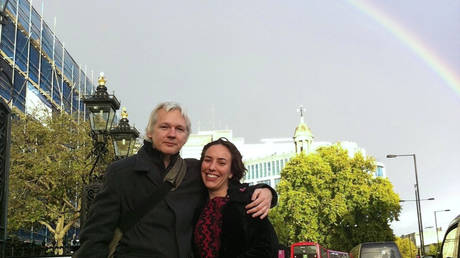
FILE PHOTO: Julian Assange and partner Stella Moris are seen in an undated photo shared by Moris on social media November 11, 2021.
UK caves, allows Assange to get married in jail

Assange could face up to 175 years behind bars if he’s extradited to the US, where he’s wanted on espionage charges over the release by WikiLeaks of classified documents on Iraq, Afghanistan, Guantanamo Bay, and others.

He was placed in Belmarsh in April 2019 over breach of bail, after being holed up in the Ecuadorian Embassy in London for seven years.

The publisher had been fleeing an arrest warrant issued over sexual assault allegations which he has always denied, and which failed to result in any actual charges due to lack of evidence.

Assange’s supporters insist that he has actually been persecuted over his legitimate journalistic activities and revealing the truth to the public.

The UK High Court is expected to rule on the appeal by the US against a lower court decision to bar the WikiLeaks co-founder’s extradition to America due to the 50-year-old’s poor health condition and risk of suicide.

Assange’s team will then be able to challenge the ruling in the Supreme Court if it’s not favorable.

Think your friends would be interested? Share this story!

find more fun & mates at SoShow now !

People who live in the big cities are definitely masters of eavesdropping. Sometimes they can’t help it, accidentally overhearing conversations from complete strangers can be so funny, it’s hard not to share them with someone else. And here comes the fittingly named Instagram account Overheard San Francisco that’s dedicated to sharing the funniest eavesdropped interactions in San Francisco and the Bay area. Scroll down to see the funniest examples!

Funny conversation overheard in San Francisco.

Funny conversation overheard in San Francisco.

Funny conversation overheard in San Francisco.

Funny conversation overheard in San Francisco.

Funny conversation overheard in San Francisco.

Funny conversation overheard in San Francisco.

Funny conversation overheard in San Francisco.

Funny conversation overheard in San Francisco.

Funny conversation overheard in San Francisco.

Funny conversation overheard in San Francisco.

Funny conversation overheard in San Francisco.

Funny conversation overheard in San Francisco.

Funny conversation overheard in San Francisco.

Funny conversation overheard in San Francisco.

Funny conversation overheard in San Francisco.

Funny conversation overheard in San Francisco.

Funny conversation overheard in San Francisco.

Funny conversation overheard in San Francisco.

Funny conversation overheard in San Francisco.

Funny conversation overheard in San Francisco.

Funny conversation overheard in San Francisco.

Funny conversation overheard in San Francisco.

The post Hilarious Private Conversations People Overheard In San Francisco first appeared on .

find more fun & mates at SoShow now !

A pack of wild boars were rounded up and euthanized after one of the animals attacked a police officer in the streets of Hong Kong – the opening shot in a pitched battle between the feral hogs and the city’s law enforcement.

A group of veterinarians took seven wild boars into custody, euthanizing the beasts after knocking them out with dart guns in an area near the financial center of the city, according to a statement from Hong Kong’s Agriculture, Fisheries, and Conservation Department on Thursday.

The pigs were captured after one attacked a police officer last week, an act which reflects the city’s new policy toward the animals: stop them before they attack again.

The aggressive boar knocked down a police officer by biting his leg last week as the two faced off in a residential car park, the pig only losing the battle after falling off the building to its death. The wild boars are apparently “accustomed” to wandering back and forth along the roadway, begging for food from pedestrians and vehicles alike. Previously, the city had handled the population by capturing and sedating the animals, then relocating them to “remote areas,” according to the the department.

Hong Kong CEO Carrie Lam vowed to increase penalties for those citizens found feeding the boars, which have reportedly been responsible for some 30 attacks in recent years. While residents are warned not to feed the boars so as not to encourage population growth or disease outbreaks, the animals are a favorite among some visitors. Still, Lam insisted “we can’t simply sit on our hands while things deteriorate.”

Animal rights groups have responded with a protest letter against a policy of euthanasia, pointing out that most visitors do not feed the boars and arguing resources should be directed toward stopping the human activity rather than blaming all the boars. Allowing the boars to be captured and killed “ignores their right to live and considers their existence in urban areas as a capital offense,” the letter read.

Like this story? Share it with a friend!

find more fun & mates at SoShow now !

As part of a special series on climate in partnership with The Intelligence Project at Harvard University’s Belfer Center for Science and International Affairs, and Cipher Brief Expert and Senior Editor Kristin Wood, The Cipher Brief is focusing on the national security implications of climate change. 

This report is derived from a half-day conference in April 2021 co-sponsored by the Intelligence Project and the Environment and Natural Resources Program at Harvard Kennedy School’s Belfer Center for Science and International Affairs, along with the Center for Climate and Security and The Cipher Brief. It explores the requirements of the U.S. IC to fulfill the mission prescribed by President Biden, DNI Haines, and Secretary Kerry. The IC must rise to challenge, unshackled from the past, to re-imagine its role in combatting climate change.

The Authors

Calder Walton, Asst. Director, Belfer Center’s Applied History Project and Intelligence Project, Harvard University

Calder Walton is Assistant Director of the Belfer Center’s Applied History Project and Intelligence Project. Calder’s research is broadly concerned with intelligence history, grand strategy, and international relations. The

Sean Power, Masters in Public Policy Candidate, Harvard Kennedy School

Sean Power is a Masters in Public Policy 2021 candidate at the Harvard Kennedy School. Prior to HKS, he managed the analyst program at Kobre & Kim LLP, where he assisted on matters involving government enforcement defense and internal investigations.

The Report

The U.S. Director of National Intelligence (DNI), Avril Haines, has stated that climate change needs to be at the center of U.S. foreign policy and national security. It is a threat multiplier that impacts every function of government and society: territorial integrity, economic well-being, social stability, and military capabilities are all impacted by climate change, directly and indirectly. However, in addressing climate change, the U.S. Intelligence Community (IC) is currently unsure of its mission space and hitherto has been relying on boilerplate responses to it. In an exclusive discussion, the U.S. Special Presidential Envoy for Climate, Secretary John Kerry, who should be a principal consumer of intelligence about climate change within the U.S. government, stated that the U.S. IC must deliver significantly more.

The increasing effects of climate change are arising at a moment when the nature of intelligence itself is undergoing a revolution—from the collection of hidden secrets to collation of non-obvious (but knowable) data frequently hiding out in the open. This watershed in intelligence and national security requires bold, innovative, ideas for the U.S. IC to adapt and anticipate security threats derived by climate change. It must establish its mission space and alter its own architecture to ensure it is providing its customers with intelligence about them needed. Its mission will not be about spies disseminating secrets to policymakers; rather, it will require a new intelligence and national security paradigm that must reach across society, allowing the general public to consume climate intelligence and hold policymakers to account.

Background

The twenty-first century presents globalized threats that will require globalized solutions, the greatest of which is climate change. As the Covid-19 pandemic has demonstrated, no country is immune from actor-less threats like novel disease outbreaks and climate change. When combined with other security threats like transnational terrorism and ubiquitous cyberattacks, it becomes clear that existing national security frameworks are insufficient. New relationships and lines of communication will need to be forged, both within the U.S. government, in the private sector, and internationally with allies and adversaries. The U.S. IC needs to determine the requirements of its customers regarding climate change and how its unique collection and analytical capabilities fit into this new mission space.

The IC has incorporated climate change into its analysis and threat assessments for decades, but climate has not received the attention it requires given the magnitude of the threat it poses. On January 27, 2021, President Biden issued an executive order on tackling the climate crisis at home and abroad, establishing that “climate considerations shall be an essential element of United States foreign policy and national security.” The order also called for the Director of National Intelligence to prepare a National Intelligence Estimate on the national and economic security impacts of climate change within 120 days.

The Climate Change, Intelligence, and Global Security conference at Harvard’s Belfer Center earlier this year, brought together senior climate experts, current and former intelligence officers, and leaders in the private sector and academia to discuss the climate threat and generate innovative ideas on role the IC will play in combatting that threat. Led by Paul Kolbe, Director of the Intelligence Project, Kristin Wood, Intelligence Project Non-Resident Fellow, and Erin Sikorsky, Deputy Director of the Center for Climate and Security, the conference facilitated an urgent opportunity for productive dialogue on the climate threat.

Climate change as a threat to international security

Policymakers and the public need to understand that climate change impacts seemingly unrelated challenges and magnifies existing threats. The direct effects of climate change are readily apparent around the world—melting glaciers, rising sea levels, thawing permafrost, longer droughts, hotter heat waves, persistent wildfires, torrential rains, and catastrophic storm systems. These effects create disastrous consequences for humans like crop failures, fishery collapses, water insecurity, and the inundation of coastal regions, all of which lead to mass migration and displacement. These situations lead to fragile states and regions where increased conflict over scarce resources allows malign actors thrive. In this way, climate change is a threat multiplier that touches every aspect of international security.

Professor John P. Holdren, the Teresa and John Heinz Professor of Environmental Policy at Harvard Kennedy School, noted that the big picture on how climate change will impact the planet is clear, but the detailed effects are difficult to predict with precision and confidence, in part because we do not know exactly how human societies will react. This uncertainty exacerbates the security threat posed by climate change. We know it will increase the number of displaced persons in the world, but we do not know when they will be displaced, how many there will be, or where they will go.

Climate change also impacts the effective functioning of the U.S. military: to meet traditional security threats and protect Americans at home and abroad. U.S. bases around the world function as launching pads for everything from quick tactical operations to large-scale disaster relief missions. When severe weather damages those bases or limits their ability to operate at full capacity, America’s security is put at risk. Disasters like the flooding at Offutt Air Force Base in Nebraska, headquarters for U.S. Strategic Command, and Hurricane Michael’s destruction of Tyndall Air Force Base in Florida show that this threat knows no geographic bounds. Their effects are costly as well—the Air Force requested nearly $5 billion to rebuild those two bases alone.

The overall impacts of climate change on international security are inevitable, consequential, and predictable. Previously the U.S. government has undertaken more extensive, and expensive, actions on the basis of proportionally less intelligence about security threats. The U.S. IC must give climate change the proportional attention it deserves.

Role of U.S. intelligence in addressing climate change

Climate change poses an existential, global, non-state security threat, making it fundamentally different from past threats. Its unprecedented nature will require unprecedented thinking by the U.S. IC and requirements from it. Former Principal Deputy Director of National Intelligence Sue Gordon stated clearly that it is not enough to just say that the U.S. IC should focus more on climate— rather, the challenge lies in determining what its specific contribution will be, and then evaluating what changes need to occur to make that contribution happen. Answering these questions will require difficult, but necessary, upfront work. Without that work, the U.S. IC is likely to lead with its current capabilities, rather than identifying and developing capabilities needed to meet the nature of the new threat we face.

The U.S. IC must play to its strengths in carving out its climate mission. Intelligence is no longer just about stealing secrets; it is about providing policymakers with decision advantages to influence events, which is the same as the past, but with a key difference that doing so now requires mastery of is a vast eco-space of openly-available information. To accomplish its mission, the U.S. IC must leverage its analytic tradecraft to present objective assessments about climate change to policymakers. This means collecting intelligence, assessing it, removing bias, and delivering timely and relevant assessments to customers. The U.S. IC must also leverage its global relationships with partners and competitors in performing these tasks. These relationships lie below politics and can help elicit understanding that allows policymakers to distinguish facts on the ground from prevailing political rhetoric of the day.

The U.S. IC’s workforce and technology will need to advance and adapt to serve the climate mission. It does not need to have the foremost climate experts, but it does need to have dialogue with them, and develop its own climate expertise. Like other threats, the IC needs personnel that are devoted to understanding this new threat and understand its place in larger risk frameworks. Predictive models are critical to understanding climate science, and the IC should invest more resources into artificial intelligence and machine learning capabilities (AI/ML) that can inform them. Intelligence professionals will not need to advance science, and scientists will not need to assess national security; but collaborations between the IC and the federal science community are necessary and will benefit both by allowing them to identify and meet shared objectives.

Climate change intelligence cannot be siloed. As DNI Haines promised, it must be integrated into traditional security threat assessments, and those emerging threats from other globalized challenges, bio-hazards, cyber capabilities, and weaponized information, if we want to understand how they interact and manifest around the globe. Compared to the twentieth century, when intelligence was dominated by governments, the twenty-first century offers more democratic forms of intelligence: the private sector offers major capabilities to collect and analyze intelligence. It has disrupted and transformed the nature of intelligence. The IC’s advantage in this new environment will come from thinking deeply about these issues and using its unique analytical and collection capabilities to identify patterns and trends others might overlook.

The future of intelligence cooperation and climate change

Climate change is an indiscriminating challenge unlike anything humanity has encountered before. Understanding how it is different helps illustrate the need for intelligence cooperation among states, large and small, to combat it. Carol Dumaine, Senior Fellow at the Atlantic Council, noted that the impact of the Covid-19 pandemic has highlighted many of the ways in which the climate threat is unique. It is non-state, non-adversarial, non-linear, boundary-less, and its root causes can be found in human economic activity. Unlike pandemics, however, combatting climate change will require something we have never done: decades of consistent cooperation across states with an eye towards tackling a systemic problem that will persist for centuries.

The U.S. IC needs to determine how it will work with other countries to combat the shared threat of climate change. The big first step is determining what the security collective is trying to accomplish. One area ripe for collaboration is foresight and early warning systems. During the Cold War the famous “red telephone” connected the White House and the Kremlin, enabling direct communication to avoid nuclear brinksmanship. Similar innovate thinking will be needed on climate change cooperation. Lt. Gen. Richard Nugee, Climate Change and Sustainability Strategy Lead for the UK Ministry of Defence, emphasized that the biggest danger on climate change is not a morass of bureaucracy, but instead a lack of imagination in understanding its impact and generating solutions for it.

Relying on existing partnerships, such as the Five Eyes alliance or NATO, will not be sufficient. Those agreements will play a role, but they do not include some of largest contributors to greenhouse gases or the countries that will suffer the largest initial impacts from climate change. Intelligence communities are by nature competitive and adversarial, but when it comes to climate change they will need to be cooperative. The U.S. IC needs to identify areas of cooperation even with adversaries like China and Russia. Rolf Mowatt-Larssen, Senior Fellow and former Director of the Intelligence Project, tasked the U.S. IC to look for a peace dividend—areas where collaboration on climate will yield multilateral benefits. Even though spying will still exist, as it always had, we cannot let espionage stand in the way of climate collaboration.

Any collaboration on climate intelligence will certainly require American leadership. That means America needs to treat the climate threat with the seriousness it deserves. Climate change is siloed into a one-page length analysis in the 27-page Annual Threat Assessment issued by the Office of the Director of National Intelligence in April 2021. The six pages focusing on China and Russia make no mention of how those are contributing to climate change or working to combat it. The IC must continually reinforce that climate is a serious and central threat. We cannot wait until the impacts are painfully obvious for every individual across the globe to treat it with the seriousness it requires.

The private sector, intelligence, and climate change

The threat from climate change reinforces the fact that intelligence is no longer a domain solely for governments. Mekala Krishnan, Partner at the McKinsey Global Institute, underscored that the private sector is also seeking to take climate risk out of a sustainability silo and integrate it into all aspects of decision making affected by risk and finance. Companies are thinking about how climate interacts with physical capital, natural resources, labor supply, and food supply—the factors of production in an economy that fundamentally affect our lives and livelihoods. One of the most important factors in a country’s national security is the health of its economy. The U.S. IC needs to be working with the private sector to understand what the economic effects of climate change will be.

In many respects, the U.S. government is still one of the few parties that can afford the costs to collect data on climate change, much like space exploration and early Internet research. The private sector can innovate ways to extract insights from that public data. Harnessing that with government capabilities will require innovative public-private partnerships with a shared strategy to help combat climate change. The U.S. IC must develop a level of transparency on climate data that will allow the private sector to identify where incentives for research and development exist. It will not matter how good the climate intelligence collected by the U.S. IC is if it does not get into the hands of public and private users in the right shape and form.

At the same time, the IC cannot be everywhere at once, collecting troves of climate data at significant cost. Richard Jenkins, CEO of Saildrone, noted that the private sector has the capability to deploy significant private money to develop and test new technologies that advance climate data collection, which the government can purchase at great value and incorporate into climate intelligence analysis. New technology is democratizing intelligence; it will force the U.S. IC to change how it interacts with the private sector— for the better.

Conclusion

In a moderated discussion with Dr. Calder Walton, Secretary Kerry stated unambiguously that the U.S. IC needs to start providing policymakers with a decision advantage on climate change in order for the U.S. government to lead the world on meeting this unprecedented threat. That starts with treating climate change seriously. The U.S. IC will need to determine its requirements, play to its strengths, and adapt its workforce to best serve its mission. It will need to cultivate deeper cooperation with allies and adversaries, develop new relationships with the private sector, and approach climate change with a fresh mindset to seek and find what others overlook.

When it comes to climate change, the U.S. IC should also reframe who its customers are, not just policymakers, to whom it gives secret briefings, but also the public. By publicly disseminating assessments, the U.S. IC can effectively democratize intelligence about climate change, with the public holding policymakers to account for their actions or inactions on the basis of shared intelligence.

The Cipher Brief is proud to be continuing our coverage on Climate with a series of webcast briefings beginning in July 2021.

Read also:

The Climate and US National Security Conversation with Admiral Jim Stavridis (Ret.)

How to Integrate Climate in Future National Security Risk

Russia’s Climate Problem and Opportunity

Why the Intelligence Community Needs a Climate Change Task Force


The post Defining the IC’s Mission Space for Climate Change appeared first on The Cipher Brief.

find more fun & mates at SoShow now !