Three soldiers were killed near Damascus, according to a Syrian military source
Syrian air defenses were activated shortly after midnight on Friday in response to an act of “Israeli aggression” in the vicinity of the capital Damascus, according to a military source cited by the Syrian Arab News Agency (SANA).
“At exactly 12:32am today, the Israeli enemy carried out an air aggression with rockets from the direction of the occupied Syrian Golan, targeting some points in the vicinity of the city of Damascus,” the source told SANA.
While air defense systems reportedly managed to intercept some of the missiles, three soldiers were killed and at least seven others injured in the strike, which also caused some “material damage,” according to the military.
The Israeli government has not officially commented on the reports so far. On the rare occasions Israel has admitted carrying out attacks inside Syria, the Israeli government says it has the right to preemptive self-defense against Iran. Tehran has acknowledged sending military aid to Damascus to aid the fight against Islamic State and other terrorist groups.
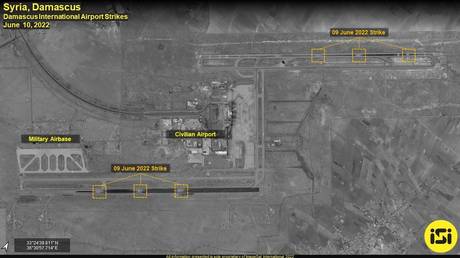
Last month, another alleged Israeli strike forced the Damascus International Airport to temporarily suspend operations, after several missiles also fired from the direction of Golan Heights hit the runway.
While the government in West Jerusalem did not officially comment on that attack, the satellite company ImageSat International (ISI) published photos of the destruction and said that the strike “disabled the entire airport until repair.”
Animal health is important to help reduce greenhouse gas emissions, but greater investment is needed to evaluate the impact, the Food and Agriculture Organization (FAO) and partners said in a report published on Thursday.
Draghi’s government of national unity collapsed Wednesday after members of his uneasy coalition of right, left and populists rebuffed his appeal to band back together.
Private firms have successfully aided Kiev, Space Force chief John Raymond says
Commercial players in the aerospace industry have been “helpful” to Kiev during the Russia-Ukraine conflict, the head of the US Space Force has said.
“My first observation I’d say is that space is important. And we have certainly seen that in this conflict,” General John Raymond, chief of US space operations, said on Tuesday at the Aspen Security Forum in Colorado.
“And I would also say that commercial space has been very important in providing capabilities that have been helpful to Ukraine.”
Raymond also said that the US military uses space capabilities “each and every day.”
“Today, nothing we do as a joint force that isn’t enabled by space,” he stated. “And it is a huge force multiplier.”
Elon Musk’s SpaceX said last month that it had delivered 15,000 kits of its Starlink satellite communication system to Ukraine, which, according to reports, helps Ukrainian troops aim artillery at Russian positions.
President Vladimir Zelensky told Wire in June that Starlink was “very effective” in maintaining internet access in embattled cities.
Reports in the media have also claimed that the US has been using classified and commercial satellites to provide Ukraine with intelligence on Russian troop movements.
“We routinely and have now for weeks been sharing information and intelligence about Russian units, both at sea and ashore,” Pentagon spokesman John Kirby told CNN in May.
Kigali, Jul 21 (IPS) – For many years, East African countries were considered wildlife trafficking hotspots. Now conservation organisations have started to mobilise all stakeholders to combat the illegal trade that targets animals – some to the edge of extinction.
If it’s summer in Iran, that means women are under more scrutiny than usual as police seek to ensure that modest Islamic dress codes are being followed. But this summer has seen a backlash.
The Prince of Wales’s Charitable Fund faced scrutiny over ‘bags of cash’ it received from the Qatari royal family
The Charity Commission has dropped further investigation into multi-million-pound donations made by the Qatari royal family to the Prince of Wales’s Charitable Fund (PWCF), triggered by a series of UK press revelations last month.
“We have assessed the information provided by the charity and have determined there is no further regulatory role for the Commission,” the watchdog’s spokesperson confirmed on Wednesday.
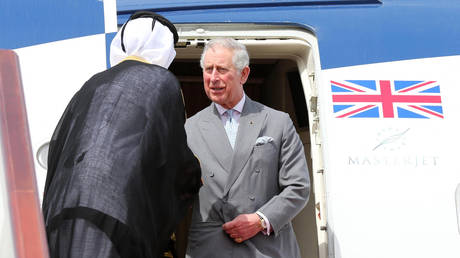
British media reported in June that Prince Charles had received three separate payments of cash totaling over £2.5 million ($3 million) between the years 2011 and 2015, personally accepting the donations from Sheikh Hamad bin Jassim bin Jaber al Thani, who served as PM of Qatar from 2007 to 2013.
During one meeting at Clarence House, which an adviser reportedly described as making everyone present “very uncomfortable about the situation,” the prince was allegedly handed a bag holding €1 million in €500 notes. During another handover, the cash was presented in bags from department store Fortnum and Mason, again raising eyebrows among those concerned with propriety.
Following the revelations, the charity watchdog was initially forced to consider “whether there’s a role for the commission to investigate these matters,” but has since been given “sufficient assurance” that nothing illegal had taken place. The PWCF insisted it verified the donor was a “legitimate and verified counterparty” and that its “auditors signed off on the donation after a specific enquiry during the audit.”
While neither the prince nor the sheikh have been accused of wrongdoing at any point, a senior royal source told the Guardian “contexts change over the years” and that the prince no longer accepts large cash donations.