Many voters in the French territory of New Caledonia go to the polls this Sunday to vote on a referendum on independence. It’s a moment not lost on China and the United States.
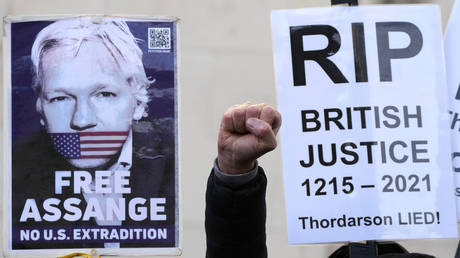
The former Ecuadorian president, who hosted a show on RT Spanish, said that those going after Julian Assange want to discourage others from exposing war crimes. The prosecution is a total sham, he argued.
“It’s such a paradox that on the International Human Rights Day a tremendous attack was committed on the human rights of a journalist – for the sin of having told the truth,” Rafael Correa, who ruled Ecuador between 2007 and 2017, told in an interview to RT Spanish, where he hosted a talk show.
A British High Court ruled on Friday that the WikiLeaks co-founder could be extradited to the US, where he is wanted on espionage charges.
Under Assange’s helm, WikiLeaks published troves of classified materials about US’ war in Afghanistan and Iraq, including a harrowing video of American helicopters gunning down civilians in Baghdad in 2007.
“War criminals are persecuting the one who denounced them,” Correa said, dismissing the case against Assange as “total hypocrisy.”
If Assange would have exposed the secrets of China, Russia or left-wing Latin American governments, including my government, he would have been praised by the international press, honored by US Congress and the British parliament. But because his actions were against the interests of the US, the hegemonic country, he was labeled a criminal.
Correa said that the goal of the prosecution was to scare others so that “nobody else dares to denounce the secrets of great powers.” He argued that war crimes should not be treated as protected state secrets. “The whole world must know about them. Such crimes must be punished.”
In 2012, fearing extradition to Sweden over a rape investigation that was later dropped, Assange jumped bail and hid inside the Ecuadorian Embassy in London. He was granted asylum by Correa’s government, but that decision was reversed nearly seven year later under Correa’s successor Lenin Moreno. In 2019, Assange was accused of violating asylum terms and ejected from the embassy. He was immediately arrested by British police and jailed.
A lower UK court ruled against extraditing Assange earlier this year, citing concerns for his mental health. The US appealed the verdict and won after promising not to keep Assange in solitary confinement and otherwise reduce the risk of him committing suicide behind bars.
Assange’s legal team and supporters promised to appeal the verdict.
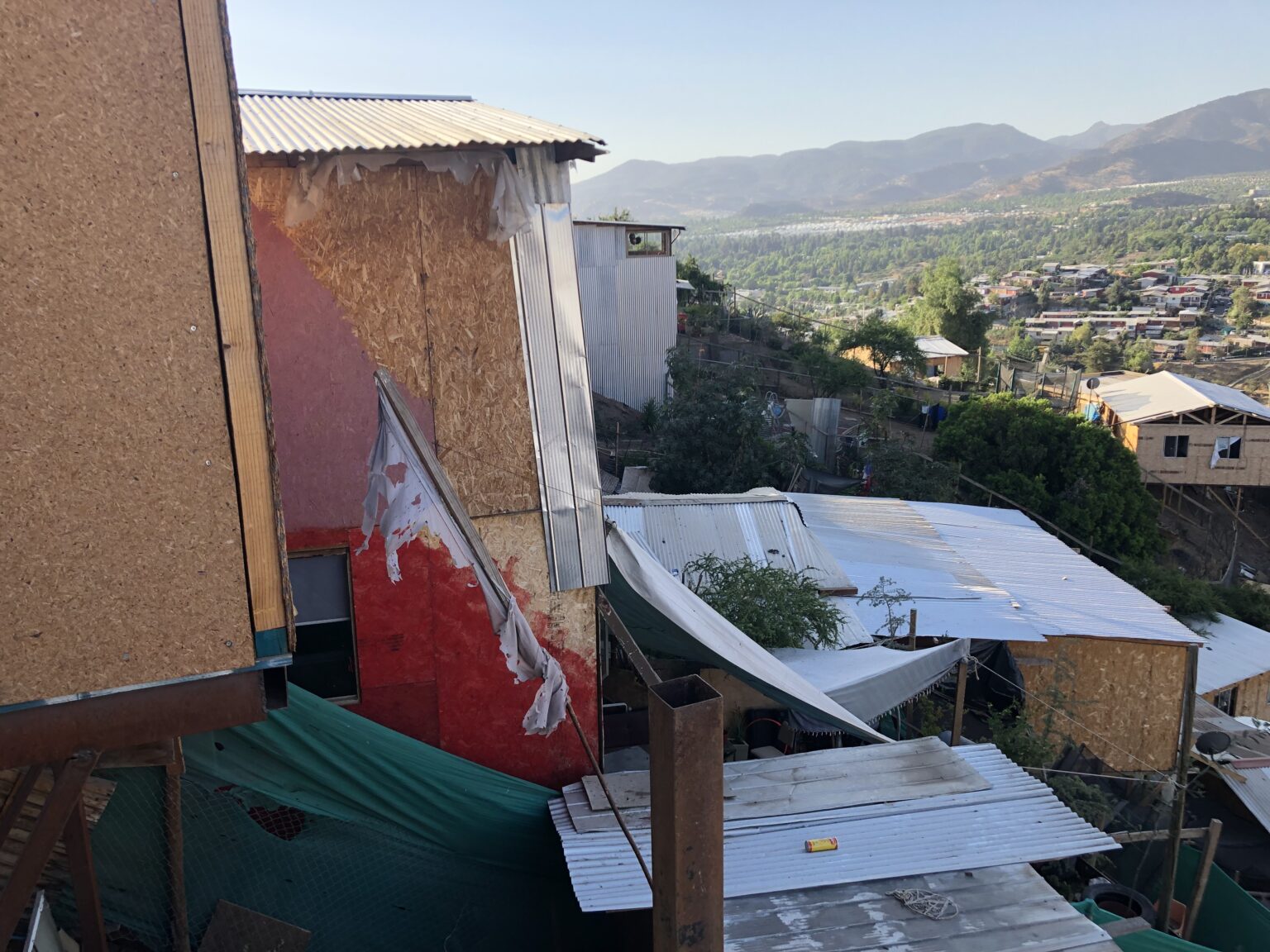
SANTIAGO, Dec 10 (IPS) – Camps made up of thousands of tents and shacks have mushroomed in Chile due to the failure of housing policies and official subsidies for the sector, aggravated by the rise in poverty, the covid-19 pandemic and the massive influx of immigrants.
The variant has spread through South Africa with remarkable speed — and been detected in at least 60 other countries. Specialists are trying to figure out the next stage for this unwelcome variant.
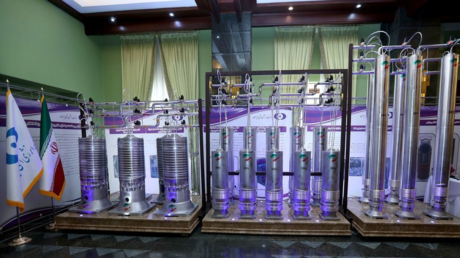
Tehran has alleged that monitoring cameras set up at an Iranian nuclear site by the UN’s atomic watchdog may have been “sabotaged” by Israel, and possibly even used to assist an attack on the facility in June.
During a briefing in London on Friday, Iran’s envoy to the UK Mohsen Baharvand called on the International Atomic Energy Agency (IAEA) to allow authorities in Tehran more time to probe potential sabotage at a centrifuge workshop in the city of Karaj, which was also rocked by a mysterious explosion over the summer.
“There was a sabotage there by Israel and some cameras were damaged and there was some investigation going on,” the ambassador said, as cited by Bloomberg, adding that Iranian investigators are considering whether the cameras may have been used as part of the attack.
We just asked IAEA to wait for a time for that investigation to be over.
However, in official documents obtained by AFP last month, the IAEA “categorically” rejected the notion that its surveillance cameras played any role in the blast, after the Iranian government told the agency it was looking into possible sabotage.
Though no actor took responsibility for the June attack, the New York Times, citing intelligence sources, reported that the site in Keraj was on a list of targets that Israel presented to the Donald Trump administration sometime last year. It was far from the first strange incident at an Iranian facility, with a similar attack taking place on another site in Natanz back in April – also pinned on Israel by authorities in Tehran.
A series of IAEA monitoring devices were set up at nuclear sites after Iran limited access for inspectors, part of an effort to scale back compliance with a nuclear deal struck with world powers in 2015. The United States walked away from the pact under ex-President Trump, reimposing all sanctions and prompting Iran to gradually move away from its own commitments. Amid that fallout, a stop-gap agreement was struck with the IAEA to continue allowing remote surveillance at sensitive facilities, including the centrifuge complex in Karaj.
Washington, for its part, has urged Tehran to allow the IAEA to replace one camera destroyed in the June attack, even vowing an “appropriate response” should it decline to do so. The atomic watchdog itself has also raised concerns, with IAEA Director General Rafael Mariano Grossi stating last month that the agency is “close to the point when [it] would not be able to guarantee continuity of knowledge” concerning Iran’s nuclear energy program.
The sabotage probe continues as American and Iranian officials resume talks to revive the nuclear deal, which recently started anew following a lengthy hiatus. Despite the diplomatic efforts, however, the Joe Biden administration appears to be hardening its stance, even stating that Washington is now considering its “options” should the negotiations fail. Israel, too, has reportedly pushed to conduct joint military drills with the US to prepare for a potential strike on Iranian nuclear infrastructure in the event no deal is reached.