NPR’s Ari Shapiro chats with Madhu Pai, a global health expert at McGill University, about the state of vaccine deliveries to Africa and the global south.
A new study has contradicted the UN World Food Programme’s (WFP) claim that Madagascar is experiencing the “world’s first climate-induced famine,” finding poverty and reliance on annual rains are driving the nation’s food crisis.
Earlier in November, the WFP claimed that extreme weather events, escalating in recent years, have resulted in five years of consecutive droughts, pushing thousands into famine. The UN’s assessment found that around 1.3 million people across Madagascar are experiencing acute hunger, with 30,000 suffering from famine.
However, new research contradicts the UN’s claim that this is the “world’s first climate-induced famine,” instead blaming the suffering on poverty. Madagascar’s poor infrastructure and the financial situation of individuals there showed that, “in many cases, we are not even prepared for today’s climate,” Maarten van Aalst, director of the Red Cross Red Crescent Climate Centre, wrote in the study. However, the analysis did accept that the hardship suffered is likely to be worsened by the weather events sparked by climate change.
“Even though we do not clearly see the role of anthropogenic climate change in this particular event, similar events will happen in the future, and will more likely be exacerbated rather than alleviated by climate change,” Piotr Wolski, one of the researchers, stated.
With droughts having plagued the region, researchers found that, based on the variable rainfall Madagascar can experience, in any given year, a drought currently has a one in 135 chance of occurring. While global warming is likely to slightly increase that, the analysis claimed it is not statistically significant, dismissing it as the main driver behind the five years of droughts.
As well as the impact that varying weather conditions can have on Madagascar, the latest research outlined how the recent situation emerged due to a combination of factors, including an infestation of crop-targeting insects and Covid-19 restrictions that hampered the ability of people to work.
Despite rejecting the link between global warming and the current food crisis, the study did urge nations to support Madagascar and other vulnerable places, preparing them for potential future climate-related issues, stating that governments have a “moral imperative” to offer aid to alleviate concerns facing at-risk countries, preparing them for future temperature rises.
NPR’s Ari Shapiro chats with Madhu Pai, a global health expert at McGill University, about the state of vaccine deliveries to Africa and the global south.
Former Argentine president Mauricio Macri has been charged with illegal spying in a case related to his government’s surveillance of grief-stricken families of a missing submarine’s crew.
Federal Judge Martíni Bava supported the indictment on Wednesday, saying that Macri was responsible for an online surveillance campaign on the relatives of the San Juan submarine sailors, who asked the government to continue searching for the submarine that went missing in November 2017.
The judge sequestered 100 million pesos (around $1 million) from Macri and banned him from leaving Argentina, local media reported, citing judicial sources. The defendant “led an unlawful spying” campaign targeting people affected by “one of the greatest tragedies” that occurred during his time in office, seeking to be in the loop of “movements” and “claims” they made, a 171-page court ruling seen by Infobae said.
Surveillance was allegedly conducted between December 2017 and the end of 2018. The former president supposedly initiated it because he was concerned about how the whole San Juan case could “affect the image of government.”
Macri’s lawyers said they would appeal this decision. The former president has repeatedly called the process political and said that his prosecution was linked to the legislative elections that were held in mid-November.
Earlier, an Argentinian court also charged two former top officials of Argentina’s Federal Intelligence Agency, arguing that they could not have been unaware of the spying campaign and most likely had a hand in it.
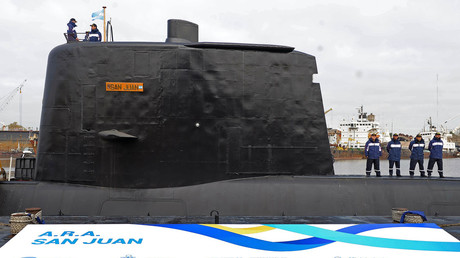
The ARA San Juan (S-42) vanished in November 2017. The search for the diesel-electric submarine started immediately, involving ships and aircraft manned by personnel from 13 countries. After 15 days of the operation, the navy decided to end it. In late 2018, it was discovered “imploded” and lying at the bottom of the sea at a depth of 800 meters. The tragedy took the lives of all 44 sailors on board.
Macri could face a potential prison sentence of up to ten years if found guilty.
Think your friends would be interested? Share this story!