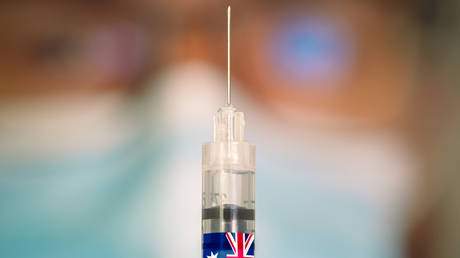
Australia’s government could be forced to spend tens of millions in payouts after receiving more than 10,000 compensation claims from people who suffered side effects and loss of income due to Covid-19 vaccines.
Under its no-fault indemnity scheme, eligible claimants can apply for compensation amounts between AU$5,000 (US$3,646) to AU$20,000 (US$14,585) to cover medical costs and lost wages as a result of being hospitalized after getting the shot. The scheme’s online portal is scheduled to be launched next month.
Official figures suggest, however, that over 10,000 people have already indicated their intention to make a claim since registration opened on the health department’s website in September. If each claim was approved, the government could face a bill of at least AU$50 million (US$36.46 million).
There were around 78,880 adverse events to Covid-related vaccination in Australia as of November 7, according to the Therapeutic Goods Administration, which regulates national health products. The majority of side effects were minor, including headaches, nausea, and arm soreness.
Only people who experienced a moderate to significant adverse reaction that resulted in a hospital stay of at least one night are eligible for coverage under the government’s scheme. Those seeking $20,000 or less have to provide proof their claims are vaccine-related – although there has been no information as yet on exactly what evidence would be acceptable.
“Adverse events, even though they happen to a tiny proportion of people, for the people it does impact it’s really quite devastating,” Clare Eves, the head of medical negligence at injury compensation firm Shine Lawyers, told the Sydney Morning Herald.
Among the adverse reactions covered are the blood clotting disorder “thrombosis with thrombocytopenia syndrome (TTS)” linked to the AstraZeneca vaccine and the “myocarditis and pericarditis” heart conditions associated with the Pfizer vaccine. Other reportedly accepted side effects are Guillain-Barré syndrome, a rare neurological condition, and immune thrombocytopenia (excessive bleeding due to low platelet levels).
Claims for over $20,000, including those for vaccine-related deaths, will be assessed by an independent legal panel of legal experts and compensation paid on its recommendations. Nine people have reportedly died after an adverse reaction to one of the three vaccines in the country.
Eves told the Morning Herald that her firm was representing a number of litigants over the vaccine side effects, including several who are not eligible for the scheme.
Australia’s government could be forced to spend tens of millions in payouts after receiving more than 10,000 compensation claims from people who suffered side effects and loss of income due to Covid-19 vaccines.
Under its no-fault indemnity scheme, eligible claimants can apply for compensation amounts between AU$5,000 (US$3,646) to AU$20,000 (US$14,585) to cover medical costs and lost wages as a result of being hospitalized after getting the shot. The scheme’s online portal is scheduled to be launched next month.
Official figures suggest, however, that over 10,000 people have already indicated their intention to make a claim since registration opened on the health department’s website in September. If each claim was approved, the government could face a bill of at least AU$50 million (US$36.46 million).
There were around 78,880 adverse events to Covid-related vaccination in Australia as of November 7, according to the Therapeutic Goods Administration, which regulates national health products. The majority of side effects were minor, including headaches, nausea, and arm soreness.
Only people who experienced a moderate to significant adverse reaction that resulted in a hospital stay of at least one night are eligible for coverage under the government’s scheme. Those seeking $20,000 or less have to provide proof their claims are vaccine-related – although there has been no information as yet on exactly what evidence would be acceptable.
“Adverse events, even though they happen to a tiny proportion of people, for the people it does impact it’s really quite devastating,” Clare Eves, the head of medical negligence at injury compensation firm Shine Lawyers, told the Sydney Morning Herald.
Among the adverse reactions covered are the blood clotting disorder “thrombosis with thrombocytopenia syndrome (TTS)” linked to the AstraZeneca vaccine and the “myocarditis and pericarditis” heart conditions associated with the Pfizer vaccine. Other reportedly accepted side effects are Guillain-Barré syndrome, a rare neurological condition, and immune thrombocytopenia (excessive bleeding due to low platelet levels).
Claims for over $20,000, including those for vaccine-related deaths, will be assessed by an independent legal panel of legal experts and compensation paid on its recommendations. Nine people have reportedly died after an adverse reaction to one of the three vaccines in the country.
Eves told the Morning Herald that her firm was representing a number of litigants over the vaccine side effects, including several who are not eligible for the scheme.
As India is mulling new rules for digital money, Prime Minister Narendra Modi has called for regulations to ensure cryptocurrencies like bitcoin do not “end up in the wrong hands,” warning that this could “spoil” young people.
While he did not expand on those concerns, Modi spoke on Thursday about the need for “democratic nations” to band together and deal with challenges posed by emerging technologies. He was delivering a virtual address at the Sydney Dialogue, an annual cyber-tech summit.
Noting that technology and data could either become “new weapons” for conflict or “instruments of cooperation,” Modi brought up digital currencies as an example of how it was important that like-minded nations “work together on this” to “ensure it does not end up in the wrong hands, which can spoil our youth.”
We are at a historic moment of choice. Whether all the wonderful powers of technology of our age will be instruments of cooperation or conflict, coercion or choice, domination or development, oppression or opportunity.
He also urged the development of technical and governance standards and norms, singling out the use of data, and called for renewed efforts to prevent manipulation of public opinion. In recent weeks, Indian authorities have raised concerns over claims of huge returns from cryptocurrency investment as well as its potential connections to money laundering, organized crime and terror financing.
On Saturday, Modi chaired a meeting to formulate the country’s approach to digital currencies and examine their impact on the economy. According to The Economic Times, Indian officials are drafting regulations to propose a ban on all transactions and payments in cryptocurrencies, while allowing investors to hold them as assets, similar to gold, bonds and stock shares.
Citing unnamed sources familiar with the government’s discussions, the newspaper said there was a belief in policy circles that crypto markets needed to be regulated in order to tackle the problem of opaque advertising that exaggerates investment returns in order to attract young investors.
The sources informed the newspaper that draft legislation on the matter was expected to be forwarded to Modi’s cabinet for consideration in the next two to three weeks.
In September, China had banned all cryptocurrency transactions and crypto-mining.
An official inquiry has found that Germany’s justice system was staffed with former Nazis for decades after the Second World War, At one point, three out of four top officials at the prosecutor’s office were former party members.
Released on Thursday, the 600-page report was compiled by historian Friedrich Kiessling and legal scholar Christoph Safferling, and covers the Cold War period running from the early 1950s until 1974. The work was commissioned by the federal prosecutor’s office.
The researchers found that, at one point during the 1950s, roughly three in four top officials in the federal prosecutor’s office had been members of the Nazi Party. It took until 1972 before former Nazis were no longer in the majority in that office, and until 1992 before the judicial system had been fully purged of ex-members of the fascist party.
“There was no break, let alone a conscious break, with the Nazi past,” the researchers said of the situation.
Presenting the inquiry’s findings, state secretary at the justice ministry Margaretha Sudhof said the country has “long remained blind” to the presence of ex-Nazis in senior positions after the end of the Second World War.
“On the face of it they were highly competent lawyers… but that came against the backdrop of the death sentences and race laws in which they were involved,” Sudhof commented.
In a statement about the study’s publication, Justice Minister Christine Lambrecht said she welcomed “the fact that the Federal Prosecutor’s Office is also grappling with its troubled past and is shedding more light on its own Nazi entanglements in the post-war period.”
The federal prosecutor’s office is Germany’s highest prosecutorial authority, responsible for pursuing those who violate international law and commit alleged crimes relating to state security.
The latest study follows an earlier report published in 2016, which stated that in 1957 – more than a decade after the war had ended – 77% of senior officials in the justice ministry were former Nazis. At the time of that publication, then-Justice Minister Heiko Maas stated that the “Nazi-era lawyers went on to cover up old injustice rather than to uncover it, and thereby created new injustice.”
Covid-battered global supply chains are being threatened by organized criminals, including drug cartels and con artists posing as legit suppliers, a new study has found, warning that the situation is set to get worse.
The international supply chain woes amid the Covid-19 pandemic are highlighted in a new annual report, released this week by the British Standards Institution (BSI).
The document, titled the ‘Supply Chain Risk Insights Report’, highlights Covid’s impact on supply chains, with the experts also warning that organized crime has increasingly preyed on this crucial area during the pandemic. On multiple instances, criminals were posing as legitimate logistics providers, stealing goods during shipment.
“I’m seeing a significant number of false suppliers acting as genuine potential suppliers in supply chain logistics provision – warehousing distribution, distribution centres, transportation companies – and actually, they are criminal groups trying to infiltrate the logistics supply chain,” said David Fairnie, BSI’s principal consultant in supply chain security. He urged producers to “continuously monitor” the supply chain and to not immediately trust new logistics providers – especially those contacted only remotely.
So, arguably today more than ever, you do need to know your suppliers. So far in 2021, BSI has noted this issue of fake carriers in an increasing number of countries in both the Americas and Europe.
Criminals have apparently been trying to steal goods in various ways, with phony truck drivers loading up items and taking off with them, while conmen “posing as legitimate employees” have reportedly been observed lurking around delivery destinations to steal cargo.
At the same time, the report found that trade in illicit goods has also been on the rise lately, with the illegal drug industry in particular appearing to flourish. While the supply chain for drug cartels, which require large amounts of assorted chemicals to produce narcotics, was disrupted due to the pandemic lockdowns and border closures impacted trafficking routes, organized crime quickly overcame these problems, the BSI noted.
“Drug cartels around the world did not miss a beat,” Chris Tomas, BSI lead intelligence analyst, said.
While many cartels shifted their production towards synthetic drugs, namely amphetamine, amid the pandemic, the apparent “lack of eradication of coca crops in Latin American countries” also remains an issue, the BSI said. The flow of cocaine has grown over the past year and is expected to increase even further, the organization warned.
“The numbers and quantities of cocaine seizures in Europe increased steadily in 2020 and 2021 and are expected to continue to rise in 2022,” the report reads.
Think your friends would be interested? Share this story!
The Swedish government has announced plans to introduce mandatory Covid-19 passes starting next month, amid rising infection rates in Europe. The passes will be required to attend any indoor event with 100 or more participants.
The upcoming introduction of mandatory coronavirus vaccine passes was announced by Health Minister Lena Hallengren on Wednesday.
Citing the ongoing surge in coronavirus cases across Europe – which has not hit the country itself yet – the minister stressed the need to be ready for the new wave of infections, projected to reach Sweden mid-December.
“The spread is increasing in Europe. We haven’t seen it yet in Sweden, but we are not isolated,” Hallengren told a news conference. “We need to be able to use vaccination certificates.”
Starting from December 1, the documents confirming a person’s vaccination status will be a requirement to enter any indoor event with 100 or more people in attendance. Sweden already boasts high vaccination rates, with 85% of its citizens aged over 16 having received at least one dose of a Covid-19 vaccine. Over 81% have received two shots or more, public health data shows.
Earlier in the day, the country’s health authorities backtracked on a highly controversial decision to stop testing fully vaccinated people who showed symptoms of Covid. The recommendation was rolled out in October, leading to a 35% decline in Covid-19 tests taken.
“The Public Health Agency has decided to recommend that the regions offer testing to everyone who is 6 years and older who gets symptoms that may be COVID-19,” the health authority said in a statement.
Sweden bucked the trend among European governments in its approach to handling the pandemic, electing not to impose widespread lockdowns. Having relied primarily on voluntary measures and social distancing, the country displayed several times higher death rates per capita than its Nordic neighbors, though it still fared better than many European countries, registering some 1.18 million cases and just over 15,000 coronavirus deaths since the beginning of the pandemic.
Think your friends would be interested? Share this story!
Israeli and UAE defense suppliers have agreed to jointly develop unmanned vessels that can be tailored for a range of military roles, including anti-sub warfare. The move comes after the two countries held naval drills last week.
Emirati state-owned weapons maker EDGE group and the government-run Israel Aerospace Industries (IAI) announced the partnership in Dubai on Thursday. In a joint statement, the firms said they would design the 170 m-USV (modular-unmanned surface vessels) series for both military and commercial applications.
The vessels, which can apparently operate remotely or with partial and complete autonomy, are expected to be used for “maritime security operations,” intelligence-gathering, surveillance, detecting and countering submarines and mines, and as a deployment platform for vertical take-off and landing (VTOL) aircraft such as helicopters and certain types of drones.
For commercial use, the manufacturers noted that they can be customized to serve in a variety of roles, including oceanography, pollution monitoring, oil and gas exploration, transportation, search and rescue, firefighting, and first interventions.
While not specifying the sources and amount of the project’s funding, or when production would begin, EDGE Chief Executive Faisal Al Bannai described the deal as an “important milestone” that would “open many doors” for the company in “local and global markets, military and commercial alike.”
According to the statement, the EDGE-owned Abu Dhabi Ship Building (ADSB) will design the vessel and integrate the platform’s control systems and payload. IAI will develop the autonomous control systems and provide various mission-requirement payloads to the control system units.
In March, the two companies had partnered up to develop an autonomous drone defense system to “detect, identify and intercept a broad range of threats.”
Last week, the UAE and Bahrain conducted their first-ever joint maritime drill with Israel’s navy. The US Fifth Fleet also participated in the five-day show of force in the Red Sea, which was reported by Israeli media outlets as sending a message to Iran.
The naval exercises came a little more than a year after Israel and the UAE established diplomatic ties in normalization agreements brokered by the Trump administration. The Abraham Accords broke decades of Arab consensus to not formally recognize Israel until the issue of a Palestinian state was settled.
President Joe Biden commented on reports that US officials are planning to boycott the upcoming Olympics in Beijing over alleged human rights violations – but his answer left journalists perplexed.
When asked on Tuesday if an official US delegation will be traveling to the Winter Games in the Chinese capital in February, Biden responded: “I am the delegation.”
The president, however, did not elaborate, leaving the White House correspondents in a state of confusion, as his response could mean that Biden will attend the Winter Olympics alone or, as some reporters suggested, that he simply did not understand the question.
A recent report by a Washington Post columnist claimed the US won’t be sending an official delegation to Beijing in 2022 over allegations of human rights violations by the Chinese government. According to the sources cited in the article, a formal recommendation for a diplomatic boycott of the Olympics has been already presented to Biden, with the move expected to be approved by the president by the end of November.
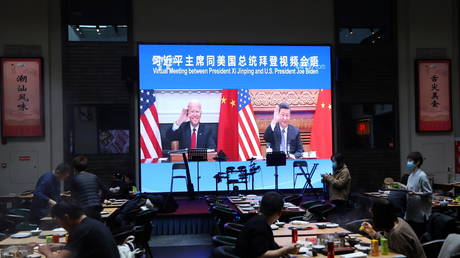
The piece was published on the day that Biden held a lengthy virtual meeting with Chinese leader Xi Jinping, in which they discussed a range of issues regarding the strained relations between the two nations – but not the Olympics.
The White House said that during the talks, President Biden challenged his Chinese counterpart over what Washington sees as persecution against the Uyghur population in the Xinjiang region, as well as human rights violations in Tibet and Hong Kong. China has strongly denied the claims, accusing the US of interfering in its internal affairs.
Calls for the Biden administration to boycott the Olympics and refrain from sending a political delegation to Beijing have recently been made by top Democratic and Republican lawmakers.
If implemented, it won’t affect the American athletes, who will still be taking part in the Winter Olympics.
An object lurking in the outer region of our solar system may well be the elusive Planet 9, a leading British astronomer has suggested after digging through the telescope archives of 250,000 point sources.
Possible evidence of a mysterious planet up to 10 times bigger than Earth, with a distant orbit around the Sun, has been unveiled by professor of astrophysics at Imperial College of London, Michael Rowan-Robinson. Aiming to prove – or rule out – the existence of another big planet beyond Neptune, the UK scientist decided to conduct a new analysis of data collected by the Infrared Astronomical Satellite (IRAS) in 1983.
The astronomer has looked through some 250,000 point sources detected by the telescope, which took a far-infrared survey of 96% of the sky. Having analyzed the data, keeping in mind the hypothetical planet’s size and distance, “at the very limit of the survey,” he singled out a moving object that the satellite picked out on three occasions.
The candidate for Planet 9 would be up to five times the mass of Earth, according to the IRAS data. Its orbital distance would be some 225 times farther than that of our planet, equaling about 33.7 billion kilometers (20.9 billion miles) from the Sun.
If the enigmatic object is indeed rotating around the Sun at such a distance, it would be extremely cold and not much sunlight would be reflected by it, making it even more elusive and harder to find. While the latest study is not a clear detection, it could be valuable as guidance for where exactly to search for the new planet, the astronomer concluded.
“Given the great interest of the Planet 9 hypothesis, it would be worthwhile to check whether an object with the proposed parameters and in the region of sky proposed, is inconsistent with the planetary ephemerides,” he wrote in the preprint paper, accepted for publication in the Monthly Notices of the Royal Astronomical Society.
A debate on the possible existence of an undiscovered planet in our solar system has been ongoing for decades. With no concrete evidence found, there has been speculation about its presence, mainly based on the gravitational clustering of objects in the system’s outer reaches. Several years ago, a suggestion was put forward that a group of icy objects that lie beyond the orbit of Neptune in the Kuiper Belt are possibly under the gravitational influence of a larger mysterious body, possibly Planet 9. The claim was based not on observation, but on modeling.
Currently, the eighth and farthest known planet from the Sun is Neptune. In the last century, Pluto, discovered in 1930, was regarded as the ninth planet, but a controversial vote at the International Astronomical Union (IAU) in 2006 formally excluded it from the solar system’s ‘planets’, and reclassified it as a dwarf planet.
Czechia will prohibit people who have not been vaccinated from entering public spaces such as restaurants and shops from Monday. Negative Covid-19 tests will no longer be allowed.
Speaking on Wednesday, outgoing Prime Minister Andrej Babis said the country would adopt the so-called Bavarian model from Monday next week, prohibiting those who have not received a Covid-19 vaccine from entering public places. Those who have recently recovered from the virus will be allowed entry.
The country will enter a partial lockdown of the unvaccinated from Monday morning, assuming the restrictions are approved by the cabinet on Thursday.
“We will introduce the Bavarian model from Sunday to Monday. This means that entry to restaurants, service establishments, or mass events will only be allowed for vaccinated or survivors. Those vaccinated with a single dose must have a PCR test,” Babis said on local TV.
The prime minister said that self-testing would be completely cancelled, as he lamented unvaccinated people for clogging up hospitals and preventing treatment reaching those with other illnesses.
“The death toll is rising; the situation is serious. Vaccination is the only solution, there is no other,” he added.
The country is seeing a spike in infections, with a record 22,479 new cases reported on Tuesday.
The Bavarian model refers to strict anti-Covid measures introduced in the southern German state. Markus Soder, the state’s premier, claimed there was no choice but to implement “a kind of lockdown for the unvaccinated,” citing increasing pressure on hospitals and medical staff.
Meanwhile, some two million people in Austria who are yet to receive their Covid shots have been subject to the world’s first lockdown for the unvaccinated, in an effort to bring case numbers down.
While 68% of people are vaccinated in Germany, and 65% in Austria, just over 60% are vaccinated in the Czech Republic.