Covid-19 variants keep emerging in different parts of the world, causing experts to ask how long the pandemic will last, and how effective the current methods of protection really are.
Since the pandemic started in 2019, people have referred to the disease which has paralyzed the world simply as ‘coronavirus’. Now, in 2021, when we talk about it, we mean not just the original variant, but also its numerous mutations.
In May, the WHO decided to label the key variants with Greek letters. Since then, the Delta variant has been proclaimed the predominant strain across the world, and now we have titles that look like codes to detail the differences between variants. Last month, the UK was put on high alert over a fast-spreading Delta AY.4.2 variant. This week, Norway reported finding one more version of the Delta strain – AY. 63. The country’s experts suggest it’s not more dangerous than the Delta mutation itself. Meanwhile, another Covid variant, discovered in France (B.1.640), brought the researchers an unpleasant surprise: they said they’d never seen mutations like it.
Professor David Dockrell, from the Center for Inflammation Research of the University of Edinburgh, described to RT the reasons for the constant mutation of the coronavirus. “The areas in the virus that are most likely to change are those that come into contact with what we call ‘selective pressures’ – or factors that make them need to change,” he explains. “So, a version of the virus which mutates and changes to give it a selective advantage to escape from the immune system is more likely to prosper and become a dominant strain.”
That’s how it works: The part of the virus many of the immune responses (or antibodies, T-cells etc.) are responding to is called the spike protein (or the S-protein). So, the virus tries to change it in order to survive.
“We know that a variety of different viruses are able to mutate and change when exposed to the selective pressure of the immune system, whether it would be the human immune system or other species in which these viruses have evolved,” Prof. Dockrell says. “And of course, we’ve seen it most clearly with HIV, which is particularly good at changing and evolving. It does something called ‘reverse transcription’ – it copies material in the reversed direction from DNA to RNA.”
Covid is still seemingly running faster than humanity’s efforts to curb it, but Prof. Dockrell has some good news. “The coronavirus – and viruses like it – are not as able to make these changes. They are going to do it to some extent, but they are not going to be as successful as retroviruses and HIV.”
And the other major thing to say: When the viruses make changes, there’s always what we call ‘a fitness cost’. Many of the potential changes that the virus could make will actually not favor its survival. So there are only a certain number, potentially, of changes that the virus can make, before it starts affecting its fitness.
Now, unfortunately, we are still in a phase where Covid19 can continue to evolve and change. It’s not time to panic, though, because across the world various ways to adapt the current anti-Covid strategies are already in place. First of all, people should keep getting vaccines – maybe receiving slightly altered booster doses, Prof. Dockrell suggests, “in a way, that we, after all, have to do with influenza, by providing a seasonal influenza vaccine and changing it every year.”
“And maybe we have to keep changing some of the treatments like these new monoclonal antibodies against the virus, because they also may be limited by the emergence of a mutation of the virus evolving the S-protein,” he adds.
Sounds promising – but won’t it become a never-ending race against constantly emerging mutations?
Hopefully not. According to Prof. Dockrell, there are parts of viruses that scientists call ‘conserved areas’. With time, vaccines and monoclonal antibodies will target these areas, which the virus finds very hard to change. “Clearly, the direction of travel is to develop either vaccine responses that affect more different kinds of virus, or these ‘monoclonal antibodies’ that we could use to prevent or treat infection, that they will target more conserved areas and therefore will be less limited by the ability of these virus to evolve and change,” he concludes.
Think your friends would be interested? Share this story!
Greece will soon prohibit unvaccinated residents from entering a litany of public spaces, the country’s prime minister has announced, claiming its current Covid outbreak is largely fueled by those who haven’t received the jab.
Starting next week, the unvaccinated will be barred from entry to restaurants, cafes, theaters, bars, gyms and museums, among other indoor public places, PM Kyriakos Mitsotakis said on Thursday, noting that a negative Covid-19 test will no longer be accepted as an alternative to proof of vaccination.
“This is indeed a pandemic of the unvaccinated,” he said as he announced the move in a televised address, adding “Greece is mourning unnecessary losses because it simply does not have the vaccination rates of other European countries.”
The new rules are set to take effect on Monday, and will require Greeks to present vaccine certificates to businesses and other indoor establishments to be allowed inside. Those attending religious services mark a rare exception, however, as they will only be asked to present a negative test in order to enter a church or other place of worship.
In a bid to encourage booster vaccinations among the elderly – a population much more vulnerable to Covid-19 – citizens over the age of 60 will be made to renew their certificate after a period of seven months.
While officials had hoped to hit a full vaccination figure of 70% for Greece’s population of 11 million by autumn, the number currently stands at about 62%, according to Reuters. As its weekly case counts continue to soar to record highs, the country reported 7,317 new Covid-19 infections and 63 deaths on Thursday, bringing the totals to more than 860,000 cases and some 17,000 fatalities since the pandemic kicked off in late 2019.
The new restrictions in Greece mirror similar policies implemented elsewhere in Europe, with Austria, Germany, Italy, France, the Czech Republic and Slovakia each imposing limits on public life for the unvaccinated. Though the Austrian government recently imposed a full lockdown for millions of residents who have not received the shot, some officials in that country are pushing for even harsher policies, including a national stay-at-home order on the jabbed and non-jabbed alike.
Think your friends would be interested? Share this story!
An adviser to the EU’s top court has claimed that citizens’ information in Germany is being illegally harvested, after telecom companies challenged bulk data collection.
The German data retention law was criticized on Thursday by an adviser to the Court of Justice of the European Union (CJEU), who stated that general and indiscriminate retention of traffic and location data is only allowed in exceptional cases, such as a threat to national security.
According to the adviser, bulk collection of data generates a ‘serious risk’ of leaks or improper access. It also entails a ‘serious interference’ with citizens’ fundamental rights to privacy and the protection of personal data.
This comes after two companies, SpaceNet and Telekom Deutschland, challenged the obligation to store their customers’ telecommunications traffic data in 2016. The Administrative Court of Cologne ruled that the two companies were not obliged to retain data because such an obligation violated Union law. Germany then appealed to the Federal Administrative Court, who asked the CJEU about the compatibility of the data retention obligation.
The CJEU has often stated that indiscriminate mass surveillance does not fit within the general principles of EU law. Over a year ago it saw a similar case involving legal challenges around national bulk data collection under UK and French law. The court then ruled that only limited data collection and temporary retention were allowed. France seeks to bypass the CJEU on data retention and has asked the country’s highest administrative court (the Council of State) not to follow the EU ruling. France is waiting for the conclusion of the procedure launched by the Council of State before “assessing to what extent” national law should be changed.
Despite recent EU court attempts to curb surveillance powers, leaked papers from June 2021 show that the national governments of the Netherlands, France, Spain, Luxembourg, Slovakia, and Estonia are pushing for a new pan-EU data retention law. They claim that data retention is essential for safeguarding public security and ensuring effective criminal investigations.
Think your friends would be interested? Share this story!
France’s best-known book of words, Le Petit Robert dictionary, has caused a stir by including the non-binary personal pronoun as an alternative to the existing masculine and feminine terms.
While the annual update of the Petit Robert dictionary is often a topic of considerable debate in French media, the latest edition has caused quite the backlash, with some, including a cabinet member, accusing it of pandering to wokeism.
The word “iel,” a neologism combining the French words for he and she (“il” and “elle“), is described as the personal pronoun for a person of any gender. “Personal pronoun subject to the third person singular and plural, used to evoke a person of any gender. The use of the pronominal in inclusive communication,” the dictionary’s entry reads.
Striking out at the latest inclusion, François Jolivet, an MP in President Emmanuel Macron’s LREM party took his protest to the Académie Française, the official guardians of the French language.
Describing the move as “wokeism,” Jolivet said in a letter to the Académie that the word “iel” had no place in the French language and claimed it would be a precursor to the rise of ‘woke’ ideology, which undermines the values of the Gallic nation.
Outspoken Education Minister Jean-Michel Blanquer also chimed in. “Inclusive writing is not the future of the French language,” he tweeted, sharing Jolivet’s letter. “Just as our schoolchildren are consolidating their basic skills, they don’t need to have this as a reference,” he added.
The head of Gaullist party Debout La France, Nicolas Dupont-Aignan, further criticized Petit Robert’s “woke” addition. “Let’s defend our language against these ridiculous fanatics of deconstruction and let’s boycott the collaborators who give into them,” he tweeted.
Le Petit Robert has responded to the “lively debate” by claiming that the pronoun has been used increasingly in society in recent months and they chose to reflect this by adding it to their latest update. The publication also said that some have welcomed the addition.
France’s offensive against wokeism, which has been described by some as an Anglo-Saxon import, recently saw Blanquer vow to increase the teaching of ancient Greek and Latin languages. The education minister claims that the classical vernaculars respond to a demand for logos (language as a tool for reason), in a world where “a lack of reason is spreading like wildfire.”
The EU must quickly seal its external borders to stem the flow of migrants who are no longer welcome in the 27-member bloc, according to Slovenia’s interior minister, whose country currently holds the presidency of the EU Council.
Speaking at the ‘Sarajevo Migration Dialogue’ on Thursday, Interior Minister Ales Hojs said EU countries were preoccupied recently with the coronavirus pandemic, the fall of the government in Afghanistan, and now a migrant crisis on the Poland-Belarus border, which he said was a hybrid war waged by Minsk against the EU.
“All three have additionally contributed to the increase in numbers of illegal migrants moving towards Europe and the Balkans, destabilizing the European Union,” Hojs told reporters.
The Slovenian minister said the current situation was similar to the 2015 influx of refugees and migrants from the Middle East and North Africa, when the EU admitted over one million people across its borders.
This time the situation is different, Hojs said, warning that “there is no more ‘refugees welcome.’”
“I believe that external borders must be secured, even with fences if necessary,” Hojs said, saying that he supported a plan for Brussels to finance the building of fences to reinforce the bloc’s borders.
He said it was important to strengthen cooperation and partnership across the EU in order to better manage migration and maintain security.
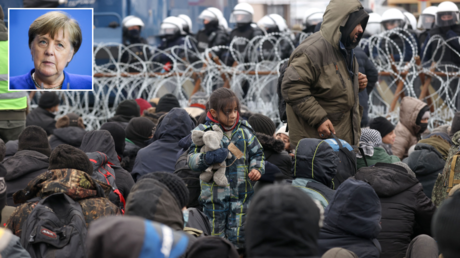
Thousands of migrants have been trying to cross the Belarus-Poland border in an attempt to reach the EU. They have been stranded at barbed-wire fencing with Polish border guards repelling their attempts to cross. Warsaw has accused Belarus of orchestrating the crisis to destabilize the EU and “weaponize” migration in an effort to have sanctions lifted.
A spokesperson for Belarusian leader Alexander Lukashenko claimed on Thursday that Germany agreed to open a humanitarian corridor for 2,000 refugees on the border.
Austria will introduce a full lockdown that could last for three weeks on Monday in an attempt to tackle a new wave of Covid-19 infections. The government has also ordered the entire population to get vaccinated from February 1.
On Friday, conservative Chancellor Alexander Schallenberg told a news conference that a complete lockdown of the nation would begin on Monday and last for an initial 10 days.
He stated that the restrictions could be extended if infection rates did not start to fall, but he insisted the lockdown would not exceed 20 days.
The measures concern the entire Austrian population. The government has already imposed a partial lockdown on the unvaccinated in an effort to reduce hospitalization rates amid a surge in Covid-19 cases.
When the full lockdown ends, restrictions will remain in place for the unvaccinated.
Schallenberg’s announcement came after a meeting of nine state governors, two of whom had already vowed to introduce full lockdowns in their regions on Monday, in the western province of Tyrol.
The chancellor also announced that vaccinations would be mandatory from February 1. “We haven’t been able to convince enough people to vaccinate. For too long, I and others have assumed that you can convince people to get vaccinated,” he added, giving his rationale for the mandate.
Schallenberg said he lamented the political forces, radical opposition, and fake news fighting against vaccination.
Austria has one of the lowest vaccination rates in western Europe, with only 65% inoculated against the deadly virus according to data from Johns Hopkins university.
Infection rates are almost among the highest on the continent. The seven-day incidence rate stands at 971.5 per 100,000 people.
Think your friends would be interested? Share this story!
The Swedish government has announced plans to introduce mandatory Covid-19 passes starting next month, amid rising infection rates in Europe. The passes will be required to attend any indoor event with 100 or more participants.
The upcoming introduction of mandatory coronavirus vaccine passes was announced by Health Minister Lena Hallengren on Wednesday.
Citing the ongoing surge in coronavirus cases across Europe – which has not hit the country itself yet – the minister stressed the need to be ready for the new wave of infections, projected to reach Sweden mid-December.
“The spread is increasing in Europe. We haven’t seen it yet in Sweden, but we are not isolated,” Hallengren told a news conference. “We need to be able to use vaccination certificates.”
Starting from December 1, the documents confirming a person’s vaccination status will be a requirement to enter any indoor event with 100 or more people in attendance. Sweden already boasts high vaccination rates, with 85% of its citizens aged over 16 having received at least one dose of a Covid-19 vaccine. Over 81% have received two shots or more, public health data shows.
Earlier in the day, the country’s health authorities backtracked on a highly controversial decision to stop testing fully vaccinated people who showed symptoms of Covid. The recommendation was rolled out in October, leading to a 35% decline in Covid-19 tests taken.
“The Public Health Agency has decided to recommend that the regions offer testing to everyone who is 6 years and older who gets symptoms that may be COVID-19,” the health authority said in a statement.
Sweden bucked the trend among European governments in its approach to handling the pandemic, electing not to impose widespread lockdowns. Having relied primarily on voluntary measures and social distancing, the country displayed several times higher death rates per capita than its Nordic neighbors, though it still fared better than many European countries, registering some 1.18 million cases and just over 15,000 coronavirus deaths since the beginning of the pandemic.
Think your friends would be interested? Share this story!
Planetary alignment on Friday has offered sky-gazers around the globe a chance to witness a spectacular near-total lunar eclipse, the longest since the 1440s.
The fascinating astronomical phenomenon lasted three hours and 28 minutes – the longest in centuries, according to international space agencies. On Thursday and Friday, depending on local time zones, the Earth, Sun and Moon aligned in such a way that 97.4% of our natural satellite’s surface was darkened in shadow.
When the Moon came out of the shroud, it turned bloody or rusty red in sunlight.
The dramatic celestial show was visible in those parts of the globe where the Moon appeared above the horizon during the eclipse.
Sky watchers in North and South America, parts of Eastern Asia and Australia had a chance to witness the phenomenon.
In Russia, the partial eclipse could be seen in Siberia and the Far East. Russian space agency Roscosmos also shared images of the shadowed moon as seen from the International Space Station (ISS).
Adding to the astonishment, the Moon was very low in the sky for much of the eclipse, causing an optical illusion that made it seem larger.
Marx, Lenin, and Ho Chi Minh – the revolutionaries’ namesakes – have gathered for a wedding in India’s state of Kerala. Friedrich Engels was the one walking down the aisle.
And this has nothing to do with time travel. In India’s southwestern state of Kerala parents have often named their children after prominent figures in the hammer and sickle movement. The local communist party has been at the helm there for much of the past 60 years, and is still quite popular with voters.
In the town of Athirappilly on Sunday the groom, Friedrich Engels, a namesake of the 19th century German philosopher who helped conceive Marxism, tied the knot with the bride, Bismitha. In attendance were also Engels’s brother Lenin, named after the man behind the 1917 Russian Revolution, as well as the groom’s friends, Marx and Ho Chi Minh, who bear the names of Marxism’s founding father and the Vietnamese revolutionary leader respectively.
All four men are members of India’s Communist Party. Incidentally, Marx is currently working and residing in ultra-capitalist Dubai, but flew back to see his friend exchange wedding vows with his betrothed, as reported by local media.
Another wedding ceremony that took place in June in the state of Tamil Nadu, saw Socialism getting married in front of his brothers, Communism and Leninism, as well as nephew, Marxism.
Think your friends would be interested? Share this story!
France shouldn’t remain silent on Julian Assange, leftist leader Jean-Luc Melenchon has said, after the imprisoned WikiLeaks co-founder’s father suggested that Paris could offer asylum to his son.
The life of Assange – who is being held in solitary confinement at London’s Belmarsh maximum security prison while a British court considers an extradition request by the US – is under threat, Melenchon wrote on Twitter on Tuesday.
“For years, we’ve been calling for France to accept him,” the head of the leftist La France Insoumise (France Unbowed) party said, insisting that “France shouldn’t remain silent.”
The statement by Melenchon, who won 19.6% of the ballot in the first round of the French presidential election in 2017, follows a visit by Assange’s father, John Shipton, to the Whistleblower Meeting in Paris on Monday.
During the event, Shipton told Sputnik news agency that it would be “an honorable thing” for the French government to grant his son asylum.
“I feel that France hasn’t attacked Julian over the last 12 years and consequently France is free to act in return for the information that WikiLeaks and Julian brought to France,” he said, referring to the website’s revelations of the US intelligence agencies spying on French presidents and hacking into local banks.
🔴 John #Shipton : «La France n’a pas attaqué #Julian pendant les dernières années difficiles, donc la France est libre d’agir en échange des informations que #WikiLeaks et Julian ont apportées à la France. Ce serait honorable pour la #France d’offrir [l’asile] à Julian #Assange» pic.twitter.com/ceZ7qTARua
Several dozen French lawmakers have also recently called upon Paris to take Assange in, with the Australian-born publisher’s legal team saying last year that their client was hoping to find asylum on French soil.
Assange could face up to 175 years behind bars if he’s extradited to the US, where he’s wanted on espionage charges over the release by WikiLeaks of classified documents on Iraq, Afghanistan, Guantanamo Bay, and others.
He was placed in Belmarsh in April 2019 over breach of bail, after being holed up in the Ecuadorian Embassy in London for seven years.
The publisher had been fleeing an arrest warrant issued over sexual assault allegations which he has always denied, and which failed to result in any actual charges due to lack of evidence.
Assange’s supporters insist that he has actually been persecuted over his legitimate journalistic activities and revealing the truth to the public.
The UK High Court is expected to rule on the appeal by the US against a lower court decision to bar the WikiLeaks co-founder’s extradition to America due to the 50-year-old’s poor health condition and risk of suicide.
Assange’s team will then be able to challenge the ruling in the Supreme Court if it’s not favorable.
Think your friends would be interested? Share this story!