Scientists have used an AI tool to identify which animals are most likely to contract and spread mutated versions of Covid-19. The model highlighted both pets and wild animals as likely reservoirs for the virus.
Using information about their habitats and various biological traits, researchers at the Cary Institute of Ecosystem Studies in New York developed the machine learning tool to figure out which animals had the particular ACE2 protein that the coronavirus was most likely to latch onto.
Out of 5,400 tested, the scientists narrowed it down to 540 mammalian species.
Some of its predictions have been previously documented as transmission risks, for instance, dogs, cats and bats, while farm animals like pigs and exotic zoo animals were surprise additions.
Other expected additions are minks, Sunda pangolins, and 35 species of bats – which are together ranked among the top 10% of animals most likely to spread the virus, in line with lab results.
The study, published in the Proceedings of the Royal Society journal, also ranked water buffalo, a number of primates, including gorillas and 76 rodent species as being more susceptible to infection.
The researchers taught the AI to identify patterns between rates of transmission and some 60 ecological and biological traits collected by earlier studies, including the overlap between the animal and human habitats as well as their respective lifespans, diets, and sizes.
Previously, the specific amino acid sequences had only been mapped out in around 300 species, including about 143 mammals — and figuring out which ones are more prone to infection is key to predicting the spread of the virus, researchers said.
Arinjay Banerjee at the University of Saskatchewan in Canada told the New Scientist that the results will help researchers “track viral infections and the possible emergence of animal-adapted coronavirus variants” around the world. Barbara Han, who led the study, said predictions needed to be followed up with systematic surveillance and lab studies.
Think your friends would be interested? Share this story!
The EU Commission has released draft legislation aimed at tackling the destruction of woodland by introducing import restrictions on products not certified as ‘deforestation-free’.
The draft proposal, which the commission hopes will become binding rules for all member states, seeks to limit the import of beef, cocoa, coffee, palm, soy, and wood if it is not proven “deforestation-free.”
Outlining the legislation, the EU commissioner for climate action policy, Virginijus Sinkevicius, called it a “ground-breaking” proposal that will help fight “illegal deforestation” and “deforestation driven by agricultural expansion.”
Our proposal to fight deforestation will help us protect 1/3 of 🌎 lands.
We don’t only target illegal deforestation but 𝙖𝙡𝙡 deforestation driven by agricultural expansion.
We start with 6 products that must be deforestation-free 👉🏼 beef, wood, palm oil, soya, coffee, cocoa. pic.twitter.com/Cs9POoydNX
The bill comes after nations at the COP26 summit agreed to work to end deforestation by 2030. It would impose two criteria on imports, requiring items to have been produced in accordance with the origin country’s laws, and not on land that has been deforested or degraded since the start of 2021.
It is not clear when the rules would come into effect; legislative proposals by the commission have to be debated and considered by both the EU Parliament and the Council of the EU before they are passed. The implementation of measures could potentially impact the EU’s trade relations with countries like Brazil, where clearing of the Amazon rainforest hit a new record in October.
During the recent COP26 climate summit, 110 world leaders – whose countries contain around 85% of the world’s woodland – committed to ending and reversing deforestation by 2030, pledging around £14 billion ($18.84 billion) of public and private funds towards the goal.
A Canadian teenager has been arrested after allegedly stealing $36.5 million in cryptocurrency from a person in the US. The police claim it was the largest such heist involving one victim ever registered in North America.
Police in the city of Hamilton, Ontario, arrested the unidentified perpetrator on Wednesday, after over a year investigating what they have described as the biggest-ever cryptocurrency theft from a single person in either the US or Canada. Local police began a joint investigation with the Federal Bureau of Investigation and the US Secret Service Electronic Crimes Task Force in March 2020, when the theft was reported.
The Hamilton Police Service said it had made “multiple” seizures in excess of CA$7 million (US$5.5 million) during the arrest, which came after investigators noticed some of the stolen money had been used to buy an online username considered “rare” in the gaming community, according to a police statement.
The victim was apparently targeted by a cell phone hijack known as SIM swapping. This method involves manipulating cellular network employees to duplicate phone numbers in order to let the scammer intercept the two-factor authorization requests that allow them access to a victim’s account.
This method is considered especially potent because a lot of people use the same password for multiple sites, according to Detective Constable Kenneth Kirkpatrick, of the Hamilton Police’s cybercrimes unit. He added that cyber and cryptocurrency crimes were becoming increasingly common, but noted that the figures involved in this case were “very surprising.”
“It’s a large amount of money in anybody’s opinion,” Kirkpatrick said, adding that the case was currently in the Hamilton court system.
The police haven’t revealed the age or gender of the youth, the username they purchased, or whether they were acting alone.
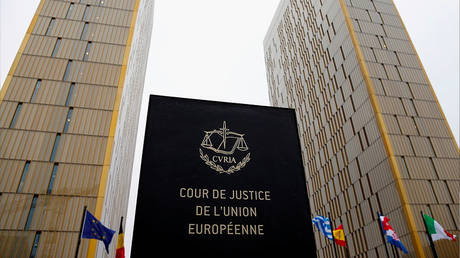
The European Union’s top court has ruled that Hungary’s 2018 law aimed at criminalizing aiding illegal immigrants who are claiming asylum violates the “rights safeguarded” by the bloc’s legislature.
The Hungarian legislation, passed in 2018, sought to punish anyone “facilitating illegal immigration” with a year in prison, under a bill dubbed the “Stop Soros” law. Hungary’s government justified it at the time by arguing that migrants illegally entering the country threatened its national security.
In the ruling, handed down on Tuesday, the European Court of Justice declared that “criminalizing such activities impinges on the exercise of the rights safeguarded by the EU legislature in respect of the assistance of applicants for international protection.”
The EU’s advocate general, Athanasios Rantos, had urged the court to make such a judgement back in February, claiming the introduction of the legislation meant that “Hungary has failed to fulfil its obligations under the [bloc’s] Procedures Directive.”
It became known as the Stop Soros law after billionaire philanthropist George Soros became a vocal opponent of the Hungarian government’s opposition to migration. The administration, in turn, accused Soros of orchestrating migration to Europe, with the Open Society Foundation, run by the philanthropist, closing its operation in the country in response.
Hungary, under the leadership of right-wing Prime Minister Viktor Orban, has repeatedly clashed with the EU in recent years over its strong stance on immigration and concerns from the bloc about threats to the rule of law in the country.
At the end of 2020, a dispute between Hungary and Poland and the EU risked derailing the bloc’s budget, as both member states were threatening to veto it over their view that the EU was attempting to interfere in their domestic affairs. Ultimately, the EU backed down, agreeing to a compromise with Budapest and Warsaw to ensure the budget secured the support of all 27 member states.
Despite acknowledging the EU court’s ruling, Hungary’s government defended its right to challenge any foreign-funded non-government organizations that are attempting to “promote migration.”
“Hungary’s position on migration remains unchanged: Help should be taken where the problem is, instead of bringing the problem here,” Hungarian government spokesperson Zoltan Kovacs said, adding that the country will challenge outside entities “seeking to gain political influence and interference.”
Think your friends would be interested? Share this story!
Planetary alignment on Friday has offered sky-gazers around the globe a chance to witness a spectacular near-total lunar eclipse, the longest since the 1440s.
The fascinating astronomical phenomenon lasted three hours and 28 minutes – the longest in centuries, according to international space agencies. On Thursday and Friday, depending on local time zones, the Earth, Sun and Moon aligned in such a way that 97.4% of our natural satellite’s surface was darkened in shadow.
When the Moon came out of the shroud, it turned bloody or rusty red in sunlight.
The dramatic celestial show was visible in those parts of the globe where the Moon appeared above the horizon during the eclipse.
Sky watchers in North and South America, parts of Eastern Asia and Australia had a chance to witness the phenomenon.
In Russia, the partial eclipse could be seen in Siberia and the Far East. Russian space agency Roscosmos also shared images of the shadowed moon as seen from the International Space Station (ISS).
Adding to the astonishment, the Moon was very low in the sky for much of the eclipse, causing an optical illusion that made it seem larger.
A large settlement of migrants in the suburbs of Dunkirk in northern France has been dismantled, in the wake of yet another wave of tensions with the UK over the growing number of illegal crossings.
“At my instruction, the security forces are evacuating the illegal migrant camp in Grande-Synthe this morning,” French Interior Minister Gerald Darmanin said on Twitter on Tuesday. He added that state services in the region would provide shelter for the group.
Government spokesman Gabriel Attal said the decision to dismantle the camp was primarily based on the intention to put people into shelters ahead of the winter season.
Around 1,500 migrants were evacuated from the site via buses and their tents removed. According to Utopia 56, one of the charities monitoring the process of dismantling the camp, people “were forced to board buses, without being informed of their destination, and some of their personal belongings have been destroyed.”
Évacuation forcée et sans annonce du campement de Grande-Synthe depuis ce matin : plus de 500 personnes sont contraintes de monter dans des bus, sans être informées de leur destination : “police ou hôtel”. Une partie de leurs effets personnels est en cours de destruction. pic.twitter.com/EwFPR2yl2j
Tides changing on Channel crossings? French police began moving some 1,500 migrants on from a camp near Dunkirk amid talks yesterday between Priti Patel and her French counterpart agreeing to stop ‘100 percent’ of Channel crossings after record numbers reached the UK in 2021. pic.twitter.com/PUE9YDCTAY
In a separate tweet, Darmanin announced the arrest of 13 alleged migrant smugglers, “bringing the total to 1,308 since January.”
“These smugglers are criminals who exploit human misery, responsible for irregular immigration,” the minister wrote.
Tuesday’s actions by French authorities came in the wake of a phone call between Darmanin and his British counterpart Priti Patel. The two discussed the increasing number of illegal migrants attempting to cross the English Channel, and reiterated the importance of cooperation in making this route “unviable,” Patel said afterwards.
At Grande-Synthe, near Dunkirk, where demolition work has already begun on the migrant camp. Around 1,500 people, many of them Iraqi Kurds, have been moved out of the site@SkyNewspic.twitter.com/rHFDHHcxmf
The UK and France have a history of mutual accusations when it comes to illegal migration. While British officials have claimed that French authorities do not do enough to prevent migrants from embarking for the dangerous trip, France’s government has said that the UK should reform its labor market rules in order to become less attractive to migrants.
More than 23,000 people have crossed the Channel by boat this year, compared to 8,404 in 2020, according to Press Association figures.
As India is mulling new rules for digital money, Prime Minister Narendra Modi has called for regulations to ensure cryptocurrencies like bitcoin do not “end up in the wrong hands,” warning that this could “spoil” young people.
While he did not expand on those concerns, Modi spoke on Thursday about the need for “democratic nations” to band together and deal with challenges posed by emerging technologies. He was delivering a virtual address at the Sydney Dialogue, an annual cyber-tech summit.
Noting that technology and data could either become “new weapons” for conflict or “instruments of cooperation,” Modi brought up digital currencies as an example of how it was important that like-minded nations “work together on this” to “ensure it does not end up in the wrong hands, which can spoil our youth.”
We are at a historic moment of choice. Whether all the wonderful powers of technology of our age will be instruments of cooperation or conflict, coercion or choice, domination or development, oppression or opportunity.
He also urged the development of technical and governance standards and norms, singling out the use of data, and called for renewed efforts to prevent manipulation of public opinion. In recent weeks, Indian authorities have raised concerns over claims of huge returns from cryptocurrency investment as well as its potential connections to money laundering, organized crime and terror financing.
On Saturday, Modi chaired a meeting to formulate the country’s approach to digital currencies and examine their impact on the economy. According to The Economic Times, Indian officials are drafting regulations to propose a ban on all transactions and payments in cryptocurrencies, while allowing investors to hold them as assets, similar to gold, bonds and stock shares.
Citing unnamed sources familiar with the government’s discussions, the newspaper said there was a belief in policy circles that crypto markets needed to be regulated in order to tackle the problem of opaque advertising that exaggerates investment returns in order to attract young investors.
The sources informed the newspaper that draft legislation on the matter was expected to be forwarded to Modi’s cabinet for consideration in the next two to three weeks.
In September, China had banned all cryptocurrency transactions and crypto-mining.
UK Home Secretary Priti Patel has acted to proscribe the Palestinian group Hamas “in its entirety,” stating that it has significant capacity to carry out terrorist acts and has facilities to train attackers.
In a tweet on Friday, Patel stated that she had banned the Palestinian group Hamas and designated it a terrorist organization, as she reiterated the British government’s commitment to “tackling extremism and terrorism wherever it occurs.”
“Hamas has significant terrorist capability, including access to extensive and sophisticated weaponry, as well as terrorist training facilities,” she wrote.
The home secretary’s tweet came during her visit to Washington and followed speculation on Friday morning that she was soon to outlaw the group.
Pre-empting Patel’s announcement, Israeli Prime Minister Naftali Bennett welcomed Britain’s “intention” on Twitter.
“Hamas is a radical Islamic group that targets innocent Israelis & seeks Israel’s destruction. I welcome the UK’s intention to declare Hamas a terrorist organization in its entirety – because that’s exactly what it is,” Bennett wrote, thanking the leadership of Prime Minister Boris Johnson.
Yair Lapid, Israel’s foreign minister, also hailed the expected move against Hamas, saying it was “part of strengthening ties with Britain.”
Until now, only Hamas’ military wing, the Izz al-Din al-Qassam Brigades, had been outlawed by the British government. The EU and the US have already proscribed all of Hamas.
Hamas political official Sami Abu Zuhri rejected Britain’s move, claiming it showed “absolute bias toward the Israeli occupation and is a submission to Israeli blackmail and dictations.”
In a separate statement, the group claimed it had a right to resist occupation by all available means, “including armed resistance.”
Hamas seized total control of Gaza in 2007, on the back of an election victory in 2006.
French President Emmanuel Macron has dismissed the possibility of locking down unvaccinated people in France, claiming the move would not be necessary because of the success of the Covid-19 ‘health pass’.
Speaking to La Voix du Nord newspaper in an interview published on Thursday, Macron said there was no need for France to follow Austria’s lead by locking down its unvaccinated citizens.
“Those countries locking down the non-vaccinated are those which have not put in place the [health] pass. Therefore, this step is not necessary in France,” Macron claimed.
The president’s health pass, which was the target of much criticism when it was introduced, requires people to provide proof of vaccination or a recent negative test before undertaking certain normal activities.
The ‘Pass Sanitaire’ is required if citizens wish to go to restaurants, cafes, cultural venues, or cinemas. It’s also required to take long-distance trains, among other activities.
Austria has led the way by starting a partial lockdown of the unvaccinated amid a surge in Covid-19 cases. The Czech Republic will follow suit next week, while Germany decided on Thursday to introduce similar measures in areas where Covid incident rates exceed the threshold.
Earlier in November, Macron made the continued use of the Covid health pass for over 65s dependent on getting a booster jab.
Some 20,366 new infections were registered in the last 24-hour recording period. Case numbers have risen steeply in recent weeks.
After vowing to retaliate against Lithuania’s move to allow Taiwan open a “representative office” in Vilnius, Beijing has announced it is downgrading diplomatic relations with the Baltic state.
In a statement on Sunday, the Chinese foreign ministry said that China’s diplomatic relations with Lithuania will be formally lowered to the level of charge d’affaires, while blasting Vilnius for setting a “bad international precedent” by giving the island the green light to open its mission in the Lithuanian capital.
The ministry went on to accuse Vilnius of undermining the One China principle and the principle of neutrality in bilateral relations, explaining its decision to demote relations by citing the need to “safeguard its sovereignty and the basic norms of international relations.”
“The Lithuanian government must bear all the consequences arising from this,” the ministry said, while calling on Vilnius to “correct its mistakes immediately.”
“No matter how the ‘Taiwan independence’ forces distort facts and reverse black and white, they cannot change the historical fact that the mainland and Taiwan belong to the same China,” the ministry asserted.
The move comes just two days after Beijing went on a verbal offensive against the Baltic country, warning that pushback for its cozying up to Taiwan would be imminent. “As to what necessary measures China will take, you may wait and see,” it said at the time.
Lithuania and China have been embroiled in a diplomatic row and have not maintained relations at ambassadorial level since September. After the Baltic state revealed that it would be opening a de facto Taiwanese embassy, China withdrew its ambassador from the country in August. Vilnius followed suit the following month.
Think your friends would be interested? Share this story!