The Philippine government has accused the Chinese Coast Guard of unleashing water cannon on two supply ships in a disputed stretch of the South China Sea, claiming its boats were blocked and forced to turn around.

Manila’s Department of Foreign Affairs detailed the encounter in a statement on Wednesday, alleging that a pair of supply boats en route to the Ayungin Shoal – also known as the Second Thomas Shoal – were stopped by three Chinese vessels and “water cannoned” before they could reach their destination.

“Fortunately, no one was hurt; but our boats had to abort their resupply mission,” Foreign Affairs Secretary Teodoro Locsin said, adding that the department had conveyed its “outrage, condemnation and protest of the incident” to Beijing’s envoy to the Philippines, Huang Xilian.

The acts of the Chinese Coast Guard vessels are illegal. China has no law enforcement rights in and around these areas. They must take heed and back off.

Though both China and the Philippines claim territorial rights to the Ayungin Shoal, The Hague’s Permanent Court of Arbitration ruled in the latter country’s favor in 2016. And despite Chinese objections, the Philippines has occupied the area for much longer, after its military purposely grounded a naval vessel on the shoal in 1999.  

READ MORE: Manila backs controversial AUKUS security pact as move to fix ‘imbalance’ of power in Southeast Asia

Manila was also quick to note that the supply ships are “covered by the Philippines-United States Mutual Defense Treaty,” a pact inked with Washington in 1951 that calls for a US military response to any attack on the country, including “island territories under its jurisdiction in the Pacific Ocean, its armed forces, public vessels or aircraft.” 

Beijing so far has not commented on the alleged run-in.

Think your friends would be interested? Share this story!

find more fun & mates at SoShow now !

The EU Commission has released draft legislation aimed at tackling the destruction of woodland by introducing import restrictions on products not certified as ‘deforestation-free’.

The draft proposal, which the commission hopes will become binding rules for all member states, seeks to limit the import of beef, cocoa, coffee, palm, soy, and wood if it is not proven “deforestation-free.”

Outlining the legislation, the EU commissioner for climate action policy, Virginijus Sinkevicius, called it a “ground-breaking” proposal that will help fight “illegal deforestation” and “deforestation driven by agricultural expansion.”

The bill comes after nations at the COP26 summit agreed to work to end deforestation by 2030. It would impose two criteria on imports, requiring items to have been produced in accordance with the origin country’s laws, and not on land that has been deforested or degraded since the start of 2021.

It is not clear when the rules would come into effect; legislative proposals by the commission have to be debated and considered by both the EU Parliament and the Council of the EU before they are passed. The implementation of measures could potentially impact the EU’s trade relations with countries like Brazil, where clearing of the Amazon rainforest hit a new record in October.

During the recent COP26 climate summit, 110 world leaders – whose countries contain around 85% of the world’s woodland – committed to ending and reversing deforestation by 2030, pledging around £14 billion ($18.84 billion) of public and private funds towards the goal.

Like this story? Share it with a friend!

find more fun & mates at SoShow now !

An official inquiry has found that Germany’s justice system was staffed with former Nazis for decades after the Second World War, At one point, three out of four top officials at the prosecutor’s office were former party members.

Released on Thursday, the 600-page report was compiled by historian Friedrich Kiessling and legal scholar Christoph Safferling, and covers the Cold War period running from the early 1950s until 1974. The work was commissioned by the federal prosecutor’s office. 

Read more

The Federal Ministry of Justice in Berlin © De-okin
Over 50% of W. Germany’s senior justice ministry officials in 1950-70s were ex-Nazis – govt report

The researchers found that, at one point during the 1950s, roughly three in four top officials in the federal prosecutor’s office had been members of the Nazi Party. It took until 1972 before former Nazis were no longer in the majority in that office, and until 1992 before the judicial system had been fully purged of ex-members of the fascist party.

“There was no break, let alone a conscious break, with the Nazi past,” the researchers said of the situation. 

Presenting the inquiry’s findings, state secretary at the justice ministry Margaretha Sudhof said the country has “long remained blind” to the presence of ex-Nazis in senior positions after the end of the Second World War.

“On the face of it they were highly competent lawyers… but that came against the backdrop of the death sentences and race laws in which they were involved,” Sudhof commented. 

In a statement about the study’s publication, Justice Minister Christine Lambrecht said she welcomed “the fact that the Federal Prosecutor’s Office is also grappling with its troubled past and is shedding more light on its own Nazi entanglements in the post-war period.”

The federal prosecutor’s office is Germany’s highest prosecutorial authority, responsible for pursuing those who violate international law and commit alleged crimes relating to state security. 

The latest study follows an earlier report published in 2016, which stated that in 1957 – more than a decade after the war had ended – 77% of senior officials in the justice ministry were former Nazis. At the time of that publication, then-Justice Minister Heiko Maas stated that the “Nazi-era lawyers went on to cover up old injustice rather than to uncover it, and thereby created new injustice.”

If you like this story, share it with a friend!

find more fun & mates at SoShow now !

Any apology for Nazism is unacceptable, Colombia’s president Ivan Duque has insisted, after photos of police academy cadets dressed up in Third Reich uniforms were uploaded online, causing outrage.

“Any apology for Nazism is unacceptable,” Duque stated in a tweet on Friday. The president said he condemned any references to those who were “responsible for the Jewish Holocaust that claimed the lives of more than 6 million people,” adding that “anti-Semitism has no place in the world.”

Duque had earlier made demands for “heads to roll” at an academy that “promotes such criminal practices,” with its director, Lieutenant Colonel Jorge Ferney Bayona Sanchez, already having been sacked.

Colombia’s defense ministry, which oversees the country’s police, also insisted in a statement that that its training programs “don’t envisage in any way an activity such as the one which took place” at the academy.

Read more

Nazi uniforms found inside the house of a man suspected of raping a 12-year-old boy at the Vargem Grande neighbourhood of Rio de Janeiro. © AFP / Rio de Janeiro Civil Police
Brazilian police discover $3.5mn trove of Nazi memorabilia at home of ‘insane psychopath’ suspected of child rape

The images of police cadets in Nazi uniforms caused anger and bewilderment among internet users.

The German and Israeli embassies in the country reacted by issuing a joint statement, in which they expressed “total rejection of any form of apology or demonstration of Nazism.” The US embassy in Bogota also said that it was “shocked and deeply disappointed” by the development.

The controversial images, in which aspiring officers were caught sporting black SS outfits with red swastika armbands and grey Wehrmacht uniforms from the World War II era, weren’t revealed in some bombshell media report, but were actually published on the official Twitter account of the Colombian police this Thursday.

The photos were taken as part of a “cultural exchange” event at the police academy in the city of Tulua, aimed at commemorating Germany and “strengthening the knowledge of our police students.” The cosplay was apparently intended to illustrate the history of German law enforcement, with more cadets pictured wearing more modern versions of the country’s police uniforms in the pictures.

Like this story? Share it with a friend!

find more fun & mates at SoShow now !

An adviser to the EU’s top court has claimed that citizens’ information in Germany is being illegally harvested, after telecom companies challenged bulk data collection.

The German data retention law was criticized on Thursday by an adviser to the Court of Justice of the European Union (CJEU), who stated that general and indiscriminate retention of traffic and location data is only allowed in exceptional cases, such as a threat to national security.

According to the adviser, bulk collection of data generates a ‘serious risk’ of leaks or improper access. It also entails a ‘serious interference’ with citizens’ fundamental rights to privacy and the protection of personal data.

Read more

(FILE PHOTO) © REUTERS/Russell Cheyne
Google won’t pay for spying on UK iPhone users

This comes after two companies, SpaceNet and Telekom Deutschland, challenged the obligation to store their customers’ telecommunications traffic data in 2016. The Administrative Court of Cologne ruled that the two companies were not obliged to retain data because such an obligation violated Union law. Germany then appealed to the Federal Administrative Court, who asked the CJEU about the compatibility of the data retention obligation.

The CJEU has often stated that indiscriminate mass surveillance does not fit within the general principles of EU law. Over a year ago it saw a similar case involving legal challenges around national bulk data collection under UK and French law. The court then ruled that only limited data collection and temporary retention were allowed. France seeks to bypass the CJEU on data retention and has asked the country’s highest administrative court (the Council of State) not to follow the EU ruling. France is waiting for the conclusion of the procedure launched by the Council of State before “assessing to what extent” national law should be changed. 

Despite recent EU court attempts to curb surveillance powers, leaked papers from June 2021 show that the national governments of the Netherlands, France, Spain, Luxembourg, Slovakia, and Estonia are pushing for a new pan-EU data retention law. They claim that data retention is essential for safeguarding public security and ensuring effective criminal investigations.

Think your friends would be interested? Share this story!

find more fun & mates at SoShow now !

UK Home Secretary Priti Patel has acted to proscribe the Palestinian group Hamas “in its entirety,” stating that it has significant capacity to carry out terrorist acts and has facilities to train attackers.

In a tweet on Friday, Patel stated that she had banned the Palestinian group Hamas and designated it a terrorist organization, as she reiterated the British government’s commitment to “tackling extremism and terrorism wherever it occurs.”

Read more

The Imperial War Museum (FILE PHOTO) © REUTERS/Suzanne Plunkett
Woke rap after moment of silence lands museum in trouble

“Hamas has significant terrorist capability, including access to extensive and sophisticated weaponry, as well as terrorist training facilities,” she wrote.  

The home secretary’s tweet came during her visit to Washington and followed speculation on Friday morning that she was soon to outlaw the group.

Pre-empting Patel’s announcement, Israeli Prime Minister Naftali Bennett welcomed Britain’s intention” on Twitter.

“Hamas is a radical Islamic group that targets innocent Israelis & seeks Israel’s destruction. I welcome the UK’s intention to declare Hamas a terrorist organization in its entirety – because that’s exactly what it is,” Bennett wrote, thanking the leadership of Prime Minister Boris Johnson.  

Yair Lapid, Israel’s foreign minister, also hailed the expected move against Hamas, saying it was part of strengthening ties with Britain.” 

Until now, only Hamas’ military wing, the Izz al-Din al-Qassam Brigades, had been outlawed by the British government. The EU and the US have already proscribed all of Hamas.

Hamas political official Sami Abu Zuhri rejected Britain’s move, claiming it showed absolute bias toward the Israeli occupation and is a submission to Israeli blackmail and dictations.” 

In a separate statement, the group claimed it had a right to resist occupation by all available means, “including armed resistance.”

Hamas seized total control of Gaza in 2007, on the back of an election victory in 2006.

If you like this story, share it with a friend!

find more fun & mates at SoShow now !

Pfizer has agreed to grant a royalty-free license to sell its anti-coronavirus pill in nearly 100 developing countries around the world.

Under the agreement signed with the Medicines Patent Pool (MPP), a UN-backed public health organization, Pfizer will not receive royalties on the sales of its promising antiviral pill in 95 poorer countries, including the states of Sub-Saharan Africa. The measure allows MPP to grant sub-licenses to “qualified” generic medicine manufacturers in each country.

The countries covered by the deal comprise around 53% of the world’s population, Pfizer said. “We believe oral antiviral treatments can play a vital role in reducing the severity of Covid-19 infections, decreasing the strain on our healthcare systems and saving lives,” Pfizer CEO Albert Bourla said. 

We must work to ensure that all people – regardless of where they live or their circumstances – have access to these breakthroughs.

During its phase-two/three trial, the drug PF-07321332, trademarked as Paxlovid, reduced the risk of hospitalization or death by 89% in Covid-19 patients who took it within three days of symptom onset. The drug is administered in combination with low-dose ritonavir, a medication used to treat HIV/AIDS. 

The UN and the World Health Organization (WHO) have long been urging companies to make vaccines and other forms of Covid-19 treatment accessible and affordable for developing countries.

Think your friends would be interested? Share this story!
find more fun & mates at SoShow now !

Planetary alignment on Friday has offered sky-gazers around the globe a chance to witness a spectacular near-total lunar eclipse, the longest since the 1440s.

The fascinating astronomical phenomenon lasted three hours and 28 minutes – the longest in centuries, according to international space agencies. On Thursday and Friday, depending on local time zones, the Earth, Sun and Moon aligned in such a way that 97.4% of our natural satellite’s surface was darkened in shadow.

When the Moon came out of the shroud, it turned bloody or rusty red in sunlight.

The dramatic celestial show was visible in those parts of the globe where the Moon appeared above the horizon during the eclipse.

Sky watchers in North and South America, parts of Eastern Asia and Australia had a chance to witness the phenomenon.

In Russia, the partial eclipse could be seen in Siberia and the Far East. Russian space agency Roscosmos also shared images of the shadowed moon as seen from the International Space Station (ISS).

Adding to the astonishment, the Moon was very low in the sky for much of the eclipse, causing an optical illusion that made it seem larger.

While the full Moon travels through Earth’s shadow roughly two times a year, lunar eclipses are usually far shorter.

The latest event, due to its rare duration, might have affected people not only visually, but also emotionally, astrologers cautioned.

Like this story? Share it with a friend!

find more fun & mates at SoShow now !

Syrian-born musician Omar Souleyman, who worked with the likes of Bjork and Damon Albarn, has been detained in Turkey over alleged links to the Kurdistan Workers’ Party, which is deemed a terrorist group by Ankara.

Souleyman was brought in for questioning on Wednesday, with officers also searching through his home in Turkey’s southeastern province of Sanliurfa, the singer’s manager said.

Read more

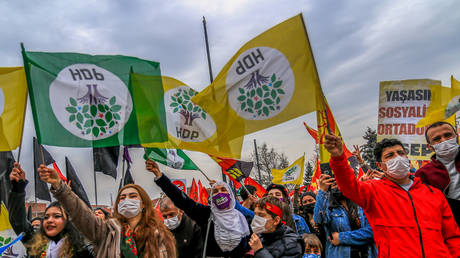
Pro-Kurdish Peoples' Democratic Party (HDP) supporters shout slogans and hold flags during a rally as part of Nowruz (Newroz). © Tunahan Turhan/SOPA Images/LightRocket via Getty Images
Turkey’s top court accepts indictment to dissolve pro-Kurdish HDP party

The arrest was likely provoked by recent reports that the musician had traveled to an area in Syria controlled by the Kurdish militias known as the YPG, he added.

The YPG have been US allies in the fight against Islamic State (IS, formerly ISIS), but Turkey considers them to be an extension of the Kurdistan Workers’ Party (PKK) and a threat to its national security.

For decades, the Workers’ Party has been fighting Turkish troops in the southeast of the country, striving for greater autonomy for the Kurdish population.  

Souleyman’s son denied his father’s alleged terrorist links, saying he didn’t have any political affiliation and had become the victim of a “malicious report.” Some media outlets claimed the musician could be released from custody later on Thursday.

Coming from Syria’s majority-Kurdish province of Hasekeh, Souleyman had been known as a prolific wedding performer in his home country. But his international career skyrocketed after he moved to Turkey a decade ago, fleeing the Syrian conflict. The 55-year-old’s clips, including his top hit ‘Warni Warni’, have garnered millions of views on YouTube. He performed at the Nobel Peace Prize ceremony in 2013, as well as at many large festivals around the globe.

His unique style, which is based on mixing traditional Middle Eastern folk music with electronic sound, has attracted the attention of such stars as Bjork, Four Tet, Damon Albarn, and Diplo, who have all collaborated with Souleyman.

Like this story? Share it with a friend!

find more fun & mates at SoShow now !

The European Union’s top court has ruled that Hungary’s 2018 law aimed at criminalizing aiding illegal immigrants who are claiming asylum violates the “rights safeguarded” by the bloc’s legislature.

The Hungarian legislation, passed in 2018, sought to punish anyone “facilitating illegal immigration” with a year in prison, under a bill dubbed the “Stop Soros” law. Hungary’s government justified it at the time by arguing that migrants illegally entering the country threatened its national security. 

In the ruling, handed down on Tuesday, the European Court of Justice declared that “criminalizing such activities impinges on the exercise of the rights safeguarded by the EU legislature in respect of the assistance of applicants for international protection.”

The EU’s advocate general, Athanasios Rantos, had urged the court to make such a judgement back in February, claiming the introduction of the legislation meant that “Hungary has failed to fulfil its obligations under the [bloc’s] Procedures Directive.”

It became known as the Stop Soros law after billionaire philanthropist George Soros became a vocal opponent of the Hungarian government’s opposition to migration. The administration, in turn, accused Soros of orchestrating migration to Europe, with the Open Society Foundation, run by the philanthropist, closing its operation in the country in response. 

Read more

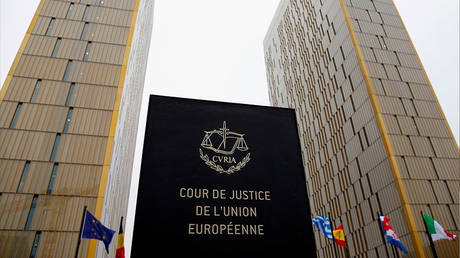
The towers of the European Court of Justice are seen in Luxembourg. © Reuters / Francois Lenoir
Top EU court says Poland broke rules with judge appointment system

Hungary, under the leadership of right-wing Prime Minister Viktor Orban, has repeatedly clashed with the EU in recent years over its strong stance on immigration and concerns from the bloc about threats to the rule of law in the country.

At the end of 2020, a dispute between Hungary and Poland and the EU risked derailing the bloc’s budget, as both member states were threatening to veto it over their view that the EU was attempting to interfere in their domestic affairs. Ultimately, the EU backed down, agreeing to a compromise with Budapest and Warsaw to ensure the budget secured the support of all 27 member states. 

Despite acknowledging the EU court’s ruling, Hungary’s government defended its right to challenge any foreign-funded non-government organizations that are attempting to “promote migration.”

“Hungary’s position on migration remains unchanged: Help should be taken where the problem is, instead of bringing the problem here,” Hungarian government spokesperson Zoltan Kovacs said, adding that the country will challenge outside entities “seeking to gain political influence and interference.”

Think your friends would be interested? Share this story!

find more fun & mates at SoShow now !