Greece will soon prohibit unvaccinated residents from entering a litany of public spaces, the country’s prime minister has announced, claiming its current Covid outbreak is largely fueled by those who haven’t received the jab.
Starting next week, the unvaccinated will be barred from entry to restaurants, cafes, theaters, bars, gyms and museums, among other indoor public places, PM Kyriakos Mitsotakis said on Thursday, noting that a negative Covid-19 test will no longer be accepted as an alternative to proof of vaccination.
“This is indeed a pandemic of the unvaccinated,” he said as he announced the move in a televised address, adding “Greece is mourning unnecessary losses because it simply does not have the vaccination rates of other European countries.”
The new rules are set to take effect on Monday, and will require Greeks to present vaccine certificates to businesses and other indoor establishments to be allowed inside. Those attending religious services mark a rare exception, however, as they will only be asked to present a negative test in order to enter a church or other place of worship.
In a bid to encourage booster vaccinations among the elderly – a population much more vulnerable to Covid-19 – citizens over the age of 60 will be made to renew their certificate after a period of seven months.
While officials had hoped to hit a full vaccination figure of 70% for Greece’s population of 11 million by autumn, the number currently stands at about 62%, according to Reuters. As its weekly case counts continue to soar to record highs, the country reported 7,317 new Covid-19 infections and 63 deaths on Thursday, bringing the totals to more than 860,000 cases and some 17,000 fatalities since the pandemic kicked off in late 2019.
The new restrictions in Greece mirror similar policies implemented elsewhere in Europe, with Austria, Germany, Italy, France, the Czech Republic and Slovakia each imposing limits on public life for the unvaccinated. Though the Austrian government recently imposed a full lockdown for millions of residents who have not received the shot, some officials in that country are pushing for even harsher policies, including a national stay-at-home order on the jabbed and non-jabbed alike.
Think your friends would be interested? Share this story!
Reuters has apologized for its poor choice of photo to illustrate a story about a monkey brain study that was deemed offensive and racist in China.
On Thursday, Reuters published a story titled “Monkey-brain study with link to China’s military roils top European university.” The report was about a Chinese professor studying how a monkey’s brain functions at extreme altitude.
The study was done with the help of Beijing’s People’s Liberation Army (PLA) with the aim of developing new drugs to prevent brain damage, Reuters said.
The news agency promoted the story on Twitter with a photo of smiling Chinese soldiers in an oxygen chamber.
The tweet prompted outrage in China, with people calling it racist on social media. Reuters responded on Friday night by deleting the original tweet because the photo of Chinese soldiers was unrelated to the story and “could have been read as offensive.”
PHOTO CORRECTION: We have deleted an earlier tweet that included a picture of Chinese soldiers in an oxygen chamber not described in the original tweet that could have been read as offensive https://t.co/Ahtv9fj8EQ 2/2
“As soon as we became aware of our mistake, the tweet was deleted and corrected, and we apologize for the offense it caused,” Reuters said in a statement to the Global Times, China’s state-run newspaper.
It was not the first time the leading Western news agency had run into trouble in China. In July, the Chinese Embassy in Sri Lanka criticized Reuters for using a photo of Chinese weightlifter and Tokyo 2020 Olympics gold medalist Hou Zhihui that the country’s state media described as “ugly” and “disrespectful to the athlete.”
Think your friends would be interested? Share this story!
An Australian TV show has come up with a set of “tips and tricks” on how to bar unvaccinated loved ones from the Christmas table, and what to do if you can’t get rid of them.
Dealing with relatives who didn’t get their Covid-19 jabs is the “new dilemma” for Australians this Christmas, according to the hosts of the Sunrise morning show on the country’s Seven Network.
The program stopped short of saying that the unvaccinated shouldn’t be invited to parties at all, but dedicated a whole segment to advice for those looking to avoid “awkward encounters” during the upcoming holiday season.
Its “top tips” included being upfront and having “a peaceful and respectful” conversation about the relative’s vaccination status long before the gathering. But if that doesn’t work, you can always blame the government and its health advice.
Another way to stay clear of anti-vaxxers would be holding your Christmas celebrations at a venue outside your home and referring to the health rules there.
If those without jabs are still coming, one can stage the party outdoors to minimize the risk, the journalists suggested.
But apparently there won’t be too many awkward encounters: more than 84% of Australians aged over 16 have been fully vaccinated, government data show.
Think your friends would be interested? Share this story!
An American nonprofit behind the US-funded bat virus research in China has denied sending virus samples from Laos – where the closest natural relative of SARS-CoV-2 was found – to Wuhan in response to new allegations.
“No work was ever conducted in Laos as a part of this collaborative research project,” EcoHealth Alliance – a group that conducted experiments on coronaviruses while receiving funding from the National Institutes of Health (NIH) – said in a series of tweets on Sunday, responding to media reports alleging that the group might have transported a potentially dangerous virus from Laos to the laboratory in Wuhan.
However, we considered it a higher priority to continue our focus on China, and no work was ever conducted in Laos as a part of this collaborative research project.
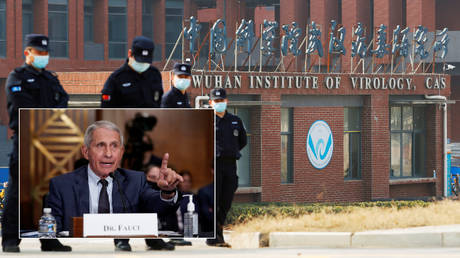
The group’s name surfaced in October when the NIH’s principal deputy director, Lawrence Tabak, revealed that EcoHealth Alliance did experiments on the viruses with the agency’s financial help. At the time, White House medical adviser Dr. Anthony Fauci stated that the viruses “were distant enough molecularly that no matter what you did to them, they could never, ever become SARS-CoV-2.”
EcoHealth Alliance has come under renewed scrutiny after emails obtained through a Freedom of Information request appeared to indicate that the group was discussing the possibility of collecting viral samples from bats in Laos and sending them to the Wuhan Institute of Virology. The emails were initially obtained by the White Coat Waste Project and sparked a flurry of reports over the weekend, including in the Spectator by British science writer Matt Ridley.
The emails shared between EcoHealth Alliance and its US government funders reportedly reveal that the scientists discussed collecting viral samples from bats in eight countries, including in Laos, between 2016 and 2019, and toyed with the idea of transporting them to Wuhan – apparently, to avoid red tape. One email from 2016 cited by the Spectator reportedly reads: “All samples collected would be tested at the Wuhan Institute of Virology.”
Laos is the birthplace of at least one virus that seems to be very close to SARS-Cov-2. A bat viral strain called Banal-52 discovered in Laos in September shares 96.8% of its genome with the virus behind the Covid-19 pandemic
On Sunday, EcoHealth Alliance claimed that the emails cited by Ridley “do not show… that we were sampling bats in Laos and sending the results to Wuhan.”
The group acknowledged, however, that it requested NIH permission to work in Southeast Asian countries, including Laos, and that permission was granted.
However, the nonprofit claimed it ended and focused on China instead.
The response was not satisfactory for Ridley, who is also the co-author of a book on the origins of Covid-19, and he has demanded evidence showing that his report was not “fully accurate.”
A cleaner for Israel’s defense minister has been accused of espionage after allegedly offering to place malware on his boss’ household computer for an Iran-linked hacking group.
In a statement on Thursday, the Shin Bet security service said that Omri Goren, a housekeeper for Defense Minister Benny Gantz, and a former bank robber according to Israeli media, corresponded with an unnamed person over social media shortly before his arrest.
Goren reached out earlier this month to “a figure affiliated with Iran and offered to help him in different ways, in light of his access to the minister’s home,” the statement read, according to the Times of Israel.
It is understood that Goren offered to spy and place malware on Gantz’s computer on behalf of a hacking group, reportedly called ‘Black Shadow’ and associated with Iran, Tel Aviv’s perennial enemy. It is also said that he provided photos of Gantz’s residence to prove he had access.
A Central District prosecutor filed espionage charges against Goren on Thursday. If convicted, the accused could face a sentence of between 10 and 15 years, according to the Times of Israel.
The 37-year-old Lod resident has previously served four prison sentences, the most recent of which was for four years. Goren was found guilty of five crimes between 2002 to 2013, two of the convictions were for bank robbery.
The Shin Bet said they would review their processes for staff background checks “with the goal of limiting the possibility of cases like this repeating themselves in the future.”
Speaking on Kan public radio, Gal Wolf, the attorney representing Goren, suggested his client had intended to extract money from the Iranians without carrying out any spying.
Hospitals in the Netherlands have begun delaying certain operations to free-up ICU beds during a record wave of Covid-19 infections, while an infectious diseases researcher has warned of an impending ‘Code Black’ in the sector.
The country set a daily national record for new Covid infections on Thursday, registering around 23,600 cases. It was the third day in a row of the figure topping 20,000.
To make more staff available for Covid wards, a number of operations, including those for cancer and heart patients, are being canceled from this week on, Dutch healthcare officials have said. Fewer than 200 beds remained available in Dutch ICUs as of Thursday, while Friday figures show almost half (47.8%) of occupied ICU beds were being used by Covid patients.
“These are cancer patients that should actually be operated-on within six weeks of diagnosis, and that won’t be met in all cases. It’s also heart patients,” said a spokesperson for the National Coordination Center for Patient Distribution (LCPS).
Meanwhile, new calculations by an infectious disease modeller at Wageningen University & Research suggest that a so-called ‘Code Black’ in hospitals is looming. The emergency designation means that patient safety is at risk and, if declared, would mean many people with life-threatening illnesses cannot go to the ICU, while doctors have to prioritize who to treat.
According to recent estimates from the Dutch Healthcare Authority (NZa), up to 200,000 operations were not performed as a result of urgently needed Covid care since the start of the pandemic. On Thursday, the NZa revealed that almost a quarter of operating rooms across the country are not currently in use due to a combination of Covid patient pressures and rising staff absences due to illness.
It is not yet clear what impact the delayed care will have on public health. In December 2020, the Dutch National Institute for Public Health and the Environment (RIVM) calculated that an estimated 34,000 to 50,000 ‘healthy life years’ had been lost due to the first Covid-19 wave alone.
Think your friends would be interested? Share this story!
Taiwan’s president unveiled the country’s combat wing of advanced US-made F-16 fighters in a ceremony on Thursday, showing its new Air Force capabilities against mainland China.
The event, held at an air base in the southern Taiwanese city of Chiayi, saw the island commission the first combat wing of F-16 fighters, developed with US support.
The F-16 upgrades, costing T$110 billion (USD$3.95 billion), have been jointly completed by American manufacturer Lockheed Martin Corp and Taiwan’s Aerospace Industrial Development Corp.
Taiwan’s leader, Tsai Ing-wen, touted the new F-16s as ensuring that the island’s defenses would be “even stronger” in the face of increased tensions with China.
In October, Beijing sent a record 150 warplanes into Taiwan’s air defense identification zone (ADIZ) in four straight days of incursions. Over the past year, China’s Air Force has increased military activity in and around Taiwan’s ADIZ, according to Taipei.
Despite Taipei claiming it does not want to provoke a confrontation with China, the island’s president pledged that it will “do whatever it takes to defend itself.”
China has rejected claims that it is provoking conflict in Taiwan, which it sees as an integral part of its country, accusing America of “inflating” the island separatist movement, firmly stating that “Taiwan independence” is a dead end and Beijing will “take all steps” to ensure the island remains under its control. In recent years, China has become increasingly assertive about reuniting its wealthy island neighbor with the mainland.
The successful F-16 development process has been seen by Taiwan as the latest visible sign of the military partnership between Washington, DC and Taipei. Back in 2019, America approved an $8 billion sale of F-16s to Taiwan, which would bring the total number of jets in the island’s fleet to 200.
During the event, the Taiwanese president praised America for remaining steadfast in its cooperation with the island despite opposition from China. “As long as we adhere to the values of democracy and freedom, there will be more like-minded countries standing on the same front with us,” Tsai said alongside US diplomat Sandra Oudkirk.
In 2019, after the US and Taiwan agreed to upgrade the F-16 fighter jets, then-Foreign Ministry spokesperson Geng Shuang threatened to sanction American firms unless the deal was halted. Beijing opposed the military partnership between Taipei and Washington, DC, arguing that the sale violated international law, harmed relations between the countries, and breached the One China policy, which America recognizes.
Think your friends would be interested? Share this story!
France’s education minister has announced plans to boost the teaching of ancient Greek and Latin in an effort to fight the proliferation of wokeism and “develop the culture” of the country’s younger generations.
Speaking on Monday, Education Minister Jean-Michel Blanquer, a leading figure in France’s war on woke, said that ancient Greek and Latin would become available to sixth formers pursuing vocational courses next year, as well as middle school students.
Blanquer wants sixth formers to have the opportunity to “develop their culture” by reading ancient philosophers while gaining the technical qualifications that the economy demands.
Speaking at a charter signing, alongside counterparts from Italy, Greece, and Cyprus, the minister claimed their joint commitment to the promotion of the classics came at a time when ancient languages were being threatened by American wokeism.
The targeting of the dead languages has been most prominent in the US with Princeton University announcing this summer that it would no longer require classics students to study ancient Greek and Latin; the two vernaculars are often considered the core pillars of the discipline.
Dan-el Padilla Peralta, an associate professor of classics at Princeton, claimed the ancient languages had been used as a justification of slavery, colonialism, and fascism for 2,000 years.
In a similar move, a Massachusetts high school boasted that it had removed Homer’s Odyssey from the school curriculum as it conflicted with the anti-racist agenda it wanted to teach. “Very proud to say we got the Odyssey removed from the curriculum this year,” a teacher wrote on social media.
Blanquer told Le Point that such interpretations of the classics were “completely mind boggling.” “To stick categories and a contemporary world view on writings dating back two millennia is an abyssal absurdity,” he added, noting that these civilizations brought us “openness and a search for the universal.”
The minister believes that ancient languages are a common bond for contemporary European nations, noting that the “common linguistic fund” would help spread “common values.”
Blanquer also claimed the classics respond to a demand for logos (language as a tool for reason), in a world where “a lack of reason is spreading like wildfire.”
Last month, the education minister set up a think tank dedicated to President Emmanuel Macron’s war on wokeism.
The liberal or woke agenda, which some in France claim is an Anglo-Saxon import, is likely to be a major feature in the 2022 presidential election, where Macron’s main competitor is likely to hail from the far right of the political spectrum.
A large settlement of migrants in the suburbs of Dunkirk in northern France has been dismantled, in the wake of yet another wave of tensions with the UK over the growing number of illegal crossings.
“At my instruction, the security forces are evacuating the illegal migrant camp in Grande-Synthe this morning,” French Interior Minister Gerald Darmanin said on Twitter on Tuesday. He added that state services in the region would provide shelter for the group.
Government spokesman Gabriel Attal said the decision to dismantle the camp was primarily based on the intention to put people into shelters ahead of the winter season.
Around 1,500 migrants were evacuated from the site via buses and their tents removed. According to Utopia 56, one of the charities monitoring the process of dismantling the camp, people “were forced to board buses, without being informed of their destination, and some of their personal belongings have been destroyed.”
Évacuation forcée et sans annonce du campement de Grande-Synthe depuis ce matin : plus de 500 personnes sont contraintes de monter dans des bus, sans être informées de leur destination : “police ou hôtel”. Une partie de leurs effets personnels est en cours de destruction. pic.twitter.com/EwFPR2yl2j
Tides changing on Channel crossings? French police began moving some 1,500 migrants on from a camp near Dunkirk amid talks yesterday between Priti Patel and her French counterpart agreeing to stop ‘100 percent’ of Channel crossings after record numbers reached the UK in 2021. pic.twitter.com/PUE9YDCTAY
In a separate tweet, Darmanin announced the arrest of 13 alleged migrant smugglers, “bringing the total to 1,308 since January.”
“These smugglers are criminals who exploit human misery, responsible for irregular immigration,” the minister wrote.
Tuesday’s actions by French authorities came in the wake of a phone call between Darmanin and his British counterpart Priti Patel. The two discussed the increasing number of illegal migrants attempting to cross the English Channel, and reiterated the importance of cooperation in making this route “unviable,” Patel said afterwards.
At Grande-Synthe, near Dunkirk, where demolition work has already begun on the migrant camp. Around 1,500 people, many of them Iraqi Kurds, have been moved out of the site@SkyNewspic.twitter.com/rHFDHHcxmf
The UK and France have a history of mutual accusations when it comes to illegal migration. While British officials have claimed that French authorities do not do enough to prevent migrants from embarking for the dangerous trip, France’s government has said that the UK should reform its labor market rules in order to become less attractive to migrants.
More than 23,000 people have crossed the Channel by boat this year, compared to 8,404 in 2020, according to Press Association figures.
Sports goods retailer Decathlon has said it won’t be selling canoes in its stores in northern France anymore because the light vessels are increasingly being used by migrants trying to cross into England.
“Given the current context… the purchase of canoes will no longer be possible” in Decathlon stores in Calais and Grande-Synthe, outside Dunkirk, the French retailer announced.
The two cities overlook the Strait of Dover, which is the narrowest point in the English Channel. Thousands of migrants have been using this spot in recent years to try to make the dangerous 34-kilometer-long sea journey from France to the UK.A lot of canoes aren’t being purchased for their original sporting purpose, Decathlon complained.
They “could be used to cross the Channel” and as a result of this, “people’s lives would be endangered,” it pointed out.
“We are committed to never putting our customers at risk in the use of our products, whatever the circumstances,” the company said.
The initiative to remove canoes from the shelves came from the stores themselves and was backed by the head office, according to the retailer. However, Decathlon will keep selling the vessels online and in its other shops across France.
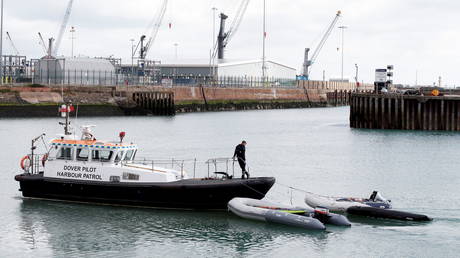
Last Thursday, two canoes were found adrift in the Channel near Calais, while two migrants were rescued from the water. The next day, three more people were reported missing after attempting to get to England using canoes.
Tensions between London and Paris are high after a record number of migrants – 1,185 – were able to cross the Channel a week ago.
Britain said it was “unacceptable” that France had let so many people slip through, but the French government insisted they were “neither their collaborators nor their assistants” and blamed the soaring crossings on the smugglers and the UK’s labor market, which makes the country attractive to people eager to “work at low cost.”