US non-profit responds to claims it brought close relative of Covid-19 virus to Wuhan

An American nonprofit behind the US-funded bat virus research in China has denied ever sending virus samples from Laos – a place where SARS-CoV-2 closest natural relative was found – to Wuhan in response to fresh allegations.

“No work was ever conducted in Laos as a part of this collaborative research project,” EcoHealth Alliance – a group that conducted experiments on coronaviruses while receiving funding from the National Institutes of Health (NIH) – said in a series of tweets on Sunday, responding to media reports alleging that the group might have transported a potentially dangerous virus from Laos to the laboratory in Wuhan.

The group’s name surfaced in October when the NIH principal deputy director, Lawrence Tabak, revealed EcoHealth Alliance did experiment on the viruses with the agency’s financial help. At that time, White House Medical Advisor Dr. Anthony Fauci stated that the viruses studied as part of the project “were distant enough molecularly that no matter what you did to them, they could never, ever become SARS-CoV-2.”

EcoHealth has come under renewed scrutiny after its emails, obtained through a Freedom of Information request, appeared to suggest that the group was discussing the prospect of collecting viral samples from bats in Laos and sending them to the Wuhan Institute of Virology. The emails were initially obtained by the White Coat Waste Project and sparked a flurry of reports over the weekend, including in the Spectator by British science writer Matt Ridley.

Read more

FILE PHOTOS.
Fauci DID fund Wuhan virus experiments, but officials insist virus involved ‘could not have been’ cause of Covid-19 pandemic

The emails shared between EcoHealth Alliance and its US government funders reportedly reveal that the scientists discussed collecting viral samples from bats in eight countries, including in Laos, between 2016 and 2019, and toyed with the idea of transporting them to Wuhan, ostensibly, to avoid red tape. One email from 2016 cited by the Spectator reportedly reads: “All samples collected would be tested at the Wuhan Institute of Virology.”

Laos is the birthplace of at least one virus that seems to be very close to SARS-Cov-2. A bat viral strain called Banal-52 discovered in Laos in September shares 96.8 percent of its genome with the virus behind the Covid-19 pandemic

On Sunday, EcoHealth Alliance claimed that the emails cited by Ridley “do not show…that we were sampling bats in Laos and sending the results to Wuhan.”

The group acknowledged, however, that it requested NIH permission to work in Southeast Asian countries, including in Laos, and that this permission was granted. 

However, the nonprofit claimed it ended focusing on China instead.

 The response failed to satisfy Ridley, who is also a co-author of a book on Covid’s origin, who demanded “evidence” proving that  his report was not “fully accurate.”

Think your friends would be interested? Share this story!

find more fun & mates at SoShow now !

People around the world will need to get a jab against Covid-19 once a year, at least when it comes to the Pfizer vaccine, BioNTech’s CEO Ugur Sahin said in an interview on Sunday, as he praised the quality of its booster shot.

In an interview with Germany’s Bild newspaper on Sunday, Sahin said he considers the vaccine, co-developed by his company, to be “very effective.”

Read more

© Getty Images / sasacvetkovic33
Drastic drop in Covid vaccine effectiveness – study

When asked whether people should be worried about the “breakthrough infections” – in which those vaccinated with the Pfizer-BioNTech vaccine still developed Covid-19 symptoms – he dismissed such concerns, saying that the jab offers a “90 percent protection” against cases that require intensive care in those aged over 60.

A “very high” level of protection against severe illness lasts for up to nine months, the BioNTech CEO maintained. He said this level starts decreasing “from the fourth month,” however. To maintain the protection, Sahin strongly pushed for booster shots, arguing that they would not just restore levels of antibodies but would potentially help “to break … chains of infection.”

He also encouraged doctors to be “as pragmatic as possible” when it comes to greenlighting vaccination and “not to send people home unvaccinated even though they could be vaccinated without any problems.”

In the future, people might need to get booster shots once a year, the BioNTech CEO believes. He said that he expects protection from a booster shot to “last longer” than the initial immunity one acquires after getting two doses of the vaccine.

“Subsequent … vaccinations may only be needed every year – just like [with] influenza,” he said. Currently, the German Federal Center for Health Education – an agency subordinated to the Health Ministry – recommends a booster shot six months after one gets the second dose of a vaccine. It also says that “booster vaccination makes sense after a minimum interval of about four months.”

Read more

© AFP / MARTIN BERNETTI
FDA approves Covid booster shots for all US adults

Sahin’s interview comes days after it was revealed that Pfizer, BioNTech and Moderna are making a combined profit of $65,000 every minute – all thanks to their Covid-19 jabs. That is according to estimates made by the People’s Vaccine Alliance (PVA) – a coalition demanding wider access to vaccines.

The PVA estimated that the three companies are to earn a total of $34 billion in combined pre-tax profits this year alone, which roughly translates into more than $1,000 a second and $93.5 million a day.

PVA has slammed the three companies over their refusal to allow vaccine technology transfer despite receiving a combined $8 billion in public funding. Such a move could increase global supply and save millions of lives as well as drive down prices, the coalition said.

“Pfizer, BioNTech and Moderna have used their monopolies to prioritize the most profitable contracts with the richest governments, leaving low-income countries out in the cold,” said Maaza Seyoum of the African Alliance and People’s Vaccine Alliance Africa.

Think your friends would be interested? Share this story!

find more fun & mates at SoShow now !

Any apology for Nazism is unacceptable, Colombia’s president Ivan Duque has insisted, after photos of police academy cadets dressed up in Third Reich uniforms were uploaded online, causing outrage.

“Any apology for Nazism is unacceptable,” Duque stated in a tweet on Friday. The president said he condemned any references to those who were “responsible for the Jewish Holocaust that claimed the lives of more than 6 million people,” adding that “anti-Semitism has no place in the world.”

Duque had earlier made demands for “heads to roll” at an academy that “promotes such criminal practices,” with its director, Lieutenant Colonel Jorge Ferney Bayona Sanchez, already having been sacked.

Colombia’s defense ministry, which oversees the country’s police, also insisted in a statement that that its training programs “don’t envisage in any way an activity such as the one which took place” at the academy.

Read more

Nazi uniforms found inside the house of a man suspected of raping a 12-year-old boy at the Vargem Grande neighbourhood of Rio de Janeiro. © AFP / Rio de Janeiro Civil Police
Brazilian police discover $3.5mn trove of Nazi memorabilia at home of ‘insane psychopath’ suspected of child rape

The images of police cadets in Nazi uniforms caused anger and bewilderment among internet users.

The German and Israeli embassies in the country reacted by issuing a joint statement, in which they expressed “total rejection of any form of apology or demonstration of Nazism.” The US embassy in Bogota also said that it was “shocked and deeply disappointed” by the development.

The controversial images, in which aspiring officers were caught sporting black SS outfits with red swastika armbands and grey Wehrmacht uniforms from the World War II era, weren’t revealed in some bombshell media report, but were actually published on the official Twitter account of the Colombian police this Thursday.

The photos were taken as part of a “cultural exchange” event at the police academy in the city of Tulua, aimed at commemorating Germany and “strengthening the knowledge of our police students.” The cosplay was apparently intended to illustrate the history of German law enforcement, with more cadets pictured wearing more modern versions of the country’s police uniforms in the pictures.

Like this story? Share it with a friend!

find more fun & mates at SoShow now !

Protesters thronged the streets of Australian cities on Saturday, demanding an end to what they called the “tyranny” and “oppression” of lockdowns, vaccine mandates, and the proposed expansion of the government’s pandemic powers.

In Melbourne, Sky News reporter Sophie Elsworth described “tens of thousands of people streaming through the streets.” The march came after a week of smaller protests aimed at Victoria Premier Dan Andrews’ controversial pandemic bill, which if approved by the state’s legislature would allow Andrews and Health Minister Martin Foley to declare an indefinite state of emergency and issue public health orders by decree – including “any order… that the minister believes is reasonably necessary to protect public health.”

Should the bill pass, it would allow Andrews to target certain classes of people with these orders, categorizing them by age, occupation, or vaccination status. Fines for noncompliance would range from up to AU$21,800 for people and AU$109,000 for businesses.

Alternative media sources claimed that more than 100,000 people showed up to protest. However, the demonstration remained free of the violent clashes seen at protests in Melbourne in recent months.

“Australia has been willing to send troops to all parts of the world to help people become free,” one military veteran told a crowd of listeners during the protest. “To now be fighting oppression here in our own country, it’s saddening.”

Huge numbers of protesters also turned out in Sydney, and although more than 600 police officers were deployed to watch over the gathering, no arrests were made, 9News reported.

Holding signs decrying state “tyranny,” the demonstrators chanted “freedom” and called for the firing of state politicians who have implemented a two-tier system where the unvaccinated are denied many of the privileges extended to the fully jabbed.

Similarly massive gatherings took place in Adelaide, Brisbane, and Perth, with no notable incidents of violence or police action. Further afield, protests are taking place in more than 120 cities around the world this weekend, in a loosely coordinated event dubbed the ‘Worldwide Rally For Freedom’ by activists.

Like this story? Share it with a friend!

find more fun & mates at SoShow now !

When The Washington Post reported this week that CIA Director William Burns slipped into Afghanistan on Monday to meet with Taliban leader Abdul Ghani Baradar, it was described as the highest-level face-to-face encounter between the Taliban and the Biden Administration.  WaPo cited anonymous sources for the information and the CIA offered no immediate comment on the reporting.  If the reporting is accurate, it doesn’t answer any immediate questions about why the President would dispatch the CIA director for such a meeting.

What we do know, is that the unexpected advances of the Taliban that have dominated the headlines over the past week and a half were initially blamed on an intelligence failure by many.  Early on, Cipher Brief Expert and former Acting Director of CIA John McLaughlin tweeted that “The ‘intelligence failure’ drumbeat is starting. People should be careful about the charge if they have not actually seen/read the intelligence…”

So, what intelligence did the US have that would have led to a different outcome in Kabul and throughout the country?

  • The New York Times reported last week that “classified assessments by American spy agencies over the summer painted an increasingly grim picture of the prospect of a Taliban takeover of Afghanistan and warned of the rapid collapse of the Afghan military, even as President Biden and his advisers said publicly that was unlikely to happen as quickly.” The paper cited current and former US government officials, saying, “By July, many intelligence reports grew pessimistic, questioning whether Afghan security forces would muster serious resistance and whether the government could hold on in Kabul, the capital.”
  • On August 15, The Wall Street Journal reported that administration officials said they knew that a “total capitulation of the Taliban was a possibility, and they planned their withdrawal efforts accordingly.” But they also cited an administration official, saying “it wasn’t so much a failure in intelligence in which the administration based its decision, but rather, a change in circumstances brought about by the swift U.S. withdrawal.”

But private sector analysts were watching as well. Here’s an inside look at what The Cipher Brief has been publishing since January with key outtakes from Cipher Brief Expert Tim Willasey-Wilsey:

Brief: January 25, 2021

“The Afghans themselves are also monitoring the Washington newsfeeds in forensic detail and will be encouraged by Sullivan’s statement. Recently, all too many conversations in Kabul have been about when to leave and which route to take. Some wealthier Afghans already have their money in Dubai and children in foreign universities. Some even have passports and property in the United States, UK or Germany. For those who are less fortunate, the discussions are about which route to take out. The Uzbekistan border is favoured because a visa costs just $30 and there is a variety of onward routes via Turkey or Russia to the West whereas the routes via Iran or Pakistan are more restrictive or liable to interference.”

Brief: March 11, 2021

“Saleh will advise Ghani not to take Taliban or Pakistani promises on trust. Instead, Ghani may decide to call Washington’s bluff. He may doubt that Washington is really willing to abandon Afghanistan on 1st May with the risk of a rapid Taliban victory jeopardising all the hard-won advances in areas such as women’s rights and counterterrorism over the past 20 years. The spectre of Al Qaida re-establishing camps in Afghanistan would surely be too much for Biden and Blinken.”

“Even if there were no helicopters from the US Embassy roof, the TV pictures of the Taliban entering Kabul, and of Afghan refugees fleeing their advance could evoke memories of Saigon in 1975. The reimposition of Taliban curbs on women would provoke international opprobrium. And subsequent reports of AQ training camps being re-established in Afghanistan would bring back recent and painful memories. After all the blood and treasure expended in Afghanistan that would be a disastrous outcome.”

Brief: April 19, 2021

“The Afghan government may be able to hold on to power for a few years as the Najibullah administration survived after the Soviet departure. However, there is a danger that there will be a sudden dam-burst in confidence with senior officials and politicians leaving en masse and hundreds of thousands of refugees fleeing westwards through Iran, Pakistan and the Central Asian Republics. As the Taliban re-enter Kabul, we could see disturbing scenes of retribution and, in time, the return of Al Qa’ida figures from their hiding-places in the tribal borderlands in Pakistan. Only then will people re-examine this decision and recognise that the Afghan deployments since 2014 have not been that onerous.”


The Cipher Brief hosts private briefings with the world’s most experienced national and global security experts.  Become a member today.


Brief: June 1, 2021

“According to my sources, the Taliban are convinced they can take Kabul “within days” of the NATO withdrawal and they believe the Afghan army is “in a shambles and demoralised”. Although the Taliban will not disrupt departing US troops (unless attacked) they are not willing to wait until September to continue their campaign against Kabul government forces.”

“But we should not take much comfort from the Najibullah example. The comparisons with today’s Afghanistan are misleading. Najibullah’s government was able to reach and supply all the major towns by military convoy. The Afghan army was deployed to protect towns and road communications. By contrast, in 2021, only the route between Kabul and Jalalabad is reasonably safe. Convoys cannot get through from Kabul to Kandahar, Kandahar to Herat, or Kabul to Mazar-e-Sharif. The Afghan army is spread across the country in piecemeal district centres (often surrounded by Taliban-controlled countryside) and have to be resupplied by air. This is not a sustainable model.”

“Furthermore, a number of today’s Afghan leaders, officials and military officers have received offers to relocate to the United States, Germany and elsewhere. As the security situation continues to deteriorate, the gradual trickle of departures is likely to gather pace. In such circumstances, the government could implode quite suddenly.”

“To some, this may evoke images of the 1975 fall of Saigon with the big losers being the Afghans who remain, particularly the women, who face a future of uncertainty and anxiety. There could also be a migration crisis reminiscent of Syria in the last decade.”

Brief: June 28, 2021

“One key indicator is that Afghan security forces have begun to surrender to the Taliban. The procedure is quick and simple. Tribal elders are used to deliver a stark message to Afghan troops often holding positions in district centres. The message is often; “The non-believers are leaving Afghanistan. They are defeated. Your leaders are corrupt. You can surrender now, and we will protect you; or you can fight, and we will kill you.” Recently, the Taliban appear to have honoured their promise not to punish Afghan soldiers who surrender. News of this new-found leniency is likely to encourage other units to follow suit and lay down their arms. In several provinces, including in the north, the Taliban are tightening their grip on those cities which are still held by the government. The Taliban will soon be in a position to cut off food supplies and demand their surrender, possibly offering a similarly lenient dispensation to the population. Now that the Taliban possesses captured armoured vehicles and artillery, their ability to exert pressure on the cities is enhanced. In Kabul, a sense of panic has begun to grip the capital. There are desperate attempts to sell family homes but there are no buyers even when houses are on the market at one tenth of their previous value. Some families have departed to Tajikistan, conscious that several of the land border crossing-points with the Central Asian Republics have been captured by Taliban forces in recent weeks.”

Read also Putin’s Calculated Afghanistan Play from Cipher Brief Expert Robert Dannenberg


The Cipher Brief hosts private briefings with the world’s most experienced national and global security experts.  Become a member today. 


Read more expert-driven national security insight, perspective and analysis in The Cipher Brief


The post What Intelligence was there on Afghanistan? appeared first on The Cipher Brief.

find more fun & mates at SoShow now !

Some voters in Germany’s capital, Berlin, may have to re-cast their ballots after the country’s federal election czar filed an official complaint over irregularities in a parliamentary vote held two months ago.

The election – which saw Berliners decide the makeup of the German parliament, the Bundestag, as well as select city representatives – was marred by irregularities at numerous polling stations, according to the official, Georg Thiel. 

Among the most common problems were ballot shortages and long lines, with waiting times of up to two hours. In some cases, voters were also seen casting their ballots past a 6pm cutoff – the time when all polling stations were supposed to have closed. Thiel, who was tasked with overseeing elections at federal level, saw all of the above as reason enough to raise an objection in the German capital, local media reported on Friday.

Read more

Workers remove a campaign poster showing Armin Laschet, the Christian Democratic Union’s candidate for chancellor, in Bad Segeberg, Germany, September 27, 2021. © Fabian Bimmer / Reuters
Conservative wing of Merkel’s bloc says party leadership must resign after ‘debacle’ in Germany’s general election

Thiel identified six Berlin constituencies where irregularities were allegedly rampant, potentially setting the stage for a re-do election in the city.  

It is now up to a special Bundestag committee to examine Thiel’s complaint and see if the reported violations ran afoul of German law or electoral procedures. For the vote to be repeated, however, at least one of those violations would have to be deemed serious enough to have affected the distribution of seats in the Bundestag.

The September 26 election saw outgoing Chancellor Angela Merkel’s conservatives take a historic beating, with the Social Democrats coming out on top. The Social Democratic Party (SPD) has been engaged in coalition talks with the Greens and the Free Democratic Party ever since, with the trio expected to announce a preliminary deal as early as next week.

Think your friends would be interested? Share this story!

find more fun & mates at SoShow now !

The EU’s drug regulator has backed the emergency use of Merck’s pill for the treatment for clinically vulnerable Covid-19 patients as cases surge across the continent.

On Friday, the European Medicines Agency (EMA) “issued advice” backing the emergency use of the drug developed by Merck in collaboration with Ridgeback Biotherapeutics, although it has not yet been authorized by national authorities.

Read more

© Reuters / Piroschka van de Wouw
EMA green lights new Covid treatments

In a statement, the drug regulator said the medicine called Lagevrio – also known as molnupiravir or MK 4482 – “can be used to treat adults with Covid-19 who do not require supplemental oxygen and who are at increased risk of developing severe Covid-19.

It said the treatment should be administered as soon as possible after Covid-19 is diagnosed and within five days of the start of symptoms. The medicine should be taken twice a day for a period of five days.

The EMA listed the potential side effects of the capsules, including mild or moderate diarrhea, nausea, dizziness and headache. The treatment is not recommended for pregnant women.

The watchdog announced earlier on Friday that it had begun reviewing Pfizer’s medicine Paxlovid for Covid-19 with the same goal “to support national authorities” who may decide on its early use prior to marketing authorization in light of rising cases and deaths in Europe.

On Friday, Austria announced it would enter a new nationwide lockdown from Monday and make vaccination mandatory, while Germany’s health authorities claimed the country had turned into “one big outbreak.”

Both Pfizer and Merck have requested approval for their coronavirus medicines from the US Food and Drug Administration, but it is unclear when it might be granted.

Think your friends would be interested? Share this story!

find more fun & mates at SoShow now !

Australia’s Defense Minister derided a senior Chinese diplomat’s comments as “silly” and “comical,” after the latter dubbed Canberra’s trilateral nuclear-powered submarine pact with the US and UK a threat to peace.

During a television interview on Friday, Peter Dutton said acting Chinese Ambassador Wang Xining was “probably reading off a script from the Communist Party” when he warned that Australia would become the “naughty guy” if it procured the stealth-combat vessels through the AUKUS deal.

Wang, who is China’s most senior representative to the country after the previous ambassador’s term ended last month, told The Guardian on Thursday that Australia would be labeled a “sabre-wielder” rather than a “peace defender.” He said the Australian public “should be more worried” about the impact of the security pact their nation had made with the UK and the US. 

There’s zero nuclear capacity, technologically, in Australia, that would guarantee you will be trouble free, that you will be incident free. And if anything happened, are the politicians ready to say sorry to people in Melbourne and in Adelaide?

However, Dutton “dismissed” the comments and countered that “most Australians [would] see through [their] non-productive nature.”

Read more

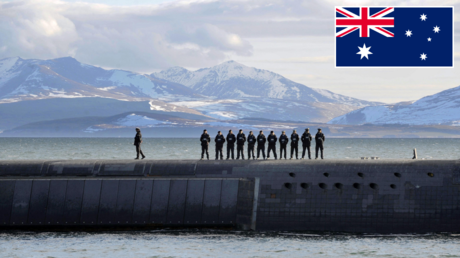
FILE PHOTO. British Navy personnel stand atop the Trident Nuclear Submarine, HMS Victorious, on patrol off the west coast of Scotland. © AFP / ANDY BUCHANAN
New AUKUS anti-China alliance could spark global arms race, Moscow warns, as Beijing sounds alarm over West’s ‘Cold War’ tactics

“We don’t see it from any other ambassador here in Australia. It’s quite remarkable,” the minister told the Nine Network, adding that “this type of diplomacy” was seen elsewhere in the world too.

“These provocative comical statements – it’s just so silly. It’s funny,” he added.

In September, Australian Prime Minister Scott Morrison announced the deal to obtain at least eight nuclear-powered vessels as part of its new defense alliance. The pact angered not only China but also France, which claimed it had been “stabbed in the back” after Canberra unilaterally scrapped a multi-billion-dollar diesel-electric submarine contract with Paris.

Last weekend, Dutton had irked Beijing by stating that he could not conceive of a situation in which Australia would hesitate to support the US should armed conflict with China break out over Taiwan. Under its ‘One China’ policy, Beijing has pledged to reunify the island with the mainland.

Wang warned Australian politicians on Thursday not to do anything that would be “destructive to our relationship.”

If you like this story, share it with a friend!

find more fun & mates at SoShow now !

A large settlement of migrants in the suburbs of Dunkirk in northern France has been dismantled, in the wake of yet another wave of tensions with the UK over the growing number of illegal crossings.

Read more

FILE PHOTO. ©REUTERS/Peter Cziborra
London & Paris trade barbs over Channel crossings

At my instruction, the security forces are evacuating the illegal migrant camp in Grande-Synthe this morning,” French Interior Minister Gerald Darmanin said on Twitter on Tuesday. He added that state services in the region would provide shelter for the group.

Government spokesman Gabriel Attal said the decision to dismantle the camp was primarily based on the intention to put people into shelters ahead of the winter season.

Around 1,500 migrants were evacuated from the site via buses and their tents removed. According to Utopia 56, one of the charities monitoring the process of dismantling the camp, people “were forced to board buses, without being informed of their destination, and some of their personal belongings have been destroyed.” 

In a separate tweet, Darmanin announced the arrest of 13 alleged migrant smugglers, “bringing the total to 1,308 since January.

These smugglers are criminals who exploit human misery, responsible for irregular immigration,” the minister wrote.

Tuesday’s actions by French authorities came in the wake of a phone call between Darmanin and his British counterpart Priti Patel. The two discussed the increasing number of illegal migrants attempting to cross the English Channel, and reiterated the importance of cooperation in making this route “unviable,” Patel said afterwards. 

The UK and France have a history of mutual accusations when it comes to illegal migration. While British officials have claimed that French authorities do not do enough to prevent migrants from embarking for the dangerous trip, France’s government has said that the UK should reform its labor market rules in order to become less attractive to migrants.

More than 23,000 people have crossed the Channel by boat this year, compared to 8,404 in 2020, according to Press Association figures.

If you like this story, share it with a friend!

find more fun & mates at SoShow now !

Corin Stone, Washington College of Law
Corin Stone is a Scholar-in-Residence and Adjunct Professor at the Washington College of Law.  Stone is on leave from the Office of the Director of National Intelligence (ODNI) where, until August 2020, she served as the Deputy Director of National Intelligence for Strategy & Engagement, leading Intelligence Community (IC) initiatives on artificial intelligence, among other key responsibilities. From 2014-2017, Ms. Stone served as the Executive Director of the National Security Agency (NSA).

(Editor’s Note: This article was first published by our friends at Just Security and is the third in a series that is diving into the foundational barriers to the broad integration of AI in the IC – culture, budget, acquisition, risk, and oversight.)

OPINION — As I have written earlier, there is widespread bipartisan support for radically improving the nation’s ability to take advantage of artificial intelligence (AI). For the Intelligence Community (IC), that means using AI to more quickly, easily, and accurately analyze increasing volumes of data to produce critical foreign intelligence that can warn of and help defuse national security threats, among other things. To do that, the IC will have to partner closely with the private sector, where significant AI development occurs. But despite the billions of dollars that may ultimately flow toward this goal, there are basic hurdles the IC still must overcome to successfully transition and integrate AI into the community at speed and scale.

Among the top hurdles are the U.S. government’s slow, inflexible, and complex budget and acquisition processes. The IC’s rigid budget process follows the standard three-year cycle for the government, which means it takes years to incorporate a new program and requires confident forecasting of the future. Once a program overcomes the necessary hurdles to be included in a budget, it must follow a complex sequence of regulations to issue and manage a contract for the actual goods or services needed. These budget and acquisition processes are often considered separately as they are distinct, but I treat them together because they are closely related and inextricably intertwined in terms of the government’s purchasing of technology.

Importantly, these processes were not intended to obstruct progress; they were designed to ensure cautious and responsible spending, and for good reason. Congress, with its power of the purse, and the Office of Management and Budget (OMB), as the executive branch’s chief budget authority, have the solemn duty to ensure wise and careful use of taxpayer dollars. And their roles in this regard are vital to the U.S. government’s ability to function.

Unfortunately, despite the best of intentions, as noted by some in Congress itself, the budget process has become so “cumbersome, frustrating, and ineffective” that it has weakened the power of the purse and Congress’ capacity to govern. And when complicated acquisition processes are layered on top of the budget process, the result is a spider web of confusion and difficulty for anyone trying to navigate them.

The Need for Speed … and Flexibility and Simplicity

As currently constructed, government budget and acquisition processes cause numerous inefficiencies for the purchase of AI capabilities, negatively impacting three critical areas in particular: speed, flexibility, and simplicity. When it comes to speed and flexibility, the following difficulties jump out:

  • The executive branch has a methodical and deliberate three-year budget cycle that calls for defined and steady requirements at the beginning of the cycle. Changing the requirements at any point along the way is difficult and time-consuming.
  • The IC’s budgeting processes require that IC spending fit into a series of discrete sequential steps, represented by budget categories like research, development, procurement, or sustainment. Funds are not quickly or easily spent across these categories.
  • Most appropriations expire at the end of each fiscal year, which means programs must develop early on, and precisely execute, detailed spending plans or lose the unspent funds at the end of one year.
  • Government agencies expend significant time creating detailed Statements of Work (SOWs) that describe contract requirements. Standard contract vehicles do not support evolving requirements, and companies are evaluated over the life of the contract based on strict compliance with the original SOW created years earlier.

These rules make sense in the abstract and result from well-intentioned attempts to buy down the risk of loss or failure and promote accountability and transparency. They require the customer to know with clarity and certainty the solution it seeks in advance of investment and they narrowly limit the customer’s ability to change the plan or hastily implement it. These rules are not unreasonably problematic for the purchase of items like satellites or airplanes, the requirements for which probably should not and will not significantly change over the course of many years.

However, because AI technology is still maturing and the capabilities themselves are always adapting, developing, and adding new functionality, the rules above have become major obstacles to the quick integration of AI across the IC. First, AI requirements defined with specificity years in advance of acquisition – whether in the budget or in a statement of work – are obsolete by the time the technology is delivered. Second, as AI evolves there is often not a clear delineation between research, development, procurement, and sustainment of the technology – it continuously flows back and forth across these categories in very compressed timelines. Third, it is difficult to predict the timing of AI breakthroughs, related new requirements, and funding impacts, so money might not be spent as quickly as expected and could be lost at the end of the fiscal year. Taken together, these processes are inefficient and disruptive, cause confusion and delay, and discourage engagement from small businesses, which have neither the time nor the resources to wait years to complete a contract or to navigate laborious, uncertain processes.


Engage personally with experts on Artificial Intelligence and national security  at The Cipher Brief Threat Conference October 24-26.  If you are an actively working in the national security field, we invite you to apply to attend.  Seats are limited.  


Simply put, modern practices for fielding AI have outpaced the IC’s decades-old approach to budgeting and acquisition. That AI solutions are constantly evolving, learning, and improving both undermines the IC’s ability to prescribe a specific solution and, in fact, incentivizes the IC to allow the solution to evolve with the technology. The lack of flexibility and speed in how the IC manages and spends money and acquires goods and services is a core problem when it comes to fully incorporating AI into the IC’s toolkit.

Even while we introduce more speed and agility into these processes, however, the government must continue to ensure careful, intentional, and appropriate spending of taxpayer dollars. The adoption of an IC risk framework and modest changes to congressional oversight engagements, which I address in upcoming articles, will help regulate these AI activities in the spirit of the original intent of the budget and acquisition rules.

As for the lack of simplicity, the individually complex budget and acquisition rules are together a labyrinth of requirements, regulations, and processes that even long-time professionals have trouble navigating. In addition:

  • There is no quick or simple way for practitioners to keep current with frequent changes in acquisition rules.
  • The IC has a distributed approach that allows each element to use its various acquisition authorities independently rather than cohesively, increasing confusion across agency lines.
  • Despite the many federal acquisition courses aimed at demystifying the process, there is little connection among educational programs, no clear path for IC officers to participate, and no reward for doing so.

The complexity of the budget and acquisition rules compounds the problems with speed and flexibility, and as more flexibility is introduced to support AI integration, it is even more critical that acquisition professionals be knowledgeable and comfortable with the tools and levers they must use to appropriately manage and oversee contracts.

Impactful Solutions: A Target Rich Environment

Many of these problems are not new; indeed, they have been highlighted and studied often over the past few years in an effort to enable the Department of Defense (DOD) and the IC to more quickly and easily take advantage of emerging technology. But to date, DOD has made only modest gains and the IC is even further behind. While there are hundreds of reforms that could ease these difficulties, narrowing and prioritizing proposed solutions will have a more immediate impact. Moreover, significant change is more likely to be broadly embraced if the IC first proves its ability to successfully implement needed reforms on a smaller scale. The following actions by the executive and legislative branches – some tactical and some strategic – would be powerful steps to ease and speed the transition of AI capabilities into the IC.

Statements of Objectives

A small but important first step to deal with the slow and rigid acquisition process is to encourage the use of Statements of Objectives (SOO) instead of SOWs, when appropriate. As mentioned, SOWs set forth defined project activities, deliverables, requirements, and timelines, which are used to measure contractor progress and success. SOWs make sense when the government understands with precision exactly what is needed from the contractor and how it should be achieved.

SOOs, on the other hand, are more appropriate when the strategic outcome and objectives are clear, but the steps to achieve them are less so. They describe “what” without dictating “how,” thereby encouraging and empowering industry to propose innovative solutions. SOOs also create clarity about what is important to the government, leading companies to focus less on aggressively low pricing of specific requirements and more on meeting the ultimate outcomes in creative ways that align with a company’s strengths. This approach requires knowledgeable acquisition officers as part of the government team, as described below, to ensure the contract includes reasonable milestones and decision points to keep the budget within acceptable levels.


The Cipher Brief hosts private briefings with the world’s most experienced national and global security experts.  Become a member today.


New Authorities for the IC

Two new authorities would help the IC speed and scale its use of AI capabilities: Other Transaction Authority (OTA)  and Commercial Solutions Openings (CSO). Other Transaction Authority allows specific types of transactions to be completed outside of the traditional federal laws and regulations that apply to standard government procurement contracts, providing significantly more speed, flexibility, and accessibility than traditional contracts. While OTA is limited in scope and not a silver bullet for all acquisition problems, OTA has been used to good effect since 1990 by the Defense Advanced Research Projects Activity (DARPA), DOD’s over-the-horizon research and development organization, among others.

CSOs are a simplified and relatively quick solicitation method to award firm fixed price contracts up to $100 million. CSOs can be used to acquire innovative commercial items, technologies, or services that close capability gaps or provide technological advances through an open call for proposals that provide offerors the opportunity to respond with technical solutions of their own choosing to a broadly defined area of government interest. CSOs are considered competitively awarded regardless of how many offerors respond.

Both OTA and CSO authority should be immediately granted to the IC to improve the speed and flexibility with which the IC can acquire and transition AI into the IC.

Unclassified Sandbox

The predictive nature of the IC’s work and the need to forecast outcomes means the IC must be able to acquire AI at the point of need, aligned to the threat. Waiting several years to acquire AI undermines the IC’s ability to fulfill its purpose. But with speed comes added risk that new capabilities might fail. Therefore, the IC should create an isolated unclassified sandbox, not connected to operational systems, in which potential IC customers could test and evaluate new capabilities alongside developers in weeks-to-months, rather than years. Congress should provide the IC with the ability to purchase software quickly for test and evaluation purposes only to buy down the risk that a rapid acquisition would result in total failure. The sandbox process would allow the IC to test products, consider adjustments, and engage with developers early on, increasing the likelihood of success.

Single Appropriation for Software

DOD has a pilot program that funds software as a single budget item – allowing the same money to be used for research, production, operations, and sustainment – to improve and speed software’s unique development cycle. AI, being largely software, is an important beneficiary of this pilot. Despite much of the IC also being part of DOD, IC-specific activities do not fall within this pilot. Extending DOD’s pilot to the IC would not only speed the IC’s acquisition of AI, but it would also increase interoperability and compatibility of IC and DOD projects.

No-Year Funds

Congress should reconsider the annual expiration of funds as a control lever for AI. Congress already routinely provides no-year funding when it makes sense to do so. In the case of AI, no-year funds would allow the evolution of capabilities without arbitrary deadlines, drive more thoughtful spending throughout the lifecycle of the project, and eliminate the additional overhead required to manage the expiration of funds annually. Recognizing the longer-term nature of this proposal, however, the executive branch also must seek shorter-term solutions in the interim.

A less-preferable alternative is to seek two-year funding for AI. Congress has a long history of proposing biennial budgeting for all government activities. Even without a biennial budget, Congress has already provided nearly a quarter of the federal budget with two-year funding. While two-year funding is not a perfect answer in the context of AI, it would at a minimum discourage parties from rushing to outcomes or artificially burning through money at the end of the first fiscal year and would provide additional time to fulfill the contract. This is presumably why DOD recently created a new budget activity under their Research, Development, Test and Evaluation (RDT&E) category, which is typically available for two years, for “software and digital technology pilot programs.”

AI Technology Fund

Congress should establish an IC AI Technology Fund (AITF) to provide kick-starter funds for priority community AI efforts and enable more flexibility to get those projects off the ground. To be successful, the AITF must have no-year funds, appropriated as a single appropriation, without limits on usage throughout the acquisition lifecycle. The AITF’s flexibility and simplicity would incentivize increased engagement by small businesses, better allowing the IC to tap into the diversity of the marketplace, and would support and speed the delivery of priority AI capabilities to IC mission users.


Go beyond the headlines with expert perspectives on today’s news with The Cipher Brief’s Daily Open-Source Podcast.  Listen here or wherever you listen to podcasts.


ICWERX  

To quickly take advantage of private sector AI efforts at scale, the IC must better understand the market and more easily engage directly with the private sector. To do so, the IC should create an ICWERX, modeled after AFWERX, an Air Force innovation organization that drives agile public-private sector collaboration to quickly leverage and develop cutting-edge technology for the Air Force. AFWERX aggressively uses innovative, flexible, and speedy procurement mechanisms like OTA and the Small Business Innovation Research and Small Business Technology Transfer programs (SBIR/STTR) to improve the acquisition process and encourage engagement from small businesses. AFWERX is staffed by acquisition and market research experts who are comfortable using those authorities and understand the market. While the IC’s needs are not identical, an ICWERX could serve as an accessible “front door” for prospective partners and vendors, and enable the IC to more quickly leverage and scale cutting-edge AI.

De-mystify Current Authorities

While there is much complaining about a lack of flexible authorities in the IC (and a real need for legal reform), there is flexibility in existing rules that has not been fully utilized. The IC has not prioritized the development or hiring of people with the necessary government acquisition and contracts expertise, so there are insufficient officers who know how to use the existing authorities and those who do are overworked and undervalued. The IC must redouble its efforts to increase its expertise in, and support the use of, these flexibilities in several ways.

First, the IC should create formal partnerships and increase engagement with existing U.S. government experts. The General Services Administration’s Technology Transformation Services (TTS) and FEDSIM, for example, work across the federal government to build innovative acquisition solutions and help agencies more quickly adopt AI. In addition, DOD’s Joint AI Center has built significant acquisition expertise that the IC must better leverage. The IC also should increase joint duty rotations in this area to better integrate and impart acquisition expertise across the IC.

Second, the IC must prioritize training and education of acquisition professionals. And while deep acquisition expertise is not necessary for everyone, it is important for lawyers, operators, technologists, and innovators to have a reasonable understanding of the acquisition rules, and the role they each play in getting to successful outcomes throughout the process. Collaboration and understanding across these professions and up and down the chain of command will result in more cohesive, speedy, and effective outcomes.

To that end, the Office of the Director of National Intelligence (ODNI) should work with the many existing government acquisition education programs, as well as the National Intelligence University, to develop paths for IC officers to grow their understanding of and ability to navigate and successfully use acquisition rules. The ODNI also should strengthen continuing education requirements and create incentive pay for acquisition professionals.

Third, the IC should prioritize and use direct hire authority to recruit experts in government acquisition, to include a mix of senior term-limited hires and junior permanent employees with room to grow and the opportunity for a long career in the IC. Such a strategy would allow the IC to quickly tackle the current AI acquisition challenges and build a bench of in-house expertise.

Finally, practitioners should have an easily accessible reference book to more quickly discover relevant authorities, understand how to use them, and find community experts. A few years ago, the ODNI led the creation of an IC Acquisition Playbook, which describes common IC acquisition authorities, practices, and usages. The ODNI should further develop and disseminate this Playbook as a quick win for the IC.

Incentivize Behavior

To encourage creative and innovative acquisition practices, as well as interdisciplinary collaboration, the IC must align incentives with desired outcomes and create in acquisition professionals a vested interest in the success of the contract. Acquisition officers today are often brought into projects only in transactional ways, when contracts must be completed or money must be obligated, for example. They are rarely engaged early as part of a project team, so they are not part of developing the solutions and have minimal investment in the project’s success. Reinforcing this, acquisition professionals are evaluated primarily on the amount of money they obligate by the end of the fiscal year, rather than on the success of a project.

Therefore, to start, project teams should be required to engage acquisition officers early and often, both to seek their advice and to ensure they have a good understanding of the project’s goals. In addition, evaluation standards for acquisition officers should incorporate effective engagement and collaboration with stakeholders, consideration of creative alternatives and options, and delivery of mission outcomes. If an officer uses innovative practices that fail, that officer also should be evaluated on what they learned from the experience that may inform future success.

Lastly, the ODNI should reinvigorate and highlight the IC acquisition awards to publicly reward desired behavior, and acquisition professionals should be included in IC mission team awards as a recognition of their impact on the ultimate success of the mission.

Conclusion

Between the government’s rigid budget and acquisition processes and confusion about how to apply them, there is very little ability for the IC to take advantage of a fast-moving field that produces new and updated technology daily. Tackling these issues through the handful of priority actions set forth above will begin to drive the critical shift away from the IC’s traditional, linear processes to the more dynamic approaches the IC needs to speed and transform the way it purchases, integrates, and manages the use of AI.

Read more expert-driven national security insights, perspective and analysis in The Cipher Brief


The post AI and the IC: The Tangled Web of Budget and Acquisition appeared first on The Cipher Brief.

find more fun & mates at SoShow now !