As information emerges about Islamic State of Khorasan, or ISIS-K – the terrorist group that claimed responsibility for last week’s suicide attack that killed 13 US service members and more than 160 Afghans – there is an increased effort to predict how Afghanistan, under Taliban rule, may emerge once again as a breeding ground for terrorist groups.

A United Nations report released in June estimates that thousands of fighters from the region had already poured into Afghanistan.  Many of them are believed to be affiliated with either the Taliban – still seen as a terrorist organization – or al Qaeda or ISIS-K.

The New York Times reports that ISIS-K was created six years ago by members of the Pakistani branch of the Taliban.  There is a range of thought among experts as to what their ability to successfully carry out a terrorist attack in a Taliban-ruled area means for the terrorist threat moving forward. 

The Cipher Brief spoke with respected terrorism experts Bruce Hoffman, Mitch Silber and Colin Clarke to get their thoughts on the current risk of terrorist attacks against Americans both home and abroad. 

Bruce Hoffman, Terrorism Expert and Professor, Georgetown University

Cipher Brief Expert Bruce Hoffman is a professor at Georgetown University and served as a commissioner on the Independent Commission to Review the FBI’s Post-9/11 Response to Terrorism and Radicalization.  He is also a Scholar-in-Residence for Counterterrorism at CIA.

Mitch Silber, Former Director of Analysis, NYPD

Cipher Brief Expert Mitch Silber served as Director of Intelligence Analysis at the New York City Police Department and served as principal advisor to the Deputy Commissioner of Intelligence on counterterrorism policy and analysis. He is now executive director of the Community Security Initiative.

Colin Clarke, Director of Policy and Research, The Soufan Group

Colin P. Clarke, Ph.D., is the Director of Policy and Research at The Soufan Group. Clarke’s research focuses on domestic and transnational terrorism, international security, and geopolitics. He is also a senior research fellow at The Soufan Center.  

The Cipher Brief: If the United Nations Report issued in June is accurate, and there are thousands of fighters from the region who have poured into Afghanistan – many associated with known terrorist groups – is there any way that the administration can say ‘mission accomplished’ in terms of degrading terrorism’s presence in Afghanistan? 

Hoffman: No. As those numbers from the report released by the United Nations Support and Sanctions Monitoring Team highlight, Afghanistan is again becoming a jihadi magnet and will likely continue to be so into the future. The suicide bomb attacks outside the gates of Kabul International Airport last Thursday underscore the multiplicity of terrorist groups already present in that country.

In addition to ISIS-K, there is the Haqqani Network, al Qaeda and, of course, the Taliban. Terrorism thrives in conditions of chaos and instability which the terrorists hope to spread to other countries and eventually across regions.

Much as Salafi-Jihadi terrorists migrated from existing battlefields in South Asia back to the Middle East, North Africa, and the Caucasus in the 1990s; spread to East and West Africa in the early 2000s; blossomed during the Arab Spring to wage civil wars in Syria, Libya, and the Sahel, in the early twenty-teens; the same phenomenon is unfolding in Afghanistan.

Silber:  Frankly, I don’t think any of the four administrations can make the claim that the policy goal of making Afghanistan inhospitable to serve as a safe haven for Al Qaeda or other similarly oriented jihadist groups has been accomplished.  Certainly, at a number of times during the last twenty years, the threat that jihadist groups, most importantly — Al Qaeda — has presented, in terms of their ability to project a threat to the United States has been diminished, the degradation of the threat was only temporary.

The Cipher Brief: How confident are you that Al Qaeda and ISIS are unable to plan and execute attacks against the U.S. domestically? 

Hoffman:  The credulous Doha negotiations with the Taliban that led to the withdrawal of U.S. military forces from Afghanistan and subsequently to the Taliban’s blitzkrieg across Afghanistan and then to the shambolic evacuation of our diplomats and citizens, has painted a huge target on America’s back. Like sharks in the water, terrorists will smell blood. As my Council on Foreign Relations colleague, Jacob Ware, and I wrote in War on the Rocks, in May, every time terrorism has forced the U.S. to withdraw from a conflict zone where it had committed ground forces, whether in Lebanon in 1984; Somalia in 1993; and Iraq in 2011, it has led to more terrorism worldwide, not less, and thus made the U.S. less safe.

At a time when our country continues to grapple with the COVID pandemic; when climate change is pulverizing the Gulf States with Hurricane Ida and California with worsening wildfires; when the January 6th insurrection at the U.S. Capitol building continues to smolder with incidents such as the bomb threat that paralyzed the area near the Library of Congress and Cannon House Office Building earlier this month; coupled with ongoing cyberattacks and peer competition from China and Russia and concerns over Iran’s nuclear aspirations; our terrorist adversaries may well conclude that the U.S. is sufficiently preoccupied or distracted by any or all of the preceding and therefore conclude that the time to strike the homeland is opportune. It would very unlikely entail a repeat of the catastrophic September 11th 2001 attacks. But a terrorist strike along the lines of the 2019 shootings at Naval Air Station Pensacola; the 2017 suicide bombing of a concert venue in Manchester, England; the coordinated suicide attacks on London transport in 2005; the 2004 Madrid commuter train bombings; or any kind of significant lone wolf incident perpetrated in the name of some existing terrorist movement would likely re-create the widespread fear and anxiety that are terrorism’s stock-in-trade. Twice in the past three years, it should also be noted, members of al-Shabaab – perhaps al Qaeda’s least technologically proficient franchise – have been arrested both in the Philippines and in an undisclosed African country engaging in the same flight training that four of the 9/11 hijackers undertook before their fateful, history-changing coordinated attack.

Silber:  At this very moment, it is unlikely that Al Qaeda or ISIS-K have the infrastructure, resources, recruits and external planning ability to strike the United States based on statements by the IC and senior DoD officials to Congress.  However, without any, or only limited external pressure by the U.S. military as a result of the retreat from Afghanistan, these networks and capabilities can be reconstituted in the coming months and certainly groups like Al Qaeda have never given up their desire to strike the American homeland.

Clarke:  I think it is unlikely that AQ or ISIS will be able to attack the U.S. homeland.  We’ve spent the better part of the past two decades shoring up homeland defense. We’ve got CT tools now that we didn’t have twenty years ago. That said, the picture could look quite different 6, 12, 18 months from now. Both of those organizations are capable of regenerating an external operations planning capability. There is also the worry of inspired attacks.


The Cipher Brief hosts private briefings with the world’s most experienced national and global security experts.  Become a member today.


The Cipher Brief:  Some analysts have said that morale among terrorist or Islamic extremist groups is extremely high due to the circumstances surrounding the US pullout in Afghanistan, do you agree and if so what does that mean? 

Hoffman:  Yes. Of course. Both Sunni and Shi’a terrorist movements around the globe have applauded the Taliban’s re-conquest of Afghanistan and routing of the U.S. military. For Sunni Salafi-Jihadi terrorists, the events there this past month validate the strategy articulated by Usama bin Laden just before the 2004 U.S. presidential election, when he described the ease with which al-Qaeda had been able to “bled Russia for 10 years, until it went bankrupt and was forced to withdraw in defeat” from Afghanistan in 1989, and predicted that the same fate would eventually befall the U.S. And, Sayed Hassan Nasrallah, the Secretary-General of Hezbollah, a Shi’a terrorist organization, for instance, last week delivered a sermon where he described America’s “historic and humiliating defeat in Afghanistan as representing, “the moral downfall of America.”

Silber:  Jihadi chat rooms and online extremist networks are feeling like they have the wind behind them.  It took twenty years, but before the 20th anniversary of the attacks of 9/11 an Islamic emirate has been re-established in Afghanistan.  Suddenly, what seemed impossible has become possible and Islamist insurgencies all throughout the Middle East and South Asia can take inspiration by the determination of the Taliban in their efforts to overthrow a secular democratic government and replace it with an Islamist one.

Clarke:  I do expect morale to be high among terrorist and especially Islamic extremists given the turn of events we’ve seen in Afghanistan. We’re a week and a half out from the 20-year anniversary of 9/11, and Al Qaeda leaders are returning to Afghanistan (this is being displayed in AQ propaganda). We’ve seen al-Qaeda affiliates all over the globe congratulating the Taliban for their victory. I don’t want to overstate the case here, but I do believe that what has occurred in Afghanistan will be a serious boost for the global jihadist movement right at the same time the U.S. and its allies are shifting from counterterrorism to great power competition. There will be fewer resources and energy to deal with terrorists, right at the time we have major threats metastasizing in Afghanistan, potentially with both a reinvigorated al-Qaeda and a stubbornly resilient ISKP.

Read also Mike Leiter’s Why We’re Much Safer from Terrorism Now, Than We Were After 9/11 in The Cipher Brief 

Read also Why We Need a New National Defense Strategy (for terrorism) exclusively in The Cipher Brief 


Go beyond the headlines with expert perspectives on today’s news with The Cipher Brief’s Daily Open-Source Podcast.  Listen here or wherever you listen to podcasts.


The post The Risk of Terrorism at Home and Abroad appeared first on The Cipher Brief.

find more fun & mates at SoShow now !

Controversial agriculture laws that saw farmers across India protesting for over a year are going to be rolled back, Prime Minister Narendra Modi has unexpectedly announced.

“I want to tell the country that we have decided to repeal the three farm laws,” Modi said in a televised address on Friday, which local media described as “stunning.”

The Indian parliament will complete the constitutional process of repealing the agricultural legislation in late November, he added.

However, the PM again defended the divisive legislation, saying that the reform of the sector, which accounts for some 15% of India’s $2.7 trillion economy, was actually aimed at supporting the country’s small farmers.

Whatever I did was for farmers. What I am doing is for the country.

“Maybe something was lacking in our efforts, which is why we couldn’t convince some farmers about the laws,” Modi acknowledged.

Read more

Farmers block railway tracks as part of protests against farm laws during nationwide protests, in Sonipat, northern state of Haryana, India, September 27, 2021. © Reuters / Anushree Fadnavi
Indian farmers return to hold nationwide protests against last year’s agriculture laws

The laws, which were introduced last September, allowed farmers to sell their crops outside of the government-regulated wholesale markets, in which they were guaranteed a minimum price.

The government argued that it would see them earning more, but growers feared that that move would, on the contrary, cause a drop in prices and make them hostages to large corporations.

Thousands of farmers joined the protests against what they called “black laws,” and some rallies turned violent. A year later, many demonstrators remain camped along roads outside the capital New Delhi.

And the farmers aren’t planning on going home just yet, with one of their leaders saying on Twitter: “We will wait for parliament to repeal the laws.”

Modi’s concession to the protesters may have been unexpected, but it comes several months ahead of elections in India’s most populous state of Uttar Pradesh, as well as two other northern states with large rural populations.

Think your friends would be interested? Share this story!

find more fun & mates at SoShow now !

Protests against renewed Covid-19 restrictions turned violent in The Hague. The unrest comes a day after several demonstrators in another Dutch city, Rotterdam, were injured amid police gunfire.

Seven people were arrested after fierce clashes broke out between law enforcement and anti-lockdown demonstrators in The Hague, the seat of the International Court of Justice (ICJ), on Saturday.

A video shared on social media shows protesters lighting firecrackers that sparked multiple fires, causing the skies in the city to glow an eerie red.

In another clip, a group of protesters could be seen knocking down a traffic pole fitted with a surveillance camera.

Dutch police reported that five of its officers were injured in the showdown with rioters. One officer was taken to hospital with a knee injury and concussion. Two others “suffered hearing damage,” while another two suffered injuries to their hands.

Read more

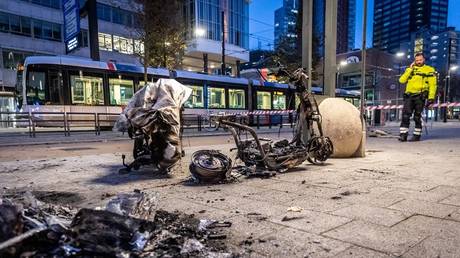
A burned electric scooter is seen after an anti-lockdown protest in Rotterdam, Netherlands, November 19, 2021 © AFP / Jeffrey Groeneweg
Lockdown protest described as ‘orgy of violence’

The chaotic scenes in the Netherlands’ third-largest city unfolded a day after a protest against reimposed Covid-19 restrictions in Rotterdam was marred by violence. Over 50 people were arrested in the city and three were injured after police opened fire in a bid to quell the unrest. Police later claimed that officers were “compelled to shoot at targets” to protect themselves. The three injured protesters remain in hospital, and their condition is unknown.

Protests have swept through a number of Dutch cities after the Netherlands became the first country in Western Europe since summer to go into a partial lockdown last week. Tensions soared further after the government banned New Year’s Eve fireworks displays and the Dutch parliament backed the introduction of the so-called 2G system, which would bar the unvaccinated and those who have not recently recovered from the virus from a long list of public places if introduced.

Think your friends would be interested? Share this story!

find more fun & mates at SoShow now !

The Swedish government has announced plans to introduce mandatory Covid-19 passes starting next month, amid rising infection rates in Europe. The passes will be required to attend any indoor event with 100 or more participants.

The upcoming introduction of mandatory coronavirus vaccine passes was announced by Health Minister Lena Hallengren on Wednesday.

Citing the ongoing surge in coronavirus cases across Europe – which has not hit the country itself yet – the minister stressed the need to be ready for the new wave of infections, projected to reach Sweden mid-December.

“The spread is increasing in Europe. We haven’t seen it yet in Sweden, but we are not isolated,” Hallengren told a news conference. “We need to be able to use vaccination certificates.”

Read more

© Getty Images / picture alliance
German media reveals jail terms for fake Covid certificates

Starting from December 1, the documents confirming a person’s vaccination status will be a requirement to enter any indoor event with 100 or more people in attendance. Sweden already boasts high vaccination rates, with 85% of its citizens aged over 16 having received at least one dose of a Covid-19 vaccine. Over 81% have received two shots or more, public health data shows.

Earlier in the day, the country’s health authorities backtracked on a highly controversial decision to stop testing fully vaccinated people who showed symptoms of Covid. The recommendation was rolled out in October, leading to a 35% decline in Covid-19 tests taken.

“The Public Health Agency has decided to recommend that the regions offer testing to everyone who is 6 years and older who gets symptoms that may be COVID-19,” the health authority said in a statement.

Sweden bucked the trend among European governments in its approach to handling the pandemic, electing not to impose widespread lockdowns. Having relied primarily on voluntary measures and social distancing, the country displayed several times higher death rates per capita than its Nordic neighbors, though it still fared better than many European countries, registering some 1.18 million cases and just over 15,000 coronavirus deaths since the beginning of the pandemic.

Think your friends would be interested? Share this story!

find more fun & mates at SoShow now !

A Roadmap for AI in the Intelligence Community

(Editor’s Note: This article was first published by our friends at Just Security and is the fourth in a series that is diving into the foundational barriers to the broad integration of AI in the IC – culture, budget, acquisition, risk, and oversight.  This article considers a new IC approach to risk management.)

OPINION — I have written previously that the Intelligence Community (IC) must rapidly advance its artificial intelligence (AI) capabilities to keep pace with our nation’s adversaries and continue to provide policymakers with accurate, timely, and exquisite insights. The good news is that there is strong bipartisan support for doing so. The not-so-good news is that the IC is not well-postured to move quickly and take the risks required to continue to outpace China and other strategic competitors over the next decade.

In addition to the practical budget and acquisition hurdles facing the IC, there is a strong cultural resistance to taking risks when not absolutely necessary. This is understandable given the life-and-death nature of intelligence work and the U.S. government’s imperative to wisely execute national security funds and activities. However, some risks related to innovative and cutting-edge technologies like AI are in fact necessary, and the risk of inaction – the costs of not pursuing AI capabilities – is greater than the risk of action.

The Need for a Risk Framework

For each incredible new invention, there are hundreds of brilliant ideas that have failed. To entrepreneurs and innovators, “failure” is not a bad word. Rather, failed ideas are often critical steps in the learning process that ultimately lead to a successful product; without those prior failed attempts, that final product might never be created. As former President of India A.P.J. Abdul Kalam once said, “FAIL” should really stand for “First Attempt In Learning.”

The U.S. government, however, is not Silicon Valley; it does not consider failure a useful part of any process, especially when it comes to national security activities and taxpayer dollars. Indeed, no one in the U.S. government wants to incur additional costs or delay or lose taxpayer dollars. But there is rarely a distinction made within the government between big failures, which may have a lasting, devastating, and even life-threatening impact, and small failures, which may be mere stumbling blocks with acceptable levels of impact that result in helpful course corrections.


The Cipher Brief hosts private briefings with the world’s most experienced national and global security experts.  Become a member today.


As a subcommittee report of the House Permanent Select Committee on Intelligence (HPSCI) notes “[p]rogram failures are often met with harsh penalties and very public rebukes from Congress which often fails to appreciate that not all failures are the same. Especially with cutting-edge research in technologies … early failures are a near certainty …. In fact, failing fast and adapting quickly is a critical part of innovation.” There is a vital difference between an innovative project that fails and a failure to innovate. The former teaches us something we did not know before, while the latter is a national security risk.

Faced with congressional hearings, inspector general reports, performance evaluation downgrades, negative reputational effects, and even personal liability, IC officers are understandably risk-averse and prefer not to introduce any new risk. That is, of course, neither realistic nor the standard the IC meets today. The IC is constantly managing a multitude of operational risks – that its officers, sources, or methods will be exposed, that it will miss (or misinterpret) indications of an attack, or that it will otherwise fail to produce the intelligence policymakers need at the right time and place. Yet in the face of such serious risks, the IC proactively and aggressively pursues its mission. It recognizes that it must find effective ways to understand, mitigate, and make decisions around risk, and therefore it takes action to make sure potential ramifications are clear, appropriate, and accepted before any failure occurs. In short, the IC has long known that its operations cannot be paralyzed by a zero-risk tolerance that is neither desirable nor attainable. This recognition must also be applied to the ways in which the IC acquires, develops, and uses new technology.

This is particularly important in the context of AI. While AI has made amazing progress in recent years, the underlying technology, the algorithms and their application, are still evolving and the resulting capabilities, by design, will continue to learn and adapt. AI holds enormous promise to transform a variety of IC missions and tasks, but how and when these changes may occur is difficult to forecast and AI’s constant innovation will introduce uncertainty and mistakes. There will be unexpected breakthroughs, as well as failures in areas that initially seemed promising.

The IC must rethink its willingness to take risks in a field where change and failure is embraced as part of the key to future success. The IC must experiment and iterate its progress over time and shift from a culture that punishes even reasonable risk to one that embraces, mitigates, and owns it. This can only be done with a systematic, repeatable, and consistent approach to making risk-conscious decisions.

Today there is no cross-IC mechanism for thinking about risk, let alone for taking it. When considering new activities or approaches, each IC element manages risk through its own lens and mechanisms, if at all. Several individual IC elements have created internal risk assessment frameworks to help officers understand the risks of both action and inaction, and to navigate the decisions they are empowered to make depending upon the circumstances. These frameworks increase confidence that if an activity goes wrong, supervisors all the way up the chain will provide backing as long as the risk was reasonable, well-considered and understood, and the right leaders approved it. And while risk assessments are often not precise instruments of measurement – they reflect the quality of the data, the varied expertise of those conducting the assessments, and the subjective interpretation of the results – regularized and systematic risk assessments are nevertheless a key part of effective risk management and facilitate decision-making at all levels.


Go beyond the headlines with expert perspectives on today’s news with The Cipher Brief’s Daily Open-Source Podcast.  Listen here or wherever you listen to podcasts.


Creating these individual frameworks is commendable and leading-edge for government agencies, but more must be done holistically across the IC. Irregular and inconsistent risk assessments among IC elements will not provide the comfort and certainty needed to drive an IC-wide cultural shift to taking risk. At the same time, the unique nature of the IC, comprised of 18 different elements, each with similar and overlapping, but not identical, missions, roles, authorities, threats and vulnerabilities, does not lend itself to a one-size-fits-all approach.

For this reason, the IC needs a flexible but common strategic framework for considering risk that can apply across the community, with each element having the ability to tailor that framework to its own mission space. Such an approach is not unlike how the community is managed in many areas today – with overarching IC-wide policy that is locally interpreted and implemented to fit the specific needs of each IC element. When it comes to risk, creating an umbrella IC-wide framework will significantly improve the workforce’s ability to understand acceptable risks and tradeoffs, produce comprehensible and comparable risk determinations across the IC, and provide policymakers the ability to anticipate and mitigate failure and unintended escalation.

Critical Elements of a Risk Framework

A common IC AI risk framework should inform and help prioritize decisions from acquisition or development, to deployment, to performance in a consistent way across the IC. To start, the IC should create common AI risk management principles, like its existing principles of transparency and AI ethics, that include clear and consistent definitions, thresholds, and standards. These principles should drive a repeatable risk assessment process that each IC element can tailor to its individual needs, and should promote policy, governance, and technological approaches that are aligned to risk management.

The successful implementation of this risk framework requires a multi-disciplinary approach involving leaders from across the organization, experts from all relevant functional areas, and managers who can ensure vigilance in implementation. A whole-of-activity methodology that includes technologists, collectors, analysts, innovators, security officers, acquisition officers, lawyers and more, is critical to ensuring a full 360-degree understanding of the opportunities, issues, risks, and potential consequences associated with a particular action, and to enabling the best-informed decision.

Given the many players involved, each IC element must strengthen internal processes to manage the potential disconnects that can lead to unintended risks and to create a culture that instills in every officer a responsibility to proactively consider risk at each stage of the activity. Internal governance should include an interdisciplinary Risk Management Council (RMC) made up of senior leaders from across the organization. The RMC should establish clear and consistent thresholds for when a risk assessment is required, recommended, or not needed given that resource constraints likely will not allow all of the broad and diverse AI activities within organizations to be assessed. These thresholds should be consistent with the IC risk management principles so that as IC elements work together on projects across the community, officers have similar understandings and expectations.

The risk framework itself should provide a common taxonomy and process to:

  • Understand and identify potential failures, including the source, timeline, and range of effects.
  • Analyze failures and risks by identifying internal vulnerabilities or predisposing conditions that could increase the likelihood of adverse impact.
  • Evaluate the likelihood of failure, taking into consideration risks and vulnerabilities.
  • Assess the severity of the potential impact, to include potential harm to organizational operations, assets, individuals, other organizations, or the nation.
  • Consider whether the ultimate risk may be sufficiently mitigated or whether it should be transferred, avoided, or accepted.

AI-related risks may include, among other things, technology failure, biased data, adversarial attacks, supply chain compromises, human error, cost overruns, legal compliance challenges, or oversight issues.

An initial risk level is determined by considering the likelihood of a failure against the severity of the potential impact. For example, is there is a low, moderate, or high likelihood of supply chain compromise? Would such a compromise affect only one discrete system or are there system-wide implications? These calculations will result in an initial risk level. Then potential mitigation measures, such as additional policies, training, or security measures, are applied to lower the initial risk level to an adjusted risk level. For example, physically or logically segmenting an organization’s systems so that a compromise only touches one system would significantly decrease the risk level associated with that particular technology. The higher the likelihood of supply chain compromise, the lower the severity of its impact must be to offset the risk, and vice versa. Organizations should apply the Swiss Cheese Model of more than one preventative or mitigative action for a more effective layered defense. Organizations then must consider the adjusted risk level in relation to their tolerance for risk; how much risk (and potential consequence) is acceptable in pursuit of value? This requires defining the IC’s risk tolerance levels, within which IC elements may again define their own levels based upon their unique missions.

Understanding and considering the risk of action is an important step forward for the IC, but it is not the last step. Sometimes overlooked in risk assessment practices is the consideration of the risk of inaction. To fully evaluate potential options, decision-makers must consider whether the overall risk of doing something is outweighed by the risks of not doing it. If the IC does not pursue particular AI capabilities, what is the opportunity cost of that inaction? Any final determination about whether to take action must consider whether declining to act would cause greater risk of significant harm. While the answer will not always be yes, in the case of AI and emerging technology, it is a very realistic possibility.

And, finally, a risk framework only works if people know about it. Broad communication – about the existence of the framework, how to apply it, and expectations for doing so – is vital. We cannot hold people accountable for appropriately managing risk if we do not clearly and consistently communicate and help people use the structure and mechanisms for doing so.

Buy-in To Enhance Confidence

An IC-wide AI risk framework will help IC officers understand risks and determine when and how to take advantage of innovative emerging technologies like AI, increasing comfort with uncertainty and risk-taking in the pursuit of new capabilities. Such a risk framework will have even greater impact if it is accepted – explicitly or implicitly – by the IC’s congressional overseers. The final article in this series will delve more deeply into needed changes to further improve the crucial relationship between the IC and its congressional overseers. It will also provide a link to a full report that provides more detail on each aspect of the series, including a draft IC AI Risk Framework.

Although Congress is not formally bound by such a framework, given the significant accountability measures that often flow from these overseers, a meeting of the minds between the IC and its congressional overseers is critical. Indeed, these overseers should have awareness of and an informal ability to provide feedback into the framework as it is being developed. This level of transparency and partnership would lead to at least two important benefits: first, increased confidence in the framework by all; and second, better insight into IC decision-making for IC overseers.

Ultimately, such a mutual understanding would encourage exactly what the IC needs to truly take advantage of next-generation technology like AI: a culture of experimentation, innovation, and creativity that sees reasonable risk and failure as necessary steps to game-changing outcomes.

Read also AI and the IC: The Tangled Web of Budget and Acquisition

Read also Artificial Intelligence in the IC: Culture is Critical

Read also AI and the IC: The Challenges Ahead

Read more expert-driven national security insights, perspective and analysis in The Cipher Brief

The post A Roadmap for AI in the IC appeared first on The Cipher Brief.

find more fun & mates at SoShow now !

Austria will introduce a full lockdown that could last for three weeks on Monday in an attempt to tackle a new wave of Covid-19 infections. The government has also ordered the entire population to get vaccinated from February 1.

On Friday, conservative Chancellor Alexander Schallenberg told a news conference that a complete lockdown of the nation would begin on Monday and last for an initial 10 days.

Read more

French President Emmanuel Macron (FILE PHOTO) © REUTERS/Sarah Meyssonnier
Macron discloses whether lockdown for unvaccinated will be necessary in France

He stated that the restrictions could be extended if infection rates did not start to fall, but he insisted the lockdown would not exceed 20 days.

The measures concern the entire Austrian population. The government has already imposed a partial lockdown on the unvaccinated in an effort to reduce hospitalization rates amid a surge in Covid-19 cases.

When the full lockdown ends, restrictions will remain in place for the unvaccinated.

Schallenberg’s announcement came after a meeting of nine state governors, two of whom had already vowed to introduce full lockdowns in their regions on Monday, in the western province of Tyrol.

The chancellor also announced that vaccinations would be mandatory from February 1. “We haven’t been able to convince enough people to vaccinate. For too long, I and others have assumed that you can convince people to get vaccinated,” he added, giving his rationale for the mandate.

Schallenberg said he lamented the political forces, radical opposition, and fake news fighting against vaccination.

Austria has one of the lowest vaccination rates in western Europe, with only 65% inoculated against the deadly virus according to data from Johns Hopkins university.

Infection rates are almost among the highest on the continent. The seven-day incidence rate stands at 971.5 per 100,000 people.

Think your friends would be interested? Share this story!

find more fun & mates at SoShow now !

People are weird. They cook and eat the strangest things. This time it’s an octopus stuffed inside a turkey, sitting on top of crab legs, and (optionally) garnished with bacon strips. This monstrous culinary invention was inspired by H.P. Lovecraft’s Cthulhu mythos, and honestly… it looks like a crime against food.

Cthulhu turkey.

Cthulhu turkey.

Cthulhu turkey.

Cthulhu turkey.

Cthulhu turkey.

Cthulhu turkey.

Cthulhu turkey.

Cthulhu turkey.

Cthulhu turkey.

Cthulhu turkey.

Cthulhu turkey.

Cthulhu turkey.

Cthulhu turkey.

Cthulhu turkey.

Cthulhu turkey.

Cthulhu turkey.

Cthulhu turkey.

Cthulhu turkey.

Cthulhu turkey.

Cthulhu turkey.

Cthulhu turkey.

If this gallery wasn’t disgusting enough for you, you should also check out pre-cooked canned chicken that we’ve previously featured on this fun and useful site. We know you’ll love it!

The post Meet Cthulhu Turkey: It’s a Turkey Stuffed With Octopus That People Actually Make first appeared on .

find more fun & mates at SoShow now !

As infections are rising again, scientists all around the world are rushing to fight the danger, offering a choice of new treatments and unusual variants of vaccines.

Levels of contagion are setting new records, hospitals are overwhelmed, governments are starting to introduce lockdowns, and not only for unvaccinated people ​​– the picture of the fight against Covid-19 looks quite disappointing. However, there’s still a place for good news: Research teams report positive results while trialling new medicines and vaccine types.

Nasal vaccines 

Vaccination will remain one of the most effective tools against Covid-19. As Professor David Dockrell, from the Center for Inflammation Research of the University of Edinburgh, told RT, “vaccines will continue to be a central part of how we control the virus.”

“If we can dampen down the number of infections, and the severity of infections, and also the extent to which the virus can replicate in people when they become infected, then we are slowing down the ability of the virus to change and to mutate,” he explains. 

So I think the vaccines still will be a very important part of the preventive strategy. It’s vital that they are available to all the world’s population, irrespective of where people live, and the wealth of the country in which they live. 

However, vaccination doesn’t always mean you have to get an injection. For instance, several intranasal Covid-19 vaccines are currently being developed. As the virus gets into the body through the nose, a nasal spray or drops are aimed to produce mucosal immune response and prevent it from getting into the lungs.

In India, a vaccine of this type is already completing Phase 2 of clinical trials. In Russia, a nasal vaccine is undergoing a clinical trial on volunteers. In Thailand, a home-developed product is expected to be trialed on humans next spring. In the US, Universities of Houston and Stanford recently reported good results of their experiments carried out on mice.

Read more

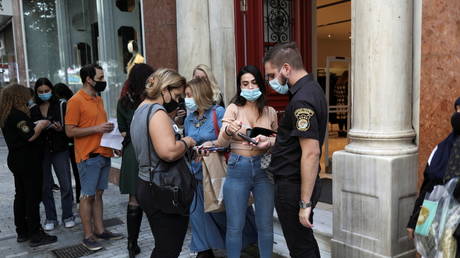
A security guard checks vaccination certificates outside a business in Athens, Greece, November 6, 2021.
Another EU state to ban unvaccinated from indoor spaces

Intranasal vaccines can have several potential benefits compared to inoculation. 

“They would be easier to use, because they can be self-administered. They wouldn’t need a nurse or clinical settings,” Swedish professor emeritus of epidemiology Marcello Ferrada de Noli explained to RT. As a result, he says, there’s hope that fewer people will be reluctant to be immunized. Not so many of us find it pleasant to get a jab ​​– and after all, there are those who are just afraid of needles. Also, it would be much easier to vaccinate children with nasal substances. 

However, what concerns Prof. de Noli the most is the duration of the effect of a vaccine of this type. Still, scientists can’t say for sure whether a nasal substance may completely replace a shot. According to Alexander Gintsburg, the head of Moscow’s Gamaleya Center biomedical research institute, which created the Sputnik V vaccine, the nasal version they are working on would serve for an additional protection against the virus, but would not replace the injections.

Chew the virus away? 

A nasal vaccine is not the only one being developed. In summer, it was revealed that Russian Defense Ministry scientists were creating a ‘chewing gum’ vaccine, also targeting the mucosal immune response. Meanwhile, a UK firm announced this month that it would conduct a human trial of a skin patch that uses T-cells to confront the virus. Developers hope it would offer longer-lasting immunity than the existing vaccines. Work on a similar project is being done in the University of Queensland, Australia.

While it all looks so promising, Prof. de Noli warns that it would still take a lot of time until these products become available to the public. “I think that discoveries in this field are a very good thing. But if we say ‘We discovered a new type of vaccine’, people will say ‘Aha, so I’m going to wait’. But we need to vaccinate people now,” he points out.

Improving Covid treatment

Vaccines are not a silver bullet, unfortunately, given the not-so-high level of global immunization and the constantly emerging new strains of the virus. “People might get infected despite having had a vaccine, but I still think the vaccine strategy is going to be central to how we manage this kind of virus going forward,” Prof. Dockrell says. “But we will have other strategies that will be very important. We will have other elements. When we put them all together, it gives us the best opportunity that people can live with coronaviruses, and hopefully, the mortality can be limited to much lower extense than what we’ve sadly seen in the last eighteen months.”

Read more

© Don Emmert/AFP
Pfizer widens access to its anti-Covid pill

Monoclonal antibodies will be central to the ongoing vaccine strategy, Prof. Dockrell explains. These are the antibodies similar to those the body uses to fight the virus. They are produced in labs and given via infusion or injection to boost the patient’s response against certain diseases. Monoclonal antibody treatment is used for people under a high risk of developing severe infection (including older patients 65+ years old or those with chronic medical conditions). It’s already being used in the US, following last year’s FDA approval. Earlier in November, the European Medicines agency recommended authorizing two monoclonal antibody medicines.

In October, UK’s AstraZeneca reported positive results of a Phase 3 study of its antibody combination, which, according to developers, is highly effective in both prevention and treatment of coronavirus.

Researchers are also working on a possibility to save Covid-infected patients from the so-called ‘cytokine storm’ – a situation when the immune system reacts so intensely that kills not only the virus, but the whole organism itself. A drug to ‘calm the storm’ was registered in Russia this year, and it’s already being used on patients.

Another way to fight Covid-19 is to use antiviral drugs. When the pandemic started, medics had to use something already existing (like anti-influenza Favipiravir) or something being authorized for emergency use (like remdesivir). Now, more than a year on, the work to create a special drug to specifically cure Covid-19 is giving its results. This month, Russia registered its first injectable anti-Covid medicine. A bit earlier, the UK became the first country to approve an antiviral pill produced by the US-based companies Merck and Ridgeback Biotherapeutics. Another American firm, Pfizer, got positive results from trials of its drug of the same kind. Both firms hope that with a drug in the form of a pill it would be easier to treat people at home.

Appreciating all the efforts on the field of developing anti-Covid treatment, Prof. de Noli points out that still, the key issue now is to reduce the spreading of the virus. “The new medicines are developed for people who already got the disease,” he says.

But we need to prevent people from getting the infection, not let them get infected because we have some new medicine that can cure them.

The same idea is echoed by scientists all over the world quoted in plenty of articles dedicated to the medical gains: it’s great to have the treatment, but none of the drugs may substitute vaccination, as first and foremost, humanity has to adopt preventive measures and stop the pandemic.

If you like this story, share it with a friend!

find more fun & mates at SoShow now !

Sporadic clashes broke out at massive Saturday demonstrations in major European cities, as thousands of people took to the streets of Vienna, Paris and Rome to express their discontent with Covid-19 restrictions.

The Austrian capital Vienna on Saturday saw the largest protest turnout since the start of the Covid-19 pandemic. A total of 38,000 people took to the city streets to join a dozen demonstrations protesting government measures.

The protests came a day after the Austrian authorities ordered nationwide compulsory vaccination from February 1 and imposed a full lockdown, starting Monday. The massive procession that spanned over several kilometers marched along Vienna’s central ring road. The city center was paralyzed for several hours as traffic was restricted.

Austria’s right-wing Freedom Party, whose members joined the rallies, put the number of protesters at 100,000. Some demonstrations were also attended by members of various far-right groups. The protests were generally peaceful but footage published by Ruptly video news agency showed several scuffles between the police and the demonstrators breaking out.

Law enforcement spoke of a total of five arrests. One incident saw a protester attempting to grab an officer’s gun and take it from its holster. In another incident, the officers were pelted with bottles and fireworks and had to use pepper spray in response.

Hundreds of kilometers away from Vienna, in the French capital Paris, events took a more dramatic turn. There, a demonstration against the government Covid-19 measures coincided with the third anniversary of the Yellow Vests movement. Hundreds of protesters took part in the protest, which quickly turned into clashes between the demonstrators and law enforcement.

The protesters were building barricades and setting them on fire as well as pelting police with bottles and various other projectiles. Law enforcement responded with profuse amounts of tear gas, sometimes filling entire streets with thick smoke to disperse the crowds.

Rome saw a massive demonstration against Italy’s Covid-19 health pass, also known as the Green Pass. Some 4,000 people gathered in the center of the Italian capital, according to the police. The demonstrators were waving national flags and chanting “Freedom” and “No Green Pass,” referring to the vaccination certificate needed to enter various public venues such as clubs or bars.

The crowd staged a sit-in in the Circus Maximus – an ancient Roman chariot-racing stadium converted into a modern-day park. They remained there after sunset, lighting the area with thousands of phones and colored smoke bombs. The rally was peaceful, though, as the police did not report any incidents.

Unlike Rome, Italy’s northern city of Milano saw clashes between protesters and the police as law enforcement officers sought to break up an unauthorized rally at the city center. Large police forces were deployed to the city center and several squares were cordoned off.

Think your friends would be interested? Share this story!

find more fun & mates at SoShow now !

CIPHER BRIEF EXPERT PERSPECTIVE 

Cipher Brief Expert Tim Willasey-Wilsey served for over 27 years in the British Foreign and Commonwealth Office. He is now Visiting Professor of War Studies at King’s College, London.

Older Americans have Saigon 1975 and the helicopters from the Embassy roof seared into their memories. A previous generation of Britons was haunted by the image of General Percival surrendering vast numbers of troops and equipment in Singapore to the Japanese in 1942. How Kabul falls to the Taliban could have important practical and symbolic significance.

The announcement that the United States is sending 3,000 troops to Kabul alongside 600 British troops to manage the evacuation of their civilians and those Afghans who provided assistance, is a remarkably late response to a rapidly deteriorating situation. Unless carried out in the next 48 hours, it will also be risky. Taliban infiltrators are already inside Kabul and the forces which captured Ghazni and Kandahar on 12th August will be heading towards the capital on their Honda 125cc motorbikes.

The US must have extracted undertakings from the Taliban negotiators in Qatar not to launch their full assault on Kabul until the evacuations are complete, but elements of doubt remain. Previous Taliban assurances have proved worthless, and it is doubtful that individual Taliban commanders would wish to hold back while some of Ashraf Ghani’s ministers, senior army officers, judges and officials are spirited away to a life of exile.

It is hard not to be impressed by the speed and élan of the Taliban’s recent successes; taking 13 of Afghanistan’s 34 regional capitals in almost as many days. It is reminiscent of the extraordinary progress which the Japanese made down the Malaya Peninsula in 1942 with Singapore as the ultimate prize.

The Taliban’s success has not happened by chance. It is clearly the fruit of preparation and planning. Above all, they have learnt from the experience of 1994 to 1996 when they eventually took Kabul but failed to capture the north, thereby allowing space for the Northern Alliance parties to survive and then reassert themselves following the 9/11 terrorist attacks.

This time, the Taliban have focussed first on border posts with neighbouring countries (thereby denying the government vital supply routes and customs revenues) before taking outlying regional capitals and leaving Kabul (which is never easy to capture) until last. Above all, they have concentrated on the north where many rural Afghans are disenchanted with the Kabul government and regional warlords. The north is no longer the solid bastion of anti-Taliban sentiment it was in the 1990s.


The Cipher Brief hosts private briefings with the world’s most experienced national and global security experts.  Become a member today.


Taliban progress in the north has snuffed out any chance that the old Northern Alliance could be reborn out of the eventual collapse of the Ashraf Ghani government. Whereas in 1996, Ahmed Shah Massoud, its brilliant military leader, was able to abandon Kabul and beat a tactical retreat up the Panjshir Valley, that option barely exists today. Not only is Massoud dead but his former adherents are no longer guerrilla fighters but members of a stratified Afghan army which has struggled to perform without US air support.

The Taliban have also ruthlessly exploited the weak negotiating stance of the United States and its chief negotiator Zalmay Khalilzad. Whereas some of the Taliban team in Doha, such as Mullah Barader, may indeed have been ‘moderates’ there was never any doubt that the Taliban movement wanted to see the total defeat of the Kabul government and the expulsion of Western forces. Pakistan too, may have occasionally considered some form of negotiated deal but ultimately the only sure way of keeping Indian influence out of Afghanistan (it believes) is a Taliban government.

The Afghan army (and in particular its impressive Special Forces) will now be assembling in Kabul and should be able to repel initial attempts to overrun the city. Certainly, Gulbuddin Hekmatyar found it impossible to take Kabul in 1992 and 1993 even with help from Pakistan, which, in frustration, switched support to the newly-created Taliban movement in late 1994.

But from 1992 to 1996 there were frequent deliveries of supplies to Massoud and his Northern Alliance defenders from Russia, Iran, and India. In 2021, the position is very different. Russia has already decided to “back the winner” and believes it has extracted promises from the Taliban not to export Islamism northwards into the Central Asian Republics (CARs). Iran too has channels to the Taliban and will be watching carefully for any return to the Taliban’s persecution of the Shia Hazaras. And India has already made contact with the Taliban in Doha in the hope that the Taliban in power will prevent Kashmiri militant groups from setting up bases there.

The likelihood therefore is that Kabul will fall to the Taliban quite quickly. If the Americans and British do manage to insert their evacuation forces soon, they should be able to complete the operation successfully, although there are likely to be heart-rending scenes at the airport as crowds of refugees are turned away at gunpoint from departing aircraft. Regional powers, particularly Pakistan, will try and persuade the Taliban to hold back from intervening, conscious that a bloodbath in Kabul would be a disastrous start to the Taliban’s second spell in government. Ironically, however, the evacuation would almost certainly lead to the collapse of the Kabul government as senior officials are forced to decide whether to take the last aircraft out or face almost certain torture and death at the hands of the victors. It is doubtful whether any Western countries will choose to retain their embassies in Kabul. For President Biden, the memory of Benghazi will be too raw.

What is certain is that there will be new iconic images to rival those of Saigon and Singapore.


Go beyond the headlines with expert perspectives on today’s news with The Cipher Brief’s Daily Open-Source Podcast.  Listen here or wherever you listen to podcasts.


Read more expert-driven national security insights, perspective and analysis in The Cipher Brief.

The post How Does Kabul End? appeared first on The Cipher Brief.

find more fun & mates at SoShow now !