This piece by General Joseph Votel (Ret.) and Lt. Gen. Michael K. Nagata (Ret.) and was first published by our friends at the Middle East Institute.


Lt. Gen. (ret.) Michael K. Nagata is a distinguished senior fellow on national security at MEI. He retired from the U.S. Army in 2019 after 38 years of active duty, with 34 years in US Special Operations. His final position was director of strategy for the National Counterterrorism Center from 2016 to 2019.

Gen. (ret.) Joseph L. Votel is a distinguished senior fellow on national security at MEI. He retired as a four-star general in the U.S. Army after a nearly 40-year career, during which he held a variety of commands in positions of leadership, including most recently as commander of CENTCOM from March 2016 to March 2019. 


OPINION – The United States and Pakistan have had a complex and often disappointing “love-hate” relationship since 1947 — one severely tested during the 20-year U.S.-led intervention in Afghanistan. We believe the time has come for serious policy consideration of whether and how both nations can achieve a more strategically beneficial and sustainable post-intervention relationship between the American and Pakistani governments and their populations.

As we consider a new policy, the U.S. military withdrawal from Afghanistan after two decades of leading the international coalition is almost complete. Early indications are that Afghanistan is increasingly likely to descend into significant instability and possibly serious fracture, which will have unwelcome consequences for the Afghan people and all of Afghanistan’s neighbors. It is already clear that international terrorist groups like al-Qaeda and Islamic State-Khorasan Province will continue to enjoy and probably grow their safe havens.

Whatever U.S. strategic concerns may be about the future of Afghanistan, the course and direction of Pakistan’s strategic choices in coming years will also matter to the United States. There are a variety of reasons for this.

First, Pakistan is a nuclear weapon state. Decades of investments in nuclear weapons by Pakistan and India, compounded by unrelenting and mutual historical, religious, cultural, and political antagonism between them, make this one of the world’s most dangerous flashpoints.

Second, all of the countries Pakistan borders are consequential for the U.S. Pakistan also has significant religious, cultural, and economic ties to other Muslim states such as Turkey and Saudi Arabia. In an era of “great power competition,” while Pakistan may not be one of the principal players, its network of relationships can be of strategic benefit to any of the great powers now involved, including the U.S. and China.

Third, despite its significant political and economic difficulties, Pakistan has a growing technology sector. Its youthful population and worldwide diaspora of Pakistani doctors, scientists, academics, and other professionals have become an increasingly important part of the global community.


The Cipher Brief hosts private briefings with the world’s most experienced national and global security experts.  Become a member today.


As long-time veterans of South Asia, both of us understand the sources of “weariness and wariness” that U.S. policymakers, in both Democratic and Republican administrations, often associate with strategic discussions of Pakistan. We have both seen the U.S. government’s reluctance toward undertaking any kind of strategic interaction or rapprochement with Pakistan because of previous disappointments or perceived betrayals. Understanding the enormous complexities of Pakistan’s relationships, influence, and strategic choices in the South Asia milieu can be intellectually challenging and draining.

Yet, we have both concluded that the only thing harder than establishing a functional and mutually beneficial relationship with Pakistan is living without one. Given unstable borders, a nuclear standoff with India, the continued presence of terrorist organizations, and the high potential for all of this to further disrupt our interests, there is no better alternative.

Among those areas that we believe worth exploring with the Pakistanis are these:

First, the possibility of planning, along with other like-minded international actors (both state and non-state), to manage the consequences of significant political instability and human suffering emerging from Afghanistan, including the possibility of substantial refugee flight into Pakistan. Indeed, the Pakistanis have long and miserable memories of the surge of Afghan refugees after the Kabul government collapsed in the 1990s and have consistently expressed deep concerns about a possible repeat resulting from the U.S. withdrawal now nearing its completion.

Second, the possibility of counterterrorism cooperation against any terrorist threat that emerges from Afghanistan and prevents it from sowing further instability across the region. We do not consider it likely that Pakistan will allow any positioning of U.S. intelligence or counterterrorism elements within its borders. Still, there may be other ways (e.g., working groups, forums, or exchanges) to foster better cooperation if a threat emerges from Afghanistan that is of concern to our mutual interests.

Third, the possibility of enlisting Pakistan cooperation, and that of India, toward some type of partial de-escalation of tensions along their common border and, with it, even a slight amelioration of the nuclear weapons threat. It is instructive to recall that, before 9/11, Pakistani President Pervez Musharraf and Indian Prime Minister Atal Bihari Vajpayee initiated a dialogue about the de-escalation of tensions that included the highly emotional issue of Kashmir. However, talks broke down without significant agreement. While we recognize this is an extraordinarily complex and fraught issue for the U.S. to embrace, given all of its other strategic challenges, the specter of a potential nuclear conflict in South Asia should at a minimum prompt us to ask ourselves, “why not at least try?” Indeed, U.S. antagonists such as China would probably take a dim view of such efforts, and we believe that might be a reason for doing so rather than a reason to flinch from it.


Go beyond the headlines with expert perspectives on today’s news with The Cipher Brief’s Daily Open-Source Podcast.  Listen here or wherever you listen to podcasts.


We have long heard U.S. policy and operational practitioners cite phrases such as “never underestimate the Pakistanis’ ability to disappoint us.” But, unfortunately, most American policymakers do not understand how often we have heard the Pakistanis say the same thing about Americans. Thus, both sides have longstanding “neuralgias” about the other. As we end our Afghan campaign, now is the time to move beyond our neuralgias and carefully weigh the strategic costs of whether trying to somehow partner with Pakistan is more, or less, than the cost of failing to do so. We believe, in the long run, it is likely to be less costly.

The views expressed in this piece are those of the authors.

Read more expert-driven national security insights, perspective and analysis in The Cipher Brief

The post OPINION: The Future of US Cooperation with Pakistan appeared first on The Cipher Brief.

find more fun & mates at SoShow now !

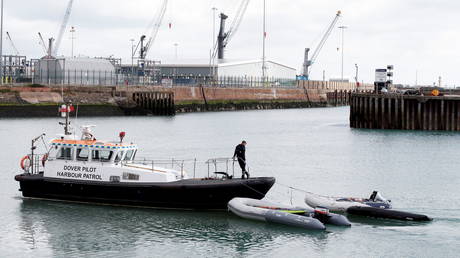
A large settlement of migrants in the suburbs of Dunkirk in northern France has been dismantled, in the wake of yet another wave of tensions with the UK over the growing number of illegal crossings.

Read more

FILE PHOTO. ©REUTERS/Peter Cziborra
London & Paris trade barbs over Channel crossings

At my instruction, the security forces are evacuating the illegal migrant camp in Grande-Synthe this morning,” French Interior Minister Gerald Darmanin said on Twitter on Tuesday. He added that state services in the region would provide shelter for the group.

Government spokesman Gabriel Attal said the decision to dismantle the camp was primarily based on the intention to put people into shelters ahead of the winter season.

Around 1,500 migrants were evacuated from the site via buses and their tents removed. According to Utopia 56, one of the charities monitoring the process of dismantling the camp, people “were forced to board buses, without being informed of their destination, and some of their personal belongings have been destroyed.” 

In a separate tweet, Darmanin announced the arrest of 13 alleged migrant smugglers, “bringing the total to 1,308 since January.

These smugglers are criminals who exploit human misery, responsible for irregular immigration,” the minister wrote.

Tuesday’s actions by French authorities came in the wake of a phone call between Darmanin and his British counterpart Priti Patel. The two discussed the increasing number of illegal migrants attempting to cross the English Channel, and reiterated the importance of cooperation in making this route “unviable,” Patel said afterwards. 

The UK and France have a history of mutual accusations when it comes to illegal migration. While British officials have claimed that French authorities do not do enough to prevent migrants from embarking for the dangerous trip, France’s government has said that the UK should reform its labor market rules in order to become less attractive to migrants.

More than 23,000 people have crossed the Channel by boat this year, compared to 8,404 in 2020, according to Press Association figures.

If you like this story, share it with a friend!

find more fun & mates at SoShow now !

Palestinian Islamist group Hamas has called on Canadian singer Justin Bieber to cancel his upcoming concert in what it calls the “Zionist occupation state” of Israel.

Bieber announced his 2022 world tour dates this week, with a concert in Tel Aviv planned for next October. On Thursday, Hamas’ Artistic Production Department issued a statement, cited by the Palestinian Sawa news outlet, “condemning and denouncing” the performer. It called on the star to cancel the show and “boycott the Zionist occupation state in protest at its repeated crimes against the Palestinian people.” 

Read more

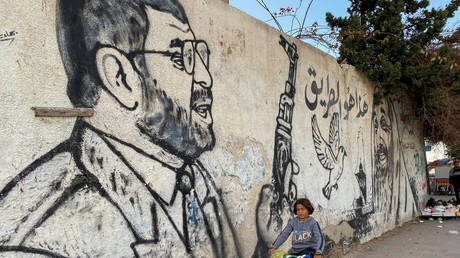
A Palestinian boy rides a bicycle past a mural depicting late Hamas leader Abdel-Aziz Al-Rantissi in Gaza City (FILE PHOTO) © REUTERS/Mohammed Salem
UK outlaws Hamas as terrorist organization

Bieber has performed in Israel multiple times, his last performance there having been in 2017 at Park HaYarkon – the same venue slated for next year. Since the announcement of the ‘Justice’ tour dates, calls for him to cancel the Tel Aviv show have gained momentum across social media, with many posters condemning the singer for supporting what one called an “apartheid state.”

Some noted that Bieber was set to arrive in Israel after performing in South Africa. “Justin Bieber is really going straight from SA to Israel. From a country that fought apartheid to a country that’s practicing apartheid,” one Twitter user complained.

A petition asking the singer to boycott Israel and exclude it from his tour has been launched online, and had garnered some 3,700 signatures by Friday. 

In 2018, the New Zealand singer Lorde canceled a concert in Israel, subsequently thanking fans for “educating” her on the issue, and, the same year, US artist Lana Del Rey at first defended her decision to perform in the country, saying her appearance would not be a “political statement,” before backtracking and canceling the gig.

Hamas has been designated a terrorist group by the US, the EU, and, as of Friday, the UK. In April 2021, international non-governmental organization Human Rights Watch concluded in a report that Israel had committed “crimes against humanity of apartheid and persecution.”

If you like this story, share it with a friend!

find more fun & mates at SoShow now !

Covid-battered global supply chains are being threatened by organized criminals, including drug cartels and con artists posing as legit suppliers, a new study has found, warning that the situation is set to get worse.

The international supply chain woes amid the Covid-19 pandemic are highlighted in a new annual report, released this week by the British Standards Institution (BSI).

The document, titled the ‘Supply Chain Risk Insights Report’, highlights Covid’s impact on supply chains, with the experts also warning that organized crime has increasingly preyed on this crucial area during the pandemic. On multiple instances, criminals were posing as legitimate logistics providers, stealing goods during shipment.

“I’m seeing a significant number of false suppliers acting as genuine potential suppliers in supply chain logistics provision – warehousing distribution, distribution centres, transportation companies – and actually, they are criminal groups trying to infiltrate the logistics supply chain,” said David Fairnie, BSI’s principal consultant in supply chain security. He urged producers to “continuously monitor” the supply chain and to not immediately trust new logistics providers – especially those contacted only remotely.

So, arguably today more than ever, you do need to know your suppliers. So far in 2021, BSI has noted this issue of fake carriers in an increasing number of countries in both the Americas and Europe.

Criminals have apparently been trying to steal goods in various ways, with phony truck drivers loading up items and taking off with them, while conmen “posing as legitimate employees” have reportedly been observed lurking around delivery destinations to steal cargo.

Read more

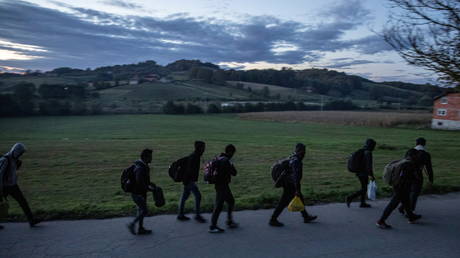
FILE PHOTO: Migrants walk towards the Bosnia-Croatia border in attempt to cross. © Reuters / Marko Djurica
Human trafficker explains migrant smuggling business

At the same time, the report found that trade in illicit goods has also been on the rise lately, with the illegal drug industry in particular appearing to flourish. While the supply chain for drug cartels, which require large amounts of assorted chemicals to produce narcotics, was disrupted due to the pandemic lockdowns and border closures impacted trafficking routes, organized crime quickly overcame these problems, the BSI noted.

“Drug cartels around the world did not miss a beat,” Chris Tomas, BSI lead intelligence analyst, said.

While many cartels shifted their production towards synthetic drugs, namely amphetamine, amid the pandemic, the apparent “lack of eradication of coca crops in Latin American countries” also remains an issue, the BSI said. The flow of cocaine has grown over the past year and is expected to increase even further, the organization warned.

“The numbers and quantities of cocaine seizures in Europe increased steadily in 2020 and 2021 and are expected to continue to rise in 2022,” the report reads.

Think your friends would be interested? Share this story!

find more fun & mates at SoShow now !

Brazil’s former President Luiz Inacio Lula da Silva has said he is willing to stand as a candidate in elections against incumbent leader Jair Bolsonaro, labelling his potential opponent “a poor copy of Trump.”

Speaking in Brussels at a media conference in the European Parliament on Monday, Lula announced that the Workers Party needs to put forward a presidential candidate to take over from right-wing Bolsonaro in 2022 and said he was willing to run in the elections again.  

Read more

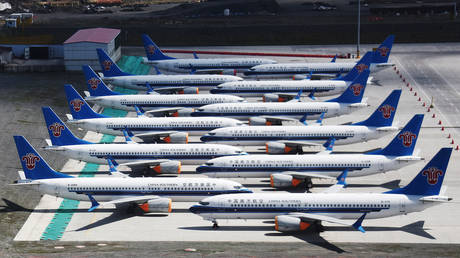
Grounded China Southern Airlines Boeing 737 MAX aircraft at Urumqi airport, in China's western Xinjiiang region, June 5, 2019.
World’s biggest aviation market may soon welcome back exiled Boeing 737 MAX

“I’m willing, I’m motivated, I’m in good health,” Lula stated, adding that said he would only make his decision early next year, some months before the election scheduled for October 2022. The popular leftist said his candidacy would depend on whether the party wanted him. 

“We need to have someone who stands, we need to win the elections. And at the same time, we have to rebuild Brazil,” he said, speaking on behalf of his Workers Party.

Lula, 76, also took aim at the incumbent president. “He’s a poor copy of Trump. But Bolsonaro doesn’t think, he doesn’t have any ideas,” the former president said, claiming the incumbent leader was hellbent on ensuring the beneficial legacies of Lula’s administration were “torn down.” 

A recent poll put him 27 points ahead of Bolsonaro, despite his candidacy not officially being announced.  

In 2010, Lula made way for his protégé, Dilma Rousseff. Rousseff was ousted from power in what was described by her supporters as a parliamentary coup. Lula served nearly two years in prison after being convicted on money laundering and corruption, despite a nine-and-a-half-year sentence. He was also barred from running in the 2018 election. 

A number of judges have subsequently ruled that the case against Lula was unlawful and the Supreme Court annulled his earlier convictions, meaning he can face off against Bolsonaro in 2022.

If you like this story, share it with a friend!

find more fun & mates at SoShow now !

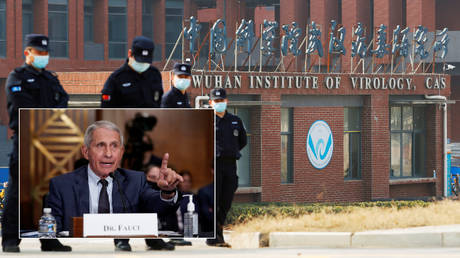
An American nonprofit behind the US-funded bat virus research in China has denied ever sending virus samples from Laos – a place where SARS-CoV-2 closest natural relative was found – to Wuhan in response to fresh allegations.

“No work was ever conducted in Laos as a part of this collaborative research project,” EcoHealth Alliance – a group that conducted experiments on coronaviruses while receiving funding from the National Institutes of Health (NIH) – said in a series of tweets on Sunday, responding to media reports alleging that the group might have transported a potentially dangerous virus from Laos to the laboratory in Wuhan.

The group’s name surfaced in October when the NIH principal deputy director, Lawrence Tabak, revealed EcoHealth Alliance did experiment on the viruses with the agency’s financial help. At that time, White House Medical Advisor Dr. Anthony Fauci stated that the viruses studied as part of the project “were distant enough molecularly that no matter what you did to them, they could never, ever become SARS-CoV-2.”

EcoHealth has come under renewed scrutiny after its emails, obtained through a Freedom of Information request, appeared to suggest that the group was discussing the prospect of collecting viral samples from bats in Laos and sending them to the Wuhan Institute of Virology. The emails were initially obtained by the White Coat Waste Project and sparked a flurry of reports over the weekend, including in the Spectator by British science writer Matt Ridley.

Read more

FILE PHOTOS.
Fauci DID fund Wuhan virus experiments, but officials insist virus involved ‘could not have been’ cause of Covid-19 pandemic

The emails shared between EcoHealth Alliance and its US government funders reportedly reveal that the scientists discussed collecting viral samples from bats in eight countries, including in Laos, between 2016 and 2019, and toyed with the idea of transporting them to Wuhan, ostensibly, to avoid red tape. One email from 2016 cited by the Spectator reportedly reads: “All samples collected would be tested at the Wuhan Institute of Virology.”

Laos is the birthplace of at least one virus that seems to be very close to SARS-Cov-2. A bat viral strain called Banal-52 discovered in Laos in September shares 96.8 percent of its genome with the virus behind the Covid-19 pandemic

On Sunday, EcoHealth Alliance claimed that the emails cited by Ridley “do not show…that we were sampling bats in Laos and sending the results to Wuhan.”

The group acknowledged, however, that it requested NIH permission to work in Southeast Asian countries, including in Laos, and that this permission was granted. 

However, the nonprofit claimed it ended focusing on China instead.

 The response failed to satisfy Ridley, who is also a co-author of a book on Covid’s origin, who demanded “evidence” proving that  his report was not “fully accurate.”

Think your friends would be interested? Share this story!

find more fun & mates at SoShow now !

Colder weather is settling in around much of the globe and after a year and a half of managing a global pandemic, energy markets are more complicated than ever.  The U.S. petroleum inventory is at its lowest level since 2015, the UK is experiencing a severe energy crisis, Russia continues to push Germany on the Nordstream II pipeline and winter has already come to China, which has experienced weeks of rolling blackouts. What does all of this mean as both state and non-state cyber actors continue to take aim at energy infrastructure?

The Cipher Brief spoke with energy expert Norm Roule, a top adviser on energy issues, to get a sense of where we’re headed.

Norman T. Roule served for 34-years in the Central Intelligence Agency, managing numerous programs relating to Iran and the Middle East.  He served as the National Intelligence Manager for Iran (NIM-I) at the Office of the Director of National Intelligence from November 2008 until September 2017.  As NIM-I, he was the principal Intelligence Community (IC) official responsible for overseeing all aspects of national intelligence policy and activities related to Iran, to include IC engagement on Iran issues with senior policy makers in the National Security Council and the Department of State.

The Cipher Brief: Give us a brief snapshot of the global energy market today and what you think we will see in the coming months.

Roule: The energy market is working through what will hopefully be the final phase of a perfect storm of market distortions ignited by the pandemic and influenced by shifts in capital markets and climate change initiatives. I say the final phase because most countries are returning to growth and pre-pandemic energy consumption. Most of the drivers of this final phase will likely push prices upward in the near term. A few involve long-known issues that are now coming into play. A few remain unpredictable. Ancillary industries that rely on oil, gas, or distillates as significant feedstocks will either raise prices or shift production to areas with less exposure to hydrocarbons. In short, in the coming weeks, consumers should expend to not only pay more at the gas pump but at the supermarket and mall.  We are likely to see relief in the Spring as the pandemic and supply chain distortions wane, seasonal demands on oil and gas pass, and energy producers ramp up operations to exploit high prices. China’s economy also shows signs of slowing, and financial packages meant to jump-start global economies will run their course.

The Cipher Brief: Energy markets seem more complicated than ever. What are the primary variables at play?

Roule: Global oil consumption is now back to 100 million barrels per day, a statistic last seen when the pandemic hit. Production is up, but the most crucial trend in recent months has been the deep draw on the glut of oil stocks during the pandemic. Producers – especially OPEC – have constrained production to reflect their cautious approach to market stability and their desire to reduce the stockpiles accumulated during the pandemic. As a result, stocks are now lower than before the pandemic. If you exclude the strategic petroleum reserve, the U.S. petroleum inventory is at a level not seen since 2014-2015. Stockpiles at Cushing are at a similar level. U.S. gasoline stocks are around five million barrels below pre-pandemic seasonal averages.

U.S. producers have consolidated, and the industry prioritizes return on equity over expansion, particularly in a political environment that is increasingly hostile to hydrocarbon production. As a result, U.S. oil production is still about 1.7 million barrels a day below pre-pandemic levels. Add to this the push to reduce carbon emissions, gas supply cuts, and some supply chain distortions, and you get a surge in gas prices and a need for oil (and coal) to replace gas in electricity production, as we see in China.

The Cipher Brief: The administration seems to be blaming OPEC plus for high oil prices. What’s happening within the cartel?  How does the cartel see the current energy market?

Roule: OPEC’s role in oil markets remains deeply significant. The cartel produces 40 percent of the world’s oil, but 60 percent of the world’s total traded exports. That inevitably gives it an important voice. It is also clear that OPEC+ leaders remain confident in their strategy to maintain market stability and benefit from prices that are not so high that they ignite demand destruction. OPEC discipline during this turbulent period has been quite good, especially given that it is far from a monolith of views and capabilities. For example, the UAE would likely support additional production. Moscow makes positive noises about its willingness to increase production, but it follows Riyadh’s lead for the revenue and political advantage it derives from the current market.  

Riyadh remains the architect of OPEC’s approach. Kuwait and Baghdad seem comfortable with this strategy. Production restraint is made easier because about half of OPEC’s members reportedly are unable to meet production quotas due to technical problems, mismanagement, or a lack of capital investment. This list includes Angola, Gabon, Equatorial Guinea, Nigeria, Libya, and Venezuela.  

OPEC decision-making likely rests on a handful of variables, some predictable, others not. The cartel has done well in its assessments of global recovery and pandemic impact. But questions remain on aviation recovery. Likewise, even their best analysts have a tough time predicting the impact of speculators, weather trends, and the future of sanctions on Iran and Venezuela. Riyadh and Abu Dhabi will do what they can to avoid the financial and political consequences of inflation and any energy-instigated recession.

The strains in US-Saudi relations appear to have undermined Riyadh’s sympathy for Washington’s challenges. The Saudis are tired of being a political target within the U.S. They also seem to believe that while the U.S. touts itself as being interested in only renewable energy sources, it has no problem criticizing the Kingdom when high gas prices become a political issue. Last, we should recall that it was only in May 2020 that a group of Republican Senators publicly called on Saudi Arabia, demanding that it stabilize the energy market. From Riyadh’s perspective, it has done precisely that.

The Cipher Brief: Are the Gulf oil producers serious about renewable energy? 

Roule: Absolutely. Regional leaders certainly understand the consequences of climate change for their people. In recent years, the region has experienced some of the highest temperatures on record, causing concern that, if unchecked, the trend could make portions of the Middle East unlivable.

But their approach is different from ours and as we all know, Gulf economies rely heavily on revenues from hydrocarbons. To varying degrees, all the Gulf states are trying to diversify their economies. But they also want to avoid a situation in which they are stuck with stranded strategic assets. In the West, our climate narrative tends to focus on ending the use of hydrocarbons. As with Norway, Gulf producers claim that they will use the resources from their oil revenues to fund the transition to a new energy economy.


Join The Cipher Brief for Members Only expert conversations on issues related to economic and global security.  Become a member for just $10 a month and then join us for a Members Only Brief with Norm Roule on Thursday, November 18 at 1:30p.  Members receive invitations via email.


Their focus tends to be a balance between a reduction of emissions and reduction of hydrocarbon use. Recent weeks have seen multiple significant events in the Gulf in which they tried to highlight their decision to expend resources and political bandwidth on green technologies, hydrogen production, and carbon capture solutions. We will also see increasing efforts to plant trees and to rely on natural gas instead of oil for power generation. They also claim they will try to end gas flaring and reduce methane emissions. I don’t think these efforts will satisfy Western environmental activists who demand an end to oil use, but the trend is undeniable.

The Cipher Brief: What is happening with U.S. oil and gas producers?  How are they responding to changing conditions?

Roule: Much has changed in the last two years. First, the sector underwent significant consolidation. The larger publicly-held companies must satisfy investors and financial institutions with a steady return on equity over the growth. Washington has cooled on its support for the industry. The decision to kill the Keystone Pipeline and limit drilling on federal property has contributed to industry reluctance on expansion. Last, some investors are pushing for companies to devote more attention to renewable energy sources.  During the pandemic, this reduced capital investment to about half of average expenditure, thus producing our current limited production capacity. U.S. rig count has significantly improved over the past year, but not on a scale that would return U.S. production to pre-pandemic levels. In the near term, smaller privately-held firms are likely to spend the resources to expand production with public firms following once they get a sense of what 2022 will bring.

The results speak for themselves. At the beginning of the pandemic, the U.S. produced around 12.8 million barrels of oil per day (BPD). By May 2020, production declined to 9.7 million BPD, and with recovery is now approximately 11.3 million BPD.  We are once again a net importer, bringing in about 1.3 million BPD in October.

We have seen a broader recovery in gas production, particularly in Texas. But a lack of production, low stockpiles, and unprecedented demand from abroad means consumers will face high bills if winter is severe or the risk of short supplies. Beyond heating, gas-fired power plants produce more than 50% of New England’s electricity, for example, so that any price spike will play out elsewhere in the economy.

The Cipher Brief: Is there a policy response to this situation?

Roule: I think policymakers globally are praying for a mild winter. But beyond this, policy options are few in the near term. A release from the strategic petroleum reserve (SPR) is conceivable. Still, we should remember the SPR was established for national emergencies and not a piggy bank to manage gas prices in an election year. Domestic producers will take a while to ramp up production, but policymakers will find this tough to seek in the current political environment. The administration could ban oil and gas exports or allow Congress to pass legislation enabling the federal government to sue OPEC for its cartel activities. Either step would invite predictable and unwelcome diplomatic consequences. 

Although the American public demands cheap energy, it isn’t enthusiastic about supporting the infrastructure needed to achieve this, even if the power is produced elsewhere.  Let me cite a couple of recent examples:

• Maine voters just rejected the construction of a billion-dollar electric line that would have delivered Canadian hydro-power electricity to New England.

• The administration is wrestling with a decision as to whether it should shut a pipeline that carries crude oil from Canada to refineries across Wisconsin, Michigan, and the Great Lakes region. 

If the administration hopes to convince OPEC members to increase production, it will improve relations with Gulf Arabs. It might be possible to convince Saudi Arabia, Kuwait, and the UAE to lift production to cover the exports of OPEC members unable to meet their production quotas. In an extreme situation, the administration might consider a temporary oil export waiver to Iran as a sign of goodwill. I think the political blowback on the latter rules it out, but the possibility is there. 

The Cipher Brief: The United Kingdom seems to be working its way through a severe energy crisis. How did this happen, and what are its policymakers doing in response?

Roule: The United Kingdom’s energy challenge is significant. As with other countries, it faces consequences of production limitation and the need to turn to more climate-friendly energy sources.

A few basics.  Gas produces about 40% of the country’s electricity and heats many of its homes. Once London could rely on the North Sea for its gas; it now imports about half of its gas requirements.  Norway is its primary gas source, but it also depends on gas producers in the U.S., Russia, Qatar, Belgium, and the Netherlands. To add to its woes, the U.K.’s storage capacity would survive only a short period of peak consumption. In 2017, London closed a massive Rough, which accounted for 70% of the country’s entire gas storage system. At the time, London believed it could rely on the global LNG market for reliable and cheap gas. Unfortunately, most LNG tankers head to Asia, a trend that can only increase as power-hungry Asian countries wean themselves from coal and oil.

The exploitation of new energy sources in the U.K. is no less contentious than in the U.S. A good illustration of this would be the tussle over the development of the Cambo oil and gas field in the waters near Scotland. Opposed by environmentalists who cite the inevitable carbon emissions the project and its oil would produce, the project offers to ease London’s energy woes and provide around a thousand jobs. The Johnson government has yet to indicate whether it will approve the project.

London’s options are few and leaving the country reliant on market conditions means risking shortages. For this reason, it has reportedly asked Qatar to agree to become the “supplier of last resort” in case global suppliers are unavailable. 


Go beyond the headlines with expert perspectives on today’s news with The Cipher Brief’s Daily Open-Source Podcast.  Listen here or wherever you listen to podcasts.


The Cipher Brief: What’s the Russian angle to the energy story?

Roule: Upfront, I think we should worry whether Russia will perceive the energy crisis as offering an opportunity for aggression. What if Moscow decides its gas hold over Europe allows it to invade Ukraine without penalty? Or as a means of pushing German regulators to accelerate their approval of the Nordstream II pipeline?

Moscow insists that it is meeting contractual obligations and that its exports have increased in the past year. At the same time, there are routine reports that Russia’s gas supplies to Europe have not only not met requirements, but that gas flow reversed in the Yamal-Europe pipeline. Russia also maintains eight gas storage sites in Europe to help manage supply during high-demand periods. Gas levels at these sites are currently low. Critics claim Gazprom diverted production to Russian domestic storage and that exports in October fell to the lowest level since 2014. When pressed, Moscow explains shortages saying that it must fill its winter supply stocks and expects to send Europe additional gas this week. 

But if the current energy dynamic seems to be in Russia’s interest, Moscow’s long-term prospects are dim. A global shift to renewable energy sources forces Moscow to reckon with the prospect of holding a massive oil infrastructure of little commercial value. If so, future historians may look at the recent Glasgow climate summit as a significant step in accelerating Russia’s decline, possibly a new era of aggression as it seeks to accumulate power ahead of this decline or a more competitive race for market share against OPEC members.

The Cipher Brief: What about China?

Roule: No major country has endured such energy problems in recent months as China. After weeks of rolling blackouts, China looks well on its way to solving its coal problems that partially contributed to this situation. That won’t delight environmentalists, but it should ease China’s electricity problems and ensure its citizens stay warm this winter. Winter arrived early, and Beijing is about to see its first snow of the season. China’s efforts will be put to the test in a winter that many expect to be colder than 2020.

Longer-term, China still must work through the causes of this crisis. If the global economy continues to surge demand for Chinese products, its energy requirements will grow. Weather problems cut wind production; floods shut mines. We shouldn’t be surprised if such problems continue. Inevitably, China can only meet its climate goals by shifting from coal to natural gas, raising prices for other consumers.

The Cipher Brief: Let’s shift to North Africa.  Algeria recently closed a long-established pipeline that transited Morocco to deliver gas to Spain.  Will this impact Europe’s already tight gas situation? What’s the story here? 

Roule: Over the past year, Algerian relations with Morocco have steadily deteriorated.  In addition to their traditional disagreement over the status of Western Sahara and the Polisario, Algiers criticized Morocco’s renewed ties with Israel and accused Rabat of supporting an opposition group that Algeria claims ignited forest fires. Algiers closed its airspace to Moroccan flights and accused Morocco of killing several Algerian citizens in the Sahara region.

Here’s how it touches the energy picture. On 31 October, Algiers closed an 800-mile pipeline that carried Algerian gas to Spain via Morocco and the Strait of Gibraltar.  The closure cost Morocco a portion of the gas it used from the pipeline. Morocco used this gas to produce about a tenth of its electricity. Rabat claims it can use other energy sources for this purpose. However, Spain has little gas and derives a significant portion of its electricity from that which it must import. Algiers claims it will make up the loss through a secondary pipeline, but the loss of gas will compound the energy problems of Spain and Europe in general.

The Cipher Brief: Any other issues on the horizon we should consider?

Roule: A growing number of aging refineries in the West will be closed in the coming years.  However, Asia is the new center for refinery construction. This expansion will draw even more crude to the region for processing with the inherent impact on local economies and global consumers.

The Cipher Brief: Last, let’s touch on wild cards. What are the grey swans that might impact markets in 2022?

Roule: With low stockpiles and supplies, the energy topography is ill-prepared to sudden shocks to its production or distribution architecture. Yet, it faces three threats that have grown in the last decade.

First, we have climate change issues.  Increasingly harsh weather events have shut down large portions of the production and refinery sectors in the United States and Mexico, sometimes taking weeks to restore normal production. Second, we have the universe of cyber threats.  State and non-state cyber actors routinely probe or attack every aspect of the energy industry. Last, we have new geopolitical pressures.  Tensions are rising with China as well as Iran and its proxies. Three of the world’s six most significant shipping channels are in the Middle East and a fourth in Asia.

Join us for a Members Only Brief with Norm Roule on Thursday, November 18 at 1:30p.  Cipher Brief Members receive invitations via email.

Read more expert-driven national security insights, perspective and analysis in The Cipher Brief

The post Winter is Coming: Global Energy Markets and the Impact on National Security appeared first on The Cipher Brief.

find more fun & mates at SoShow now !
General Joseph L. Votel (Ret.) joined BENS as CEO & President in January 2020 following a 39-year military career where he commanded special operations and conventional forces at every level; last serving as the Commander of U.S. Central Command (CENTCOM) where he was responsible for U.S. and coalition military operations in the Middle East, Levant, and Central and South Asia. General Votel’s career included combat in Panama, Afghanistan, and Iraq and he led the 79-member coalition that successfully liberated Iraq and Syria from the Islamic State Caliphate. General Votel preceded his assignment at CENTCOM with service as the Commander of U.S. Special Operations Command and the Joint Special Operations Command.

The Cipher Brief:  Did you ever envision that the U.S. would pull out so quickly or completely leaving the Afghan military on its own without U.S. air support?  

General Votel: I did not anticipate this during my time – but once the President sets a hard departure date – then a fast withdrawal is inevitable.  No Commander wants to accept unnecessary risk with troops on the ground when you are up against a clearly articulated departure date.

The Cipher Brief: Intelligence assessments wildly missed the mark on how fast Kabul would fall, what factors contributed most directly to this? 

General Votel: Certainly, the departure of our own capabilities is a big part of this; the lack of direct contact with Afghan leaders is another important factor; and, of course, once it was clear that we were departing (and took our Commander out) — we lost priority and access with our normal and reliable Afghan intelligence sources.

The Cipher Brief: U.S. personnel are facing a deteriorating security situation at the Kabul airport while U.S. forces are still deploying for the contingency operation, another sign that the administration underestimated how fast the Taliban would reach Kabul. The U.S. could have chosen to slow the Taliban advance using airpower, why didn’t it happen, do you think? 


The Cipher Brief hosts private briefings with the world’s most experienced national and global security experts.  Become a member today.


General Votel: I think it is very clear that this was no longer a priority for our Government.  The mission right now, at least articulated over the weekend, is about supporting evacuation of the diplomats and helping with the departure of those Afghans who assisted the US and meet the criteria for evacuation.  While I don’t know this for certain — I believe what we were trying to do with over the horizon air support in a rapidly developing situation, was not optimal or overly effective.  It doesn’t seem to have done much – if anything.

The Cipher Brief: The U.S. has allowed U.S. supplied military hardware, weapons and technology to fall into the hands of the Taliban, a group responsible for the deaths of U.S. personnel and thousands of innocent Afghans.  The U.S. government holds private citizens and corporations accountable for far lesser violations of export violations involving dual-use technology or military equipment, etc.  How should Americans think about this situation now, where the Taliban will use equipment, paid for the by the U.S. taxpayer, to potentially perpetrate acts of violence against U.S. interests, and erode democratic values that the U.S. tried to introduce to Afghanistan?  

General Votel: Not sure on this.  Unfortunately, it is not the first time we have seen this — remember ISIS in 2014, in Mosul?  I suspect these will be more trophy pieces than they will be hard military capability – with the exception of small arms, mortars, and artillery.  Most of this will be difficult for the Taliban to sustain – and they probably prefer their own gear, anyway.

The Cipher Brief:  There is a lot of anger among the national security community right now.  What would you say to individuals who have suffered because of the U.S. role in Afghanistan, who may be feeling anger and rage?  

General Votel: I can’t really comment on anger in the national security community — I am sure that exists, but the sentiment that seems more strong to me, is disappointment.  No one wants what we are seeing now.  I think most security professionals can accept a decision to depart by the Commander in Chief — that is well within his authority, and everyone understands this; what is harder to accept is the manner in which this happened, and how it has played out.  It was hard for me to watch Taliban sitting at a conference table that I once sat at with the Afghan President.  In a number of public engagements, I have participated in lately – people have asked me if this whole effort was a waste.  My response has been consistent.  American military personnel, members of the IC and the diplomatic corps conducted themselves honorably throughout this war.  They responded when the Nation called and did their best for our Country, each other, and the Afghan people.  There will be plenty of time to place the blame – but the vast, vast majority of Americans who participated in some aspect of the Afghan War did so nobly and to the best of their ability.  We should not lose sight of this.  That this did not turn out the way we all hoped — is not their fault … and I would not want anyone (especially families of our wounded and killed) to think these efforts were in vain.  That is not how I thought about them at the time, and it is not how I think about them now.  They answered when the Nation called.

Have a perspective to share?  Email Editor@thecipherbrief.com

Read more expert-driven national security insight, perspective and analysis in The Cipher Brief


The post The Painful Lessons of Afghanistan appeared first on The Cipher Brief.

find more fun & mates at SoShow now !