Scientists have used artificial intelligence to “predict” formulas for new designer drugs, with the stated goal of helping to improve their regulation. The AI generated formulas for nearly nine million potential new drugs.

Researchers with the University of British Columbia (UBC) used a deep neural net for the job, teaching it to make up chemical structures of potential new drugs. According to their study, released this week, the computer intelligence fared better at the task than the scientists had expected.

The research team used a database of known designer drugs – synthetic psychoactive substances – to train the AI on their structures. The market for designer drugs is ever-changing, since their manufacturers are constantly tweaking their formulas to circumvent restrictions and produce new “legal” substances, while cracking their structure takes months for law enforcement agencies, the researchers said.

Read more

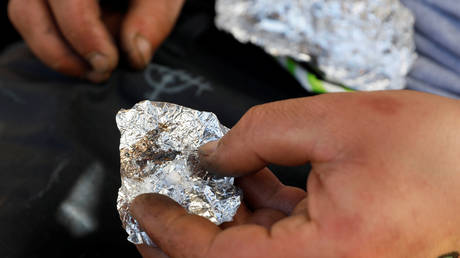
FILE PHOTO: A man living on the streets displays what he says is the synthetic drug fentanyl, in the Tenderloin section of San Francisco, California, February 27, 2020 © Reuters / Shannon Stapleton
Drug overdose deaths in US hit all-time record

“The vast majority of these designer drugs have never been tested in humans and are completely unregulated. They are a major public-health concern to emergency departments across the world,” one of the researchers, UBC medical student Dr. Michael Skinnider has said.

After its training, the AI was able to generate some 8.9 million potential designer drugs. Afterwards, researchers ran a data sheet of some 196 new drugs, which had emerged in real life after the model was trained, and found that more than 90% of these have been already predicted by the computer.

“The fact that we can predict what designer drugs are likely to emerge on the market before they actually appear is a bit like the 2002 sci-fi movie, Minority Report, where foreknowledge about criminal activities about to take place helped significantly reduce crime in a future world,” senior author Dr. David Wishart, a professor of computing science at the University of Alberta, has said.

Identifying completely unknown substances remains an issue for the AI, the research team has noted, but they hope it might potentially help with that task, since the computer was also able to predict which formulas of designer drugs were more likely to be created and hit the market. The model “ranked the correct chemical structure of an unidentified designer drug among the top 10 candidates 72 percent of the time,” while throwing in spectrometry analysis, which is an easily obtained measurement, bumped the accuracy to some 86%.

“It was shocking to us that the model performed this well, because elucidating entire chemical structures from just an accurate mass measurement is generally thought to be an unsolvable problem,” Skinnider stated.

Think your friends would be interested? Share this story!

find more fun & mates at SoShow now !

Australia’s Defense Minister derided a senior Chinese diplomat’s comments as “silly” and “comical,” after the latter dubbed Canberra’s trilateral nuclear-powered submarine pact with the US and UK a threat to peace.

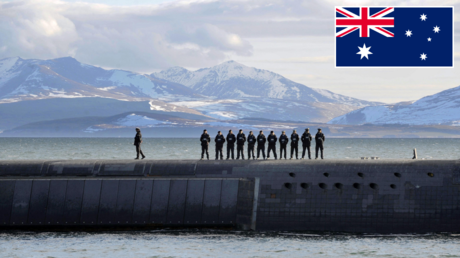
During a television interview on Friday, Peter Dutton said acting Chinese Ambassador Wang Xining was “probably reading off a script from the Communist Party” when he warned that Australia would become the “naughty guy” if it procured the stealth-combat vessels through the AUKUS deal.

Wang, who is China’s most senior representative to the country after the previous ambassador’s term ended last month, told The Guardian on Thursday that Australia would be labeled a “sabre-wielder” rather than a “peace defender.” He said the Australian public “should be more worried” about the impact of the security pact their nation had made with the UK and the US. 

There’s zero nuclear capacity, technologically, in Australia, that would guarantee you will be trouble free, that you will be incident free. And if anything happened, are the politicians ready to say sorry to people in Melbourne and in Adelaide?

However, Dutton “dismissed” the comments and countered that “most Australians [would] see through [their] non-productive nature.”

Read more

FILE PHOTO. British Navy personnel stand atop the Trident Nuclear Submarine, HMS Victorious, on patrol off the west coast of Scotland. © AFP / ANDY BUCHANAN
New AUKUS anti-China alliance could spark global arms race, Moscow warns, as Beijing sounds alarm over West’s ‘Cold War’ tactics

“We don’t see it from any other ambassador here in Australia. It’s quite remarkable,” the minister told the Nine Network, adding that “this type of diplomacy” was seen elsewhere in the world too.

“These provocative comical statements – it’s just so silly. It’s funny,” he added.

In September, Australian Prime Minister Scott Morrison announced the deal to obtain at least eight nuclear-powered vessels as part of its new defense alliance. The pact angered not only China but also France, which claimed it had been “stabbed in the back” after Canberra unilaterally scrapped a multi-billion-dollar diesel-electric submarine contract with Paris.

Last weekend, Dutton had irked Beijing by stating that he could not conceive of a situation in which Australia would hesitate to support the US should armed conflict with China break out over Taiwan. Under its ‘One China’ policy, Beijing has pledged to reunify the island with the mainland.

Wang warned Australian politicians on Thursday not to do anything that would be “destructive to our relationship.”

If you like this story, share it with a friend!

find more fun & mates at SoShow now !

Extinction Rebellion has targeted Colombian diplomatic missions across several EU countries, including France and Italy, demanding that the nation address deforestation, coal mining, and indigenous peoples’ rights.

The hard-line climate activist group staged simultaneous protests outside several of Colombia’s diplomatic missions on Tuesday, calling on Bogota to protect biodiversity and stop deforestation. It also urged the country’s government to take action against the El Descanso open-pit coal mine, which is said to be threatening the Yukpa indigenous people.

The French branch of the activist group targeted the Colombian Embassy in Paris, vandalizing its entrance. Footage from the scene shows activists dousing the mission’s entrance in black paint, while plastering placards over its walls.

XR members then chanted slogans, lighting flares that emitted thick pink and black smoke. At least one activist was seen bathing in fake blood.

Another protest held outside Colombia’s consulate in Milan, Italy, saw that mission vandalized too. The building’s entrance was covered in fake blood, with a pile of a black substance, which looked like charcoal or coal, left by its doors.

Demonstrations also took place outside Colombia’s missions in Germany’s capital, Berlin, as well as in Madrid, Spain. Those protests appeared to be more civil, with activists rallying outside of the missions without vandalizing them.

Think your friends would be interested? Share this story!

find more fun & mates at SoShow now !

Greece will soon prohibit unvaccinated residents from entering a litany of public spaces, the country’s prime minister has announced, claiming its current Covid outbreak is largely fueled by those who haven’t received the jab.

Starting next week, the unvaccinated will be barred from entry to restaurants, cafes, theaters, bars, gyms and museums, among other indoor public places, PM Kyriakos Mitsotakis said on Thursday, noting that a negative Covid-19 test will no longer be accepted as an alternative to proof of vaccination.

“This is indeed a pandemic of the unvaccinated,” he said as he announced the move in a televised address, adding “Greece is mourning unnecessary losses because it simply does not have the vaccination rates of other European countries.”

The new rules are set to take effect on Monday, and will require Greeks to present vaccine certificates to businesses and other indoor establishments to be allowed inside. Those attending religious services mark a rare exception, however, as they will only be asked to present a negative test in order to enter a church or other place of worship.

Read more

People wait in front of a vaccination after Austria's government has imposed a lockdown on people who are not fully vaccinated, in Vienna, Austria, November 18, 2021. © Reuters /Leonhard Foeger
Austria may lock down the vaccinated too

In a bid to encourage booster vaccinations among the elderly – a population much more vulnerable to Covid-19 – citizens over the age of 60 will be made to renew their certificate after a period of seven months.

While officials had hoped to hit a full vaccination figure of 70% for Greece’s population of 11 million by autumn, the number currently stands at about 62%, according to Reuters. As its weekly case counts continue to soar to record highs, the country reported 7,317 new Covid-19 infections and 63 deaths on Thursday, bringing the totals to more than 860,000 cases and some 17,000 fatalities since the pandemic kicked off in late 2019.

The new restrictions in Greece mirror similar policies implemented elsewhere in Europe, with Austria, Germany, Italy, France, the Czech Republic and Slovakia each imposing limits on public life for the unvaccinated. Though the Austrian government recently imposed a full lockdown for millions of residents who have not received the shot, some officials in that country are pushing for even harsher policies, including a national stay-at-home order on the jabbed and non-jabbed alike.

Think your friends would be interested? Share this story!

find more fun & mates at SoShow now !

The EU Commission has released draft legislation aimed at tackling the destruction of woodland by introducing import restrictions on products not certified as ‘deforestation-free’.

The draft proposal, which the commission hopes will become binding rules for all member states, seeks to limit the import of beef, cocoa, coffee, palm, soy, and wood if it is not proven “deforestation-free.”

Outlining the legislation, the EU commissioner for climate action policy, Virginijus Sinkevicius, called it a “ground-breaking” proposal that will help fight “illegal deforestation” and “deforestation driven by agricultural expansion.”

The bill comes after nations at the COP26 summit agreed to work to end deforestation by 2030. It would impose two criteria on imports, requiring items to have been produced in accordance with the origin country’s laws, and not on land that has been deforested or degraded since the start of 2021.

It is not clear when the rules would come into effect; legislative proposals by the commission have to be debated and considered by both the EU Parliament and the Council of the EU before they are passed. The implementation of measures could potentially impact the EU’s trade relations with countries like Brazil, where clearing of the Amazon rainforest hit a new record in October.

During the recent COP26 climate summit, 110 world leaders – whose countries contain around 85% of the world’s woodland – committed to ending and reversing deforestation by 2030, pledging around £14 billion ($18.84 billion) of public and private funds towards the goal.

Like this story? Share it with a friend!

find more fun & mates at SoShow now !

When The Washington Post reported this week that CIA Director William Burns slipped into Afghanistan on Monday to meet with Taliban leader Abdul Ghani Baradar, it was described as the highest-level face-to-face encounter between the Taliban and the Biden Administration.  WaPo cited anonymous sources for the information and the CIA offered no immediate comment on the reporting.  If the reporting is accurate, it doesn’t answer any immediate questions about why the President would dispatch the CIA director for such a meeting.

What we do know, is that the unexpected advances of the Taliban that have dominated the headlines over the past week and a half were initially blamed on an intelligence failure by many.  Early on, Cipher Brief Expert and former Acting Director of CIA John McLaughlin tweeted that “The ‘intelligence failure’ drumbeat is starting. People should be careful about the charge if they have not actually seen/read the intelligence…”

So, what intelligence did the US have that would have led to a different outcome in Kabul and throughout the country?

  • The New York Times reported last week that “classified assessments by American spy agencies over the summer painted an increasingly grim picture of the prospect of a Taliban takeover of Afghanistan and warned of the rapid collapse of the Afghan military, even as President Biden and his advisers said publicly that was unlikely to happen as quickly.” The paper cited current and former US government officials, saying, “By July, many intelligence reports grew pessimistic, questioning whether Afghan security forces would muster serious resistance and whether the government could hold on in Kabul, the capital.”
  • On August 15, The Wall Street Journal reported that administration officials said they knew that a “total capitulation of the Taliban was a possibility, and they planned their withdrawal efforts accordingly.” But they also cited an administration official, saying “it wasn’t so much a failure in intelligence in which the administration based its decision, but rather, a change in circumstances brought about by the swift U.S. withdrawal.”

But private sector analysts were watching as well. Here’s an inside look at what The Cipher Brief has been publishing since January with key outtakes from Cipher Brief Expert Tim Willasey-Wilsey:

Brief: January 25, 2021

“The Afghans themselves are also monitoring the Washington newsfeeds in forensic detail and will be encouraged by Sullivan’s statement. Recently, all too many conversations in Kabul have been about when to leave and which route to take. Some wealthier Afghans already have their money in Dubai and children in foreign universities. Some even have passports and property in the United States, UK or Germany. For those who are less fortunate, the discussions are about which route to take out. The Uzbekistan border is favoured because a visa costs just $30 and there is a variety of onward routes via Turkey or Russia to the West whereas the routes via Iran or Pakistan are more restrictive or liable to interference.”

Brief: March 11, 2021

“Saleh will advise Ghani not to take Taliban or Pakistani promises on trust. Instead, Ghani may decide to call Washington’s bluff. He may doubt that Washington is really willing to abandon Afghanistan on 1st May with the risk of a rapid Taliban victory jeopardising all the hard-won advances in areas such as women’s rights and counterterrorism over the past 20 years. The spectre of Al Qaida re-establishing camps in Afghanistan would surely be too much for Biden and Blinken.”

“Even if there were no helicopters from the US Embassy roof, the TV pictures of the Taliban entering Kabul, and of Afghan refugees fleeing their advance could evoke memories of Saigon in 1975. The reimposition of Taliban curbs on women would provoke international opprobrium. And subsequent reports of AQ training camps being re-established in Afghanistan would bring back recent and painful memories. After all the blood and treasure expended in Afghanistan that would be a disastrous outcome.”

Brief: April 19, 2021

“The Afghan government may be able to hold on to power for a few years as the Najibullah administration survived after the Soviet departure. However, there is a danger that there will be a sudden dam-burst in confidence with senior officials and politicians leaving en masse and hundreds of thousands of refugees fleeing westwards through Iran, Pakistan and the Central Asian Republics. As the Taliban re-enter Kabul, we could see disturbing scenes of retribution and, in time, the return of Al Qa’ida figures from their hiding-places in the tribal borderlands in Pakistan. Only then will people re-examine this decision and recognise that the Afghan deployments since 2014 have not been that onerous.”


The Cipher Brief hosts private briefings with the world’s most experienced national and global security experts.  Become a member today.


Brief: June 1, 2021

“According to my sources, the Taliban are convinced they can take Kabul “within days” of the NATO withdrawal and they believe the Afghan army is “in a shambles and demoralised”. Although the Taliban will not disrupt departing US troops (unless attacked) they are not willing to wait until September to continue their campaign against Kabul government forces.”

“But we should not take much comfort from the Najibullah example. The comparisons with today’s Afghanistan are misleading. Najibullah’s government was able to reach and supply all the major towns by military convoy. The Afghan army was deployed to protect towns and road communications. By contrast, in 2021, only the route between Kabul and Jalalabad is reasonably safe. Convoys cannot get through from Kabul to Kandahar, Kandahar to Herat, or Kabul to Mazar-e-Sharif. The Afghan army is spread across the country in piecemeal district centres (often surrounded by Taliban-controlled countryside) and have to be resupplied by air. This is not a sustainable model.”

“Furthermore, a number of today’s Afghan leaders, officials and military officers have received offers to relocate to the United States, Germany and elsewhere. As the security situation continues to deteriorate, the gradual trickle of departures is likely to gather pace. In such circumstances, the government could implode quite suddenly.”

“To some, this may evoke images of the 1975 fall of Saigon with the big losers being the Afghans who remain, particularly the women, who face a future of uncertainty and anxiety. There could also be a migration crisis reminiscent of Syria in the last decade.”

Brief: June 28, 2021

“One key indicator is that Afghan security forces have begun to surrender to the Taliban. The procedure is quick and simple. Tribal elders are used to deliver a stark message to Afghan troops often holding positions in district centres. The message is often; “The non-believers are leaving Afghanistan. They are defeated. Your leaders are corrupt. You can surrender now, and we will protect you; or you can fight, and we will kill you.” Recently, the Taliban appear to have honoured their promise not to punish Afghan soldiers who surrender. News of this new-found leniency is likely to encourage other units to follow suit and lay down their arms. In several provinces, including in the north, the Taliban are tightening their grip on those cities which are still held by the government. The Taliban will soon be in a position to cut off food supplies and demand their surrender, possibly offering a similarly lenient dispensation to the population. Now that the Taliban possesses captured armoured vehicles and artillery, their ability to exert pressure on the cities is enhanced. In Kabul, a sense of panic has begun to grip the capital. There are desperate attempts to sell family homes but there are no buyers even when houses are on the market at one tenth of their previous value. Some families have departed to Tajikistan, conscious that several of the land border crossing-points with the Central Asian Republics have been captured by Taliban forces in recent weeks.”

Read also Putin’s Calculated Afghanistan Play from Cipher Brief Expert Robert Dannenberg


The Cipher Brief hosts private briefings with the world’s most experienced national and global security experts.  Become a member today. 


Read more expert-driven national security insight, perspective and analysis in The Cipher Brief


The post What Intelligence was there on Afghanistan? appeared first on The Cipher Brief.

find more fun & mates at SoShow now !
Protests against renewed Covid-19 restrictions turned violent in The Hague. The unrest comes a day after several demonstrators in another Dutch city, Rotterdam, were injured amid police gunfire.

Seven people were arrested after fierce clashes broke out between law enforcement and anti-lockdown demonstrators in The Hague, the seat of the International Court of Justice (ICJ), on Saturday.

A video shared on social media shows protesters lighting firecrackers that sparked multiple fires, causing the skies in the city to glow an eerie red.

In another clip, a group of protesters could be seen knocking down a traffic pole fitted with a surveillance camera.

Dutch police reported that five of its officers were injured in the showdown with rioters. One officer was taken to hospital with a knee injury and concussion. Two others “suffered hearing damage,” while another two suffered injuries to their hands.

Read more

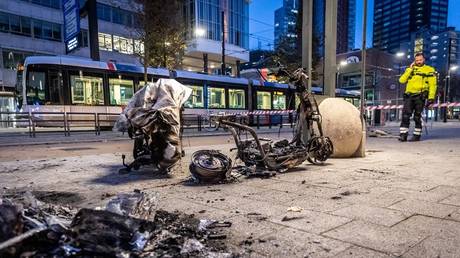
A burned electric scooter is seen after an anti-lockdown protest in Rotterdam, Netherlands, November 19, 2021 © AFP / Jeffrey Groeneweg
Lockdown protest described as ‘orgy of violence’

The chaotic scenes in the Netherlands’ third-largest city unfolded a day after a protest against reimposed Covid-19 restrictions in Rotterdam was marred by violence. Over 50 people were arrested in the city and three were injured after police opened fire in a bid to quell the unrest. Police later claimed that officers were “compelled to shoot at targets” to protect themselves. The three injured protesters remain in hospital, and their condition is unknown.

Protests have swept through a number of Dutch cities after the Netherlands became the first country in Western Europe since summer to go into a partial lockdown last week. Tensions soared further after the government banned New Year’s Eve fireworks displays and the Dutch parliament backed the introduction of the so-called 2G system, which would bar the unvaccinated and those who have not recently recovered from the virus from a long list of public places if introduced.

Think your friends would be interested? Share this story!

find more fun & mates at SoShow now !
Rotterdam Mayor Ahmed Aboutaleb has described an anti-lockdown protest in his city as an “orgy of violence.” The Dutch demonstration devolved into a violent riot that saw police open fire on protesters.

Aboutaleb described the events of Friday night as an “orgy of violence,” after protesters packed Rotterdam’s central Coolsingel shopping street to voice their opposition to an ongoing partial lockdown, a ban on New Year’s Eve fireworks displays, and the possibility of a two-tiered system of freedom in the Netherlands, one of liberty for the vaccinated and restrictions for those without the jab.

Read more

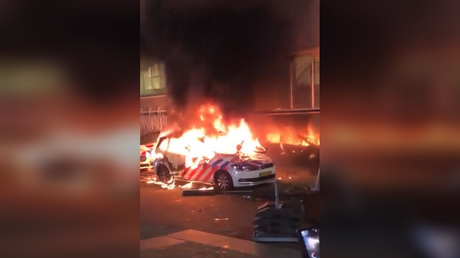
A police squad car is seen engulfed in flames during a protest in Rotterdam, Netherlands, November 19, 2021.
2 wounded after shots fired at Covid protest in Netherlands

The protest soon got out of hand, and police said on Saturday that 57 people were arrested. Protesters were seen torching police vehicles and launching fireworks at police, who shot at them in response.

Aboutaleb said that the cops had been “forced” to use their weapons. “On a number of occasions the police felt it necessary to draw their weapons to defend themselves,” he told reporters. “They shot at protesters, people were injured.”

Police say at least seven people were injured. Two of these injuries were caused by police bullets, and the victims are still in hospital. One officer was hospitalized, while several others were treated at the scene for minor injuries.

Like this story? Share it with a friend!

find more fun & mates at SoShow now !