Australia’s government could be forced to spend tens of millions in payouts after receiving more than 10,000 compensation claims from people who suffered side effects and loss of income due to Covid-19 vaccines.

Under its no-fault indemnity scheme, eligible claimants can apply for compensation amounts between AU$5,000 (US$3,646) to AU$20,000 (US$14,585) to cover medical costs and lost wages as a result of being hospitalized after getting the shot. The scheme’s online portal is scheduled to be launched next month.

Official figures suggest, however, that over 10,000 people have already indicated their intention to make a claim since registration opened on the health department’s website in September. If each claim was approved, the government could face a bill of at least AU$50 million (US$36.46 million).

There were around 78,880 adverse events to Covid-related vaccination in Australia as of November 7, according to the Therapeutic Goods Administration, which regulates national health products. The majority of side effects were minor, including headaches, nausea, and arm soreness.

Read more

© Tanaonte / Getty Images
Unvaccinated will have ‘miserable, very lonely life,’ top Australian doc warns

Only people who experienced a moderate to significant adverse reaction that resulted in a hospital stay of at least one night are eligible for coverage under the government’s scheme. Those seeking $20,000 or less have to provide proof their claims are vaccine-related – although there has been no information as yet on exactly what evidence would be acceptable.

“Adverse events, even though they happen to a tiny proportion of people, for the people it does impact it’s really quite devastating,” Clare Eves, the head of medical negligence at injury compensation firm Shine Lawyers, told the Sydney Morning Herald.

Among the adverse reactions covered are the blood clotting disorder “thrombosis with thrombocytopenia syndrome (TTS)” linked to the AstraZeneca vaccine and the “myocarditis and pericarditis” heart conditions associated with the Pfizer vaccine. Other reportedly accepted side effects are Guillain-Barré syndrome, a rare neurological condition, and immune thrombocytopenia (excessive bleeding due to low platelet levels).

Claims for over $20,000, including those for vaccine-related deaths, will be assessed by an independent legal panel of legal experts and compensation paid on its recommendations. Nine people have reportedly died after an adverse reaction to one of the three vaccines in the country.

Eves told the Morning Herald that her firm was representing a number of litigants over the vaccine side effects, including several who are not eligible for the scheme.

If you like this story, share it with a friend!

find more fun & mates at SoShow now !

Palestinian Islamist group Hamas has called on Canadian singer Justin Bieber to cancel his upcoming concert in what it calls the “Zionist occupation state” of Israel.

Bieber announced his 2022 world tour dates this week, with a concert in Tel Aviv planned for next October. On Thursday, Hamas’ Artistic Production Department issued a statement, cited by the Palestinian Sawa news outlet, “condemning and denouncing” the performer. It called on the star to cancel the show and “boycott the Zionist occupation state in protest at its repeated crimes against the Palestinian people.” 

Read more

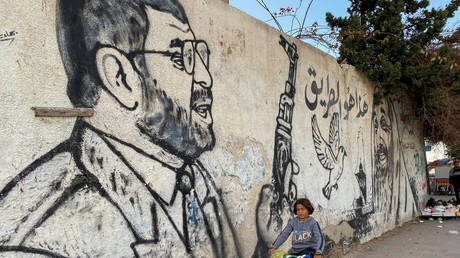
A Palestinian boy rides a bicycle past a mural depicting late Hamas leader Abdel-Aziz Al-Rantissi in Gaza City (FILE PHOTO) © REUTERS/Mohammed Salem
UK outlaws Hamas as terrorist organization

Bieber has performed in Israel multiple times, his last performance there having been in 2017 at Park HaYarkon – the same venue slated for next year. Since the announcement of the ‘Justice’ tour dates, calls for him to cancel the Tel Aviv show have gained momentum across social media, with many posters condemning the singer for supporting what one called an “apartheid state.”

Some noted that Bieber was set to arrive in Israel after performing in South Africa. “Justin Bieber is really going straight from SA to Israel. From a country that fought apartheid to a country that’s practicing apartheid,” one Twitter user complained.

A petition asking the singer to boycott Israel and exclude it from his tour has been launched online, and had garnered some 3,700 signatures by Friday. 

In 2018, the New Zealand singer Lorde canceled a concert in Israel, subsequently thanking fans for “educating” her on the issue, and, the same year, US artist Lana Del Rey at first defended her decision to perform in the country, saying her appearance would not be a “political statement,” before backtracking and canceling the gig.

Hamas has been designated a terrorist group by the US, the EU, and, as of Friday, the UK. In April 2021, international non-governmental organization Human Rights Watch concluded in a report that Israel had committed “crimes against humanity of apartheid and persecution.”

If you like this story, share it with a friend!

find more fun & mates at SoShow now !

The Robert Koch Institute, Germany’s disease control agency, has warned that the country will face a “really terrible Christmas” unless steps are taken to mitigate a huge rise in Covid-19 cases.

Speaking on Thursday, the director of the Robert Koch Institute, Lothar Wieler, reiterated the case for new, strict countermeasures to prevent the spread of Covid-19.

Read more

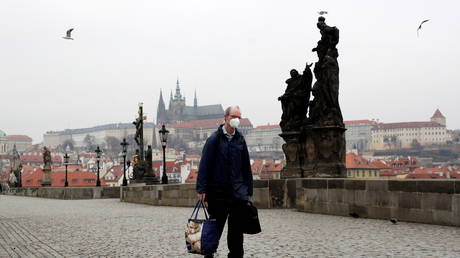
(FILE PHOTO) © REUTERS/David W Cerny
Czechia rolls out new restrictions for unvaccinated

“We are currently heading toward a serious emergency,” Wieler stated, adding we are going to have a really terrible Christmas if we don’t take countermeasures now.” He added that hospitals were already struggling to find enough beds.

Wieler has called for a campaign for a further increase in vaccine uptake, from the current 67% to well over 75%.

The diseases institute director also believes bars, nightclubs, and other large-scale venues should be temporarily forced to close, and that other areas of public life should be off-limits to the unvaccinated.

His comments come as German leaders ponder new restrictions to replace the nationwide epidemic rules, which could include a lockdown of the unvaccinated, following measures already taken in neighboring Austria.

On Thursday, in an attempt to counter waning immunity levels, the country’s vaccine advisory board recommended that booster shots be made available to everyone aged 18 or above. 

If you like this story, share it with a friend!

find more fun & mates at SoShow now !

Germany has been plunged into a “nationwide state of emergency” because of its current high level of Covid infections, acting health minister Jens Spahn has said. He also refused to rule out further lockdowns.

Read more

FILE PHOTO © Reuters / Kai Pfaffenbach
Germany sets ‘grim’ Covid record & eyes new curbs

The situation is serious, the dynamic is unbroken,” Spahn told a press conference Friday.

The incidence has increased fivefold in four weeks. We see sadly high values in the death rate. We are in a national emergency.”

Spahn refused to rule out the possibility of another lockdown, saying that, in such a drastic health situation, “we can’t rule anything out.”

The head of the Robert Koch Institute (RKI), Lothar Wieler, added to the gloomy picture by saying that “all of Germany is one big outbreak,” with an estimated half a million active Covid cases in the country – and numbers rising. For the third day in a row, more than 50,000 cases have been registered in the country, while the death toll in Germany since the start of the pandemic is above 98,700, according to figures compiled by the RKI.

Wieler added that, with many hospitals already overwhelmed, more should be done to tackle the spread of the virus. Besides obvious measures such as vaccination and wearing masks, he also suggested closing poorly ventilated bars.

On Thursday, lawmakers in the Bundestag approved new measures in the fight against coronavirus, including requirements to prove vaccination status, a negative test, or proof of recovery from infection before employees can access communal workspaces or use public transport. The measures will have to be passed by the upper house before they can take effect.

Neighboring Austria announced on Friday that it would enter full lockdown as of Monday, November 22.

Think your friends would be interested? Share this story!

find more fun & mates at SoShow now !

France shouldn’t remain silent on Julian Assange, leftist leader Jean-Luc Melenchon has said, after the imprisoned WikiLeaks co-founder’s father suggested that Paris could offer asylum to his son.

The life of Assange – who is being held in solitary confinement at London’s Belmarsh maximum security prison while a British court considers an extradition request by the US – is under threat, Melenchon wrote on Twitter on Tuesday.

“For years, we’ve been calling for France to accept him,” the head of the leftist La France Insoumise (France Unbowed) party said, insisting that “France shouldn’t remain silent.”

The statement by Melenchon, who won 19.6% of the ballot in the first round of the French presidential election in 2017, follows a visit by Assange’s father, John Shipton, to the Whistleblower Meeting in Paris on Monday.

During the event, Shipton told Sputnik news agency that it would be “an honorable thing” for the French government to grant his son asylum. 

“I feel that France hasn’t attacked Julian over the last 12 years and consequently France is free to act in return for the information that WikiLeaks and Julian brought to France,” he said, referring to the website’s revelations of the US intelligence agencies spying on French presidents and hacking into local banks.

Several dozen French lawmakers have also recently called upon Paris to take Assange in, with the Australian-born publisher’s legal team saying last year that their client was hoping to find asylum on French soil.

Read more

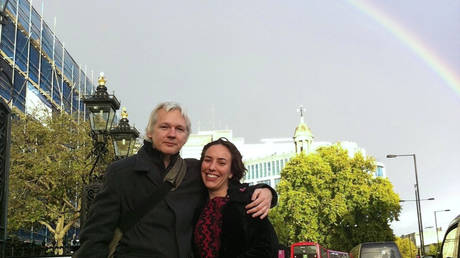
FILE PHOTO: Julian Assange and partner Stella Moris are seen in an undated photo shared by Moris on social media November 11, 2021.
UK caves, allows Assange to get married in jail

Assange could face up to 175 years behind bars if he’s extradited to the US, where he’s wanted on espionage charges over the release by WikiLeaks of classified documents on Iraq, Afghanistan, Guantanamo Bay, and others.

He was placed in Belmarsh in April 2019 over breach of bail, after being holed up in the Ecuadorian Embassy in London for seven years.

The publisher had been fleeing an arrest warrant issued over sexual assault allegations which he has always denied, and which failed to result in any actual charges due to lack of evidence.

Assange’s supporters insist that he has actually been persecuted over his legitimate journalistic activities and revealing the truth to the public.

The UK High Court is expected to rule on the appeal by the US against a lower court decision to bar the WikiLeaks co-founder’s extradition to America due to the 50-year-old’s poor health condition and risk of suicide.

Assange’s team will then be able to challenge the ruling in the Supreme Court if it’s not favorable.

Think your friends would be interested? Share this story!

find more fun & mates at SoShow now !

The EU’s drug regulator has backed the emergency use of Merck’s pill for the treatment for clinically vulnerable Covid-19 patients as cases surge across the continent.

On Friday, the European Medicines Agency (EMA) “issued advice” backing the emergency use of the drug developed by Merck in collaboration with Ridgeback Biotherapeutics, although it has not yet been authorized by national authorities.

Read more

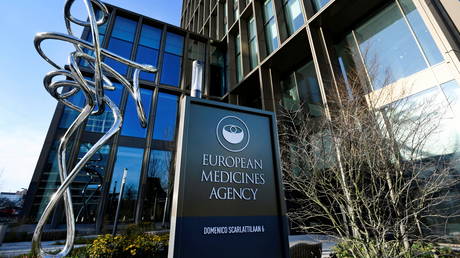
© Reuters / Piroschka van de Wouw
EMA green lights new Covid treatments

In a statement, the drug regulator said the medicine called Lagevrio – also known as molnupiravir or MK 4482 – “can be used to treat adults with Covid-19 who do not require supplemental oxygen and who are at increased risk of developing severe Covid-19.

It said the treatment should be administered as soon as possible after Covid-19 is diagnosed and within five days of the start of symptoms. The medicine should be taken twice a day for a period of five days.

The EMA listed the potential side effects of the capsules, including mild or moderate diarrhea, nausea, dizziness and headache. The treatment is not recommended for pregnant women.

The watchdog announced earlier on Friday that it had begun reviewing Pfizer’s medicine Paxlovid for Covid-19 with the same goal “to support national authorities” who may decide on its early use prior to marketing authorization in light of rising cases and deaths in Europe.

On Friday, Austria announced it would enter a new nationwide lockdown from Monday and make vaccination mandatory, while Germany’s health authorities claimed the country had turned into “one big outbreak.”

Both Pfizer and Merck have requested approval for their coronavirus medicines from the US Food and Drug Administration, but it is unclear when it might be granted.

Think your friends would be interested? Share this story!

find more fun & mates at SoShow now !

This piece by General Joseph Votel (Ret.) and Lt. Gen. Michael K. Nagata (Ret.) and was first published by our friends at the Middle East Institute.


Lt. Gen. (ret.) Michael K. Nagata is a distinguished senior fellow on national security at MEI. He retired from the U.S. Army in 2019 after 38 years of active duty, with 34 years in US Special Operations. His final position was director of strategy for the National Counterterrorism Center from 2016 to 2019.

Gen. (ret.) Joseph L. Votel is a distinguished senior fellow on national security at MEI. He retired as a four-star general in the U.S. Army after a nearly 40-year career, during which he held a variety of commands in positions of leadership, including most recently as commander of CENTCOM from March 2016 to March 2019. 


OPINION – The United States and Pakistan have had a complex and often disappointing “love-hate” relationship since 1947 — one severely tested during the 20-year U.S.-led intervention in Afghanistan. We believe the time has come for serious policy consideration of whether and how both nations can achieve a more strategically beneficial and sustainable post-intervention relationship between the American and Pakistani governments and their populations.

As we consider a new policy, the U.S. military withdrawal from Afghanistan after two decades of leading the international coalition is almost complete. Early indications are that Afghanistan is increasingly likely to descend into significant instability and possibly serious fracture, which will have unwelcome consequences for the Afghan people and all of Afghanistan’s neighbors. It is already clear that international terrorist groups like al-Qaeda and Islamic State-Khorasan Province will continue to enjoy and probably grow their safe havens.

Whatever U.S. strategic concerns may be about the future of Afghanistan, the course and direction of Pakistan’s strategic choices in coming years will also matter to the United States. There are a variety of reasons for this.

First, Pakistan is a nuclear weapon state. Decades of investments in nuclear weapons by Pakistan and India, compounded by unrelenting and mutual historical, religious, cultural, and political antagonism between them, make this one of the world’s most dangerous flashpoints.

Second, all of the countries Pakistan borders are consequential for the U.S. Pakistan also has significant religious, cultural, and economic ties to other Muslim states such as Turkey and Saudi Arabia. In an era of “great power competition,” while Pakistan may not be one of the principal players, its network of relationships can be of strategic benefit to any of the great powers now involved, including the U.S. and China.

Third, despite its significant political and economic difficulties, Pakistan has a growing technology sector. Its youthful population and worldwide diaspora of Pakistani doctors, scientists, academics, and other professionals have become an increasingly important part of the global community.


The Cipher Brief hosts private briefings with the world’s most experienced national and global security experts.  Become a member today.


As long-time veterans of South Asia, both of us understand the sources of “weariness and wariness” that U.S. policymakers, in both Democratic and Republican administrations, often associate with strategic discussions of Pakistan. We have both seen the U.S. government’s reluctance toward undertaking any kind of strategic interaction or rapprochement with Pakistan because of previous disappointments or perceived betrayals. Understanding the enormous complexities of Pakistan’s relationships, influence, and strategic choices in the South Asia milieu can be intellectually challenging and draining.

Yet, we have both concluded that the only thing harder than establishing a functional and mutually beneficial relationship with Pakistan is living without one. Given unstable borders, a nuclear standoff with India, the continued presence of terrorist organizations, and the high potential for all of this to further disrupt our interests, there is no better alternative.

Among those areas that we believe worth exploring with the Pakistanis are these:

First, the possibility of planning, along with other like-minded international actors (both state and non-state), to manage the consequences of significant political instability and human suffering emerging from Afghanistan, including the possibility of substantial refugee flight into Pakistan. Indeed, the Pakistanis have long and miserable memories of the surge of Afghan refugees after the Kabul government collapsed in the 1990s and have consistently expressed deep concerns about a possible repeat resulting from the U.S. withdrawal now nearing its completion.

Second, the possibility of counterterrorism cooperation against any terrorist threat that emerges from Afghanistan and prevents it from sowing further instability across the region. We do not consider it likely that Pakistan will allow any positioning of U.S. intelligence or counterterrorism elements within its borders. Still, there may be other ways (e.g., working groups, forums, or exchanges) to foster better cooperation if a threat emerges from Afghanistan that is of concern to our mutual interests.

Third, the possibility of enlisting Pakistan cooperation, and that of India, toward some type of partial de-escalation of tensions along their common border and, with it, even a slight amelioration of the nuclear weapons threat. It is instructive to recall that, before 9/11, Pakistani President Pervez Musharraf and Indian Prime Minister Atal Bihari Vajpayee initiated a dialogue about the de-escalation of tensions that included the highly emotional issue of Kashmir. However, talks broke down without significant agreement. While we recognize this is an extraordinarily complex and fraught issue for the U.S. to embrace, given all of its other strategic challenges, the specter of a potential nuclear conflict in South Asia should at a minimum prompt us to ask ourselves, “why not at least try?” Indeed, U.S. antagonists such as China would probably take a dim view of such efforts, and we believe that might be a reason for doing so rather than a reason to flinch from it.


Go beyond the headlines with expert perspectives on today’s news with The Cipher Brief’s Daily Open-Source Podcast.  Listen here or wherever you listen to podcasts.


We have long heard U.S. policy and operational practitioners cite phrases such as “never underestimate the Pakistanis’ ability to disappoint us.” But, unfortunately, most American policymakers do not understand how often we have heard the Pakistanis say the same thing about Americans. Thus, both sides have longstanding “neuralgias” about the other. As we end our Afghan campaign, now is the time to move beyond our neuralgias and carefully weigh the strategic costs of whether trying to somehow partner with Pakistan is more, or less, than the cost of failing to do so. We believe, in the long run, it is likely to be less costly.

The views expressed in this piece are those of the authors.

Read more expert-driven national security insights, perspective and analysis in The Cipher Brief

The post OPINION: The Future of US Cooperation with Pakistan appeared first on The Cipher Brief.

find more fun & mates at SoShow now !
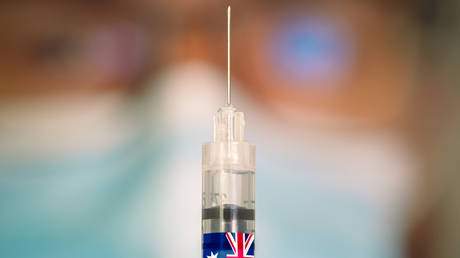
Instagram is looking to channel the anger of its users by introducing a new feature that allows them to report various problems with the app by shaking their phones.

“Have you ever used Instagram and it wasn’t working like it was supposed to? It was just really getting you… really just pissing you off?” Instagram’s head Adam Mosseri asked his followers in a clip uploaded to Twitter on Wednesday.

Well, precisely for infuriating situations like that, the platform has developed a feature it’s calling “rage shake,” he announced.

Shaking your phone will, from now on, cause a special form to pop up on screen, allowing you to instantly report issues such as photos not uploading or audio not playing.

Read more

© Pexels / Cottonbro
The culture in the grip of Instagram influencers can ruin lives and Facebook knows it. It’s time someone took responsibility

The form is also the perfect place to let out “all the emotions and feels you’ve got going on,” Mosseri insisted, assuring Instagrammers that these reports would be promptly dealt with.

Thanks to their feedback, Instagram will be able to optimize its bug-fixing process, he said. The option, which he described as a “hidden gem,” is so far available only in the US, on both iOS and Android.  

The Instagram boss gently shook his own cellphone in the clip to demonstrate the feature in action. However, it’s likely upset users may well end up rage-shaking with a good deal more passion, which could increase the risk of a gadget being damaged, or their owner or even a passerby being struck should the phone fly out of their hand.

Mosseri also didn’t advise the public what to do with their rage over media revelations about alleged shady practices by Instagram and the platform’s owner, Facebook.

Among the trove of papers recently leaked by former Facebook employee Frances Haugen was an internal study from 2020 reporting that Instagram was causing many of its young users, particularly teen girls, to suffer mental health issues and suicidal thoughts. However, the platform kept operating in the same manner despite this finding, with changes being promised only after the study made headlines this September.

Like this story? Share it with a friend!

find more fun & mates at SoShow now !