Nadya Zafira, an international relations student at Indonesia’s Gadjah Mada University, won a writing competition for her letter to UN chief António Guterres, in which she addressed the inequalities laid bare by the COVID-19 pandemic, and how indigenous communities and youth are marginalized in global conversations on climate crisis.
The children of families who were affected by the massive earthquake which devastated large parts of south-west Haiti in August this year are receiving free hot meals at school as part of an initiative by the UN’s World Food Programme (WFP) to support the recovery of the country’s most vulnerable communities.
As infections are rising again, scientists all around the world are rushing to fight the danger, offering a choice of new treatments and unusual variants of vaccines.
Levels of contagion are setting new records, hospitals are overwhelmed, governments are starting to introduce lockdowns, and not only for unvaccinated people – the picture of the fight against Covid-19 looks quite disappointing. However, there’s still a place for good news: Research teams report positive results while trialling new medicines and vaccine types.
Nasal vaccines
Vaccination will remain one of the most effective tools against Covid-19. As Professor David Dockrell, from the Center for Inflammation Research of the University of Edinburgh, told RT, “vaccines will continue to be a central part of how we control the virus.”
“If we can dampen down the number of infections, and the severity of infections, and also the extent to which the virus can replicate in people when they become infected, then we are slowing down the ability of the virus to change and to mutate,” he explains.
So I think the vaccines still will be a very important part of the preventive strategy. It’s vital that they are available to all the world’s population, irrespective of where people live, and the wealth of the country in which they live.
However, vaccination doesn’t always mean you have to get an injection. For instance, several intranasal Covid-19 vaccines are currently being developed. As the virus gets into the body through the nose, a nasal spray or drops are aimed to produce mucosal immune response and prevent it from getting into the lungs.
In India, a vaccine of this type is already completing Phase 2 of clinical trials. In Russia, a nasal vaccine is undergoing a clinical trial on volunteers. In Thailand, a home-developed product is expected to be trialed on humans next spring. In the US, Universities of Houston and Stanford recently reported good results of their experiments carried out on mice.
Intranasal vaccines can have several potential benefits compared to inoculation.
“They would be easier to use, because they can be self-administered. They wouldn’t need a nurse or clinical settings,” Swedish professor emeritus of epidemiology Marcello Ferrada de Noli explained to RT. As a result, he says, there’s hope that fewer people will be reluctant to be immunized. Not so many of us find it pleasant to get a jab – and after all, there are those who are just afraid of needles. Also, it would be much easier to vaccinate children with nasal substances.
However, what concerns Prof. de Noli the most is the duration of the effect of a vaccine of this type. Still, scientists can’t say for sure whether a nasal substance may completely replace a shot. According to Alexander Gintsburg, the head of Moscow’s Gamaleya Center biomedical research institute, which created the Sputnik V vaccine, the nasal version they are working on would serve for an additional protection against the virus, but would not replace the injections.
Chew the virus away?
A nasal vaccine is not the only one being developed. In summer, it was revealed that Russian Defense Ministry scientists were creating a ‘chewing gum’ vaccine, also targeting the mucosal immune response. Meanwhile, a UK firm announced this month that it would conduct a human trial of a skin patch that uses T-cells to confront the virus. Developers hope it would offer longer-lasting immunity than the existing vaccines. Work on a similar project is being done in the University of Queensland, Australia.
While it all looks so promising, Prof. de Noli warns that it would still take a lot of time until these products become available to the public. “I think that discoveries in this field are a very good thing. But if we say ‘We discovered a new type of vaccine’, people will say ‘Aha, so I’m going to wait’. But we need to vaccinate people now,” he points out.
Improving Covid treatment
Vaccines are not a silver bullet, unfortunately, given the not-so-high level of global immunization and the constantly emerging new strains of the virus. “People might get infected despite having had a vaccine, but I still think the vaccine strategy is going to be central to how we manage this kind of virus going forward,” Prof. Dockrell says. “But we will have other strategies that will be very important. We will have other elements. When we put them all together, it gives us the best opportunity that people can live with coronaviruses, and hopefully, the mortality can be limited to much lower extense than what we’ve sadly seen in the last eighteen months.”
Monoclonal antibodies will be central to the ongoing vaccine strategy, Prof. Dockrell explains. These are the antibodies similar to those the body uses to fight the virus. They are produced in labs and given via infusion or injection to boost the patient’s response against certain diseases. Monoclonal antibody treatment is used for people under a high risk of developing severe infection (including older patients 65+ years old or those with chronic medical conditions). It’s already being used in the US, following last year’s FDA approval. Earlier in November, the European Medicines agency recommended authorizing two monoclonal antibody medicines.
In October, UK’s AstraZeneca reported positive results of a Phase 3 study of its antibody combination, which, according to developers, is highly effective in both prevention and treatment of coronavirus.
Researchers are also working on a possibility to save Covid-infected patients from the so-called ‘cytokine storm’ – a situation when the immune system reacts so intensely that kills not only the virus, but the whole organism itself. A drug to ‘calm the storm’ was registered in Russia this year, and it’s already being used on patients.
Another way to fight Covid-19 is to use antiviral drugs. When the pandemic started, medics had to use something already existing (like anti-influenza Favipiravir) or something being authorized for emergency use (like remdesivir). Now, more than a year on, the work to create a special drug to specifically cure Covid-19 is giving its results. This month, Russia registered its first injectable anti-Covid medicine. A bit earlier, the UK became the first country to approve an antiviral pill produced by the US-based companies Merck and Ridgeback Biotherapeutics. Another American firm, Pfizer, got positive results from trials of its drug of the same kind. Both firms hope that with a drug in the form of a pill it would be easier to treat people at home.
Appreciating all the efforts on the field of developing anti-Covid treatment, Prof. de Noli points out that still, the key issue now is to reduce the spreading of the virus. “The new medicines are developed for people who already got the disease,” he says.
But we need to prevent people from getting the infection, not let them get infected because we have some new medicine that can cure them.
The same idea is echoed by scientists all over the world quoted in plenty of articles dedicated to the medical gains: it’s great to have the treatment, but none of the drugs may substitute vaccination, as first and foremost, humanity has to adopt preventive measures and stop the pandemic.
Two climate activists in Australia have brought the world’s busiest coal port to a halt, strapping themselves to a massive piece of machinery and refusing to come down. The stunt follows more than a week of similar actions.
Blockade Australia, a climate group focused on “strategic direct action,” declared that two of its members had clambered atop equipment at the Port of Newcastle and stopped work there late Tuesday night, sharing footage captured by the activists as they suspended themselves from a large loading machine.
“Zianna and Hannah have shut down Newcastle coal port, abseiling from coal handling machinery. The port cannot resume operations until the pair are removed by police,” the group said, identifying the activists by their first names only, adding “This is the tenth consecutive day of disruption to Newcastle coal port and its supply rail network.”
The protest stunt follows at least 16 similar actions over the last week or so, the group said, some targeting the rail line near the port, the world’s largest for coal exports.
Another demonstration carried out on Tuesday saw a second pair of activists breach the port and “hit emergency stop buttons” on machines before strapping themselves to a different piece of equipment. They were brought down and arrested after “several hours” and are expected to appear in court in the coming days.
The disruptions have drawn the ire of state officials, with New South Wales Environment Minister Matt Kean calling them “completely out of line” and urging police to “throw the book” at the protesters, at least 19 of whom have already been arrested so far this month, according to ABC.
“Pull your heads in, get out of the way and stop hurting other people going about their lives, running their businesses,” the minister said during a radio interview on Wednesday. “There are hundreds of ways to make your views known and advocate for change, but risking the lives of rail workers is definitely not one of them.”
The activists could face charges that carry maximum sentences of 25 years in prison, NSW police commissioner Mick Fuller said, noting that local law enforcement has created a “strike force” to deal with future disturbances at the port.
Just three days after restrictions were announced for unvaccinated Austrians, a provincial governor is pressing for a nationwide lockdown of all residents as Covid-19 infections continue to hit record highs.
“If no national lockdown is ordered tomorrow, there will definitely have to be a lockdown of several weeks in Upper Austria, together with our neighboring province Salzburg as of next week,” Upper Austria Governor Thomas Stelzer told lawmakers on Thursday.
That will mean at least two of Austria’s nine provinces will be in full lockdown mode just days after the nation created a two-tier society by locking down approximately two million unvaccinated Austrians.
“We must raise the vaccination rate. It is shamefully low,” Chancellor Alexander Schallenberg said on Sunday, announcing that unvaccinated residents would only be allowed to leave their homes for “essential” purposes, such as to buy groceries or go to a doctor’s office.
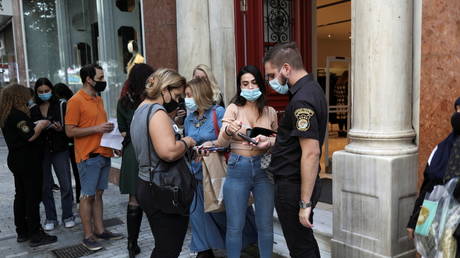
Police are now doing random checks for proof of vaccination on Austrian streets. Those unvaccinated residents who are found to be in violation of the lockdown order face steep fines of up to €500. Those who refuse to go through a vaccination status check will have to pay about three times as much.
Stelzer and other Austrian governors are scheduled to meet with Schallenberg and Health Minister Wolfgang Mueckstein on Friday, when a full lockdown will likely be considered.
New Covid-19 cases in the country passed the 15,000 mark for the first time on Thursday, far surpassing 2020’s daily high of 9,586, set when no vaccines were available. Upper Austria and Salzburg have been hit the hardest, putting hospitals at risk of bed shortages. With some 66% of its population fully vaccinated, Austria lags behind other Western European countries in terms of the Covid-19 vaccination rate.
While Austria is the first to impose a lockdown on the unvaccinated, other EU countries – including Slovakia, the Czech Republic and Greece – have imposed increasingly tight restrictions on people who haven’t accepted a Covid vaccine.
Think your friends would be interested? Share this story!
The number of musk deer in Mongolia has plummeted by some 83 per cent since the 1970s, landing them on the country’s red list of critically endangered species. A UN-supported biodiversity initiative is helping to stop the deer from disappearing altogether.
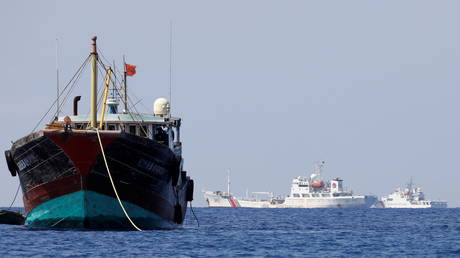
China has accused the Philippines of breaching its territory, saying two supply ships were blocked by Beijing’s coast guard as they approached a disputed shoal. Manila protested over the run-in, citing its own claim to the area.
The two Philippines vessels “trespassed” into waters near the Nansha island chain – also known as the Spratly Islands – on November 16, Foreign Ministry spokesman Zhao Lijan told reporters on Friday, noting that they entered the area “without China’s consent.”
“Chinese coast guard vessels performed official duties in accordance with law and upheld China’s territorial sovereignty and maritime order,” Zhao said, adding that the area is now “generally tranquil” and that the two countries are in communication about the encounter.
The comments from Beijing come just one day after Manila first publicized the incident, with the Philippines Foreign Affairs Secretary Teodoro Locsin claiming Chinese vessels fired water cannon on the two supply boats and forced them to abandon their mission near a disputed shoal in the Spratlys. He called on China to “back off” and “take heed” of Philippines claims to the region.
While both countries regard the Ayungin shoal – alternatively referred to as the Second Thomas or Renai Jiao shoal – as their own territory, The Hague’s Permanent Court of Arbitration settled the dispute in the Philippines’ favor in 2016. However, despite that ruling, as well as the fact that Manila has maintained a presence on the shoal since 1999, Beijing has not abandoned its claims to the area.
Israel has allegedly launched two missiles targeting an area south of the Syrian capital, Damascus, Syria’s state media reported, noting that one of the projectiles was intercepted. There are no reports of damage.
The reported attack took place shortly after midnight on Wednesday local time, according to Syria’s SANA news agency. The projectiles came from the direction of the Israeli-occupied Golan Heights, the outlet noted. The strike targeted an “empty building” south of the capital and resulted in no losses, according to the report.
Israel routinely makes incursions into Syria under the pretext of taking out alleged Iranian outposts there. The Israel Defense Forces (IDF) typically refrain from commenting on the raids, in line with its long-standing policy on military operations conducted outside its borders. Just over a week ago, two Syrian soldiers were injured in reported Israeli missile strikes on the cities of Tartus and Homs, near Russia’s naval base. The bombing also reportedly inflicted material losses.
Damascus has repeatedly condemned Israeli attacks against its territory as violations of its sovereignty. Russia, Iran, and Turkey have also denounced the Israeli airstrikes in Syria as a breach of international law.
Think your friends would be interested? Share this story!
Japan’s fifth wave of Covid-19 has virtually disappeared so dramatically that some scientists are puzzled as to why it happened. One team suggests the highly infectious Delta strain mutated into extinction on the island nation.
In mid-August, Japan experienced a peak in Covid-19 infections, recording over 23,000 new cases per day. Now the metric is just around 170, with deaths attributed to the disease mostly remaining in single digits this month.
The decline has been attributed by many to high vaccination rates, public acceptance of masks, and other factors, but some researchers say the drop was uniquely significant, compared to other nations with similar conditions.
Ituro Inoue, a geneticist at the National Institute of Genetics, believes that Japan had the good fortune of witnessing the Delta strain mostly rooting out other variants of the SARS-CoV-2 virus before then eradicating itself. He explained his team’s theory to the Japan Times newspaper this week.
For some time now, Inoue and his fellow scientists were researching mutations of SARS-CoV-2 and how they are affected by the protein nsp14, which is crucial for the reproduction of the virus.
RNA viruses, like the one causing Covid-19, tend to have a very high mutation rate, which helps them quickly adapt to changes in the environment. However, this opens the door for a so-called “error catastrophe,” when bad mutations pile up and finally cause the full extinction of a strain. The protein nsp14 appears to offer a form of error proofreading that helps the virus genome to stay below the threshold of the “error catastrophe.”
In the case of Japan’s fifth wave of Covid-19, the Delta variant’s nsp14 failed at this job, Inoue believes, based on the genetic study of specimens collected from June to October. Contrary to his team’s expectations, there was a lack of genetic diversity, while many samples had many genetic changes in the site called A394V, which is linked to the error-fixing protein.
“We were literally shocked to see the findings,” the researcher told the Japan Times. “The Delta variant in Japan was highly transmissible and [was] keeping other variants out. But as the mutations piled up, we believe it eventually became a faulty virus and it was unable to make copies of itself.”
The theory could be relevant to the previous SARS strain, which was identified in 2003, explaining why it didn’t cause a pandemic. But that would be hard to confirm, since the outbreak ended relatively quickly and didn’t result in the massive collection of genetic data necessary to test the hypothesis.
It’s not clear why Japan had this lucky turn of events, but nothing comparable happened in other East Asian countries like South Korea, where populations are genetically close to that of Japan. Virus mutations similar to those flagged by the scientists have been discovered in at least 24 countries, Inoue said. He and his team plan to publish a paper detailing their findings by the end of November.
Even if the natural extinction theory is confirmed, it is at best a temporary reprieve for the Japanese people. New, more successful strains are likely to eventually find their way into the country, though quarantine measures and immigration control could delay the emergence of new variants in Japan, Inoue believes.
Meanwhile, Tokyo is bracing for a new wave of Covid-19 this winter and is preparing to live with the virus. The government reportedly plans to ease travel restrictions by increasing the number of people it allows to enter the country per day from 3,500 to 5,000.
President Joe Biden commented on reports that US officials are planning to boycott the upcoming Olympics in Beijing over alleged human rights violations – but his answer left journalists perplexed.
When asked on Tuesday if an official US delegation will be traveling to the Winter Games in the Chinese capital in February, Biden responded: “I am the delegation.”
The president, however, did not elaborate, leaving the White House correspondents in a state of confusion, as his response could mean that Biden will attend the Winter Olympics alone or, as some reporters suggested, that he simply did not understand the question.
A recent report by a Washington Post columnist claimed the US won’t be sending an official delegation to Beijing in 2022 over allegations of human rights violations by the Chinese government. According to the sources cited in the article, a formal recommendation for a diplomatic boycott of the Olympics has been already presented to Biden, with the move expected to be approved by the president by the end of November.
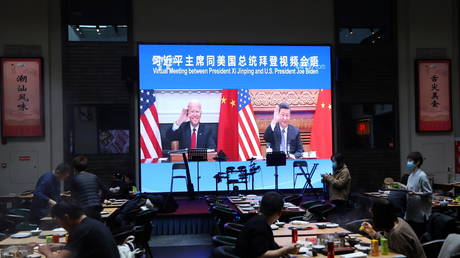
The piece was published on the day that Biden held a lengthy virtual meeting with Chinese leader Xi Jinping, in which they discussed a range of issues regarding the strained relations between the two nations – but not the Olympics.
The White House said that during the talks, President Biden challenged his Chinese counterpart over what Washington sees as persecution against the Uyghur population in the Xinjiang region, as well as human rights violations in Tibet and Hong Kong. China has strongly denied the claims, accusing the US of interfering in its internal affairs.
Calls for the Biden administration to boycott the Olympics and refrain from sending a political delegation to Beijing have recently been made by top Democratic and Republican lawmakers.
If implemented, it won’t affect the American athletes, who will still be taking part in the Winter Olympics.