An exoplanet some 70% the mass of Jupiter and about 1.4 times its size has been discovered by astronomers at India’s Physical Research Laboratory (PRL). The behemoth is 752 light years away from Earth, and has an incredible orbit.

The new discovery was revealed by the Indian Space Research Organization on Tuesday in a statement saying the country’s PRL Advanced Radial-velocity Abu-sky Search (PARAS) had measured the movements of the newly-discovered exoplanet between December 2020 and March 2021.

The planet, named either HD 82139 or TOI 1789 depending on which cataloguing method is used, is ultra-hot – with a surface temperature up to 2,000 degrees Kelvin.

Read more

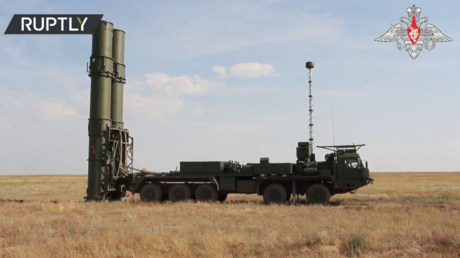
Russia’s Ministry of Defense
India may buy Russian S-500 anti-space-weapon defense system in world-first arms deal, despite risk of US sanctions, Moscow claims

India’s PRL Advanced Radial-velocity Abu-sky Search (PARAS), an optical fiber-fed spectrograph, observed t he exoplanet and its movements from the Mt. Abu Observatory, according to the space agency. Not only is the planet ultra-hot, but it is also one of the closest to an orbiting star yet discovered.

The measurements obtained via PARAS were confirmed by Germany’s TCES spectrograph in April, and further verified by independent photometric observations from the PRL’s 43cm telescope, also located at Mt. Abu.

The exoplanet has an unusually quick orbit – a mere 3.2 days. The pace indicates that its distance from its host star is one-tenth the distance between Mercury and the Sun. This makes the exoplanet one of fewer than 10 such solar systems discovered thus far. Given the closeness to its host star – an aging orb 1.5 times the mass of the Sun – the new planet is also one of the lowest density planets yet discovered.

Planets so close to their host stars, with a distance less than 0.1 AU and masses between 0.25 to several times the mass of Jupiter, are known as “hot-Jupiters.”

The Indian space agency hailed the detection of the new planet as an opportunity to “enhance our understanding of various mechanisms responsible for inflation in hot-Jupiters and the formation and evolution of planetary systems around evolving and aging stars.” It is the second planet to be discovered by PARAS, with a previous discovery taking place in 2018.

Like this story? Share it with a friend!

find more fun & mates at SoShow now !

This piece was first published by RUSI in London.  The views do not represent those of RUSI.

EXPERT PERSPECTIVE –The international community is coming under increasing pressure to recognise the Taliban and to unfreeze Afghan funds held by the IMF or to risk a humanitarian crisis over the winter and a resurgence of international terrorism.

As Afghanistan heads deeper into winter the desperate need is to avoid a humanitarian crisis. The World Food Programme has launched an appeal to feed up to 23 million people and Médecins sans Frontières have followed suit in the healthcare field. Fortunately, the distribution mechanisms are in place inside Afghanistan; what is needed is for the international community to ensure that UN humanitarian programmes are fully funded. This will require Western capitals to get over the shock of their recent defeat. It goes without saying that hunger and health should not be used as instruments of political leverage.

Meanwhile, it is becoming ever more apparent that the Taliban do not have the skills to administer a country which is far more complex than the Afghanistan of 1996 – when they began their previous and disastrous spell in office. They will need international assistance to stabilise the economy, get people back to work and, in time, continue the gradual infrastructure improvements which have been underway since 2002. China will doubtless be willing to assist in some areas but Beijing has already made clear that it is adopting a cautious, gradualist approach. However, there are emerging indications that the Taliban’s intransigent views are beginning to relax; such as their approval of the polio vaccination scheme and their willingness to work with UN humanitarian agencies.

The Taliban will also need outside help in defeating the threat from the Islamic State’s Khorasan Province (ISK). Already the Taliban are finding it difficult to counter similar asymmetric tactics which they used so successfully against Western forces. This is likely one of the subjects which CIA Director William Burns discussed with the Taliban during his visit on 24 August and where there is a mutual interest.

What can the international community (not just the West) realistically expect from the Taliban, following the militant group’s stunning victory? Maximalist demands will inevitably get short shrift.


The Cipher Brief hosts private briefings with the world’s most experienced national and global security experts.  Become a member today.


First, the Taliban should form a more inclusive government. According to multiple sources, the Taliban were intending to form such an administration had Ashraf Ghani not fled the country on 15 August. I am sceptical that this was ever their intention but former president Hamid Karzai and former reconciliation chief Abdullah Abdullah may have remained in Kabul on this understanding and Fatima Gailani, a former negotiator, insists this was the Taliban’s intention.

An inclusive government would need to include women and non-Taliban representatives from the Hazara, Uzbek and Tajik communities. It need not comprise the failed politicians and bloodstained warlords of the past, least of all Gulbuddin Hekmatyar and Abdul Rashid Dostum. It is surely time for a new generation of more technocratic Afghans to become involved in government. Some may be persuaded to return from abroad but they will need assurances for their safety.

Second, the international community should insist on female education at all levels be restored and for women to play a fuller role in society. The Taliban will baulk at this but they only need to look at Pakistan where women play an important role in an avowedly Islamic, if not Islamist, society.

Third, all neighbouring countries, as well as the wider world, want Afghanistan to commit to removing all terrorist bases and terrorists from its soil; not just ISK and Al-Qa’ida but also the Eastern Turkistan Islamic Movement, the Pakistani Taliban (TTP), anti-Iranian and anti-Indian groups, and Central Asian militant movements including the Islamic Movement of Uzbekistan.

Fourth, the Taliban should commit to allow people to join their families in exile if they wish and also cease the continuing search for and punishment of those Afghans who served the Afghan government and Western allies since 2001.


Go beyond the headlines with expert perspectives on today’s news with The Cipher Brief’s Daily Open-Source Podcast.  Listen here or wherever you listen to podcasts.


In an ideal world there would also be a fifth request: to remove Haqqani network members from the Taliban administration. However, that pass was sold when the US negotiator Zalmay Khalilzad engaged with the Haqqanis in Doha – another result of that calamitous dialogue. Furthermore, the current reality is that the Haqqanis control both Kabul and its airport and Sirajuddin Haqqani holds the key position of interior minister.

Instead, the Haqqanis need to be persuaded to prevent Al-Qa’ida regrouping in Afghanistan. Sirajuddin’s father was close to Osama bin Laden and the group retains its Al-Qa’ida connections. Pakistan is already using the Haqqanis to bring the TTP to the negotiating table. It remains to be seen how successful this will be. It is doubtful that the Haqqanis would be willing to take military action against a group from a similar area in the tribal borderlands. However, the Haqqanis could be useful as intermediaries, if not as enforcers.

Meanwhile, the wider Taliban, usually referred to as the ‘Kandaharis’, are increasingly exasperated by the entryist Haqqanis. Although they have worked together, there was never much love lost between the two. The Kandaharis have always distrusted the Haqqanis’ proximity to the Pakistani military. Since the Taliban takeover of Afghanistan, Mullah Abdul-Ghani Baradar, whose willingness to negotiate with the Kabul government in 2008 and 2010 earned him eight years in a Pakistani prison, has been sidelined. There will doubtless be a reckoning

A lasting regret of the US’s careless withdrawal is that Washington did not conclude a broader settlement for Afghanistan involving China, Iran, Russia, India and the Central Asian Republics. From now on it is essential to include all the neighbours in the discussion of recognition and the conditions required. But first the Afghans must be helped to survive the winter.

Read more expert-driven national security insights, perspective and analysis in The Cipher Brief

The post What Stands Between the Taliban and Recognition appeared first on The Cipher Brief.

find more fun & mates at SoShow now !

An exoplanet some 70% the mass of Jupiter and about 1.4 times its size has been discovered by astronomers at India’s Physical Research Laboratory (PRL). The behemoth is 752 light years away from Earth, and has an incredible orbit.

The new discovery was revealed by the Indian Space Research Organization on Tuesday in a statement saying the country’s PRL Advanced Radial-velocity Abu-sky Search (PARAS) had measured the movements of the newly-discovered exoplanet between December 2020 and March 2021.

The planet, named either HD 82139 or TOI 1789 depending on which cataloguing method is used, is ultra-hot – with a surface temperature up to 2,000 degrees Kelvin.

Read more

Russia’s Ministry of Defense
India may buy Russian S-500 anti-space-weapon defense system in world-first arms deal, despite risk of US sanctions, Moscow claims

India’s PRL Advanced Radial-velocity Abu-sky Search (PARAS), an optical fiber-fed spectrograph, observed t he exoplanet and its movements from the Mt. Abu Observatory, according to the space agency. Not only is the planet ultra-hot, but it is also one of the closest to an orbiting star yet discovered.

The measurements obtained via PARAS were confirmed by Germany’s TCES spectrograph in April, and further verified by independent photometric observations from the PRL’s 43cm telescope, also located at Mt. Abu.

The exoplanet has an unusually quick orbit – a mere 3.2 days. The pace indicates that its distance from its host star is one-tenth the distance between Mercury and the Sun. This makes the exoplanet one of fewer than 10 such solar systems discovered thus far. Given the closeness to its host star – an aging orb 1.5 times the mass of the Sun – the new planet is also one of the lowest density planets yet discovered.

Planets so close to their host stars, with a distance less than 0.1 AU and masses between 0.25 to several times the mass of Jupiter, are known as “hot-Jupiters.”

The Indian space agency hailed the detection of the new planet as an opportunity to “enhance our understanding of various mechanisms responsible for inflation in hot-Jupiters and the formation and evolution of planetary systems around evolving and aging stars.” It is the second planet to be discovered by PARAS, with a previous discovery taking place in 2018.

Like this story? Share it with a friend!

find more fun & mates at SoShow now !

EXPERT PERSPECTIVE — A meeting – albeit virtual – between President Joe Biden and Chinese President Xi Jinping finally happened.  It was a cordial and reportedly candid exchange that hopefully cooled some of the tension between the U.S. and China.

President Biden captured the essence of the meeting with his concern that this tension “does not veer into conflict, whether intended or unintended.”  President Xi said, “China and the U.S. need to increase communications and cooperation” and “respect each other and coexist in peace.”

It’s hard to believe that in 1979, when formal U.S. – China diplomatic relations were established, Chinese President Deng Xiaoping looked to the U.S. as the country that would provide the investment, technology, and unlimited access to our best universities.  And the U.S. didn’t disappoint.  Investment and sophisticated technology flowed to China, with hundreds of thousands of Chinese students enrolling in our universities.  Strategic bilateral cooperation initially contributed to the defeat of the Soviet Union in Afghanistan, with joint efforts to address international terrorism and nuclear proliferation.

So, during the span of forty-two years, relations have gone from close economic and strategic cooperation to a concern about conflict, intended or unintended.  Understandably, scholars will spend considerable time analyzing what went wrong. 

What is important now is that U.S. – China relations move in a more positive direction.  That tension over China’s aggression against Taiwan, the militarization of islands and reefs in the South China Sea, internment camps for Uyghurs in Xinjiang, the national security law in Hong Kong that suppresses democratic protests and the theft of intellectual property all must be candidly discussed by our diplomats and leaders to avoid misunderstanding and accidental conflict.

President Biden said Washington continues to have a “one China” policy and “opposes unilateral efforts to change the status quo.”  President Xi reportedly said, “Beijing will take decisive measures if the pro-Taiwan independence movement crosses a red line.”

The three communiques and the Taiwan Relations Act of 1979 specifically states that, inter alia, “the United States decision to establish diplomatic relations with the People’s Republic of China rests upon the expectation that the future of Taiwan will be determined by peaceful means; to consider any effort to determine the future of Taiwan by other than peaceful means, including by boycotts or embargoes, is a threat to the peace and security of the Western Pacific area and of grave concern to the United States.”

The challenge for the U.S. and China is to address Taiwan and a myriad of other irritants in the bilateral relationship to ensure that no one issue, or series of issues leads to conflict.  Toning down the rhetoric and pursuing a policy of substantive and sustained communications, especially by our diplomats, would be a necessary first step.


The Cipher Brief hosts private briefings with the world’s most experienced national and global security experts.  Become a member today.


The annual Economic and Strategic Dialogue with China, led by the heads of State Department and Treasury and their counterparts in Beijing was established to oversee progress in addressing these and other challenging issues.  A forum of this type, with announcements to ensure that the public is kept apprised of the issues and the work being done to resolve these issues, is of value, only if this dialogue is substantive and not just ceremonial.

This virtual presidential summit can be transformative if, in addition to addressing these and other irritants, it also addresses the opportunity to cooperate on a multitude of geopolitical issues that affect the security of the U.S. and China – and the world.

I’ll start with the nuclear issue and the fact that there’s minimal dialogue with China on its nuclear program.  And given recent reporting on the three sites in China with the construction of hundreds of missile silos and the recent DIA report that China, by 2030, will have a nuclear arsenal of 1000 nuclear warheads is of concern.  Ideally, China should be part of New Start arms control negotiations with the U.S. and Russia.  But they previously refused to join in this or any other arms control dialogue.  At a minimum, China should be responsive to a dialogue with the U.S. on nuclear-related issues, to include their recent test of two hypersonic missiles.

A separate but equally important dialogue with China is on cyber, to ensure that the cyber domain is not weaponized and used against our private sector for economic advantage.  Also, to ensure that outer space is used exclusively for peaceful purposes.

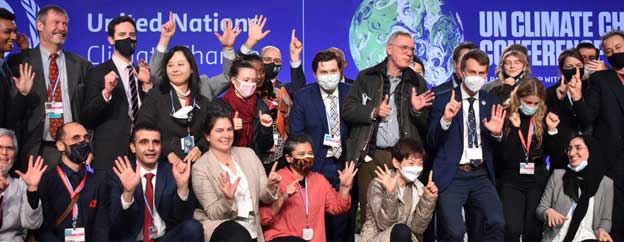
There are a multitude of global issues requiring bilateral cooperation.  We recently saw some U.S. – China cooperation on climate change at the Glasgow COPS 26 UN Climate Change Conference.  Obviously, more must be done, but this is a positive first step.

Other issues, like North Korea can and should be addressed now.  China has unique leverage with a North Korea that relies on China for its economic survival.  China can use that leverage to get North Korea to return to negotiations and to convince the North that complete and verifiable denuclearization, in return for significant deliverables, is in North Korea’s interest.

With over five million global casualties and over 760,000 deaths in the U.S. due to COVID-19, it should be obvious that greater bilateral cooperation on this and future pandemics is necessary.


Go beyond the headlines with expert perspectives on today’s news with The Cipher Brief’s Daily Open-Source Podcast.  Listen here or wherever you listen to podcasts.


Bilateral cooperation on nuclear proliferation, countering international terrorism, the trafficking of narcotics and confronting international organized crime are just some of the global issues that affect the security of the U.S. and China and the global community.  Failure to cooperate on these and other international issues is not only a security imperative, but a moral responsibility of all great powers.

Finally, with the Taliban back in control in Afghanistan, the U.S. and China have a shared goal: ensuring that the Taliban does not permit Al Qaeda and other terrorist organizations to once again use Afghanistan as a base for its international terrorist operations. China has engaged this Taliban government and should use its significant financial leverage to ensure that all terrorist groups are permanently removed from Afghanistan.

Xi Jinping was just anointed by the Chinese Communist Party as one of its revered leaders, with Mao Zedong and Deng Xiaoping.  The Party congress next year will likely give Xi a third five-year term as the Party’s Secretary General.  There are a multitude of domestic issues requiring Xi’s and the Party’s attention, to include a campaign of “common prosperity” – addressing the disparity of wealth in a China governed by a capitalist system with Chinese characteristics.

Hopefully, President Xi Jinping will work with President Joe Biden to ensure that the two great powers, consumed with domestic issues, will also address the myriad of international issues requiring immediate and long-term attention and avoid a cold war that could veer into conflict.

Read more expert-driven national security insights, perspective and analysis in The Cipher Brief

The post How to Avoid Cold War with China appeared first on The Cipher Brief.

find more fun & mates at SoShow now !

The Swedish government has announced plans to introduce mandatory Covid-19 passes starting next month, amid rising infection rates in Europe. The passes will be required to attend any indoor event with 100 or more participants.

The upcoming introduction of mandatory coronavirus vaccine passes was announced by Health Minister Lena Hallengren on Wednesday.

Citing the ongoing surge in coronavirus cases across Europe – which has not hit the country itself yet – the minister stressed the need to be ready for the new wave of infections, projected to reach Sweden mid-December.

“The spread is increasing in Europe. We haven’t seen it yet in Sweden, but we are not isolated,” Hallengren told a news conference. “We need to be able to use vaccination certificates.”

Read more

© Getty Images / picture alliance
German media reveals jail terms for fake Covid certificates

Starting from December 1, the documents confirming a person’s vaccination status will be a requirement to enter any indoor event with 100 or more people in attendance. Sweden already boasts high vaccination rates, with 85% of its citizens aged over 16 having received at least one dose of a Covid-19 vaccine. Over 81% have received two shots or more, public health data shows.

Earlier in the day, the country’s health authorities backtracked on a highly controversial decision to stop testing fully vaccinated people who showed symptoms of Covid. The recommendation was rolled out in October, leading to a 35% decline in Covid-19 tests taken.

“The Public Health Agency has decided to recommend that the regions offer testing to everyone who is 6 years and older who gets symptoms that may be COVID-19,” the health authority said in a statement.

Sweden bucked the trend among European governments in its approach to handling the pandemic, electing not to impose widespread lockdowns. Having relied primarily on voluntary measures and social distancing, the country displayed several times higher death rates per capita than its Nordic neighbors, though it still fared better than many European countries, registering some 1.18 million cases and just over 15,000 coronavirus deaths since the beginning of the pandemic.

Think your friends would be interested? Share this story!

find more fun & mates at SoShow now !

The Swedish government has announced plans to introduce mandatory Covid-19 passes starting next month, amid rising infection rates in Europe. The passes will be required to attend any indoor event with 100 or more participants.

The upcoming introduction of mandatory coronavirus vaccine passes was announced by Health Minister Lena Hallengren on Wednesday.

Citing the ongoing surge in coronavirus cases across Europe – which has not hit the country itself yet – the minister stressed the need to be ready for the new wave of infections, projected to reach Sweden mid-December.

“The spread is increasing in Europe. We haven’t seen it yet in Sweden, but we are not isolated,” Hallengren told a news conference. “We need to be able to use vaccination certificates.”

Read more

© Getty Images / picture alliance
German media reveals jail terms for fake Covid certificates

Starting from December 1, the documents confirming a person’s vaccination status will be a requirement to enter any indoor event with 100 or more people in attendance. Sweden already boasts high vaccination rates, with 85% of its citizens aged over 16 having received at least one dose of a Covid-19 vaccine. Over 81% have received two shots or more, public health data shows.

Earlier in the day, the country’s health authorities backtracked on a highly controversial decision to stop testing fully vaccinated people who showed symptoms of Covid. The recommendation was rolled out in October, leading to a 35% decline in Covid-19 tests taken.

“The Public Health Agency has decided to recommend that the regions offer testing to everyone who is 6 years and older who gets symptoms that may be COVID-19,” the health authority said in a statement.

Sweden bucked the trend among European governments in its approach to handling the pandemic, electing not to impose widespread lockdowns. Having relied primarily on voluntary measures and social distancing, the country displayed several times higher death rates per capita than its Nordic neighbors, though it still fared better than many European countries, registering some 1.18 million cases and just over 15,000 coronavirus deaths since the beginning of the pandemic.

Think your friends would be interested? Share this story!

find more fun & mates at SoShow now !

NEW YORK, Nov 19 (IPS) – A week has gone by since COP 26 with 197 Parties ended in the Scottish city of Glasgow on extended time last Saturday. Climate change which covers wide array of issues affecting all living beings engaged the people around the world for COP 26 in a way never experienced since COP1 was held in Berlin in 1995.

Read the full story, “Glossing Over in Glasgow – Some Thoughts on COP26”, on globalissues.org

find more fun & mates at SoShow now !

The Philippine government has accused the Chinese Coast Guard of unleashing water cannon on two supply ships in a disputed stretch of the South China Sea, claiming its boats were blocked and forced to turn around.

Manila’s Department of Foreign Affairs detailed the encounter in a statement on Wednesday, alleging that a pair of supply boats en route to the Ayungin Shoal – also known as the Second Thomas Shoal – were stopped by three Chinese vessels and “water cannoned” before they could reach their destination.

“Fortunately, no one was hurt; but our boats had to abort their resupply mission,” Foreign Affairs Secretary Teodoro Locsin said, adding that the department had conveyed its “outrage, condemnation and protest of the incident” to Beijing’s envoy to the Philippines, Huang Xilian.

The acts of the Chinese Coast Guard vessels are illegal. China has no law enforcement rights in and around these areas. They must take heed and back off.

Though both China and the Philippines claim territorial rights to the Ayungin Shoal, The Hague’s Permanent Court of Arbitration ruled in the latter country’s favor in 2016. And despite Chinese objections, the Philippines has occupied the area for much longer, after its military purposely grounded a naval vessel on the shoal in 1999.  

READ MORE: Manila backs controversial AUKUS security pact as move to fix ‘imbalance’ of power in Southeast Asia

Manila was also quick to note that the supply ships are “covered by the Philippines-United States Mutual Defense Treaty,” a pact inked with Washington in 1951 that calls for a US military response to any attack on the country, including “island territories under its jurisdiction in the Pacific Ocean, its armed forces, public vessels or aircraft.” 

Beijing so far has not commented on the alleged run-in.

Think your friends would be interested? Share this story!

find more fun & mates at SoShow now !