The UK has given so many weapons to Ukraine that it’ll take years to replace its stockpiles, Admiral Sir Tony Radakin has said
The UK has given so many arms to Ukraine amid its conflict with Russia that it’ll take years for the country to replace its depleted weapons stockpiles, Admiral Sir Tony Radakin, chief of British Defence Staff, has said.
The “rate of expenditure” of weapons in Ukraine and the “industrial capacity to backfill” have now become “a significant issue” for the British military, Radakin told the Lords International Relations and Defence Committee on Wednesday.
London has been among the most active backers of Kiev during the Russian military operation in Ukraine. It has insisted on a military resolution of the conflict, supplying the Ukrainian forces with a wide range of arms, including anti-tank rocket launchers, armored vehicles, anti-aircraft systems and Brimstone missiles.
The UK government would need to work closely with defense suppliers in order to make up for those deliveries, the chief of Defence Staff said. A dozen top companies in the sector have already been invited to Downing Street for talks, he added.
According to Radakin, replenishing weapons stockpiles will be a lengthy process. “We are then talking in years, because you cannot whistle up, with modern weapons, a quick production line,” he pointed out.
“Yes, you can churn out shells and artillery, but even at the not super-sophisticated end, even at the modest end of an NLAW [anti-tank] weapon, then that’s going to take several years to get back to our original stocks,” the admiral added.
When asked if the UK was capable of deploying a full division at the moment, Radakin replied that the armed forces have been “regrowing” their ability to return to “a much more orthodox divisional strength,” including longer-range weapons and other modern hardware.
“We can put out a division, but the division that we want to put out is a much better one in sort of five to 10 years’ time, with the capabilities that America would want fighting alongside America,” he acknowledged.
Moscow has decried the supply of weapons to Ukraine by the US, UK and other allied nations on numerous occasions, saying that this will only prolong the fighting, while also increasing the risk of a direct military confrontation between Russia and the West.
Russia’s President Vladimir Putin has also warned that if Kiev is provided with long-range missiles, “we will draw the appropriate conclusions and use our weapons, which we have enough of, in order to strike at those objects that we have not yet struck.”
So far, the deliveries of foreign arms have been unable to seriously affect the situation on the ground in Ukraine, with Russian forces steadily advancing and gaining land in Donbass.
Russia attacked Ukraine in late February, following Kiev’s failure to implement the terms of the Minsk agreements, first signed in 2014, and Moscow’s eventual recognition of the Donbass republics of Donetsk and Lugansk. The German- and French-brokered protocols were designed to give the regions special status within the Ukrainian state.
The Kremlin has since demanded that Ukraine officially declare itself a neutral country that will never join the US-led NATO military bloc. Kiev insists the Russian offensive was completely unprovoked and has denied claims it was planning to retake the two republics by force.
Indigenous women and girls face grave, systematic, and continuous acts of violence that permeate every aspect of their lives, a UN-appointed independent rights expert said on Wednesday in a hard hitting report to the Human Rights Council in Geneva
LIMA, Jun 22 (IPS) – “They mustn’t stop looking for her,” said Patricia Acosta, mother of Estéfhanny Díaz, who went missing on Apr. 24, 2016, along with her five-year-old and eight-month-old daughters, after attending a children’s birthday party in Mi Perú, a town in the coastal province of Callao, next to the Peruvian capital.
Scientists in Britain have detected multiple versions of the virus in wastewater. Officials say the risk to the public is extremely low and urge people to ensure their polio vaccines are up to date.
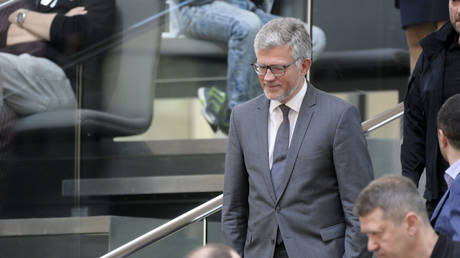
Andrey Melnik is planning to personally apologize to Olaf Scholz over the liverwurst affair
Ukraine’s ambassador to Germany, Andrey Melnik, has revealed he “regrets” calling the country’s chancellor, Olaf Scholz, an “offended liverwurst” back in May. The diplomat made the admission while speaking to German newspaper Der Spiegel on Wednesday.
“That’s a statement that I regretted later, of course. I’ll apologize to [Scholz] personally,” Melnik said.
The ambassador had described Scholz as an “offended liverwurst” over his refusal to pay a visit to Kiev back in May. Scholz’s decision was prompted by Kiev’s refusal to receive German President Frank-Walter Steinmeier in mid-April over his apparently overly close ties with Russia.
Melnik had previously stood by his liverwurst remark, explicitly refusing to apologize for it. “It’s not a matter of apologizing. It’s not about whether someone feels offended or not, it’s about whether they will help us save people,” Melnik said shortly after insulting Scholz.
Unlike other top EU politicians, who have been coming to Kiev since early April, Scholz visited Ukraine for the first time since the conflict broke out in late February only last week. The German leader met Ukrainian President Volodymyr Zelensky alongside other European leaders, namely French President Emmanuel Macron, Italian Prime Minister Mario Draghi, and Romanian President Klaus Iohannis.
Melnik also revealed that his “diplomatically inappropriate” liverwurst remark “offended many people, and not only in Germany,” as it landed the diplomat in hot water at home as well. Namely, Zelensky “was not amused” by the liverwurst remark, Melnik revealed.
The diplomat has repeatedly harshly criticized German leaders over the purported lack of support from Berlin amid the ongoing conflict between Kiev and Moscow. The anger his ‘diplomatic style’ invoked in Germany, however, has not affected his “love” for the country, Melnik insisted.
“Despite everything that we have to hear from many Germans today in these days of war: I still love Germany as a country,” he said.


 news
news