Ankara’s threat to block Finland and Sweden’s bids reportedly has nothing to do with Russia
Turkey’s list of demands for NATO and its prospective members Finland and Sweden includes the removal of sanctions imposed on Ankara over its purchase of S-400 missile defense systems from Russia, as well as re-inclusion in the F-35 advanced aircraft program, Bloomberg reported on Tuesday, citing “three senior Turkish officials.”
On May 15, Finland and Sweden officially announced their intention to join NATO in the wake of the ongoing Russian military offensive on Ukraine. To make it possible, all members of the alliance would have to unanimously support their bids. Turkey, however, said it would not say “yes” to Helsinki and Stockholm because they do not have “a clear unequivocal stance” against the Kurdistan Workers’ Party (PKK) and the Revolutionary People’s Liberation Front (DHKP/C), groups that Ankara considers terrorist organizations.
Sweden and Finland have a record of granting political asylum to people from Turkey, particularly ethnic Kurds, fleeing internal conflicts – something that Ankara finds unacceptable. According to Bloomberg, Turkish leadership demands that Sweden and Finland “publicly denounce not only the PKK, but also its affiliates before being allowed to join the bloc.”
As Turkish Foreign Minister Mevlut Cavusoglu confirmed on Monday, his country also wants Sweden and Finland to cancel trade restrictions they imposed on Turkey.
However, as Bloomberg’s sources said on the condition of anonymity, Turkey’s wish list is long.
“Turkey wants to be re-included in the F-35 advanced aircraft program, from which it was barred after it bought S-400 missile-defense systems from Russia. It also has an outstanding request to the US to purchase dozens of F-16 warplanes and upgrade kits for its existing fleet,” Bloomberg writes.
Ankara also wants the US to lift sanctions that Washington imposed on it for purchasing the S-400 missiles.
The news agency’s sources, however, refuted the suggestions that Turkey’s objections against Finland and Sweden’s NATO membership were in any way related to Ankara’s ties with Moscow. Russia has warned Helsinki and Stockholm against joining the bloc and promised an appropriate response should they create threats.
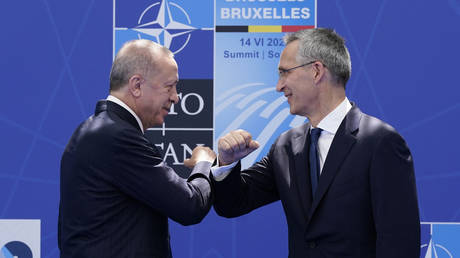
On Monday, NATO Secretary General Jens Stoltenberg said that “Turkey is a valued ally and any security concerns need to be addressed.”
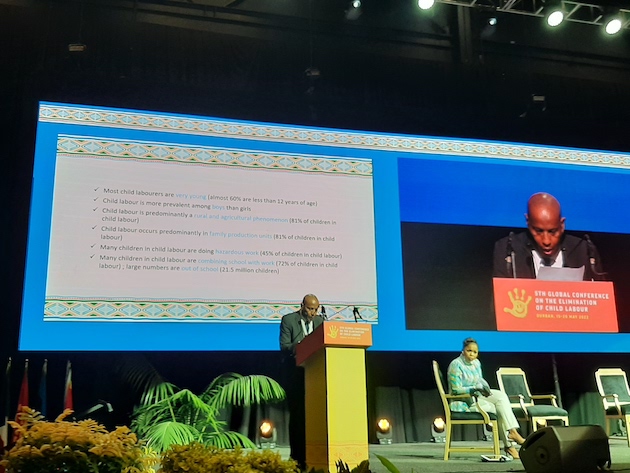
Durban, May 17 (IPS) – Global goals to eradicate child labour will not be achieved without a breakthrough in Africa, where most of the world’s 160 million children entrapped in child labour work in rural regions, mostly in agriculture with their families.
HONG KONG / LOME, May 17 (IPS) – Despite World Day Against Child Labour launched in 2002 by the International Labour Organization (ILO), little has changed over the past two decades for the millions of children who remain trapped.Read the full story, “Child Labour: No Quick End to Children Trapped in Tobacco Productionâ€, on globalissues.org →find more fun & mates at SoShow now !
Teachers in Warsaw work to address student-held trauma in classrooms after the Polish school system absorbed tens of thousands of Ukrainian refugee students.
The temporary move to allow imports will put more formula on store shelves in a few weeks, officials say
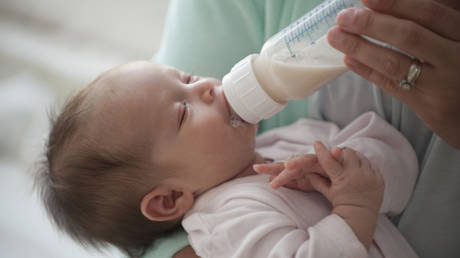
The US will temporarily allow imports of baby formula from foreign producers in an effort to ease the effects of the ongoing nationwide shortage, which has been putting pressure on American families.
The Food and Drug Administration (FDA) announced the decision on Monday, adding that the new products will have to be in line with US safety and nutrition regulations, which are provided by the FDA, but noted that the review process would be streamlined to make it easier for foreign manufacturers to begin shipping formula to the US.
“We are hopeful this call to the global market will be answered and that international businesses will rise to the occasion to assist in bolstering the supply of products,” FDA Commissioner Robert Califf said in a statement.
White House Press Secretary Karine Jean-Pierre confirmed the move in a press briefing on Monday, adding that the administration was also working on providing transportation and logistical support to major formula manufacturers and retailers.
“We are also in ongoing communications, as we talk about retailers here as well, with Target and Amazon and Walmart and other leading retailers for baby formula to identify parts of the country that may be at risk of critically low supply of infant formula, and have offered to work with manufacturers and retailers to bring more formula to those parts of the country, including the U.S. government transportation and logistical support,” Jean-Pierre said.
The US has been faced with a nationwide shortage of baby formula since February, after already existing supply chain issues stemming from the Covid-19 pandemic were exacerbated by a major product recall by one of the country’s main formula manufacturers, Abbott Laboratories.
The FDA had been investigating the manufacturer after it received reports of four infants allegedly falling ill from Abbott’s products. The investigation reportedly found evidence of bacterial contamination at the site of Abbott’s largest production facility in Sturgis, Michigan, and subsequently ordered the plant to suspend operations pending investigation.
On Monday, the US Department of Justice announced that it had reached a tentative agreement with Abbott to resolve safety issues at the plant, and that upon updating its safety protocols, the facility will be able to resume production in as soon as two weeks, as long as it receives approval from the FDA.
However, neither the import of foreign formulas nor the re-launch of Abbott’s Sturgis facility are expected to have an immediate effect on the limited supplies that continue to put pressure on American families. Even if the FDA gives the green light for Abbott to restart domestic production of formula in two weeks, it would still take an additional 8 to 10 weeks for the products to hit store shelves, Abbott Laboratories has said.
And while baby formulas produced in Canada and Europe are mostly equivalent to those in the US, companies looking to enter the US market still face a number of major hurdles, including extensive research and manufacturing standards inspections imposed by the FDA, which could mean that the integration process of these products into US supply chains will take up to several months, according to experts.


 news
news