The country’s energy regulator predicted a 35% rise in prices following the suspension of Russian supplies
Bulgarian industry workers are preparing to protest the rising gas prices, the executive director of the Bulgarian Federation of Industrial Energy Consumers (BFIEC), Ivaylo Naydenov, said on Monday following the recent suspension of Russian gas supplies.
In an interview with Radio Bulgaria, Naydenov said the federation has called on the government to take measures to reduce prices or at least keep them at current levels.
“Otherwise, we will have no choice but to organize protests, as announced by the employers’ organizations,” Naydenov said.
He revealed that Prime Minister Kiril Petkov has already been informed by the BFIEC of the potential protests.
The Bulgarian government earlier announced that Petkov and two of his deputies would hold a meeting on May 5 with the representatives of employers’ organizations to discuss “prices on natural gas and electricity, as well as the measures required in response.”
This follows remarks by the head of the BFIEC board, Konstantin Stamenov. Speaking on Monday to Nova News, he said members of the federation “definitely cannot accept a new price of gas,” and if there is no compensation, they are going to stage a protest – and the same warning applies to electricity.
“There is a very limited possibility to replace gas with propane butane, but it is logistically impossible to deliver the quantities we need,” Stamenov said.
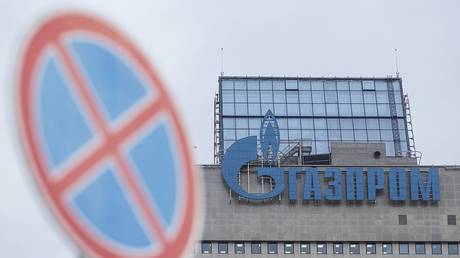
Moscow stopped exporting natural gas to Bulgaria and Poland on April 27, following their refusal to pay in rubles. Two days later, the head of Bulgaria’s energy regulator, the Energy and Water Regulatory Commission (EWRC), Stanislav Todorov, predicted a 35% rise in natural gas prices.
He explained the gloomy forecast by the fact that the country will now be fully dependent on the European markets.
“Given the fact that we have to go to the free market and replace 80% of the deliveries that Gazprom supplied to Bulgaria and which they no longer want to supply to Bulgaria, we have to replace them with quantities from alternative suppliers. What we can expect for the price for May is that the prices in Bulgaria for gas will be equal to those in Europe,” Todorov said.
The largest Bulgarian natural gas distribution company, Bulgargaz, said it had taken preventative measures to protect consumers and ensure there will be no shortage of gas in May.
The company argued that if Bulgaria had accepted Moscow’s demand to pay in rubles, the gas price would probably still “undergo unpredictable changes, given the lack of clarity on the exchange rate and the lack of ability of the Bulgarian side to exercise control over the currency conversion process.”
“The proposed mechanism implies real risks for the Bulgarian side from unilateral and uncontrolled suspension of supplies without providing the appropriate opportunity to seek liability from the Russian supplier,” Bulgargaz stated.
In March, Russian President Vladimir Putin set a requirement for states which had imposed sanctions on Russia and are still importing its gas, to use the ruble for transactions. Several buyers signaled willingness to accept Moscow’s demands, but many others made it clear they would not.
Harsh sanctions were imposed on Russia by Western nations in response to Moscow’s military operation in Ukraine. The Russian government, which considers the measures unlawful and unjustified, has retaliated by imposing its own counter-sanctions on “unfriendly states.”
NEW DELHI, May 03 (IPS) – When the Covid- 19 pandemic first broke out in Wuhan in 2020, no one imagined that it would wreak havoc on such a large scale. With over 6.2 million lives lost, countless infected and new variants emerging, the pandemic is still raging all around the world.
DOMINICA, May 02 (IPS) – Caribbean countries are signing on to the 2022-2026 agreement, hoping for increased development support to improve health, education and social services, while tackling climate-related challenges.When Dominica signed on to the United Nations Multicountry Sustainable Development Framework for the English and Dutch Speaking Caribbean (MSDCF) in March, the country joined others like Saint Lucia, St. Vincent, and the Grenadines, Suriname, and Aruba as part of a 5-year framework to plan and implement UN development initiatives.Read the full story, “English and Dutch Caribbean Rally Around UN Sustainable Development Frameworkâ€, on globalissues.org →find more fun & mates at SoShow now !
Ecology Minister Roberto Cingolani’s comments come as 10 EU countries are reportedly prepared to buy gas in Russian currency
Italian Minister of Ecological Transition Roberto Cingolani told Politico on Monday that Italian companies should “go ahead and pay in rubles” for Russian gas, as Moscow has demanded. Although his ministry later said that it does not back such a move, 10 EU nations are reportedly planning to do the same.
“I think it would be good for a few months, at least, to allow companies to go ahead and pay in rubles, while we understand the legal framework and implications,” Cingolani said, adding that he wants “a speedy and very clear pronouncement from the European Commission” on whether such an arrangement would breach EU sanctions.
Shortly afterwards, Cingolani’s ministry issued a statement saying that the minister “has never been open to a payment in rubles.”
However, Italy depends on Russia for around 40% of its gas imports, and Cingolani said that while oil and gas companies “cannot risk” paying and breaking sanctions, they also “cannot risk … not paying” until recently-signed gas contracts with African countries come into effect.
Russian President Vladimir Putin demanded in March that “unfriendly” countries – those that back sanctions imposed in the wake of Russia’s military offensive in Ukraine – would have to pay for gas in Russia’s national currency. Poland and Bulgaria have already been cut off after they refused this demand.
However, Hungary has opened a euro account with Russia’s Gazprombank for purchasing Russian gas. These euro payments are then converted into rubles by the bank, and transferred to gas suppliers in Russia, fulfilling the contract. Hungarian government official Gergely Gulyas told the public radio on Sunday that nine other EU countries were preparing the same payment scheme and not announcing it publicly.
A report by Bloomberg last week claimed that four EU states have already paid for gas by this mechanism.
It is unclear whether this setup breaches EU sanctions on Russia, as European buyers are technically not sending rubles to Russia. Cingolani said that EU companies could regard the transfer of euros to Gazprombank as the “final transaction,” while Russian suppliers would consider the deal done upon receipt of rubles.
“In this process there are gray areas, which could constitute a breach of sanctions. However you do it, there is a problem,” he stated.
EU Energy Commissioner Kadri Simson told Politico that the commission would “issue more detailed guidance on what companies can and cannot do within our sanctions framework” soon.


 news
news