Brazil’s former President Luiz Inacio Lula da Silva has said he is willing to stand as a candidate in elections against incumbent leader Jair Bolsonaro, labelling his potential opponent “a poor copy of Trump.”
Speaking in Brussels at a media conference in the European Parliament on Monday, Lula announced that the Workers Party needs to put forward a presidential candidate to take over from right-wing Bolsonaro in 2022 and said he was willing to run in the elections again.
“I’m willing, I’m motivated, I’m in good health,” Lula stated, adding that said he would only make his decision early next year, some months before the election scheduled for October 2022. The popular leftist said his candidacy would depend on whether the party wanted him.
“We need to have someone who stands, we need to win the elections. And at the same time, we have to rebuild Brazil,” he said, speaking on behalf of his Workers Party.
Lula, 76, also took aim at the incumbent president. “He’s a poor copy of Trump. But Bolsonaro doesn’t think, he doesn’t have any ideas,” the former president said, claiming the incumbent leader was hellbent on ensuring the beneficial legacies of Lula’s administration were “torn down.”
A recent poll put him 27 points ahead of Bolsonaro, despite his candidacy not officially being announced.
In 2010, Lula made way for his protégé, Dilma Rousseff. Rousseff was ousted from power in what was described by her supporters as a parliamentary coup. Lula served nearly two years in prison after being convicted on money laundering and corruption, despite a nine-and-a-half-year sentence. He was also barred from running in the 2018 election.
A number of judges have subsequently ruled that the case against Lula was unlawful and the Supreme Court annulled his earlier convictions, meaning he can face off against Bolsonaro in 2022.
France’s best-known book of words, Le Petit Robert dictionary, has caused a stir by including the non-binary personal pronoun as an alternative to the existing masculine and feminine terms.
While the annual update of the Petit Robert dictionary is often a topic of considerable debate in French media, the latest edition has caused quite the backlash, with some, including a cabinet member, accusing it of pandering to wokeism.
The word “iel,” a neologism combining the French words for he and she (“il” and “elle“), is described as the personal pronoun for a person of any gender. “Personal pronoun subject to the third person singular and plural, used to evoke a person of any gender. The use of the pronominal in inclusive communication,” the dictionary’s entry reads.
Striking out at the latest inclusion, François Jolivet, an MP in President Emmanuel Macron’s LREM party took his protest to the Académie Française, the official guardians of the French language.
Describing the move as “wokeism,” Jolivet said in a letter to the Académie that the word “iel” had no place in the French language and claimed it would be a precursor to the rise of ‘woke’ ideology, which undermines the values of the Gallic nation.
Outspoken Education Minister Jean-Michel Blanquer also chimed in. “Inclusive writing is not the future of the French language,” he tweeted, sharing Jolivet’s letter. “Just as our schoolchildren are consolidating their basic skills, they don’t need to have this as a reference,” he added.
The head of Gaullist party Debout La France, Nicolas Dupont-Aignan, further criticized Petit Robert’s “woke” addition. “Let’s defend our language against these ridiculous fanatics of deconstruction and let’s boycott the collaborators who give into them,” he tweeted.
Le Petit Robert has responded to the “lively debate” by claiming that the pronoun has been used increasingly in society in recent months and they chose to reflect this by adding it to their latest update. The publication also said that some have welcomed the addition.
France’s offensive against wokeism, which has been described by some as an Anglo-Saxon import, recently saw Blanquer vow to increase the teaching of ancient Greek and Latin languages. The education minister claims that the classical vernaculars respond to a demand for logos (language as a tool for reason), in a world where “a lack of reason is spreading like wildfire.”
At least ten people have been killed and several wounded by security forces during mass demonstrations in Sudan against the recent military coup, a medics organization has said.
“The coup forces used live bullets heavily in different areas of the capital and there are tens of gunshot injuries, some of them in serious condition,” the Central Committee of Sudanese Doctors (CCSD) said in a statement.
The group of medics, which supports the protest movement, said several of the injured were in critical condition. It reported ten deaths across Bahri, Omdurman and the capital Khartoum.
According to AFP, citing witnesses, security forces also fired tear gas at protesters in the capital.
Although internet services have been disrupted and telephone lines cut since the military coup on October 25, thousands of people made it to the streets of major cities.
The Sudanese Professionals Association, which also supports the demonstrators, said people were witnessing “excessive repression” and that there was a “deliberate interruption of voice and internet communications services.”
Videos posted on social media show protesters wrapping up in national flags, chanting anti-military mottos and demanding the release of activists detained by the military since the takeover. Resistance committees across Sudan adopted the Liverpool Football Club’s chant ‘You Will Never Walk Alone’ as their slogan, which has already become a popular hashtag on Twitter.
“The street is calling Thwra (revolution), The revolution says Madaniya (civilian gov)”
On October 25, following a long period of tensions between Sudan’s military and civilian-led government, General Abdel Fattah al-Burhan announced the dissolution of both the Sovereign Council and the transitional government, declaring a state of emergency. The apparent military coup immediately prompted mass protests across the country.
Think your friends would be interested? Share this story!
France’s best-known book of words, Le Petit Robert dictionary, has caused a stir by including the non-binary personal pronoun as an alternative to the existing masculine and feminine terms.
While the annual update of the Petit Robert dictionary is often a topic of considerable debate in French media, the latest edition has caused quite the backlash, with some, including a cabinet member, accusing it of pandering to wokeism.
The word “iel,” a neologism combining the French words for he and she (“il” and “elle“), is described as the personal pronoun for a person of any gender. “Personal pronoun subject to the third person singular and plural, used to evoke a person of any gender. The use of the pronominal in inclusive communication,” the dictionary’s entry reads.
Striking out at the latest inclusion, François Jolivet, an MP in President Emmanuel Macron’s LREM party took his protest to the Académie Française, the official guardians of the French language.
Describing the move as “wokeism,” Jolivet said in a letter to the Académie that the word “iel” had no place in the French language and claimed it would be a precursor to the rise of ‘woke’ ideology, which undermines the values of the Gallic nation.
Outspoken Education Minister Jean-Michel Blanquer also chimed in. “Inclusive writing is not the future of the French language,” he tweeted, sharing Jolivet’s letter. “Just as our schoolchildren are consolidating their basic skills, they don’t need to have this as a reference,” he added.
The head of Gaullist party Debout La France, Nicolas Dupont-Aignan, further criticized Petit Robert’s “woke” addition. “Let’s defend our language against these ridiculous fanatics of deconstruction and let’s boycott the collaborators who give into them,” he tweeted.
Le Petit Robert has responded to the “lively debate” by claiming that the pronoun has been used increasingly in society in recent months and they chose to reflect this by adding it to their latest update. The publication also said that some have welcomed the addition.
France’s offensive against wokeism, which has been described by some as an Anglo-Saxon import, recently saw Blanquer vow to increase the teaching of ancient Greek and Latin languages. The education minister claims that the classical vernaculars respond to a demand for logos (language as a tool for reason), in a world where “a lack of reason is spreading like wildfire.”
A Canadian teenager has been arrested after allegedly stealing $36.5 million in cryptocurrency from a person in the US. The police claim it was the largest such heist involving one victim ever registered in North America.
Police in the city of Hamilton, Ontario, arrested the unidentified perpetrator on Wednesday, after over a year investigating what they have described as the biggest-ever cryptocurrency theft from a single person in either the US or Canada. Local police began a joint investigation with the Federal Bureau of Investigation and the US Secret Service Electronic Crimes Task Force in March 2020, when the theft was reported.
The Hamilton Police Service said it had made “multiple” seizures in excess of CA$7 million (US$5.5 million) during the arrest, which came after investigators noticed some of the stolen money had been used to buy an online username considered “rare” in the gaming community, according to a police statement.
The victim was apparently targeted by a cell phone hijack known as SIM swapping. This method involves manipulating cellular network employees to duplicate phone numbers in order to let the scammer intercept the two-factor authorization requests that allow them access to a victim’s account.
This method is considered especially potent because a lot of people use the same password for multiple sites, according to Detective Constable Kenneth Kirkpatrick, of the Hamilton Police’s cybercrimes unit. He added that cyber and cryptocurrency crimes were becoming increasingly common, but noted that the figures involved in this case were “very surprising.”
“It’s a large amount of money in anybody’s opinion,” Kirkpatrick said, adding that the case was currently in the Hamilton court system.
The police haven’t revealed the age or gender of the youth, the username they purchased, or whether they were acting alone.
For the first time since the start of the pandemic, the number of new daily Covid cases in Germany has exceeded 60,000, according to the country’s disease control and prevention agency, the Robert Koch Institute.
Authorities fear that in reality the figure is even higher, as not all cases are immediately reported or detected. Just a week ago, the number of daily infections across Germany surpassed the 50,000 mark.
Among the country’s Covid hotspots are Thuringia, Saxony and Bavaria. In the latter region, hospitals are so overwhelmed with Covid patients that they have had to put off any non-emergency surgery.
Against this grim backdrop, lawmakers in the Bundestag on Thursday backed a new set of measures aimed at containing the spread of the disease. The package was proposed by Germany’s Social Democrats, the Green and Free Democratic parties, which are expected to form a new coalition government as early as next week.
If passed by the upper house, the rules would include mandatory daily Covid testing for employees of, and visitors to, care homes, regardless of vaccination status. Germans would also be required to show proof of full vaccination, recovery or a fresh negative Covid test in order to enter their workplace or use public transport.
On top of that, those caught selling and forging fake certificates and tests could face up to five years behind bars. Just like the Covid regulations currently in place, the new plan gives some leeway to regional authorities in terms of restrictions so that, for instance, the banning of recreational, cultural, and sporting events will be at their discretion. However, things like travel bans, curfews and massive closures of businesses would now be off-limits to local government.
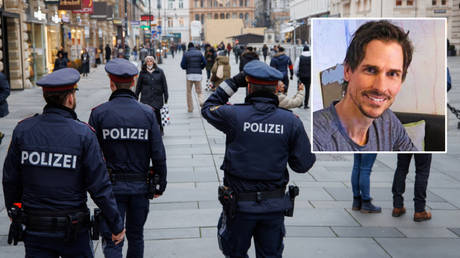
Austria will introduce a full lockdown that could last for three weeks on Monday in an attempt to tackle a new wave of Covid-19 infections. The government has also ordered the entire population to get vaccinated from February 1.
On Friday, conservative Chancellor Alexander Schallenberg told a news conference that a complete lockdown of the nation would begin on Monday and last for an initial 10 days.
He stated that the restrictions could be extended if infection rates did not start to fall, but he insisted the lockdown would not exceed 20 days.
The measures concern the entire Austrian population. The government has already imposed a partial lockdown on the unvaccinated in an effort to reduce hospitalization rates amid a surge in Covid-19 cases.
When the full lockdown ends, restrictions will remain in place for the unvaccinated.
Schallenberg’s announcement came after a meeting of nine state governors, two of whom had already vowed to introduce full lockdowns in their regions on Monday, in the western province of Tyrol.
The chancellor also announced that vaccinations would be mandatory from February 1. “We haven’t been able to convince enough people to vaccinate. For too long, I and others have assumed that you can convince people to get vaccinated,” he added, giving his rationale for the mandate.
Schallenberg said he lamented the political forces, radical opposition, and fake news fighting against vaccination.
Austria has one of the lowest vaccination rates in western Europe, with only 65% inoculated against the deadly virus according to data from Johns Hopkins university.
Infection rates are almost among the highest on the continent. The seven-day incidence rate stands at 971.5 per 100,000 people.
Think your friends would be interested? Share this story!
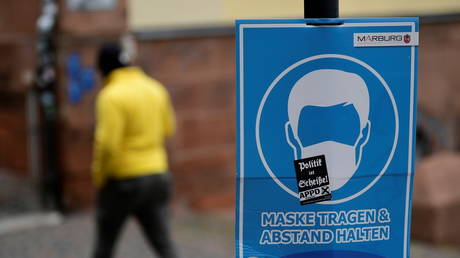
Those making and knowingly using fake vaccination certificates in Germany could soon face up to five years behind bars, as the country’s likely future coalition government is looking to tighten the screws.
Coming under the same category are also fake test results and Covid recovery certificates, with similar penalties for the counterfeiters and the holders. Everything envisaged in the new guidelines was drafted by the Social Democrats, along with the Free Democratic and Green Parties. The three are currently in coalition talks and expected to form a new government as early as next week.
The German Parliament will decide on the regulations this Thursday, though a draft has already been seen by the media outlet DPA.
According to German media, the manufacturing and sale of fake certificates has become a booming black-market industry in the country. In just one such case reported by Der Spiegel in late October, a counterfeiter working at a pharmacy in Munich and her accomplice had churned out more than 500 fake digital certificates in the span of one month, raking in €350 for each one sold.
Meanwhile, Berlin authorities are planning to further ramp up restrictions in the city, where, starting Monday, having either a vaccination or recovery certificate is a must to enter restaurants, cinemas, theaters, museums, galleries, swimming pools, gyms, as well as hairdressers and beauty salons. On Tuesday, Berlin Mayor Michael Müller confirmed that authorities want to “have an additional instrument” to contain the spread of the virus. However, he declined to elaborate on what the new measures will be. Local media speculate that starting next week, in addition to the requirement to have a vaccination or recovery certificate to enter public places, people inside the venues will also need to practice social distancing and wear a mask, or have a recent negative test result.
This comes after Covid-19 numbers in Berlin hit an all-time high last Thursday, with 2,874 new cases reported that day.
Think your friends would be interested? Share this story!
Instagram is looking to channel the anger of its users by introducing a new feature that allows them to report various problems with the app by shaking their phones.
“Have you ever used Instagram and it wasn’t working like it was supposed to? It was just really getting you… really just pissing you off?” Instagram’s head Adam Mosseri asked his followers in a clip uploaded to Twitter on Wednesday.
Well, precisely for infuriating situations like that, the platform has developed a feature it’s calling “rage shake,” he announced.
Shaking your phone will, from now on, cause a special form to pop up on screen, allowing you to instantly report issues such as photos not uploading or audio not playing.
The form is also the perfect place to let out “all the emotions and feels you’ve got going on,” Mosseri insisted, assuring Instagrammers that these reports would be promptly dealt with.
Thanks to their feedback, Instagram will be able to optimize its bug-fixing process, he said. The option, which he described as a “hidden gem,” is so far available only in the US, on both iOS and Android.
The Instagram boss gently shook his own cellphone in the clip to demonstrate the feature in action. However, it’s likely upset users may well end up rage-shaking with a good deal more passion, which could increase the risk of a gadget being damaged, or their owner or even a passerby being struck should the phone fly out of their hand.
Mosseri also didn’t advise the public what to do with their rage over media revelations about alleged shady practices by Instagram and the platform’s owner, Facebook.
Among the trove of papers recently leaked by former Facebook employee Frances Haugen was an internal study from 2020 reporting that Instagram was causing many of its young users, particularly teen girls, to suffer mental health issues and suicidal thoughts. However, the platform kept operating in the same manner despite this finding, with changes being promised only after the study made headlines this September.
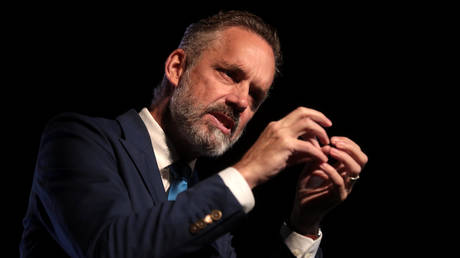
Controversial psychologist and author Jordan Peterson claimed Western countries had no “moral right” to force developing nations to reduce pollution output, noting instead that improving their economies was key.
During an appearance on the BBC’s ‘Question Time’ show on Thursday, the Canadian professor noted that the focus of climate change policies should be on incentivizing the development of cheap energy in poorer polluter countries.
“The best long term solution is to try to make developing countries as rich as possible, and the best way to do that is not control their pollution output, but to help them develop the cheapest energy they can possibly manage as fast as they possibly can,” Peterson said.
The debate saw UK undersecretary for employment Mims Davies suggest that measures taken to tackle climate change should not come at the “expense of developing countries.” But Peterson countered that it “absolutely, 100% will be [at their expense].”
I don’t think we have any moral right in the West at all to do that.
He also criticized the recent COP26 climate change conference for failing to explore ideas on how best to improve national economies in the developing world, noting that he saw “very little of that sort of idea” coming out of the UN summit.
In the final hours of the two-week conference, China and India had intervened to soften the wording around the use of coal in the Glasgow Pact. The two countries demanded a change in the final text of the agreement that called for coal to be phased out, revising this to “phasing down unabated coal.”
The move prompted COP26 president and UK minister Alok Sharma to declare that China and India would have to “justify” their actions to countries that were more vulnerable to global warming effects. However, officials in both Beijing and New Delhi have countered that the criticism was unfair.