Israeli and UAE defense suppliers have agreed to jointly develop unmanned vessels that can be tailored for a range of military roles, including anti-sub warfare. The move comes after the two countries held naval drills last week.
Emirati state-owned weapons maker EDGE group and the government-run Israel Aerospace Industries (IAI) announced the partnership in Dubai on Thursday. In a joint statement, the firms said they would design the 170 m-USV (modular-unmanned surface vessels) series for both military and commercial applications.
The vessels, which can apparently operate remotely or with partial and complete autonomy, are expected to be used for “maritime security operations,” intelligence-gathering, surveillance, detecting and countering submarines and mines, and as a deployment platform for vertical take-off and landing (VTOL) aircraft such as helicopters and certain types of drones.
For commercial use, the manufacturers noted that they can be customized to serve in a variety of roles, including oceanography, pollution monitoring, oil and gas exploration, transportation, search and rescue, firefighting, and first interventions.
While not specifying the sources and amount of the project’s funding, or when production would begin, EDGE Chief Executive Faisal Al Bannai described the deal as an “important milestone” that would “open many doors” for the company in “local and global markets, military and commercial alike.”
According to the statement, the EDGE-owned Abu Dhabi Ship Building (ADSB) will design the vessel and integrate the platform’s control systems and payload. IAI will develop the autonomous control systems and provide various mission-requirement payloads to the control system units.
In March, the two companies had partnered up to develop an autonomous drone defense system to “detect, identify and intercept a broad range of threats.”
Last week, the UAE and Bahrain conducted their first-ever joint maritime drill with Israel’s navy. The US Fifth Fleet also participated in the five-day show of force in the Red Sea, which was reported by Israeli media outlets as sending a message to Iran.
The naval exercises came a little more than a year after Israel and the UAE established diplomatic ties in normalization agreements brokered by the Trump administration. The Abraham Accords broke decades of Arab consensus to not formally recognize Israel until the issue of a Palestinian state was settled.
Greece will soon prohibit unvaccinated residents from entering a litany of public spaces, the country’s prime minister has announced, claiming its current Covid outbreak is largely fueled by those who haven’t received the jab.
Starting next week, the unvaccinated will be barred from entry to restaurants, cafes, theaters, bars, gyms and museums, among other indoor public places, PM Kyriakos Mitsotakis said on Thursday, noting that a negative Covid-19 test will no longer be accepted as an alternative to proof of vaccination.
“This is indeed a pandemic of the unvaccinated,” he said as he announced the move in a televised address, adding “Greece is mourning unnecessary losses because it simply does not have the vaccination rates of other European countries.”
The new rules are set to take effect on Monday, and will require Greeks to present vaccine certificates to businesses and other indoor establishments to be allowed inside. Those attending religious services mark a rare exception, however, as they will only be asked to present a negative test in order to enter a church or other place of worship.
In a bid to encourage booster vaccinations among the elderly – a population much more vulnerable to Covid-19 – citizens over the age of 60 will be made to renew their certificate after a period of seven months.
While officials had hoped to hit a full vaccination figure of 70% for Greece’s population of 11 million by autumn, the number currently stands at about 62%, according to Reuters. As its weekly case counts continue to soar to record highs, the country reported 7,317 new Covid-19 infections and 63 deaths on Thursday, bringing the totals to more than 860,000 cases and some 17,000 fatalities since the pandemic kicked off in late 2019.
The new restrictions in Greece mirror similar policies implemented elsewhere in Europe, with Austria, Germany, Italy, France, the Czech Republic and Slovakia each imposing limits on public life for the unvaccinated. Though the Austrian government recently imposed a full lockdown for millions of residents who have not received the shot, some officials in that country are pushing for even harsher policies, including a national stay-at-home order on the jabbed and non-jabbed alike.
Think your friends would be interested? Share this story!
American billionaire Bill Gates has claimed Covid-19 deaths and infections may drop below seasonal flu levels next year as more people get vaccinated and treatment improves, unless we encounter a new, more deadly variant.
Speaking on Thursday in a virtual interview at the Bloomberg New Economy Forum in Singapore, founder of Microsoft stated that vaccines, natural immunity and emerging oral treatments mean that “the death rate and the disease rate ought to be coming down pretty dramatically.”
The tech mogul, who has been particularly vocal during the pandemic, said issues around vaccine-production capacity are likely to be replaced by distribution challenges and even waning demand.
“The vaccines are very good news, and the supply constraints will be largely solved as we get out in the middle of next year, and so we’ll be limited by the logistics and the demand,” he noted.
He also told his audience that it remains to be seen how much demand there is for Covid-19 shots in places like Sub-Saharan Africa.
Calling for more work to eradicate flu, Gates claimed Covid-19 rates and deaths would possibly fall below those of flu by the middle of next year, unless more deadly coronavirus variants emerge.
The Bill and Melinda Gates Foundation has involved itself in the development of vaccines and virus surveillance, calling for a global response to the Covid-19 pandemic. The foundation has invested hundreds of millions dollars in the development and distribution of potentially lifesaving shots.
According to the World Health Organization, influenza kills up to 650,000 people each year. At least five million people have died from Covid-19 since the pandemic began in late 2019.
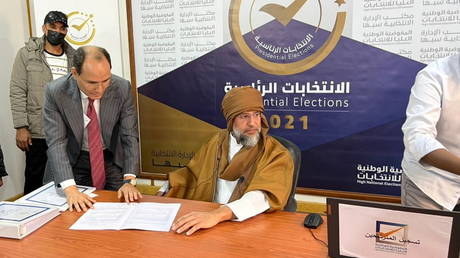
Libyan military commander Khalifa Haftar is set to challenge Gaddafi’s son for the top job, announcing his presidential bid. The election will take place on December 24.
“I declare my candidacy for the presidential election, not because I am chasing power but because I want to lead our people towards glory, progress and prosperity,” the de facto leader of Eastern Libya said in a televised speech.
Haftar added that the election is the only way out of the severe crisis the country has been plunged into.
The announcement was expected; in September, Haftar announced that he was temporarily stepping down as head of the force known as the Libyan National Army, fulfilling the requirement for presidential hopefuls to suspend public work three months before an election.
Haftar will run against the son of former leader Muammar Gaddafi, Saif al-Islam Gaddafi, who represents the Popular Front for the Liberation of Libya.
Haftar’s presidential bid is likely to anger many who consider him a war criminal responsible for the indiscriminate killing of civilians during his military campaign. A number of civil lawsuits have been filed against him in a US federal court for alleged war crimes. Haftar has both US and Libyan citizenship, and owns property in Virginia.
Following years of civil war and political chaos after the NATO-backed intervention that saw Muammar Gaddafi deposed and brutally murdered, the upcoming election is widely viewed as an opportunity for political settlement and the long-awaited unification of the country, divided now between Haftar’s forces and the Tripoli-based Government of National Accord. However, there is still no consensus on the legal grounds for the election, which could become an obstacle for the peace process.
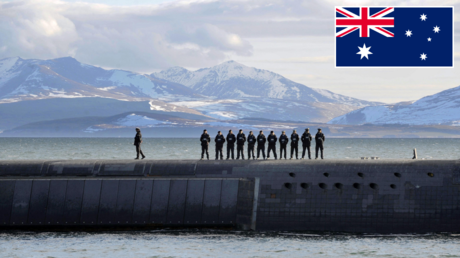
Australia’s Defense Minister derided a senior Chinese diplomat’s comments as “silly” and “comical,” after the latter dubbed Canberra’s trilateral nuclear-powered submarine pact with the US and UK a threat to peace.
During a television interview on Friday, Peter Dutton said acting Chinese Ambassador Wang Xining was “probably reading off a script from the Communist Party” when he warned that Australia would become the “naughty guy” if it procured the stealth-combat vessels through the AUKUS deal.
Wang, who is China’s most senior representative to the country after the previous ambassador’s term ended last month, told The Guardian on Thursday that Australia would be labeled a “sabre-wielder” rather than a “peace defender.” He said the Australian public “should be more worried” about the impact of the security pact their nation had made with the UK and the US.
There’s zero nuclear capacity, technologically, in Australia, that would guarantee you will be trouble free, that you will be incident free. And if anything happened, are the politicians ready to say sorry to people in Melbourne and in Adelaide?
However, Dutton “dismissed” the comments and countered that “most Australians [would] see through [their] non-productive nature.”
“We don’t see it from any other ambassador here in Australia. It’s quite remarkable,” the minister told the Nine Network, adding that “this type of diplomacy” was seen elsewhere in the world too.
“These provocative comical statements – it’s just so silly. It’s funny,” he added.
In September, Australian Prime Minister Scott Morrison announced the deal to obtain at least eight nuclear-powered vessels as part of its new defense alliance. The pact angered not only China but also France, which claimed it had been “stabbed in the back” after Canberra unilaterally scrapped a multi-billion-dollar diesel-electric submarine contract with Paris.
Last weekend, Dutton had irked Beijing by stating that he could not conceive of a situation in which Australia would hesitate to support the US should armed conflict with China break out over Taiwan. Under its ‘One China’ policy, Beijing has pledged to reunify the island with the mainland.
Wang warned Australian politicians on Thursday not to do anything that would be “destructive to our relationship.”
President Joe Biden commented on reports that US officials are planning to boycott the upcoming Olympics in Beijing over alleged human rights violations – but his answer left journalists perplexed.
When asked on Tuesday if an official US delegation will be traveling to the Winter Games in the Chinese capital in February, Biden responded: “I am the delegation.”
The president, however, did not elaborate, leaving the White House correspondents in a state of confusion, as his response could mean that Biden will attend the Winter Olympics alone or, as some reporters suggested, that he simply did not understand the question.
A recent report by a Washington Post columnist claimed the US won’t be sending an official delegation to Beijing in 2022 over allegations of human rights violations by the Chinese government. According to the sources cited in the article, a formal recommendation for a diplomatic boycott of the Olympics has been already presented to Biden, with the move expected to be approved by the president by the end of November.
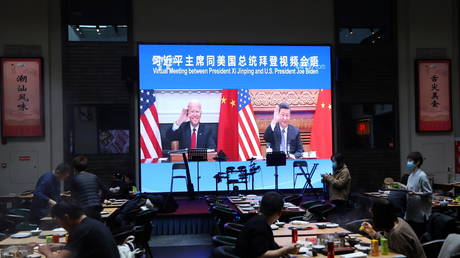
The piece was published on the day that Biden held a lengthy virtual meeting with Chinese leader Xi Jinping, in which they discussed a range of issues regarding the strained relations between the two nations – but not the Olympics.
The White House said that during the talks, President Biden challenged his Chinese counterpart over what Washington sees as persecution against the Uyghur population in the Xinjiang region, as well as human rights violations in Tibet and Hong Kong. China has strongly denied the claims, accusing the US of interfering in its internal affairs.
Calls for the Biden administration to boycott the Olympics and refrain from sending a political delegation to Beijing have recently been made by top Democratic and Republican lawmakers.
If implemented, it won’t affect the American athletes, who will still be taking part in the Winter Olympics.
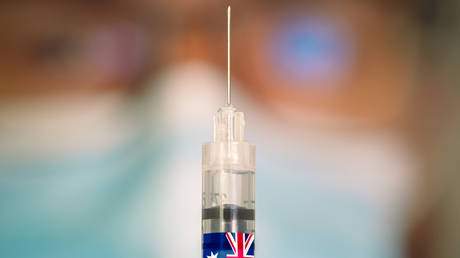
Australia’s government could be forced to spend tens of millions in payouts after receiving more than 10,000 compensation claims from people who suffered side effects and loss of income due to Covid-19 vaccines.
Under its no-fault indemnity scheme, eligible claimants can apply for compensation amounts between AU$5,000 (US$3,646) to AU$20,000 (US$14,585) to cover medical costs and lost wages as a result of being hospitalized after getting the shot. The scheme’s online portal is scheduled to be launched next month.
Official figures suggest, however, that over 10,000 people have already indicated their intention to make a claim since registration opened on the health department’s website in September. If each claim was approved, the government could face a bill of at least AU$50 million (US$36.46 million).
There were around 78,880 adverse events to Covid-related vaccination in Australia as of November 7, according to the Therapeutic Goods Administration, which regulates national health products. The majority of side effects were minor, including headaches, nausea, and arm soreness.
Only people who experienced a moderate to significant adverse reaction that resulted in a hospital stay of at least one night are eligible for coverage under the government’s scheme. Those seeking $20,000 or less have to provide proof their claims are vaccine-related – although there has been no information as yet on exactly what evidence would be acceptable.
“Adverse events, even though they happen to a tiny proportion of people, for the people it does impact it’s really quite devastating,” Clare Eves, the head of medical negligence at injury compensation firm Shine Lawyers, told the Sydney Morning Herald.
Among the adverse reactions covered are the blood clotting disorder “thrombosis with thrombocytopenia syndrome (TTS)” linked to the AstraZeneca vaccine and the “myocarditis and pericarditis” heart conditions associated with the Pfizer vaccine. Other reportedly accepted side effects are Guillain-Barré syndrome, a rare neurological condition, and immune thrombocytopenia (excessive bleeding due to low platelet levels).
Claims for over $20,000, including those for vaccine-related deaths, will be assessed by an independent legal panel of legal experts and compensation paid on its recommendations. Nine people have reportedly died after an adverse reaction to one of the three vaccines in the country.
Eves told the Morning Herald that her firm was representing a number of litigants over the vaccine side effects, including several who are not eligible for the scheme.
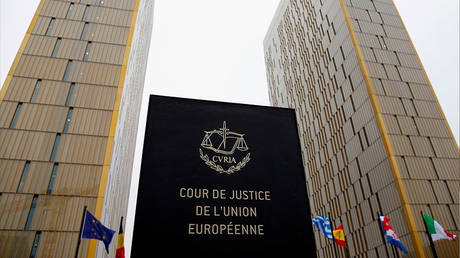
The European Union’s top court has ruled that Hungary’s 2018 law aimed at criminalizing aiding illegal immigrants who are claiming asylum violates the “rights safeguarded” by the bloc’s legislature.
The Hungarian legislation, passed in 2018, sought to punish anyone “facilitating illegal immigration” with a year in prison, under a bill dubbed the “Stop Soros” law. Hungary’s government justified it at the time by arguing that migrants illegally entering the country threatened its national security.
In the ruling, handed down on Tuesday, the European Court of Justice declared that “criminalizing such activities impinges on the exercise of the rights safeguarded by the EU legislature in respect of the assistance of applicants for international protection.”
The EU’s advocate general, Athanasios Rantos, had urged the court to make such a judgement back in February, claiming the introduction of the legislation meant that “Hungary has failed to fulfil its obligations under the [bloc’s] Procedures Directive.”
It became known as the Stop Soros law after billionaire philanthropist George Soros became a vocal opponent of the Hungarian government’s opposition to migration. The administration, in turn, accused Soros of orchestrating migration to Europe, with the Open Society Foundation, run by the philanthropist, closing its operation in the country in response.
Hungary, under the leadership of right-wing Prime Minister Viktor Orban, has repeatedly clashed with the EU in recent years over its strong stance on immigration and concerns from the bloc about threats to the rule of law in the country.
At the end of 2020, a dispute between Hungary and Poland and the EU risked derailing the bloc’s budget, as both member states were threatening to veto it over their view that the EU was attempting to interfere in their domestic affairs. Ultimately, the EU backed down, agreeing to a compromise with Budapest and Warsaw to ensure the budget secured the support of all 27 member states.
Despite acknowledging the EU court’s ruling, Hungary’s government defended its right to challenge any foreign-funded non-government organizations that are attempting to “promote migration.”
“Hungary’s position on migration remains unchanged: Help should be taken where the problem is, instead of bringing the problem here,” Hungarian government spokesperson Zoltan Kovacs said, adding that the country will challenge outside entities “seeking to gain political influence and interference.”
Think your friends would be interested? Share this story!
Apple has finally caved to users demanding the ‘right to repair’, allowing owners of iPhones, MacBooks, and other devices to tinker with their electronics at home instead of bringing them to notoriously expensive service centers.
Called Self Service Repair, the feature is set to launch “early next year” in the US before expanding to other countries. Some 200 parts are expected to be available, along with instructions on how to replace them.
Initially, the company will offer repairs for the iPhone 12 and 13, to be followed by Macs with M1 chips. Users will be able to replace the phones’ display, battery, and camera – some of the earliest parts to cease functioning – using original equipment from the company. While Apple encourages only “individual technicians with the knowledge and experience to repair electronic devices,” urging users to take their devices to a professional before cracking them open themselves, the move nevertheless represents a major step for a company that has long been resistant to allowing users to even swap out a battery.
After rolling out repair instructions and parts for the iPhone 12 and 13, the company will gradually expand users’ abilities to fix their phones themselves without having to wait in line at the Apple Store. Users who attempt to make these repairs on their own will not void their warranty, according to TechCrunch, representing another major change for the tech giant.
Even this week, Apple was sealing off users’ ability to fix their own phones, barring users who replaced their own screens from being able to use Face ID recognition going forward. However, the various departments seem to be coordinating among themselves – users will receive a recycling credit for returning their used or broken part after completing the repair, and the company plans to sell “more than 200 individual parts and tools,” as well as repair manuals customers can peruse before attempting to repair their devices.
The decision to open up Apple’s “right to repair” might not have been entirely that of the company – the Federal Trade Commission wrote to the corporation earlier this year vowing to “address unlawful repair restrictions,” adding it would also “stand ready to work with legislators, either at the state or federal level, in order to ensure that consumers have choices when they need to repair products that they purchase and own.”
A strike of more than 20,000 metal workers in Cadiz, Spain has halted the operations of key manufacturing plants, including Airbus and Alestis, with barricades erected, roads blocked, and vehicles burned.
Cadiz, the capital of the southernmost province of the country, has become one of the main sites of protests over working conditions. The Avenida de Astilleros is currently closed to traffic, with protesters burning vehicles.
Picket lines also blocked access to major shipbuilding and industrial sites of key local companies, such as Airbus, Navantia, Dragados, Alestis, and Acerinox, causing their work to be interrupted.
Protesters also cut off access to major industrial zones in Puerto Real and Campo de Gibraltar with barricades and bonfires. Rail traffic is also being obstructed, with pipes thrown onto the tracks.
The national police have been deployed to bring the situation under control and to protect the industrial sites. At one point on Tuesday, the strike turned into a full-scale confrontation, with protesters throwing rocks and screws at police, who reacted by firing rubber bullets. One person was arrested.
🎥🛑En #España 2º día y arden las calles de Cádiz en el segundo día de la #huelgadelmetal indefinida.
🔥🏴Todo nuestro apoyo a lxs trabajadorxs del sector del metal en #Cadiz.
The Federation of Metal Entrepreneurs (FEMCA), which represents major employers in the region, reiterated earlier its offer for dialogue with the workers, while stressing that the union’s requests were “unjustified” and “disproportionate.”
The workers say they will continue the strike until FEMCA provides them with an acceptable agreement.
Think your friends would be interested? Share this story!