Covid-19 variants keep emerging in different parts of the world, causing experts to ask how long the pandemic will last, and how effective the current methods of protection really are.
Since the pandemic started in 2019, people have referred to the disease which has paralyzed the world simply as ‘coronavirus’. Now, in 2021, when we talk about it, we mean not just the original variant, but also its numerous mutations.
In May, the WHO decided to label the key variants with Greek letters. Since then, the Delta variant has been proclaimed the predominant strain across the world, and now we have titles that look like codes to detail the differences between variants. Last month, the UK was put on high alert over a fast-spreading Delta AY.4.2 variant. This week, Norway reported finding one more version of the Delta strain – AY. 63. The country’s experts suggest it’s not more dangerous than the Delta mutation itself. Meanwhile, another Covid variant, discovered in France (B.1.640), brought the researchers an unpleasant surprise: they said they’d never seen mutations like it.
Professor David Dockrell, from the Center for Inflammation Research of the University of Edinburgh, described to RT the reasons for the constant mutation of the coronavirus. “The areas in the virus that are most likely to change are those that come into contact with what we call ‘selective pressures’ – or factors that make them need to change,” he explains. “So, a version of the virus which mutates and changes to give it a selective advantage to escape from the immune system is more likely to prosper and become a dominant strain.”
That’s how it works: The part of the virus many of the immune responses (or antibodies, T-cells etc.) are responding to is called the spike protein (or the S-protein). So, the virus tries to change it in order to survive.
“We know that a variety of different viruses are able to mutate and change when exposed to the selective pressure of the immune system, whether it would be the human immune system or other species in which these viruses have evolved,” Prof. Dockrell says. “And of course, we’ve seen it most clearly with HIV, which is particularly good at changing and evolving. It does something called ‘reverse transcription’ – it copies material in the reversed direction from DNA to RNA.”
Covid is still seemingly running faster than humanity’s efforts to curb it, but Prof. Dockrell has some good news. “The coronavirus – and viruses like it – are not as able to make these changes. They are going to do it to some extent, but they are not going to be as successful as retroviruses and HIV.”
And the other major thing to say: When the viruses make changes, there’s always what we call ‘a fitness cost’. Many of the potential changes that the virus could make will actually not favor its survival. So there are only a certain number, potentially, of changes that the virus can make, before it starts affecting its fitness.
Now, unfortunately, we are still in a phase where Covid19 can continue to evolve and change. It’s not time to panic, though, because across the world various ways to adapt the current anti-Covid strategies are already in place. First of all, people should keep getting vaccines – maybe receiving slightly altered booster doses, Prof. Dockrell suggests, “in a way, that we, after all, have to do with influenza, by providing a seasonal influenza vaccine and changing it every year.”
“And maybe we have to keep changing some of the treatments like these new monoclonal antibodies against the virus, because they also may be limited by the emergence of a mutation of the virus evolving the S-protein,” he adds.
Sounds promising – but won’t it become a never-ending race against constantly emerging mutations?
Hopefully not. According to Prof. Dockrell, there are parts of viruses that scientists call ‘conserved areas’. With time, vaccines and monoclonal antibodies will target these areas, which the virus finds very hard to change. “Clearly, the direction of travel is to develop either vaccine responses that affect more different kinds of virus, or these ‘monoclonal antibodies’ that we could use to prevent or treat infection, that they will target more conserved areas and therefore will be less limited by the ability of these virus to evolve and change,” he concludes.
Think your friends would be interested? Share this story!
Denmark’s air force showed off its brand-new electric-powered planes on Thursday, saying its test flights have so far proven that the cheaper-to-run, more eco-friendly technology has potential.
It had obtained the two Velis Electro jets from Slovenian manufacturer Pipistrel, becoming the first military in the world to operate this type of hardware.
“The aircraft are 100% emission-free, very quiet, and otherwise cheap to operate,” Lieutenant Colonel Casper Børge Nielsen of the Defense Ministry’s material and procurement agency said. Initial tests indicate “there may be perspectives in using electric aircraft when the technology becomes mature,” he added.
Denmark has leased the planes for two years, rather than buying it, to avoid the “risk of ending up with equipment that we can’t really use,” Børge Nielsen said. During the lease period, the Danish Air Force hopes to gain an insight into the benefits and disadvantages of the jets’ technology to decide how it can be applied in the future.
The pilots described flying the one-man light electric planes, which are powered by two lithium batteries, as “exciting,” saying they were “built well and fly well.”
Last year, the United States military said it had been keeping an eye on the development of electric-powered planes, describing their ability to approach targets silently as “tremendous.” However, their battery capacity isn’t currently sufficient to meet the US Air Force’s needs.
Work on electric aircraft has been underway since the 1970s, but the battery issue has been a stumbling block in the way of wider adoption of the technology. Global military interest could change all that, stimulating research and investment.
The switch to electric power is likely to be a win-win across the board, as it will drastically reduce CO2 emissions and also make flying much cheaper for commercial carriers and their passengers.
Think your friends would be interested? Share this story!
The International Criminal Court has halted an investigation into alleged rights abuses carried out by Philippines authorities as part of a harsh crackdown on the drug trade, saying it is reviewing a deferral request from Manila.
The ICC’s chief prosecutor Karim Khan said the probe was suspended after the Philippines government filed a request to defer the case earlier this month, according to court documents cited by Reuters on Friday.
“The prosecution has temporarily suspended its investigative activities while it assesses the scope and effect of the deferral request,” he wrote, adding that the court is seeking more information from the government in Manila.
Based in The Hague, the ICC allows states to ask for postponements if they conduct their own investigations into the charges in question. President Rodrigo Duterte’s administration filed its deferral request on November 10, while the country’s Justice Ministry announced its own investigation into the alleged abuses late last month.
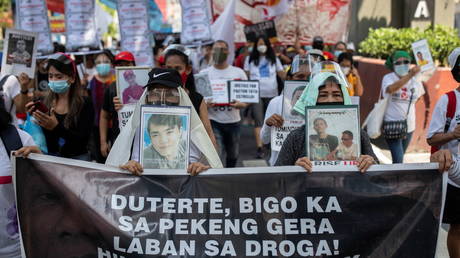
The court initially opened the probe in September over allegations that Philippines police had carried out thousands of extrajudicial executions and used other brutal tactics against suspected drug dealers, and that Duterte gave implicit backing to those actions. Activists have accused authorities of killing innocent people, including children, though the police insist they only use violence in self-defense.
While Duterte has declined to cooperate with the ICC probe, saying it has no authority on the island nation, and even pulled the Philippines out of the international body in 2019, the court has jurisdiction to investigate alleged violations committed by the country while it was still a member.
The president’s chief legal counsel, Salvador Panelo, confirmed the deferral request in brief comments to Reuters, saying “There is no inconsistency with the request for suspension of action,” though he did not elaborate.
Since its founding some 20 years ago, the ICC has successfully convicted just five people of war crimes or crimes against humanity – all leaders of armed movements in Africa, including in Mali, Uganda and the Democratic Republic of the Congo.
Think your friends would be interested? Share this story!
Criminals convicted of multiple cases of rape could face chemical castration in Pakistan as the country’s parliament supported new legislation aimed at tackling the rise in sexual offenses there.
The amendments to existing legislation, which allow for speedy conviction and harsher punishments for rapists, have been voted in by the MPs on Wednesday.
They introduce the death penalty or a life sentence for gang rape as well as chemical castration for repeat sex offenders, with the consent of the convict.
Chemical castration was described in the bill as a process through which “a person is rendered incapable of performing sexual intercourse for any period of his life, as may be determined by the court through administration of drugs.”
It’s planned to establish special courts across the country to make sure that verdicts in sexual assault cases are delivered “expeditiously, preferably within four months.” If chemical castration is assigned as a punishment, it “shall be conducted through a notified medical board,” according to the new legislation.
Mushtaq Ahmed, a senator for the religious Jamaat-i-Islami party, had earlier denounced the bill as un-Islamic. Ahmed argued that there was no mention of chemical castration in Sharia law and that rapists are to be hanged in public.
By resorting to drugs to reduce the libido of repeat sex offenders, Pakistan joins South Korea, Poland, the Czech Republic and some US states, where chemical castration has been introduced.
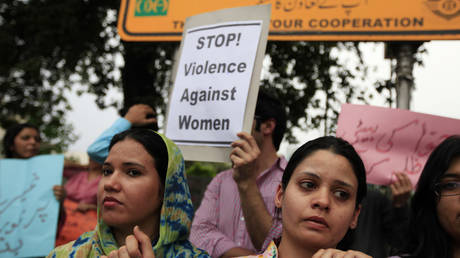
The measure was put on the table a year ago by Pakistani President Arif Alvi in response to a vast public outcry over a spike across the country in cases of rape involving both women and children.
Back then, Amnesty International decried chemical castration as a “cruel, inhumane” treatment, advising Islamabad to instead focus on reforming its “flawed” justice system and to ensure justice for the victim.
Local NGO War Against Rape told Reuters last year that less than 3% of sexual assault or rape prosecutions in Pakistan result in a conviction.
The French government has kicked off a €14 million national campaign to tackle underage prostitution and pimping. It comes months after a report found as many as 10,000 youngsters, mostly teen girls, are involved in the sex trade.
The campaign, launched by the Ministry for Solidarity and Health on Monday, is expected to be fully rolled out in 2022. The ministry described the problem as a “growing phenomenon that society can no longer ignore” and about which “too little is known.”
The government programme is expected to “increase awareness” while helping to “inform and provide a better understanding of the phenomenon.” It also aims to help “identify the young people involved” and “prosecute clients and pimps more effectively.”
According to RFI, the prevalence of underage prostitution has increased by as much as 70% over the past five years, with social media believed to be compounding the problem. The public broadcaster noted that the situation had worsened during the Covid-19 pandemic when young people spent more time online.
In July, a working group produced a damning report that found between 7,000 and 10,000 young people were involved in prostitution across the country. The majority are young girls aged between 15 and 17, but a ministry statement noted that the “entry point” into prostitution was increasingly becoming younger at around 14-15 years.
“There’s really a normalisation of prostitution of young people because girls say that selling sex is a way of making lots of money easily and that it can help them reach their dream life,” deputy public prosecutor Raphaelle Wach told the news outlet France 24.
In its statement, the ministry noted that many minors did not consider themselves victims and valued the “financial autonomy” and feelings of “belonging to a group” and “regaining control” over their lives.
“These minors are however in danger, both physically and psychologically,” the ministry warned.
“Covid played a considerable role because social networking provided new ways of being able to hook in underage girls very easily,” Geneviève Collas, who runs an NGO fighting human trafficking, told RFI. She added that recruiting minors has been made “easier” with short-term apartment rental apps like Airbnb helping mask the scale of the problem on the streets.
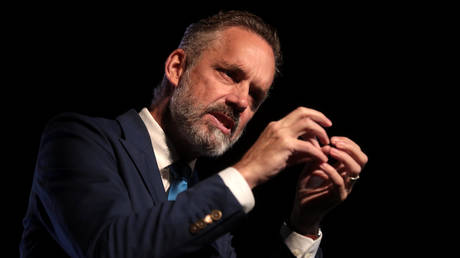
Controversial psychologist and author Jordan Peterson claimed Western countries had no “moral right” to force developing nations to reduce pollution output, noting instead that improving their economies was key.
During an appearance on the BBC’s ‘Question Time’ show on Thursday, the Canadian professor noted that the focus of climate change policies should be on incentivizing the development of cheap energy in poorer polluter countries.
“The best long term solution is to try to make developing countries as rich as possible, and the best way to do that is not control their pollution output, but to help them develop the cheapest energy they can possibly manage as fast as they possibly can,” Peterson said.
The debate saw UK undersecretary for employment Mims Davies suggest that measures taken to tackle climate change should not come at the “expense of developing countries.” But Peterson countered that it “absolutely, 100% will be [at their expense].”
I don’t think we have any moral right in the West at all to do that.
He also criticized the recent COP26 climate change conference for failing to explore ideas on how best to improve national economies in the developing world, noting that he saw “very little of that sort of idea” coming out of the UN summit.
In the final hours of the two-week conference, China and India had intervened to soften the wording around the use of coal in the Glasgow Pact. The two countries demanded a change in the final text of the agreement that called for coal to be phased out, revising this to “phasing down unabated coal.”
The move prompted COP26 president and UK minister Alok Sharma to declare that China and India would have to “justify” their actions to countries that were more vulnerable to global warming effects. However, officials in both Beijing and New Delhi have countered that the criticism was unfair.
The city council in Austria’s second-largest city, Graz, has elected a new mayor. Communist Party member Elke Kahr has become the first Communist leader of a major city in the country.
The 60-year-old politician, who has been working in the municipal government for more than 15 years and previously served as vice mayor of Graz, was elected as the new city leader on Wednesday. A member of the Austrian Communist Party (KPÖ, Kommunistische Partei Österreichs) for almost 30 years, she won the election with 28 of 46 votes. Kahr succeeded the previous long-standing mayor Siegfried Nagl of the center-right, liberal-conservative People’s Party.
“Who would have thought that the daughter of a locksmith, a Communist, would become mayor,” she said in her first speech following the vote.
Having acknowledged a number of issues to deal with in the city, especially during the Covid-19 pandemic, the new mayor highlighted a housing policy, pledging to put a stop to profit-driven construction in Ganz.
The Communists have also already formed a coalition with the Greens and the Social Democratic Party (SPÖ), and another precedent in European city governance was made – two women serving as mayor and deputy. Green leader Judith Schwentner was chosen as Graz’s vice mayor, with the new governing coalition saying they would support not only social, but also environmental changes, aiming to improve living standards especially for low-income groups. Providing a bicycle for every child in the city from the municipality is in their program.
However, not everyone in the local government is happy with the new Communist rule. A member of the right-wing Freedom Party of Austria (FPÖ), Alexis Pascuttini, described the choice as “unpleasant,” having accused the Graz Communists of empty catchphrases in their program and refusing to participate in what he described as “left-wing nonsense.” Kahr herself has been exposed to strong pressure to justify her party, being repeatedly asked about her position on “the crimes of communist parties around the world since 1917,” according to Austrian media.
As infections are rising again, scientists all around the world are rushing to fight the danger, offering a choice of new treatments and unusual variants of vaccines.
Levels of contagion are setting new records, hospitals are overwhelmed, governments are starting to introduce lockdowns, and not only for unvaccinated people – the picture of the fight against Covid-19 looks quite disappointing. However, there’s still a place for good news: Research teams report positive results while trialling new medicines and vaccine types.
Nasal vaccines
Vaccination will remain one of the most effective tools against Covid-19. As Professor David Dockrell, from the Center for Inflammation Research of the University of Edinburgh, told RT, “vaccines will continue to be a central part of how we control the virus.”
“If we can dampen down the number of infections, and the severity of infections, and also the extent to which the virus can replicate in people when they become infected, then we are slowing down the ability of the virus to change and to mutate,” he explains.
So I think the vaccines still will be a very important part of the preventive strategy. It’s vital that they are available to all the world’s population, irrespective of where people live, and the wealth of the country in which they live.
However, vaccination doesn’t always mean you have to get an injection. For instance, several intranasal Covid-19 vaccines are currently being developed. As the virus gets into the body through the nose, a nasal spray or drops are aimed to produce mucosal immune response and prevent it from getting into the lungs.
In India, a vaccine of this type is already completing Phase 2 of clinical trials. In Russia, a nasal vaccine is undergoing a clinical trial on volunteers. In Thailand, a home-developed product is expected to be trialed on humans next spring. In the US, Universities of Houston and Stanford recently reported good results of their experiments carried out on mice.
Intranasal vaccines can have several potential benefits compared to inoculation.
“They would be easier to use, because they can be self-administered. They wouldn’t need a nurse or clinical settings,” Swedish professor emeritus of epidemiology Marcello Ferrada de Noli explained to RT. As a result, he says, there’s hope that fewer people will be reluctant to be immunized. Not so many of us find it pleasant to get a jab – and after all, there are those who are just afraid of needles. Also, it would be much easier to vaccinate children with nasal substances.
However, what concerns Prof. de Noli the most is the duration of the effect of a vaccine of this type. Still, scientists can’t say for sure whether a nasal substance may completely replace a shot. According to Alexander Gintsburg, the head of Moscow’s Gamaleya Center biomedical research institute, which created the Sputnik V vaccine, the nasal version they are working on would serve for an additional protection against the virus, but would not replace the injections.
Chew the virus away?
A nasal vaccine is not the only one being developed. In summer, it was revealed that Russian Defense Ministry scientists were creating a ‘chewing gum’ vaccine, also targeting the mucosal immune response. Meanwhile, a UK firm announced this month that it would conduct a human trial of a skin patch that uses T-cells to confront the virus. Developers hope it would offer longer-lasting immunity than the existing vaccines. Work on a similar project is being done in the University of Queensland, Australia.
While it all looks so promising, Prof. de Noli warns that it would still take a lot of time until these products become available to the public. “I think that discoveries in this field are a very good thing. But if we say ‘We discovered a new type of vaccine’, people will say ‘Aha, so I’m going to wait’. But we need to vaccinate people now,” he points out.
Improving Covid treatment
Vaccines are not a silver bullet, unfortunately, given the not-so-high level of global immunization and the constantly emerging new strains of the virus. “People might get infected despite having had a vaccine, but I still think the vaccine strategy is going to be central to how we manage this kind of virus going forward,” Prof. Dockrell says. “But we will have other strategies that will be very important. We will have other elements. When we put them all together, it gives us the best opportunity that people can live with coronaviruses, and hopefully, the mortality can be limited to much lower extense than what we’ve sadly seen in the last eighteen months.”
Monoclonal antibodies will be central to the ongoing vaccine strategy, Prof. Dockrell explains. These are the antibodies similar to those the body uses to fight the virus. They are produced in labs and given via infusion or injection to boost the patient’s response against certain diseases. Monoclonal antibody treatment is used for people under a high risk of developing severe infection (including older patients 65+ years old or those with chronic medical conditions). It’s already being used in the US, following last year’s FDA approval. Earlier in November, the European Medicines agency recommended authorizing two monoclonal antibody medicines.
In October, UK’s AstraZeneca reported positive results of a Phase 3 study of its antibody combination, which, according to developers, is highly effective in both prevention and treatment of coronavirus.
Researchers are also working on a possibility to save Covid-infected patients from the so-called ‘cytokine storm’ – a situation when the immune system reacts so intensely that kills not only the virus, but the whole organism itself. A drug to ‘calm the storm’ was registered in Russia this year, and it’s already being used on patients.
Another way to fight Covid-19 is to use antiviral drugs. When the pandemic started, medics had to use something already existing (like anti-influenza Favipiravir) or something being authorized for emergency use (like remdesivir). Now, more than a year on, the work to create a special drug to specifically cure Covid-19 is giving its results. This month, Russia registered its first injectable anti-Covid medicine. A bit earlier, the UK became the first country to approve an antiviral pill produced by the US-based companies Merck and Ridgeback Biotherapeutics. Another American firm, Pfizer, got positive results from trials of its drug of the same kind. Both firms hope that with a drug in the form of a pill it would be easier to treat people at home.
Appreciating all the efforts on the field of developing anti-Covid treatment, Prof. de Noli points out that still, the key issue now is to reduce the spreading of the virus. “The new medicines are developed for people who already got the disease,” he says.
But we need to prevent people from getting the infection, not let them get infected because we have some new medicine that can cure them.
The same idea is echoed by scientists all over the world quoted in plenty of articles dedicated to the medical gains: it’s great to have the treatment, but none of the drugs may substitute vaccination, as first and foremost, humanity has to adopt preventive measures and stop the pandemic.
Sporadic clashes broke out at massive Saturday demonstrations in major European cities, as thousands of people took to the streets of Vienna, Paris and Rome to express their discontent with Covid-19 restrictions.
The Austrian capital Vienna on Saturday saw the largest protest turnout since the start of the Covid-19 pandemic. A total of 38,000 people took to the city streets to join a dozen demonstrations protesting government measures.
Austria se colocó en pleno apartheid sanitario esta semana, mirando a Viena ahora mismo, no lo pensarías, recuerda que dependen únicamente de la conformidad del pueblo, la resistencia es clave. pic.twitter.com/tKRAIJ2GLt
— Creo en la justicia divina y terrenal 💞💞🇪🇸🇪🇸 (@Ninita0011) November 20, 2021
Tens of thousands have taken to the streets today in one of the largest protests in the history of Vienna, Austria, after the government implemented a new COVID lockdown and became the first in the world to announce compulsory vaccination.pic.twitter.com/FFriWCZioG
The protests came a day after the Austrian authorities ordered nationwide compulsory vaccination from February 1 and imposed a full lockdown, starting Monday. The massive procession that spanned over several kilometers marched along Vienna’s central ring road. The city center was paralyzed for several hours as traffic was restricted.
Austria’s right-wing Freedom Party, whose members joined the rallies, put the number of protesters at 100,000. Some demonstrations were also attended by members of various far-right groups. The protests were generally peaceful but footage published by Ruptly video news agency showed several scuffles between the police and the demonstrators breaking out.
Law enforcement spoke of a total of five arrests. One incident saw a protester attempting to grab an officer’s gun and take it from its holster. In another incident, the officers were pelted with bottles and fireworks and had to use pepper spray in response.
#w2011 Die Situation in Wien eskaliert. Die Polizei scheint, trotz der bekannten Grossmobilisierung und zahllosen Gewaltaufrufen, äusserst schlecht vorbereitet. An mehreren Orten wurde die Polizei umzingelt und musste sich zurückziehen. pic.twitter.com/4VzZTbww2S
Hundreds of kilometers away from Vienna, in the French capital Paris, events took a more dramatic turn. There, a demonstration against the government Covid-19 measures coincided with the third anniversary of the Yellow Vests movement. Hundreds of protesters took part in the protest, which quickly turned into clashes between the demonstrators and law enforcement.
The protesters were building barricades and setting them on fire as well as pelting police with bottles and various other projectiles. Law enforcement responded with profuse amounts of tear gas, sometimes filling entire streets with thick smoke to disperse the crowds.
PARIS – Un conteneur est renversé pour utiliser les bouteilles comme projectiles.
Rome saw a massive demonstration against Italy’s Covid-19 health pass, also known as the Green Pass. Some 4,000 people gathered in the center of the Italian capital, according to the police. The demonstrators were waving national flags and chanting “Freedom” and “No Green Pass,” referring to the vaccination certificate needed to enter various public venues such as clubs or bars.
The crowd staged a sit-in in the Circus Maximus – an ancient Roman chariot-racing stadium converted into a modern-day park. They remained there after sunset, lighting the area with thousands of phones and colored smoke bombs. The rally was peaceful, though, as the police did not report any incidents.
Unlike Rome, Italy’s northern city of Milano saw clashes between protesters and the police as law enforcement officers sought to break up an unauthorized rally at the city center. Large police forces were deployed to the city center and several squares were cordoned off.
Think your friends would be interested? Share this story!
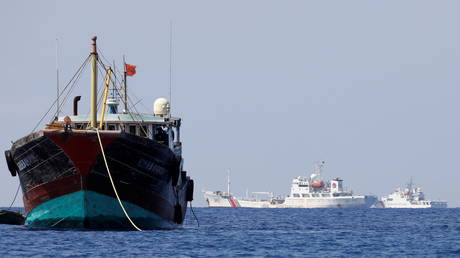
China has accused the Philippines of breaching its territory, saying two supply ships were blocked by Beijing’s coast guard as they approached a disputed shoal. Manila protested over the run-in, citing its own claim to the area.
The two Philippines vessels “trespassed” into waters near the Nansha island chain – also known as the Spratly Islands – on November 16, Foreign Ministry spokesman Zhao Lijan told reporters on Friday, noting that they entered the area “without China’s consent.”
“Chinese coast guard vessels performed official duties in accordance with law and upheld China’s territorial sovereignty and maritime order,” Zhao said, adding that the area is now “generally tranquil” and that the two countries are in communication about the encounter.
The comments from Beijing come just one day after Manila first publicized the incident, with the Philippines Foreign Affairs Secretary Teodoro Locsin claiming Chinese vessels fired water cannon on the two supply boats and forced them to abandon their mission near a disputed shoal in the Spratlys. He called on China to “back off” and “take heed” of Philippines claims to the region.
While both countries regard the Ayungin shoal – alternatively referred to as the Second Thomas or Renai Jiao shoal – as their own territory, The Hague’s Permanent Court of Arbitration settled the dispute in the Philippines’ favor in 2016. However, despite that ruling, as well as the fact that Manila has maintained a presence on the shoal since 1999, Beijing has not abandoned its claims to the area.