Germany has been plunged into a “nationwide state of emergency” because of its current high level of Covid infections, acting health minister Jens Spahn has said. He also refused to rule out further lockdowns.

Read more

FILE PHOTO © Reuters / Kai Pfaffenbach
Germany sets ‘grim’ Covid record & eyes new curbs

The situation is serious, the dynamic is unbroken,” Spahn told a press conference Friday.

The incidence has increased fivefold in four weeks. We see sadly high values in the death rate. We are in a national emergency.”

Spahn refused to rule out the possibility of another lockdown, saying that, in such a drastic health situation, “we can’t rule anything out.”

The head of the Robert Koch Institute (RKI), Lothar Wieler, added to the gloomy picture by saying that “all of Germany is one big outbreak,” with an estimated half a million active Covid cases in the country – and numbers rising. For the third day in a row, more than 50,000 cases have been registered in the country, while the death toll in Germany since the start of the pandemic is above 98,700, according to figures compiled by the RKI.

Wieler added that, with many hospitals already overwhelmed, more should be done to tackle the spread of the virus. Besides obvious measures such as vaccination and wearing masks, he also suggested closing poorly ventilated bars.

On Thursday, lawmakers in the Bundestag approved new measures in the fight against coronavirus, including requirements to prove vaccination status, a negative test, or proof of recovery from infection before employees can access communal workspaces or use public transport. The measures will have to be passed by the upper house before they can take effect.

Neighboring Austria announced on Friday that it would enter full lockdown as of Monday, November 22.

Think your friends would be interested? Share this story!

find more fun & mates at SoShow now !

Austria will introduce a full lockdown that could last for three weeks on Monday in an attempt to tackle a new wave of Covid-19 infections. The government has also ordered the entire population to get vaccinated from February 1.

On Friday, conservative Chancellor Alexander Schallenberg told a news conference that a complete lockdown of the nation would begin on Monday and last for an initial 10 days.

Read more

French President Emmanuel Macron (FILE PHOTO) © REUTERS/Sarah Meyssonnier
Macron discloses whether lockdown for unvaccinated will be necessary in France

He stated that the restrictions could be extended if infection rates did not start to fall, but he insisted the lockdown would not exceed 20 days.

The measures concern the entire Austrian population. The government has already imposed a partial lockdown on the unvaccinated in an effort to reduce hospitalization rates amid a surge in Covid-19 cases.

When the full lockdown ends, restrictions will remain in place for the unvaccinated.

Schallenberg’s announcement came after a meeting of nine state governors, two of whom had already vowed to introduce full lockdowns in their regions on Monday, in the western province of Tyrol.

The chancellor also announced that vaccinations would be mandatory from February 1. “We haven’t been able to convince enough people to vaccinate. For too long, I and others have assumed that you can convince people to get vaccinated,” he added, giving his rationale for the mandate.

Schallenberg said he lamented the political forces, radical opposition, and fake news fighting against vaccination.

Austria has one of the lowest vaccination rates in western Europe, with only 65% inoculated against the deadly virus according to data from Johns Hopkins university.

Infection rates are almost among the highest on the continent. The seven-day incidence rate stands at 971.5 per 100,000 people.

Think your friends would be interested? Share this story!

find more fun & mates at SoShow now !

Criminals convicted of multiple cases of rape could face chemical castration in Pakistan as the country’s parliament supported new legislation aimed at tackling the rise in sexual offenses there.

The amendments to existing legislation, which allow for speedy conviction and harsher punishments for rapists, have been voted in by the MPs on Wednesday.

They introduce the death penalty or a life sentence for gang rape as well as chemical castration for repeat sex offenders, with the consent of the convict.

Chemical castration was described in the bill as a process through which “a person is rendered incapable of performing sexual intercourse for any period of his life, as may be determined by the court through administration of drugs.”

Read more

RT
High court rules Pakistan’s ‘two-finger’ virginity test for rape victims unconstitutional

It’s planned to establish special courts across the country to make sure that verdicts in sexual assault cases are delivered “expeditiously, preferably within four months.” If chemical castration is assigned as a punishment, it “shall be conducted through a notified medical board,” according to the new legislation.

Mushtaq Ahmed, a senator for the religious Jamaat-i-Islami party, had earlier denounced the bill as un-Islamic. Ahmed argued that there was no mention of chemical castration in Sharia law and that rapists are to be hanged in public.

By resorting to drugs to reduce the libido of repeat sex offenders, Pakistan joins South Korea, Poland, the Czech Republic and some US states, where chemical castration has been introduced.

The measure was put on the table a year ago by Pakistani President Arif Alvi in response to a vast public outcry over a spike across the country in cases of rape involving both women and children.

Back then, Amnesty International decried chemical castration as a “cruel, inhumane” treatment, advising Islamabad to instead focus on reforming its “flawed” justice system and to ensure justice for the victim.

Local NGO War Against Rape told Reuters last year that less than 3% of sexual assault or rape prosecutions in Pakistan result in a conviction.

If you like this story, share it with a friend!

find more fun & mates at SoShow now !

AstraZeneca has announced that its preventative antibody cocktail offers 83% protection against symptomatic Covid-19 for at least six months, making it more effective than its own vaccine.

In a statement on Thursday, AstraZeneca cemented its lead in the race to develop and market a preventative Covid-19 drug, which is delivered as a shot in the arm. 

The drug, named AZD7442, reduces the risk of symptomatic Covid-19 by 83% over the course of six months, according to data from a trial in which participants were given one 300mg dose. There were no deaths or severe infections recorded within the trial group, it said. 

Read more

Paxlovid, a Pfizer's coronavirus disease (Covid-19) pill, is seen manufactured in Ascoli, Italy (FILE PHOTO) © Pfizer/Handout via REUTERS
Pfizer gets new $5.3bn boost over Covid

A separate trial showed the drug reduced the risk of severe Covid-19 or death by 88% when administered within three days of the onset of symptoms. 

“These new data add to the growing body of evidence supporting AZD7442’s potential … We are progressing regulatory filings around the world and look forward to providing an important new option against SARS-CoV-2 [Covid-19] as quickly as possible,” AstraZeneca Executive Vice President Mene Pangalos said in the statement. 

The Anglo-Swedish firm has agreed to supply the US government with 700,000 doses of AZD7442 if the Food and Drug Administration grants it emergency use, which AstraZeneca requested on October 5. The firm has similar agreements with other nations. 

The drug is created using a combination of two antibodies originating from immune B-cells donated by a recovering Covid-19 patient. 

The treatment could be used in people who are known not to respond well to vaccines, such as cancer patients. Around 2% of people are considered to be at risk of not creating enough antibodies following the administration of a Covid-19 vaccine. 

Based on the numbers, the drug appears to be more effective than the firm’s first-generation Covid-19 vaccine. Britain’s Zoe Covid study showed the effectiveness of the vaccine dropped to around 67% after four to five months. 

If you like this story, share it with a friend!

find more fun & mates at SoShow now !

EXPERT PERSPECTIVE — On 16 June, US President Joe Biden and Russian President Vladimir Putin met for just under four hours in Geneva. This was Mr. Biden’s first meeting with Mr. Putin during his presidency and Biden is the fifth US President with whom Putin has held a summit.

Expectations for the summit were characterized as low by both sides in advance and assessed a bit more positively after the conclusion of the meeting. The meeting presented an opportunity for both leaders to present grievances and warnings to the other (and show toughness to their domestic constituencies).  Other than presenting the opportunity to blow off steam, the results of the meeting appear modest:  the agreement to return ambassadors to their posts, to resume bilateral arms control discussions, to conduct discussions on “strategic stability” and to hold unspecified consultations on cyber. In typical fashion, Mr. Putin rejected all of Mr. Biden’s assertions about Russian actions and made counter accusations referencing hostile US actions.

Of the deliverables from the summit, cyber will no doubt turn out to be the most problematic area for follow up. Mr. Biden apparently delivered to Mr. Putin a list of 16 US critical infrastructure sectors that should be considered “off limits” for cyberattacks, e.g., “red lines” not to be crossed without the risk of significant retaliation. For his part, Mr. Putin asserted that it is Russia that is the victim of cyberattacks originating from the territory of the US and it’s NATO partners and also is the victim of  attempts to interfere with Russian elections.  The challenge in cyber discussions going forward will center around three areas:  differing interpretations of the relevance of deterrence theory in today’s cyber environment, attribution, and control.

Mr. Biden’s firm comments to Mr. Putin on recent cyberattacks against the US such as the ransomware attack on Colonial Pipelines (Mr. Biden is said to have asked Mr. Putin how he would react if Russia’s pipelines were hit?) and his provision of a list of “off limits” US infrastructure entities suggests a deep belief in this administration that Russia can be deterred from engaging in future conduct of cyber operations against US targets or “sanctioning” attacks originating from the territory of the Russian Federation by criminal groups.

Unfortunately, it is highly likely that either Mr. Putin nor those who control the levers of Russian cyber operations agree that deterrence theory applies.  Deterrence only works when both sides know the other is capable of – and willing to – cause significant harm to the other.

The Russian side likely believes (and may have amply demonstrated) that the US is disproportionately vulnerable to cyber risk at every level of its economic, societal, and political infrastructure whereas Russia is not.  There is a reason the use of cyber tools has become a central feature of Russian strategic doctrine. They work and seem a legitimate tool that falls short of conventional war. Hybrid warfare using cyber tools, the Russian side would argue, is no different than the economic warfare Russia is experiencing from sanctions imposed by the US its allies.

For full access to the article, sign up to become a Cipher Brief member for just $10/mo.


“The Cipher Brief has become the most popular outlet for former intelligence officers; no media outlet is even a close second to The Cipher Brief in terms of the number of articles published by formers.” – Sept. 2018, Studies in Intelligence, Vol. 62 No.

Access all of The Cipher Brief’s national-security focused expert insight by becoming a  Cipher Brief Level I Member .  


The post After Geneva: US – Russia Strategy Moving Forward appeared first on The Cipher Brief.

find more fun & mates at SoShow now !

Hundreds of major websites returned ‘404: not found’ errors after an apparent problem with Google Cloud. Alphabet said the problem was “partially resolved” after about ten minutes, but it will take time for everything to update.

The site Downdetector began showing a spike in reports of outages starting at 12:40pm Eastern time on Tuesday, affecting Google, Facebook, Instagram, Snapchat, Discord, Spotify, and TikTok, as well as e-commerce sites Target, Etsy, Shopify, and Home Depot, among others.

Amazon, Amazon Web Services (AWS), and Cloudflare were also affected.

Google’s Status Dashboard reported an unspecified “issue” with the Cloud service starting at 10:10 Pacific, which was causing users to encounter errors when accessing websites. 

“We believe the issue with Cloud Networking is partially resolved,” the company said by 10:17 PST, but it added that “Customers will be unable to apply changes to their load balancers until the issue is fully resolved,” and they did not have an estimate as to when that might be.

Think your friends would be interested? Share this story!

find more fun & mates at SoShow now !

French luxury giant Dior has taken down a controversial photograph that had been criticized in China for “smearing Asian women” by pandering to Western stereotypes while “distorting Chinese culture.”

The photo, which was part of the brand’s ‘Lady Dior’ exhibition in Shanghai, depicts an Asian model wearing a traditional dress and clutching a Dior handbag. It came under fire this week from Chinese media outlets for featuring “spooky eyes, [a] gloomy face and Qing Dynasty-styled nail armor.”

Read more

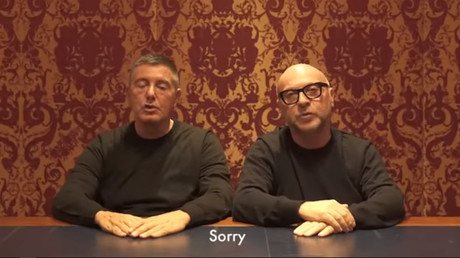
A screenshot from D&G's apology video © YouTube / Dolce & Gabbana
Dolce & Gabbana beg for forgiveness after ‘racist’ ad triggers backlash in China

Although Dior has not released a statement regarding the controversy, it confirmed to fashion trade publication Business of Fashion that the photo had been removed from the exhibition. The brand has also reportedly taken the photo off Chinese social media platform Weibo.

The image, which was shot by Chinese photographer Chen Man, had drawn both media ire and public outrage. However, there were apparently no calls for a boycott of the brand.

In an editorial on Monday titled “Is This the Asian Woman in Dior’s Eyes?”, the Beijing Daily paper had noted that the image makes Chinese consumers uncomfortable. The publication criticized Man for “playing up to the brands, or the aesthetic tastes of the Western world.”

For years, Asian women have always appeared with small eyes and freckles from the Western perspective, but the Chinese way to appreciate art and beauty can’t be distorted by that.

Warning that both the brand and the photographer had “gone too far,” the China Women’s News paper ran an editorial on Wednesday that claimed it “indicated their intention of uglifying Chinese women and distorting Chinese culture.”

Read more

RT
‘Deeply sorry’: Versace in hot water as China accuses fashion brand of questioning its sovereignty

“Again, from… Dior’s ghost-style picture, which makes the public feel uncomfortable, it’s easy to see some Western brands’ ‘pride and prejudice’ in their aesthetics and culture,” said the newspaper, which is run by the All-China Women’s Federation.

Meanwhile, the Global Times noted that the “lingering controversy could pose a delicate situation” for Dior and other global brands – for whom China’s “massive” luxury market was one of the biggest sources of revenue. The paper said that the Chinese public had become “increasingly sensitive” toward the depiction and treatment of Chinese people and culture by foreign companies.

While pointing out that Chinese social media users had demanded the company and photographer explain their intention, a number of media outlets also highlighted how some netizens had praised the photo as a departure from typical standards of beauty in the country, often characterized by “fair skin and large eyes.”

If you like this story, share it with a friend!

find more fun & mates at SoShow now !
Some voters in Germany’s capital, Berlin, may have to re-cast their ballots after the country’s federal election czar filed an official complaint over irregularities in a parliamentary vote held two months ago.

The election – which saw Berliners decide the makeup of the German parliament, the Bundestag, as well as select city representatives – was marred by irregularities at numerous polling stations, according to the official, Georg Thiel. 

Among the most common problems were ballot shortages and long lines, with waiting times of up to two hours. In some cases, voters were also seen casting their ballots past a 6pm cutoff – the time when all polling stations were supposed to have closed. Thiel, who was tasked with overseeing elections at federal level, saw all of the above as reason enough to raise an objection in the German capital, local media reported on Friday.

Read more

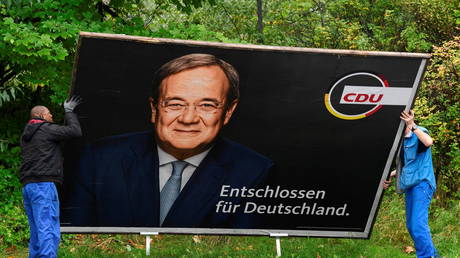
Workers remove a campaign poster showing Armin Laschet, the Christian Democratic Union’s candidate for chancellor, in Bad Segeberg, Germany, September 27, 2021. © Fabian Bimmer / Reuters
Conservative wing of Merkel’s bloc says party leadership must resign after ‘debacle’ in Germany’s general election

Thiel identified six Berlin constituencies where irregularities were allegedly rampant, potentially setting the stage for a re-do election in the city.  

It is now up to a special Bundestag committee to examine Thiel’s complaint and see if the reported violations ran afoul of German law or electoral procedures. For the vote to be repeated, however, at least one of those violations would have to be deemed serious enough to have affected the distribution of seats in the Bundestag.

The September 26 election saw outgoing Chancellor Angela Merkel’s conservatives take a historic beating, with the Social Democrats coming out on top. The Social Democratic Party (SPD) has been engaged in coalition talks with the Greens and the Free Democratic Party ever since, with the trio expected to announce a preliminary deal as early as next week.

Think your friends would be interested? Share this story!

find more fun & mates at SoShow now !

The stars of the Harry Potter films will reunite for a 20-year anniversary special on HBO, minus author JK Rowling. Fans and commenters wondered if Rowling’s absence had anything to do with her views on transgender issues.

‘Harry Potter and the Sorcerer’s Stone’ premiered 20 years ago this week, catapulting actors Daniel Radcliffe, Rupert Grint, and Emma Watson to superstardom. Warner Bros announced on Tuesday that the three stars – ​​as well as a whole range of supporting actors from the franchise – will travel back to Hogwarts for an “enchanting making-of story” airing on New Year’s Day, entitled ‘Harry Potter 20th Anniversary: Return to Hogwarts’. 

Conspicuously absent from the production is author JK Rowling. A Warner Bros’ press release made no mention of Rowling, and a lengthy Instagram post by actress Emma Watson thanked fans and fellow cast members, but also made no mention of Rowling, whom other Harry Potter actors said they “owe everything” to.

Rowling’s PR team did not comment on the author’s absence, and the Hollywood Reporter claimed that the author will only appear in the show in archival footage. 

Commentators online reckoned that Rowling had been canceled from the retrospective special due to her high-profile clashes with transgender activists. A self-described feminist, Rowling has spoken out against gender-neutral language, arguing that it “erases” the concept of sex and therefore the concept of womanhood. She has also stated that sex is a binary concept, and argued against gender-neutral bathrooms, claiming that by allowing men into women’s bathrooms, women are made less safe.

Rowling’s comments on gender issues generated intense backlash from LGBT organizations, and death and rape threats from the most zealous transgender ideologues online. Actors Daniel Radcliffe and Emma Watson also both spoke out against Rowling’s defense of biological sex last year, with Radcliffe declaring that “transgender women are women,” and apologizing to upset fans “for the pain [Rowling’s] comments have caused you.”

“Trans people are who they say they are and deserve to live their lives without being constantly questioned or told they aren’t who they say they are,” Watson chimed in.

Rowling has repeatedly stated that she is against anti-trans discrimination, but would not change her position on sex. “I refuse to bow down to a movement that I believe is doing demonstrable harm in seeking to erode ‘woman’ as a political and biological class and offering cover to predators like few before it,” she wrote last year.

Think your friends would be interested? Share this story!

find more fun & mates at SoShow now !
Czechia will prohibit people who have not been vaccinated from entering public spaces such as restaurants and shops from Monday. Negative Covid-19 tests will no longer be allowed.

Speaking on Wednesday, outgoing Prime Minister Andrej Babis said the country would adopt the so-called Bavarian model from Monday next week, prohibiting those who have not received a Covid-19 vaccine from entering public places. Those who have recently recovered from the virus will be allowed entry. 

Read more

(FILE PHOTO) © REUTERS/Costas Baltas
France turns to Ancient Greece for war on woke

The country will enter a partial lockdown of the unvaccinated from Monday morning, assuming the restrictions are approved by the cabinet on Thursday.   

“We will introduce the Bavarian model from Sunday to Monday. This means that entry to restaurants, service establishments, or mass events will only be allowed for vaccinated or survivors. Those vaccinated with a single dose must have a PCR test,” Babis said on local TV.

The prime minister said that self-testing would be completely cancelled, as he lamented unvaccinated people for clogging up hospitals and preventing treatment reaching those with other illnesses.  

“The death toll is rising; the situation is serious. Vaccination is the only solution, there is no other,” he added. 

The country is seeing a spike in infections, with a record 22,479 new cases reported on Tuesday. 

The Bavarian model refers to strict anti-Covid measures introduced in the southern German state. Markus Soder, the state’s premier, claimed there was no choice but to implement “a kind of lockdown for the unvaccinated,” citing increasing pressure on hospitals and medical staff. 

Meanwhile, some two million people in Austria who are yet to receive their Covid shots have been subject to the world’s first lockdown for the unvaccinated, in an effort to bring case numbers down.  

While 68% of people are vaccinated in Germany, and 65% in Austria, just over 60% are vaccinated in the Czech Republic. 

If you like this story, share it with a friend!

find more fun & mates at SoShow now !