The European Union’s top court has ruled that Hungary’s 2018 law aimed at criminalizing aiding illegal immigrants who are claiming asylum violates the “rights safeguarded” by the bloc’s legislature.

The Hungarian legislation, passed in 2018, sought to punish anyone “facilitating illegal immigration” with a year in prison, under a bill dubbed the “Stop Soros” law. Hungary’s government justified it at the time by arguing that migrants illegally entering the country threatened its national security. 

In the ruling, handed down on Tuesday, the European Court of Justice declared that “criminalizing such activities impinges on the exercise of the rights safeguarded by the EU legislature in respect of the assistance of applicants for international protection.”

The EU’s advocate general, Athanasios Rantos, had urged the court to make such a judgement back in February, claiming the introduction of the legislation meant that “Hungary has failed to fulfil its obligations under the [bloc’s] Procedures Directive.”

It became known as the Stop Soros law after billionaire philanthropist George Soros became a vocal opponent of the Hungarian government’s opposition to migration. The administration, in turn, accused Soros of orchestrating migration to Europe, with the Open Society Foundation, run by the philanthropist, closing its operation in the country in response. 

Read more

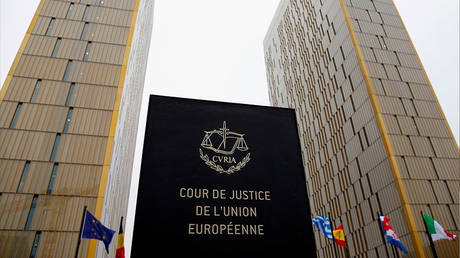
The towers of the European Court of Justice are seen in Luxembourg. © Reuters / Francois Lenoir
Top EU court says Poland broke rules with judge appointment system

Hungary, under the leadership of right-wing Prime Minister Viktor Orban, has repeatedly clashed with the EU in recent years over its strong stance on immigration and concerns from the bloc about threats to the rule of law in the country.

At the end of 2020, a dispute between Hungary and Poland and the EU risked derailing the bloc’s budget, as both member states were threatening to veto it over their view that the EU was attempting to interfere in their domestic affairs. Ultimately, the EU backed down, agreeing to a compromise with Budapest and Warsaw to ensure the budget secured the support of all 27 member states. 

Despite acknowledging the EU court’s ruling, Hungary’s government defended its right to challenge any foreign-funded non-government organizations that are attempting to “promote migration.”

“Hungary’s position on migration remains unchanged: Help should be taken where the problem is, instead of bringing the problem here,” Hungarian government spokesperson Zoltan Kovacs said, adding that the country will challenge outside entities “seeking to gain political influence and interference.”

Think your friends would be interested? Share this story!

find more fun & mates at SoShow now !

Covid-19 variants keep emerging in different parts of the world, causing experts to ask how long the pandemic will last, and how effective the current methods of protection really are.

Since the pandemic started in 2019, people have referred to the disease which has paralyzed the world simply as ‘coronavirus’. Now, in 2021, when we talk about it, we mean not just the original variant, but also its numerous mutations. 

Read more

© Getty Images / sasacvetkovic33
Drastic drop in Covid vaccine effectiveness – study

In May, the WHO decided to label the key variants with Greek letters. Since then, the Delta variant has been proclaimed the predominant strain across the world, and now we have titles that look like codes to detail the differences between variants. Last month, the UK was put on high alert over a fast-spreading Delta AY.4.2 variant. This week, Norway reported finding one more version of the Delta strain – AY. 63. The country’s experts suggest it’s not more dangerous than the Delta mutation itself. Meanwhile, another Covid variant, discovered in France (B.1.640), brought the researchers an unpleasant surprise: they said they’d never seen mutations like it. 

Professor David Dockrell, from the Center for Inflammation Research of the University of Edinburgh, described to RT the reasons for the constant mutation of the coronavirus. “The areas in the virus that are most likely to change are those that come into contact with what we call ‘selective pressures’ – or factors that make them need to change,” he explains. “So, a version of the virus which mutates and changes to give it a selective advantage to escape from the immune system is more likely to prosper and become a dominant strain.” 

That’s how it works: The part of the virus many of the immune responses (or antibodies, T-cells etc.) are responding to is called the spike protein (or the S-protein). So, the virus tries to change it in order to survive. 

“We know that a variety of different viruses are able to mutate and change when exposed to the selective pressure of the immune system, whether it would be the human immune system or other species in which these viruses have evolved,” Prof. Dockrell says. “And of course, we’ve seen it most clearly with HIV, which is particularly good at changing and evolving. It does something called ‘reverse transcription’ – it copies material in the reversed direction from DNA to RNA.” 

Covid is still seemingly running faster than humanity’s efforts to curb it, but Prof. Dockrell has some good news. “The coronavirus – and viruses like it – are not as able to make these changes. They are going to do it to some extent, but they are not going to be as successful as retroviruses and HIV.” 

And the other major thing to say: When the viruses make changes, there’s always what we call ‘a fitness cost’. Many of the potential changes that the virus could make will actually not favor its survival. So there are only a certain number, potentially, of changes that the virus can make, before it starts affecting its fitness. 

Now, unfortunately, we are still in a phase where Covid19 can continue to evolve and change. It’s not time to panic, though, because across the world various ways to adapt the current anti-Covid strategies are already in place. First of all, people should keep getting vaccines – maybe receiving slightly altered booster doses, Prof. Dockrell suggests, “in a way, that we, after all, have to do with influenza, by providing a seasonal influenza vaccine and changing it every year.” 

Read more

RT
WHO sounds alarm over looming Covid-19 catastrophe in Europe

“And maybe we have to keep changing some of the treatments like these new monoclonal antibodies against the virus, because they also may be limited by the emergence of a mutation of the virus evolving the S-protein,” he adds. 

Sounds promising – but won’t it become a never-ending race against constantly emerging mutations? 

Hopefully not. According to Prof. Dockrell, there are parts of viruses that scientists call ‘conserved areas’. With time, vaccines and monoclonal antibodies will target these areas, which the virus finds very hard to change. “Clearly, the direction of travel is to develop either vaccine responses that affect more different kinds of virus, or these ‘monoclonal antibodies’ that we could use to prevent or treat infection, that they will target more conserved areas and therefore will be less limited by the ability of these virus to evolve and change,” he concludes.

Think your friends would be interested? Share this story!


find more fun & mates at SoShow now !

Just three days after restrictions were announced for unvaccinated Austrians, a provincial governor is pressing for a nationwide lockdown of all residents as Covid-19 infections continue to hit record highs.

“If no national lockdown is ordered tomorrow, there will definitely have to be a lockdown of several weeks in Upper Austria, together with our neighboring province Salzburg as of next week,” Upper Austria Governor Thomas Stelzer told lawmakers on Thursday.

That will mean at least two of Austria’s nine provinces will be in full lockdown mode just days after the nation created a two-tier society by locking down approximately two million unvaccinated Austrians.

“We must raise the vaccination rate. It is shamefully low,” Chancellor Alexander Schallenberg said on Sunday, announcing that unvaccinated residents would only be allowed to leave their homes for “essential” purposes, such as to buy groceries or go to a doctor’s office.

Read more

FILE PHOTO: Health care workers exchange a fast PCR test sample in a mobile laboratory truck, amid the coronavirus disease (COVID-19) outbreak, in Soelden, Austria, October 15, 2020. REUTERS/Leonhard Foeger
Lockdown-ready Austria has its PCR system tricked

Police are now doing random checks for proof of vaccination on Austrian streets. Those unvaccinated residents who are found to be in violation of the lockdown order face steep fines of up to €500. Those who refuse to go through a vaccination status check will have to pay about three times as much.

Stelzer and other Austrian governors are scheduled to meet with Schallenberg and Health Minister Wolfgang Mueckstein on Friday, when a full lockdown will likely be considered.

New Covid-19 cases in the country passed the 15,000 mark for the first time on Thursday, far surpassing 2020’s daily high of 9,586, set when no vaccines were available. Upper Austria and Salzburg have been hit the hardest, putting hospitals at risk of bed shortages. With some 66% of its population fully vaccinated, Austria lags behind other Western European countries in terms of the Covid-19 vaccination rate.

While Austria is the first to impose a lockdown on the unvaccinated, other EU countries – including Slovakia, the Czech Republic and Greece – have imposed increasingly tight restrictions on people who haven’t accepted a Covid vaccine.

Think your friends would be interested? Share this story!

find more fun & mates at SoShow now !

Slovakia has become the latest European country to implement lockdown restrictions on people who haven’t had the Covid vaccine, as it seeks to prevent a resurgence in infections and hospital admissions over the winter.

Slovakian Prime Minister Eduard Heger announced the new measures in a press conference on Thursday, declaring a “lockdown for the unvaccinated” after the country reported a record number of new cases.

The new restrictions in Slovakia, which come into effect on Monday, will require people to have been vaccinated or have recovered from Covid in the past six months to enter restaurants, non-essential shops, or public events.

In the past few days, the European nation has seen record numbers of new infections, including over 8,000 on Tuesday, with hospitals running out of space to treat Covid patients.

Slovakia has one of the lowest rates of vaccination in the European Union, with over 50% of individuals still not jabbed. The country of around 5.5 million has so far only inoculated 2.5 million people against the virus.

Read more

(FILE PHOTO) © REUTERS/David W Cerny
Czechia rolls out new restrictions for unvaccinated

Earlier this week, Austria became the first nation to impose restrictions on unvaccinated individuals, as it sought to limit pressure on hospitals and emergency care units. The move came into effect at midnight on Monday for anyone aged 12 and older who has not received their Covid vaccine or recently recovered from the virus.

The German state of Bavaria and the Czech Republic followed Austria in restricting access for unvaccinated individuals. Only people who can show proof of vaccination or that they have recently recovered from Covid will be allowed to enter public spaces, such as restaurants and shops. 

If you like this story, share it with a friend!

find more fun & mates at SoShow now !

Rotterdam Mayor Ahmed Aboutaleb has described an anti-lockdown protest in his city as an “orgy of violence.” The Dutch demonstration devolved into a violent riot that saw police open fire on protesters.

Aboutaleb described the events of Friday night as an “orgy of violence,” after protesters packed Rotterdam’s central Coolsingel shopping street to voice their opposition to an ongoing partial lockdown, a ban on New Year’s Eve fireworks displays, and the possibility of a two-tiered system of freedom in the Netherlands, one of liberty for the vaccinated and restrictions for those without the jab.

Read more

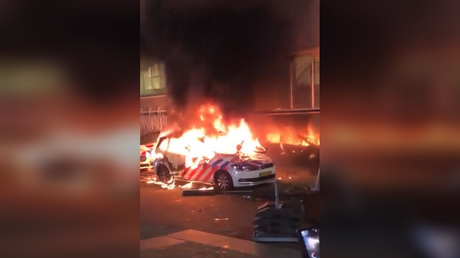
A police squad car is seen engulfed in flames during a protest in Rotterdam, Netherlands, November 19, 2021.
2 wounded after shots fired at Covid protest in Netherlands

The protest soon got out of hand, and police said on Saturday that 57 people were arrested. Protesters were seen torching police vehicles and launching fireworks at police, who shot at them in response.

Aboutaleb said that the cops had been “forced” to use their weapons. “On a number of occasions the police felt it necessary to draw their weapons to defend themselves,” he told reporters. “They shot at protesters, people were injured.”

Police say at least seven people were injured. Two of these injuries were caused by police bullets, and the victims are still in hospital. One officer was hospitalized, while several others were treated at the scene for minor injuries.

Like this story? Share it with a friend!

find more fun & mates at SoShow now !

The Robert Koch Institute, Germany’s disease control agency, has warned that the country will face a “really terrible Christmas” unless steps are taken to mitigate a huge rise in Covid-19 cases.

Speaking on Thursday, the director of the Robert Koch Institute, Lothar Wieler, reiterated the case for new, strict countermeasures to prevent the spread of Covid-19.

Read more

(FILE PHOTO) © REUTERS/David W Cerny
Czechia rolls out new restrictions for unvaccinated

“We are currently heading toward a serious emergency,” Wieler stated, adding we are going to have a really terrible Christmas if we don’t take countermeasures now.” He added that hospitals were already struggling to find enough beds.

Wieler has called for a campaign for a further increase in vaccine uptake, from the current 67% to well over 75%.

The diseases institute director also believes bars, nightclubs, and other large-scale venues should be temporarily forced to close, and that other areas of public life should be off-limits to the unvaccinated.

His comments come as German leaders ponder new restrictions to replace the nationwide epidemic rules, which could include a lockdown of the unvaccinated, following measures already taken in neighboring Austria.

On Thursday, in an attempt to counter waning immunity levels, the country’s vaccine advisory board recommended that booster shots be made available to everyone aged 18 or above. 

If you like this story, share it with a friend!

find more fun & mates at SoShow now !

US non-profit responds to claims it brought close relative of Covid-19 virus to Wuhan

An American nonprofit behind the US-funded bat virus research in China has denied sending virus samples from Laos – where the closest natural relative of SARS-CoV-2 was found – to Wuhan in response to new allegations.

“No work was ever conducted in Laos as a part of this collaborative research project,” EcoHealth Alliance – a group that conducted experiments on coronaviruses while receiving funding from the National Institutes of Health (NIH) – said in a series of tweets on Sunday, responding to media reports alleging that the group might have transported a potentially dangerous virus from Laos to the laboratory in Wuhan.

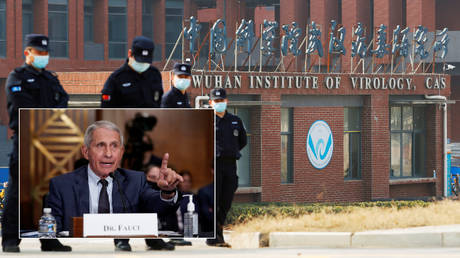
The group’s name surfaced in October when the NIH’s principal deputy director, Lawrence Tabak, revealed that EcoHealth Alliance did experiments on the viruses with the agency’s financial help. At the time, White House medical adviser Dr. Anthony Fauci stated that the viruses “were distant enough molecularly that no matter what you did to them, they could never, ever become SARS-CoV-2.”

EcoHealth Alliance has come under renewed scrutiny after emails obtained through a Freedom of Information request appeared to indicate that the group was discussing the possibility of collecting viral samples from bats in Laos and sending them to the Wuhan Institute of Virology. The emails were initially obtained by the White Coat Waste Project and sparked a flurry of reports over the weekend, including in the Spectator by British science writer Matt Ridley.

Read more

FILE PHOTOS.
Fauci DID fund Wuhan virus experiments, but officials insist virus involved ‘could not have been’ cause of Covid-19 pandemic

The emails shared between EcoHealth Alliance and its US government funders reportedly reveal that the scientists discussed collecting viral samples from bats in eight countries, including in Laos, between 2016 and 2019, and toyed with the idea of transporting them to Wuhan – apparently, to avoid red tape. One email from 2016 cited by the Spectator reportedly reads: “All samples collected would be tested at the Wuhan Institute of Virology.”

Laos is the birthplace of at least one virus that seems to be very close to SARS-Cov-2. A bat viral strain called Banal-52 discovered in Laos in September shares 96.8% of its genome with the virus behind the Covid-19 pandemic

On Sunday, EcoHealth Alliance claimed that the emails cited by Ridley “do not show… that we were sampling bats in Laos and sending the results to Wuhan.”

The group acknowledged, however, that it requested NIH permission to work in Southeast Asian countries, including Laos, and that permission was granted. 

However, the nonprofit claimed it ended and focused on China instead.

The response was not satisfactory for Ridley, who is also the co-author of a book on the origins of Covid-19, and he has demanded evidence showing that his report was not “fully accurate.”

Think your friends would be interested? Share this story!

find more fun & mates at SoShow now !

Scientists have used artificial intelligence to “predict” formulas for new designer drugs, with the stated goal of helping to improve their regulation. The AI generated formulas for nearly nine million potential new drugs.

Researchers with the University of British Columbia (UBC) used a deep neural net for the job, teaching it to make up chemical structures of potential new drugs. According to their study, released this week, the computer intelligence fared better at the task than the scientists had expected.

The research team used a database of known designer drugs – synthetic psychoactive substances – to train the AI on their structures. The market for designer drugs is ever-changing, since their manufacturers are constantly tweaking their formulas to circumvent restrictions and produce new “legal” substances, while cracking their structure takes months for law enforcement agencies, the researchers said.

Read more

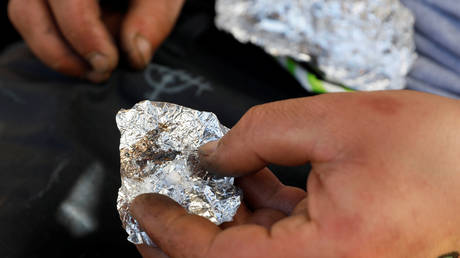
FILE PHOTO: A man living on the streets displays what he says is the synthetic drug fentanyl, in the Tenderloin section of San Francisco, California, February 27, 2020 © Reuters / Shannon Stapleton
Drug overdose deaths in US hit all-time record

“The vast majority of these designer drugs have never been tested in humans and are completely unregulated. They are a major public-health concern to emergency departments across the world,” one of the researchers, UBC medical student Dr. Michael Skinnider has said.

After its training, the AI was able to generate some 8.9 million potential designer drugs. Afterwards, researchers ran a data sheet of some 196 new drugs, which had emerged in real life after the model was trained, and found that more than 90% of these have been already predicted by the computer.

“The fact that we can predict what designer drugs are likely to emerge on the market before they actually appear is a bit like the 2002 sci-fi movie, Minority Report, where foreknowledge about criminal activities about to take place helped significantly reduce crime in a future world,” senior author Dr. David Wishart, a professor of computing science at the University of Alberta, has said.

Identifying completely unknown substances remains an issue for the AI, the research team has noted, but they hope it might potentially help with that task, since the computer was also able to predict which formulas of designer drugs were more likely to be created and hit the market. The model “ranked the correct chemical structure of an unidentified designer drug among the top 10 candidates 72 percent of the time,” while throwing in spectrometry analysis, which is an easily obtained measurement, bumped the accuracy to some 86%.

“It was shocking to us that the model performed this well, because elucidating entire chemical structures from just an accurate mass measurement is generally thought to be an unsolvable problem,” Skinnider stated.

Think your friends would be interested? Share this story!

find more fun & mates at SoShow now !

Marx, Lenin, and Ho Chi Minh – the revolutionaries’ namesakes – have gathered for a wedding in India’s state of Kerala. Friedrich Engels was the one walking down the aisle.

Read more

FILE PHOTO. M.K. Stalin in Chennai. © AFP / Arun SANKAR
Stalin fulfills political destiny, comes to power in Indian state assembly elections

And this has nothing to do with time travel. In India’s southwestern state of Kerala parents have often named their children after prominent figures in the hammer and sickle movement. The local communist party has been at the helm there for much of the past 60 years, and is still quite popular with voters.

In the town of Athirappilly on Sunday the groom, Friedrich Engels, a namesake of the 19th century German philosopher who helped conceive Marxism, tied the knot with the bride, Bismitha. In attendance were also Engels’s brother Lenin, named after the man behind the 1917 Russian Revolution, as well as the groom’s friends, Marx and Ho Chi Minh, who bear the names of Marxism’s founding father and the Vietnamese revolutionary leader respectively.

All four men are members of India’s Communist Party. Incidentally, Marx is currently working and residing in ultra-capitalist Dubai, but flew back to see his friend exchange wedding vows with his betrothed, as reported by local media. 

Another wedding ceremony that took place in June in the state of Tamil Nadu, saw Socialism getting married in front of his brothers, Communism and Leninism, as well as nephew, Marxism.

Think your friends would be interested? Share this story!

find more fun & mates at SoShow now !

Mark Kelton, Former Deputy Director, CIA’s Counterintelligence, National Clandestine Service

Cipher Brief Expert Mark Kelton is a retired senior Central Intelligence Agency executive with 34 years of experience in intelligence operations. Before retiring, he served as CIA’s Deputy Director for Counterintelligence.  He is a partner at the FiveEyes Group and is Board Chair of Spookstock, a charity that benefits the CIA Memorial Foundation, the Special Operations Warrior Foundation and the Defense Intelligence Memorial Foundation.

EXPERT PERSPECTIVE — Winston Churchill’s 04 June 1940 speech in which he vowed that he and his countrymen would “fight on the beaches “and would “never surrender” in the face of a seemingly inevitable Nazi invasion is rightly renowned as perhaps history’s most famous address by a wartime leader.  Less well known, however, is the cautionary tone the new Prime Minister struck in that same appearance before the House of Commons, as he sought to temper the joy and relief engendered by the seemingly miraculous extraction of the British army from the beaches of Dunkirk.  “We must,” Churchill warned, “be very careful not to assign to this deliverance the attributes of a victory.”  “Wars” he admonished, “are not won by evacuations.”

Shortly before the 2011 Abbottabad operation that killed Osama bin Laden, I was asked by my HQ, my views on mounting an assault on the target we knew as Abbottabad Compound 1, (AC1) given that we were not sure it sheltered the terrorist leader.  After expressing my 95% confidence that the Al Qaeda (AQ) leader was in fact, there, I allegorically added that we must strike as ‘you cannot leave Hitler in his bunker and end the war’.  I was fortuitously, right in my assessment that the murderer of so many innocents was present within AC1.  Sadly, however, his death did not bring our war with radical Islamic terrorism to a conclusion.  As was the case after Dunkirk, our enemy was unwilling to quit the field or to limit his unbounded war aims.

Likewise, we should have no expectation that the withdrawal of our forces from the Afghan theater of combat signals an end to the conflict with terrorists who started that war by attacking us on September 11, 2001.  We cannot unilaterally declare an end to the War on Terror by leaving Afghanistan – however much we might wish to do so – for the very simple reason that our enemies do not share that desire.  As former Defense Secretary Leon E. Panetta put it, “I understand that we’re trying to get our troops out of there, but the bottom line is, we can leave a battlefield, but we can’t leave the war on terrorism, which still is a threat to our security.”

The Taliban parading of the American-made weapons and accoutrements of their defeated foes was, in a manner akin to that of ancient Rome, intended not only to celebrate victory.  It was also meant to humiliate the vanquished.   Such triumphal demonstrations – and what will be a galling celebration of the anniversary of 9/11 as their own holiday to follow – will evoke enthusiastic responses from Islamic extremists and will draw many new adherents to the cause that lies at the core of Taliban legitimacy and belief.

As was the case when we left Iraq and later had to go back into the region to crush the ISIS Caliphate that metastasized in the wake of our departure, there is every prospect that the Taliban’s success will breathe new life into Islamic extremist groups.  And there is no reason to believe that the “new” and now much more heavily armed Taliban – an organization that refused to break with AQ over the course of a brutal twenty-year battle, will be any less receptive to working with Islamic terror groups than were their pre-9/11 forebears.


The Cipher Brief hosts private briefings with the world’s most experienced national and global security experts.  Become a member today.


“We are going to have to maintain very, very intense  levels of indicators and warnings and observstion and ISR [Intelligence, Surveillance, Reconnaissance] over that entire region to monitor potential terrorist threats”, said Chairman of the Joint Chiefs, General Mark Milley in a recent interview, adding it will not be easy.

As CIA Director William Burns said during Senate testimony in April, “Our ability to keep (the) threat…in check in Afghanistan from either al Qaeda or ISIS…has benefited greatly from the presence of U.S. and coalition militaries on the ground and in the air fueled by intelligence provided by the CIA and our other intelligence partners.” With the withdrawal of the American military, Burns said, “the U.S. government’s ability to collect and act on threats will diminish.”

Much discussed ‘over the horizon’ intelligence collection against Afghan terror targets will not fill the void left by the loss of our ability to monitor and attack terrorist targets from in-country bases.  With Afghanistan bordered by countries unlikely to be willing to host a significant US presence, intelligence collection missions will now have to be launched from bases well beyond the horizon with all that implies for the quantity, quality and timeliness of intelligence collected.  Such operations will also be commensurately more expensive and difficult to mount.  Moreover, the intimate knowledge of our adversaries that we have painstakingly built over the course of nearly 20 years on the ground, began aging the moment we departed Afghanistan.  Absent an intelligence presence on the ground, our ability to collect on terrorist groups operating in and from that country will only degrade further as time goes on.

After acknowledging that we “could see a resurgence of terrorism out of the region in the coming 12-36 months”, Milley went on that we will, “as opportunities present themselves… have to continue to conduct strike operations if there’s a threat to the United States.”  However, as our pre-9/11 experience showed, such remote strikes can delay our terrorist enemies’ plans, but will not deter them from their intent to strike the US homeland.

As such, Secretary Panetta is undoubtedly correct in his conclusion that US involvement in Afghanistan is not over.  “We’re going to have to go back in to get ISIS,” Panetta said.  “We’re probably going to have to go back in when al-Qaeda resurrects itself, as they will, with this Taliban.”  And, as was the case with our operations to destroy ISIS’s so-called Caliphate after we precipitously left Iraq, there can be no doubt that should we have to go back into Afghanistan, our task will be greatly complicated by the manner in which we left that country, abandoning our allies and bases there.


Go beyond the headlines with expert perspectives on today’s news with The Cipher Brief’s Daily Open-Source Podcast.  Listen here or wherever you listen to podcasts.


The US withdrawal from Afghanistan will have profound geo-strategic implications for America’s position in the region and in the world.  Our Chinese, Russian and Iranian adversaries will seize the opportunity to fill the void left in the wake of our departure.

The Taliban has already indicated it will engage with China, which covets Afghanistan’s mineral wealth.  Entry into a transactional relationship with the cash-strapped Taliban regime and granting access to Afghan mineral resources – and possibly use of Bagram Air Base – in exchange for financial aid and Chinese support for the Taliban in international organizations would suit Beijing, which would evince no concerns about human rights and the like.

For their part, Central Asian countries will look away from Washington and ever more towards their old masters in Moscow and a rising China to ensure their security and economic well-being.   Islamabad, while publicly celebrating the victory of their Taliban proxies and its role in guiding it, must at the same time worry that the extremism embodied by the victors will gain renewed traction beyond its frontier provinces with all that implies for the security of the Pakistani state.

Caught by surprise by Washington’s decision to leave and the conduct of the withdrawal, even our closest and oldest allies are questioning US resolve.  They will surely think twice before acceding to any future US request to join in joint operations.  Our decision to quit Afghanistan, and its messy execution, will also evoke questions about the validity of American assurances to other nations under threat from aggressors.  It will not have been lost on them that the withdrawal of American air, intelligence, planning expertise and logistical support ensured the collapse of an Afghan Army that was dependent on the US.

Our adversaries, too, will see the chaotic nature of our departure as well as the abandonment of Americans, allied citizens and Afghans to uncertain fates as signs of weakness and enfeeblement.   This possibility is particularly dangerous in that they could seize this moment of US distraction to engage in opportunistic adventurism that could include movement by China against Taiwan; a Russian attempt to resolve its impasse with Ukraine forcibly; stepped-up Iranian prosecution of its proxy war with Israel; or a further ramping up by North Korea of its nuclear program.  Any such eventuality would force the US to respond vigorously or risk further erosion of its international credibility.

Finally, the costs involved in remotely monitoring and trying to deter threats emanating from a Taliban-controlled Afghanistan mean that we will be unable to shift intelligence and military resources away from the War on Terror to confront the threat posed by peer competitors to the degree we had hoped.

Aristotle is said to have pronounced, “You will never do anything in this world without courage. It is the greatest quality of the mind next to honor.”  Likewise, the courage shown by so many – and the heroic conduct of US military and CIA personnel in particular – in seeking to extract American citizens from Afghanistan and to honor our obligations to Afghans who worked and fought alongside us for so long, cannot obviate the dishonor attendant to having left so many behind.  Bloody Taliban outrages and reprisals against the latter are a certainty.

It will not be long before Kabul’s new rulers recognize that the Americans now under their control, are potentially useful pawns in trying to extract diplomatic, financial and other concessions in exchange for their freedom.  The effectiveness of our efforts hereafter to extract our own people and our Afghan allies from the clutches of the Taliban and how we respond to any attempts to use them as leverage against us, will determine the depth of the stain on our national honor already attendant to the disastrous end of our Afghan campaign.

In that same famous speech, Churchill solemnly told his countrymen that: ‘The Battle of France is over: The Battle of Britain is about to begin.”  He went on that “we would be well advised to gird our loins for the continued warfare to come.”

As we approach the 20th anniversary of 9/11, we should honor our sacred dead from that horrible day.  But we should likewise prepare ourselves for the battles with Al Qaeda and its murderous kindred of Cain that will surely come.

Recent polls would indicate that Americans support the decision to withdraw from Afghanistan, if not the way in which it was conducted.  One wonders how those polled would have responded if the question had been ‘Do you support a withdrawal from Afghanistan even if it markedly increases the chance of terror attacks and atrocities directed at your fellow citizens at home and abroad?’  I fear we will find out soon enough.

Read more expert-driven national security insights, perspective and analysis in The Cipher Brief

The post Wars are not Won by Evacuations appeared first on The Cipher Brief.

find more fun & mates at SoShow now !