French luxury giant Dior has taken down a controversial photograph that had been criticized in China for “smearing Asian women” by pandering to Western stereotypes while “distorting Chinese culture.”

The photo, which was part of the brand’s ‘Lady Dior’ exhibition in Shanghai, depicts an Asian model wearing a traditional dress and clutching a Dior handbag. It came under fire this week from Chinese media outlets for featuring “spooky eyes, [a] gloomy face and Qing Dynasty-styled nail armor.”

Read more

A screenshot from D&G's apology video © YouTube / Dolce & Gabbana
Dolce & Gabbana beg for forgiveness after ‘racist’ ad triggers backlash in China

Although Dior has not released a statement regarding the controversy, it confirmed to fashion trade publication Business of Fashion that the photo had been removed from the exhibition. The brand has also reportedly taken the photo off Chinese social media platform Weibo.

The image, which was shot by Chinese photographer Chen Man, had drawn both media ire and public outrage. However, there were apparently no calls for a boycott of the brand.

In an editorial on Monday titled “Is This the Asian Woman in Dior’s Eyes?”, the Beijing Daily paper had noted that the image makes Chinese consumers uncomfortable. The publication criticized Man for “playing up to the brands, or the aesthetic tastes of the Western world.”

For years, Asian women have always appeared with small eyes and freckles from the Western perspective, but the Chinese way to appreciate art and beauty can’t be distorted by that.

Warning that both the brand and the photographer had “gone too far,” the China Women’s News paper ran an editorial on Wednesday that claimed it “indicated their intention of uglifying Chinese women and distorting Chinese culture.”

Read more

RT
‘Deeply sorry’: Versace in hot water as China accuses fashion brand of questioning its sovereignty

“Again, from… Dior’s ghost-style picture, which makes the public feel uncomfortable, it’s easy to see some Western brands’ ‘pride and prejudice’ in their aesthetics and culture,” said the newspaper, which is run by the All-China Women’s Federation.

Meanwhile, the Global Times noted that the “lingering controversy could pose a delicate situation” for Dior and other global brands – for whom China’s “massive” luxury market was one of the biggest sources of revenue. The paper said that the Chinese public had become “increasingly sensitive” toward the depiction and treatment of Chinese people and culture by foreign companies.

While pointing out that Chinese social media users had demanded the company and photographer explain their intention, a number of media outlets also highlighted how some netizens had praised the photo as a departure from typical standards of beauty in the country, often characterized by “fair skin and large eyes.”

If you like this story, share it with a friend!

find more fun & mates at SoShow now !

The Middle East has demanded Washington’s attention on an almost weekly basis since President Biden took office in January. Since then, the White House has made the decision to speed up the withdrawal of U.S. troops from Afghanistan, has been faced with militia attacks in Iraq, Hamas attacks on Israel, the collapse of Lebanon, political instability in Jordan, OPEC issues, a political crisis in Tunisia, Houthi rejection of diplomacy in Yemen, Iran’s refusal to return to the nuclear deal, and most recently, attacks believed to be perpetrated by Iran against  tanker ships. This of course, is occurring as COVID continues to ravage regional economies and undermine the stability of fragile states. And let’s not forget that Al Qaeda and ISIS remain active throughout the region.

The Cipher Brief tapped Expert Norman Roule for insights into what all of this means for the Biden Administration and the rest of us in the coming months.

Norman T. Roule, Middle East Expert, Former National Intelligence Manager for Iran, ODNI
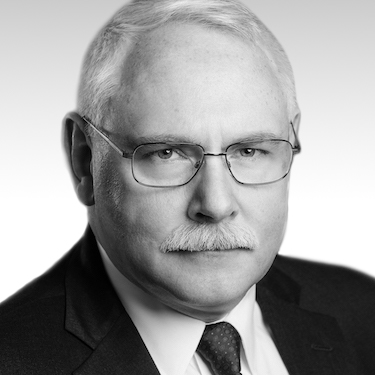
Norman Roule served for 34-years in the Central Intelligence Agency, managing numerous programs relating to Iran and the Middle East.   He served as the National Intelligence Manager for Iran (NIM-I) at the Office of the Director of National Intelligence from November 2008 until September 2017.  As NIM-I, he was the principal Intelligence Community (IC) official responsible for overseeing all aspects of national intelligence policy and activities related to Iran, to include IC engagement on Iran issues with senior policy makers in the National Security Council and the Department of State.

The Cipher Brief: Let’s start broadly.  The Biden Administration has had a lot to deal with in the Middle East since the president took office in January.  How are they doing?

Roule:  I think it’s too early to assesses the administration’s performance. The Biden administration arrived with several broad goals. It promised to reduce American military forces in the region, rely more on diplomacy and cooperation with Europe to resolve regional problems, and adjust relations with long-time regional partners like Israel and Saudi Arabia. But the challenges of the region are long-standing and routinely intrude upon Washington’s foreign policy agenda. And U.S. foreign policy in the Middle East has become a sharply partisan issue.

The administration’s response to events that have transpired in the region since the beginning of the year, has reassured those who looked for a greater emphasis on diplomacy. Washington assigned experienced envoys to contain multi-party issues and coordinated with Europe to limit U.S. involvement. The Secretary of State and his deputy have made high-profile visits to the region. The President has hosted such leaders as the King of Jordan and the Prime Minister of Iraq. And National Security Council engagement with Israel is routine. U.S. military shifts have taken place, but the administration still prioritizes security cooperation with regional partners. However, the U.S. withdrawal from Afghanistan is perceived by many as precipitous. Others worry that the U.S. has joined Europe in overlooking Iran’s attempts to change the political DNA of Iraq, Syria, and Yemen. The U.S. response to the Houthi’s use of Iran-supplied missiles and drones against civilian targets remains mainly rhetorical despite the lethal threat this poses to Saudis, Americans, and others living in the Kingdom.

The Cipher Brief:  That’s a sobering review. Is there any good news from the region for this administration?

Roule:  Actually, quite a bit. The administration has found that regional states will collaborate on complex issues beyond the region. Qatar plays a unique role in U.S. Afghan policy. The United Arab Emirates and Saudi Arabia are essential partners in resolving East African crises.

Regional leaders place great value on security cooperation as well as robust engagement with the U.S. private sector. Al-Qaeda and ISIS remain a threat, but at a fraction of their past potency.

Long-overdue political and economic reforms continue, albeit not at the pace or scale some Western observers seek. Saudi Arabia has introduced notable human rights reforms. A growing number of countries in the region have undertaken high-profile efforts to combat corruption and reshape their economies. Oman has begun the long road to restructuring its economy. Iraq and Libya remain intact despite their fractious polities.

I think the administration has also been impressed by the efforts of the Gulf states to diversify their economies, particularly in the area of green energy. The visits by U.S. Climate Envoy Secretary Kerry have been quite popular, probably more than some expected. I see plenty of momentum for growth here. 


Cipher Brief Members are invited to join us for a live virtual briefing with Norm Roule on Wednesday, August 11 at 11a ET.  

Members receive invites via email.  Not a member?  Not a problem.

Become a member today.


The Cipher Brief: The Iranian nuclear talks appear to have stalled. How did this happen? And what will it take for Iran to return to the deal?

Roule: Iran will return to the nuclear deal when it first believes it has wrung every concession out of the West in order to shield its economy from sanctions that could follow its non-nuclear aggression. It will also seek to ensure that it has fatally compromised the U.S. ability to reimpose sanctions within the nuclear deal itself. The Biden administration pledged a return to the deal as written, an end to the maximum pressure policy of its predecessor, and a rejection of regime change. More broadly, it also announced an intention to reduce the U.S. military presence in the region, a reassessment of Washington’s relationship with Israel and Saudi Arabia, and support for regional engagement with Iran. Some believe that the administration may even have turned a blind eye to Chinese purchases of Iranian oil as a signal to Tehran of Washington’s goodwill. If reasonable leaders ruled Iran, all of this should have produced an early return to the deal. But Iran’s leaders are rarely seen as reasonable. Iran could have chosen a fast return to the deal. Instead, it pushed for what all members of the P5+1 agree are unreasonable demands.

At this point, conditions aren’t favorable for an Iranian return to the deal in the near term. First, Tehran has pocketed all the benefits offered by the Biden administration’s initial approach without any concessions of its own.

We should also consider that Iran’s leaders may not want to return to the deal. Tehran’s primary goal in the 2015 nuclear deal was to obtain sanctions protections against the most vulnerable sectors of its economy in exchange for constraints on its civilian nuclear program. Tehran found that an end of nuclear sanctions did not solve the economic problems which produced domestic unrest, nor did the imposition of sanctions threaten the regime. Sanctions indeed constrained Iran’s ability to support proxies in the region, but even this was tolerable for the regime.

Next, Iran’s economy has stabilized somewhat in recent months. It remains in terrible shape but not so bad that the survival of the system is in question.

Last, we need to remember that Iran has historically offered concessions when confronted by a united international threat. Whatever your views on the nuclear deal, its very existence fragments international unity against Iran, which has always been a critical goal for Iran’s leaders. Support of the deal may bring us closer to Europe, Russia, and China but inevitably make regional partners believe we have ignored their valid security interests since there is little reason to believe Iran will moderate its non-nuclear behavior. Opposition to the nuclear talks may win support from Israel and Iran’s neighbors but it also invites friction with Europe, Russia, and China. These countries generally reject non-economic coercion against Iran and say relatively little about Iran’s regional adventurism.

The Cipher Brief: With a new president, will Iran’s new leadership continue to participate in the nuclear talks?  What will it take for Iran to return to the deal?

Roule: I believe Tehran will remain in the talks, but it will likely use the coming weeks to project defiance and even a willingness to walk away. The developing crisis over Iran’s naval attacks in the Arabian Sea may also postpone engagement. But for Iran, talks are a net positive. In addition to significant sanctions relief, the talks allow Iran – a mid-sized country – to routinely engage the attention of the world’s powers and play these actors against each other. This engagement also brings de facto recognition of the Raisi government, no small thing given his bloody background. The talks allow the Raisi government to argue directly with senior European counterparts that new sanctions for its many non-nuclear crimes would prevent it from returning to the nuclear deal. Last, the talks will give the Raisi government a platform for defiant rhetoric that will unsettle its adversaries and satisfy domestic supporters.

The Cipher Brief:  So, what circumstances would compel Iran to return to the deal?

Roule:  I can think of two paths that lead to an Iranian return once the new regime has vented defiant rhetoric. First, Tehran would need to believe that its rejection of the deal and malign regional actions had unified the international community to collectively support renewed economic pressure. Second, if Iran’s economy or political dynamic suffers a downturn that Tehran’s leaders perceive as leading to the downfall of the Islamic Republic. Either will need to include face-saving concessions.

The Cipher Brief: How should we look at current unrest in Iran?

Roule: The ongoing unrest shows no sign of being a near-term threat to the regime.  The crowd sizes appear manageable and anti-regime violence has so far been minimal. Security forces are relatively well organized and they are unsympathetic to protestors. The main weakness of protest remains that the opposition lacks direction, leadership, and support by labor groups. There appear to be no external or internal power centers capable of challenging the Supreme Leader.

We shouldn’t overlook the fact that many Iranians do support the regime. Despite a historically low turnout and Raisi’s admitted record of blood, eighteen million Iranians voted for him. It has become routine to see videos from Iran in which women argue that they cannot be forced to wear a hijab. But the same videos show other Iranian women (and men) asserting that failure to do so violates Iranian law and culture.

The current unrest did have aspects that likely worry Tehran. Oil workers put down their tools, and sympathy strikes reportedly erupted in major cities, albeit not on a scale that threatened the regime. The grievances of the Iranian people are so reasonable that they are increasingly acknowledged as such by government officials. But conditions in Iran are unlikely to improve. COVID continues to wreak havoc while climate change makes water and electricity shortages more painful. For these reasons, unrest will continue and probably intensify.


Go beyond the headlines with expert perspectives on today’s news with The Cipher Brief’s Daily Open-Source Podcast.  Listen here or wherever you listen to podcasts.


The Cipher Brief: What do you expect President Raisi to accomplish domestically, regionally, and internationally in his first 100 days in office?

Roule: Domestically, he will take steps to show how he will sustain Iran’s revolutionary spirit during what many believe to be a period of transition to a new generation of leaders. We will see this initially play out in his ministerial selections as part of a broader campaign to staff the bureaucracy with ideologically sound personnel, especially those with a background in the Revolutionary Guard. Security services and the military are very likely to see strong support. He will want to show that he is taking steps to address COVID and the economy. Programs directed at the poor are likely to be a priority, but he will have no sympathy for protestors. I wouldn’t be surprised if he announced an anti-corruption campaign and targeted members of the Rouhani administration for its initial investigations. We will also continue to see efforts to prepare Iran’s oil sector so that Tehran can quickly ramp up oil sales once sanctions end. Last, he is likely to support growing regime control of the internet. A bill calling for such control is currently before the parliament.

The Cipher Brief:  What about foreign policy?

Roule:  I don’t anticipate many changes in foreign policy. Raisi will mouth support for regional engagement but will maintain a defiant attitude towards the West, animus toward the U.S., support for proxies, and suspicion – but likely not rejection – of the nuclear talks. We need to be clear that he sees any sanctions relief as a transactional issue. Much as in 2015, Tehran will be clear that it will not allow a new deal to transform Iran’s society or its relations with the West.

The Cipher Brief: What are your thoughts on what would constitute an effective U.S. strategy to deter Iran’s regional activities, such as continued attacks on maritime trade, proxy support for attacks on Saudi Arabia, and activities in Yemen and Syria?  Can you imagine a scenario when the U.S. might engage militarily?

Roule: Our strategy must involve our international partners. We should avoid anything that makes it appear as if this is a U.S-Iran conflict instead of Iranian actions that threaten multiple countries and their citizens. The question becomes, will the international community join us or stand back while the U.S. takes the hard steps needed to contain Iran. Sanctions certainly deprive Iran of resources it would use for its proxies, but sanctions alone will not end Iran’s belligerence. The

The Cipher Brief:  What are Iran’s likely plans in Afghanistan in the wake of the U.S. withdrawal? What worries you the most?

Roule: There is plenty about Afghanistan to worry everyone, but I won’t dwell on the issues that are covered well in The Cipher Brief by others.  Iran has enjoyed the security stability that came with our presence. Now they have the Taliban on their border. Qods Force commander Esmail Qaani has considerable experience in Afghanistan. Iran’s security forces will likely engage the Taliban, Afghan governments, and warlords in equal measure to ensure that Iran can exert some influence over each. Iran is likely to transfer some portion of its Afghan proxies in Syria to western Afghanistan to protect Iran’s interests.

One issue that concerns me is the fate of the al-Qaeda cell in Iran. Tehran has enabled an Al-Qaeda presence on its territory for years without any international cost. That presence may well choose to migrate back to Afghanistan to reconstitute its former power center. The international community should hold Iran responsible if this happens. After all of the blood and treasure spent in the war on terror, we cannot tolerate Iran enabling al-Qaeda’s resurgence.

The Cipher Brief:  It feels like that would be an incredible regression.  Let’s shift to energy issues. Where do energy markets stand in the wake of the OPEC deal? And what do you think are the main drivers?


Cipher Brief Members are invited to apply for a seat at the table for The Cipher Brief’s Annual Threat Conference Oct 24-26 in Sea Island, GA.  Engage directly with experts on national security issues.  Space is limited.  Apply today.


Roule: Three baskets of drivers now define energy markets. First, the fundamentals. Here we are watching steady draws on stockpiles, production remains below what the market could absorb, and supplies will be tight for the remainder of the year. U.S. producers appear generally focused on return on equity vice expansion, which will likely mean that we will produce around two million BPD of oil less this year than last year. U.S. rig count is about double what it was a year ago at this time but is growing only slowly. It likely dropped slightly a week ago. Capital investment in the oil industry plummeted in 2020. Shareholders are pressing company leaders to use profits from restored oil prices to invest in green technology. OPEC policy remains conservative in the face of variables including; when Iran and Venezuela will resume production, the question of whether inflation has returned, and the impact of investor speculation.

Second, COVID is here to stay even in the best-case scenarios. The international community has failed to come close to a uniform approach to social distancing, travel, and economic reopening. We tend to look at this through a national perspective, but it may be insightful to look regionally to see how COVID-D shuts down specific industries as it spreads globally. Fresh COVID lockdowns in China have combined with signs of a decline in Chinese manufacturing to restrain prices.

Finally, geopolitical developments have generally had only a temporary impact on price pressures, but I worry about events in the Middle East. Expansion of Iranian attacks in strategic waterways with significant commercial and energy traffic may be more consequential. Insurance costs may increase for an industry with tight profit margins. Worse, attacks against only a few large container ships would disrupt global supply chains. We are moving into a new age when the importance of the Middle East may be as significant in terms of transportation security as it is in terms of energy.

The Cipher Brief:  So, let’s put you on the spot. What is your outlook for prices in the coming months?

Roule: Let me give this my best shot. Absent a sudden economic downturn, widespread COVID lockdowns, or conflict in the Middle East, we should see a continuation of the upward price velocity seen over recent months. This trend should sustain prices in the mid $70s and even low $80s. Several factors make upward movement beyond that problematic. First, OPEC leaders would be reluctant to invite the inflationary (and thus political) pressures such a spike would entail.  The Saudis will continue to push for market stability which dominates their strategy.  Second, India – and possibly China – would draw upon their strategic reserves if prices moved that high. Finally, such a price would draw out producers in the U.S. and OPEC + who would not be able to pass on a chance for a spike in revenue.


Read more expert-driven national security insights, perspective and analysis in The Cipher Brief 

The post Expert Brief: Iran, the Middle East and Strategies around Oil appeared first on The Cipher Brief.

find more fun & mates at SoShow now !

Just three days after restrictions were announced for unvaccinated Austrians, a provincial governor is pressing for a nationwide lockdown of all residents as Covid-19 infections continue to hit record highs.

“If no national lockdown is ordered tomorrow, there will definitely have to be a lockdown of several weeks in Upper Austria, together with our neighboring province Salzburg as of next week,” Upper Austria Governor Thomas Stelzer told lawmakers on Thursday.

That will mean at least two of Austria’s nine provinces will be in full lockdown mode just days after the nation created a two-tier society by locking down approximately two million unvaccinated Austrians.

“We must raise the vaccination rate. It is shamefully low,” Chancellor Alexander Schallenberg said on Sunday, announcing that unvaccinated residents would only be allowed to leave their homes for “essential” purposes, such as to buy groceries or go to a doctor’s office.

Read more

FILE PHOTO: Health care workers exchange a fast PCR test sample in a mobile laboratory truck, amid the coronavirus disease (COVID-19) outbreak, in Soelden, Austria, October 15, 2020. REUTERS/Leonhard Foeger
Lockdown-ready Austria has its PCR system tricked

Police are now doing random checks for proof of vaccination on Austrian streets. Those unvaccinated residents who are found to be in violation of the lockdown order face steep fines of up to €500. Those who refuse to go through a vaccination status check will have to pay about three times as much.

Stelzer and other Austrian governors are scheduled to meet with Schallenberg and Health Minister Wolfgang Mueckstein on Friday, when a full lockdown will likely be considered.

New Covid-19 cases in the country passed the 15,000 mark for the first time on Thursday, far surpassing 2020’s daily high of 9,586, set when no vaccines were available. Upper Austria and Salzburg have been hit the hardest, putting hospitals at risk of bed shortages. With some 66% of its population fully vaccinated, Austria lags behind other Western European countries in terms of the Covid-19 vaccination rate.

While Austria is the first to impose a lockdown on the unvaccinated, other EU countries – including Slovakia, the Czech Republic and Greece – have imposed increasingly tight restrictions on people who haven’t accepted a Covid vaccine.

Think your friends would be interested? Share this story!

find more fun & mates at SoShow now !

Sporadic clashes broke out at massive Saturday demonstrations in major European cities, as thousands of people took to the streets of Vienna, Paris and Rome to express their discontent with Covid-19 restrictions.

The Austrian capital Vienna on Saturday saw the largest protest turnout since the start of the Covid-19 pandemic. A total of 38,000 people took to the city streets to join a dozen demonstrations protesting government measures.

The protests came a day after the Austrian authorities ordered nationwide compulsory vaccination from February 1 and imposed a full lockdown, starting Monday. The massive procession that spanned over several kilometers marched along Vienna’s central ring road. The city center was paralyzed for several hours as traffic was restricted.

Austria’s right-wing Freedom Party, whose members joined the rallies, put the number of protesters at 100,000. Some demonstrations were also attended by members of various far-right groups. The protests were generally peaceful but footage published by Ruptly video news agency showed several scuffles between the police and the demonstrators breaking out.

Law enforcement spoke of a total of five arrests. One incident saw a protester attempting to grab an officer’s gun and take it from its holster. In another incident, the officers were pelted with bottles and fireworks and had to use pepper spray in response.

Hundreds of kilometers away from Vienna, in the French capital Paris, events took a more dramatic turn. There, a demonstration against the government Covid-19 measures coincided with the third anniversary of the Yellow Vests movement. Hundreds of protesters took part in the protest, which quickly turned into clashes between the demonstrators and law enforcement.

The protesters were building barricades and setting them on fire as well as pelting police with bottles and various other projectiles. Law enforcement responded with profuse amounts of tear gas, sometimes filling entire streets with thick smoke to disperse the crowds.

Rome saw a massive demonstration against Italy’s Covid-19 health pass, also known as the Green Pass. Some 4,000 people gathered in the center of the Italian capital, according to the police. The demonstrators were waving national flags and chanting “Freedom” and “No Green Pass,” referring to the vaccination certificate needed to enter various public venues such as clubs or bars.

The crowd staged a sit-in in the Circus Maximus – an ancient Roman chariot-racing stadium converted into a modern-day park. They remained there after sunset, lighting the area with thousands of phones and colored smoke bombs. The rally was peaceful, though, as the police did not report any incidents.

Unlike Rome, Italy’s northern city of Milano saw clashes between protesters and the police as law enforcement officers sought to break up an unauthorized rally at the city center. Large police forces were deployed to the city center and several squares were cordoned off.

Think your friends would be interested? Share this story!

find more fun & mates at SoShow now !
A gunman injured two civilians, one of them fatally, and two police officers before being shot dead by security forces near Jerusalem’s Western Wall on Sunday morning, Israeli police said.

The civilian victims were taken to Shaare Zedek Medical Center. One, who was in his 30s, succumbed to his injuries at the hospital. The other, a 46-year-old, is said to have suffered moderate injuries. Two police officers were hurt by shrapnel.

In a video clip shared on social media and purportedly filmed at the scene, multiple gunshots could be heard amid agitated shouting. Security officers could then be seen standing around what appears to be a dead body. Witnesses speculated it was that of a “terrorist.”

The gunman, whose identity was not immediately disclosed, was killed during the incident. Police said he had used a homemade submachine gun.

DETAILS TO FOLLOW

find more fun & mates at SoShow now !
The Robert Koch Institute, Germany’s disease control agency, has warned that the country will face a “really terrible Christmas” unless steps are taken to mitigate a huge rise in Covid-19 cases.

Speaking on Thursday, the director of the Robert Koch Institute, Lothar Wieler, reiterated the case for new, strict countermeasures to prevent the spread of Covid-19.

Read more

(FILE PHOTO) © REUTERS/David W Cerny
Czechia rolls out new restrictions for unvaccinated

“We are currently heading toward a serious emergency,” Wieler stated, adding we are going to have a really terrible Christmas if we don’t take countermeasures now.” He added that hospitals were already struggling to find enough beds.

Wieler has called for a campaign for a further increase in vaccine uptake, from the current 67% to well over 75%.

The diseases institute director also believes bars, nightclubs, and other large-scale venues should be temporarily forced to close, and that other areas of public life should be off-limits to the unvaccinated.

His comments come as German leaders ponder new restrictions to replace the nationwide epidemic rules, which could include a lockdown of the unvaccinated, following measures already taken in neighboring Austria.

On Thursday, in an attempt to counter waning immunity levels, the country’s vaccine advisory board recommended that booster shots be made available to everyone aged 18 or above. 

If you like this story, share it with a friend!

find more fun & mates at SoShow now !

Hard-line cleric Ebrahim Raisi won Iran’s presidential election on Saturday in a move that is expected to bolster the conservative legacy of the country’s supreme leader, Ayatollah Ali Khamenei.

The decision is not expected to derail ongoing negotiations aimed at restoring the Joint Comprehensive Plan of Action (JCPOA) nuclear deal, even though Mr. Raisi himself is under US sanctions over accusations of human rights abuses.  Many voters stayed away from the polls as the outcome had been predicted for months with many progressive candidates barred from running.

The Islamic Republic has entered a post-revolutionary dynamic in which a fading revolutionary generation seeks to ensure that the rising political leadership sustains their revolutionary ideals,” says Norman T. Roule, former National Intelligence Manager for Iran at ODNI and Cipher Brief Expert. “The regime’s decision to bar so many candidates and the low turnout make this election a historic embarrassment for the regime and its supporters.”

The Cipher Brief talked with Roule about what the election means and what it doesn’t mean when it comes to relations with the west, the progressive movement within Iran and the election’s impact on the oil markets.


“The Cipher Brief has become the most popular outlet for former intelligence officers; no media outlet is even a close second to The Cipher Brief in terms of the number of articles published by formers.” – Sept. 2018, Studies in Intelligence, Vol. 62 No.

Access all of The Cipher Brief’s national-security focused expert insight by becoming a  Cipher Brief Level I Member .  


The post What Iran’s Election Tells Us About Where It’s Headed appeared first on The Cipher Brief.

find more fun & mates at SoShow now !

At least two people were wounded by police gunfire in the Dutch city of Rotterdam after a protest over renewed Covid-19 restrictions spiraled into a violent riot, seeing demonstrators torch a squad car and clash with officers.

A large crowd of protesters showed up at Rotterdam’s iconic Coolsingel street on Friday evening to denounce a new round of pandemic measures, including an ongoing partial lockdown, a ban on New Year’s Eve fireworks displays, as well as fears the government will impose a ‘2G’ pass system allowing only the vaccinated and those who’ve recently recovered from the virus to enter a long list of public places.

At least two people were wounded during the demonstration, a local police spokesperson told Reuters, adding the injuries were “probably” due to officers’ “warning shots” but also noting that “direct shots were fired because the situation was life-threatening” to law enforcement.

Footage of the heated protest circulated online, some clips showing a police squad car fully engulfed in flames after it was apparently torched by rioters.

Demonstrators were also seen launching fireworks at police, who appeared to respond with large quantities of tear gas, which at one point blanketed the area.

Local law enforcement said that officers deployed a mobile riot control unit to Coolsingel and unleashed water cannon on protesters who refused to clear the streets, also noting that some arrests were made after an emergency order was imposed to cordon off the area.

The Dutch government announced the fireworks ban earlier on Friday, saying it is meant to “prevent, as much as possible, extra strain on healthcare, law enforcement and first responders.” However, while private displays are prohibited, officials said that local governments may still put on fireworks shows so long as their Covid-19 restrictions allow it.

The Netherlands currently has a ‘3G’ rule in place, allowing the vaccinated, the recently recovered, as well as those who test negative for the virus to enter most public spaces. But as the country remains under a partial three-week lockdown to rein in growing infections, officials are now mulling the stricter ‘2G’ scheme, prompting the intense demonstrations seen on Friday night.

Think your friends would be interested? Share this story!

find more fun & mates at SoShow now !

Reuters has apologized for its poor choice of photo to illustrate a story about a monkey brain study that was deemed offensive and racist in China.

On Thursday, Reuters published a story titled “Monkey-brain study with link to China’s military roils top European university.” The report was about a Chinese professor studying how a monkey’s brain functions at extreme altitude.

The study was done with the help of Beijing’s People’s Liberation Army (PLA) with the aim of developing new drugs to prevent brain damage, Reuters said.

The news agency promoted the story on Twitter with a photo of smiling Chinese soldiers in an oxygen chamber.

The tweet prompted outrage in China, with people calling it racist on social media. Reuters responded on Friday night by deleting the original tweet because the photo of Chinese soldiers was unrelated to the story and “could have been read as offensive.”

“As soon as we became aware of our mistake, the tweet was deleted and corrected, and we apologize for the offense it caused,” Reuters said in a statement to the Global Times, China’s state-run newspaper.

It was not the first time the leading Western news agency had run into trouble in China. In July, the Chinese Embassy in Sri Lanka criticized Reuters for using a photo of Chinese weightlifter and Tokyo 2020 Olympics gold medalist Hou Zhihui that the country’s state media described as “ugly” and “disrespectful to the athlete.”

Think your friends would be interested? Share this story!

find more fun & mates at SoShow now !

Cipher Brief Expert Tim Willasey-Wilsey is a Visiting Professor at King’s College, London and a former senior British diplomat. From 1996 to 1999 he was senior advisor to the British government on overseas counterterrorism.  This piece was first published by RUSI in London.  The views do not represent those of RUSI.


Analysis of openly available sources indicates that a British report shared with the US in December 1998 described an early stage of the 9/11 plot.


EXPERT PERSPECTIVE — Two extracts from Presidential Daily Briefs (PDB) are given some prominence in the 9/11 Commission report into the terrorist attacks in New York and Washington on 11 September 2001. One is from a PDB delivered to President Bill Clinton on 4 December 1998, and the other is from a PDB given to President George W Bush on 6 August 2001. Both are presented inside a textbox and both contain intelligence ‘from a friendly government’ which provided the first and only significant suggestion that Al-Qa’ida (AQ) planned to hijack aircraft in the US.

Eight months after the attacks, under Congressional pressure, the Bush administration was obliged to reveal some details of the PDBs, and on 17 May 2002 the New York Times disclosed that ‘the report provided to the president on Aug. 6, which warned him that Mr. bin Laden’s followers might hijack airplanes, was based on 1998 intelligence data drawn from a single British source, government officials said today’. The British government was obliged to acknowledge that the intelligence came from British sources. The Guardian reported on 18 May that ‘The memo received by Bush on 6 August contained unconfirmed information passed on by British intelligence in 1998’. The Independent ran much the same story with additional detail.

Both PDBs quoted from one British report from December 1998. The key question is whether this report, with its significant deviations from what actually happened on the day, actually referred to the 9/11 operation. Subsequently published evidence points compellingly to this indeed being an early version of the 9/11 plan.

The heavily redacted British contribution was shown on pages 127 and 128 of the 9/11 Commission’s report. It reads:

‘On Friday December 4 1998 the CIA included an article in the Presidential Daily Brief (PDB) describing intelligence received from a friendly government about a hijacking in the United States.

‘SUBJECT. Bin Laden preparing to hijack US aircraft. Reporting [passage redacted] suggests bin Laden and his allies are preparing for attacks in the US including an aircraft hijacking to obtain the release of Sheikh Omar Abdal Rahman,  Ramzi Yousef and Muhammad Sadiq Awda. One source quoted a senior member of the Gamaat Al-Islamiya (GI) saying that “as of late October the GI had completed planning for an operation in the US on behalf of bin Laden but that the operation was on hold. A senior bin Laden operative from Saudi Arabia was to visit GI counterparts in the US soon thereafter to discuss options – perhaps including an aircraft hijacking. GI leader Islambouli in late September was planning to hijack a US airliner during “the next couple of weeks” to free Abdal Rahman and the other prisoners according to what may be another source. The same source late last month said that bin Laden might implement plans to hijack aircraft before the beginning of Ramadan on 20 December and that two members of the operational team had evaded security checks during a recent trial run at an unidentified New York airport.’


The Cipher Brief hosts private briefings with the world’s most experienced national and global security experts.  Become a member today.


In May 2002 the US National Security Advisor Condoleezza Rice issued a statement observing (correctly) that the report had mentioned ‘hijacking in the traditional sense’ with no indication that aircraft would be used as weapons of mass destruction. Her testimony to the 9/11 Commission made broadly the same point.

Indeed, even in late 1998, there was a profusion of threat reports of which the aviation strand was just one. The MI5 official history comments aptly that the Service was puzzled as to why there were so many more reports of threats than actual attacks: ‘Even the most reliably sourced intelligence received on this question usually consists of a snapshot of a proposed plan being discussed. Most of the reporting does not make clear how far advanced the plan is’ (Christopher Andrew, The Defence of the Realm, pp. 802–806). What MI5 did not realise at the time was that AQ operations could take up to three years from inception to execution.

Steve Coll writes that ‘Within the morass of intelligence lay ominous patterns. One was an interest by bin Laden’s operatives in the use of aircraft … yet at the counter terrorism security group meetings and at the CIA’s counter terrorist centre there was no special emphasis placed on bin Laden’s threat to civil aviation or on the several exposed plots where his followers had considered turning hijacked airplanes into cruise missiles’ (Steve Coll, Ghost Wars, pp. 419–420).

Although the December 1998 report appears fragmentary, there were a number of aspects of particular interest. The first was the name Ramzi Yousef. Yousef had studied electrical engineering at Swansea Institute from 1986 to 1990 before exploding a massive bomb under the World Trade Centre in February 1993 and then planning the Bojinka Plot against airliners in the Philippines in 1994. Yousef had been arrested in Islamabad in February 1995 and sent to the US, where he was tried and imprisoned for life. He was an energetic and imaginative terrorist, and his uncle Khalid Sheikh Mohammed was also known to move in terrorist circles.

The aviation link must have struck a chord, too. The British were also interested in Hussain Kherchtou, who had been in Kenya at the time of the Embassy bombings and was himself a pilot. He later provided a debrief to the FBI. His story and his courtship by the British came into the public domain because of a subsequent US court case and a talkative FBI officer.

The Egyptian angle also would have provoked little surprise. On 19 November 1995 Egyptian terrorists had blown up the Egyptian Embassy in Islamabad, killing 13 – only yards from the British High Commission compound with its exposed staff housing and kindergarten. The British had a miraculous escape that day.

The concern for the release of Sheikh Abdal Rahman, ‘the Blind Sheikh’, was consistent with the widespread devotion which the preacher inspired among Islamist radicals and particularly Egyptians. His imprisonment in New York for his part in Yousef’s attack on the World Trade Centre had caused significant distress among his many adherents, who all wanted his release.

The idea that AQ would strike the US had first surfaced in 1997 and felt like the logical next step. Only a month beforehand (in November 1998), AQ had attacked two US Embassies in Kenya and Tanzania, killing 224 people including 12 US citizens. These operations had served as a wake-up call for those who thought the AQ threat was being exaggerated, and some who even conceived of Osama bin Laden himself as a benign figure who had somehow got out of his depth.

There were also some puzzling elements in the report. The first was the rather outdated idea of hijacking an aircraft to demand the release of the Blind Sheikh. It felt more in tune with Palestinian terrorist methods of the 1970s, and it was already known that Ramzi Yousef had developed the idea of exploding full airliners in flight.

The involvement of Gama’at Islamiya (GI) seemed odd. Bin Laden was known to be close to Ayman Al-Zawahiri of Egyptian Islamic Jihad (EIJ), with whom GI were usually at daggers drawn. At the time GI were conceived of more as domestic Egyptian terrorists compared to the internationalist EIJ. Indeed, GI’s most recent operation had been the Luxor Massacre of November 1997, which killed 56 foreign tourists.


Go beyond the headlines with expert perspectives on today’s news with The Cipher Brief’s Daily Open-Source Podcast.  Listen here or wherever you listen to podcasts.


The name Islambouli carried great resonance. This was Mohammed Shawqi Islambouli, who had tried to assassinate Egyptian President Hosni Mubarak in Addis Ababa in 1995. His brother Khalid had been one of the assassins of President Anwar Sadat in October 1981 and had been tried and executed in Cairo. However, although Mohammed was thought to be in Afghanistan, he was not then known to be close to bin Laden, let alone Al-Zawahiri.

The dates made little sense. On the one hand an attack seemed imminent, but on the other hand it was ‘on hold’. But such is the nature of counterterrorist reporting: small fragments of a much bigger jigsaw.

Nonetheless, the report was taken very seriously on its receipt in the US. President Bill Clinton’s counterterrorism advisor Richard Clarke summoned his Counterterrorism Security Group. ‘To address the hijacking warning, the group agreed that New York airports should go to maximum security starting that weekend. They agreed to boost security at other East coast airports. The CIA agreed to distribute versions of the report to the FBI and FAA to pass to the New York Police Department and the airlines. The FAA issued a security directive on December 8, with specific requirements for more intensive air carrier screening of passengers and more oversight of the screening process, at all three New York City area airports.’

Of course, when 9/11 happened nearly three years later, there were two very significant differences. Although aircraft were indeed hijacked, they were used as missiles rather than as bargaining chips, and the terrorists were mainly Saudi and not Egyptian. So what happened between December 1998 and September 2001 which could explain these changes?

The 9/11 Commission report (drawing on material from the interrogation of Khalid Sheikh Mohammed) provides a fascinating section on AQ’s development of aviation methodology. Even before bin Laden had left Sudan in mid-1996, he had allegedly discussed the use of aircraft with Mohammed Atef: ‘(1) they rejected hijackings aimed at gaining the release of imprisoned comrades as too complex, because al Qaeda had no friendly countries in which to land a plane and then negotiate; (2) they considered the bombing of commercial flights in midair, as carried out against Pan Am Flight 103 over Lockerbie, Scotland, a promising means to inflict massive casualties; and (3) they did not yet consider using hijacked aircraft as weapons against other targets.’

So, why was the idea of a traditional hijacking still being discussed as late as December 1998? The answer must lie in the Egyptian jihadists’ determination to win the release of the Blind Sheikh. Mustafa Hamid, a journalist who was with bin Laden in Afghanistan, provides illuminating insight into the wrangling between EIJ and GI in Afghanistan. Hamid documents the tortuous process by which GI, with some reluctance, formed a union (‘The World Islamic Front against Jews and Crusaders’) with AQ, EIJ and others, but recounts how GI insisted on secrecy about their involvement. Hamid also describes GI’s determination to obtain the Blind Sheikh’s release and the involvement of one of their operatives in the African Embassy bombings (Mustafa Hamid and Leah Farrall, The Arabs at War in Afghanistan, p. 241 and pp. 263–266). So GI was indeed part of bin Laden’s group in Afghanistan and was involved in operations at the time of the December 1998 report.

However, bin Laden became increasingly irritated by the endless squabbling among the two Egyptian groups. Lawrence Wright, drawing upon a variety of sources, chronicles the disastrous attack on Luxor, which had the effect of alienating the Egyptian population from both groups. When on 23 February 1998 bin Laden’s second fatwa announcing the ‘World Islamic Front’ was published in an Arabic newspaper in London, GI were appalled, and some members tried to have Rahman pronounced emir instead of bin Laden. No wonder that Wright concludes that ‘bin Laden had had enough of the in-fighting between the Egyptian factions. He told both groups that their operations in Egypt were ineffectual and too expensive and that it was time for them to turn their guns on the United States and Israel’ (Lawrence Wright, The Looming Tower, pp. 290–296). This may explain why the December 1998 report mentions the operation being ‘on hold’. Between December and the spring of 1999, the GI team and Islambouli must have been stood down.

According to the 9/11 Commission report, in March or April 1999, Khalid Sheikh Mohammed (KSM) – who had hitherto allegedly been on the fringes of AQ – was summoned to Kandahar, where he discussed the aircraft plan with bin Laden and Mohammed Atef. Four operatives were chosen to begin work on the US project. However, ‘travel issues … played a part in al Qaeda’s operational planning from the very start. During the spring and summer of 1999, KSM realized that Khallad and Abu Bara, both of whom were Yemenis, would not be able to obtain US visas as easily as Saudi operatives like Mihdhar and Hazmi’. And so, the 9/11 plot developed with 15 of the 19 terrorists being Saudi nationals. Only Mohammed Atta was Egyptian.

KSM’s key involvement in the 9/11 plot makes it evident that there could not have been a second GI plot running in parallel, because KSM and Islambouli were close associates. Robert Baer and the 9/11 Commission report agree that KSM and Islambouli were working together in Qatar in the mid-1990s. For KSM it must have been difficult to abandon the rescue of his nephew, but he would have known that a traditional hostage release operation had none of the ambition or scale of bin Laden’s new thinking.

On 6 August 2001, only five weeks before the attacks, the December 1998 report featured once again in the PDB given to George W Bush at Crawford, Texas, entitled ‘Bin Laden determined to strike in US’. It began: ‘Clandestine foreign government and media reports indicate bin Laden since 1997 has wanted to conduct terrorist attacks in the US’, and concluded: ‘We have not been able to corroborate some of the more sensational threat reporting such as that from a [redacted] Service in 1998 saying that bin Laden wanted to hijack a US aircraft to gain the release of “blind Sheikh” Omar Abdal Rahman and other US-held extremists … Nevertheless, FBI information since that time indicates patterns of suspicious activity in this country consistent with preparations for hijackings or other types of attacks.’

The PDB of 6 August caused some discomfort to the Bush administration and led to a National Security Archive page devoted to that one PDB (of which the December 1998 British report was just one constituent part).

The CIA Director George Tenet, who had been a tireless pursuer of the AQ threat before 9/11 and a regular correspondent with and visitor to London, regretted that more had not been done ‘to protect the United States against the threat. To cite two obvious and tragic failures, only after 9/11 were cockpit doors hardened and passengers forbidden from carrying box-cutters aboard US commercial airliners’ (George Tenet, At the Centre of the Storm, p. 205).

The British report of December 1998 was fragmentary, and while it was certainly ‘sensational’, it was not half as sensational as the actual events of that unforgettable and tragic day.

The views expressed in this Commentary are the authors, and do not represent those of RUSI or any other institution.

Read more expert-driven national security insights, perspective and analysis in The Cipher Brief

The post The British and 9/11 appeared first on The Cipher Brief.

find more fun & mates at SoShow now !