France has imposed a curfew on its overseas territory of Guadeloupe and is sending extra police to the island, citing days of “violence,” unrest and vandalism in response to harsh pandemic restrictions.

“Given the ongoing social unrest and acts of vandalism, the prefect of Guadeloupe has decided to establish a curfew starting today from 6pm to 5am,” Alexandre Rochatte, who represents the archipelago as prefect, said on Friday.

Earlier on Friday, the French Interior Ministry noted that 200 French police officers and gendarmes would be shipped into Guadeloupe in the coming days to crack down on the “violence” and “restore republican order.”

READ MORE: Macron discloses whether lockdown for unvaccinated will be necessary in France

The move comes after nearly a week of heated protests over local Covid-19 policies – which include mandatory vaccinations for healthcare staff and other ‘essential’ workers, among other things. Demonstrators have torched cars and erected burning barricades in the streets, while doctors, firefighters and other professionals have walked off their jobs in protest, according to Reuters.

In footage circulating online earlier this week, men purported to be protesting firefighters were seen soaking police with a water hose hooked up to a nearby fire hydrant. Officers quickly shut off the spigot.

As in mainland France, residents are also required to present proof of vaccination, a negative PCR test or show they recently recovered from the virus in order to enter a number of public establishments, including restaurants and museums.

Those policies have proven unpopular for many locals, with trade unions launching indefinite strikes in protest over the past week, joined by other residents in street demonstrations.

Like this story? Share it with a friend!

find more fun & mates at SoShow now !

AstraZeneca has announced that its preventative antibody cocktail offers 83% protection against symptomatic Covid-19 for at least six months, making it more effective than its own vaccine.

In a statement on Thursday, AstraZeneca cemented its lead in the race to develop and market a preventative Covid-19 drug, which is delivered as a shot in the arm. 

The drug, named AZD7442, reduces the risk of symptomatic Covid-19 by 83% over the course of six months, according to data from a trial in which participants were given one 300mg dose. There were no deaths or severe infections recorded within the trial group, it said. 

Read more

Paxlovid, a Pfizer's coronavirus disease (Covid-19) pill, is seen manufactured in Ascoli, Italy (FILE PHOTO) © Pfizer/Handout via REUTERS
Pfizer gets new $5.3bn boost over Covid

A separate trial showed the drug reduced the risk of severe Covid-19 or death by 88% when administered within three days of the onset of symptoms. 

“These new data add to the growing body of evidence supporting AZD7442’s potential … We are progressing regulatory filings around the world and look forward to providing an important new option against SARS-CoV-2 [Covid-19] as quickly as possible,” AstraZeneca Executive Vice President Mene Pangalos said in the statement. 

The Anglo-Swedish firm has agreed to supply the US government with 700,000 doses of AZD7442 if the Food and Drug Administration grants it emergency use, which AstraZeneca requested on October 5. The firm has similar agreements with other nations. 

The drug is created using a combination of two antibodies originating from immune B-cells donated by a recovering Covid-19 patient. 

The treatment could be used in people who are known not to respond well to vaccines, such as cancer patients. Around 2% of people are considered to be at risk of not creating enough antibodies following the administration of a Covid-19 vaccine. 

Based on the numbers, the drug appears to be more effective than the firm’s first-generation Covid-19 vaccine. Britain’s Zoe Covid study showed the effectiveness of the vaccine dropped to around 67% after four to five months. 

If you like this story, share it with a friend!

find more fun & mates at SoShow now !

Clinics in the Austrian region of Salzburg have set up a special assessment team tasked with identifying Covid patients who have a higher chance of survival; the rest may soon have to take a back seat.

Amid a dramatic spike in Covid cases, medical personnel warn they may soon have to make the heart-wrenching choice of which patients get life-saving treatment and which ones will have to wait, Austrian media report. Intensive care units in the Salzburg region are packed, with the number of patients treated there setting a new grim record on Tuesday, reaching 33. The region ranks amid Austria’s hardest-hit, logging more than 1,500 new infections per 100,000 residents in a week. In an emotional plea for help to the local government, the head of Salzburg’s hospitals warned that soon clinics would likely not be able to guarantee the existing level of standards in terms of medical treatment. A representative for the city clinics likened the situation to “running into a wall.

The region’s governor, Wilfried Haslauer, announced on Tuesday that some of the Covid patients whose condition was no longer life-threatening would be transferred from hospitals to rehabilitation centers to make room for more serious cases.

Read more

FILE PHOTO.GRAZ, AUSTRIA. © AFP /CREDITERWIN SCHERIAU
Austria imposes compulsory vaccination from February 1 & nationwide lockdown starting Monday

In neighboring Upper Austria, the situation is no better, with the number of deaths in intensive care units surpassing figures seen in all the previous Covid waves. Speaking to Austria’s Der Standard paper on condition of anonymity, healthcare workers there said they had free beds “because the infected are dying.

For the time being, the creation of a so-called ‘triage team’ in Salzburg hospitals is being described as a “precautionary measure.” The panel is made up of six people: one legal expert and five providers from various medical disciplines. If push comes to shove, they will be deciding which patients stand a chance and which treatments have little prospect of success.

Like this story? Share it with a friend!

find more fun & mates at SoShow now !

The Middle East has demanded Washington’s attention on an almost weekly basis since President Biden took office in January. Since then, the White House has made the decision to speed up the withdrawal of U.S. troops from Afghanistan, has been faced with militia attacks in Iraq, Hamas attacks on Israel, the collapse of Lebanon, political instability in Jordan, OPEC issues, a political crisis in Tunisia, Houthi rejection of diplomacy in Yemen, Iran’s refusal to return to the nuclear deal, and most recently, attacks believed to be perpetrated by Iran against  tanker ships. This of course, is occurring as COVID continues to ravage regional economies and undermine the stability of fragile states. And let’s not forget that Al Qaeda and ISIS remain active throughout the region.

The Cipher Brief tapped Expert Norman Roule for insights into what all of this means for the Biden Administration and the rest of us in the coming months.

Norman T. Roule, Middle East Expert, Former National Intelligence Manager for Iran, ODNI
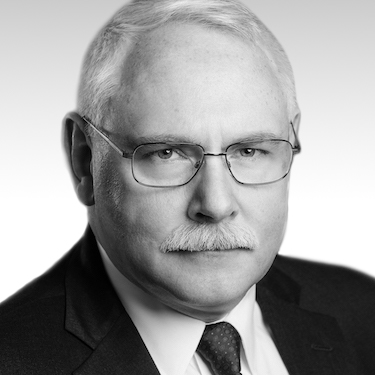
Norman Roule served for 34-years in the Central Intelligence Agency, managing numerous programs relating to Iran and the Middle East.   He served as the National Intelligence Manager for Iran (NIM-I) at the Office of the Director of National Intelligence from November 2008 until September 2017.  As NIM-I, he was the principal Intelligence Community (IC) official responsible for overseeing all aspects of national intelligence policy and activities related to Iran, to include IC engagement on Iran issues with senior policy makers in the National Security Council and the Department of State.

The Cipher Brief: Let’s start broadly.  The Biden Administration has had a lot to deal with in the Middle East since the president took office in January.  How are they doing?

Roule:  I think it’s too early to assesses the administration’s performance. The Biden administration arrived with several broad goals. It promised to reduce American military forces in the region, rely more on diplomacy and cooperation with Europe to resolve regional problems, and adjust relations with long-time regional partners like Israel and Saudi Arabia. But the challenges of the region are long-standing and routinely intrude upon Washington’s foreign policy agenda. And U.S. foreign policy in the Middle East has become a sharply partisan issue.

The administration’s response to events that have transpired in the region since the beginning of the year, has reassured those who looked for a greater emphasis on diplomacy. Washington assigned experienced envoys to contain multi-party issues and coordinated with Europe to limit U.S. involvement. The Secretary of State and his deputy have made high-profile visits to the region. The President has hosted such leaders as the King of Jordan and the Prime Minister of Iraq. And National Security Council engagement with Israel is routine. U.S. military shifts have taken place, but the administration still prioritizes security cooperation with regional partners. However, the U.S. withdrawal from Afghanistan is perceived by many as precipitous. Others worry that the U.S. has joined Europe in overlooking Iran’s attempts to change the political DNA of Iraq, Syria, and Yemen. The U.S. response to the Houthi’s use of Iran-supplied missiles and drones against civilian targets remains mainly rhetorical despite the lethal threat this poses to Saudis, Americans, and others living in the Kingdom.

The Cipher Brief:  That’s a sobering review. Is there any good news from the region for this administration?

Roule:  Actually, quite a bit. The administration has found that regional states will collaborate on complex issues beyond the region. Qatar plays a unique role in U.S. Afghan policy. The United Arab Emirates and Saudi Arabia are essential partners in resolving East African crises.

Regional leaders place great value on security cooperation as well as robust engagement with the U.S. private sector. Al-Qaeda and ISIS remain a threat, but at a fraction of their past potency.

Long-overdue political and economic reforms continue, albeit not at the pace or scale some Western observers seek. Saudi Arabia has introduced notable human rights reforms. A growing number of countries in the region have undertaken high-profile efforts to combat corruption and reshape their economies. Oman has begun the long road to restructuring its economy. Iraq and Libya remain intact despite their fractious polities.

I think the administration has also been impressed by the efforts of the Gulf states to diversify their economies, particularly in the area of green energy. The visits by U.S. Climate Envoy Secretary Kerry have been quite popular, probably more than some expected. I see plenty of momentum for growth here. 


Cipher Brief Members are invited to join us for a live virtual briefing with Norm Roule on Wednesday, August 11 at 11a ET.  

Members receive invites via email.  Not a member?  Not a problem.

Become a member today.


The Cipher Brief: The Iranian nuclear talks appear to have stalled. How did this happen? And what will it take for Iran to return to the deal?

Roule: Iran will return to the nuclear deal when it first believes it has wrung every concession out of the West in order to shield its economy from sanctions that could follow its non-nuclear aggression. It will also seek to ensure that it has fatally compromised the U.S. ability to reimpose sanctions within the nuclear deal itself. The Biden administration pledged a return to the deal as written, an end to the maximum pressure policy of its predecessor, and a rejection of regime change. More broadly, it also announced an intention to reduce the U.S. military presence in the region, a reassessment of Washington’s relationship with Israel and Saudi Arabia, and support for regional engagement with Iran. Some believe that the administration may even have turned a blind eye to Chinese purchases of Iranian oil as a signal to Tehran of Washington’s goodwill. If reasonable leaders ruled Iran, all of this should have produced an early return to the deal. But Iran’s leaders are rarely seen as reasonable. Iran could have chosen a fast return to the deal. Instead, it pushed for what all members of the P5+1 agree are unreasonable demands.

At this point, conditions aren’t favorable for an Iranian return to the deal in the near term. First, Tehran has pocketed all the benefits offered by the Biden administration’s initial approach without any concessions of its own.

We should also consider that Iran’s leaders may not want to return to the deal. Tehran’s primary goal in the 2015 nuclear deal was to obtain sanctions protections against the most vulnerable sectors of its economy in exchange for constraints on its civilian nuclear program. Tehran found that an end of nuclear sanctions did not solve the economic problems which produced domestic unrest, nor did the imposition of sanctions threaten the regime. Sanctions indeed constrained Iran’s ability to support proxies in the region, but even this was tolerable for the regime.

Next, Iran’s economy has stabilized somewhat in recent months. It remains in terrible shape but not so bad that the survival of the system is in question.

Last, we need to remember that Iran has historically offered concessions when confronted by a united international threat. Whatever your views on the nuclear deal, its very existence fragments international unity against Iran, which has always been a critical goal for Iran’s leaders. Support of the deal may bring us closer to Europe, Russia, and China but inevitably make regional partners believe we have ignored their valid security interests since there is little reason to believe Iran will moderate its non-nuclear behavior. Opposition to the nuclear talks may win support from Israel and Iran’s neighbors but it also invites friction with Europe, Russia, and China. These countries generally reject non-economic coercion against Iran and say relatively little about Iran’s regional adventurism.

The Cipher Brief: With a new president, will Iran’s new leadership continue to participate in the nuclear talks?  What will it take for Iran to return to the deal?

Roule: I believe Tehran will remain in the talks, but it will likely use the coming weeks to project defiance and even a willingness to walk away. The developing crisis over Iran’s naval attacks in the Arabian Sea may also postpone engagement. But for Iran, talks are a net positive. In addition to significant sanctions relief, the talks allow Iran – a mid-sized country – to routinely engage the attention of the world’s powers and play these actors against each other. This engagement also brings de facto recognition of the Raisi government, no small thing given his bloody background. The talks allow the Raisi government to argue directly with senior European counterparts that new sanctions for its many non-nuclear crimes would prevent it from returning to the nuclear deal. Last, the talks will give the Raisi government a platform for defiant rhetoric that will unsettle its adversaries and satisfy domestic supporters.

The Cipher Brief:  So, what circumstances would compel Iran to return to the deal?

Roule:  I can think of two paths that lead to an Iranian return once the new regime has vented defiant rhetoric. First, Tehran would need to believe that its rejection of the deal and malign regional actions had unified the international community to collectively support renewed economic pressure. Second, if Iran’s economy or political dynamic suffers a downturn that Tehran’s leaders perceive as leading to the downfall of the Islamic Republic. Either will need to include face-saving concessions.

The Cipher Brief: How should we look at current unrest in Iran?

Roule: The ongoing unrest shows no sign of being a near-term threat to the regime.  The crowd sizes appear manageable and anti-regime violence has so far been minimal. Security forces are relatively well organized and they are unsympathetic to protestors. The main weakness of protest remains that the opposition lacks direction, leadership, and support by labor groups. There appear to be no external or internal power centers capable of challenging the Supreme Leader.

We shouldn’t overlook the fact that many Iranians do support the regime. Despite a historically low turnout and Raisi’s admitted record of blood, eighteen million Iranians voted for him. It has become routine to see videos from Iran in which women argue that they cannot be forced to wear a hijab. But the same videos show other Iranian women (and men) asserting that failure to do so violates Iranian law and culture.

The current unrest did have aspects that likely worry Tehran. Oil workers put down their tools, and sympathy strikes reportedly erupted in major cities, albeit not on a scale that threatened the regime. The grievances of the Iranian people are so reasonable that they are increasingly acknowledged as such by government officials. But conditions in Iran are unlikely to improve. COVID continues to wreak havoc while climate change makes water and electricity shortages more painful. For these reasons, unrest will continue and probably intensify.


Go beyond the headlines with expert perspectives on today’s news with The Cipher Brief’s Daily Open-Source Podcast.  Listen here or wherever you listen to podcasts.


The Cipher Brief: What do you expect President Raisi to accomplish domestically, regionally, and internationally in his first 100 days in office?

Roule: Domestically, he will take steps to show how he will sustain Iran’s revolutionary spirit during what many believe to be a period of transition to a new generation of leaders. We will see this initially play out in his ministerial selections as part of a broader campaign to staff the bureaucracy with ideologically sound personnel, especially those with a background in the Revolutionary Guard. Security services and the military are very likely to see strong support. He will want to show that he is taking steps to address COVID and the economy. Programs directed at the poor are likely to be a priority, but he will have no sympathy for protestors. I wouldn’t be surprised if he announced an anti-corruption campaign and targeted members of the Rouhani administration for its initial investigations. We will also continue to see efforts to prepare Iran’s oil sector so that Tehran can quickly ramp up oil sales once sanctions end. Last, he is likely to support growing regime control of the internet. A bill calling for such control is currently before the parliament.

The Cipher Brief:  What about foreign policy?

Roule:  I don’t anticipate many changes in foreign policy. Raisi will mouth support for regional engagement but will maintain a defiant attitude towards the West, animus toward the U.S., support for proxies, and suspicion – but likely not rejection – of the nuclear talks. We need to be clear that he sees any sanctions relief as a transactional issue. Much as in 2015, Tehran will be clear that it will not allow a new deal to transform Iran’s society or its relations with the West.

The Cipher Brief: What are your thoughts on what would constitute an effective U.S. strategy to deter Iran’s regional activities, such as continued attacks on maritime trade, proxy support for attacks on Saudi Arabia, and activities in Yemen and Syria?  Can you imagine a scenario when the U.S. might engage militarily?

Roule: Our strategy must involve our international partners. We should avoid anything that makes it appear as if this is a U.S-Iran conflict instead of Iranian actions that threaten multiple countries and their citizens. The question becomes, will the international community join us or stand back while the U.S. takes the hard steps needed to contain Iran. Sanctions certainly deprive Iran of resources it would use for its proxies, but sanctions alone will not end Iran’s belligerence. The

The Cipher Brief:  What are Iran’s likely plans in Afghanistan in the wake of the U.S. withdrawal? What worries you the most?

Roule: There is plenty about Afghanistan to worry everyone, but I won’t dwell on the issues that are covered well in The Cipher Brief by others.  Iran has enjoyed the security stability that came with our presence. Now they have the Taliban on their border. Qods Force commander Esmail Qaani has considerable experience in Afghanistan. Iran’s security forces will likely engage the Taliban, Afghan governments, and warlords in equal measure to ensure that Iran can exert some influence over each. Iran is likely to transfer some portion of its Afghan proxies in Syria to western Afghanistan to protect Iran’s interests.

One issue that concerns me is the fate of the al-Qaeda cell in Iran. Tehran has enabled an Al-Qaeda presence on its territory for years without any international cost. That presence may well choose to migrate back to Afghanistan to reconstitute its former power center. The international community should hold Iran responsible if this happens. After all of the blood and treasure spent in the war on terror, we cannot tolerate Iran enabling al-Qaeda’s resurgence.

The Cipher Brief:  It feels like that would be an incredible regression.  Let’s shift to energy issues. Where do energy markets stand in the wake of the OPEC deal? And what do you think are the main drivers?


Cipher Brief Members are invited to apply for a seat at the table for The Cipher Brief’s Annual Threat Conference Oct 24-26 in Sea Island, GA.  Engage directly with experts on national security issues.  Space is limited.  Apply today.


Roule: Three baskets of drivers now define energy markets. First, the fundamentals. Here we are watching steady draws on stockpiles, production remains below what the market could absorb, and supplies will be tight for the remainder of the year. U.S. producers appear generally focused on return on equity vice expansion, which will likely mean that we will produce around two million BPD of oil less this year than last year. U.S. rig count is about double what it was a year ago at this time but is growing only slowly. It likely dropped slightly a week ago. Capital investment in the oil industry plummeted in 2020. Shareholders are pressing company leaders to use profits from restored oil prices to invest in green technology. OPEC policy remains conservative in the face of variables including; when Iran and Venezuela will resume production, the question of whether inflation has returned, and the impact of investor speculation.

Second, COVID is here to stay even in the best-case scenarios. The international community has failed to come close to a uniform approach to social distancing, travel, and economic reopening. We tend to look at this through a national perspective, but it may be insightful to look regionally to see how COVID-D shuts down specific industries as it spreads globally. Fresh COVID lockdowns in China have combined with signs of a decline in Chinese manufacturing to restrain prices.

Finally, geopolitical developments have generally had only a temporary impact on price pressures, but I worry about events in the Middle East. Expansion of Iranian attacks in strategic waterways with significant commercial and energy traffic may be more consequential. Insurance costs may increase for an industry with tight profit margins. Worse, attacks against only a few large container ships would disrupt global supply chains. We are moving into a new age when the importance of the Middle East may be as significant in terms of transportation security as it is in terms of energy.

The Cipher Brief:  So, let’s put you on the spot. What is your outlook for prices in the coming months?

Roule: Let me give this my best shot. Absent a sudden economic downturn, widespread COVID lockdowns, or conflict in the Middle East, we should see a continuation of the upward price velocity seen over recent months. This trend should sustain prices in the mid $70s and even low $80s. Several factors make upward movement beyond that problematic. First, OPEC leaders would be reluctant to invite the inflationary (and thus political) pressures such a spike would entail.  The Saudis will continue to push for market stability which dominates their strategy.  Second, India – and possibly China – would draw upon their strategic reserves if prices moved that high. Finally, such a price would draw out producers in the U.S. and OPEC + who would not be able to pass on a chance for a spike in revenue.


Read more expert-driven national security insights, perspective and analysis in The Cipher Brief 

The post Expert Brief: Iran, the Middle East and Strategies around Oil appeared first on The Cipher Brief.

find more fun & mates at SoShow now !

Protests against renewed Covid-19 restrictions turned violent in The Hague. The unrest comes a day after several demonstrators in another Dutch city, Rotterdam, were injured amid police gunfire.

Seven people were arrested after fierce clashes broke out between law enforcement and anti-lockdown demonstrators in The Hague, the seat of the International Court of Justice (ICJ), on Saturday.

A video shared on social media shows protesters lighting firecrackers that sparked multiple fires, causing the skies in the city to glow an eerie red.

In another clip, a group of protesters could be seen knocking down a traffic pole fitted with a surveillance camera.

Dutch police reported that five of its officers were injured in the showdown with rioters. One officer was taken to hospital with a knee injury and concussion. Two others “suffered hearing damage,” while another two suffered injuries to their hands.

Read more

A burned electric scooter is seen after an anti-lockdown protest in Rotterdam, Netherlands, November 19, 2021 © AFP / Jeffrey Groeneweg
Lockdown protest described as ‘orgy of violence’

The chaotic scenes in the Netherlands’ third-largest city unfolded a day after a protest against reimposed Covid-19 restrictions in Rotterdam was marred by violence. Over 50 people were arrested in the city and three were injured after police opened fire in a bid to quell the unrest. Police later claimed that officers were “compelled to shoot at targets” to protect themselves. The three injured protesters remain in hospital, and their condition is unknown.

Protests have swept through a number of Dutch cities after the Netherlands became the first country in Western Europe since summer to go into a partial lockdown last week. Tensions soared further after the government banned New Year’s Eve fireworks displays and the Dutch parliament backed the introduction of the so-called 2G system, which would bar the unvaccinated and those who have not recently recovered from the virus from a long list of public places if introduced.

Think your friends would be interested? Share this story!

find more fun & mates at SoShow now !

Israel has allegedly launched two missiles targeting an area south of the Syrian capital, Damascus, Syria’s state media reported, noting that one of the projectiles was intercepted. There are no reports of damage.

The reported attack took place shortly after midnight on Wednesday local time, according to Syria’s SANA news agency. The projectiles came from the direction of the Israeli-occupied Golan Heights, the outlet noted. The strike targeted an “empty building” south of the capital and resulted in no losses, according to the report.

Read more

Historic town of the Crusader city of Tartus, Tartous, built on the antique citadel, Syria, Middle East, West Asia. © Global Look Press / imagebroker / Egmont Strigl
Syria accuses Israel of missile strikes near Russian base

Israel routinely makes incursions into Syria under the pretext of taking out alleged Iranian outposts there. The Israel Defense Forces (IDF) typically refrain from commenting on the raids, in line with its long-standing policy on military operations conducted outside its borders. Just over a week ago, two Syrian soldiers were injured in reported Israeli missile strikes on the cities of Tartus and Homs, near Russia’s naval base. The bombing also reportedly inflicted material losses. 

Damascus has repeatedly condemned Israeli attacks against its territory as violations of its sovereignty. Russia, Iran, and Turkey have also denounced the Israeli airstrikes in Syria as a breach of international law.

Think your friends would be interested? Share this story!

find more fun & mates at SoShow now !
When The Washington Post reported this week that CIA Director William Burns slipped into Afghanistan on Monday to meet with Taliban leader Abdul Ghani Baradar, it was described as the highest-level face-to-face encounter between the Taliban and the Biden Administration.  WaPo cited anonymous sources for the information and the CIA offered no immediate comment on the reporting.  If the reporting is accurate, it doesn’t answer any immediate questions about why the President would dispatch the CIA director for such a meeting.

What we do know, is that the unexpected advances of the Taliban that have dominated the headlines over the past week and a half were initially blamed on an intelligence failure by many.  Early on, Cipher Brief Expert and former Acting Director of CIA John McLaughlin tweeted that “The ‘intelligence failure’ drumbeat is starting. People should be careful about the charge if they have not actually seen/read the intelligence…”

So, what intelligence did the US have that would have led to a different outcome in Kabul and throughout the country?

  • The New York Times reported last week that “classified assessments by American spy agencies over the summer painted an increasingly grim picture of the prospect of a Taliban takeover of Afghanistan and warned of the rapid collapse of the Afghan military, even as President Biden and his advisers said publicly that was unlikely to happen as quickly.” The paper cited current and former US government officials, saying, “By July, many intelligence reports grew pessimistic, questioning whether Afghan security forces would muster serious resistance and whether the government could hold on in Kabul, the capital.”
  • On August 15, The Wall Street Journal reported that administration officials said they knew that a “total capitulation of the Taliban was a possibility, and they planned their withdrawal efforts accordingly.” But they also cited an administration official, saying “it wasn’t so much a failure in intelligence in which the administration based its decision, but rather, a change in circumstances brought about by the swift U.S. withdrawal.”

But private sector analysts were watching as well. Here’s an inside look at what The Cipher Brief has been publishing since January with key outtakes from Cipher Brief Expert Tim Willasey-Wilsey:

Brief: January 25, 2021

“The Afghans themselves are also monitoring the Washington newsfeeds in forensic detail and will be encouraged by Sullivan’s statement. Recently, all too many conversations in Kabul have been about when to leave and which route to take. Some wealthier Afghans already have their money in Dubai and children in foreign universities. Some even have passports and property in the United States, UK or Germany. For those who are less fortunate, the discussions are about which route to take out. The Uzbekistan border is favoured because a visa costs just $30 and there is a variety of onward routes via Turkey or Russia to the West whereas the routes via Iran or Pakistan are more restrictive or liable to interference.”

Brief: March 11, 2021

“Saleh will advise Ghani not to take Taliban or Pakistani promises on trust. Instead, Ghani may decide to call Washington’s bluff. He may doubt that Washington is really willing to abandon Afghanistan on 1st May with the risk of a rapid Taliban victory jeopardising all the hard-won advances in areas such as women’s rights and counterterrorism over the past 20 years. The spectre of Al Qaida re-establishing camps in Afghanistan would surely be too much for Biden and Blinken.”

“Even if there were no helicopters from the US Embassy roof, the TV pictures of the Taliban entering Kabul, and of Afghan refugees fleeing their advance could evoke memories of Saigon in 1975. The reimposition of Taliban curbs on women would provoke international opprobrium. And subsequent reports of AQ training camps being re-established in Afghanistan would bring back recent and painful memories. After all the blood and treasure expended in Afghanistan that would be a disastrous outcome.”

Brief: April 19, 2021

“The Afghan government may be able to hold on to power for a few years as the Najibullah administration survived after the Soviet departure. However, there is a danger that there will be a sudden dam-burst in confidence with senior officials and politicians leaving en masse and hundreds of thousands of refugees fleeing westwards through Iran, Pakistan and the Central Asian Republics. As the Taliban re-enter Kabul, we could see disturbing scenes of retribution and, in time, the return of Al Qa’ida figures from their hiding-places in the tribal borderlands in Pakistan. Only then will people re-examine this decision and recognise that the Afghan deployments since 2014 have not been that onerous.”


The Cipher Brief hosts private briefings with the world’s most experienced national and global security experts.  Become a member today.


Brief: June 1, 2021

“According to my sources, the Taliban are convinced they can take Kabul “within days” of the NATO withdrawal and they believe the Afghan army is “in a shambles and demoralised”. Although the Taliban will not disrupt departing US troops (unless attacked) they are not willing to wait until September to continue their campaign against Kabul government forces.”

“But we should not take much comfort from the Najibullah example. The comparisons with today’s Afghanistan are misleading. Najibullah’s government was able to reach and supply all the major towns by military convoy. The Afghan army was deployed to protect towns and road communications. By contrast, in 2021, only the route between Kabul and Jalalabad is reasonably safe. Convoys cannot get through from Kabul to Kandahar, Kandahar to Herat, or Kabul to Mazar-e-Sharif. The Afghan army is spread across the country in piecemeal district centres (often surrounded by Taliban-controlled countryside) and have to be resupplied by air. This is not a sustainable model.”

“Furthermore, a number of today’s Afghan leaders, officials and military officers have received offers to relocate to the United States, Germany and elsewhere. As the security situation continues to deteriorate, the gradual trickle of departures is likely to gather pace. In such circumstances, the government could implode quite suddenly.”

“To some, this may evoke images of the 1975 fall of Saigon with the big losers being the Afghans who remain, particularly the women, who face a future of uncertainty and anxiety. There could also be a migration crisis reminiscent of Syria in the last decade.”

Brief: June 28, 2021

“One key indicator is that Afghan security forces have begun to surrender to the Taliban. The procedure is quick and simple. Tribal elders are used to deliver a stark message to Afghan troops often holding positions in district centres. The message is often; “The non-believers are leaving Afghanistan. They are defeated. Your leaders are corrupt. You can surrender now, and we will protect you; or you can fight, and we will kill you.” Recently, the Taliban appear to have honoured their promise not to punish Afghan soldiers who surrender. News of this new-found leniency is likely to encourage other units to follow suit and lay down their arms. In several provinces, including in the north, the Taliban are tightening their grip on those cities which are still held by the government. The Taliban will soon be in a position to cut off food supplies and demand their surrender, possibly offering a similarly lenient dispensation to the population. Now that the Taliban possesses captured armoured vehicles and artillery, their ability to exert pressure on the cities is enhanced. In Kabul, a sense of panic has begun to grip the capital. There are desperate attempts to sell family homes but there are no buyers even when houses are on the market at one tenth of their previous value. Some families have departed to Tajikistan, conscious that several of the land border crossing-points with the Central Asian Republics have been captured by Taliban forces in recent weeks.”

Read also Putin’s Calculated Afghanistan Play from Cipher Brief Expert Robert Dannenberg


The Cipher Brief hosts private briefings with the world’s most experienced national and global security experts.  Become a member today. 


Read more expert-driven national security insight, perspective and analysis in The Cipher Brief


The post What Intelligence was there on Afghanistan? appeared first on The Cipher Brief.

find more fun & mates at SoShow now !

The Funniest Clothing Labels Ever – When was the last time you read the label on your favorite shirt or most comfortable pair of jeans? Maybe it’s time to take a look, your clothing tags may hide a funny message.

The Perfect Gift For Someone You Hate – Hungry AND tired? You can rest on this soft body pillow shaped like smoked pig’s feet! What really amazes us are the details, it looks so real… and so disgusting.

Every Cat at 3AM – If you currently have or have ever had a cat, you’ll be able to relate to Gus Johnson’s video, in which he demonstrates one of the many ways in which our furry friends can be a-holes.

The Funniest Dog Videos Of All Time – We understand the value of a good funny dog video, so here’s a list of our six best viral pup videos of all time. You’re welcome.

Mildly Infuriating Things In Life – Sometimes the internet shows you a photo that’s ever so slightly wrong that it sticks in your brain forever…

Funny Images Showing How Differently Men and Women Act – Yup, we’re different and there is no denying that fact. We have different bodies, different brains and different ways of using both.

Dads Who Didn’t Want The Damn Dogs In Their Lives – Dad logic is a weird thing. They say they hate dogs, and then you end up with a gallery like this…

Random Funny Pictures – What do you do when you are bored at work? You just mindlessly scroll through random funny pictures, of course!

Mr. Bean Playing Every Role In Hollywood – When one thinks of a rugged, versatile actor capable of elevating any role given to them, Mr. Bean naturally springs to mind. And yet he was never cast as Frodo Baggins or Indiana Jones, which in our eyes is one of the saddest tragedies of modern filmmaking.

Funny Thanksgiving Cake Fails – Thanksgiving is a day to reflect and enjoy time with family… and sometimes to FAIL.

Still bored to tears and want to see more funny and entertaining links? You should check out Linkiest, Leenks, or Fark!

The post This Month’s Funniest Internet Finds first appeared on .

find more fun & mates at SoShow now !

EXPERT OPINION — More than 200 U.S. officers have been hunted around the globe and targeted by an adversary using a mysterious weapon that causes permanent brain injury. It’s time to get serious about fighting back.

The Authors:

Paul Kolbe served for 25 years in the CIA’s Directorate of Operations. He is currently Director of the Intelligence Project at Harvard Kennedy School’s Belfer Center for Science and International Affairs.

Marc Polymeropoulos worked for the CIA for 26 years. He is author of “Clarity in Crisis: Leadership Lessons from the CIA.

John Sipher worked for the CIA’s clandestine service for 28 years. He is now a nonresident senior fellow at the Atlantic Council and a co-founder of Spycraft Entertainment.

Prior to 9/11, al Qaida declared war on the United States, bombed the USS Cole, and blew up U.S. embassies in Nairobi and Dar es Salam. Despite heavy casualties, America viewed successive al Qaida terrorist attacks as somehow unique, not representative of a larger threat or state of war. We went about our business and failed to take hard action against al Qaida despite clear warning. Our failure to respond forcefully led to 9/11 and the two decades of war that followed.

Fast forward to today.  Since 2016, more than 200 U.S. officials have reportedly suffered from a mysterious series of symptoms which have caused long-lasting, debilitating injuries. Suffering from searing headaches, vertigo, vision impairment, and nausea, many victims have been formally diagnosed with traumatic brain injuries (TBI) at the Walter Reed National Military Medical Center and other leading hospitals. Family members and young children have suffered as well. Some medical tests can now confirm the markers of brain injury, similar to those suffered by victims of concussive injuries in Iraq and Afghanistan.

These injuries began with a cluster of reports from Cuba in 2016 and have become commonly referred to as Havana Syndrome. Moscow, Vienna, Belgrade, and Hanoi are among more than a dozen cities where U.S. officials reportedly have been attacked and injured. In residences, on the street, in vehicles, and even at secure U.S. facilities, U.S. officers are being hunted. Stunningly, even a close aide to CIA Director Bill Burns was reportedly attacked on a trip to India just this past August.

The CIA, after a period of confusion, delay, and even denial at times, now appears to take these threats very seriously. CIA Director Burns and Deputy Director David Cohen have publicly stated that U.S. officials are being “attacked.” They have improved health care for CIA officers who are hurt. And an agency task force is hard at work trying to obtain additional intelligence on those responsible. We credit Director Burns for his solid leadership.

The cause of these injuries? The National Academy of Sciences has pointed to Directed Energy Weapons – devices which emit microwave pulses which can inflict pain and damage tissue. The United States, Russia, China, and others have all developed Directed Energy Weapons to destroy equipment, counter drones, and control crowds. This is not science fiction.

Directed energy weapons would account for the highly directional and locational nature of these incidents. When victims can “move off the x,” the signature sounds, sensations, and pain that goes with the attacks often stop, though damage has already occurred. The amount of exposure seems to affect the degree of injury. Other technologies could be at play and are being investigated, but microwaves appear to be the most likely vector. Russia has used them before, flooding the U.S. Embassy in Moscow with microwave radiation for decades.

Regardless of form, the weapons being used in these attacks are nothing less than weapons of terror, designed to cause injury to non-combatants. Who would use such a weapon to attack U.S. intelligence officers, diplomats, and military personnel, and to what conceivable end?


The Cipher Brief hosts private briefings with the world’s most experienced national and global security experts.  Become a member today.


CIA Deputy Director Cohen stated at a recent intelligence summit, that the U.S. was closer to identifying the culprit, and Politico has reported that members of the Senate Intelligence Committee are increasingly convinced that Russia or another hostile adversary is behind the attack, although reportedly, no smoking gun has been found.

As former CIA operations officers with extensive experience dealing with both counterterrorism and counterintelligence issues, we have few doubts about who will be named as the culprit. For at least a decade, Russia has conducted itself as in a state of conflict with the West in general and the United States in particular. Russia has launched cyberattacks impacting critical infrastructure and supply chains, assassinated opponents with nuclear poisons and chemical weapons, gunned down people in the streets using criminal proxies, sabotaged a Czech ammunition depot, and mounted a violent coup attempt in Montenegro. It has also bombarded the U.S. embassy in Moscow with microwave radiation and used carcinogenic “spy dust” without regard to health effects. The attacks on U.S. officials would fit this pattern of behavior.

We recognize that it is important to let the intelligence community do its job and its findings must inform policy action. Congress and the administration must work together to formulate a range of possible responses and it is not too early to begin. As Senator Collins and others have stated, these attacks are “an act of war,” and as such, preparation for a future attribution call by the national security establishment is in order. So how could the U.S. respond?

Let’s start with what doesn’t work – sanctions. Sanctions feel good and satisfy an action imperative but they are feckless. Sanctions have not stopped Russia from killing dissidents, halted the Nordstream II pipeline, compelled a pull back from occupied territories, reduced support for tyrants, or hindered oil and gas production. Sanctions have simply forced Russia to develop more creative money laundering and sanction circumvention mechanisms.

So, what would work? For starters, we must understand that the Putin regime considers itself in a state of conflict with the U.S., short of war, but nonetheless deadly real. We are dealing with a state sponsor of terror which conducts operations across the globe to weaken the U.S. abroad, divide it from its allies, and sow discord at home. Our policy must be calibrated to win this conflict, without sparking a shooting war, but at risk of one.

Russia understands reciprocity and strength. When four Russian diplomats were kidnapped by extremists in Beirut in 1985, and one of them was killed, Russia reportedly responded by kidnapping and gruesomely killing a relative of the group’s leader. The surviving diplomats were released immediately. The story may be apocryphal, but it does illustrate the Russian approach. Tempting as it may be for America to retaliate tit for tat, we need not mirror Russia’s actions. Instead, we should play to our greater economic, diplomatic, and military advantages.

We offer five elements to frame a response: enlist U.S. allies, expand forward deterrence, limit the adversary’s reach, choke off money, and bring those accountable to justice.

NATO: With proof of the attacks on U.S. officials, we should activate NATO’s Article Five collective defense clause. The only other time this was enacted was after 9/11. As justification, in addition to the Havana Syndrome attacks, (which also caused Canadian casualties), we would include GRU and FSB assassination operations across Europe, deadly sabotage in the Czech Republic, a coup attempt in Montenegro, persistent cyberattacks, and a litany of other actions that can only be described as irregular warfare directed against NATO members.


Go beyond the headlines with expert perspectives on today’s news with The Cipher Brief’s Daily Open-Source Podcast.  Listen here or wherever you listen to podcasts.


Forward Presence: A crystal clear signal that we understand the nature of Russian hybrid warfare and are responding would be to enhance our deployed military presence in Poland, the Baltic States, and in the Black Sea region. These units would pose no offensive threat to Russia but would be a clear signal that the U.S. is prepared to counter any Russian shenanigans. We should also significantly ramp up our lethal aid and training to the Ukraine, where the nature of Russian aggression is well known. Weakness in Eastern Europe is an invitation to conflict.

Travel and Presence: We should drastically limit Russian business and tourist travel which is being used as cover for FSB and GRU operations. We would reduce Russian diplomatic presence in each capital to the bare minimum – handfuls not hundreds. American and European counterintelligence experts believe there are more Russian intelligence officers operating from embassies than during the Cold War. Limiting the size of Russia’s espionage infrastructure will complicate the planning and execution of all of its intelligence operations.

Finance: A key tool in counterterrorism operations is the ability to target sources of finance which constitute material support to terrorism. In this case, we would apply that principle to the Russian government, state enterprises, and individuals who provide cover, tools, and sources of funding to Russia’s campaign to undermine the West with violence, terror, and media manipulation. Russia’s dirty money has been used to undermine the west and poison our politics. We should limit the easy access of shady money to western banks.

Criminal Cases: We need bring war crime cases to the International Court of Justice (ICJ) in the Hague. Following a decade of conflict in the Balkans, the ICJ brought to justice 161 indicted Serbian, Croatian, and Bosnian war criminals. This was an astounding success – a manhunt which included American and European law enforcement and intelligence services. Just as in Nuremberg after World War II, these actions to hold war criminals accountable drew a line in the sand.

This is a start.  Successive Democratic and Republican administrations have pursued Russia policies which represent the triumph of hope over experience. We have treated the symptoms of malign Russian actions rather than the underlying pathology. It is now time to finally acknowledge that we are in a long-term hybrid conflict and forget the fantasy of changing Putin’s behavior. Only a new regime in the Kremlin would hold the hope of bringing about a change in actions. Eventually, the Putin regime will wither or collapse, but until it does, we and our allies must do a better job of defending ourselves.

Read more expert-driven national security insights, perspective and analysis in The Cipher Brief

The post Havana and the Global Hunt for U.S. Officers appeared first on The Cipher Brief.

find more fun & mates at SoShow now !