Libyan military commander Khalifa Haftar is set to challenge Gaddafi’s son for the top job, announcing his presidential bid. The election will take place on December 24.

Read more

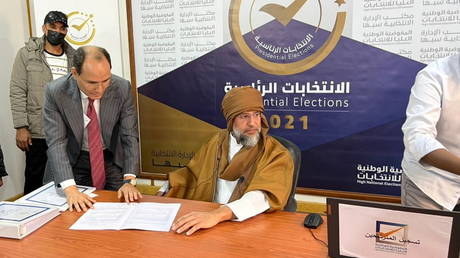
Saif al-Islam al-Gaddafi at the registration centre in Sebha. ©Khaled Al-Zaidy / Handout via REUTERS
Gaddafi heir runs for Libyan presidency despite arrest warrant

I declare my candidacy for the presidential election, not because I am chasing power but because I want to lead our people towards glory, progress and prosperity,” the de facto leader of Eastern Libya said in a televised speech.

Haftar added that the election is the only way out of the severe crisis the country has been plunged into.

The announcement was expected; in September, Haftar announced that he was temporarily stepping down as head of the force known as the Libyan National Army, fulfilling the requirement for presidential hopefuls to suspend public work three months before an election.

Haftar will run against the son of former leader Muammar Gaddafi, Saif al-Islam Gaddafi, who represents the Popular Front for the Liberation of Libya.

Haftar’s presidential bid is likely to anger many who consider him a war criminal responsible for the indiscriminate killing of civilians during his military campaign. A number of civil lawsuits have been filed against him in a US federal court for alleged war crimes. Haftar has both US and Libyan citizenship, and owns property in Virginia.

Following years of civil war and political chaos after the NATO-backed intervention that saw Muammar Gaddafi deposed and brutally murdered, the upcoming election is widely viewed as an opportunity for political settlement and the long-awaited unification of the country, divided now between Haftar’s forces and the Tripoli-based Government of National Accord. However, there is still no consensus on the legal grounds for the election, which could become an obstacle for the peace process.

Like this story? Share it with a friend!

find more fun & mates at SoShow now !

UK Home Secretary Priti Patel has acted to proscribe the Palestinian group Hamas “in its entirety,” stating that it has significant capacity to carry out terrorist acts and has facilities to train attackers.

In a tweet on Friday, Patel stated that she had banned the Palestinian group Hamas and designated it a terrorist organization, as she reiterated the British government’s commitment to “tackling extremism and terrorism wherever it occurs.”

Read more

The Imperial War Museum (FILE PHOTO) © REUTERS/Suzanne Plunkett
Woke rap after moment of silence lands museum in trouble

“Hamas has significant terrorist capability, including access to extensive and sophisticated weaponry, as well as terrorist training facilities,” she wrote.  

The home secretary’s tweet came during her visit to Washington and followed speculation on Friday morning that she was soon to outlaw the group.

Pre-empting Patel’s announcement, Israeli Prime Minister Naftali Bennett welcomed Britain’s intention” on Twitter.

“Hamas is a radical Islamic group that targets innocent Israelis & seeks Israel’s destruction. I welcome the UK’s intention to declare Hamas a terrorist organization in its entirety – because that’s exactly what it is,” Bennett wrote, thanking the leadership of Prime Minister Boris Johnson.  

Yair Lapid, Israel’s foreign minister, also hailed the expected move against Hamas, saying it was part of strengthening ties with Britain.” 

Until now, only Hamas’ military wing, the Izz al-Din al-Qassam Brigades, had been outlawed by the British government. The EU and the US have already proscribed all of Hamas.

Hamas political official Sami Abu Zuhri rejected Britain’s move, claiming it showed absolute bias toward the Israeli occupation and is a submission to Israeli blackmail and dictations.” 

In a separate statement, the group claimed it had a right to resist occupation by all available means, “including armed resistance.”

Hamas seized total control of Gaza in 2007, on the back of an election victory in 2006.

If you like this story, share it with a friend!

find more fun & mates at SoShow now !

As part of a special series on climate in partnership with The Intelligence Project at Harvard University’s Belfer Center for Science and International Affairs, and Cipher Brief Expert and Senior Editor Kristin Wood, The Cipher Brief is focusing on the national security implications of climate change. 

This report is derived from a half-day conference in April 2021 co-sponsored by the Intelligence Project and the Environment and Natural Resources Program at Harvard Kennedy School’s Belfer Center for Science and International Affairs, along with the Center for Climate and Security and The Cipher Brief. It explores the requirements of the U.S. IC to fulfill the mission prescribed by President Biden, DNI Haines, and Secretary Kerry. The IC must rise to challenge, unshackled from the past, to re-imagine its role in combatting climate change.

The Authors

Calder Walton, Asst. Director, Belfer Center’s Applied History Project and Intelligence Project, Harvard University
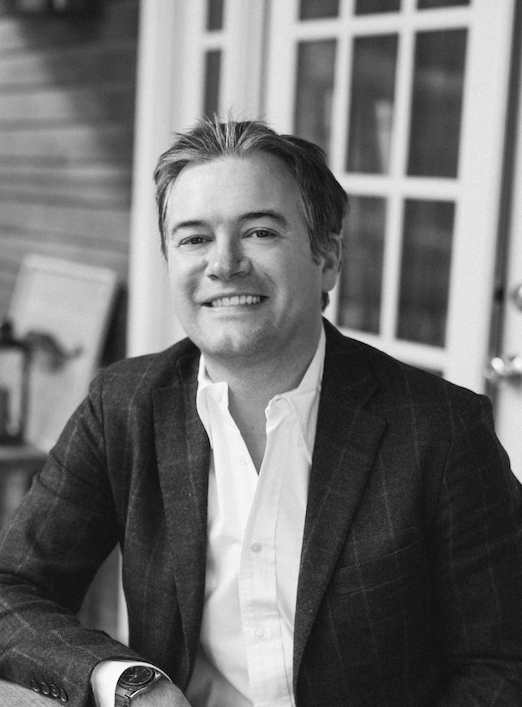
Calder Walton is Assistant Director of the Belfer Center’s Applied History Project and Intelligence Project. Calder’s research is broadly concerned with intelligence history, grand strategy, and international relations. The

Sean Power, Masters in Public Policy Candidate, Harvard Kennedy School

Sean Power is a Masters in Public Policy 2021 candidate at the Harvard Kennedy School. Prior to HKS, he managed the analyst program at Kobre & Kim LLP, where he assisted on matters involving government enforcement defense and internal investigations.

The Report

The U.S. Director of National Intelligence (DNI), Avril Haines, has stated that climate change needs to be at the center of U.S. foreign policy and national security. It is a threat multiplier that impacts every function of government and society: territorial integrity, economic well-being, social stability, and military capabilities are all impacted by climate change, directly and indirectly. However, in addressing climate change, the U.S. Intelligence Community (IC) is currently unsure of its mission space and hitherto has been relying on boilerplate responses to it. In an exclusive discussion, the U.S. Special Presidential Envoy for Climate, Secretary John Kerry, who should be a principal consumer of intelligence about climate change within the U.S. government, stated that the U.S. IC must deliver significantly more.

The increasing effects of climate change are arising at a moment when the nature of intelligence itself is undergoing a revolution—from the collection of hidden secrets to collation of non-obvious (but knowable) data frequently hiding out in the open. This watershed in intelligence and national security requires bold, innovative, ideas for the U.S. IC to adapt and anticipate security threats derived by climate change. It must establish its mission space and alter its own architecture to ensure it is providing its customers with intelligence about them needed. Its mission will not be about spies disseminating secrets to policymakers; rather, it will require a new intelligence and national security paradigm that must reach across society, allowing the general public to consume climate intelligence and hold policymakers to account.

Background

The twenty-first century presents globalized threats that will require globalized solutions, the greatest of which is climate change. As the Covid-19 pandemic has demonstrated, no country is immune from actor-less threats like novel disease outbreaks and climate change. When combined with other security threats like transnational terrorism and ubiquitous cyberattacks, it becomes clear that existing national security frameworks are insufficient. New relationships and lines of communication will need to be forged, both within the U.S. government, in the private sector, and internationally with allies and adversaries. The U.S. IC needs to determine the requirements of its customers regarding climate change and how its unique collection and analytical capabilities fit into this new mission space.

The IC has incorporated climate change into its analysis and threat assessments for decades, but climate has not received the attention it requires given the magnitude of the threat it poses. On January 27, 2021, President Biden issued an executive order on tackling the climate crisis at home and abroad, establishing that “climate considerations shall be an essential element of United States foreign policy and national security.” The order also called for the Director of National Intelligence to prepare a National Intelligence Estimate on the national and economic security impacts of climate change within 120 days.

The Climate Change, Intelligence, and Global Security conference at Harvard’s Belfer Center earlier this year, brought together senior climate experts, current and former intelligence officers, and leaders in the private sector and academia to discuss the climate threat and generate innovative ideas on role the IC will play in combatting that threat. Led by Paul Kolbe, Director of the Intelligence Project, Kristin Wood, Intelligence Project Non-Resident Fellow, and Erin Sikorsky, Deputy Director of the Center for Climate and Security, the conference facilitated an urgent opportunity for productive dialogue on the climate threat.

Climate change as a threat to international security

Policymakers and the public need to understand that climate change impacts seemingly unrelated challenges and magnifies existing threats. The direct effects of climate change are readily apparent around the world—melting glaciers, rising sea levels, thawing permafrost, longer droughts, hotter heat waves, persistent wildfires, torrential rains, and catastrophic storm systems. These effects create disastrous consequences for humans like crop failures, fishery collapses, water insecurity, and the inundation of coastal regions, all of which lead to mass migration and displacement. These situations lead to fragile states and regions where increased conflict over scarce resources allows malign actors thrive. In this way, climate change is a threat multiplier that touches every aspect of international security.

Professor John P. Holdren, the Teresa and John Heinz Professor of Environmental Policy at Harvard Kennedy School, noted that the big picture on how climate change will impact the planet is clear, but the detailed effects are difficult to predict with precision and confidence, in part because we do not know exactly how human societies will react. This uncertainty exacerbates the security threat posed by climate change. We know it will increase the number of displaced persons in the world, but we do not know when they will be displaced, how many there will be, or where they will go.

Climate change also impacts the effective functioning of the U.S. military: to meet traditional security threats and protect Americans at home and abroad. U.S. bases around the world function as launching pads for everything from quick tactical operations to large-scale disaster relief missions. When severe weather damages those bases or limits their ability to operate at full capacity, America’s security is put at risk. Disasters like the flooding at Offutt Air Force Base in Nebraska, headquarters for U.S. Strategic Command, and Hurricane Michael’s destruction of Tyndall Air Force Base in Florida show that this threat knows no geographic bounds. Their effects are costly as well—the Air Force requested nearly $5 billion to rebuild those two bases alone.

The overall impacts of climate change on international security are inevitable, consequential, and predictable. Previously the U.S. government has undertaken more extensive, and expensive, actions on the basis of proportionally less intelligence about security threats. The U.S. IC must give climate change the proportional attention it deserves.

Role of U.S. intelligence in addressing climate change

Climate change poses an existential, global, non-state security threat, making it fundamentally different from past threats. Its unprecedented nature will require unprecedented thinking by the U.S. IC and requirements from it. Former Principal Deputy Director of National Intelligence Sue Gordon stated clearly that it is not enough to just say that the U.S. IC should focus more on climate— rather, the challenge lies in determining what its specific contribution will be, and then evaluating what changes need to occur to make that contribution happen. Answering these questions will require difficult, but necessary, upfront work. Without that work, the U.S. IC is likely to lead with its current capabilities, rather than identifying and developing capabilities needed to meet the nature of the new threat we face.

The U.S. IC must play to its strengths in carving out its climate mission. Intelligence is no longer just about stealing secrets; it is about providing policymakers with decision advantages to influence events, which is the same as the past, but with a key difference that doing so now requires mastery of is a vast eco-space of openly-available information. To accomplish its mission, the U.S. IC must leverage its analytic tradecraft to present objective assessments about climate change to policymakers. This means collecting intelligence, assessing it, removing bias, and delivering timely and relevant assessments to customers. The U.S. IC must also leverage its global relationships with partners and competitors in performing these tasks. These relationships lie below politics and can help elicit understanding that allows policymakers to distinguish facts on the ground from prevailing political rhetoric of the day.

The U.S. IC’s workforce and technology will need to advance and adapt to serve the climate mission. It does not need to have the foremost climate experts, but it does need to have dialogue with them, and develop its own climate expertise. Like other threats, the IC needs personnel that are devoted to understanding this new threat and understand its place in larger risk frameworks. Predictive models are critical to understanding climate science, and the IC should invest more resources into artificial intelligence and machine learning capabilities (AI/ML) that can inform them. Intelligence professionals will not need to advance science, and scientists will not need to assess national security; but collaborations between the IC and the federal science community are necessary and will benefit both by allowing them to identify and meet shared objectives.

Climate change intelligence cannot be siloed. As DNI Haines promised, it must be integrated into traditional security threat assessments, and those emerging threats from other globalized challenges, bio-hazards, cyber capabilities, and weaponized information, if we want to understand how they interact and manifest around the globe. Compared to the twentieth century, when intelligence was dominated by governments, the twenty-first century offers more democratic forms of intelligence: the private sector offers major capabilities to collect and analyze intelligence. It has disrupted and transformed the nature of intelligence. The IC’s advantage in this new environment will come from thinking deeply about these issues and using its unique analytical and collection capabilities to identify patterns and trends others might overlook.

The future of intelligence cooperation and climate change

Climate change is an indiscriminating challenge unlike anything humanity has encountered before. Understanding how it is different helps illustrate the need for intelligence cooperation among states, large and small, to combat it. Carol Dumaine, Senior Fellow at the Atlantic Council, noted that the impact of the Covid-19 pandemic has highlighted many of the ways in which the climate threat is unique. It is non-state, non-adversarial, non-linear, boundary-less, and its root causes can be found in human economic activity. Unlike pandemics, however, combatting climate change will require something we have never done: decades of consistent cooperation across states with an eye towards tackling a systemic problem that will persist for centuries.

The U.S. IC needs to determine how it will work with other countries to combat the shared threat of climate change. The big first step is determining what the security collective is trying to accomplish. One area ripe for collaboration is foresight and early warning systems. During the Cold War the famous “red telephone” connected the White House and the Kremlin, enabling direct communication to avoid nuclear brinksmanship. Similar innovate thinking will be needed on climate change cooperation. Lt. Gen. Richard Nugee, Climate Change and Sustainability Strategy Lead for the UK Ministry of Defence, emphasized that the biggest danger on climate change is not a morass of bureaucracy, but instead a lack of imagination in understanding its impact and generating solutions for it.

Relying on existing partnerships, such as the Five Eyes alliance or NATO, will not be sufficient. Those agreements will play a role, but they do not include some of largest contributors to greenhouse gases or the countries that will suffer the largest initial impacts from climate change. Intelligence communities are by nature competitive and adversarial, but when it comes to climate change they will need to be cooperative. The U.S. IC needs to identify areas of cooperation even with adversaries like China and Russia. Rolf Mowatt-Larssen, Senior Fellow and former Director of the Intelligence Project, tasked the U.S. IC to look for a peace dividend—areas where collaboration on climate will yield multilateral benefits. Even though spying will still exist, as it always had, we cannot let espionage stand in the way of climate collaboration.

Any collaboration on climate intelligence will certainly require American leadership. That means America needs to treat the climate threat with the seriousness it deserves. Climate change is siloed into a one-page length analysis in the 27-page Annual Threat Assessment issued by the Office of the Director of National Intelligence in April 2021. The six pages focusing on China and Russia make no mention of how those are contributing to climate change or working to combat it. The IC must continually reinforce that climate is a serious and central threat. We cannot wait until the impacts are painfully obvious for every individual across the globe to treat it with the seriousness it requires.

The private sector, intelligence, and climate change

The threat from climate change reinforces the fact that intelligence is no longer a domain solely for governments. Mekala Krishnan, Partner at the McKinsey Global Institute, underscored that the private sector is also seeking to take climate risk out of a sustainability silo and integrate it into all aspects of decision making affected by risk and finance. Companies are thinking about how climate interacts with physical capital, natural resources, labor supply, and food supply—the factors of production in an economy that fundamentally affect our lives and livelihoods. One of the most important factors in a country’s national security is the health of its economy. The U.S. IC needs to be working with the private sector to understand what the economic effects of climate change will be.

In many respects, the U.S. government is still one of the few parties that can afford the costs to collect data on climate change, much like space exploration and early Internet research. The private sector can innovate ways to extract insights from that public data. Harnessing that with government capabilities will require innovative public-private partnerships with a shared strategy to help combat climate change. The U.S. IC must develop a level of transparency on climate data that will allow the private sector to identify where incentives for research and development exist. It will not matter how good the climate intelligence collected by the U.S. IC is if it does not get into the hands of public and private users in the right shape and form.

At the same time, the IC cannot be everywhere at once, collecting troves of climate data at significant cost. Richard Jenkins, CEO of Saildrone, noted that the private sector has the capability to deploy significant private money to develop and test new technologies that advance climate data collection, which the government can purchase at great value and incorporate into climate intelligence analysis. New technology is democratizing intelligence; it will force the U.S. IC to change how it interacts with the private sector— for the better.

Conclusion

In a moderated discussion with Dr. Calder Walton, Secretary Kerry stated unambiguously that the U.S. IC needs to start providing policymakers with a decision advantage on climate change in order for the U.S. government to lead the world on meeting this unprecedented threat. That starts with treating climate change seriously. The U.S. IC will need to determine its requirements, play to its strengths, and adapt its workforce to best serve its mission. It will need to cultivate deeper cooperation with allies and adversaries, develop new relationships with the private sector, and approach climate change with a fresh mindset to seek and find what others overlook.

When it comes to climate change, the U.S. IC should also reframe who its customers are, not just policymakers, to whom it gives secret briefings, but also the public. By publicly disseminating assessments, the U.S. IC can effectively democratize intelligence about climate change, with the public holding policymakers to account for their actions or inactions on the basis of shared intelligence.

The Cipher Brief is proud to be continuing our coverage on Climate with a series of webcast briefings beginning in July 2021.

Read also:

The Climate and US National Security Conversation with Admiral Jim Stavridis (Ret.)

How to Integrate Climate in Future National Security Risk

Russia’s Climate Problem and Opportunity

Why the Intelligence Community Needs a Climate Change Task Force


The post Defining the IC’s Mission Space for Climate Change appeared first on The Cipher Brief.

find more fun & mates at SoShow now !
NEW YORK, Nov 19 (IPS) – A week has gone by since COP 26 with 197 Parties ended in the Scottish city of Glasgow on extended time last Saturday. Climate change which covers wide array of issues affecting all living beings engaged the people around the world for COP 26 in a way never experienced since COP1 was held in Berlin in 1995.

Read the full story, “Glossing Over in Glasgow – Some Thoughts on COP26”, on globalissues.org

find more fun & mates at SoShow now !
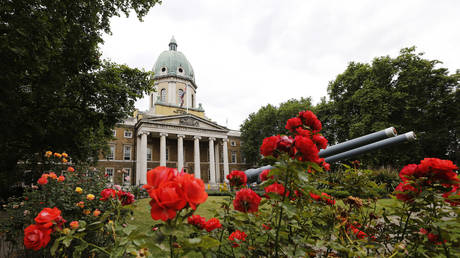
Carving the turkey for Thanksgiving is a true honor for any man, and should be taken extremely seriously. Assuming you have no backup turkey, you have one opportunity to slice and carve it just perfectly, or your reputation with your family with be tainted forever. What better way to ensure you carve your Thanksgiving turkey properly and in the most manly way possible than with a chainsaw carving tool?

Turkey carving chainsaw.

The electric chainsaw turkey carving tool looks and acts like a real chainsaw, except it won’t actually cut wood, and it’s a much smaller version of its larger counterpart. Though a chain doesn’t wrap around the blade and spin like a real chainsaw, a small electric knife is on the bottom of the blade to make it look like it’s working like a real chainsaw.

Turkey carving chainsaw.

Made with stainless steel cutting blades along with an ABS plastic body, the chainsaw inspired turkey carving tool is not only great for cutting turkeys and other birds, but is also useful for cutting melons, pineapples, potatoes, breads, and more.

Chainsaw knife.

Turkey carving chainsaw.

Turkey carving chainsaw.

Turkey carving chainsaw.

Turkey carving chainsaw.

If you feel like this is something you would want to spend money on, you can get this weird kitchen tool on Amazon.

The post This Miniature Chainsaw For Carving Turkeys Will Take Thanksgiving To The Next Level first appeared on .

find more fun & mates at SoShow now !
Marx, Lenin, and Ho Chi Minh – the revolutionaries’ namesakes – have gathered for a wedding in India’s state of Kerala. Friedrich Engels was the one walking down the aisle.

Read more

FILE PHOTO. M.K. Stalin in Chennai. © AFP / Arun SANKAR
Stalin fulfills political destiny, comes to power in Indian state assembly elections

And this has nothing to do with time travel. In India’s southwestern state of Kerala parents have often named their children after prominent figures in the hammer and sickle movement. The local communist party has been at the helm there for much of the past 60 years, and is still quite popular with voters.

In the town of Athirappilly on Sunday the groom, Friedrich Engels, a namesake of the 19th century German philosopher who helped conceive Marxism, tied the knot with the bride, Bismitha. In attendance were also Engels’s brother Lenin, named after the man behind the 1917 Russian Revolution, as well as the groom’s friends, Marx and Ho Chi Minh, who bear the names of Marxism’s founding father and the Vietnamese revolutionary leader respectively.

All four men are members of India’s Communist Party. Incidentally, Marx is currently working and residing in ultra-capitalist Dubai, but flew back to see his friend exchange wedding vows with his betrothed, as reported by local media. 

Another wedding ceremony that took place in June in the state of Tamil Nadu, saw Socialism getting married in front of his brothers, Communism and Leninism, as well as nephew, Marxism.

Think your friends would be interested? Share this story!

find more fun & mates at SoShow now !

The International Criminal Court has halted an investigation into alleged rights abuses carried out by Philippines authorities as part of a harsh crackdown on the drug trade, saying it is reviewing a deferral request from Manila.

The ICC’s chief prosecutor Karim Khan said the probe was suspended after the Philippines government filed a request to defer the case earlier this month, according to court documents cited by Reuters on Friday. 

“The prosecution has temporarily suspended its investigative activities while it assesses the scope and effect of the deferral request,” he wrote, adding that the court is seeking more information from the government in Manila.

Based in The Hague, the ICC allows states to ask for postponements if they conduct their own investigations into the charges in question. President Rodrigo Duterte’s administration filed its deferral request on November 10, while the country’s Justice Ministry announced its own investigation into the alleged abuses late last month.

Read more

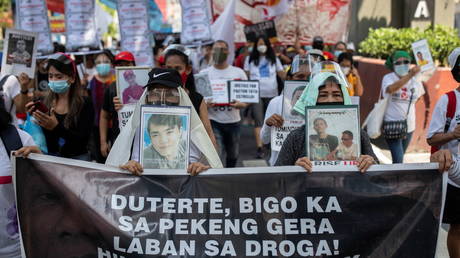
Relatives of drug war victims hold photographs of their slain loved ones with placards calling for justice (FILE PHOTO) © REUTERS/Eloisa Lopez
Philippines announces probe into thousands of killings during Duterte’s war on drugs as initial review suggests abuses took place

The court initially opened the probe in September over allegations that Philippines police had carried out thousands of extrajudicial executions and used other brutal tactics against suspected drug dealers, and that Duterte gave implicit backing to those actions. Activists have accused authorities of killing innocent people, including children, though the police insist they only use violence in self-defense.

While Duterte has declined to cooperate with the ICC probe, saying it has no authority on the island nation, and even pulled the Philippines out of the international body in 2019, the court has jurisdiction to investigate alleged violations committed by the country while it was still a member.

The president’s chief legal counsel, Salvador Panelo, confirmed the deferral request in brief comments to Reuters, saying “There is no inconsistency with the request for suspension of action,” though he did not elaborate.

Since its founding some 20 years ago, the ICC has successfully convicted just five people of war crimes or crimes against humanity – all leaders of armed movements in Africa, including in Mali, Uganda and the Democratic Republic of the Congo.

Think your friends would be interested? Share this story!

find more fun & mates at SoShow now !

Libyan military commander Khalifa Haftar is set to challenge Gaddafi’s son for the top job, announcing his presidential bid. The election will take place on December 24.

Read more

Saif al-Islam al-Gaddafi at the registration centre in Sebha. ©Khaled Al-Zaidy / Handout via REUTERS
Gaddafi heir runs for Libyan presidency despite arrest warrant

I declare my candidacy for the presidential election, not because I am chasing power but because I want to lead our people towards glory, progress and prosperity,” the de facto leader of Eastern Libya said in a televised speech.

Haftar added that the election is the only way out of the severe crisis the country has been plunged into.

The announcement was expected; in September, Haftar announced that he was temporarily stepping down as head of the force known as the Libyan National Army, fulfilling the requirement for presidential hopefuls to suspend public work three months before an election.

Haftar will run against the son of former leader Muammar Gaddafi, Saif al-Islam Gaddafi, who represents the Popular Front for the Liberation of Libya.

Haftar’s presidential bid is likely to anger many who consider him a war criminal responsible for the indiscriminate killing of civilians during his military campaign. A number of civil lawsuits have been filed against him in a US federal court for alleged war crimes. Haftar has both US and Libyan citizenship, and owns property in Virginia.

Following years of civil war and political chaos after the NATO-backed intervention that saw Muammar Gaddafi deposed and brutally murdered, the upcoming election is widely viewed as an opportunity for political settlement and the long-awaited unification of the country, divided now between Haftar’s forces and the Tripoli-based Government of National Accord. However, there is still no consensus on the legal grounds for the election, which could become an obstacle for the peace process.

Like this story? Share it with a friend!

find more fun & mates at SoShow now !

CIPHER BRIEF EXPERT PERSPECTIVE 

Cipher Brief Expert Tim Willasey-Wilsey served for over 27 years in the British Foreign and Commonwealth Office. He is now Visiting Professor of War Studies at King’s College, London.

Older Americans have Saigon 1975 and the helicopters from the Embassy roof seared into their memories. A previous generation of Britons was haunted by the image of General Percival surrendering vast numbers of troops and equipment in Singapore to the Japanese in 1942. How Kabul falls to the Taliban could have important practical and symbolic significance.

The announcement that the United States is sending 3,000 troops to Kabul alongside 600 British troops to manage the evacuation of their civilians and those Afghans who provided assistance, is a remarkably late response to a rapidly deteriorating situation. Unless carried out in the next 48 hours, it will also be risky. Taliban infiltrators are already inside Kabul and the forces which captured Ghazni and Kandahar on 12th August will be heading towards the capital on their Honda 125cc motorbikes.

The US must have extracted undertakings from the Taliban negotiators in Qatar not to launch their full assault on Kabul until the evacuations are complete, but elements of doubt remain. Previous Taliban assurances have proved worthless, and it is doubtful that individual Taliban commanders would wish to hold back while some of Ashraf Ghani’s ministers, senior army officers, judges and officials are spirited away to a life of exile.

It is hard not to be impressed by the speed and élan of the Taliban’s recent successes; taking 13 of Afghanistan’s 34 regional capitals in almost as many days. It is reminiscent of the extraordinary progress which the Japanese made down the Malaya Peninsula in 1942 with Singapore as the ultimate prize.

The Taliban’s success has not happened by chance. It is clearly the fruit of preparation and planning. Above all, they have learnt from the experience of 1994 to 1996 when they eventually took Kabul but failed to capture the north, thereby allowing space for the Northern Alliance parties to survive and then reassert themselves following the 9/11 terrorist attacks.

This time, the Taliban have focussed first on border posts with neighbouring countries (thereby denying the government vital supply routes and customs revenues) before taking outlying regional capitals and leaving Kabul (which is never easy to capture) until last. Above all, they have concentrated on the north where many rural Afghans are disenchanted with the Kabul government and regional warlords. The north is no longer the solid bastion of anti-Taliban sentiment it was in the 1990s.


The Cipher Brief hosts private briefings with the world’s most experienced national and global security experts.  Become a member today.


Taliban progress in the north has snuffed out any chance that the old Northern Alliance could be reborn out of the eventual collapse of the Ashraf Ghani government. Whereas in 1996, Ahmed Shah Massoud, its brilliant military leader, was able to abandon Kabul and beat a tactical retreat up the Panjshir Valley, that option barely exists today. Not only is Massoud dead but his former adherents are no longer guerrilla fighters but members of a stratified Afghan army which has struggled to perform without US air support.

The Taliban have also ruthlessly exploited the weak negotiating stance of the United States and its chief negotiator Zalmay Khalilzad. Whereas some of the Taliban team in Doha, such as Mullah Barader, may indeed have been ‘moderates’ there was never any doubt that the Taliban movement wanted to see the total defeat of the Kabul government and the expulsion of Western forces. Pakistan too, may have occasionally considered some form of negotiated deal but ultimately the only sure way of keeping Indian influence out of Afghanistan (it believes) is a Taliban government.

The Afghan army (and in particular its impressive Special Forces) will now be assembling in Kabul and should be able to repel initial attempts to overrun the city. Certainly, Gulbuddin Hekmatyar found it impossible to take Kabul in 1992 and 1993 even with help from Pakistan, which, in frustration, switched support to the newly-created Taliban movement in late 1994.

But from 1992 to 1996 there were frequent deliveries of supplies to Massoud and his Northern Alliance defenders from Russia, Iran, and India. In 2021, the position is very different. Russia has already decided to “back the winner” and believes it has extracted promises from the Taliban not to export Islamism northwards into the Central Asian Republics (CARs). Iran too has channels to the Taliban and will be watching carefully for any return to the Taliban’s persecution of the Shia Hazaras. And India has already made contact with the Taliban in Doha in the hope that the Taliban in power will prevent Kashmiri militant groups from setting up bases there.

The likelihood therefore is that Kabul will fall to the Taliban quite quickly. If the Americans and British do manage to insert their evacuation forces soon, they should be able to complete the operation successfully, although there are likely to be heart-rending scenes at the airport as crowds of refugees are turned away at gunpoint from departing aircraft. Regional powers, particularly Pakistan, will try and persuade the Taliban to hold back from intervening, conscious that a bloodbath in Kabul would be a disastrous start to the Taliban’s second spell in government. Ironically, however, the evacuation would almost certainly lead to the collapse of the Kabul government as senior officials are forced to decide whether to take the last aircraft out or face almost certain torture and death at the hands of the victors. It is doubtful whether any Western countries will choose to retain their embassies in Kabul. For President Biden, the memory of Benghazi will be too raw.

What is certain is that there will be new iconic images to rival those of Saigon and Singapore.


Go beyond the headlines with expert perspectives on today’s news with The Cipher Brief’s Daily Open-Source Podcast.  Listen here or wherever you listen to podcasts.


Read more expert-driven national security insights, perspective and analysis in The Cipher Brief.

The post How Does Kabul End? appeared first on The Cipher Brief.

find more fun & mates at SoShow now !