A gunman injured two civilians, one of them fatally, and two police officers before being shot dead by security forces near Jerusalem’s Western Wall on Sunday morning, Israeli police said.

The civilian victims were taken to Shaare Zedek Medical Center. One, who was in his 30s, succumbed to his injuries at the hospital. The other, a 46-year-old, is said to have suffered moderate injuries. Two police officers were hurt by shrapnel.

In a video clip shared on social media and purportedly filmed at the scene, multiple gunshots could be heard amid agitated shouting. Security officers could then be seen standing around what appears to be a dead body. Witnesses speculated it was that of a “terrorist.”

The gunman, whose identity was not immediately disclosed, was killed during the incident. Police said he had used a homemade submachine gun.

DETAILS TO FOLLOW

find more fun & mates at SoShow now !

Palestinian Islamist group Hamas has called on Canadian singer Justin Bieber to cancel his upcoming concert in what it calls the “Zionist occupation state” of Israel.

Bieber announced his 2022 world tour dates this week, with a concert in Tel Aviv planned for next October. On Thursday, Hamas’ Artistic Production Department issued a statement, cited by the Palestinian Sawa news outlet, “condemning and denouncing” the performer. It called on the star to cancel the show and “boycott the Zionist occupation state in protest at its repeated crimes against the Palestinian people.” 

Read more

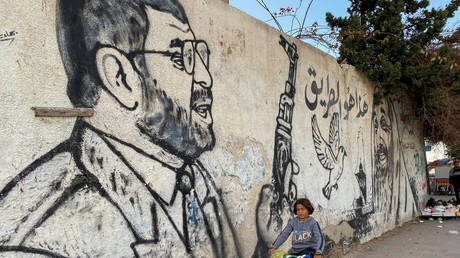
A Palestinian boy rides a bicycle past a mural depicting late Hamas leader Abdel-Aziz Al-Rantissi in Gaza City (FILE PHOTO) © REUTERS/Mohammed Salem
UK outlaws Hamas as terrorist organization

Bieber has performed in Israel multiple times, his last performance there having been in 2017 at Park HaYarkon – the same venue slated for next year. Since the announcement of the ‘Justice’ tour dates, calls for him to cancel the Tel Aviv show have gained momentum across social media, with many posters condemning the singer for supporting what one called an “apartheid state.”

Some noted that Bieber was set to arrive in Israel after performing in South Africa. “Justin Bieber is really going straight from SA to Israel. From a country that fought apartheid to a country that’s practicing apartheid,” one Twitter user complained.

A petition asking the singer to boycott Israel and exclude it from his tour has been launched online, and had garnered some 3,700 signatures by Friday. 

In 2018, the New Zealand singer Lorde canceled a concert in Israel, subsequently thanking fans for “educating” her on the issue, and, the same year, US artist Lana Del Rey at first defended her decision to perform in the country, saying her appearance would not be a “political statement,” before backtracking and canceling the gig.

Hamas has been designated a terrorist group by the US, the EU, and, as of Friday, the UK. In April 2021, international non-governmental organization Human Rights Watch concluded in a report that Israel had committed “crimes against humanity of apartheid and persecution.”

If you like this story, share it with a friend!

find more fun & mates at SoShow now !

Slovakia has become the latest European country to implement lockdown restrictions on people who haven’t had the Covid vaccine, as it seeks to prevent a resurgence in infections and hospital admissions over the winter.

Slovakian Prime Minister Eduard Heger announced the new measures in a press conference on Thursday, declaring a “lockdown for the unvaccinated” after the country reported a record number of new cases.

The new restrictions in Slovakia, which come into effect on Monday, will require people to have been vaccinated or have recovered from Covid in the past six months to enter restaurants, non-essential shops, or public events.

In the past few days, the European nation has seen record numbers of new infections, including over 8,000 on Tuesday, with hospitals running out of space to treat Covid patients.

Slovakia has one of the lowest rates of vaccination in the European Union, with over 50% of individuals still not jabbed. The country of around 5.5 million has so far only inoculated 2.5 million people against the virus.

Read more

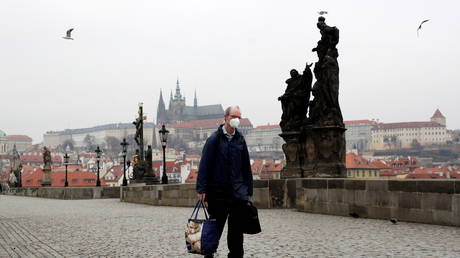
(FILE PHOTO) © REUTERS/David W Cerny
Czechia rolls out new restrictions for unvaccinated

Earlier this week, Austria became the first nation to impose restrictions on unvaccinated individuals, as it sought to limit pressure on hospitals and emergency care units. The move came into effect at midnight on Monday for anyone aged 12 and older who has not received their Covid vaccine or recently recovered from the virus.

The German state of Bavaria and the Czech Republic followed Austria in restricting access for unvaccinated individuals. Only people who can show proof of vaccination or that they have recently recovered from Covid will be allowed to enter public spaces, such as restaurants and shops. 

If you like this story, share it with a friend!

find more fun & mates at SoShow now !

The children of families who were affected by the massive earthquake which devastated large parts of south-west Haiti in August this year are receiving free hot meals at school as part of an initiative by the UN’s World Food Programme (WFP) to support the recovery of the country’s most vulnerable communities.

Read the full story, “Hot meals helping Haiti’s children recover from the earthquake”, on globalissues.org

find more fun & mates at SoShow now !

Scientists have used an AI tool to identify which animals are most likely to contract and spread mutated versions of Covid-19. The model highlighted both pets and wild animals as likely reservoirs for the virus.

Using information about their habitats and various biological traits, researchers at the Cary Institute of Ecosystem Studies in New York developed the machine learning tool to figure out which animals had the particular ACE2 protein that the coronavirus was most likely to latch onto. 

Out of 5,400 tested, the scientists narrowed it down to 540 mammalian species.

Some of its predictions have been previously documented as transmission risks, for instance, dogs, cats and bats, while farm animals like pigs and exotic zoo animals were surprise additions.

Read more

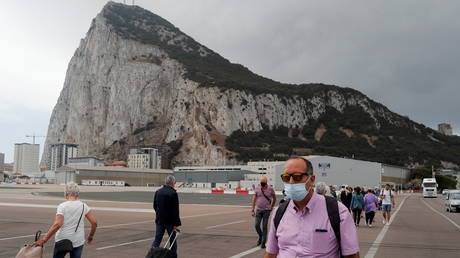
FILE PHOTO: People cross the tarmac of the airport in front of the Rock of Gibraltar in the British Overseas territory of Gibraltar, June 24, 2021 © Reuters / Jon Nazca
‘Most vaccinated’ place on earth cancels Christmas

Other expected additions are minks, Sunda pangolins, and 35 species of bats – which are together ranked among the top 10% of animals most likely to spread the virus, in line with lab results. 

The study, published in the Proceedings of the Royal Society journal, also ranked water buffalo, a number of primates, including gorillas and 76 rodent species as being more susceptible to infection.

The researchers taught the AI to identify patterns between rates of transmission and some 60 ecological and biological traits collected by earlier studies, including the overlap between the animal and human habitats as well as their respective lifespans, diets, and sizes.

Previously, the specific amino acid sequences had only been mapped out in around 300 species, including about 143 mammals — and figuring out which ones are more prone to infection is key to predicting the spread of the virus, researchers said.

Arinjay Banerjee at the University of Saskatchewan in Canada told the New Scientist that the results will help researchers “track viral infections and the possible emergence of animal-adapted coronavirus variants” around the world. Barbara Han, who led the study, said predictions needed to be followed up with systematic surveillance and lab studies.

Think your friends would be interested? Share this story!

find more fun & mates at SoShow now !

Scientists in Sweden claim that a single protein in the blood could predict the onset of Type 2 diabetes nearly 20 years in advance. The breakthrough potentially affects hundreds of millions of people worldwide.

Diabetes is the world’s ninth-leading cause of death, and affects nearly half a billion people worldwide, according to the World Health Organisation (WHO). The vast majority of diabetes patients suffer from Type 2 diabetes, a condition that can lead to blindness, kidney failure, heart attacks, strokes, and lower limb amputation. Cases of diabetes quadrupled worldwide between 1980 and 2014, with unhealthy diets and lack of exercise blamed for the rise.

Read more

© Getty Images / Peter Dazeley
NHS setting up fat camps for children

However, researchers at Lund University in Malmo, Sweden claim that elevated levels of a certain protein – follistatin – in the blood can predict the onset of Type 2 diabetes regardless of a person’s age, weight, diet or activity level. In a study published last week, the scientists wrote that high levels of follistatin can predict the condition up to 19 years before symptoms appear.

To discover the link between follistatin and diabetes, the researchers tracked 5,300 people from Sweden, Italy, and the UK for between four and 19 years. Follistatin helps break down body fat, while simultaneously leading to an increase in fat in the liver. This buildup can cause fatty liver disease and Type 2 diabetes.

“This study shows that follistatin has the potential to become an important biomarker to predict future Type 2 diabetes, and it also brings us one step closer to the understanding of the mechanisms behind the disease,” Dr. Yang De Marinis, associate professor at Lund University and lead author of the study, told a university newsletter. De Marinis added that the next step for her team would be to help develop an AI-based diagnostic tool that could analyze a patient’s blood sample and use their follistatin levels – and other biomarkers – to calculate their “risk score” for Type 2 diabetes.

As follistatin levels rise in response to food intake and activity levels, the same advice for prevention of diabetes still applies. “Balanced meals, eat[ing] healthy and regular exercise are important to decrease the risk of developing Type 2 diabetes,” De Marinis told StudyFinds.

Think your friends would be interested? Share this story!

find more fun & mates at SoShow now !

Nadya Zafira, an international relations student at Indonesia’s Gadjah Mada University, won a writing competition for her letter to UN chief António Guterres, in which she addressed the inequalities laid bare by the COVID-19 pandemic, and how indigenous communities and youth are marginalized in global conversations on climate crisis.

Read the full story, “First Person: ‘Bridge the gap between indigenous youth and the world’”, on globalissues.org

find more fun & mates at SoShow now !

Robert Dannenberg, Former Senior CIA Officer

Cipher Brief Expert Rob Dannenberg is a 24-year veteran of the CIA, where he served in several senior leadership positions, including chief of operations for the Counterterrorism Center, chief of the Central Eurasia Division and chief of the CIA’s Information Operations Center. Dannenberg is a member of the Board of Advisors to the Director of the National Counterterrorism Center and is a senior fellow at the GWU Center for Cyber and Homeland Security. He is now an independent consultant on geopolitical and security risk, after serving as the managing director and head of the Office of Global Security for Goldman Sachs, and director of International Security Affairs at BP.

EXPERT PERSPECTIVE — The images from Kabul are demoralizing and depressing—unless you are sitting in the Kremlin, where they are certainly being viewed in a quite different light. Probably something close to giddiness and glee.

From Russian President Vladimir Putin’s perspective, this likely reinforces his view that President Joe Biden and his national security team are weak and naïve.  ‘This is Obama’s third term’, Putin must be thinking. And of course, the images of US helicopters desperately trying to evacuate thousands from Kabul also resonate in Kiev, Tbilisi, and probably Tallinn, Riga, and Vilnius and beyond—think Taipei.  The appalling mismanagement of the withdrawal from Afghanistan will have consequences that will affect American credibility globally and linger well beyond the end of Biden’s presidency.

A first order consequence concerns Russia.

It is highly likely there was practical cooperation between the Kremlin and the Taliban in the preparation for the American withdrawal and this may have included direct support to Taliban forces. We don’t need to revisit the narrative of Russian bounties for dead American soldiers in Afghanistan, but the evidence of Russian energetic engagement with the Taliban in recent months is manifest and the fact the Russian embassy in Kabul is currently protected by Taliban fighters is significant.

For both Russia and the Taliban there was a clear shared strategic objective: Get the Americans and their allies out of Afghanistan and ideally in the most humiliating fashion possible.  The Russian-Taliban honeymoon may not last long, but for the moment it has served both sides well.

For over a decade and a half of his tenure as Russia’s president, Putin has been preaching the gospel that you can’t trust the Americans to back you in the long run or when the chips are down, but you can count on the Russia he leads (think the Russian intervention in Syria and support for Assad or their intervention—whether acknowledged or not—in Libya on the side of Khalifa Haftar among other examples). This messaging is important in current times and reinforces Putin’s narrative about the decline of the West and the waning relevance of western liberal systems of governance.

In recent years, Chinese President Xi Jinping has picked up the trumpet to echo this message that American power is in decline and that American security guarantees cannot be relied on in East Asia and beyond.

Putin has been Russia’s Czar for over two decades without meaningful interruption and is likely to remain so for the foreseeable future. He has seen US Presidents come and go and he has been quick to size them up and adjust his moves accordingly. He was genuinely scared of what George W. Bush might do in the immediate aftermath of 9/11 and the speed and efficacy of the US response made a deep impression on him.  He adjusted his approach to the US to one of partner and ally against Islamic extremism (Putin was also busy consolidating his control over the Russian Federation in the immediate post-Yeltsin period).

Putin also sized up then-President Barack Obama after Obama’s failure to act when Syrian President Bashar al-Assad blithely crossed the “no use of chemical weapons” red line.  That opened the door for the annexation of Crimea as well as the Russian military intervention in Syria (and later Libya). Joe Biden was Vice President at the time. Putin likely has a very good book on Joe Biden and was quite confident of what the end result for the US in Afghanistan would look like.  Putin may even have a better feel for Joe Biden than many realize, if any of the Hunter Biden material is true.  One leader’s assessment of another, matters in geopolitical relations. Putin has a high level of confidence in his ability to read his international opposition.

As recently as July 2021 President Biden said, “There’s going to be no circumstance where you see people being lifted off the roof of the US embassy in Afghanistan.”  He went on to add, “The likelihood there’s going to be the Taliban overrunning everything and owning the whole country is highly unlikely.”  President Biden made these statements knowing perfectly or should have known—from intelligence briefings and expert commentary—as well as historical precedent—that when the US announces a withdrawal of forces with a hard deadline, in this case 9/11, our adversaries use the time to prepare for their offensive military action. Our Afghan allies knew this as well and prepared accordingly.  Now the Taliban will celebrate the twentieth anniversary of the September 11 attacks in the US embassy in Kabul, probably with their ISIS and Al Qaeda friends as honored guests.  If you think the videos from Afghanistan have been troubling to this point, just wait for the anniversary celebrations.

Perhaps of more near term geopolitical significance, Putin will use the Taliban takeover of Afghanistan to support a narrative that Russia needs to defend its interests from the spread of Islamic extremism from Afghanistan by strengthening “security and counterterrorism” cooperation with Turkmenistan, Uzbekistan, Tajikistan, Kyrgyzstan. Does anyone want an excuse to get – and keep – those pesky Americans out of Central Asia and start rebuilding that corner of the Soviet Union?

Putin’s use of terrorism risk as justification for military action is well-rehearsed and goes back to the Moscow apartment bombings (which the FSB almost certainly organized) in September 1999, which Putin used both to consolidate political power and to justify the brutal military campaign in Chechnya. Putin is acutely aware of the risks of Islamic extremism spreading from Afghanistan to Central Asia, the Caucasus, and into the Russian Federation. In fact, Russian, Uzbek, and Tajik troops conducted exercises in July, which appear to have been designed to prepare to respond to cross border incursions from Afghanistan. This is only the first step in his plan for consolidation of Russian power and influence in Central Asia and the Caucasus.


The Cipher Brief hosts private briefings with the world’s most experienced national and global security experts.  Become a member today.


Some might ask – given the risk of the spread of Islamic extremism from Afghanistan to the Russian Federation – why would Putin would want to partner with the Taliban?  Those who ask this question are misunderstanding the depth of Putin’s enmity toward the United States and the West and everything for which we stand.  Putin views the world as a “zero sum” game.  What hurts the US must serve Russia’s interests. The debacle in Afghanistan clearly qualifies. A short-term deal with the Taliban is a risk with taking in Putin’s mind.  Putin plays on the superpower chessboard using the only tools he has at hand, military power, cyber and disinformation capability and US ineptitude and lack of strategic thought.  He has taken clever advantage of President Trump’s four years of thoughtless estrangement of US allies around the world.

Beyond the propaganda value and regional leverage our withdrawal has given adversaries like Russia and China, there is the impact of our withdrawal on the many nations among our allies who contributed to the Afghanistan mission. The images of Afghans clinging to a departing US Air Force C-17 and falling to their deaths will not fade easily. How easy will it be to assemble their support when we inevitably have to go in again to deal with a resurgent Al Qaeda, a globally ambitious Taliban, or an even more dangerous embedded ISIS in the hills of Afghanistan?

We should also consider the impact on Pakistan.  Pakistan has nurtured Islamic extremism in Afghanistan for decades.  While a part of the Pakistani security establishment partnered with the US effectively after 9/11, other parts simultaneously were nurturing relations with extremists including the Taliban. The “Great Game” is still being played in that part of the world, and neither the Pakistanis, nor the Indians or Chinese have forgotten it.

Pakistan also still certainly chafes from the US raid to kill bin Ladin in Abbottabad a little over ten years ago.  One wonders if the waning of US influence in Islamabad has opened the door for Islamic extremists to enter the security establishment there. Pakistan is a nuclear power and has in recent years, increased its development of tactical nuclear weapons. Does the Taliban now have a path to nuclear weapons?  This is an important question and it’s answer casts a shadow over our withdrawal from Afghanistan.

The Biden Administration, for all its vaunted claims of “return to competence” in Washington, has fallen flat in its first serious challenge. One could argue that Biden’s capitulation on Nord Stream 2 and Putin’s mocking rejection in Geneva of charges of US election interference and cyberattacks on the US, foretold the debacle in Afghanistan. The challenge for the US now will be to manage the airlift of those Afghans who were willing to partner with the US and carefully look for opportunities to rebuild the credibility of US security guarantees around the world.

Taiwan and South Korea would seem good places to start.

At the same time, we need to recognize that Afghanistan will once again become the training ground for those who hope to replicate 9/11 attacks on the US. A strong and robust intelligence capability will be essential in mitigating that risk.

Read more expert-driven national security insight, perspective and analysis in The Cipher Brief

The post Putin’s Calculated Afghanistan Play appeared first on The Cipher Brief.

find more fun & mates at SoShow now !

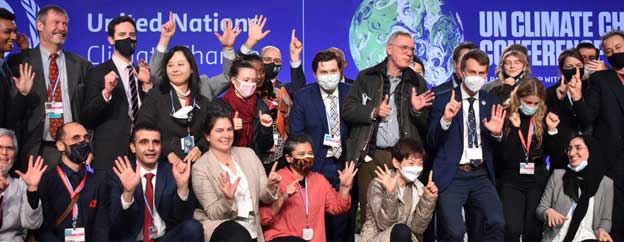
NEW YORK, Nov 19 (IPS) – A week has gone by since COP 26 with 197 Parties ended in the Scottish city of Glasgow on extended time last Saturday. Climate change which covers wide array of issues affecting all living beings engaged the people around the world for COP 26 in a way never experienced since COP1 was held in Berlin in 1995.

Read the full story, “Glossing Over in Glasgow – Some Thoughts on COP26”, on globalissues.org

find more fun & mates at SoShow now !

As the U.S. works toward getting more 11,000 Americans, diplomats and Afghan allies out of the country, what kind of Taliban should the U.S. expect to deal with in Afghanistan?  So far, there have been assurances from the Taliban that a new regime may not be as brutal as regimes past, but few who have worked with the Taliban believe the assurances.  How might the regime work with, or shelter groups like al-Qaeda, which is the reason why the U.S. entered into Afghanistan after 9/11.  And how might a massive-scale exodus of Afghans impact neighboring countries?

The Cipher Brief sat down with the former National Intelligence Manager for Iran at ODNI, Norman T. Roule to get his expert-level perspective.

Norman T. Roule, Former National Intelligence Manager for Iran, ODNI
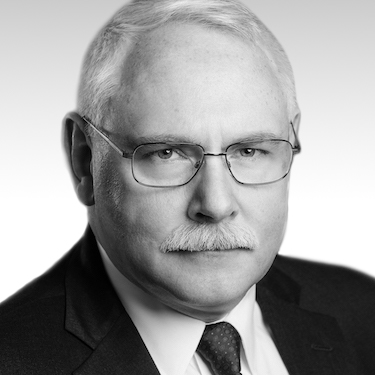
Cipher Brief Expert Norm Roule served for 34-years in the Central Intelligence Agency, managing numerous programs relating to Iran and the Middle East. He served as the National Intelligence Manager for Iran (NIM-I) at the Office of the Director of National Intelligence from November 2008 until September 2017.  As NIM-I, he was the principal Intelligence Community (IC) official responsible for overseeing all aspects of national intelligence policy and activities related to Iran, to include IC engagement on Iran issues with senior policy makers in the National Security Council and the Department of State.

The Cipher Brief: How would you characterize the international community’s response to the Taliban victory in Afghanistan?

Roule:  Historians of the future will likely describe the response to the Taliban victory as a strange mix of apathy and confusion.

In terms of apathy, there is extraordinary irony in the fact that after spending so much blood and treasure to defeat Da’esh efforts to establish an extremist Islamic Republic in Syria and impose its oppression over Iraqis and Syrians, the international community failed to prevent the creation of an Islamic Republic in Afghanistan. Many of the arguments behind our involvement in Syria – from a refugee crisis to the need to deny international Islamic militants a home to birth new terror groups – apply to Afghanistan. Whether or not one supported this decision, it is hard to avoid thinking that this episode will embolden militants worldwide.

In terms of confusion, we seem to be unable to accept that no one can predict the course and pace of crowd dynamics that so quickly eroded Afghan resistance. We live in a world where people acknowledge their inability to predict who will win our presidential elections but insist the Intelligence Community can somehow predict the day events will occur in a denied environment. But such a worst-case possibility should have been part of the planning deck and resourced on the ground accordingly.

The Cipher Brief: How would you expect the international community to respond in the coming days?

Roule: Absent a Taliban attack, operations at the airport should proceed more smoothly as our response architecture grows. Beyond that, much depends on how the Taliban act in the coming weeks. The group is not a monolith. Their success was highly likely as much a surprise to them as anyone. As they define their path and choose their leaders, there will be internal debates, jockeying for power, and perhaps some violent infighting.

In terms of indicators of the regime’s direction, we may want to consider the following questions:

First and foremost, how will the Taliban respond to our ongoing evacuation? Thus far, they seem willing to let us leave untouched, probably believing that the sooner we get out, the easier it will be for them to take control. At the same time, international media coverage of the evacuation will impose a strategic embarrassment on Washington.

Second, to what extent have the Taliban changed? They certainly understand that diplomacy played a role in their victory. Some of their leaders have spent hundreds of hours with foreign diplomats and traveled to multiple foreign capitals. How will these leaders merge such experiences into governance with more insular colleagues? They are likely to talk initially about compromise regarding women’s rights and inclusion of opponents in the government, but this may well be another effort to buy time. The international community has few pressure points over the group. How this plays out will be a good indicator of how they plan to run the country.

Next, how will they handle the issue of al-Qaida and other terrorists? We cannot overlook the deep connections between the Taliban and al-Qaida. If they believe the international community will limit its response to demarches, press statements, and empty sanctions, many in the group will be inclined to allow al-Qaida to reorganize.

Last, I would look at the refugee issue. They are likely to welcome external aid and allow at least some humanitarian groups to remain in country. Doing so requires no political concessions, addresses a domestic headache, and provides an opportunity for corruption. Humanitarian groups also offer a lever the Taliban can use against the West, i.e., refrain from criticizing us, or we will block your humanitarian operations. The Houthis have done this with great effect in Yemen.


The Cipher Brief hosts private briefings with the world’s most experienced national and global security experts.  Become a member today.


The Cipher Brief: How do you think will China, Russia, and other adversaries will respond to the withdrawal? 

Roule: Chinese propagandists have aggressively exploited our evacuation from Afghanistan. Its media is already claiming that these events show Taiwan that “once war breaks out in the Straits, the island’s defense will collapse in hours, and the US military won’t come to respond.” China’s press has also reportedly announced that the U.S. will not stand by Hong Kong activists.

Beijing, Tehran, and their proxies will likely point to the withdrawal as evidence that the U.S. is a declining power, unwilling or incapable of defending its friends. It will be lost on no one that whereas the U.S. has abandoned Afghanistan, Russia, China, and Iran have not wavered in support of their – admittedly few and otherwise isolated – allies.

In a worse case, if our adversaries believe the withdrawal reflects a lack of national resolve, they may be tempted to test our will on other issues. In this case, a miscalculation could lead to a conventional war in another theater.

The Cipher Brief: What would you say to those who say that the withdrawal demonstrates that the U.S. will only focus on strategic interests?

Roule:  Certainly, this argument has an appeal. It is true that our strategic adversaries like nothing better than the U.S. expending resources and diplomatic energy in such areas as Afghanistan, in part because we are, in essence, protecting their interests for free. But it does beg two questions.

First, what will happen differently next year regarding China, Russia, efforts to combat climate change, and cyber actors, now that we are out of Afghanistan? Second, what exactly is a U.S. strategic interest that we would protect? Estonia? Bahrain? Taiwan?

This argument also glosses over how others respond to such a posture. If a country perceives itself outside the international community’s protection, it will likely accommodate an aggressor. Our next call for a coalition of the willing will likely meet with less enthusiasm.

U.S. influence depends on the respect shown to us in multiple arenas. The echoes of this localized respect become self-reinforcing. We should think about what happens to collective international security if these echoes are silenced.

Last, this argument inherently argues that values are strategic interests. Unless violence directly touches Americans, we will limit our response to diplomacy and public statements. Such protests are unlikely to stop those behind a future Srebrenica massacre or the Rwandan genocide. Indeed, one can make a case that such a response might even encourage such events.

The Cipher Brief: How can the U.S. now best demonstrate its national resolve?

Roule:  As the saying goes, the best way to demonstrate national resolve is to demonstrate national resolve. Fair or not, this episode will tar the Biden administration. It doesn’t help that some allies reportedly have complained that the U.S. did not sufficiently consult with them on its decision to withdraw. Public criticism of the withdrawal decision by some of our closest European partners is growing. Adversaries will now consider their action through the lens of Afghanistan, much as the post-Vietnam malaise encouraged Soviet aggression in the 1970s.

I am not saying that we can’t reverse this situation. The U.S. withdrawal from Lebanon in 1984 caused many to question U.S. resolve. Although it did signal an end to U.S. (and international) efforts to eradicate Hezbollah, Reagan’s actions in other arenas (to include Afghanistan) restored the image of U.S. national resolve. Difficult diplomacy and a demonstration of our willingness to use military power when needed lay ahead.


Go beyond the headlines with expert perspectives on today’s news with The Cipher Brief’s Daily Open-Source Podcast.  Listen here or wherever you listen to podcasts.


The Cipher Brief: What does the return of the Taliban mean for al-Qaeda?

Roule:  There is little reason to believe the Taliban-Al-Qaida relationship will not resume, although al-Qaeda is a fragmented and a pale version of its original stature. Nonetheless, it is easy to imagine the delight of its remaining leadership and cadres. Elements in Iran will likely seek to return to Afghanistan, perhaps assuring Iran that in exchange for tolerance of periodic transit of Iranian territory, the group will use its influence with the Taliban to protect Iran’s interests. We should watch for any signs of a return to Afghanistan by Zawahiri’s deputy, Sayf al-Adel, who is currently in Iran with other members of the group’s leadership council.

But al-Qaeda is not the only actor on this stage. Its leader Ayman al-Zawahiri has not appeared for months and has far less influence than Osama Bin Laden. Afghanistan also hosts al-Qaeda in the Indian Subcontinent (AQIS), ISIS, and other groups. The Taliban have emptied Afghanistan’s prisons which held deeply committed and dangerous militants who may gravitate to whatever new militant leadership might arise. But a lethal threat to Americans is sure to appear. The only questions are its size, goals, and reach.

The Cipher Brief: What does the U.S. withdrawal mean for China and Russia?

Roule: Both countries have sought to undercut U.S. influence in Afghanistan. They will each be delighted with the rhetorical violence of our internal debate over the withdrawal. But they also enjoyed the stability our engagement provided in a country so close to their borders.

Both countries have developed relations with the Taliban. I believe each hosted a Taliban delegation in recent weeks. It shouldn’t be lost on us that neither country felt compelled to withdraw its personnel from Kabul. That’s a pretty good sign of their confidence in the relationship.

Outside of Afghanistan, each will use the withdrawal to increase their influence with Central Asian actors – including Turkey. Coordination on terrorism and narcotics issues will come most easily. For example, Uzbekistan will worry that the Taliban will renew support of the violent Islamic Movement of Uzbekistan, which has long maintained a presence in Afghanistan.

China’s concerns will be threefold. Beijing will use economic and diplomatic inducements to ensure that the Taliban do not encourage unrest among China’s oppressed Uighur population, let alone support the East Turkistan Islamic Movement or other Chinese militants in Xinjiang province. Next, Beijing will want to explore the Belt and Road access Afghanistan offers. Last, China will likely test whether it can achieve a commercially viable deal to mine Lithium and other minerals. In that mine operations require many years to develop and a vast amount of capital to construct, such arrangements are likely to be few given Afghanistan’s unpredictable political and security environment.

As for Russia, the U.S. withdrawal offers a chance for greater influence in Central Asia. We should watch for signs of new Russian military bases in the region. Moscow’s concern that Afghanistan will once more become a sanctuary for anti-Russian terrorists will also drive its relationship with the Taliban.

The Cipher Brief: What about Iran and Pakistan?

Roule: Iran has long maintained a relationship with Taliban elements. Reportedly, this involved sanctuary and provision of some weaponry. Tehran’s goals were to hedge its bets in Afghanistan, influence the enemies of the U.S., and protect the Shi’a of Afghanistan.

On the last point, Iran may have much work to do. Taliban personnel reportedly tore down Shi’a posters as they entered Kabul. Tehran must now contend with the consequences of refugees and the rise of warlords on its border.

The current head of Iran’s Qods Force, Esmail Qaani, has considerable experience on Afghan issues, and I expect he will play a prominent role in Iran’s response. We should watch to see how the Qods Force deploys its seasoned Afghan Fatemiyoun proxies from Syria.

Pakistan’s long-time relationship with the Taliban will give it more influence over the group than other countries. But Islamabad also will be on the receiving end of a flood of refugees, renewed militant terrorism in its loosely-controlled border areas, and Western pressure for its support of the Taliban. Ties to the Taliban may also complicate Islamabad’s relationship with India and China.

The Cipher Brief: What does this mean for the U.S. intelligence community?

Roule: The counterterrorism cadre of the US intelligence community and its partners have achieved extraordinary successes in the last years. But their work is now more complicated but no less urgent. For example, our withdrawal has reduced collection streams and potential access when the Afghanistan-based terrorist threat has only begun to grow. This challenge arrives as we shift counterterrorism resources from al-Qaeda to domestic extremists, cyber threats, and China.

The Cipher Brief: Any final comments?

Roule: If I may, I would like to close with a couple of brief comments.

First, we need to do everything we can to support personnel on the ground in Afghanistan. They – and their support teams at home – are trying to restore order in the middle of a hurricane. We are watching heroism at its best.

Next, the narrative of Afghanistan is unsurprisingly partisan. But politics shouldn’t obscure the truth. For more than twenty years, thousands of American and coalition partners volunteered to risk their lives in Afghanistan. We didn’t come to colonize. We didn’t steal Afghan resources. The operational goals were to bring Bin Laden to justice, destroy al-Qaeda, and prevent Afghanistan from becoming a haven for the group in the future. We also worked to transform Afghan society. The need for this last effort wasn’t apparent at the outset of our invasion. But it was likely unavoidable if we hoped to satisfy our values and enable Afghan society to confront its militant population. This effort represents the best of our values, and we owe all who served in this arena our most profound respect. Afghans who have participated in their country’s efforts during the past two decades will endure tremendous suffering. But they remain Afghanistan’s best hope and they deserve our support. Last, we need to end the fiction that Afghans didn’t fight for their country. Tens of thousands of Afghans were killed and wounded in the fight against al-Qaeda. Many involved in this fight are reportedly being sought door-to-door by the Taliban. Discounting their efforts may serve a political narrative, but it does them a terrible injustice.

Read more expert-driven national security insights, perspective and analysis in The Cipher Brief


The post What Should the U.S. Expect from the ‘New’ Taliban Regime? appeared first on The Cipher Brief.

find more fun & mates at SoShow now !