The planned introduction of chemical castration for serial rapists in Pakistan has been dropped due to objections from experts in Islamic law, who said such punishment would be counter to Sharia.

The controversial clause in a bill amending criminal law in Pakistan was dropped before the National Assembly voted on it on Wednesday, a parliament official said on Friday. If it were passed, it would have been unconstitutional, Parliamentary Secretary for Law and Justice Maleeka Bokhari explained. The basic law of the country requires all its laws to be in line with the Sharia and the Koran.

Bokhari said the decision to drop the clause was taken due to objections from the Council of Islamic Ideology, a constitutional body that advises the government of Pakistan on the intricacies of Islamic law.

Read more

© publicdomainpictures.net
Outrage as teen’s rapist spared jail time

The bill amends Pakistan’s Penal Code and Criminal Procedure Code to streamline investigations and prosecutions of sexual crimes as part of wider anti-rape reform. Some conservative lawmakers vocally argued against the castration clause as the piece of legislation was moving towards approval. Senator Mushtaq Ahmed from the Islamist Jamaat-i-Islami party argued that rapists should be hanged publicly, while castration was never mentioned in Sharia.

A separate bill also approved by the parliament on Wednesday introduces a system of special regional investigators for rape allegations to be appointed by the prime minister, as well as new protections for victims, and punishments for officials who fail to investigate their complaints properly. Among other things, it makes evidence that a victim is “generally of immoral character” inadmissible in court.

The reform is necessary because currently deterrence of sexual crimes in Pakistan is undermined by “poor investigation, archaic procedures and rules of evidence and delay in the trial,” the bill said.

If you like this story, share it with a friend!

find more fun & mates at SoShow now !

Extinction Rebellion has targeted Colombian diplomatic missions across several EU countries, including France and Italy, demanding that the nation address deforestation, coal mining, and indigenous peoples’ rights.

The hard-line climate activist group staged simultaneous protests outside several of Colombia’s diplomatic missions on Tuesday, calling on Bogota to protect biodiversity and stop deforestation. It also urged the country’s government to take action against the El Descanso open-pit coal mine, which is said to be threatening the Yukpa indigenous people.

The French branch of the activist group targeted the Colombian Embassy in Paris, vandalizing its entrance. Footage from the scene shows activists dousing the mission’s entrance in black paint, while plastering placards over its walls.

XR members then chanted slogans, lighting flares that emitted thick pink and black smoke. At least one activist was seen bathing in fake blood.

Another protest held outside Colombia’s consulate in Milan, Italy, saw that mission vandalized too. The building’s entrance was covered in fake blood, with a pile of a black substance, which looked like charcoal or coal, left by its doors.

Demonstrations also took place outside Colombia’s missions in Germany’s capital, Berlin, as well as in Madrid, Spain. Those protests appeared to be more civil, with activists rallying outside of the missions without vandalizing them.

Think your friends would be interested? Share this story!

find more fun & mates at SoShow now !

France has imposed a curfew on its overseas territory of Guadeloupe and is sending extra police to the island, citing days of “violence,” unrest and vandalism in response to harsh pandemic restrictions.

“Given the ongoing social unrest and acts of vandalism, the prefect of Guadeloupe has decided to establish a curfew starting today from 6pm to 5am,” Alexandre Rochatte, who represents the archipelago as prefect, said on Friday.

Earlier on Friday, the French Interior Ministry noted that 200 French police officers and gendarmes would be shipped into Guadeloupe in the coming days to crack down on the “violence” and “restore republican order.”

READ MORE: Macron discloses whether lockdown for unvaccinated will be necessary in France

The move comes after nearly a week of heated protests over local Covid-19 policies – which include mandatory vaccinations for healthcare staff and other ‘essential’ workers, among other things. Demonstrators have torched cars and erected burning barricades in the streets, while doctors, firefighters and other professionals have walked off their jobs in protest, according to Reuters.

In footage circulating online earlier this week, men purported to be protesting firefighters were seen soaking police with a water hose hooked up to a nearby fire hydrant. Officers quickly shut off the spigot.

As in mainland France, residents are also required to present proof of vaccination, a negative PCR test or show they recently recovered from the virus in order to enter a number of public establishments, including restaurants and museums.

Those policies have proven unpopular for many locals, with trade unions launching indefinite strikes in protest over the past week, joined by other residents in street demonstrations.

Like this story? Share it with a friend!

find more fun & mates at SoShow now !

An official inquiry has found that Germany’s justice system was staffed with former Nazis for decades after the Second World War, At one point, three out of four top officials at the prosecutor’s office were former party members.

Released on Thursday, the 600-page report was compiled by historian Friedrich Kiessling and legal scholar Christoph Safferling, and covers the Cold War period running from the early 1950s until 1974. The work was commissioned by the federal prosecutor’s office. 

Read more

The Federal Ministry of Justice in Berlin © De-okin
Over 50% of W. Germany’s senior justice ministry officials in 1950-70s were ex-Nazis – govt report

The researchers found that, at one point during the 1950s, roughly three in four top officials in the federal prosecutor’s office had been members of the Nazi Party. It took until 1972 before former Nazis were no longer in the majority in that office, and until 1992 before the judicial system had been fully purged of ex-members of the fascist party.

“There was no break, let alone a conscious break, with the Nazi past,” the researchers said of the situation. 

Presenting the inquiry’s findings, state secretary at the justice ministry Margaretha Sudhof said the country has “long remained blind” to the presence of ex-Nazis in senior positions after the end of the Second World War.

“On the face of it they were highly competent lawyers… but that came against the backdrop of the death sentences and race laws in which they were involved,” Sudhof commented. 

In a statement about the study’s publication, Justice Minister Christine Lambrecht said she welcomed “the fact that the Federal Prosecutor’s Office is also grappling with its troubled past and is shedding more light on its own Nazi entanglements in the post-war period.”

The federal prosecutor’s office is Germany’s highest prosecutorial authority, responsible for pursuing those who violate international law and commit alleged crimes relating to state security. 

The latest study follows an earlier report published in 2016, which stated that in 1957 – more than a decade after the war had ended – 77% of senior officials in the justice ministry were former Nazis. At the time of that publication, then-Justice Minister Heiko Maas stated that the “Nazi-era lawyers went on to cover up old injustice rather than to uncover it, and thereby created new injustice.”

If you like this story, share it with a friend!

find more fun & mates at SoShow now !

Carving the turkey for Thanksgiving is a true honor for any man, and should be taken extremely seriously. Assuming you have no backup turkey, you have one opportunity to slice and carve it just perfectly, or your reputation with your family with be tainted forever. What better way to ensure you carve your Thanksgiving turkey properly and in the most manly way possible than with a chainsaw carving tool?

Turkey carving chainsaw.

The electric chainsaw turkey carving tool looks and acts like a real chainsaw, except it won’t actually cut wood, and it’s a much smaller version of its larger counterpart. Though a chain doesn’t wrap around the blade and spin like a real chainsaw, a small electric knife is on the bottom of the blade to make it look like it’s working like a real chainsaw.

Turkey carving chainsaw.

Made with stainless steel cutting blades along with an ABS plastic body, the chainsaw inspired turkey carving tool is not only great for cutting turkeys and other birds, but is also useful for cutting melons, pineapples, potatoes, breads, and more.

Chainsaw knife.

Turkey carving chainsaw.

Turkey carving chainsaw.

Turkey carving chainsaw.

Turkey carving chainsaw.

If you feel like this is something you would want to spend money on, you can get this weird kitchen tool on Amazon.

The post This Miniature Chainsaw For Carving Turkeys Will Take Thanksgiving To The Next Level first appeared on .

find more fun & mates at SoShow now !

When the PRC decides to move on Taiwan, it is unlikely to move in a manner that makes a US decision on intervention clear cut.  Should China decide, initially at least, against a full-scale invasion of that island nation, it could instead opt to try to “win without fighting.” Beijing might do so by using its large, state-controlled fishing fleet to cut smaller Taipei-controlled islands off from Taiwan itself much as the PRC is now massing fishing boats to expand Chinese-controlled seas to press claims on the Japanese Senkakus and Whitsun Reef in Philippine waters. Chinese state-owned fisheries companies – part of the so-called ‘Maritime Militia’ – serve as fronts for PLA intelligence. Using their fleets to operate in a manner somewhere between peace and conflict in the gray zone of contested control around Taiwan would allow Beijing to test whether the US and its allies are willing to help defend the island’s independence without being seen to initiate open conflict.

“The Cipher Brief has become the most popular outlet for former intelligence officers; no media outlet is even a close second to The Cipher Brief in terms of the number of articles published by formers.” – Sept. 2018, Studies in Intelligence, Vol. 62 No.

Access all of The Cipher Brief’s national-security focused expert insight by becoming a  Cipher Brief Level I Member .  


The post Why the China – Russia Relationship Should Worry You – Part Two appeared first on The Cipher Brief.

find more fun & mates at SoShow now !

The Middle East has demanded Washington’s attention on an almost weekly basis since President Biden took office in January. Since then, the White House has made the decision to speed up the withdrawal of U.S. troops from Afghanistan, has been faced with militia attacks in Iraq, Hamas attacks on Israel, the collapse of Lebanon, political instability in Jordan, OPEC issues, a political crisis in Tunisia, Houthi rejection of diplomacy in Yemen, Iran’s refusal to return to the nuclear deal, and most recently, attacks believed to be perpetrated by Iran against  tanker ships. This of course, is occurring as COVID continues to ravage regional economies and undermine the stability of fragile states. And let’s not forget that Al Qaeda and ISIS remain active throughout the region.

The Cipher Brief tapped Expert Norman Roule for insights into what all of this means for the Biden Administration and the rest of us in the coming months.

Norman T. Roule, Middle East Expert, Former National Intelligence Manager for Iran, ODNI
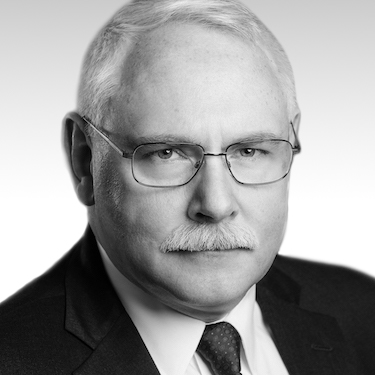
Norman Roule served for 34-years in the Central Intelligence Agency, managing numerous programs relating to Iran and the Middle East.   He served as the National Intelligence Manager for Iran (NIM-I) at the Office of the Director of National Intelligence from November 2008 until September 2017.  As NIM-I, he was the principal Intelligence Community (IC) official responsible for overseeing all aspects of national intelligence policy and activities related to Iran, to include IC engagement on Iran issues with senior policy makers in the National Security Council and the Department of State.

The Cipher Brief: Let’s start broadly.  The Biden Administration has had a lot to deal with in the Middle East since the president took office in January.  How are they doing?

Roule:  I think it’s too early to assesses the administration’s performance. The Biden administration arrived with several broad goals. It promised to reduce American military forces in the region, rely more on diplomacy and cooperation with Europe to resolve regional problems, and adjust relations with long-time regional partners like Israel and Saudi Arabia. But the challenges of the region are long-standing and routinely intrude upon Washington’s foreign policy agenda. And U.S. foreign policy in the Middle East has become a sharply partisan issue.

The administration’s response to events that have transpired in the region since the beginning of the year, has reassured those who looked for a greater emphasis on diplomacy. Washington assigned experienced envoys to contain multi-party issues and coordinated with Europe to limit U.S. involvement. The Secretary of State and his deputy have made high-profile visits to the region. The President has hosted such leaders as the King of Jordan and the Prime Minister of Iraq. And National Security Council engagement with Israel is routine. U.S. military shifts have taken place, but the administration still prioritizes security cooperation with regional partners. However, the U.S. withdrawal from Afghanistan is perceived by many as precipitous. Others worry that the U.S. has joined Europe in overlooking Iran’s attempts to change the political DNA of Iraq, Syria, and Yemen. The U.S. response to the Houthi’s use of Iran-supplied missiles and drones against civilian targets remains mainly rhetorical despite the lethal threat this poses to Saudis, Americans, and others living in the Kingdom.

The Cipher Brief:  That’s a sobering review. Is there any good news from the region for this administration?

Roule:  Actually, quite a bit. The administration has found that regional states will collaborate on complex issues beyond the region. Qatar plays a unique role in U.S. Afghan policy. The United Arab Emirates and Saudi Arabia are essential partners in resolving East African crises.

Regional leaders place great value on security cooperation as well as robust engagement with the U.S. private sector. Al-Qaeda and ISIS remain a threat, but at a fraction of their past potency.

Long-overdue political and economic reforms continue, albeit not at the pace or scale some Western observers seek. Saudi Arabia has introduced notable human rights reforms. A growing number of countries in the region have undertaken high-profile efforts to combat corruption and reshape their economies. Oman has begun the long road to restructuring its economy. Iraq and Libya remain intact despite their fractious polities.

I think the administration has also been impressed by the efforts of the Gulf states to diversify their economies, particularly in the area of green energy. The visits by U.S. Climate Envoy Secretary Kerry have been quite popular, probably more than some expected. I see plenty of momentum for growth here. 


Cipher Brief Members are invited to join us for a live virtual briefing with Norm Roule on Wednesday, August 11 at 11a ET.  

Members receive invites via email.  Not a member?  Not a problem.

Become a member today.


The Cipher Brief: The Iranian nuclear talks appear to have stalled. How did this happen? And what will it take for Iran to return to the deal?

Roule: Iran will return to the nuclear deal when it first believes it has wrung every concession out of the West in order to shield its economy from sanctions that could follow its non-nuclear aggression. It will also seek to ensure that it has fatally compromised the U.S. ability to reimpose sanctions within the nuclear deal itself. The Biden administration pledged a return to the deal as written, an end to the maximum pressure policy of its predecessor, and a rejection of regime change. More broadly, it also announced an intention to reduce the U.S. military presence in the region, a reassessment of Washington’s relationship with Israel and Saudi Arabia, and support for regional engagement with Iran. Some believe that the administration may even have turned a blind eye to Chinese purchases of Iranian oil as a signal to Tehran of Washington’s goodwill. If reasonable leaders ruled Iran, all of this should have produced an early return to the deal. But Iran’s leaders are rarely seen as reasonable. Iran could have chosen a fast return to the deal. Instead, it pushed for what all members of the P5+1 agree are unreasonable demands.

At this point, conditions aren’t favorable for an Iranian return to the deal in the near term. First, Tehran has pocketed all the benefits offered by the Biden administration’s initial approach without any concessions of its own.

We should also consider that Iran’s leaders may not want to return to the deal. Tehran’s primary goal in the 2015 nuclear deal was to obtain sanctions protections against the most vulnerable sectors of its economy in exchange for constraints on its civilian nuclear program. Tehran found that an end of nuclear sanctions did not solve the economic problems which produced domestic unrest, nor did the imposition of sanctions threaten the regime. Sanctions indeed constrained Iran’s ability to support proxies in the region, but even this was tolerable for the regime.

Next, Iran’s economy has stabilized somewhat in recent months. It remains in terrible shape but not so bad that the survival of the system is in question.

Last, we need to remember that Iran has historically offered concessions when confronted by a united international threat. Whatever your views on the nuclear deal, its very existence fragments international unity against Iran, which has always been a critical goal for Iran’s leaders. Support of the deal may bring us closer to Europe, Russia, and China but inevitably make regional partners believe we have ignored their valid security interests since there is little reason to believe Iran will moderate its non-nuclear behavior. Opposition to the nuclear talks may win support from Israel and Iran’s neighbors but it also invites friction with Europe, Russia, and China. These countries generally reject non-economic coercion against Iran and say relatively little about Iran’s regional adventurism.

The Cipher Brief: With a new president, will Iran’s new leadership continue to participate in the nuclear talks?  What will it take for Iran to return to the deal?

Roule: I believe Tehran will remain in the talks, but it will likely use the coming weeks to project defiance and even a willingness to walk away. The developing crisis over Iran’s naval attacks in the Arabian Sea may also postpone engagement. But for Iran, talks are a net positive. In addition to significant sanctions relief, the talks allow Iran – a mid-sized country – to routinely engage the attention of the world’s powers and play these actors against each other. This engagement also brings de facto recognition of the Raisi government, no small thing given his bloody background. The talks allow the Raisi government to argue directly with senior European counterparts that new sanctions for its many non-nuclear crimes would prevent it from returning to the nuclear deal. Last, the talks will give the Raisi government a platform for defiant rhetoric that will unsettle its adversaries and satisfy domestic supporters.

The Cipher Brief:  So, what circumstances would compel Iran to return to the deal?

Roule:  I can think of two paths that lead to an Iranian return once the new regime has vented defiant rhetoric. First, Tehran would need to believe that its rejection of the deal and malign regional actions had unified the international community to collectively support renewed economic pressure. Second, if Iran’s economy or political dynamic suffers a downturn that Tehran’s leaders perceive as leading to the downfall of the Islamic Republic. Either will need to include face-saving concessions.

The Cipher Brief: How should we look at current unrest in Iran?

Roule: The ongoing unrest shows no sign of being a near-term threat to the regime.  The crowd sizes appear manageable and anti-regime violence has so far been minimal. Security forces are relatively well organized and they are unsympathetic to protestors. The main weakness of protest remains that the opposition lacks direction, leadership, and support by labor groups. There appear to be no external or internal power centers capable of challenging the Supreme Leader.

We shouldn’t overlook the fact that many Iranians do support the regime. Despite a historically low turnout and Raisi’s admitted record of blood, eighteen million Iranians voted for him. It has become routine to see videos from Iran in which women argue that they cannot be forced to wear a hijab. But the same videos show other Iranian women (and men) asserting that failure to do so violates Iranian law and culture.

The current unrest did have aspects that likely worry Tehran. Oil workers put down their tools, and sympathy strikes reportedly erupted in major cities, albeit not on a scale that threatened the regime. The grievances of the Iranian people are so reasonable that they are increasingly acknowledged as such by government officials. But conditions in Iran are unlikely to improve. COVID continues to wreak havoc while climate change makes water and electricity shortages more painful. For these reasons, unrest will continue and probably intensify.


Go beyond the headlines with expert perspectives on today’s news with The Cipher Brief’s Daily Open-Source Podcast.  Listen here or wherever you listen to podcasts.


The Cipher Brief: What do you expect President Raisi to accomplish domestically, regionally, and internationally in his first 100 days in office?

Roule: Domestically, he will take steps to show how he will sustain Iran’s revolutionary spirit during what many believe to be a period of transition to a new generation of leaders. We will see this initially play out in his ministerial selections as part of a broader campaign to staff the bureaucracy with ideologically sound personnel, especially those with a background in the Revolutionary Guard. Security services and the military are very likely to see strong support. He will want to show that he is taking steps to address COVID and the economy. Programs directed at the poor are likely to be a priority, but he will have no sympathy for protestors. I wouldn’t be surprised if he announced an anti-corruption campaign and targeted members of the Rouhani administration for its initial investigations. We will also continue to see efforts to prepare Iran’s oil sector so that Tehran can quickly ramp up oil sales once sanctions end. Last, he is likely to support growing regime control of the internet. A bill calling for such control is currently before the parliament.

The Cipher Brief:  What about foreign policy?

Roule:  I don’t anticipate many changes in foreign policy. Raisi will mouth support for regional engagement but will maintain a defiant attitude towards the West, animus toward the U.S., support for proxies, and suspicion – but likely not rejection – of the nuclear talks. We need to be clear that he sees any sanctions relief as a transactional issue. Much as in 2015, Tehran will be clear that it will not allow a new deal to transform Iran’s society or its relations with the West.

The Cipher Brief: What are your thoughts on what would constitute an effective U.S. strategy to deter Iran’s regional activities, such as continued attacks on maritime trade, proxy support for attacks on Saudi Arabia, and activities in Yemen and Syria?  Can you imagine a scenario when the U.S. might engage militarily?

Roule: Our strategy must involve our international partners. We should avoid anything that makes it appear as if this is a U.S-Iran conflict instead of Iranian actions that threaten multiple countries and their citizens. The question becomes, will the international community join us or stand back while the U.S. takes the hard steps needed to contain Iran. Sanctions certainly deprive Iran of resources it would use for its proxies, but sanctions alone will not end Iran’s belligerence. The

The Cipher Brief:  What are Iran’s likely plans in Afghanistan in the wake of the U.S. withdrawal? What worries you the most?

Roule: There is plenty about Afghanistan to worry everyone, but I won’t dwell on the issues that are covered well in The Cipher Brief by others.  Iran has enjoyed the security stability that came with our presence. Now they have the Taliban on their border. Qods Force commander Esmail Qaani has considerable experience in Afghanistan. Iran’s security forces will likely engage the Taliban, Afghan governments, and warlords in equal measure to ensure that Iran can exert some influence over each. Iran is likely to transfer some portion of its Afghan proxies in Syria to western Afghanistan to protect Iran’s interests.

One issue that concerns me is the fate of the al-Qaeda cell in Iran. Tehran has enabled an Al-Qaeda presence on its territory for years without any international cost. That presence may well choose to migrate back to Afghanistan to reconstitute its former power center. The international community should hold Iran responsible if this happens. After all of the blood and treasure spent in the war on terror, we cannot tolerate Iran enabling al-Qaeda’s resurgence.

The Cipher Brief:  It feels like that would be an incredible regression.  Let’s shift to energy issues. Where do energy markets stand in the wake of the OPEC deal? And what do you think are the main drivers?


Cipher Brief Members are invited to apply for a seat at the table for The Cipher Brief’s Annual Threat Conference Oct 24-26 in Sea Island, GA.  Engage directly with experts on national security issues.  Space is limited.  Apply today.


Roule: Three baskets of drivers now define energy markets. First, the fundamentals. Here we are watching steady draws on stockpiles, production remains below what the market could absorb, and supplies will be tight for the remainder of the year. U.S. producers appear generally focused on return on equity vice expansion, which will likely mean that we will produce around two million BPD of oil less this year than last year. U.S. rig count is about double what it was a year ago at this time but is growing only slowly. It likely dropped slightly a week ago. Capital investment in the oil industry plummeted in 2020. Shareholders are pressing company leaders to use profits from restored oil prices to invest in green technology. OPEC policy remains conservative in the face of variables including; when Iran and Venezuela will resume production, the question of whether inflation has returned, and the impact of investor speculation.

Second, COVID is here to stay even in the best-case scenarios. The international community has failed to come close to a uniform approach to social distancing, travel, and economic reopening. We tend to look at this through a national perspective, but it may be insightful to look regionally to see how COVID-D shuts down specific industries as it spreads globally. Fresh COVID lockdowns in China have combined with signs of a decline in Chinese manufacturing to restrain prices.

Finally, geopolitical developments have generally had only a temporary impact on price pressures, but I worry about events in the Middle East. Expansion of Iranian attacks in strategic waterways with significant commercial and energy traffic may be more consequential. Insurance costs may increase for an industry with tight profit margins. Worse, attacks against only a few large container ships would disrupt global supply chains. We are moving into a new age when the importance of the Middle East may be as significant in terms of transportation security as it is in terms of energy.

The Cipher Brief:  So, let’s put you on the spot. What is your outlook for prices in the coming months?

Roule: Let me give this my best shot. Absent a sudden economic downturn, widespread COVID lockdowns, or conflict in the Middle East, we should see a continuation of the upward price velocity seen over recent months. This trend should sustain prices in the mid $70s and even low $80s. Several factors make upward movement beyond that problematic. First, OPEC leaders would be reluctant to invite the inflationary (and thus political) pressures such a spike would entail.  The Saudis will continue to push for market stability which dominates their strategy.  Second, India – and possibly China – would draw upon their strategic reserves if prices moved that high. Finally, such a price would draw out producers in the U.S. and OPEC + who would not be able to pass on a chance for a spike in revenue.


Read more expert-driven national security insights, perspective and analysis in The Cipher Brief 

The post Expert Brief: Iran, the Middle East and Strategies around Oil appeared first on The Cipher Brief.

find more fun & mates at SoShow now !

The Islamic State terrorist group is tearing a path across Afghanistan, establishing itself in “nearly all” of its provinces while increasing attacks more than five-fold in the past year, the UN’s envoy to the country has warned.

Addressing the UN Security Council on Wednesday, the body’s special representative for Afghanistan Deborah Lyons spoke of a major Islamic State (IS, formerly ISIS) surge through the war-torn country, claiming the jihadist group has now expanded nationwide.

“Once limited to a few provinces and the capital, ISKP now seems to be present in nearly all provinces, and increasingly active,” Lyons said, referring to the group’s Afghanistan-based ‘Khorasan’ faction. She added that so far in 2021, IS has carried out 334 attacks, up from just 60 last year.

The envoy’s comments came just hours after an Islamic State bombing erupted in a Shiite Muslim neighborhood of the Afghan capital, killing one and wounding six others, according to Reuters.

Since taking over as the government following a chaotic US withdrawal and the outright collapse of the American-backed administration in Kabul last summer, the Taliban has struggled to keep the terrorist group at bay, Lyons said. Though she noted that the Taliban insists it is “waging a concerted campaign” against IS and is making “genuine efforts to present itself as a government,” she said its response “appears to rely heavily on extrajudicial detentions and killings.”

READ MORE: ‘Ghost soldiers’ to blame for Afghan government’s quick defeat – ex-minister

Despite the rise in IS attacks in recent months, however, Lyons said the overall security situation in Afghanistan has improved since the end of the US war, which stretched on for two decades.

In addition to the terrorism issue, the UN representative also cited broader concerns for the country in the coming months, warning of a looming “humanitarian catastrophe” driven by a litany of causes, including foreign sanctions – which she said have “paralyzed” the local banking system – as well as growing levels of food shortages due to famine and a failing economy, among other factors.

Think your friends would be interested? Share this story!

find more fun & mates at SoShow now !

People are weird. They cook and eat the strangest things. This time it’s an octopus stuffed inside a turkey, sitting on top of crab legs, and (optionally) garnished with bacon strips. This monstrous culinary invention was inspired by H.P. Lovecraft’s Cthulhu mythos, and honestly… it looks like a crime against food.

Cthulhu turkey.

Cthulhu turkey.

Cthulhu turkey.

Cthulhu turkey.

Cthulhu turkey.

Cthulhu turkey.

Cthulhu turkey.

Cthulhu turkey.

Cthulhu turkey.

Cthulhu turkey.

Cthulhu turkey.

Cthulhu turkey.

Cthulhu turkey.

Cthulhu turkey.

Cthulhu turkey.

Cthulhu turkey.

Cthulhu turkey.

Cthulhu turkey.

Cthulhu turkey.

Cthulhu turkey.

Cthulhu turkey.

If this gallery wasn’t disgusting enough for you, you should also check out pre-cooked canned chicken that we’ve previously featured on this fun and useful site. We know you’ll love it!

The post Meet Cthulhu Turkey: It’s a Turkey Stuffed With Octopus That People Actually Make first appeared on .

find more fun & mates at SoShow now !

Mark Kelton, Former Deputy Director, CIA’s Counterintelligence, National Clandestine Service

Cipher Brief Expert Mark Kelton is a retired senior Central Intelligence Agency executive with 34 years of experience in intelligence operations. Before retiring, he served as CIA’s Deputy Director for Counterintelligence.  He is a partner at the FiveEyes Group and is Board Chair of Spookstock, a charity that benefits the CIA Memorial Foundation, the Special Operations Warrior Foundation and the Defense Intelligence Memorial Foundation.

EXPERT PERSPECTIVE — Winston Churchill’s 04 June 1940 speech in which he vowed that he and his countrymen would “fight on the beaches “and would “never surrender” in the face of a seemingly inevitable Nazi invasion is rightly renowned as perhaps history’s most famous address by a wartime leader.  Less well known, however, is the cautionary tone the new Prime Minister struck in that same appearance before the House of Commons, as he sought to temper the joy and relief engendered by the seemingly miraculous extraction of the British army from the beaches of Dunkirk.  “We must,” Churchill warned, “be very careful not to assign to this deliverance the attributes of a victory.”  “Wars” he admonished, “are not won by evacuations.”

Shortly before the 2011 Abbottabad operation that killed Osama bin Laden, I was asked by my HQ, my views on mounting an assault on the target we knew as Abbottabad Compound 1, (AC1) given that we were not sure it sheltered the terrorist leader.  After expressing my 95% confidence that the Al Qaeda (AQ) leader was in fact, there, I allegorically added that we must strike as ‘you cannot leave Hitler in his bunker and end the war’.  I was fortuitously, right in my assessment that the murderer of so many innocents was present within AC1.  Sadly, however, his death did not bring our war with radical Islamic terrorism to a conclusion.  As was the case after Dunkirk, our enemy was unwilling to quit the field or to limit his unbounded war aims.

Likewise, we should have no expectation that the withdrawal of our forces from the Afghan theater of combat signals an end to the conflict with terrorists who started that war by attacking us on September 11, 2001.  We cannot unilaterally declare an end to the War on Terror by leaving Afghanistan – however much we might wish to do so – for the very simple reason that our enemies do not share that desire.  As former Defense Secretary Leon E. Panetta put it, “I understand that we’re trying to get our troops out of there, but the bottom line is, we can leave a battlefield, but we can’t leave the war on terrorism, which still is a threat to our security.”

The Taliban parading of the American-made weapons and accoutrements of their defeated foes was, in a manner akin to that of ancient Rome, intended not only to celebrate victory.  It was also meant to humiliate the vanquished.   Such triumphal demonstrations – and what will be a galling celebration of the anniversary of 9/11 as their own holiday to follow – will evoke enthusiastic responses from Islamic extremists and will draw many new adherents to the cause that lies at the core of Taliban legitimacy and belief.

As was the case when we left Iraq and later had to go back into the region to crush the ISIS Caliphate that metastasized in the wake of our departure, there is every prospect that the Taliban’s success will breathe new life into Islamic extremist groups.  And there is no reason to believe that the “new” and now much more heavily armed Taliban – an organization that refused to break with AQ over the course of a brutal twenty-year battle, will be any less receptive to working with Islamic terror groups than were their pre-9/11 forebears.


The Cipher Brief hosts private briefings with the world’s most experienced national and global security experts.  Become a member today.


“We are going to have to maintain very, very intense  levels of indicators and warnings and observstion and ISR [Intelligence, Surveillance, Reconnaissance] over that entire region to monitor potential terrorist threats”, said Chairman of the Joint Chiefs, General Mark Milley in a recent interview, adding it will not be easy.

As CIA Director William Burns said during Senate testimony in April, “Our ability to keep (the) threat…in check in Afghanistan from either al Qaeda or ISIS…has benefited greatly from the presence of U.S. and coalition militaries on the ground and in the air fueled by intelligence provided by the CIA and our other intelligence partners.” With the withdrawal of the American military, Burns said, “the U.S. government’s ability to collect and act on threats will diminish.”

Much discussed ‘over the horizon’ intelligence collection against Afghan terror targets will not fill the void left by the loss of our ability to monitor and attack terrorist targets from in-country bases.  With Afghanistan bordered by countries unlikely to be willing to host a significant US presence, intelligence collection missions will now have to be launched from bases well beyond the horizon with all that implies for the quantity, quality and timeliness of intelligence collected.  Such operations will also be commensurately more expensive and difficult to mount.  Moreover, the intimate knowledge of our adversaries that we have painstakingly built over the course of nearly 20 years on the ground, began aging the moment we departed Afghanistan.  Absent an intelligence presence on the ground, our ability to collect on terrorist groups operating in and from that country will only degrade further as time goes on.

After acknowledging that we “could see a resurgence of terrorism out of the region in the coming 12-36 months”, Milley went on that we will, “as opportunities present themselves… have to continue to conduct strike operations if there’s a threat to the United States.”  However, as our pre-9/11 experience showed, such remote strikes can delay our terrorist enemies’ plans, but will not deter them from their intent to strike the US homeland.

As such, Secretary Panetta is undoubtedly correct in his conclusion that US involvement in Afghanistan is not over.  “We’re going to have to go back in to get ISIS,” Panetta said.  “We’re probably going to have to go back in when al-Qaeda resurrects itself, as they will, with this Taliban.”  And, as was the case with our operations to destroy ISIS’s so-called Caliphate after we precipitously left Iraq, there can be no doubt that should we have to go back into Afghanistan, our task will be greatly complicated by the manner in which we left that country, abandoning our allies and bases there.


Go beyond the headlines with expert perspectives on today’s news with The Cipher Brief’s Daily Open-Source Podcast.  Listen here or wherever you listen to podcasts.


The US withdrawal from Afghanistan will have profound geo-strategic implications for America’s position in the region and in the world.  Our Chinese, Russian and Iranian adversaries will seize the opportunity to fill the void left in the wake of our departure.

The Taliban has already indicated it will engage with China, which covets Afghanistan’s mineral wealth.  Entry into a transactional relationship with the cash-strapped Taliban regime and granting access to Afghan mineral resources – and possibly use of Bagram Air Base – in exchange for financial aid and Chinese support for the Taliban in international organizations would suit Beijing, which would evince no concerns about human rights and the like.

For their part, Central Asian countries will look away from Washington and ever more towards their old masters in Moscow and a rising China to ensure their security and economic well-being.   Islamabad, while publicly celebrating the victory of their Taliban proxies and its role in guiding it, must at the same time worry that the extremism embodied by the victors will gain renewed traction beyond its frontier provinces with all that implies for the security of the Pakistani state.

Caught by surprise by Washington’s decision to leave and the conduct of the withdrawal, even our closest and oldest allies are questioning US resolve.  They will surely think twice before acceding to any future US request to join in joint operations.  Our decision to quit Afghanistan, and its messy execution, will also evoke questions about the validity of American assurances to other nations under threat from aggressors.  It will not have been lost on them that the withdrawal of American air, intelligence, planning expertise and logistical support ensured the collapse of an Afghan Army that was dependent on the US.

Our adversaries, too, will see the chaotic nature of our departure as well as the abandonment of Americans, allied citizens and Afghans to uncertain fates as signs of weakness and enfeeblement.   This possibility is particularly dangerous in that they could seize this moment of US distraction to engage in opportunistic adventurism that could include movement by China against Taiwan; a Russian attempt to resolve its impasse with Ukraine forcibly; stepped-up Iranian prosecution of its proxy war with Israel; or a further ramping up by North Korea of its nuclear program.  Any such eventuality would force the US to respond vigorously or risk further erosion of its international credibility.

Finally, the costs involved in remotely monitoring and trying to deter threats emanating from a Taliban-controlled Afghanistan mean that we will be unable to shift intelligence and military resources away from the War on Terror to confront the threat posed by peer competitors to the degree we had hoped.

Aristotle is said to have pronounced, “You will never do anything in this world without courage. It is the greatest quality of the mind next to honor.”  Likewise, the courage shown by so many – and the heroic conduct of US military and CIA personnel in particular – in seeking to extract American citizens from Afghanistan and to honor our obligations to Afghans who worked and fought alongside us for so long, cannot obviate the dishonor attendant to having left so many behind.  Bloody Taliban outrages and reprisals against the latter are a certainty.

It will not be long before Kabul’s new rulers recognize that the Americans now under their control, are potentially useful pawns in trying to extract diplomatic, financial and other concessions in exchange for their freedom.  The effectiveness of our efforts hereafter to extract our own people and our Afghan allies from the clutches of the Taliban and how we respond to any attempts to use them as leverage against us, will determine the depth of the stain on our national honor already attendant to the disastrous end of our Afghan campaign.

In that same famous speech, Churchill solemnly told his countrymen that: ‘The Battle of France is over: The Battle of Britain is about to begin.”  He went on that “we would be well advised to gird our loins for the continued warfare to come.”

As we approach the 20th anniversary of 9/11, we should honor our sacred dead from that horrible day.  But we should likewise prepare ourselves for the battles with Al Qaeda and its murderous kindred of Cain that will surely come.

Recent polls would indicate that Americans support the decision to withdraw from Afghanistan, if not the way in which it was conducted.  One wonders how those polled would have responded if the question had been ‘Do you support a withdrawal from Afghanistan even if it markedly increases the chance of terror attacks and atrocities directed at your fellow citizens at home and abroad?’  I fear we will find out soon enough.

Read more expert-driven national security insights, perspective and analysis in The Cipher Brief

The post Wars are not Won by Evacuations appeared first on The Cipher Brief.

find more fun & mates at SoShow now !