Instagram is looking to channel the anger of its users by introducing a new feature that allows them to report various problems with the app by shaking their phones.

“Have you ever used Instagram and it wasn’t working like it was supposed to? It was just really getting you… really just pissing you off?” Instagram’s head Adam Mosseri asked his followers in a clip uploaded to Twitter on Wednesday.

Well, precisely for infuriating situations like that, the platform has developed a feature it’s calling “rage shake,” he announced.

Shaking your phone will, from now on, cause a special form to pop up on screen, allowing you to instantly report issues such as photos not uploading or audio not playing.

Read more

© Pexels / Cottonbro
The culture in the grip of Instagram influencers can ruin lives and Facebook knows it. It’s time someone took responsibility

The form is also the perfect place to let out “all the emotions and feels you’ve got going on,” Mosseri insisted, assuring Instagrammers that these reports would be promptly dealt with.

Thanks to their feedback, Instagram will be able to optimize its bug-fixing process, he said. The option, which he described as a “hidden gem,” is so far available only in the US, on both iOS and Android.  

The Instagram boss gently shook his own cellphone in the clip to demonstrate the feature in action. However, it’s likely upset users may well end up rage-shaking with a good deal more passion, which could increase the risk of a gadget being damaged, or their owner or even a passerby being struck should the phone fly out of their hand.

Mosseri also didn’t advise the public what to do with their rage over media revelations about alleged shady practices by Instagram and the platform’s owner, Facebook.

Among the trove of papers recently leaked by former Facebook employee Frances Haugen was an internal study from 2020 reporting that Instagram was causing many of its young users, particularly teen girls, to suffer mental health issues and suicidal thoughts. However, the platform kept operating in the same manner despite this finding, with changes being promised only after the study made headlines this September.

Like this story? Share it with a friend!

find more fun & mates at SoShow now !
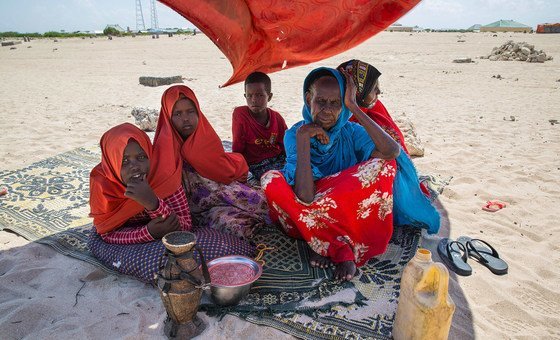
As India is mulling new rules for digital money, Prime Minister Narendra Modi has called for regulations to ensure cryptocurrencies like bitcoin do not “end up in the wrong hands,” warning that this could “spoil” young people.

While he did not expand on those concerns, Modi spoke on Thursday about the need for “democratic nations” to band together and deal with challenges posed by emerging technologies. He was delivering a virtual address at the Sydney Dialogue, an annual cyber-tech summit.

Noting that technology and data could either become “new weapons” for conflict or “instruments of cooperation,” Modi brought up digital currencies as an example of how it was important that like-minded nations “work together on this” to “ensure it does not end up in the wrong hands, which can spoil our youth.”

We are at a historic moment of choice. Whether all the wonderful powers of technology of our age will be instruments of cooperation or conflict, coercion or choice, domination or development, oppression or opportunity.

He also urged the development of technical and governance standards and norms, singling out the use of data, and called for renewed efforts to prevent manipulation of public opinion. In recent weeks, Indian authorities have raised concerns over claims of huge returns from cryptocurrency investment as well as its potential connections to money laundering, organized crime and terror financing.

Read more

© AP Photo / Charles Krupa
Bitcoin crashes after China rules all crypto-related transactions illegal

On Saturday, Modi chaired a meeting to formulate the country’s approach to digital currencies and examine their impact on the economy. According to The Economic Times, Indian officials are drafting regulations to propose a ban on all transactions and payments in cryptocurrencies, while allowing investors to hold them as assets, similar to gold, bonds and stock shares.

Citing unnamed sources familiar with the government’s discussions, the newspaper said there was a belief in policy circles that crypto markets needed to be regulated in order to tackle the problem of opaque advertising that exaggerates investment returns in order to attract young investors.

The sources informed the newspaper that draft legislation on the matter was expected to be forwarded to Modi’s cabinet for consideration in the next two to three weeks.

In September, China had banned all cryptocurrency transactions and crypto-mining.

If you like this story, share it with a friend!

find more fun & mates at SoShow now !

Controversial psychologist and author Jordan Peterson claimed Western countries had no “moral right” to force developing nations to reduce pollution output, noting instead that improving their economies was key.

During an appearance on the BBC’s ‘Question Time’ show on Thursday, the Canadian professor noted that the focus of climate change policies should be on incentivizing the development of cheap energy in poorer polluter countries.

“The best long term solution is to try to make developing countries as rich as possible, and the best way to do that is not control their pollution output, but to help them develop the cheapest energy they can possibly manage as fast as they possibly can,” Peterson said.

The debate saw UK undersecretary for employment Mims Davies suggest that measures taken to tackle climate change should not come at the “expense of developing countries.” But Peterson countered that it “absolutely, 100% will be [at their expense].”

I don’t think we have any moral right in the West at all to do that.

Read more

FILE PHOTO: Jordan Peterson speaking with attendees at the 2018 Student Action Summit hosted by Turning Point USA in West Palm Beach, Florida, December 20, 2018 © Flickr / Gage Skidmore
Jordan Peterson hammers ‘totalitarian’ Covid rules

He also criticized the recent COP26 climate change conference for failing to explore ideas on how best to improve national economies in the developing world, noting that he saw “very little of that sort of idea” coming out of the UN summit.

In the final hours of the two-week conference, China and India had intervened to soften the wording around the use of coal in the Glasgow Pact. The two countries demanded a change in the final text of the agreement that called for coal to be phased out, revising this to “phasing down unabated coal.”

The move prompted COP26 president and UK minister Alok Sharma to declare that China and India would have to “justify” their actions to countries that were more vulnerable to global warming effects. However, officials in both Beijing and New Delhi have countered that the criticism was unfair.

If you like this story, share it with a friend!

find more fun & mates at SoShow now !
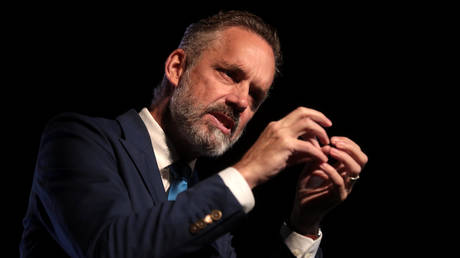
Brazil’s former President Luiz Inacio Lula da Silva has said he is willing to stand as a candidate in elections against incumbent leader Jair Bolsonaro, labelling his potential opponent “a poor copy of Trump.”

Speaking in Brussels at a media conference in the European Parliament on Monday, Lula announced that the Workers Party needs to put forward a presidential candidate to take over from right-wing Bolsonaro in 2022 and said he was willing to run in the elections again.  

Read more

Grounded China Southern Airlines Boeing 737 MAX aircraft at Urumqi airport, in China's western Xinjiiang region, June 5, 2019.
World’s biggest aviation market may soon welcome back exiled Boeing 737 MAX

“I’m willing, I’m motivated, I’m in good health,” Lula stated, adding that said he would only make his decision early next year, some months before the election scheduled for October 2022. The popular leftist said his candidacy would depend on whether the party wanted him. 

“We need to have someone who stands, we need to win the elections. And at the same time, we have to rebuild Brazil,” he said, speaking on behalf of his Workers Party.

Lula, 76, also took aim at the incumbent president. “He’s a poor copy of Trump. But Bolsonaro doesn’t think, he doesn’t have any ideas,” the former president said, claiming the incumbent leader was hellbent on ensuring the beneficial legacies of Lula’s administration were “torn down.” 

A recent poll put him 27 points ahead of Bolsonaro, despite his candidacy not officially being announced.  

In 2010, Lula made way for his protégé, Dilma Rousseff. Rousseff was ousted from power in what was described by her supporters as a parliamentary coup. Lula served nearly two years in prison after being convicted on money laundering and corruption, despite a nine-and-a-half-year sentence. He was also barred from running in the 2018 election. 

A number of judges have subsequently ruled that the case against Lula was unlawful and the Supreme Court annulled his earlier convictions, meaning he can face off against Bolsonaro in 2022.

If you like this story, share it with a friend!

find more fun & mates at SoShow now !

Hospitals in the Netherlands have begun delaying certain operations to free-up ICU beds during a record wave of Covid-19 infections, while an infectious diseases researcher has warned of an impending ‘Code Black’ in the sector.

The country set a daily national record for new Covid infections on Thursday, registering around 23,600 cases. It was the third day in a row of the figure topping 20,000.

To make more staff available for Covid wards, a number of operations, including those for cancer and heart patients, are being canceled from this week on, Dutch healthcare officials have said. Fewer than 200 beds remained available in Dutch ICUs as of Thursday, while Friday figures show almost half (47.8%) of occupied ICU beds were being used by Covid patients.

Read more

FILE PHOTO. A woman wearing a protective mask walks past a store in Amsterdam, Netherlands.
Netherlands re-introduces facemasks & other restrictions as Covid-19 cases surge

“These are cancer patients that should actually be operated-on within six weeks of diagnosis, and that won’t be met in all cases. It’s also heart patients,” said a spokesperson for the National Coordination Center for Patient Distribution (LCPS).

Meanwhile, new calculations by an infectious disease modeller at Wageningen University & Research suggest that a so-called ‘Code Black’ in hospitals is looming. The emergency designation means that patient safety is at risk and, if declared, would mean many people with life-threatening illnesses cannot go to the ICU, while doctors have to prioritize who to treat.

According to recent estimates from the Dutch Healthcare Authority (NZa), up to 200,000 operations were not performed as a result of urgently needed Covid care since the start of the pandemic. On Thursday, the NZa revealed that almost a quarter of operating rooms across the country are not currently in use due to a combination of Covid patient pressures and rising staff absences due to illness.

It is not yet clear what impact the delayed care will have on public health. In December 2020, the Dutch National Institute for Public Health and the Environment (RIVM) calculated that an estimated 34,000 to 50,000 ‘healthy life years’ had been lost due to the first Covid-19 wave alone.

Think your friends would be interested? Share this story!

find more fun & mates at SoShow now !

Those making and knowingly using fake vaccination certificates in Germany could soon face up to five years behind bars, as the country’s likely future coalition government is looking to tighten the screws.

Coming under the same category are also fake test results and Covid recovery certificates, with similar penalties for the counterfeiters and the holders. Everything envisaged in the new guidelines was drafted by the Social Democrats, along with the Free Democratic and Green Parties. The three are currently in coalition talks and expected to form a new government as early as next week.

The German Parliament will decide on the regulations this Thursday, though a draft has already been seen by the media outlet DPA.

According to German media, the manufacturing and sale of fake certificates has become a booming black-market industry in the country. In just one such case reported by Der Spiegel in late October, a counterfeiter working at a pharmacy in Munich and her accomplice had churned out more than 500 fake digital certificates in the span of one month, raking in €350 for each one sold.

Read more

Felix Gottwald has spoken out as police patrol the streets of Austria to check people are vaccinated © Lisi Niesner / Reuters | © Instagram / felixgottwaldofficial
‘I am deeply ashamed of our country’: Austria’s greatest Olympian quits political role as lockdown for unvaccinated comes in

Meanwhile, Berlin authorities are planning to further ramp up restrictions in the city, where, starting Monday, having either a vaccination or recovery certificate is a must to enter restaurants, cinemas, theaters, museums, galleries, swimming pools, gyms, as well as hairdressers and beauty salons. On Tuesday, Berlin Mayor Michael Müller confirmed that authorities want to “have an additional instrument” to contain the spread of the virus. However, he declined to elaborate on what the new measures will be. Local media speculate that starting next week, in addition to the requirement to have a vaccination or recovery certificate to enter public places, people inside the venues will also need to practice social distancing and wear a mask, or have a recent negative test result.

This comes after Covid-19 numbers in Berlin hit an all-time high last Thursday, with 2,874 new cases reported that day.

Think your friends would be interested? Share this story!

find more fun & mates at SoShow now !
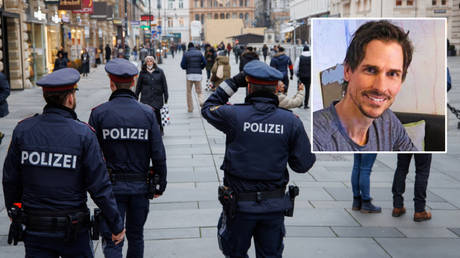
We’re starting a new segment on The Cipher Brief’s Open-Source Collection Podcast and adding to the line-up of curated headlines we bring you from around the world with expert insights on today’s news. 

The Cipher Brief’s Brad Christian talked with former CIA Officer Marc Polymeropoulos this week about what’s next for the US Government when it comes to investigating ‘Havana Syndrome’, making sure Afghan interpreters aren’t left behind and why a White House visit by Jordan’s King Abdullah was a bigger deal than some may realize.  

Cipher Brief Expert Marc Polymeropoulos served 26 years in the CIA before retiring from the Senior Intelligence Service in June 2019.  His positions included field and headquarters operational assignments covering the Middle East, Europe, Eurasia and Counterterrorism. 

Christian: What’s top of mind for you this week in the world of national security?

Polymeropoulos:  Havana Syndrome, CIA’s response to the Afghan withdrawal, and the visit of Jordan’s King Abdullah to D.C. Let’s start with Havana Syndrome.

You saw in the press the last couple of days, the notion that the CIA’s inspector general is conducting a review of CIA’s handling of healthcare, of how officers were coming to them starting in 2016 after these attacks started in Cuba. I think that’s a good thing. It’s a necessary evil. I think a lot of your listeners and readers know that I was affected by this in December of 2017. It caused my retirement in July of 2019. I’ve been very vocal on the need for healthcare for our officers.  We have to think about Havana Syndrome in three bins.

The first, is accountability and that’s good. It’s a necessary evil, but we have to look at how the agency responded to officers because that’s critical. The agency workforce is watching. I think the IG review by the CIA is good as well as a look at what’s happening in the House and Senate oversight committees as well.

The second, is continued healthcare for officers, the officers getting to Walter Reed’s National Intrepid Center of Excellence. CIA Director Bill Burns is doing that, so that’s positive.

And then the last piece is culpability. I think you also saw recently in the press, that a senior intelligence service officer who was integral in the hunt for Osama bin Laden, has been named to the task force. So, a lot of stuff is happening on Havana Syndrome, I think all of it is moving in a positive direction. I applaud Director Burns. This is something that I think is going to be at the top of the news cycle for days, weeks, and months to come.

Christian: Do you feel like now there’s a unified awareness at the entire government level outside of CIA?  Is Congress focused on this? Is the White House focused on this in the ways that you think they need to be?

Polymeropoulos: What a great question. The White House for sure. Congress has been absolutely integral both in the Senate and the House. They’re about to pass the Havana Act, which is going to provide financial relief for officers affected, but in all US government agencies. I will say that the Department of State has been woefully behind and that’s a big concern of mine. I feel for my State colleagues. There are 41 State Department officers who have been affected by this. Secretary of State Blinken has not even met with them while Director Burns has met with nearly all of the CIA victims, so State’s got a long way to go. I think we’ll look to the White House and to Congress to keep the pressure on.

Christian: These are events that are still occurring, even as they’re being investigated. Tell us a little bit about the latest that’s happened on the attack front.

Polymeropoulos: I think you see what the press reports of what can only be considered a kind of slow-rolling mass casualty event in Vienna, Austria. There were numerous State Department and intelligence officers affected at our Embassy there. Again, this is coming out in the press, so it’s important to note that. But these things are still happening and I think that we have to look back to the old counter-terrorism model that CIA employed so effectively of detect, disrupt, and deter attacks by our terrorist adversaries. We have to apply that same type of mindset to this problem set.


Go beyond the headlines with expert perspectives on today’s news with The Cipher Brief’s Daily Open-Source Podcast.  Listen here or wherever you listen to podcasts.


Christian: The Afghanistan withdrawal, there’s a lot going on there. We’ve seen reports of US airstrikes supporting Afghan forces in Kandahar. This week, it was reported that just under 50 Afghan troops requested refuge in Pakistan when their border posts near Chitral, which is a Pakistani city, was overrun. The Pakistani government let them in. And we’re seeing now an Afghan strategy focusing on protecting the capital regions and maybe ceding some of those provincial capitals.

Polymeropoulos: I look at this from a narrow optic. As a former CIA officer who was the base chief in Afghanistan between 2011 and 2012, I ran one of our paramilitary bases in eastern Afghanistan along the border with Pakistan. What is unique about life as a CIA officer out in the field, particularly in the bases, was that there were only a few of us. We had a very small number of Americans, yet we had hundreds, if not over 1,000 Afghanistan indigenous personnel, whether they were troops who were fighting with us or whether they were support personnel.  We lived with them. I think this is a little bit different than perhaps big US military’s experience with the Afghan national army.

I trusted my life to these guys. They were armed in front of us all the time. We ate together at the mess hall. We sat around the fire pit together, certainly went on patrols together. So, it’s really personal for me. I remember our Afghan interpreters. I remember our indigenous personnel and I really worry about them. The future, I think is one that certainly is bleak. I don’t support the administration’s decision for a full withdrawal. I don’t understand why we couldn’t have left a residual force, but that policy decision has been made.  I think that the things I’m looking to in the near future are even after the end of August, will the US military still conduct airstrikes in support of Afghan forces?  There is something about betraying those who really made that pact with us. That’s just something as a CIA officer that’s ingrained in us that we don’t want to do that. So, this is something I really worry about. I remember the faces of our interpreters and indigenous personnel every day. These were great heroes. I think a lot of us at CIA wouldn’t be alive today without their heroism.


 The Cipher Brief hosts private briefings with the world’s most experienced national and global security experts.  Become a member today.


Christian: The third issue you raised was interesting, the visit to D.C. by Jordan’s King Abdullah. It didn’t get a lot of press.  But you say it’s a significant story.  Tell us why.

Polymeropoulos: President Biden has had a long-standing relationship with King Abdullah. It’s a sign that Jordan is back. We call Jordan the lily pad for the United States for a lot of reasons. I mean, when you think back to 2006 and Jordan’s integral role in the Anbar Awakening, that’s when we were rallying the tribes in Iraq to fight terrorism. When you think about how the US has access to strategic bases in Jordan and when you think about the Jordanian General Intelligence Directorate as one of the US Government’s most critical counter-terrorism partners. But the fact of the matter is that under the last administration, Jordan was not treated well, so it’s really significant that Abdullah was here. I think this is a really good thing. Don’t forget that CIA Director Bill Burns was ambassador in Amman quite some time ago. I think this is a really positive development, not only for the United States going back to an old strategic partner, but also for Jordan as well, which has been a steadfast ally not only during King Abdullah’s reign, but also of course, under King Hussein before him.

Read more expert-driven national security insights, perspective and analysis in The Cipher Brief

The post An Open-Source Brief: former CIA Officer Marc Polymeropoulos appeared first on The Cipher Brief.

find more fun & mates at SoShow now !