The city council in Austria’s second-largest city, Graz, has elected a new mayor. Communist Party member Elke Kahr has become the first Communist leader of a major city in the country.

The 60-year-old politician, who has been working in the municipal government for more than 15 years and previously served as vice mayor of Graz, was elected as the new city leader on Wednesday. A member of the Austrian Communist Party (KPÖ, Kommunistische Partei Österreichs) for almost 30 years, she won the election with 28 of 46 votes. Kahr succeeded the previous long-standing mayor Siegfried Nagl of the center-right, liberal-conservative People’s Party.

Read more

FILE PHOTO: A protester waves a EU flag outside the parliament building in Budapest, December 16, 2014
Brussels, we got a problem! 30 years after collapse of communism, Eastern Europe is losing its faith in Liberal Democracy

Who would have thought that the daughter of a locksmith, a Communist, would become mayor,” she said in her first speech following the vote.

Having acknowledged a number of issues to deal with in the city, especially during the Covid-19 pandemic, the new mayor highlighted a housing policy, pledging to put a stop to profit-driven construction in Ganz.

The Communists have also already formed a coalition with the Greens and the Social Democratic Party (SPÖ), and another precedent in European city governance was made – two women serving as mayor and deputy. Green leader Judith Schwentner was chosen as Graz’s vice mayor, with the new governing coalition saying they would support not only social, but also environmental changes, aiming to improve living standards especially for low-income groups. Providing a bicycle for every child in the city from the municipality is in their program.

However, not everyone in the local government is happy with the new Communist rule. A member of the right-wing Freedom Party of Austria (FPÖ), Alexis Pascuttini, described the choice as “unpleasant,” having accused the Graz Communists of empty catchphrases in their program and refusing to participate in what he described as “left-wing nonsense.” Kahr herself has been exposed to strong pressure to justify her party, being repeatedly asked about her position on “the crimes of communist parties around the world since 1917,” according to Austrian media.

If you like this story, share it with a friend!

find more fun & mates at SoShow now !

Mark Kelton, Former Deputy Director, CIA’s Counterintelligence, National Clandestine Service

Cipher Brief Expert Mark Kelton is a retired senior Central Intelligence Agency executive with 34 years of experience in intelligence operations. Before retiring, he served as CIA’s Deputy Director for Counterintelligence.  He is a partner at the FiveEyes Group and is Board Chair of Spookstock, a charity that benefits the CIA Memorial Foundation, the Special Operations Warrior Foundation and the Defense Intelligence Memorial Foundation.

EXPERT PERSPECTIVE — Winston Churchill’s 04 June 1940 speech in which he vowed that he and his countrymen would “fight on the beaches “and would “never surrender” in the face of a seemingly inevitable Nazi invasion is rightly renowned as perhaps history’s most famous address by a wartime leader.  Less well known, however, is the cautionary tone the new Prime Minister struck in that same appearance before the House of Commons, as he sought to temper the joy and relief engendered by the seemingly miraculous extraction of the British army from the beaches of Dunkirk.  “We must,” Churchill warned, “be very careful not to assign to this deliverance the attributes of a victory.”  “Wars” he admonished, “are not won by evacuations.”

Shortly before the 2011 Abbottabad operation that killed Osama bin Laden, I was asked by my HQ, my views on mounting an assault on the target we knew as Abbottabad Compound 1, (AC1) given that we were not sure it sheltered the terrorist leader.  After expressing my 95% confidence that the Al Qaeda (AQ) leader was in fact, there, I allegorically added that we must strike as ‘you cannot leave Hitler in his bunker and end the war’.  I was fortuitously, right in my assessment that the murderer of so many innocents was present within AC1.  Sadly, however, his death did not bring our war with radical Islamic terrorism to a conclusion.  As was the case after Dunkirk, our enemy was unwilling to quit the field or to limit his unbounded war aims.

Likewise, we should have no expectation that the withdrawal of our forces from the Afghan theater of combat signals an end to the conflict with terrorists who started that war by attacking us on September 11, 2001.  We cannot unilaterally declare an end to the War on Terror by leaving Afghanistan – however much we might wish to do so – for the very simple reason that our enemies do not share that desire.  As former Defense Secretary Leon E. Panetta put it, “I understand that we’re trying to get our troops out of there, but the bottom line is, we can leave a battlefield, but we can’t leave the war on terrorism, which still is a threat to our security.”

The Taliban parading of the American-made weapons and accoutrements of their defeated foes was, in a manner akin to that of ancient Rome, intended not only to celebrate victory.  It was also meant to humiliate the vanquished.   Such triumphal demonstrations – and what will be a galling celebration of the anniversary of 9/11 as their own holiday to follow – will evoke enthusiastic responses from Islamic extremists and will draw many new adherents to the cause that lies at the core of Taliban legitimacy and belief.

As was the case when we left Iraq and later had to go back into the region to crush the ISIS Caliphate that metastasized in the wake of our departure, there is every prospect that the Taliban’s success will breathe new life into Islamic extremist groups.  And there is no reason to believe that the “new” and now much more heavily armed Taliban – an organization that refused to break with AQ over the course of a brutal twenty-year battle, will be any less receptive to working with Islamic terror groups than were their pre-9/11 forebears.


The Cipher Brief hosts private briefings with the world’s most experienced national and global security experts.  Become a member today.


“We are going to have to maintain very, very intense  levels of indicators and warnings and observstion and ISR [Intelligence, Surveillance, Reconnaissance] over that entire region to monitor potential terrorist threats”, said Chairman of the Joint Chiefs, General Mark Milley in a recent interview, adding it will not be easy.

As CIA Director William Burns said during Senate testimony in April, “Our ability to keep (the) threat…in check in Afghanistan from either al Qaeda or ISIS…has benefited greatly from the presence of U.S. and coalition militaries on the ground and in the air fueled by intelligence provided by the CIA and our other intelligence partners.” With the withdrawal of the American military, Burns said, “the U.S. government’s ability to collect and act on threats will diminish.”

Much discussed ‘over the horizon’ intelligence collection against Afghan terror targets will not fill the void left by the loss of our ability to monitor and attack terrorist targets from in-country bases.  With Afghanistan bordered by countries unlikely to be willing to host a significant US presence, intelligence collection missions will now have to be launched from bases well beyond the horizon with all that implies for the quantity, quality and timeliness of intelligence collected.  Such operations will also be commensurately more expensive and difficult to mount.  Moreover, the intimate knowledge of our adversaries that we have painstakingly built over the course of nearly 20 years on the ground, began aging the moment we departed Afghanistan.  Absent an intelligence presence on the ground, our ability to collect on terrorist groups operating in and from that country will only degrade further as time goes on.

After acknowledging that we “could see a resurgence of terrorism out of the region in the coming 12-36 months”, Milley went on that we will, “as opportunities present themselves… have to continue to conduct strike operations if there’s a threat to the United States.”  However, as our pre-9/11 experience showed, such remote strikes can delay our terrorist enemies’ plans, but will not deter them from their intent to strike the US homeland.

As such, Secretary Panetta is undoubtedly correct in his conclusion that US involvement in Afghanistan is not over.  “We’re going to have to go back in to get ISIS,” Panetta said.  “We’re probably going to have to go back in when al-Qaeda resurrects itself, as they will, with this Taliban.”  And, as was the case with our operations to destroy ISIS’s so-called Caliphate after we precipitously left Iraq, there can be no doubt that should we have to go back into Afghanistan, our task will be greatly complicated by the manner in which we left that country, abandoning our allies and bases there.


Go beyond the headlines with expert perspectives on today’s news with The Cipher Brief’s Daily Open-Source Podcast.  Listen here or wherever you listen to podcasts.


The US withdrawal from Afghanistan will have profound geo-strategic implications for America’s position in the region and in the world.  Our Chinese, Russian and Iranian adversaries will seize the opportunity to fill the void left in the wake of our departure.

The Taliban has already indicated it will engage with China, which covets Afghanistan’s mineral wealth.  Entry into a transactional relationship with the cash-strapped Taliban regime and granting access to Afghan mineral resources – and possibly use of Bagram Air Base – in exchange for financial aid and Chinese support for the Taliban in international organizations would suit Beijing, which would evince no concerns about human rights and the like.

For their part, Central Asian countries will look away from Washington and ever more towards their old masters in Moscow and a rising China to ensure their security and economic well-being.   Islamabad, while publicly celebrating the victory of their Taliban proxies and its role in guiding it, must at the same time worry that the extremism embodied by the victors will gain renewed traction beyond its frontier provinces with all that implies for the security of the Pakistani state.

Caught by surprise by Washington’s decision to leave and the conduct of the withdrawal, even our closest and oldest allies are questioning US resolve.  They will surely think twice before acceding to any future US request to join in joint operations.  Our decision to quit Afghanistan, and its messy execution, will also evoke questions about the validity of American assurances to other nations under threat from aggressors.  It will not have been lost on them that the withdrawal of American air, intelligence, planning expertise and logistical support ensured the collapse of an Afghan Army that was dependent on the US.

Our adversaries, too, will see the chaotic nature of our departure as well as the abandonment of Americans, allied citizens and Afghans to uncertain fates as signs of weakness and enfeeblement.   This possibility is particularly dangerous in that they could seize this moment of US distraction to engage in opportunistic adventurism that could include movement by China against Taiwan; a Russian attempt to resolve its impasse with Ukraine forcibly; stepped-up Iranian prosecution of its proxy war with Israel; or a further ramping up by North Korea of its nuclear program.  Any such eventuality would force the US to respond vigorously or risk further erosion of its international credibility.

Finally, the costs involved in remotely monitoring and trying to deter threats emanating from a Taliban-controlled Afghanistan mean that we will be unable to shift intelligence and military resources away from the War on Terror to confront the threat posed by peer competitors to the degree we had hoped.

Aristotle is said to have pronounced, “You will never do anything in this world without courage. It is the greatest quality of the mind next to honor.”  Likewise, the courage shown by so many – and the heroic conduct of US military and CIA personnel in particular – in seeking to extract American citizens from Afghanistan and to honor our obligations to Afghans who worked and fought alongside us for so long, cannot obviate the dishonor attendant to having left so many behind.  Bloody Taliban outrages and reprisals against the latter are a certainty.

It will not be long before Kabul’s new rulers recognize that the Americans now under their control, are potentially useful pawns in trying to extract diplomatic, financial and other concessions in exchange for their freedom.  The effectiveness of our efforts hereafter to extract our own people and our Afghan allies from the clutches of the Taliban and how we respond to any attempts to use them as leverage against us, will determine the depth of the stain on our national honor already attendant to the disastrous end of our Afghan campaign.

In that same famous speech, Churchill solemnly told his countrymen that: ‘The Battle of France is over: The Battle of Britain is about to begin.”  He went on that “we would be well advised to gird our loins for the continued warfare to come.”

As we approach the 20th anniversary of 9/11, we should honor our sacred dead from that horrible day.  But we should likewise prepare ourselves for the battles with Al Qaeda and its murderous kindred of Cain that will surely come.

Recent polls would indicate that Americans support the decision to withdraw from Afghanistan, if not the way in which it was conducted.  One wonders how those polled would have responded if the question had been ‘Do you support a withdrawal from Afghanistan even if it markedly increases the chance of terror attacks and atrocities directed at your fellow citizens at home and abroad?’  I fear we will find out soon enough.

Read more expert-driven national security insights, perspective and analysis in The Cipher Brief

The post Wars are not Won by Evacuations appeared first on The Cipher Brief.

find more fun & mates at SoShow now !

People who live in the big cities are definitely masters of eavesdropping. Sometimes they can’t help it, accidentally overhearing conversations from complete strangers can be so funny, it’s hard not to share them with someone else. And here comes the fittingly named Instagram account Overheard San Francisco that’s dedicated to sharing the funniest eavesdropped interactions in San Francisco and the Bay area. Scroll down to see the funniest examples!

Funny conversation overheard in San Francisco.

Funny conversation overheard in San Francisco.

Funny conversation overheard in San Francisco.

Funny conversation overheard in San Francisco.

Funny conversation overheard in San Francisco.

Funny conversation overheard in San Francisco.

Funny conversation overheard in San Francisco.

Funny conversation overheard in San Francisco.

Funny conversation overheard in San Francisco.

Funny conversation overheard in San Francisco.

Funny conversation overheard in San Francisco.

Funny conversation overheard in San Francisco.

Funny conversation overheard in San Francisco.

Funny conversation overheard in San Francisco.

Funny conversation overheard in San Francisco.

Funny conversation overheard in San Francisco.

Funny conversation overheard in San Francisco.

Funny conversation overheard in San Francisco.

Funny conversation overheard in San Francisco.

Funny conversation overheard in San Francisco.

Funny conversation overheard in San Francisco.

Funny conversation overheard in San Francisco.

The post Hilarious Private Conversations People Overheard In San Francisco first appeared on .

find more fun & mates at SoShow now !

Israel has allegedly launched two missiles targeting an area south of the Syrian capital, Damascus, Syria’s state media reported, noting that one of the projectiles was intercepted. There are no reports of damage.

The reported attack took place shortly after midnight on Wednesday local time, according to Syria’s SANA news agency. The projectiles came from the direction of the Israeli-occupied Golan Heights, the outlet noted. The strike targeted an “empty building” south of the capital and resulted in no losses, according to the report.

Read more

Historic town of the Crusader city of Tartus, Tartous, built on the antique citadel, Syria, Middle East, West Asia. © Global Look Press / imagebroker / Egmont Strigl
Syria accuses Israel of missile strikes near Russian base

Israel routinely makes incursions into Syria under the pretext of taking out alleged Iranian outposts there. The Israel Defense Forces (IDF) typically refrain from commenting on the raids, in line with its long-standing policy on military operations conducted outside its borders. Just over a week ago, two Syrian soldiers were injured in reported Israeli missile strikes on the cities of Tartus and Homs, near Russia’s naval base. The bombing also reportedly inflicted material losses. 

Damascus has repeatedly condemned Israeli attacks against its territory as violations of its sovereignty. Russia, Iran, and Turkey have also denounced the Israeli airstrikes in Syria as a breach of international law.

Think your friends would be interested? Share this story!

find more fun & mates at SoShow now !

Rotterdam Mayor Ahmed Aboutaleb has described an anti-lockdown protest in his city as an “orgy of violence.” The Dutch demonstration devolved into a violent riot that saw police open fire on protesters.

Aboutaleb described the events of Friday night as an “orgy of violence,” after protesters packed Rotterdam’s central Coolsingel shopping street to voice their opposition to an ongoing partial lockdown, a ban on New Year’s Eve fireworks displays, and the possibility of a two-tiered system of freedom in the Netherlands, one of liberty for the vaccinated and restrictions for those without the jab.

Read more

A police squad car is seen engulfed in flames during a protest in Rotterdam, Netherlands, November 19, 2021.
2 wounded after shots fired at Covid protest in Netherlands

The protest soon got out of hand, and police said on Saturday that 57 people were arrested. Protesters were seen torching police vehicles and launching fireworks at police, who shot at them in response.

Aboutaleb said that the cops had been “forced” to use their weapons. “On a number of occasions the police felt it necessary to draw their weapons to defend themselves,” he told reporters. “They shot at protesters, people were injured.”

Police say at least seven people were injured. Two of these injuries were caused by police bullets, and the victims are still in hospital. One officer was hospitalized, while several others were treated at the scene for minor injuries.

Like this story? Share it with a friend!

find more fun & mates at SoShow now !

AstraZeneca has announced that its preventative antibody cocktail offers 83% protection against symptomatic Covid-19 for at least six months, making it more effective than its own vaccine.

In a statement on Thursday, AstraZeneca cemented its lead in the race to develop and market a preventative Covid-19 drug, which is delivered as a shot in the arm. 

The drug, named AZD7442, reduces the risk of symptomatic Covid-19 by 83% over the course of six months, according to data from a trial in which participants were given one 300mg dose. There were no deaths or severe infections recorded within the trial group, it said. 

Read more

Paxlovid, a Pfizer's coronavirus disease (Covid-19) pill, is seen manufactured in Ascoli, Italy (FILE PHOTO) © Pfizer/Handout via REUTERS
Pfizer gets new $5.3bn boost over Covid

A separate trial showed the drug reduced the risk of severe Covid-19 or death by 88% when administered within three days of the onset of symptoms. 

“These new data add to the growing body of evidence supporting AZD7442’s potential … We are progressing regulatory filings around the world and look forward to providing an important new option against SARS-CoV-2 [Covid-19] as quickly as possible,” AstraZeneca Executive Vice President Mene Pangalos said in the statement. 

The Anglo-Swedish firm has agreed to supply the US government with 700,000 doses of AZD7442 if the Food and Drug Administration grants it emergency use, which AstraZeneca requested on October 5. The firm has similar agreements with other nations. 

The drug is created using a combination of two antibodies originating from immune B-cells donated by a recovering Covid-19 patient. 

The treatment could be used in people who are known not to respond well to vaccines, such as cancer patients. Around 2% of people are considered to be at risk of not creating enough antibodies following the administration of a Covid-19 vaccine. 

Based on the numbers, the drug appears to be more effective than the firm’s first-generation Covid-19 vaccine. Britain’s Zoe Covid study showed the effectiveness of the vaccine dropped to around 67% after four to five months. 

If you like this story, share it with a friend!

find more fun & mates at SoShow now !

An Argentinian woman has become the second-ever HIV-infected person whose immune system helped defeat the virus without requiring additional medical treatment. She was first diagnosed with the AIDS-causing infection in 2013.

Scientists have dubbed the 30-year-old mother the “Esperanza patient,” after her hometown. The word ‘esperanza’ translates to ‘hope’ in English. Publishing their findings in the Annals of Internal Medicine journal on Monday, the researchers said the discovery boosts hope for a “sterilizing cure” for the estimated 38 million people with the life-long infection.

“I enjoy being healthy,” the Esperanza patient told NBC News over email. “I have a healthy family. I don’t have to medicate, and I live as though nothing has happened. This already is a privilege.”

The study found no intact remnants of the virus in the 1.5 billion blood and tissue cells the researchers analyzed – confirming the discovery first announced in March at an international meeting of HIV experts.

Read more

© Belova59 from Pixabay
‘Elite controllers’ can cure themselves of HIV without any medical treatment, bombshell research claims

No additional information about the woman has been made public, but she was described at the time as “athletic and beautiful” and revealed to have an HIV-negative boyfriend and newborn baby.

Only one other person, identified in August 2020 as 67-year-old Loreen Willenberg from San Francisco, has been confirmed to have overcome the virus without medical intervention. The two women have been labeled ‘elite controllers’, referring to a rare subset of HIV patients who show no signs of the infection despite not undergoing antiretroviral treatments.

Typically, an HIV-infected person requires constant drug therapy to prevent the virus from attaching to their immune cells’ DNA and replicating. But, in the eight years since she was diagnosed, the Esperanza patient only received medication for six months during pregnancy to ensure her baby would be healthy.

In all, there have been four patients cured of HIV, two of whom – the ‘Berlin patient’ Timothy Ray Brown and the ‘London patient’ Adam Castillejo – were also cancer patients who received risky bone marrow transplants from donors with HIV-resistant genes. However, the success of their procedures is yet to be replicated.

“This is really the miracle of the human immune system that did it,” Dr. Xu Yu, an immunologist at the Ragon Institute in Boston, who co-authored the study, told NBC.

If you like this story, share it with a friend!

find more fun & mates at SoShow now !

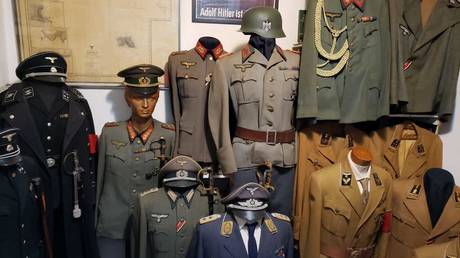
Any apology for Nazism is unacceptable, Colombia’s president Ivan Duque has insisted, after photos of police academy cadets dressed up in Third Reich uniforms were uploaded online, causing outrage.

“Any apology for Nazism is unacceptable,” Duque stated in a tweet on Friday. The president said he condemned any references to those who were “responsible for the Jewish Holocaust that claimed the lives of more than 6 million people,” adding that “anti-Semitism has no place in the world.”

Duque had earlier made demands for “heads to roll” at an academy that “promotes such criminal practices,” with its director, Lieutenant Colonel Jorge Ferney Bayona Sanchez, already having been sacked.

Colombia’s defense ministry, which oversees the country’s police, also insisted in a statement that that its training programs “don’t envisage in any way an activity such as the one which took place” at the academy.

Read more

Nazi uniforms found inside the house of a man suspected of raping a 12-year-old boy at the Vargem Grande neighbourhood of Rio de Janeiro. © AFP / Rio de Janeiro Civil Police
Brazilian police discover $3.5mn trove of Nazi memorabilia at home of ‘insane psychopath’ suspected of child rape

The images of police cadets in Nazi uniforms caused anger and bewilderment among internet users.

The German and Israeli embassies in the country reacted by issuing a joint statement, in which they expressed “total rejection of any form of apology or demonstration of Nazism.” The US embassy in Bogota also said that it was “shocked and deeply disappointed” by the development.

The controversial images, in which aspiring officers were caught sporting black SS outfits with red swastika armbands and grey Wehrmacht uniforms from the World War II era, weren’t revealed in some bombshell media report, but were actually published on the official Twitter account of the Colombian police this Thursday.

The photos were taken as part of a “cultural exchange” event at the police academy in the city of Tulua, aimed at commemorating Germany and “strengthening the knowledge of our police students.” The cosplay was apparently intended to illustrate the history of German law enforcement, with more cadets pictured wearing more modern versions of the country’s police uniforms in the pictures.

Like this story? Share it with a friend!

find more fun & mates at SoShow now !

Chris Inglis’ new White House office has a startup feel to it. There are desks, a few chairs, a coffee maker and a poster hanging on the wall.  But as the head of the newly established Office of the National Cyber Director, Inglis has to make due with what he has while still advising President Joe Biden on the smartest ways for the US to prevent and respond to cyberattacks.

Inglis has already had numerous conversations with the president, who has made clear that the government has a role to play in the defense of the private sector and in assisting the private sector in defending critical infrastructure.  And the president knows, says Inglis, that means the government needs to get its own cyber house in order. 

But like any real startup, Inglis’ resources are scarce.  More than three months after being confirmed by the Senate, he still doesn’t have the full staff he needs to take on his timely and critical mission.  That’s because the funding for his office – some $21 million, part of the $1 trillion infrastructure bill making its way through Congress – is still stuck in the political spin cycle.  Why does it matter?

“The threat is greater than I can ever remember,” Inglis told me during last month’s AFCEA and INSA Intelligence & National Security Summit in National Harbor, Maryland. “The audacity, the brazenness, the thresholds that have been crossed at every turn; we’re in a difficult place.”

While he’s waiting for Congress to act, he says he’s spending about fifty percent of his time defining his role, being careful not to duplicate the work already being done by other agencies and departments, while spending another fifty percent building relationships that will be important later.  Eventually, he’s expected to have a staff of some 75 people who will be expected to work hand in glove with CISA, the National Security Council’s cyber staff, the OMB and others.  The remaining fifty percent of his time, Inglis jokes, is spent figuring out how to attract the country’s best talent.   

“People are starting to flow into the organization. I’m confident that we’re coming up to a breakout moment, not for the National Cyber Director, but the contribution that we can and should make. I’m sobered by the nature of the challenge, I’m optimistic we can make a difference.”

Optimistic he is.  And he’s not even complaining about being given a critical task for US national security and then having to wait for politics to play out before being able to act on it.

“It has been a semi-silver lining in that we would not have had time to think about how we want to apply the resources coming our way.”

While Inglis has been waiting, he and his small team have had time to think about the four things they’d like to focus on right away. 

First, is streamlining the roles and responsibilities in government of who handles what when it comes to protecting the public and private sectors from cyberattacks.  He also spoke during his confirmation hearing about the importance of allocation of resources and while the Office of the National Cyber Director doesn’t have the authority to move money, it does have what Inglis calls the responsibility to account for cyber money.

“One of the most critical gaps in cyber is that the physical digital infrastructure is not built to a common standard. The executive order related to this requires that within a certain amount of time we have to install basic procedures like multifactor authentication and encryption of stored material. That is a challenge and a potential vulnerability for us. We need to make sure that we make these investments necessary to buy down the lack of investment for years.

The second gap is in talent related to number of people required to occupy these jobs. It’s not simply the folks with IT or cyber in their name, but general cyber awareness. There is some expenditure of resources of time, attention, and money to get awareness right on the part of the truly accountable parties like agency and department heads. We have to make sure they don’t see cyber as a cost center, but an enabler on the part of all the users as they understand what their roles are and what the accountability is.

He admits there is still a level of education needed within government to get there.

That is usually the case in both the government and the private sector,” he said.  “We need to think this way about cyber and invest in cyber so that we can enable the mission, not hold it back. I think that education is the most important and effective way to handle this. Then, it is to make sure that the accountability is aligned and harmonized. We tend to take risk in one place and expect someone in another place to be the mitigator of a risk they don’t understand was taken in the first place. We need to operate in a collaborative fashion and get away from divisions of effort which are an agreement not to collaborate and allow adversaries to pick us off one at a time.”

Inglis says that unity of effort must start at home.  “The executive order issued in May has begun to lay out common expectations about the hardware, software, and practices that we need to begin in those spaces,” he said.  “Externally, if we have sector risk management agencies who engage the private sector for the purposes of supporting and engaging the critical components of that infrastructure, we need to make sure you don’t need a Ph.D. in government to know who to deal with and what you’re going to get from them.”

He is arguing for the government to also put ‘valuable material’ on the table.  “That could be our convening power,” said Inglis. “We could perhaps address and reduce liability or give companies a clue as to what might be around the corner because the government has access to exquisite intelligence. If that setup is possible, we also need a venue where collaboration takes place. Information doesn’t collaborate, people do.”

Inglis likes to point to the example of CISA and the Joint Cyber Collaborative.  “They put people from the private sector and the public sector side by side to co-discover threats that hold us at common risk. That project sets up the possibility of implicit collaboration in what we then do with that common operational picture. The government could take ideas that private sector companies turn into proprietary systems and enrich and classify them to deal with it in their system.”

Using what he calls “all the tools in the toolkit,” Inglis also notes the importance of international relationships, which fits nicely into the White House’s International Summit on Ransomware last week in Washington, which zeroed in on tighter cryptocurrency standards, among other things. “Beyond the Five Eyes, what do other like-minded nations think about what is expected behavior in this? What are governmental actions that are appropriate,” he asked.  

Inglis has been an active participant in the president’s recent actions in cyber.  He took part in a White House meeting with tech leaders in August that was hosted by President Biden, who Inglis says, spent the first hour sharing his vision about how the country should focus on collaborative integration.  “The companies represented weren’t only companies like Microsoft and Apple, but people who operate in the critical infrastructure space,” said Inglis.  “The people component, educators, were represented reflecting the president’s view that cyberspace is not just technology, it is also the people component. They are a major link in the chain, and we need to get the roles and responsibilities right.”

While he’s waiting for the funding he needs to get his office fully staffed, Inglis said he’s also putting thought into reconciling resources with aspirations.  Managing expectations is going to be important.  Frustration has been growing for years over what some see as a lack of government response to some of the largest hacks in history.  The phrase ‘time and place of our choosing’ as a definition of response has grown old and some Americans are weary of a government that isn’t responding in a more public way to the beating it sees the US taking in cyberspace.

So, I asked Inglis whether there should be red lines in cyber.

“Red lines are both good and bad,” he answered.  “They are clear and crisp, and everybody knows what they are. The downside is that because of that, an adversary knows exactly how far they can go. It means that you set up a somewhat permissive environment. Red lines also don’t have context; sometimes there is a reason that a defender would make the ransomware payment. As a matter of policy, the U.S. government does not pay ransomware, but I imagine there will be a situation at some point where a hospital is against the Russian state and actual life and safety is at risk. If there is no other way to get the material back, in order to get back in the business of saving lives, they would want to rethink if a red line is a red line in that particular situation. I think the right thing to do here is not to establish hard thresholds of things with scripted responses, but outline what we are prepared to defend and what principles we will exercise in defense of those things. We commit to defending the private sector when it is held at risk by a nation state in cyberspace as much as in the kinetic space and make that clear to adversaries. I think that would be more helpful in changing decision calculus and creating a useful ambiguity about when and where we will come in.”

Inglis said he’s also thinking a lot about present and future resilience.  It’s a worthwhile focus, given that the White House estimates that nearly half a million public and private sector cybersecurity jobs are currently unfilled. 

“That is a massive problem,” said Inglis. “However, the more insidious problem is that the 320 million people in the United States who use the internet who have no idea how to properly take their place on the front lines of this issue. There is an awareness issue that requires us not to make Python programmers out of them but to make sure they understand the nature of this space.”

Everyone has heard the old saying that time is money, but in Inglis’ case, time is security so I asked him point blank whether he thought government was moving has quickly as it should on the cyber problem.

“Government is moving at speed; the question is if it is at the necessary speed. I don’t think anyone is moving at the necessary speed. Some are moving at light speed, but at the end of the day, we need an integrated, collaborative approach. While we won’t have unity of command, I think there needs to be a universally felt sense of urgency so that we will all get our heads in the game.”

Congress, are you listening?  Oh, and by the way, that poster in Inglis’ office? It reads, ‘Hours Since the Last Surprise.”

As a startup with maybe too few resources at the start and who often didn’t understand how all the wickets are run, we have our occasional surprise,” said Inglis.  “When we encounter those surprises and go to someone with the deep and sharp expertise to help us navigate that, we get what we need. However, we are not a full functioning, full featured, fully capable organization yet. We’re trying to build somebody else’s airplane while we’re free falling from our own. We have a parachute, and we can land safely, but it is a bit of a challenge at times.”

Find out more about why experts like former NSA Director General Keith Alexander (Ret.), Mandiant CEO Kevin Mandia and others have joined The Cyber Initiatives Group, powered by The Cipher Brief

Read more expert national security insights, perspective and analysis in The Cipher Brief

The post Chris Inglis and the Gathering Cyber Storm appeared first on The Cipher Brief.

find more fun & mates at SoShow now !

The annual migration of red crabs has brought traffic to a standstill on an Australian island. Apart from the epic journey, the species is also notorious for eating its own young.

Tens of millions of crustaceans are swarming Canberra-governed Christmas Island, which is almost a thousand miles northwest of the Australian mainland. Parks Australia, a government body in charge of wildlife conservation on the island, has deployed its staff to manage traffic, rake crabs off roads and provide advisories to local residents regarding road closures. Authorities are well-prepared to deal with the epic crab march as it repeats every year, usually in October and November. There are even special bridges and tunnels in place, built over and under busy roads so as to minimize the number of crabs crushed by cars. The sight of millions of these creatures making their perilous trek has become one of Christmas Island’s main tourist attractions.

The exact timing of the red crabs’ journey from forest to ocean is defined by rainfall and lunar phases. The march is led by male crabs, which are later joined by females. On reaching the ocean, they mate and spawn, with each female capable of producing as many as 100,000 eggs. However, most of the young crabs never make it back to the forest as they end up being eaten by fish and whale sharks for whom this is a veritable feast. To make matters worse, the crab larvae that do make it to the beach are often devoured by returning adult crabs of the very same species, hence one of their names – the cannibal crab.

If you like this story, share it with a friend!

find more fun & mates at SoShow now !