Australia’s government could be forced to spend tens of millions in payouts after receiving more than 10,000 compensation claims from people who suffered side effects and loss of income due to Covid-19 vaccines.
Under its no-fault indemnity scheme, eligible claimants can apply for compensation amounts between AU$5,000 (US$3,646) to AU$20,000 (US$14,585) to cover medical costs and lost wages as a result of being hospitalized after getting the shot. The scheme’s online portal is scheduled to be launched next month.
Official figures suggest, however, that over 10,000 people have already indicated their intention to make a claim since registration opened on the health department’s website in September. If each claim was approved, the government could face a bill of at least AU$50 million (US$36.46 million).
There were around 78,880 adverse events to Covid-related vaccination in Australia as of November 7, according to the Therapeutic Goods Administration, which regulates national health products. The majority of side effects were minor, including headaches, nausea, and arm soreness.
Only people who experienced a moderate to significant adverse reaction that resulted in a hospital stay of at least one night are eligible for coverage under the government’s scheme. Those seeking $20,000 or less have to provide proof their claims are vaccine-related – although there has been no information as yet on exactly what evidence would be acceptable.
“Adverse events, even though they happen to a tiny proportion of people, for the people it does impact it’s really quite devastating,” Clare Eves, the head of medical negligence at injury compensation firm Shine Lawyers, told the Sydney Morning Herald.
Among the adverse reactions covered are the blood clotting disorder “thrombosis with thrombocytopenia syndrome (TTS)” linked to the AstraZeneca vaccine and the “myocarditis and pericarditis” heart conditions associated with the Pfizer vaccine. Other reportedly accepted side effects are Guillain-Barré syndrome, a rare neurological condition, and immune thrombocytopenia (excessive bleeding due to low platelet levels).
Claims for over $20,000, including those for vaccine-related deaths, will be assessed by an independent legal panel of legal experts and compensation paid on its recommendations. Nine people have reportedly died after an adverse reaction to one of the three vaccines in the country.
Eves told the Morning Herald that her firm was representing a number of litigants over the vaccine side effects, including several who are not eligible for the scheme.
Controversial psychologist and author Jordan Peterson claimed Western countries had no “moral right” to force developing nations to reduce pollution output, noting instead that improving their economies was key.
During an appearance on the BBC’s ‘Question Time’ show on Thursday, the Canadian professor noted that the focus of climate change policies should be on incentivizing the development of cheap energy in poorer polluter countries.
“The best long term solution is to try to make developing countries as rich as possible, and the best way to do that is not control their pollution output, but to help them develop the cheapest energy they can possibly manage as fast as they possibly can,” Peterson said.
The debate saw UK undersecretary for employment Mims Davies suggest that measures taken to tackle climate change should not come at the “expense of developing countries.” But Peterson countered that it “absolutely, 100% will be [at their expense].”
I don’t think we have any moral right in the West at all to do that.
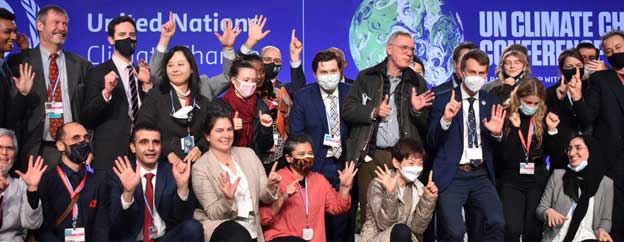
He also criticized the recent COP26 climate change conference for failing to explore ideas on how best to improve national economies in the developing world, noting that he saw “very little of that sort of idea” coming out of the UN summit.
In the final hours of the two-week conference, China and India had intervened to soften the wording around the use of coal in the Glasgow Pact. The two countries demanded a change in the final text of the agreement that called for coal to be phased out, revising this to “phasing down unabated coal.”
The move prompted COP26 president and UK minister Alok Sharma to declare that China and India would have to “justify” their actions to countries that were more vulnerable to global warming effects. However, officials in both Beijing and New Delhi have countered that the criticism was unfair.
AstraZeneca has announced that its preventative antibody cocktail offers 83% protection against symptomatic Covid-19 for at least six months, making it more effective than its own vaccine.
In a statement on Thursday, AstraZeneca cemented its lead in the race to develop and market a preventative Covid-19 drug, which is delivered as a shot in the arm.
The drug, named AZD7442, reduces the risk of symptomatic Covid-19 by 83% over the course of six months, according to data from a trial in which participants were given one 300mg dose. There were no deaths or severe infections recorded within the trial group, it said.
A separate trial showed the drug reduced the risk of severe Covid-19 or death by 88% when administered within three days of the onset of symptoms.
“These new data add to the growing body of evidence supporting AZD7442’s potential … We are progressing regulatory filings around the world and look forward to providing an important new option against SARS-CoV-2 [Covid-19] as quickly as possible,” AstraZeneca Executive Vice President Mene Pangalos said in the statement.
The Anglo-Swedish firm has agreed to supply the US government with 700,000 doses of AZD7442 if the Food and Drug Administration grants it emergency use, which AstraZeneca requested on October 5. The firm has similar agreements with other nations.
The drug is created using a combination of two antibodies originating from immune B-cells donated by a recovering Covid-19 patient.
The treatment could be used in people who are known not to respond well to vaccines, such as cancer patients. Around 2% of people are considered to be at risk of not creating enough antibodies following the administration of a Covid-19 vaccine.
Based on the numbers, the drug appears to be more effective than the firm’s first-generation Covid-19 vaccine. Britain’s Zoe Covid study showed the effectiveness of the vaccine dropped to around 67% after four to five months.
One of our favorite very specific image genres of funny pictures is cat moms that look completely unprepared for the realities of parenthood. Scroll down to see the best examples!
The EU must quickly seal its external borders to stem the flow of migrants who are no longer welcome in the 27-member bloc, according to Slovenia’s interior minister, whose country currently holds the presidency of the EU Council.
Speaking at the ‘Sarajevo Migration Dialogue’ on Thursday, Interior Minister Ales Hojs said EU countries were preoccupied recently with the coronavirus pandemic, the fall of the government in Afghanistan, and now a migrant crisis on the Poland-Belarus border, which he said was a hybrid war waged by Minsk against the EU.
“All three have additionally contributed to the increase in numbers of illegal migrants moving towards Europe and the Balkans, destabilizing the European Union,” Hojs told reporters.
The Slovenian minister said the current situation was similar to the 2015 influx of refugees and migrants from the Middle East and North Africa, when the EU admitted over one million people across its borders.
This time the situation is different, Hojs said, warning that “there is no more ‘refugees welcome.’”
“I believe that external borders must be secured, even with fences if necessary,” Hojs said, saying that he supported a plan for Brussels to finance the building of fences to reinforce the bloc’s borders.
He said it was important to strengthen cooperation and partnership across the EU in order to better manage migration and maintain security.
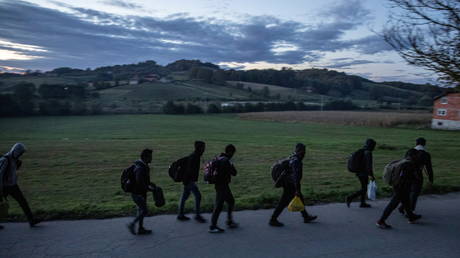
Thousands of migrants have been trying to cross the Belarus-Poland border in an attempt to reach the EU. They have been stranded at barbed-wire fencing with Polish border guards repelling their attempts to cross. Warsaw has accused Belarus of orchestrating the crisis to destabilize the EU and “weaponize” migration in an effort to have sanctions lifted.
A spokesperson for Belarusian leader Alexander Lukashenko claimed on Thursday that Germany agreed to open a humanitarian corridor for 2,000 refugees on the border.
NEW YORK, Nov 19 (IPS) – A week has gone by since COP 26 with 197 Parties ended in the Scottish city of Glasgow on extended time last Saturday. Climate change which covers wide array of issues affecting all living beings engaged the people around the world for COP 26 in a way never experienced since COP1 was held in Berlin in 1995.
EXPERT PERSPECTIVE — On 16 June, US President Joe Biden and Russian President Vladimir Putin met for just under four hours in Geneva. This was Mr. Biden’s first meeting with Mr. Putin during his presidency and Biden is the fifth US President with whom Putin has held a summit.
Expectations for the summit were characterized as low by both sides in advance and assessed a bit more positively after the conclusion of the meeting. The meeting presented an opportunity for both leaders to present grievances and warnings to the other (and show toughness to their domestic constituencies). Other than presenting the opportunity to blow off steam, the results of the meeting appear modest: the agreement to return ambassadors to their posts, to resume bilateral arms control discussions, to conduct discussions on “strategic stability” and to hold unspecified consultations on cyber. In typical fashion, Mr. Putin rejected all of Mr. Biden’s assertions about Russian actions and made counter accusations referencing hostile US actions.
Of the deliverables from the summit, cyber will no doubt turn out to be the most problematic area for follow up. Mr. Biden apparently delivered to Mr. Putin a list of 16 US critical infrastructure sectors that should be considered “off limits” for cyberattacks, e.g., “red lines” not to be crossed without the risk of significant retaliation. For his part, Mr. Putin asserted that it is Russia that is the victim of cyberattacks originating from the territory of the US and it’s NATO partners and also is the victim of attempts to interfere with Russian elections. The challenge in cyber discussions going forward will center around three areas: differing interpretations of the relevance of deterrence theory in today’s cyber environment, attribution, and control.
Mr. Biden’s firm comments to Mr. Putin on recent cyberattacks against the US such as the ransomware attack on Colonial Pipelines (Mr. Biden is said to have asked Mr. Putin how he would react if Russia’s pipelines were hit?) and his provision of a list of “off limits” US infrastructure entities suggests a deep belief in this administration that Russia can be deterred from engaging in future conduct of cyber operations against US targets or “sanctioning” attacks originating from the territory of the Russian Federation by criminal groups.
Unfortunately, it is highly likely that either Mr. Putin nor those who control the levers of Russian cyber operations agree that deterrence theory applies. Deterrence only works when both sides know the other is capable of – and willing to – cause significant harm to the other.
The Russian side likely believes (and may have amply demonstrated) that the US is disproportionately vulnerable to cyber risk at every level of its economic, societal, and political infrastructure whereas Russia is not. There is a reason the use of cyber tools has become a central feature of Russian strategic doctrine. They work and seem a legitimate tool that falls short of conventional war. Hybrid warfare using cyber tools, the Russian side would argue, is no different than the economic warfare Russia is experiencing from sanctions imposed by the US its allies.
For full access to the article, sign up to become a Cipher Brief member for just $10/mo.
“The Cipher Brief has become the most popular outlet for former intelligence officers; no media outlet is even a close second to The Cipher Brief in terms of the number of articles published by formers.” – Sept. 2018, Studies in Intelligence, Vol. 62 No.
Access all of The Cipher Brief’s national-security focused expert insight by becoming a Cipher Brief Level I Member .
The Chinese foreign ministry has lashed out at Lithuania after the small Baltic Sea nation approved the opening of the Taiwan Representative Office in Vilnius. Beijing says it undermines its One China policy.
Beijing was disappointed that Lithuania had proceeded to grant Taiwan permission to open its ‘representative office’ in Vilnius despite “China’s strong opposition and repeated persuasion,” Chinese foreign ministry spokesman Zhao Lijian said at a press briefing on Friday. Taiwan had opened its mission in Vilnius the previous day.
Zhao called the move a violation of the One China principle, which he said is undermining China’s sovereignty and territorial integrity, while grossly interfering in its internal affairs. The spokesman reminded Lithuania that Taiwan is an inalienable part of China’s territory and the Beijing government has sole legal authority.
As to what necessary measures China will take, you may wait and see. The Lithuanian side shall reap what it sows.
In a “stern warning” to the Taiwanese authorities, Zhao then added that “seeking ‘Taiwan independence’ by soliciting foreign support is a totally misguided attempt that is doomed to fail.”
In August, Lithuania announced that the diplomatic outpost would be named the “Taiwan Representative Office,” angering China. Taiwan’s diplomatic branches – in countries that have de facto relations with the island’s authorities – are normally called “Taipei Economic and Cultural Offices.”
China demanded that Lithuania recall its ambassador from China, which it did. Beijing then withdrew its envoy to the Baltic state.
Chinese officials have repeatedly called on Western nations, notably the UK and US, to stop interfering in Beijing’s internal affairs, stressing that they consider Taiwan to be part of China.
Covid-battered global supply chains are being threatened by organized criminals, including drug cartels and con artists posing as legit suppliers, a new study has found, warning that the situation is set to get worse.
The international supply chain woes amid the Covid-19 pandemic are highlighted in a new annual report, released this week by the British Standards Institution (BSI).
The document, titled the ‘Supply Chain Risk Insights Report’, highlights Covid’s impact on supply chains, with the experts also warning that organized crime has increasingly preyed on this crucial area during the pandemic. On multiple instances, criminals were posing as legitimate logistics providers, stealing goods during shipment.
“I’m seeing a significant number of false suppliers acting as genuine potential suppliers in supply chain logistics provision – warehousing distribution, distribution centres, transportation companies – and actually, they are criminal groups trying to infiltrate the logistics supply chain,” said David Fairnie, BSI’s principal consultant in supply chain security. He urged producers to “continuously monitor” the supply chain and to not immediately trust new logistics providers – especially those contacted only remotely.
So, arguably today more than ever, you do need to know your suppliers. So far in 2021, BSI has noted this issue of fake carriers in an increasing number of countries in both the Americas and Europe.
Criminals have apparently been trying to steal goods in various ways, with phony truck drivers loading up items and taking off with them, while conmen “posing as legitimate employees” have reportedly been observed lurking around delivery destinations to steal cargo.
At the same time, the report found that trade in illicit goods has also been on the rise lately, with the illegal drug industry in particular appearing to flourish. While the supply chain for drug cartels, which require large amounts of assorted chemicals to produce narcotics, was disrupted due to the pandemic lockdowns and border closures impacted trafficking routes, organized crime quickly overcame these problems, the BSI noted.
“Drug cartels around the world did not miss a beat,” Chris Tomas, BSI lead intelligence analyst, said.
While many cartels shifted their production towards synthetic drugs, namely amphetamine, amid the pandemic, the apparent “lack of eradication of coca crops in Latin American countries” also remains an issue, the BSI said. The flow of cocaine has grown over the past year and is expected to increase even further, the organization warned.
“The numbers and quantities of cocaine seizures in Europe increased steadily in 2020 and 2021 and are expected to continue to rise in 2022,” the report reads.
Think your friends would be interested? Share this story!
A pack of wild boars were rounded up and euthanized after one of the animals attacked a police officer in the streets of Hong Kong – the opening shot in a pitched battle between the feral hogs and the city’s law enforcement.
A group of veterinarians took seven wild boars into custody, euthanizing the beasts after knocking them out with dart guns in an area near the financial center of the city, according to a statement from Hong Kong’s Agriculture, Fisheries, and Conservation Department on Thursday.
The pigs were captured after one attacked a police officer last week, an act which reflects the city’s new policy toward the animals: stop them before they attack again.
The aggressive boar knocked down a police officer by biting his leg last week as the two faced off in a residential car park, the pig only losing the battle after falling off the building to its death. The wild boars are apparently “accustomed” to wandering back and forth along the roadway, begging for food from pedestrians and vehicles alike. Previously, the city had handled the population by capturing and sedating the animals, then relocating them to “remote areas,” according to the the department.
Hong Kong CEO Carrie Lam vowed to increase penalties for those citizens found feeding the boars, which have reportedly been responsible for some 30 attacks in recent years. While residents are warned not to feed the boars so as not to encourage population growth or disease outbreaks, the animals are a favorite among some visitors. Still, Lam insisted “we can’t simply sit on our hands while things deteriorate.”
Animal rights groups have responded with a protest letter against a policy of euthanasia, pointing out that most visitors do not feed the boars and arguing resources should be directed toward stopping the human activity rather than blaming all the boars. Allowing the boars to be captured and killed “ignores their right to live and considers their existence in urban areas as a capital offense,” the letter read.